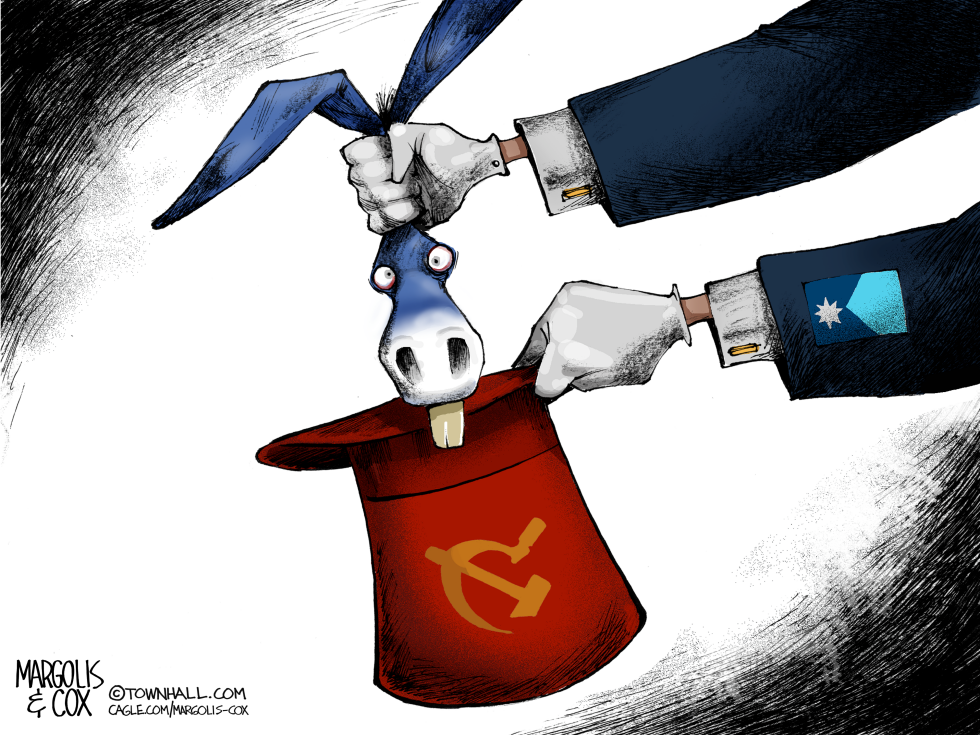
Accusations that Democratic policies carry communist undertones have persisted in partisan debate for years. The image frames the party as emerging directly from a communist emblem through a conjurer's reveal. This visual argument underscores ongoing conservative critiques that Democratic governance veers toward authoritarian economic controls rather than traditional American principles.
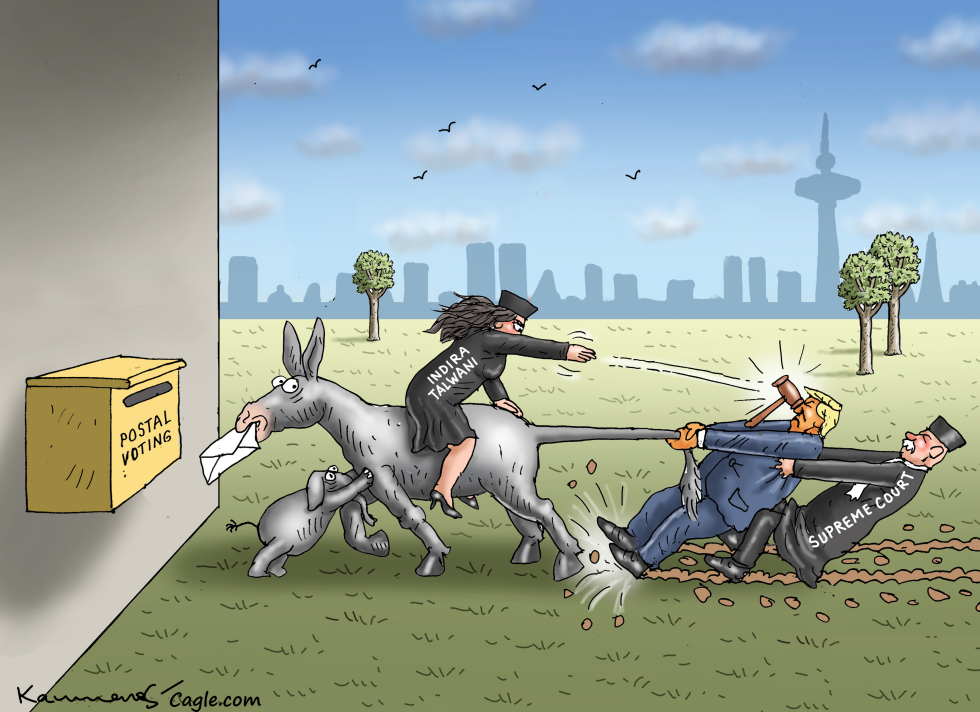
A political cartoon shows federal Judge Indira Talwani riding a Democratic donkey labeled with postal voting while dragging two Supreme Court justices across a field near the Space Needle. The image responds to ongoing disputes over postal voting rules and federal court involvement in election procedures. Talwani, a U.S. District Judge, has issued rulings affecting voting access in recent cases. The cartoon uses the donkey as a party symbol and a yellow ballot box to illustrate the conflict between lower court decisions and the Supreme Court. The visual argument centers on judicial power in election law matters active in 2026.
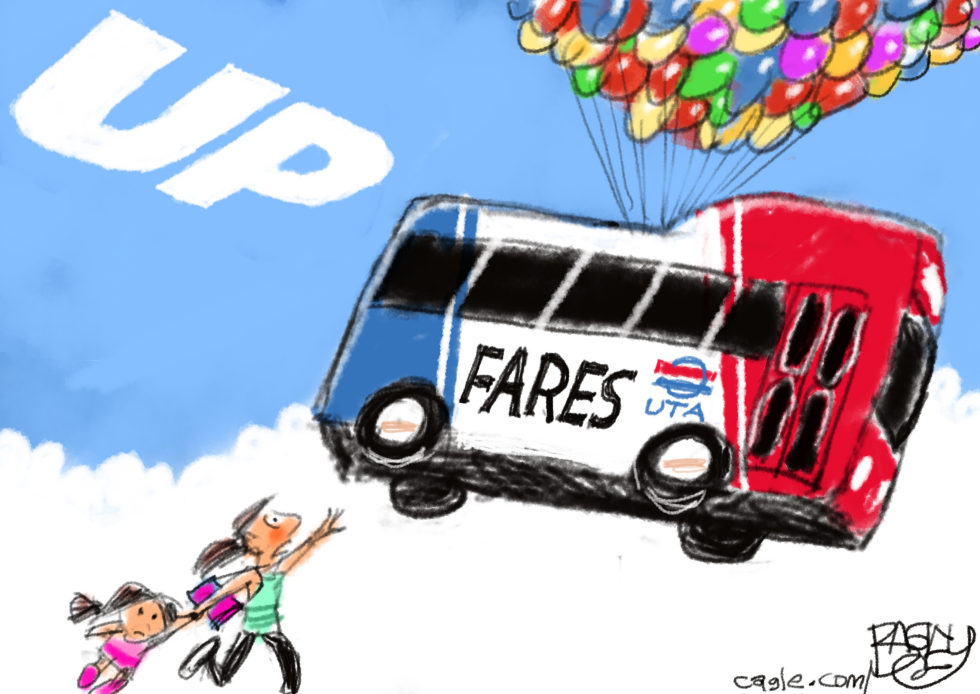
Utah Transit Authority faces pressure to increase bus fares amid broader cost pressures affecting public services. The development matters because higher fares can reduce ridership and strain lower-income households that rely on transit. The piece argues that these increases are being driven by external forces that riders are actively trying to resist.
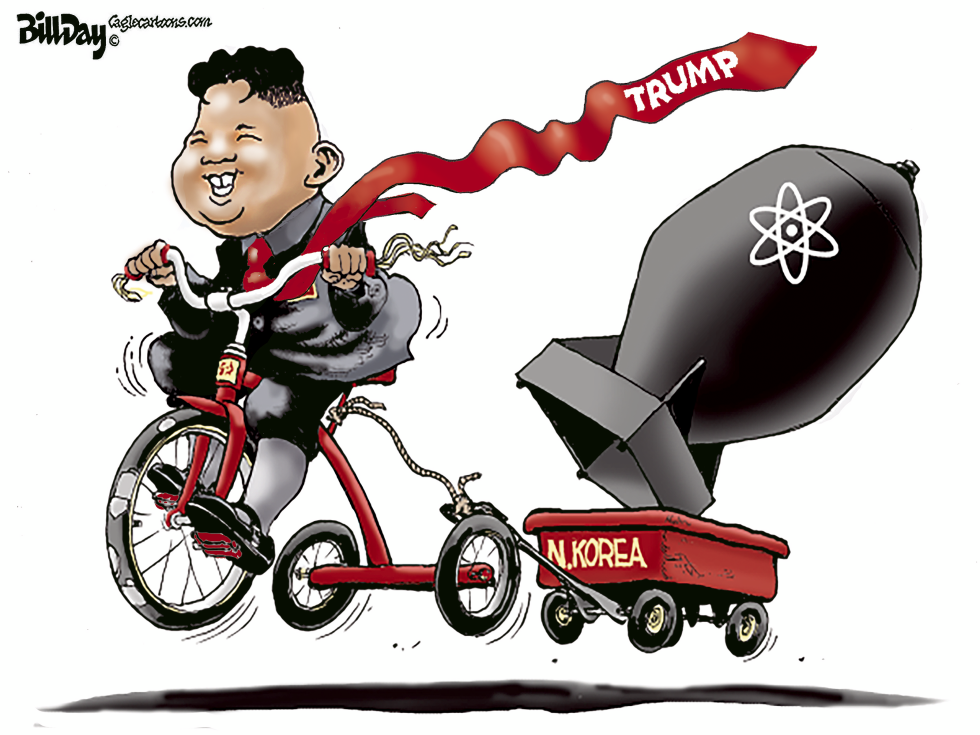
North Korea's leader Kim Jong-un is shown transporting a nuclear bomb on a child's tricycle and wagon toward Donald Trump. The image responds to ongoing tensions over North Korea's nuclear program and its direct implications for U.S. security under the Trump administration.
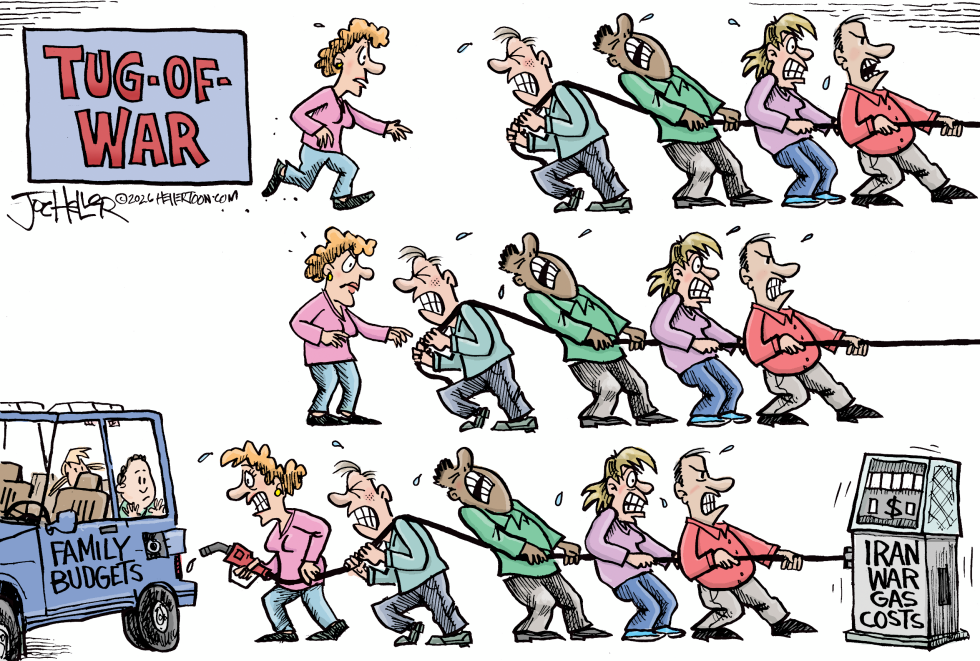
Rising gas prices linked to potential conflict with Iran are pressuring household budgets across the country. The cartoon illustrates the direct economic tug between military action abroad and everyday costs at the pump, arguing that families bear the immediate burden of such decisions.
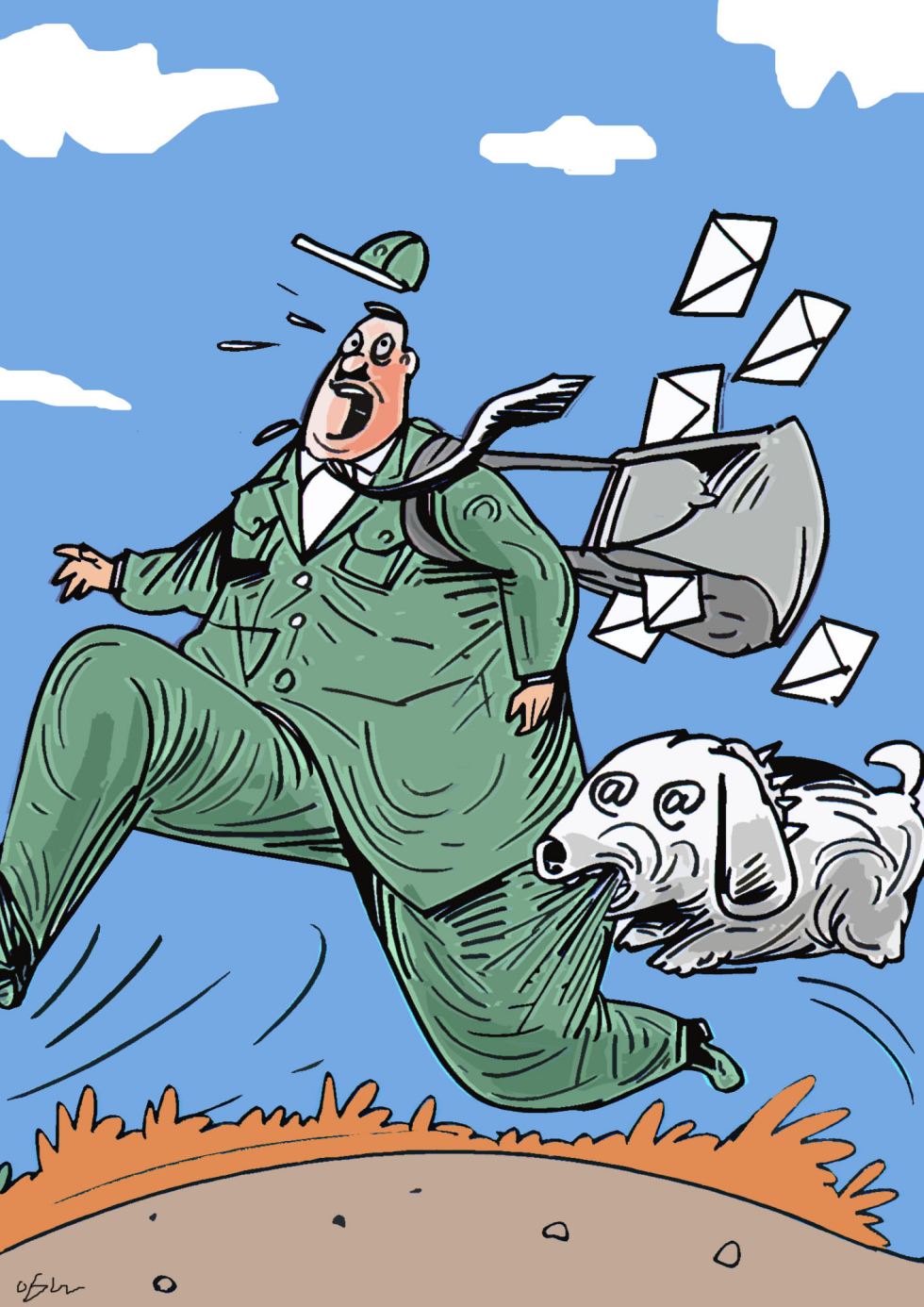
Postal workers routinely face hazards from aggressive dogs during deliveries. The incident highlights ongoing safety concerns for mail carriers who must navigate unpredictable animals on their routes. The piece takes the position that such attacks disrupt service and endanger staff.
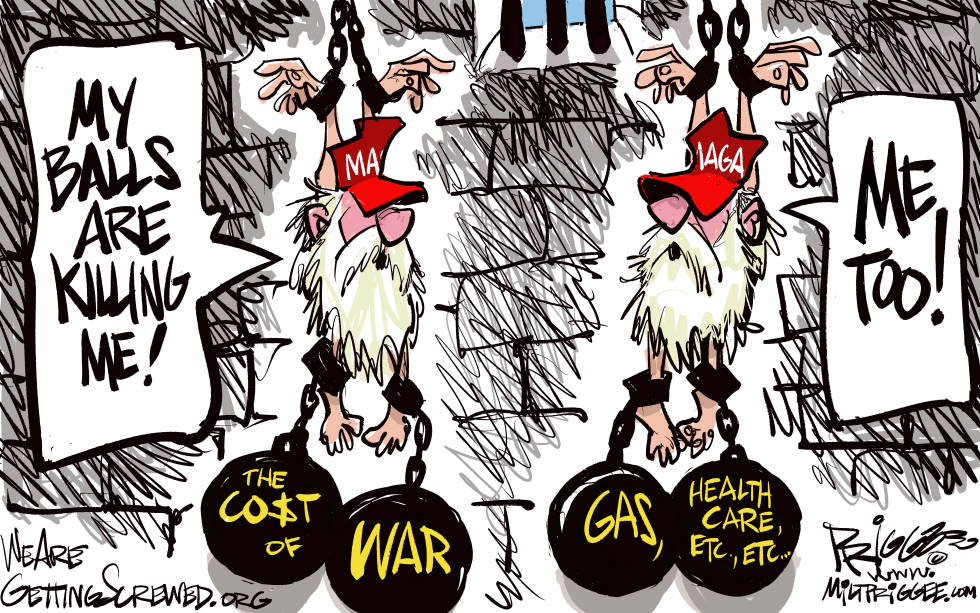
The cartoon shows two figures with white beards and red hats labeled parts of 'MAGA,' suspended upside down by chains from their ankles. Heavy black balls hang below, marked 'THE COST OF WAR,' 'GAS,' 'HEALTH CARE, ETC, ETC...' One figure speaks of balls killing him, the other agrees. Tags like MAGA, inflation, cost of living, healthcare, gas prices, Trump frame the visible elements. The drawing style is sketchy, with a dark background suggesting a dungeon. Signatures and a website appear at the bottom.
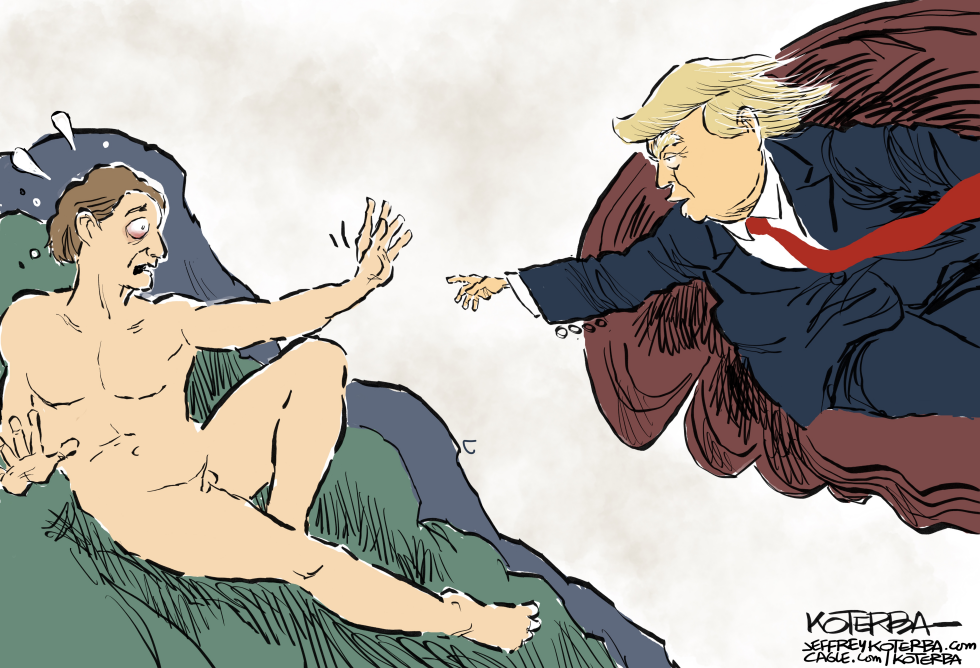
Jeff Koterba's cartoon reimagines Michelangelo's Creation of Adam, placing a Trump-like figure in the role of God, clad in a suit and red tie, floating in a red cloak while reaching toward a nude, shocked man resembling Adam on greenish rocks. The image captures satirical elements of presidential hubris, with tags including Trump caricature, political satire, divine parody, ego commentary, artistic homage, and cartoon humor. Such visuals often spark discussions on leadership perceptions, blending historical art with contemporary politics in a straightforward, humorous critique.
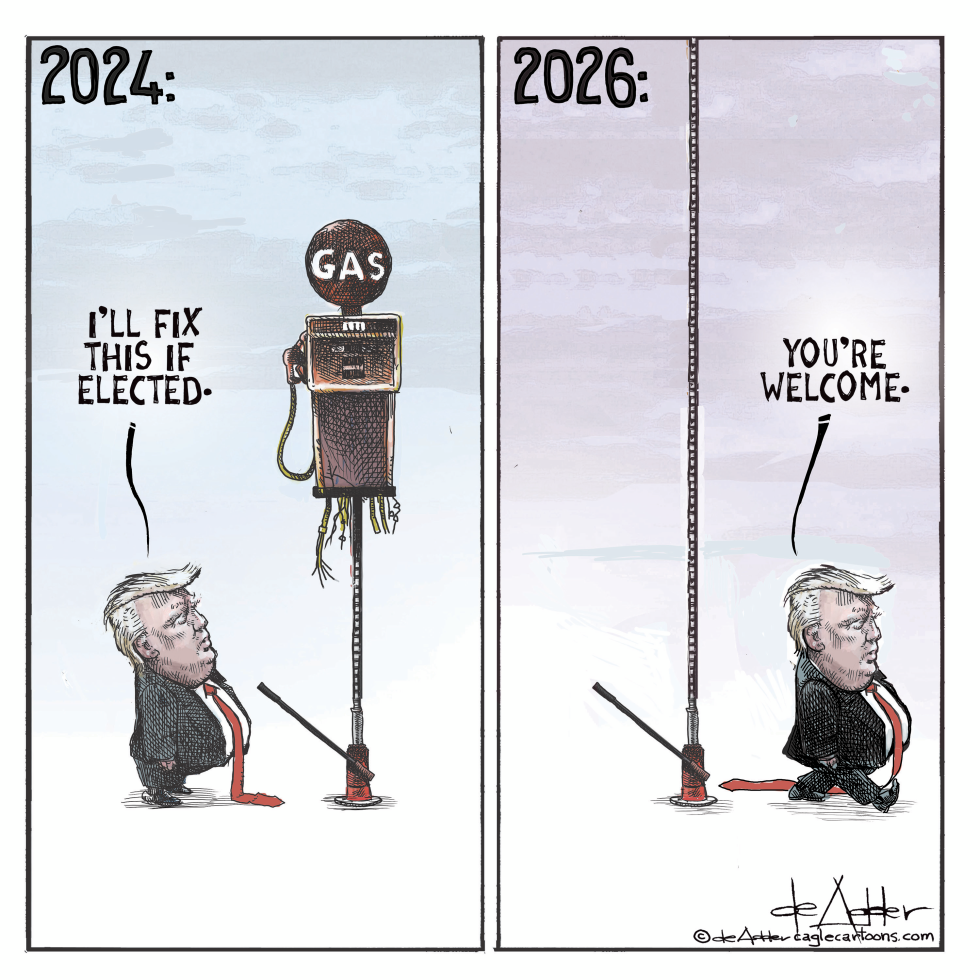
Michael de Adder's cartoon splits into 2024 and 2026 panels, showing a figure resembling Trump addressing a high gas pump with a promise to fix it if elected, tagged with Trump, gas, prices. In the later panel, the same figure pulls the pump down low, saying 'you're welcome,' tying into election, energy, Iran, war themes. The satire highlights contrasts in promise versus action on cost, economy, inflation, oil, barrel issues. This visual commentary underscores political pledges on energy costs, with the figure's actions suggesting a direct, perhaps misguided intervention. Tags like conflict and prices emphasize the economic satire at play.
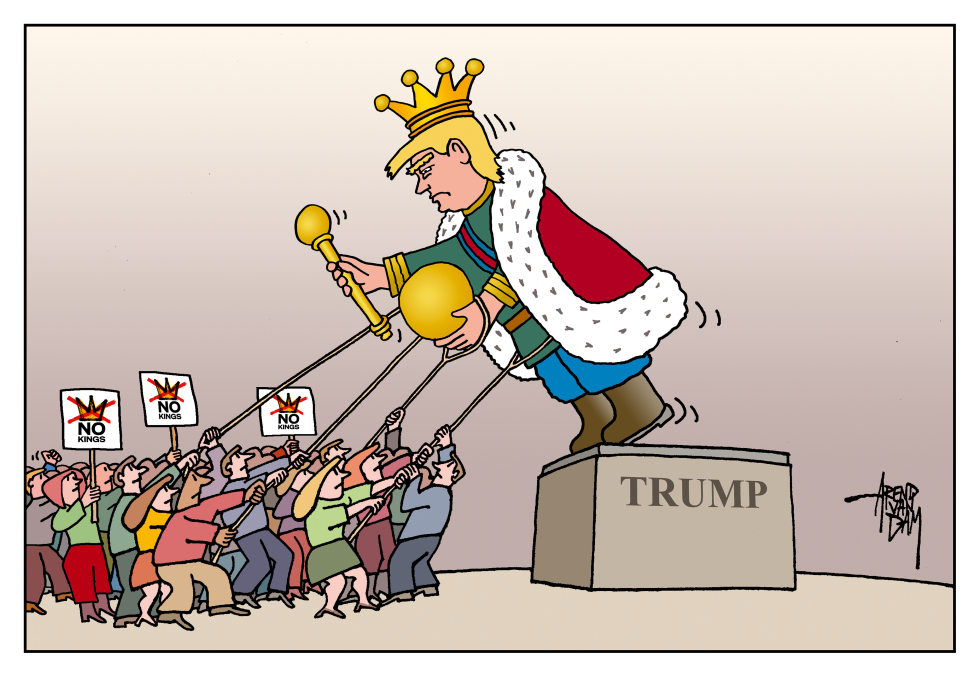
Arend van Dam's cartoon depicts a massive figure resembling Donald Trump, adorned with a crown and royal robe, perched atop a pedestal marked 'TRUMP.' A diverse group of protesters, holding signs reading 'NO KINGS,' 'NO,' and another 'NO,' tug on ropes attached to the figure's scepter, causing it to tilt as if being toppled in an act of resistance. The scene evokes themes of USA democracy clashing with autocracy, portraying a symbolic revolution against a would-be king or dictator. Protests and demonstrations fill the foreground, highlighting public outcry against unchecked power. Dated 2026, the artwork underscores ongoing concerns about authoritarian tendencies in politics.
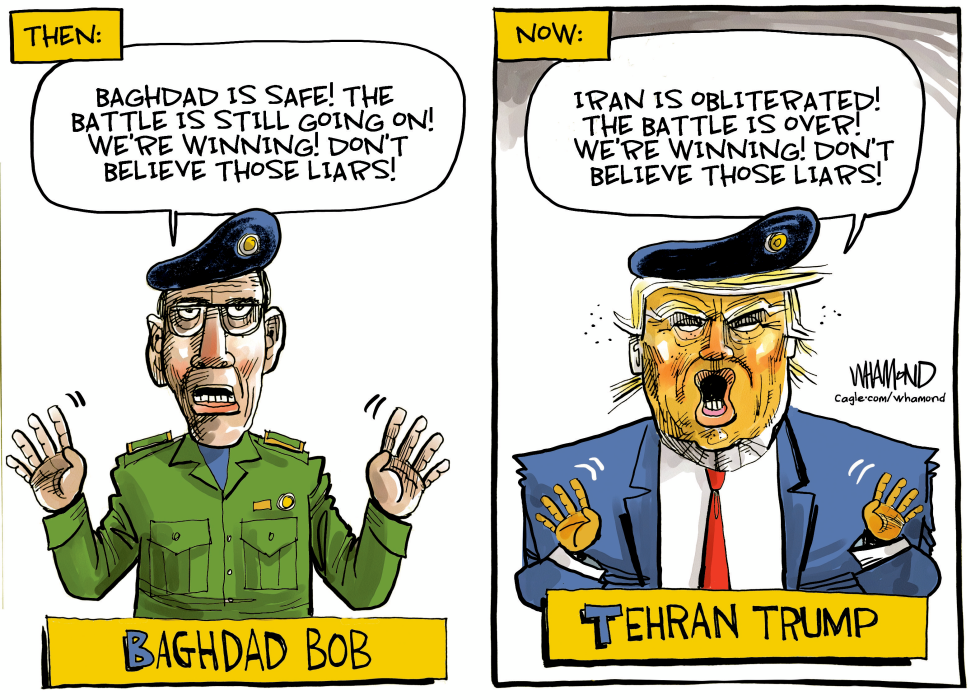
Dave Whamond's political cartoon splits into 'Then' and 'Now' panels, showing Baghdad Bob in military garb proclaiming Baghdad's safety and ongoing victory, dismissing liars. On the right, a Trump-like figure dubbed Tehran Trump, wearing a beret and suit, declares Iran obliterated and battle over, again urging disbelief in liars. The satire underscores parallels in propaganda and denialism, with tags like political satire, Trump caricature, Iraq War reference, Iran conflict, misinformation leaders, and historical parallel. This visual commentary critiques how figures twist realities in wartime narratives, blending dry humor with sharp observation on political exaggeration.
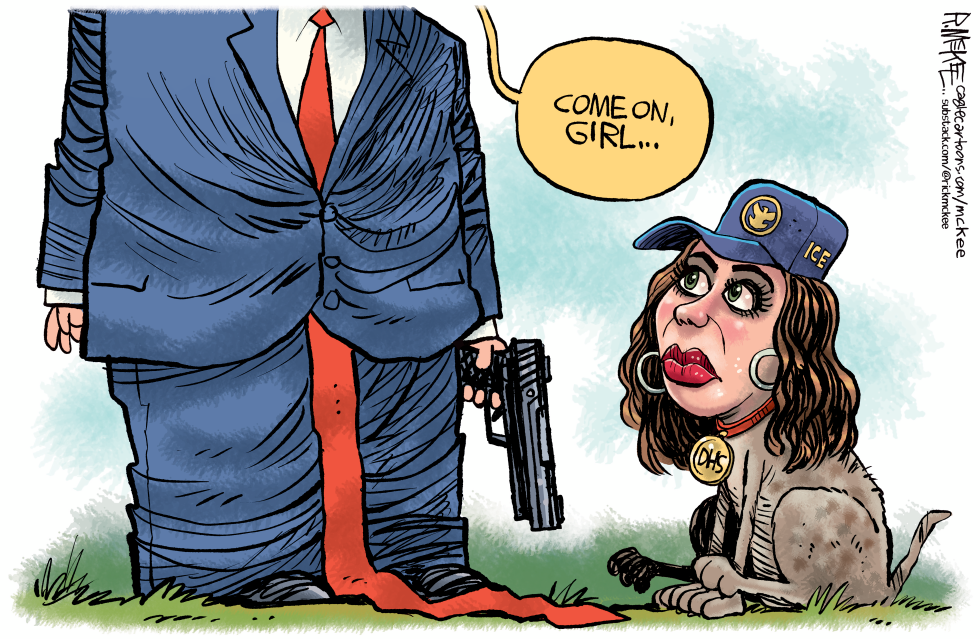
This political cartoon features Donald Trump coaxing a dog-like figure with Alexandria Ocasio-Cortez's face, donned in an ICE cap and DHS tag, gripping a gun on a leash— a sharp satire on immigration enforcement and border control. The image lampoons the Trump administration's hardline stance on deportation and US politics, using caricature to underscore the dehumanizing aspects of border patrol. With elements of political humor, it critiques how figures like AOC are portrayed in opposition, blending viral meme potential with editorial cartoon flair. The scene evokes questions about power dynamics in immigration policy, making it a timely piece for discussions on satire and governance.