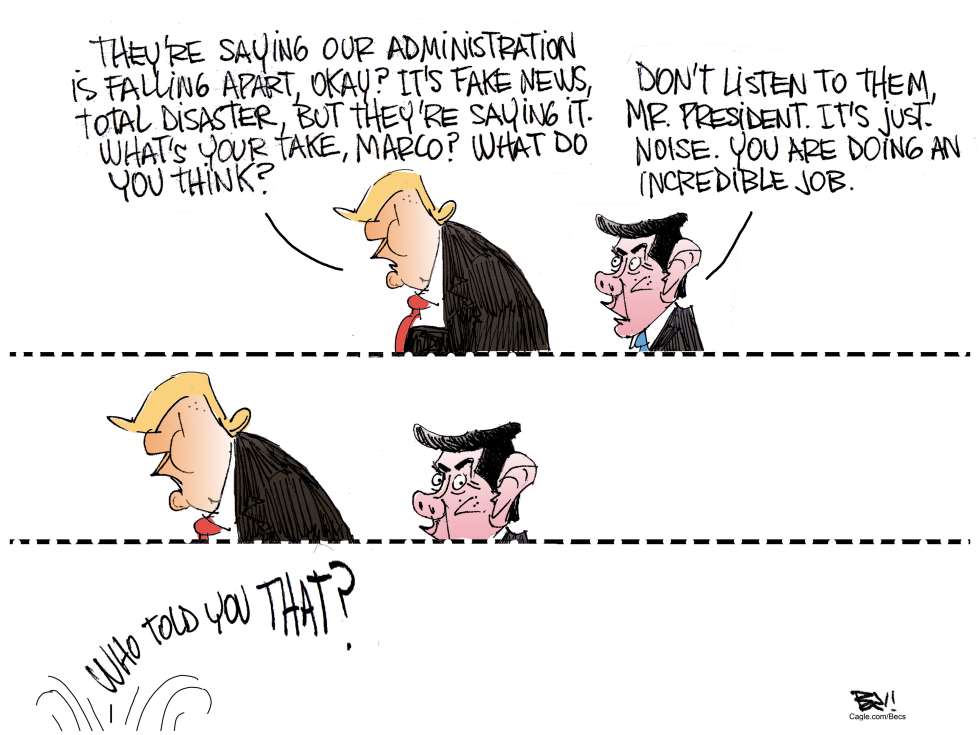
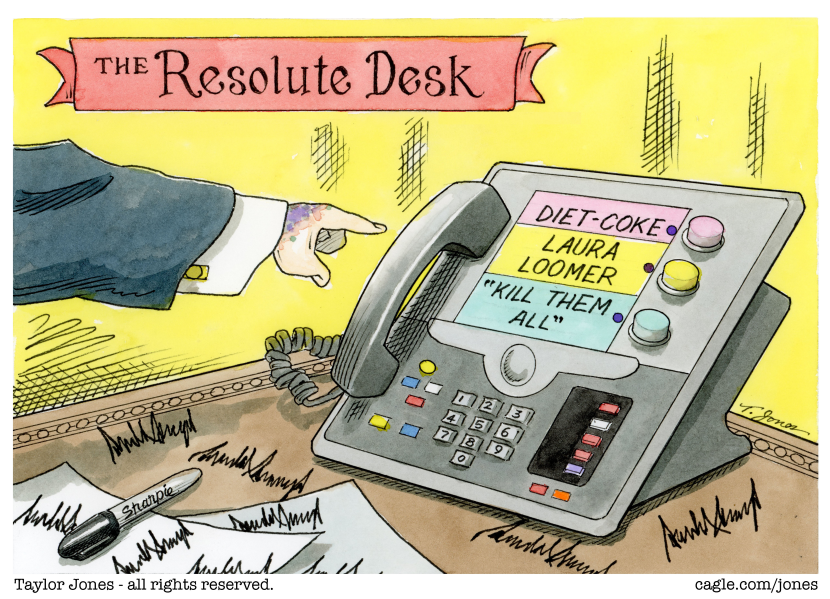
President Trump asked Senator Marco Rubio for his assessment of reports that the administration is in disarray, labeling them fake news. Rubio dismissed the reports as noise and praised Trump's performance. Trump responded by questioning who had told Rubio that assessment. The exchange highlights tensions over loyalty and information flow inside the administration. The cartoon portrays Rubio's positive reply as triggering suspicion rather than reassurance.
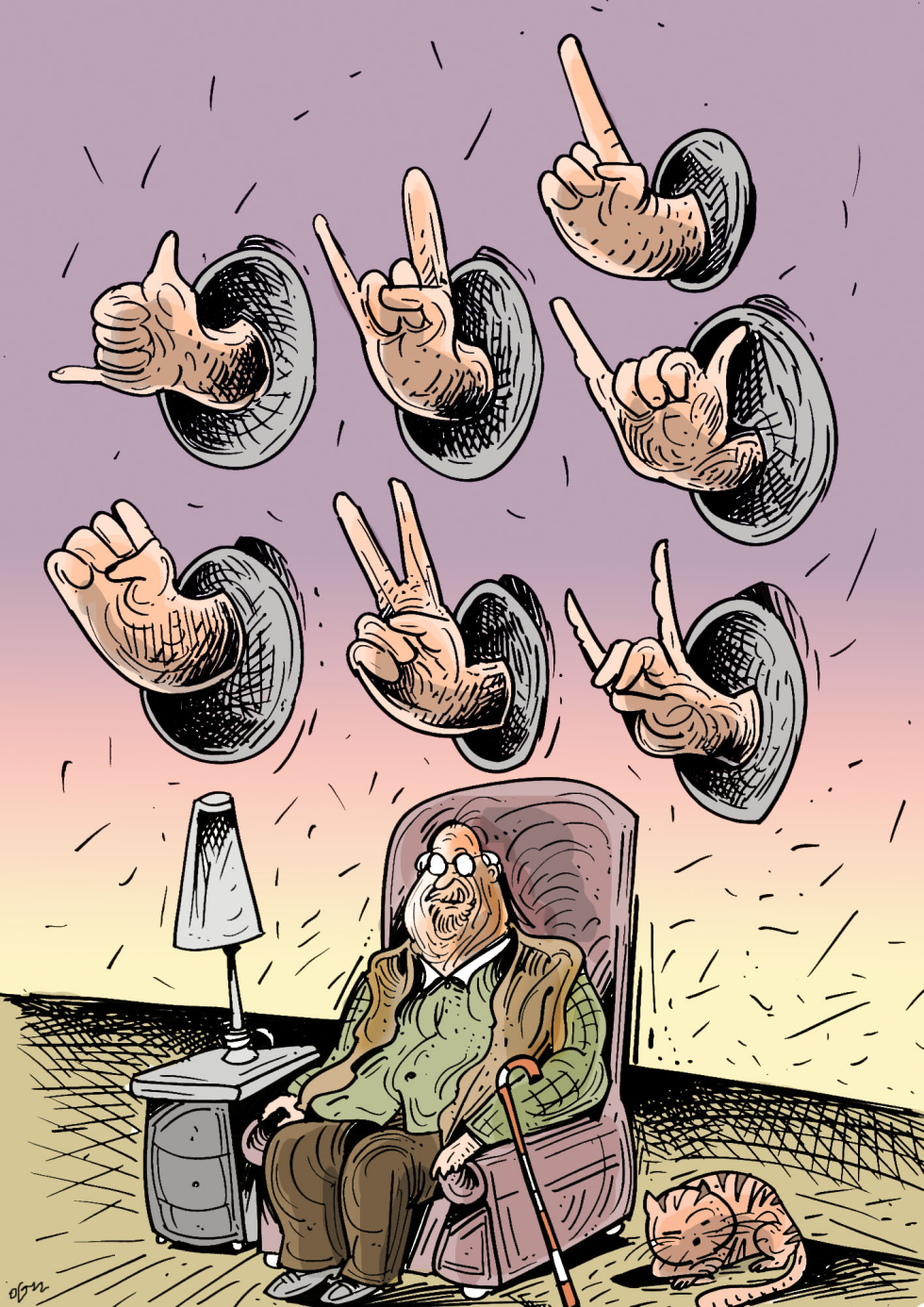
Public figures, particularly older officials in government roles, continue to face intense scrutiny and negative public reaction in 2026. Criticism has intensified through various channels, highlighting frustration with established leadership. The piece portrays an overwhelmed elderly man absorbing a barrage of dismissive gestures, underscoring the editorial view that such backlash reflects legitimate fatigue with unresponsive or out-of-touch figures in power.
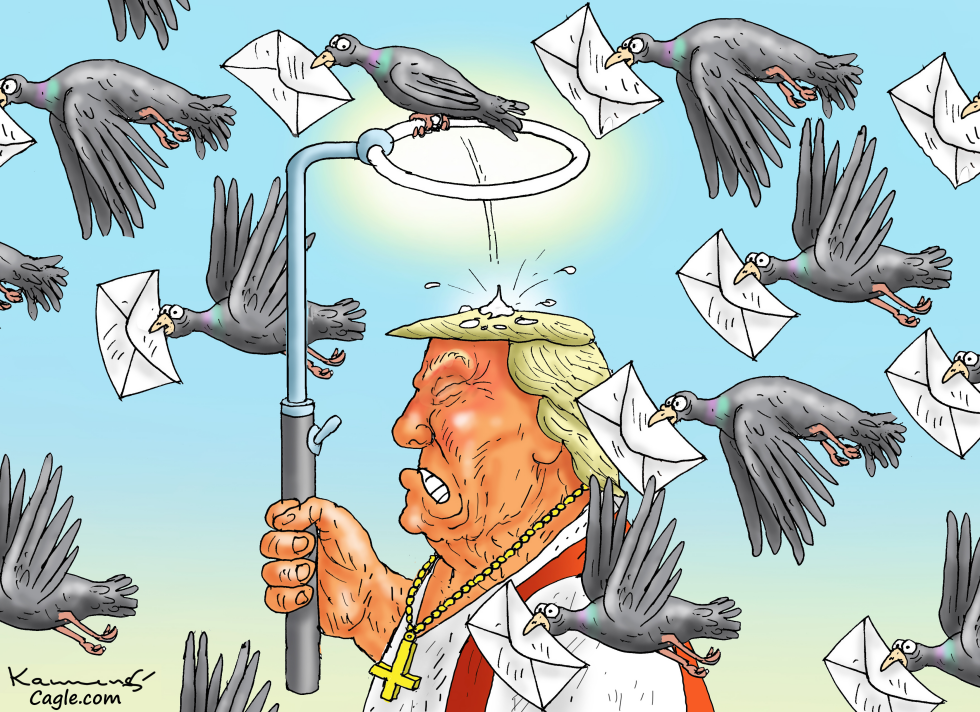
Donald J. Trump continues to draw intense public and political attention in 2026. Recent developments around mail services and communications have placed him at the center of fresh criticism. Observers note the volume of correspondence and commentary directed at him. The editorial position frames these pressures as deserved scrutiny over his conduct and influence.
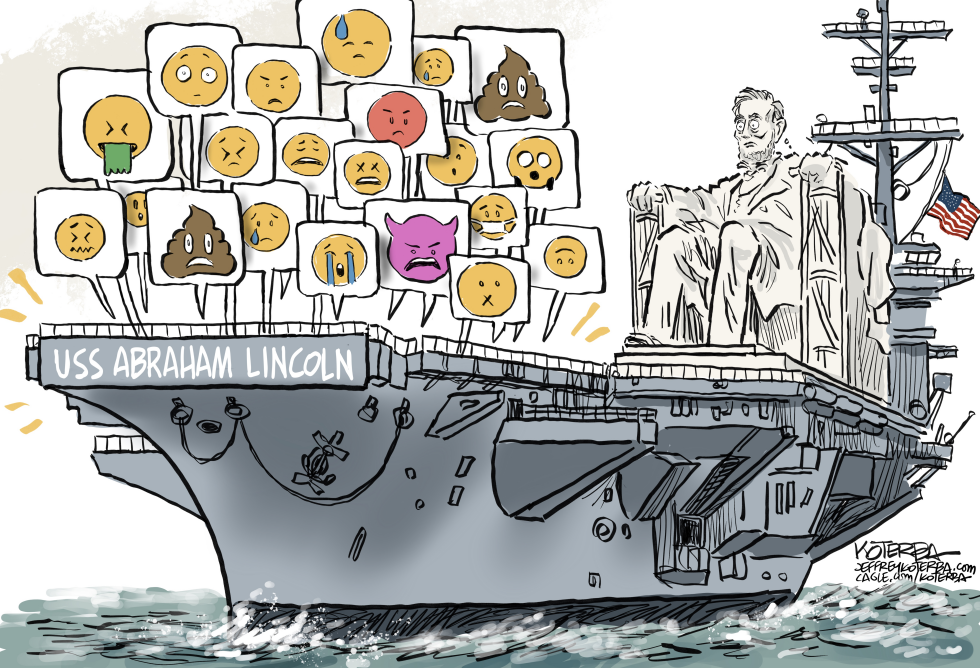
Public reaction to US naval deployments has intensified through social media platforms in recent weeks. Online users have flooded discussions with critical emojis targeting military assets like the USS Abraham Lincoln. The piece portrays this digital deluge as an overwhelming force on longstanding symbols of American leadership and naval power.
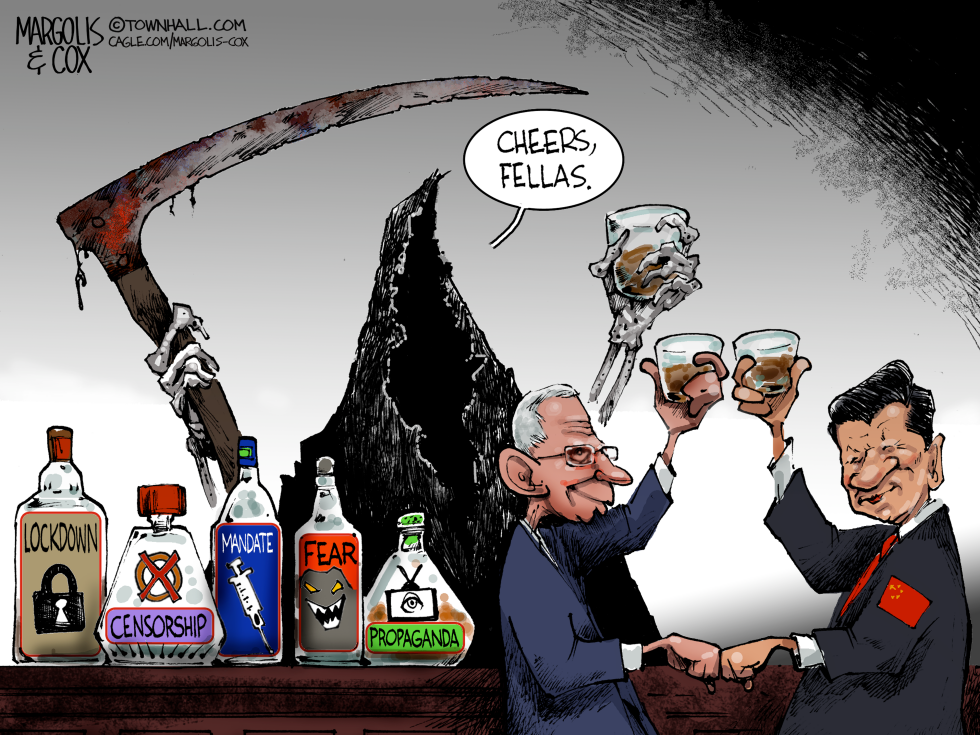
On August 6, 2026, the cartoon responds to lingering debates over COVID-19 policies by depicting former NIAID director Anthony Fauci and Chinese leader Xi Jinping toasting with the Grim Reaper. The image frames pandemic tools as shared instruments of control. The editorial position criticizes both figures for embracing fear-driven measures and information suppression.
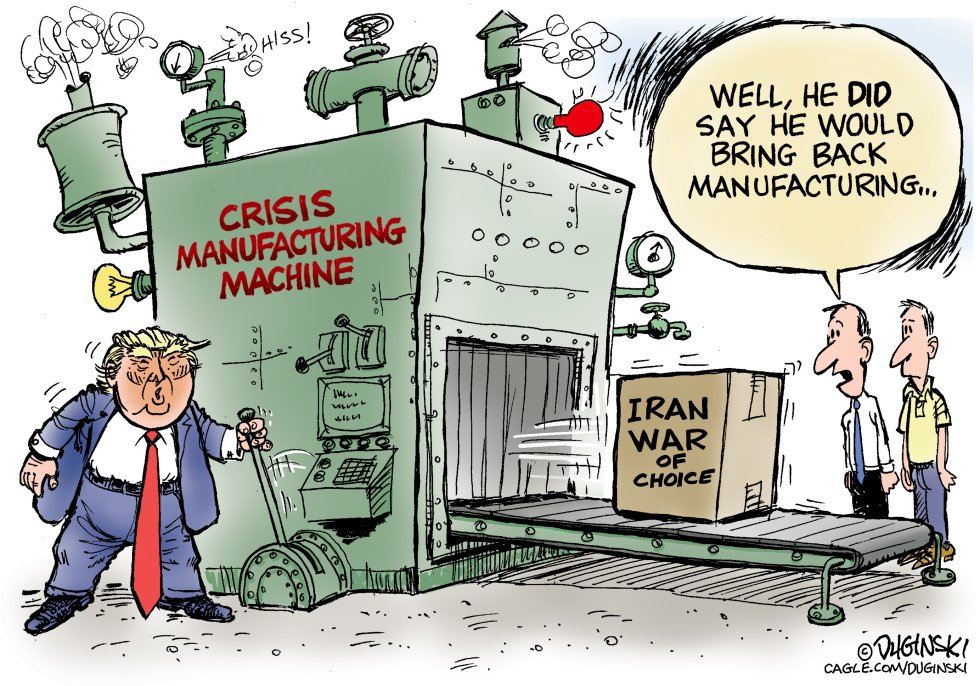
Donald Trump, holding the presidency in 2026, faces renewed scrutiny over foreign policy toward Iran. Recent statements revive campaign pledges to restore domestic manufacturing while tensions with Tehran escalate. The administration\\\'s approach draws criticism for prioritizing confrontation over diplomacy. Observers note the pattern of generating external crises rather than economic gains at home. The cartoon argues that Trump\\\'s actions fulfill a literal version of his manufacturing rhetoric by producing conflict instead of jobs.
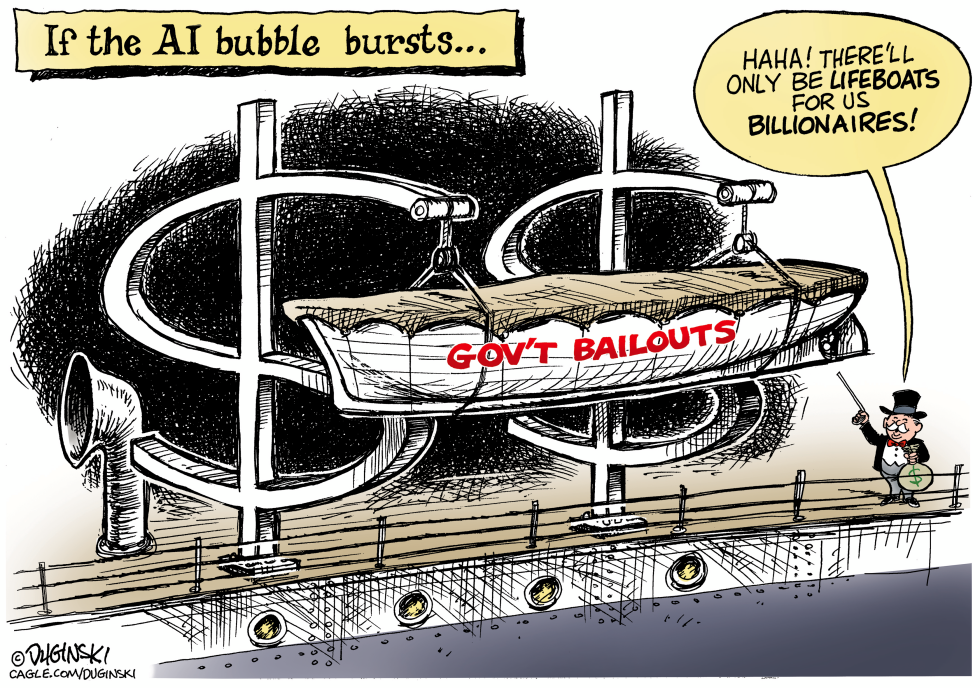
Speculation grows over potential government intervention if the artificial intelligence sector experiences a sharp downturn. Industry leaders and investors face questions about whether public funds would support failing companies. The editorial argues that any such support would primarily protect billionaires rather than address wider economic fallout from overvalued tech assets.
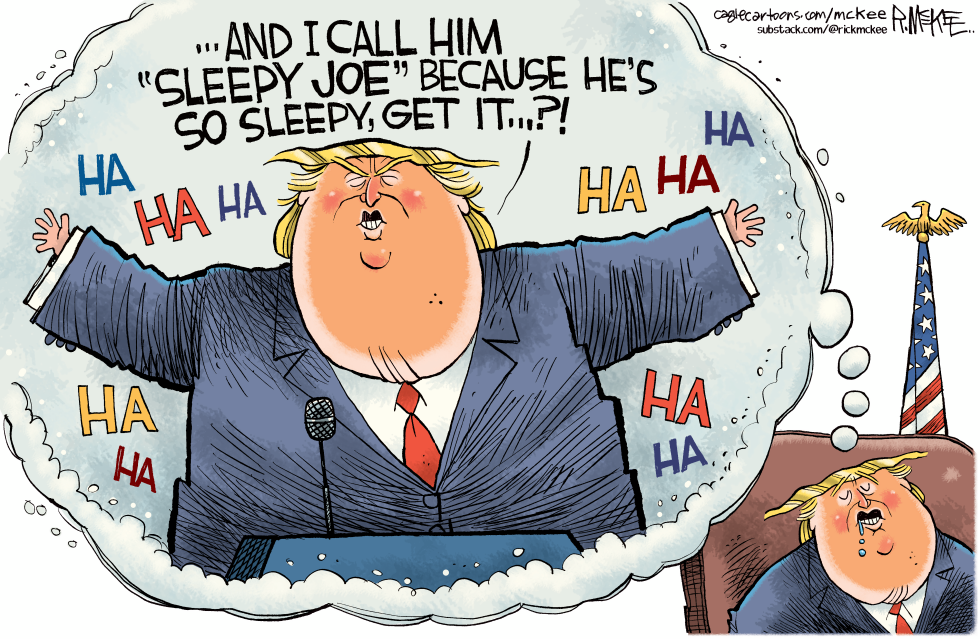
Donald Trump repeatedly labeled Joe Biden 'Sleepy Joe' during the 2024 campaign and beyond. The nickname stuck as a critique of Biden's energy and age. The cartoon responds by showing Trump himself unable to stay awake at the podium, underscoring perceived hypocrisy in the attack.
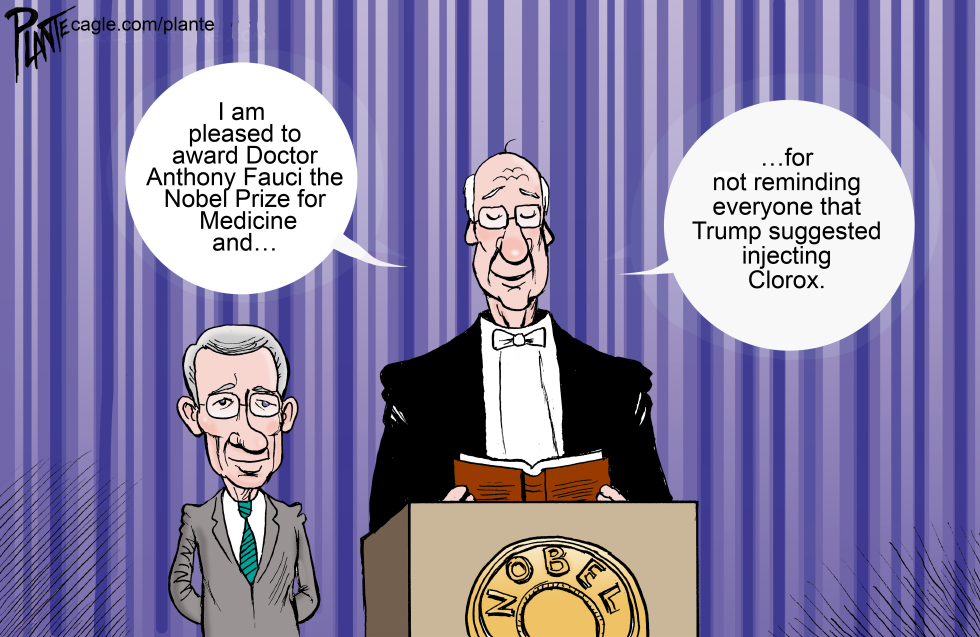
A Nobel Prize presentation for Dr. Anthony Fauci highlights his public health role during the COVID-19 period. The ceremony focuses on his contributions to medicine while avoiding reference to earlier statements from former President Trump about potential treatments. The moment underscores ongoing public debate over pandemic messaging and leadership accountability. The editorial position frames the award as recognition tied to selective memory rather than solely scientific achievement.
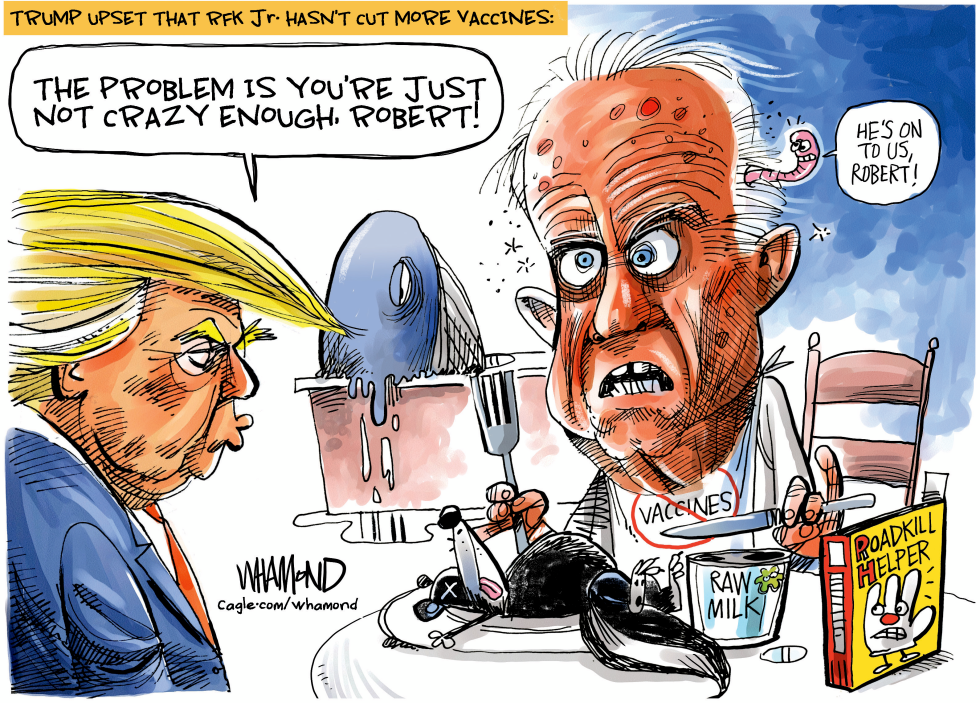
President Trump has expressed frustration with Health Secretary Robert F. Kennedy Jr. over the pace of vaccine policy reductions. The exchange highlights ongoing tensions within the administration regarding public health measures. The piece portrays Trump urging more aggressive action while RFK Jr. appears aligned with unconventional health practices.
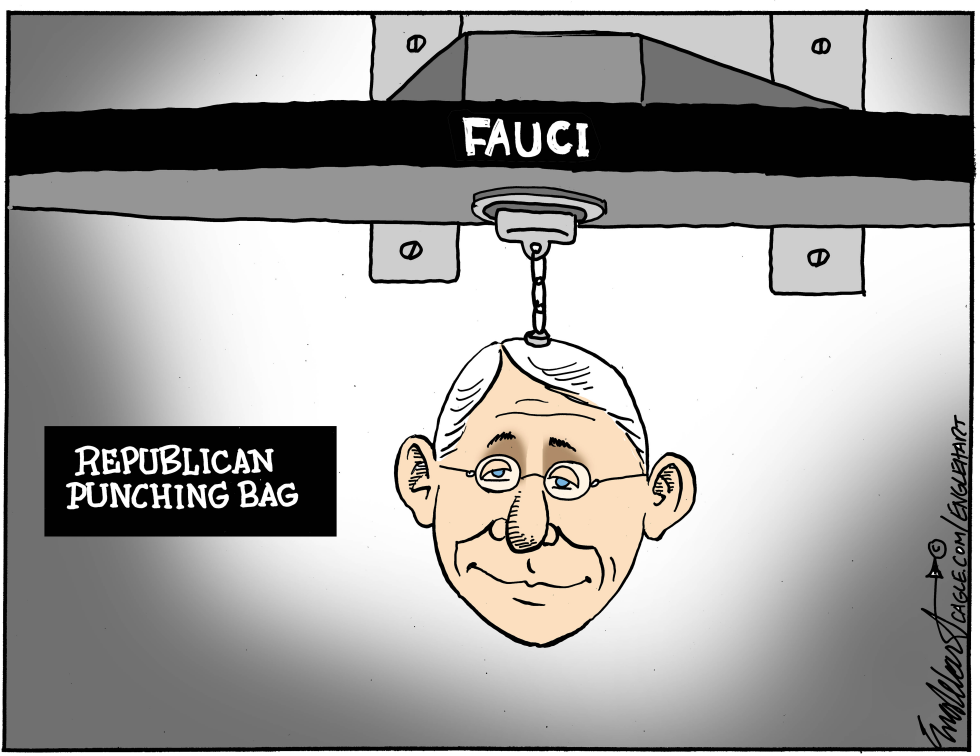
Republicans have long singled out Anthony Fauci for criticism over his role in shaping the nation's COVID-19 response. The pattern of attacks persists years after the height of the pandemic, keeping the former NIAID director in the spotlight. The editorial takes the position that these repeated assaults serve more as political theater than substantive policy debate.
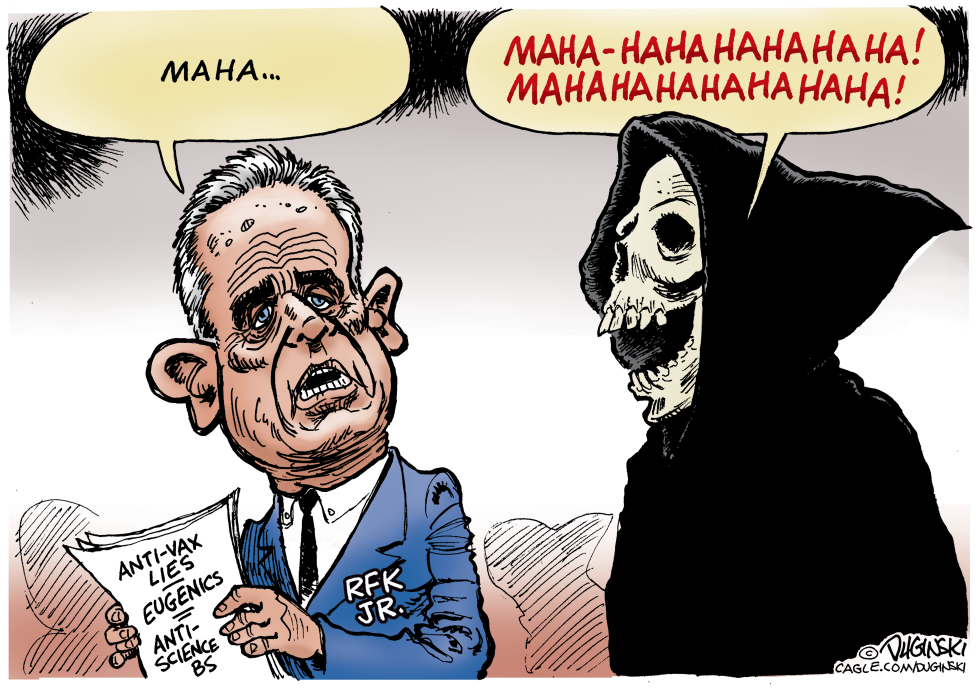
Robert F. Kennedy Jr. continues promoting Make America Healthy Again initiatives tied to his anti-vaccine positions in mid-2026. The approach draws criticism for linking public health measures to eugenics concerns and undermining scientific consensus. The editorial takes the position that such rhetoric risks real harm by eroding trust in established medical guidance.
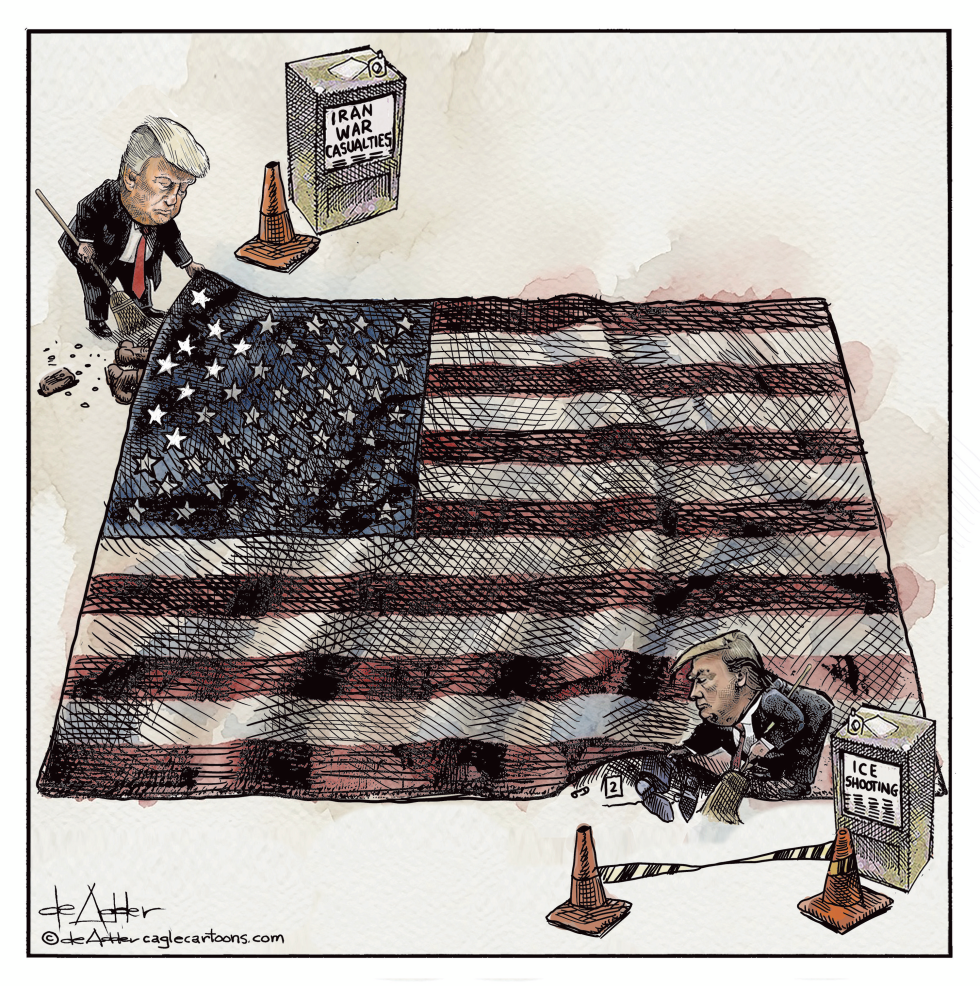
Donald Trump faces scrutiny over reported casualties from potential Iran conflict and an ICE-related shooting incident in mid-2026. The administration's handling of these events draws criticism for downplaying accountability. The piece argues that attempts to minimize these issues undermine public trust in governance.
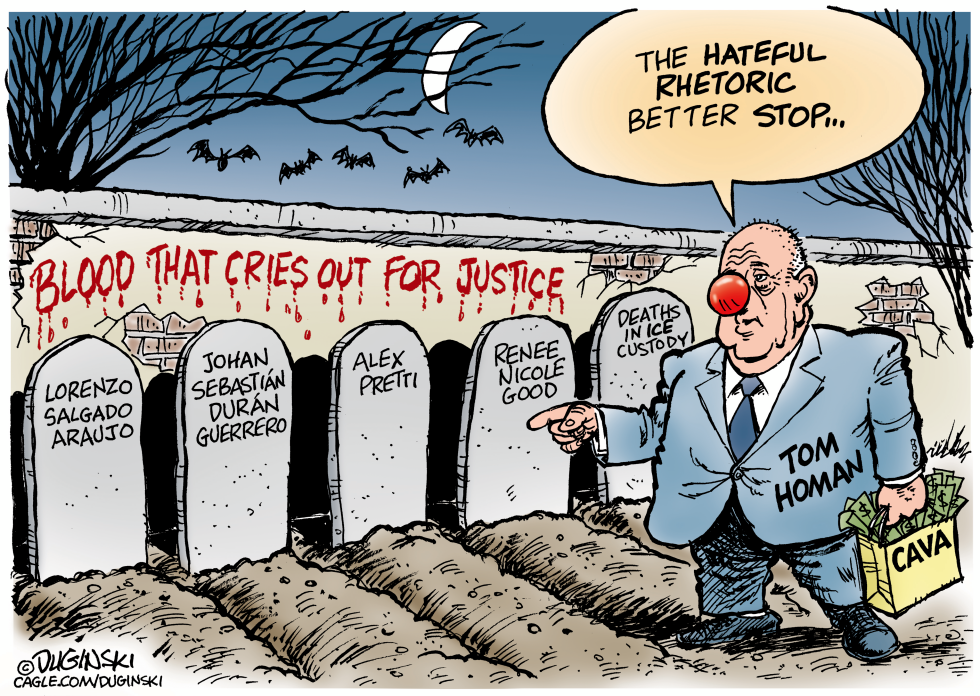
Tom Homan, a key figure in immigration enforcement, drew scrutiny in mid-2026 over inflammatory statements as reports of deaths in ICE custody continued. The piece portrays him dismissing concerns while profiting, arguing that such rhetoric must cease to address accountability in detention practices.
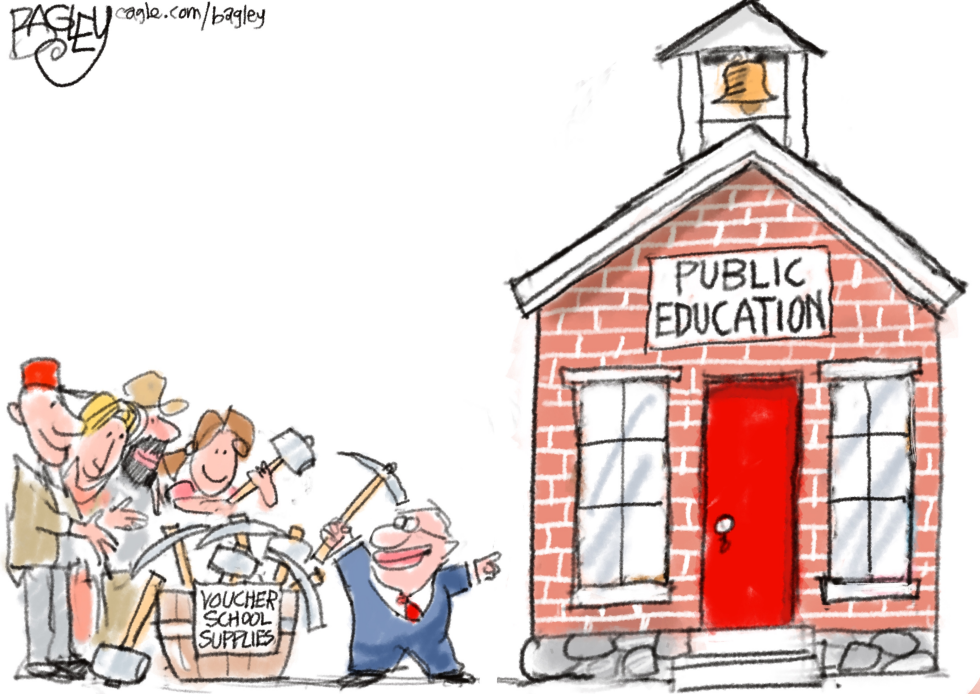
A group of figures equipped with hammers, pickaxes and a bucket labeled voucher school supplies approaches a brick building marked public education. One suited man in the foreground points forward while holding a pickaxe. The July 2026 image from Pat Bagley highlights ongoing debates over school voucher programs and their impact on traditional public schools.