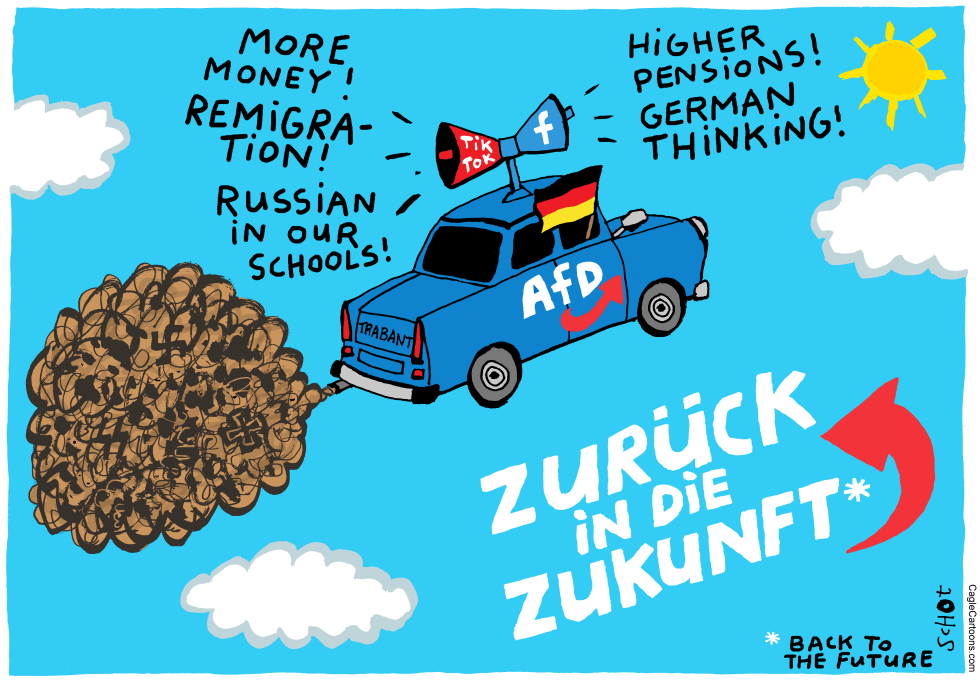
Germany's AfD secured major election gains in 2026 on pledges of remigration, higher pensions and anti-foreign rhetoric. The result raises alarms over the party's tolerance for extremist elements. The cartoon frames the victory as a dangerous retreat into past ideologies rather than genuine progress.
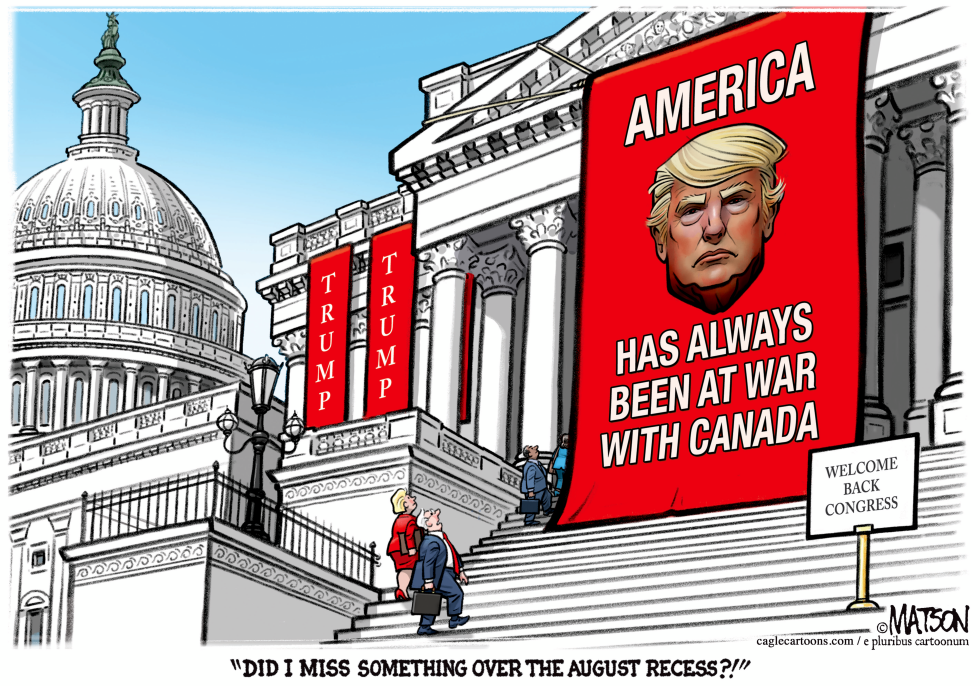
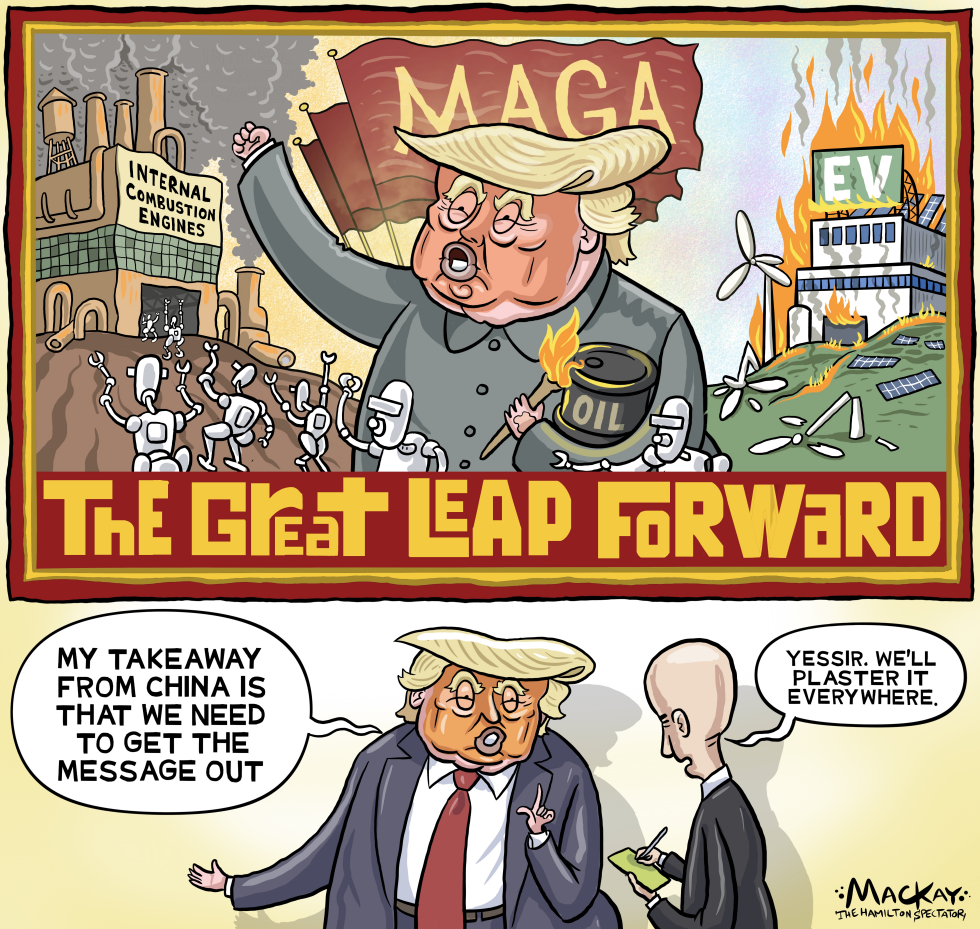
President Trump has intensified trade measures against Canada, prompting comparisons to classic dystopian rhetoric as lawmakers reconvene after the August recess. The move revives long-standing bilateral tensions over tariffs and economic policy. The cartoon frames the development as an attempt to normalize conflict through repeated messaging, underscoring concerns that familiar disputes are being recast as perpetual struggle.
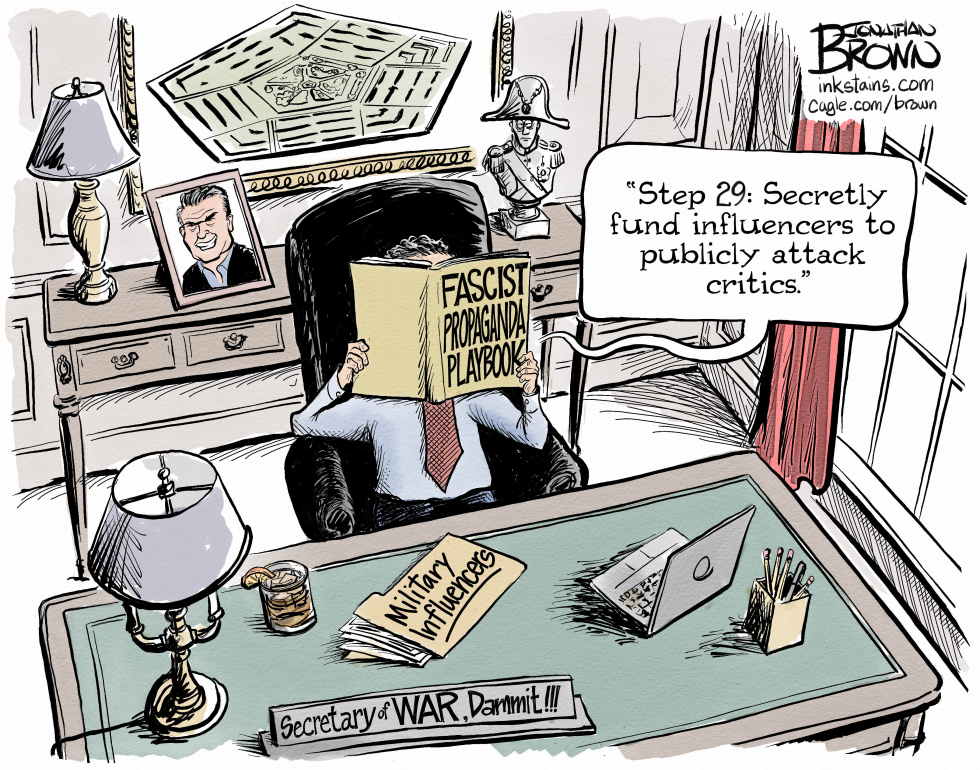
The cartoon shows a government official identified as the Secretary of War seated at a desk while holding open a book labeled Fascist Propaganda Playbook. A speech bubble lists Step 29 about secretly funding influencers to attack critics. Papers on the desk are labeled Military Influencers and a nameplate reads Secretary of WAR, Dammit. The scene includes office items such as lamps, a laptop, and a framed photo. The image responds to concerns over use of military-related influence operations in domestic political disputes.
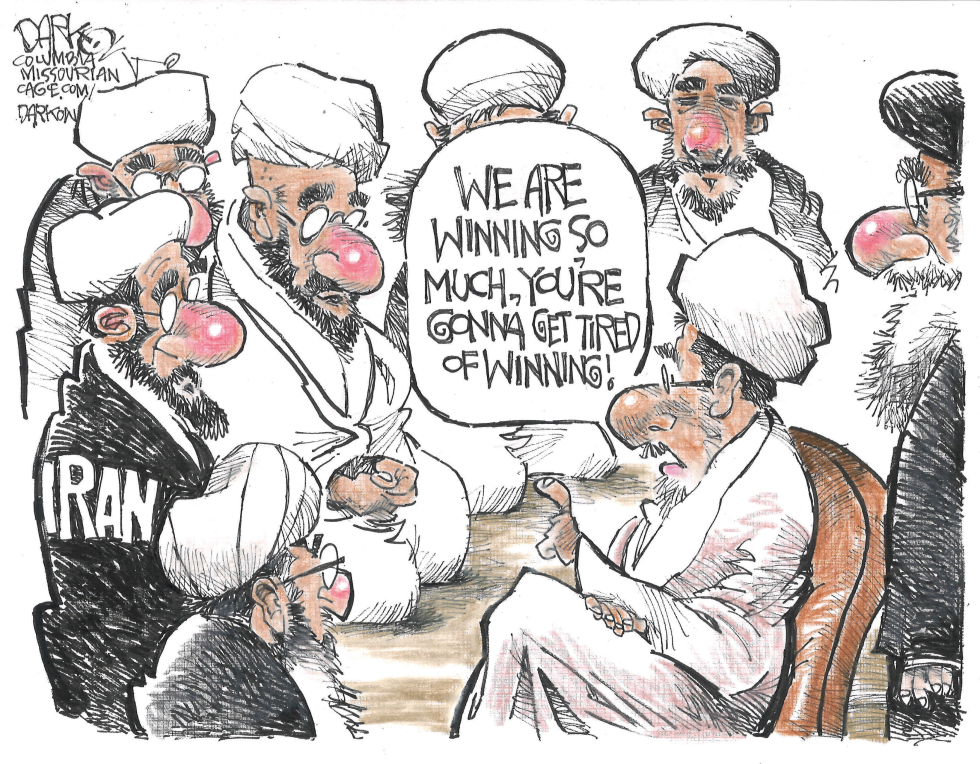
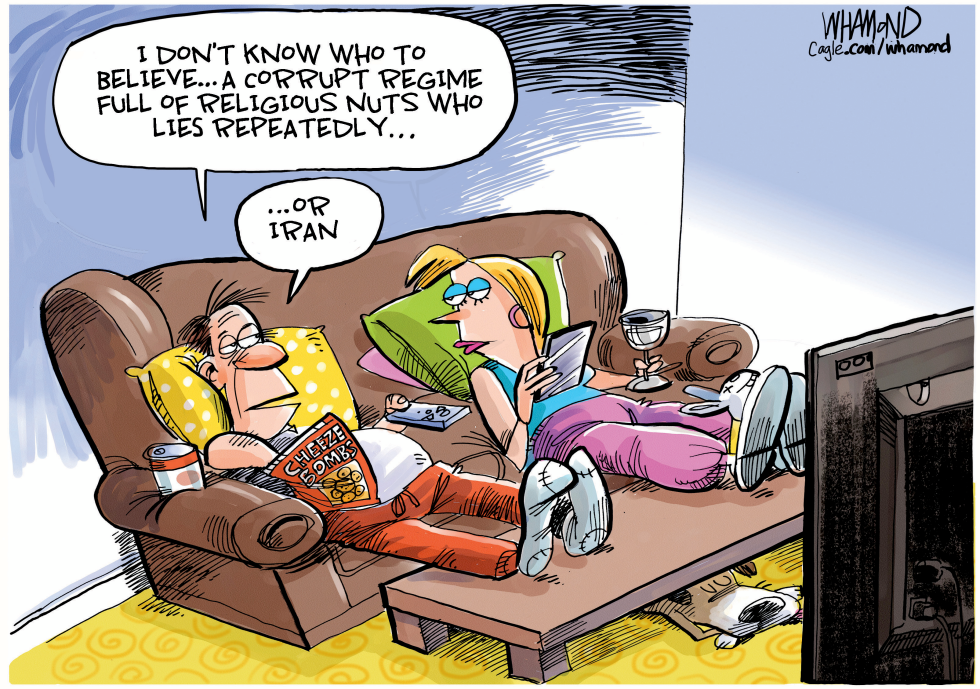
Iranian leaders have repeatedly asserted military and political successes in public statements despite international sanctions and regional conflicts. The claims come as the country navigates tensions with Western powers and neighbors over nuclear issues and proxy activities. Such messaging aims to project strength to domestic audiences. The piece portrays these assertions as overstated and tiresome, drawing a parallel to familiar political rhetoric to underscore their lack of credibility.
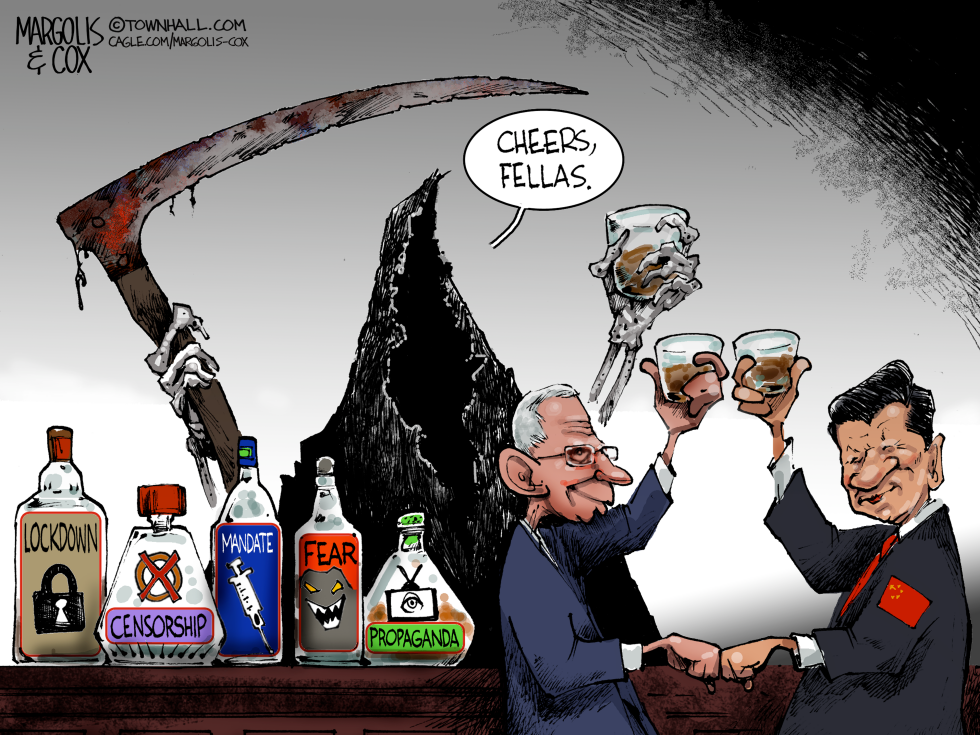
On August 6, 2026, the cartoon responds to lingering debates over COVID-19 policies by depicting former NIAID director Anthony Fauci and Chinese leader Xi Jinping toasting with the Grim Reaper. The image frames pandemic tools as shared instruments of control. The editorial position criticizes both figures for embracing fear-driven measures and information suppression.
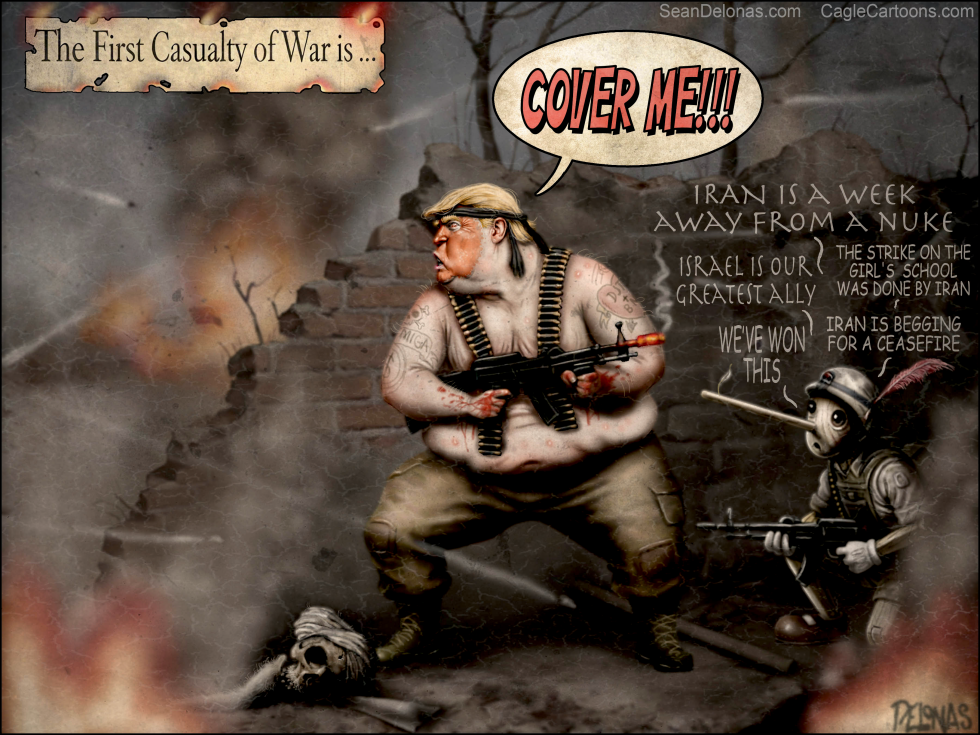
Sean Delonas captures Donald Trump as an overweight soldier in a war-torn scene, yelling 'Cover Me!!!' to a tiny Pinocchio-like ally amid rubble and a skull. The wall bears scrawled lies: 'Iran is a week away from a nuke,' 'Israel is our greatest ally,' 'We've won this,' 'Iran is begging for a ceasefire,' 'The strike on the girl's school was done by Iran.' The banner reads 'The First Casualty of War is...' implying truth's demise. Tags including Trump, Iran War, Lies, Lying, Pinnochio, Military, Propaganda, Iran, International, Israel, Middle East, Policy, Donald Trump, President underscore the critique of wartime deceptions.
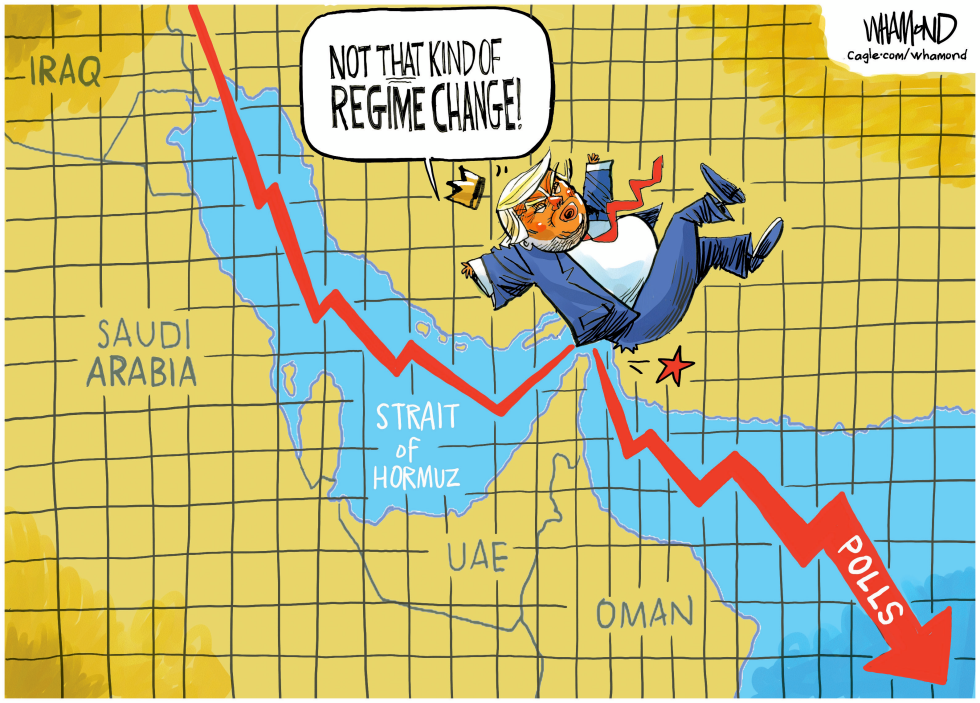
Dave Whamond's Trump regime change cartoon depicts the ex-president caricature plummeting down a jagged red line labeled 'POLLS' across a simplified map of the Persian Gulf region, including Strait of Hormuz, Iraq, Saudi Arabia, UAE, and Oman. The speech bubble exclaims 'Not that kind of REGIME CHANGE!' in a clear pun on foreign policy term versus political fortunes. This political satire captures the visual wordplay with Trump in suit and tie, mid-fall with a starburst impact, against a grid background. The dry humor lands on current events without overstatement, fitting newspaper syndication. Tags like regime change pun, Trump falling polls, Middle East map cartoon, satirical Trump caricature, polls decline illustration, and editorial cartoon Trump downfall emphasize the image's SEO potential.
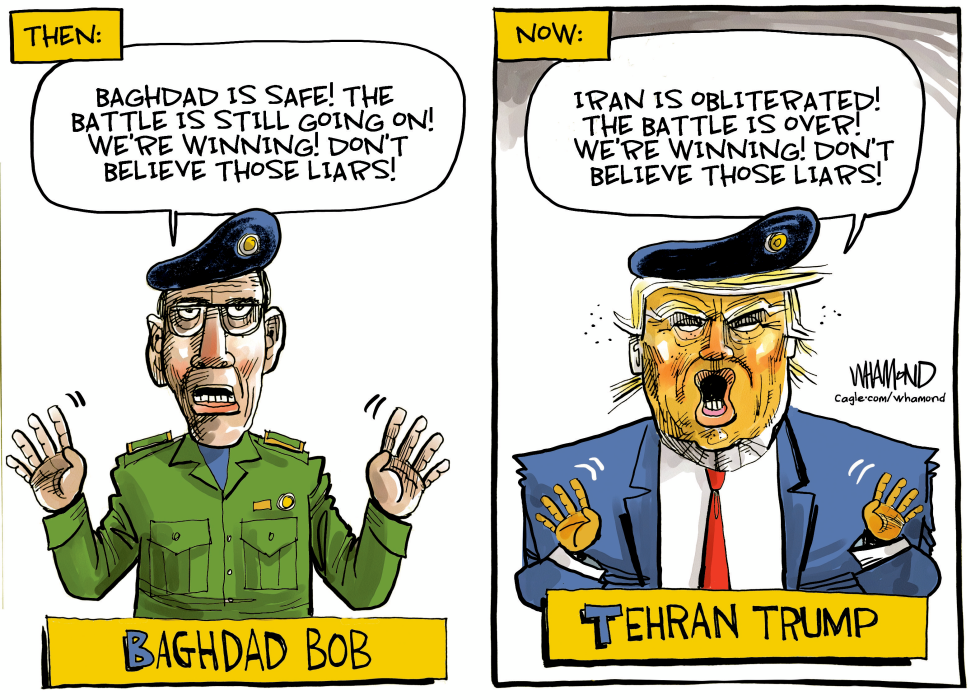
Dave Whamond's political cartoon splits into 'Then' and 'Now' panels, showing Baghdad Bob in military garb proclaiming Baghdad's safety and ongoing victory, dismissing liars. On the right, a Trump-like figure dubbed Tehran Trump, wearing a beret and suit, declares Iran obliterated and battle over, again urging disbelief in liars. The satire underscores parallels in propaganda and denialism, with tags like political satire, Trump caricature, Iraq War reference, Iran conflict, misinformation leaders, and historical parallel. This visual commentary critiques how figures twist realities in wartime narratives, blending dry humor with sharp observation on political exaggeration.