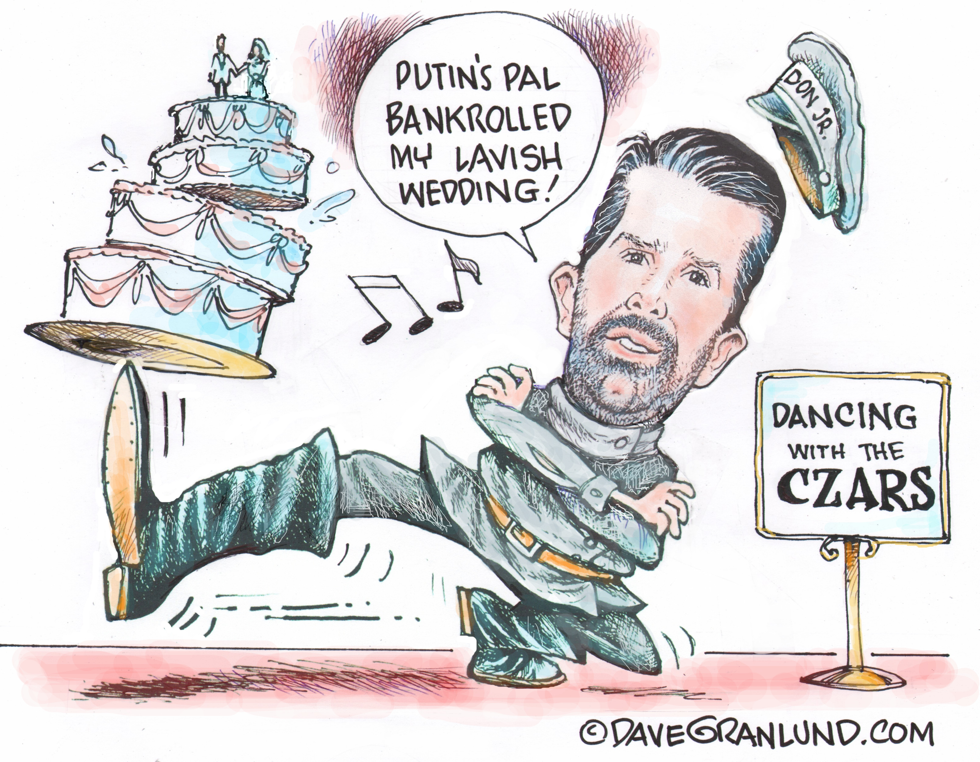
The cartoon by Dave Granlund depicts Donald Trump Jr in a military uniform dancing as a wedding cake collapses. A speech bubble has him claiming Putin's pal bankrolled the lavish wedding. A sign reads Dancing with the Czars. The image responds to ongoing allegations of Russian financial ties to the Trump family. It uses visual metaphors of dance and falling cake to highlight perceived influence. The publication date of September 16 2026 places it in a period of renewed scrutiny over foreign funding in U.S. politics. The work critiques the relationship without naming a single breaking event.
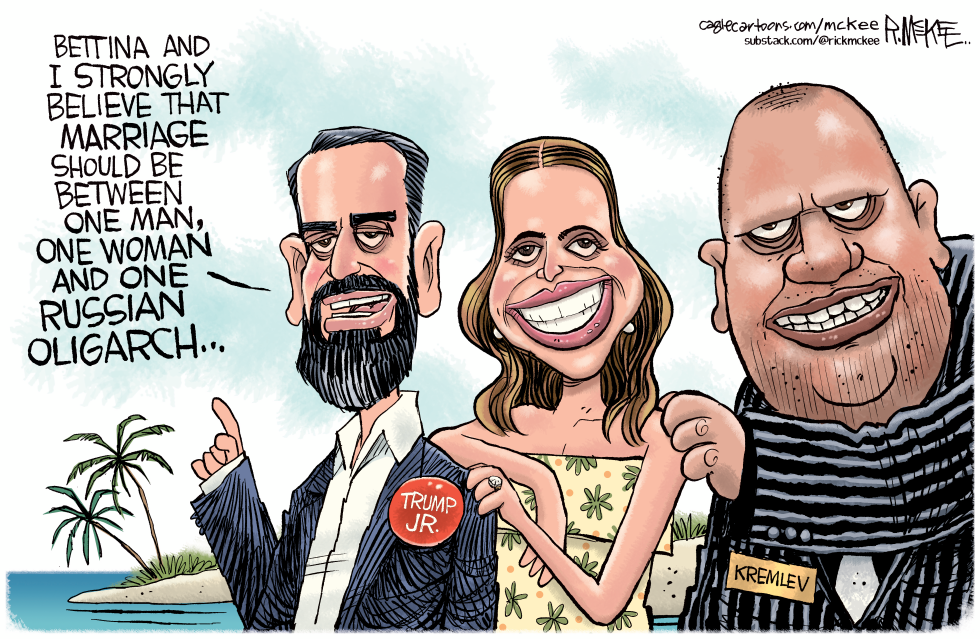
On September 15, 2026, commentary emerged around reports of Russian oligarch involvement in events tied to Donald Trump Jr. and Bettina. The development raises questions about foreign influence on the Trump family. The piece argues such connections undermine claims of independence from external interests.
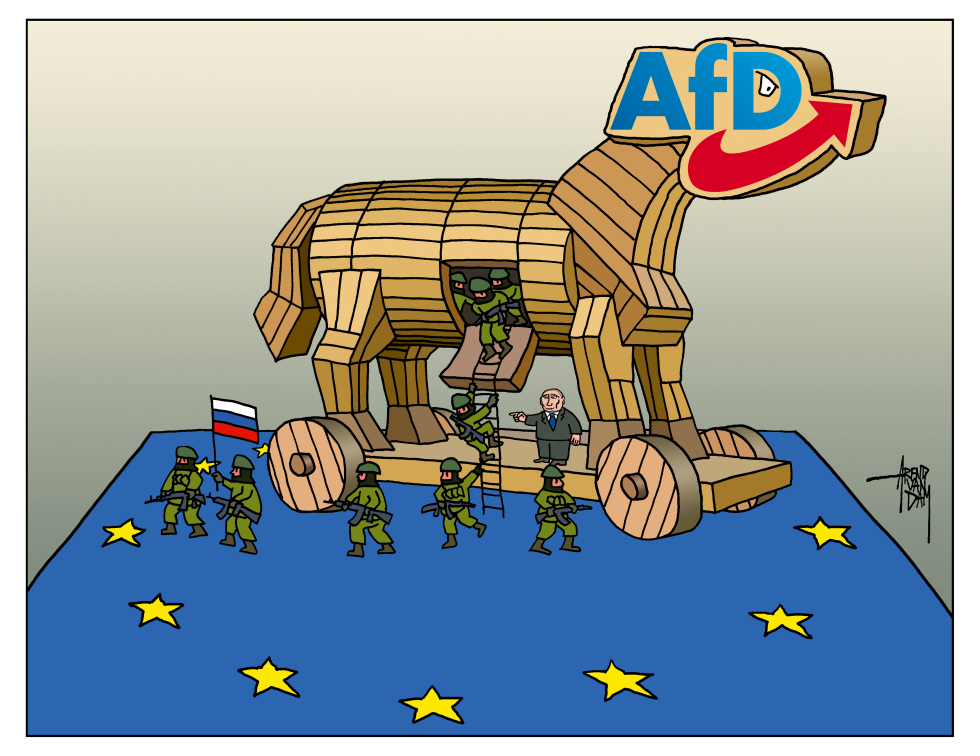
The AfD party in Germany faces accusations of serving as a conduit for Russian influence operations targeting the EU. Vladimir Putin benefits from the far-right group's rising profile ahead of elections, using it to sow division and weaken European unity. The cartoon portrays this dynamic as a classic Trojan horse tactic, with Russian troops emerging from the AfD structure on EU soil. Critics argue the party's policies align too closely with Kremlin interests, undermining NATO and EU cohesion at a critical time. The editorial stance warns that ignoring these ties risks strategic vulnerability for Europe.
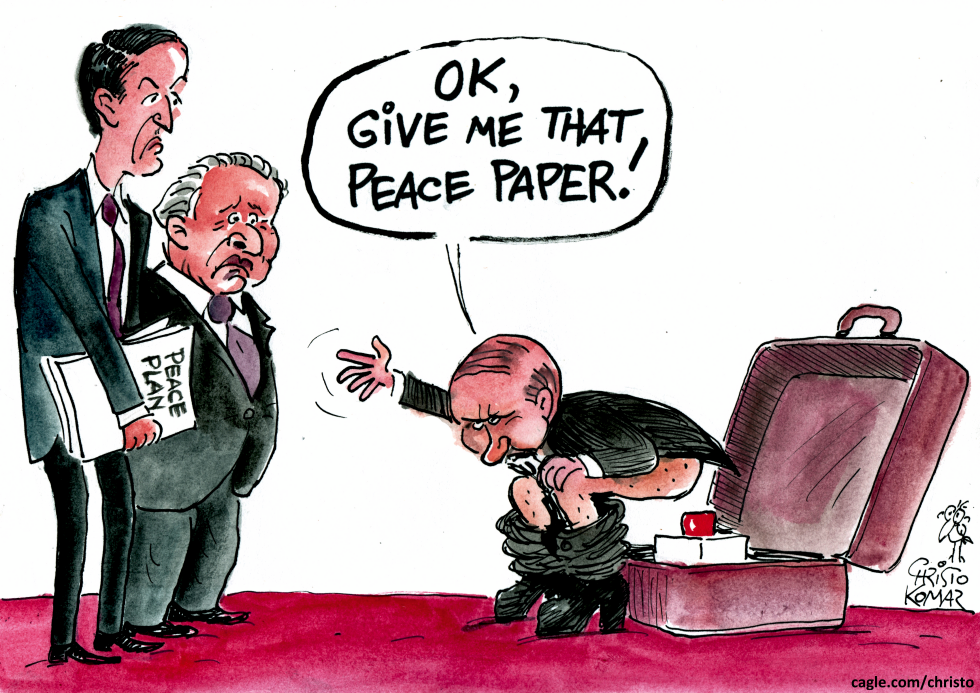
Vladimir Putin has signaled interest in renewed talks to end the war in Ukraine, a conflict that has now stretched for years with heavy costs on all sides. Recent diplomatic overtures have gained little traction as battlefield positions remain entrenched. The cartoon portrays Putin as constrained by his own choices yet eager to claim any available peace document. It underscores the gap between Russian rhetoric and the reality of prolonged fighting. The piece suggests that genuine progress remains unlikely without major concessions from Moscow.
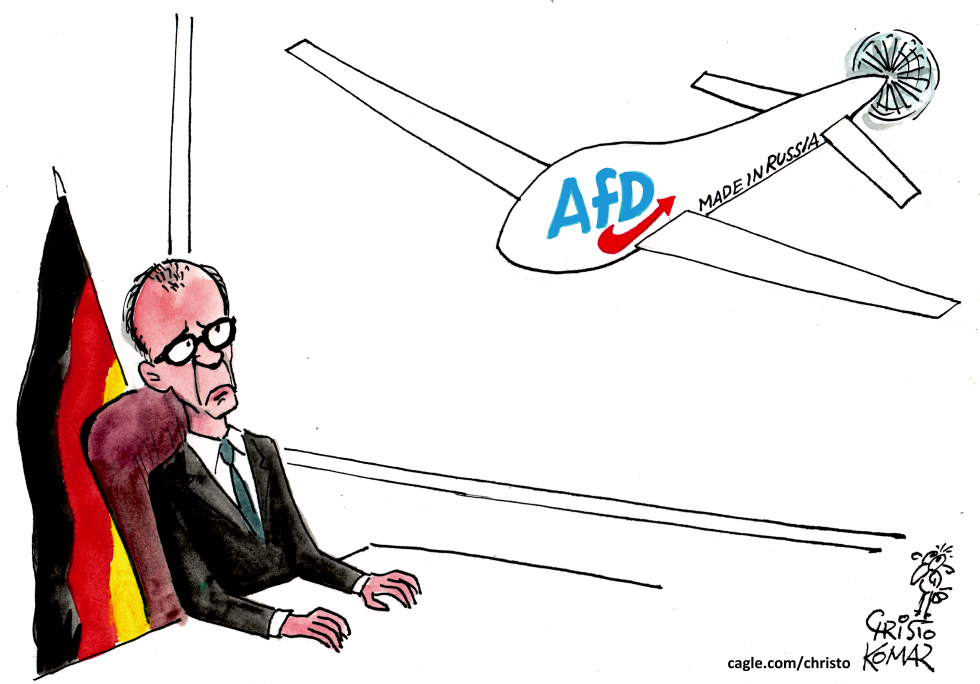
Germany's Alternative for Germany party draws renewed attention for its pro-Russia stance and possible external support. The cartoon uses the image of an AfD-branded plane labeled made in Russia to suggest the party's campaign and positions are shaped by Moscow. This comes amid ongoing debates over foreign interference in European elections and the party's rising poll numbers. Critics argue such ties undermine German sovereignty and democratic processes. The piece takes the view that AfD functions as a vehicle for Russian interests rather than a genuine domestic movement.
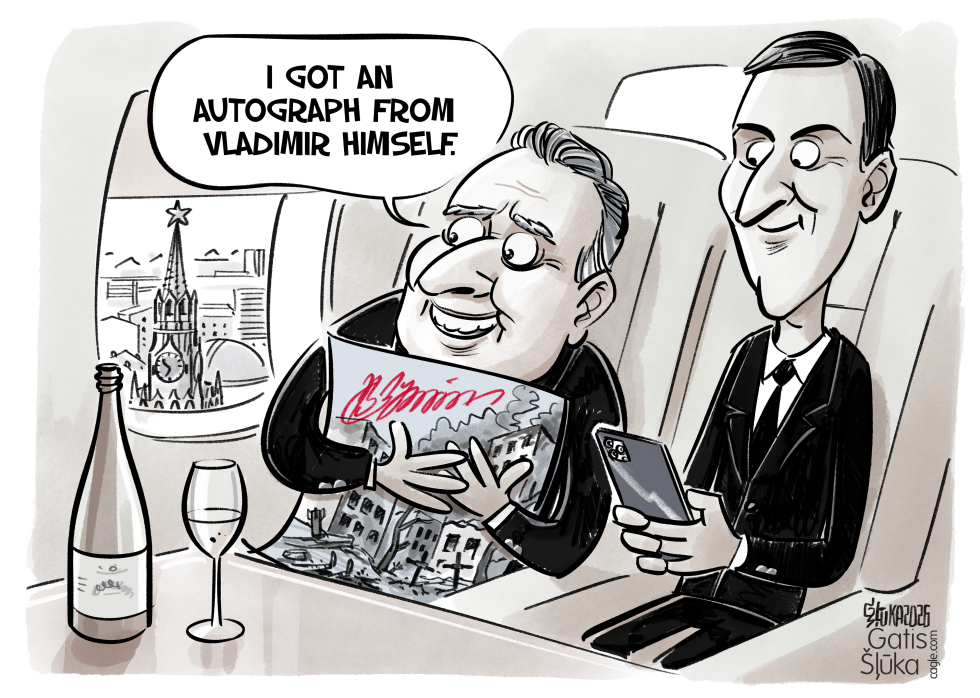
The cartoon depicts a politician on an airplane excitedly showing a colleague an autograph from Vladimir Putin on a book or document. The speech bubble reads that the autograph came from Vladimir himself. A bottle of wine and glass sit on the table, with a view of a city featuring a star-topped tower outside the window. The second man smiles while holding a phone. Published on September 7, 2026, the image comments on political figures maintaining or displaying ties to Russia despite international strains. The visual emphasizes the politician's enthusiasm for the souvenir as a point of pride.
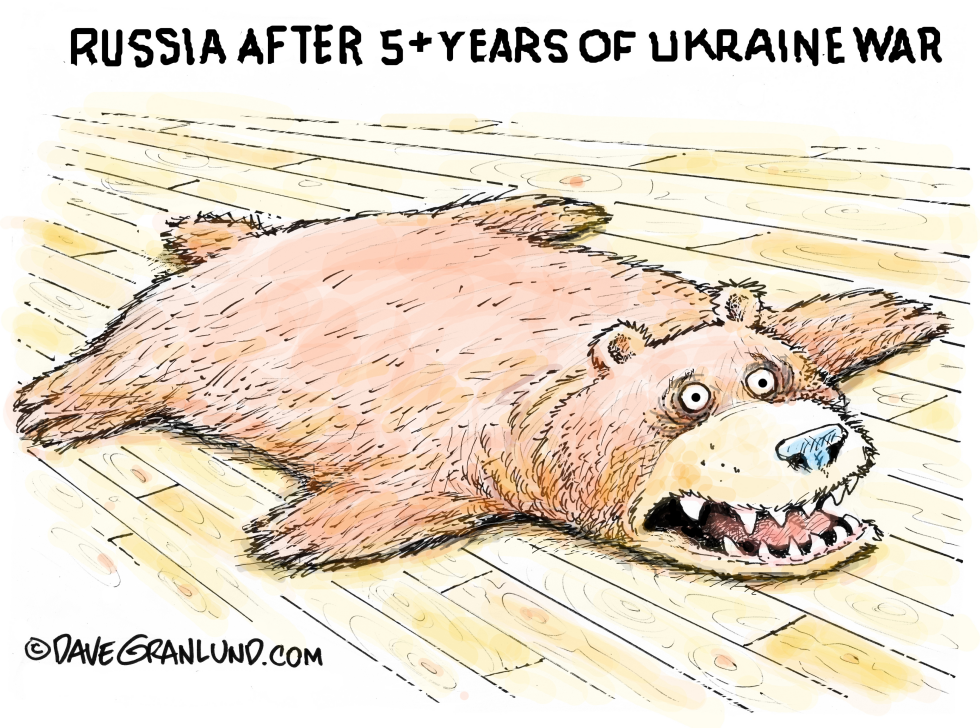
The cartoon depicts Russia as a large brown bear sprawled on a wooden floor, its eyes wide and mouth open in a weary expression. The title directly references the ongoing Ukraine war after five years. This visual metaphor illustrates the strain on Russia from the prolonged conflict. The drawing responds to the extended nature of the war that began in 2022 and continued into 2026. It highlights how the invasion has left Russia in a weakened state without resolving the underlying issues.
Russian President Vladimir Putin and former President Donald Trump are shown aiding Germany's AfD party in the run-up to elections. The piece argues that external interference from these figures is boosting the far-right German party while harming domestic U.S. political elements.
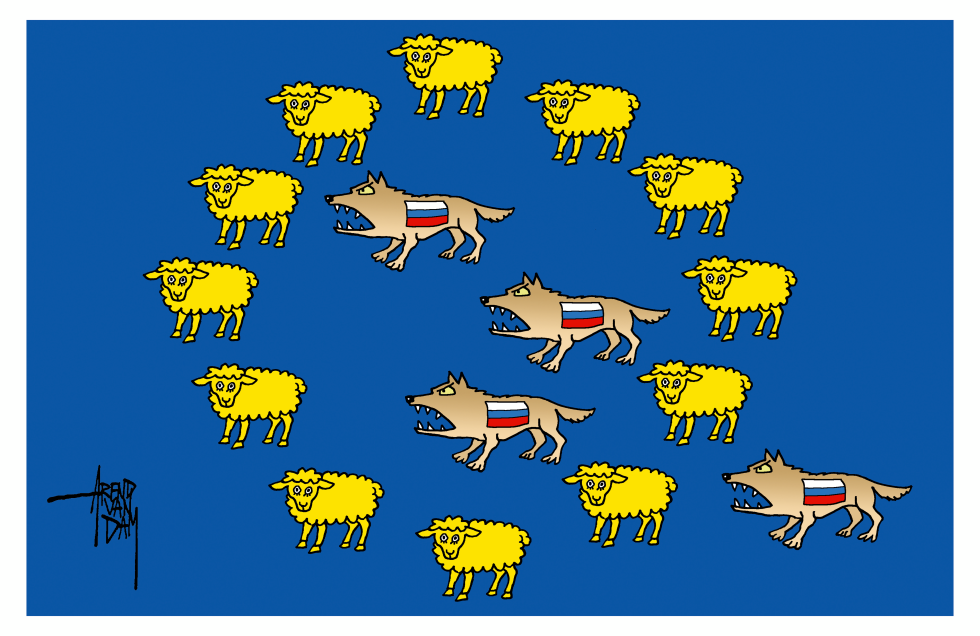
Russian hybrid warfare operations continue to target Eastern European nations through infiltration and influence campaigns. These tactics blend conventional pressure with covert actions to destabilize neighbors without triggering full-scale conflict. The editorial argues that European states must recognize and counter these disguised threats before they erode security further.
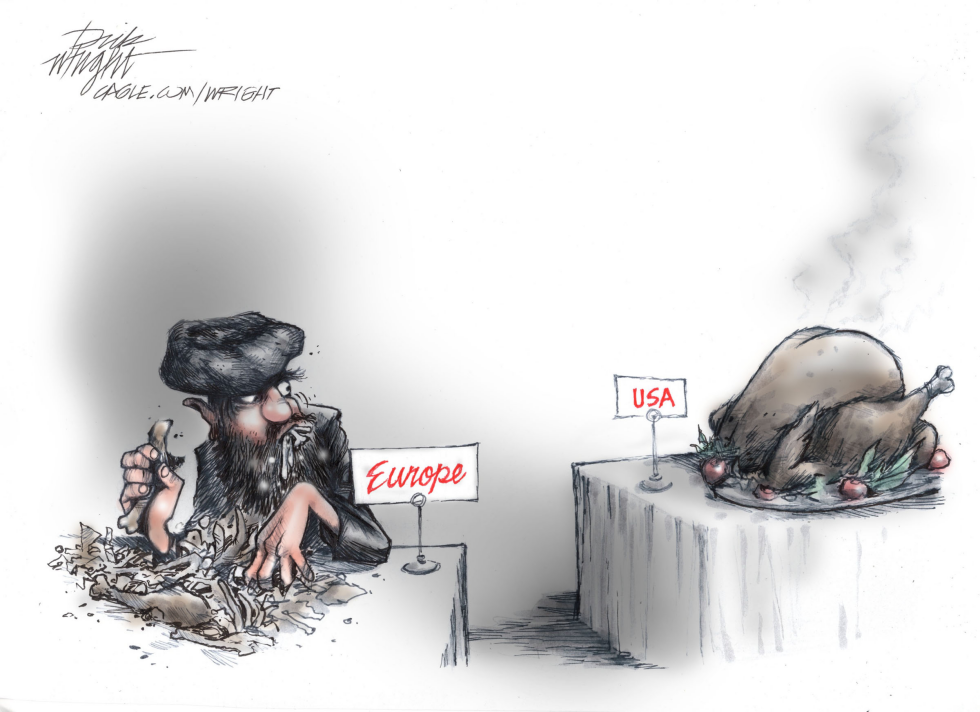
A foreign leader has stripped Europe bare and now eyes the United States as the next prize. The piece argues that unchecked expansionist momentum threatens American security and global stability.
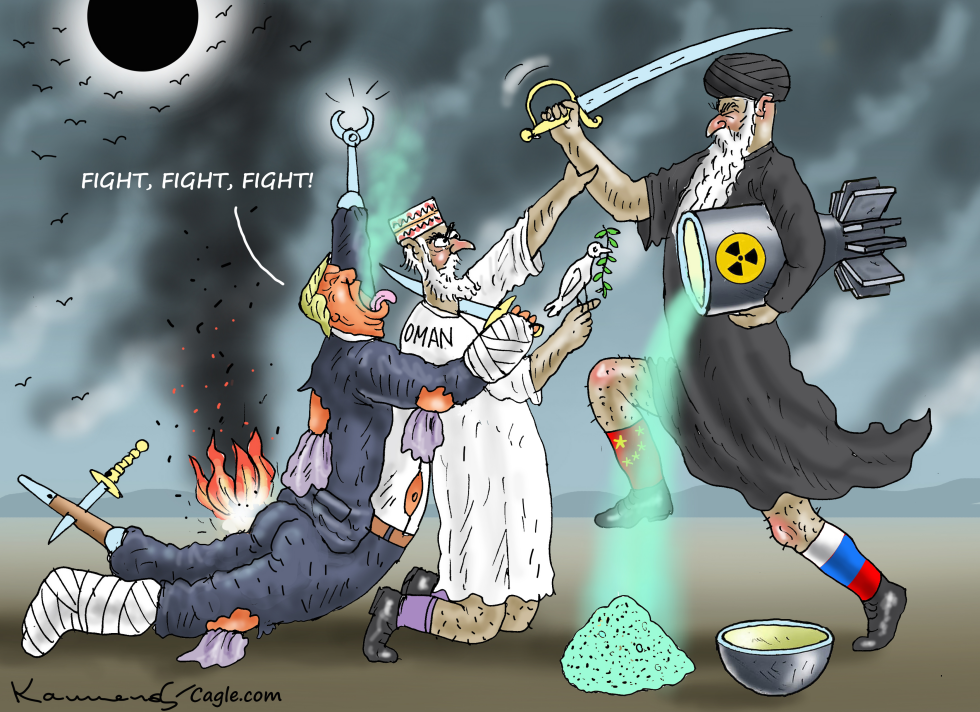
A confrontation involving the former president unfolded in Oman amid regional tensions with a nuclear capable participant. The incident highlights ongoing friction in Middle East diplomacy and arms concerns. The piece portrays the event as a chaotic clash where peace efforts compete with aggressive posturing.
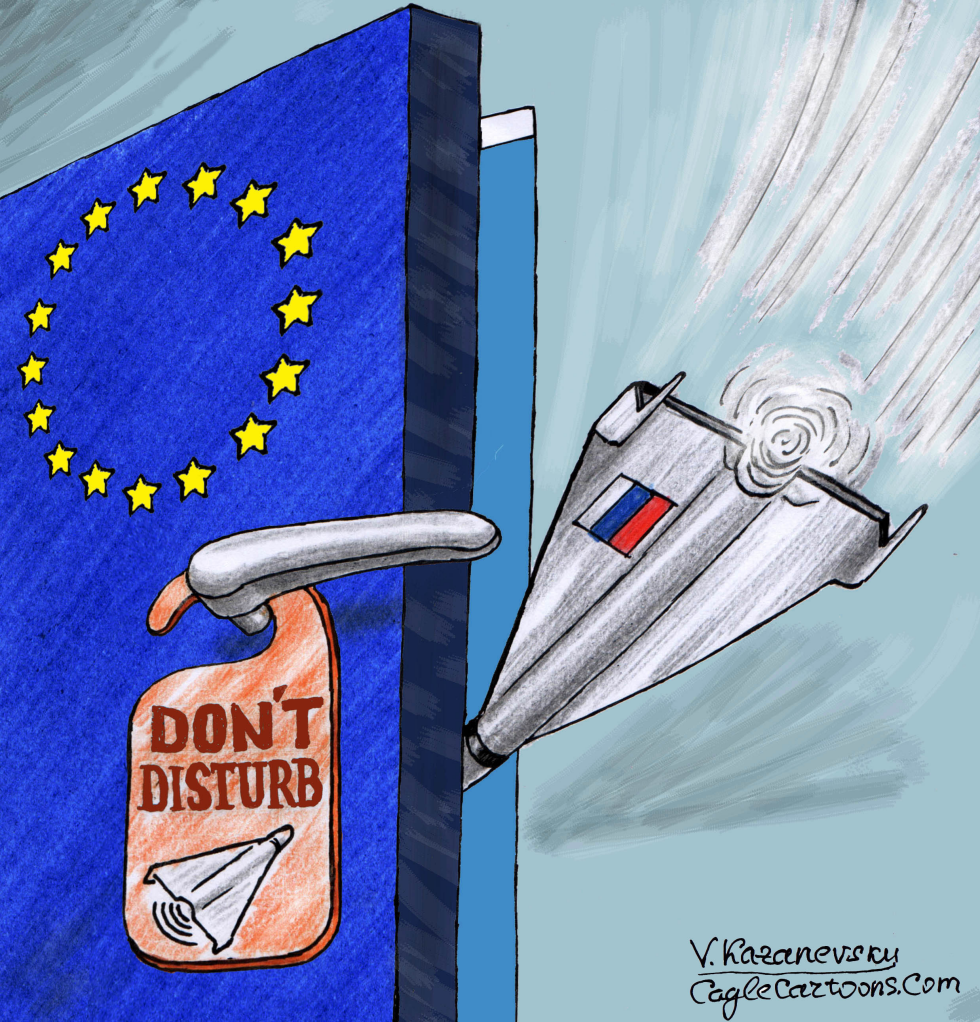
A Russian drone has breached an EU doorway in a symbolic incident highlighting ongoing security concerns from Moscow's actions near European borders. The event underscores vulnerabilities in continental defense amid the protracted Ukraine conflict and repeated airspace violations. The piece argues that EU warnings and isolation measures prove insufficient against persistent Russian incursions.
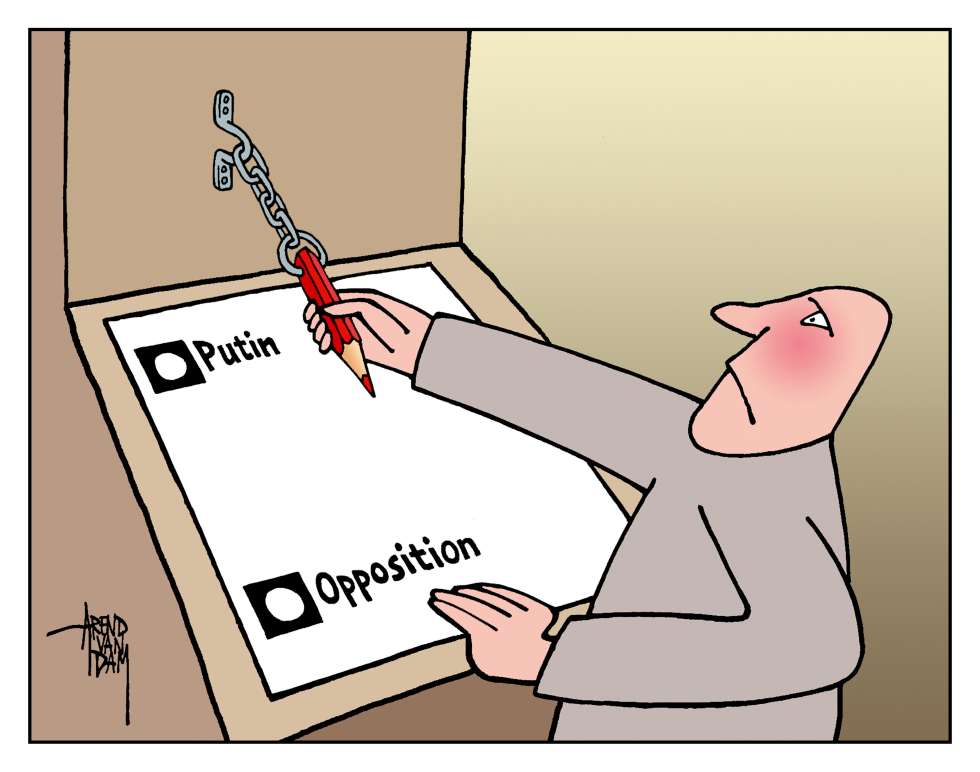
Russian voters face restricted ballot access ahead of the 2026 presidential election cycle. The chained pencil in the voting booth limits choice to the incumbent. This setup underscores ongoing limits on opposition participation. The piece argues that such physical constraints mirror broader electoral controls that prevent genuine competition.
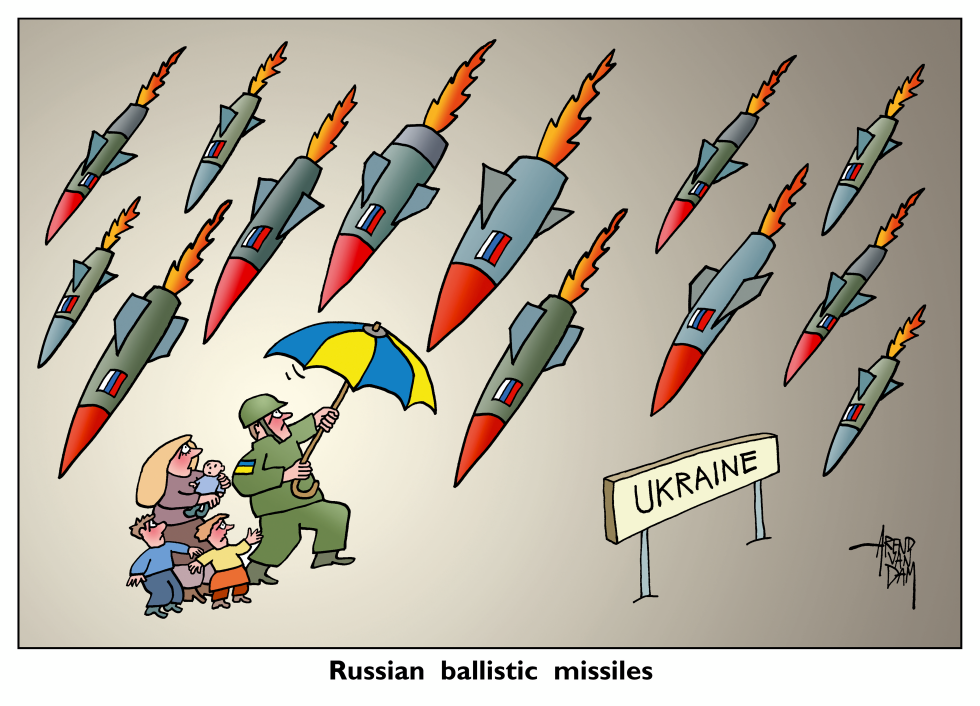
Russian ballistic missile strikes continue to target Ukrainian territory amid the prolonged conflict. A Ukrainian soldier stands at the forefront shielding a family of civilians from the barrage. The attacks underscore the persistent threat to noncombatants and infrastructure. The image frames the soldier's action as a direct barrier between the incoming weapons and those under protection. It emphasizes the role of Ukrainian forces in sustaining civilian safety during sustained aerial assaults.
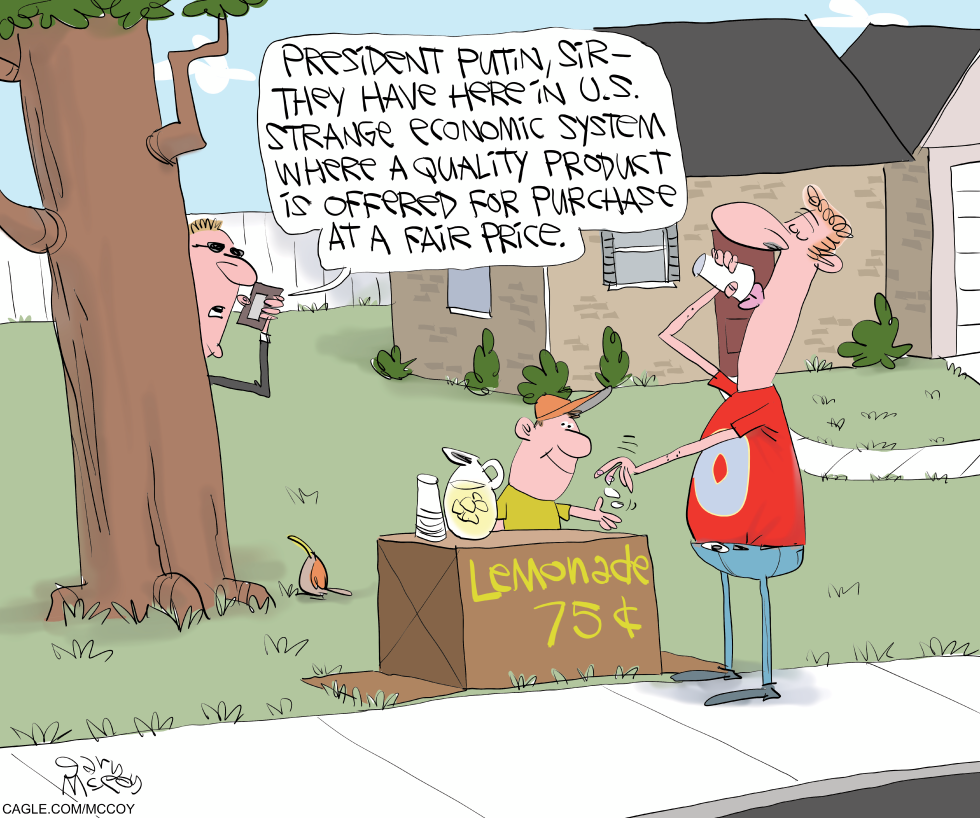
A cartoon depicts a man explaining the U.S. free-market system of offering quality goods at fair prices to President Putin during a phone call next to a child's lemonade stand. The scene underscores the perceived strangeness of American capitalism from a Russian perspective. The editorial position critiques the disconnect between market-driven economies and state-controlled systems.