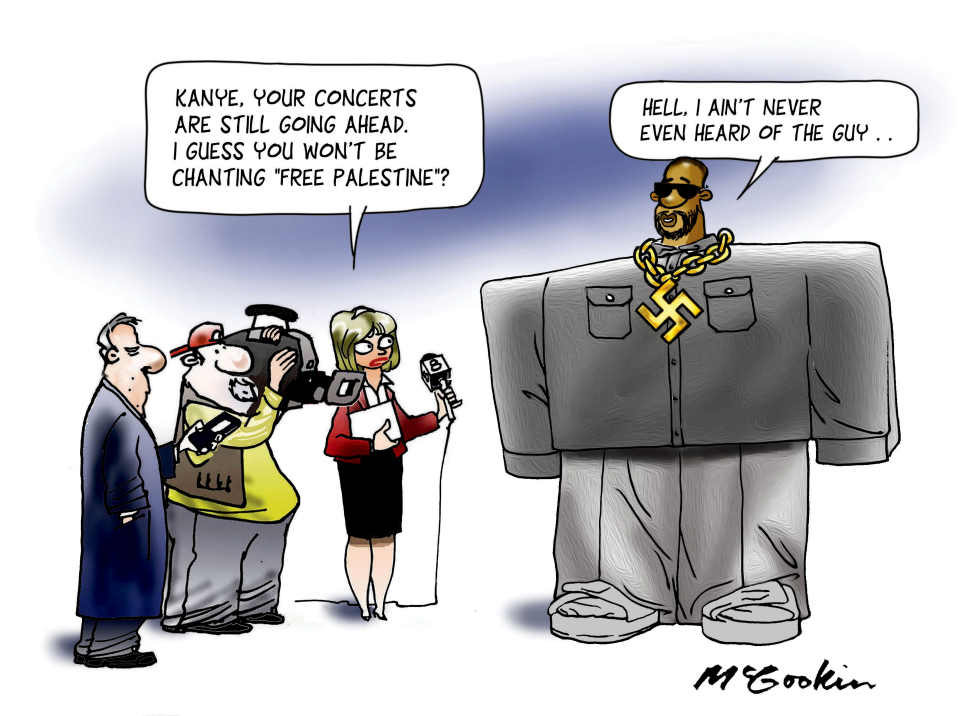
Reports indicate Macklemore faced professional setbacks tied to his expressions of support for Palestinian causes, while Kanye West maintained concert bookings and public appearances despite a documented history of antisemitic remarks. The disparity highlights selective enforcement within entertainment industry and media circles. The piece argues that such inconsistency undermines claims of principled accountability and reveals selective outrage based on the individual's profile rather than the content of the statements.
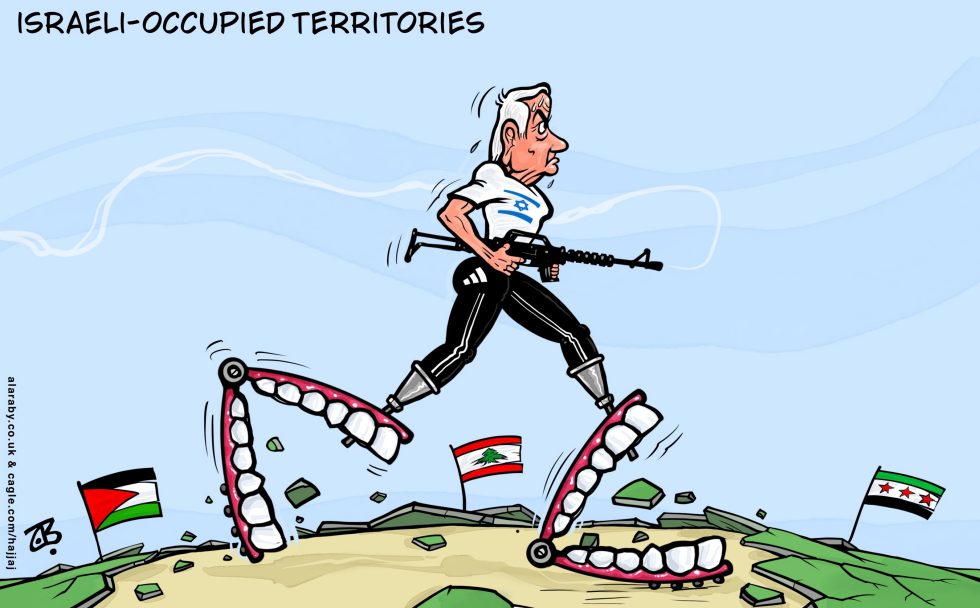
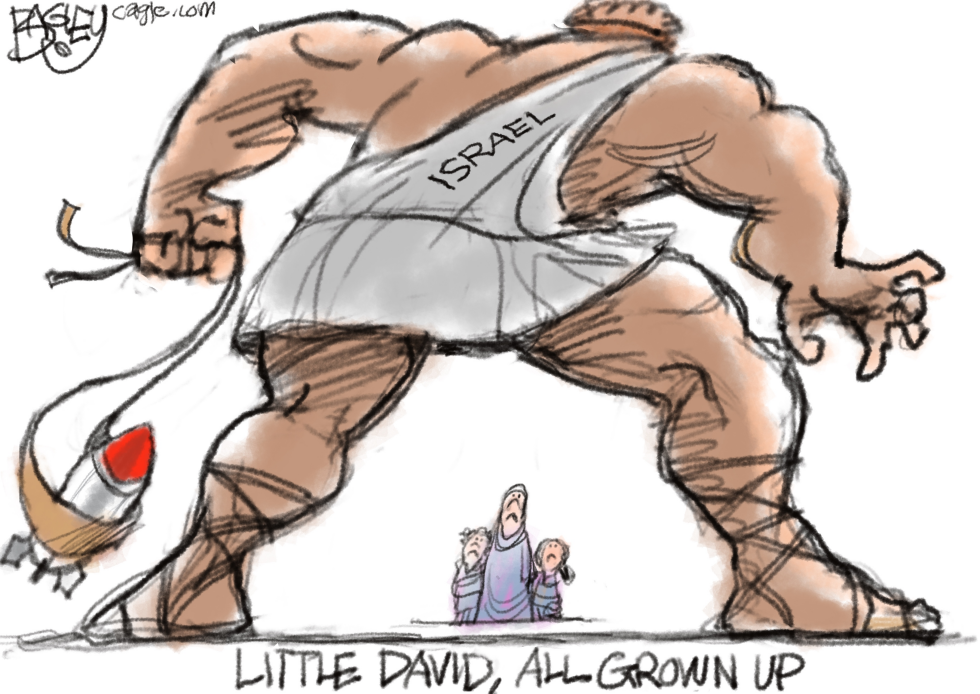
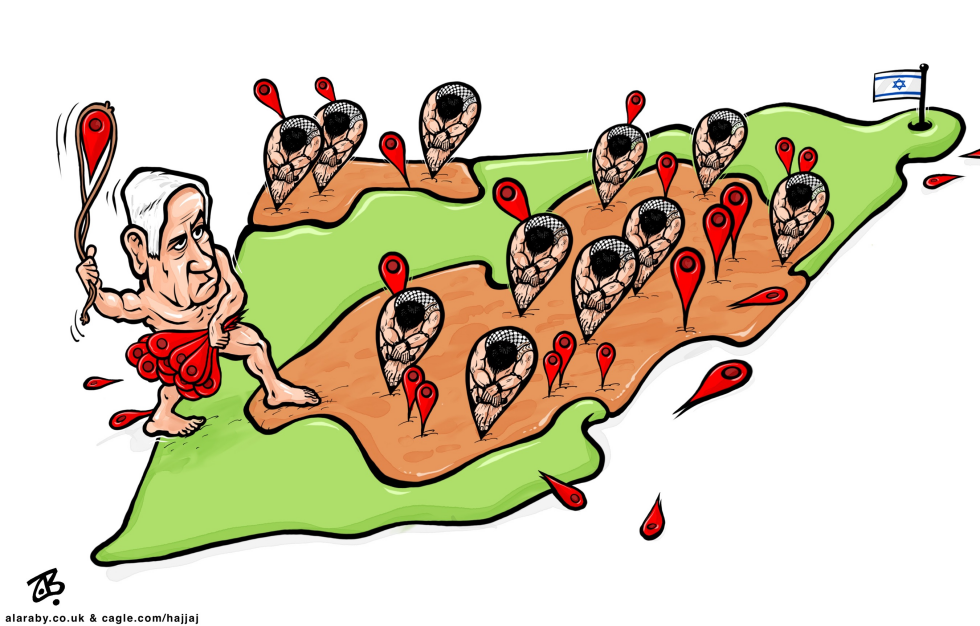
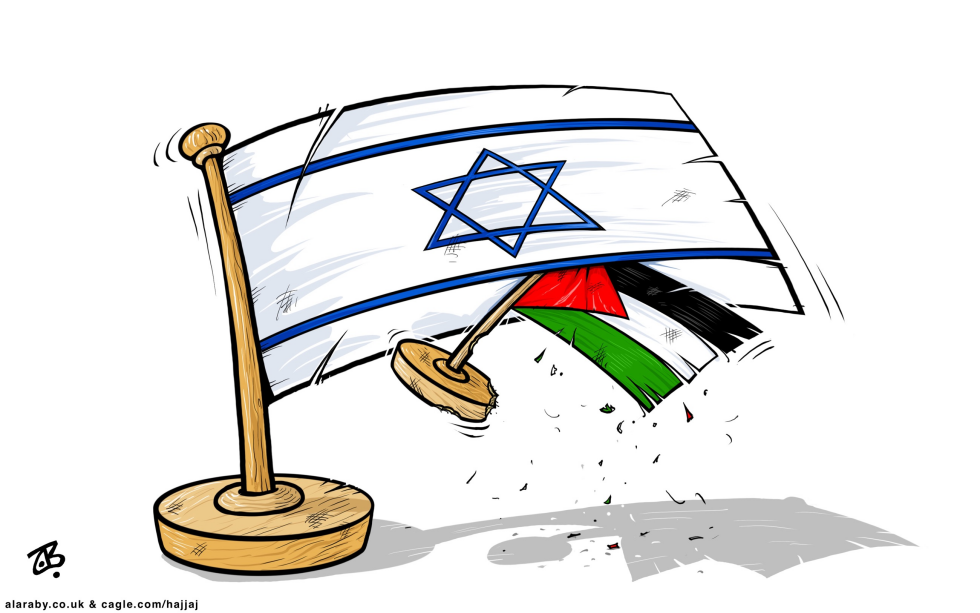
Israeli Prime Minister Benjamin Netanyahu has maintained policies of territorial control and military operations in areas bordering Israel including Gaza the West Bank southern Lebanon and parts of Syria. These actions have drawn international scrutiny over sovereignty violations and regional stability. The cartoon frames the policy as aggressive expansion that damages neighboring states.
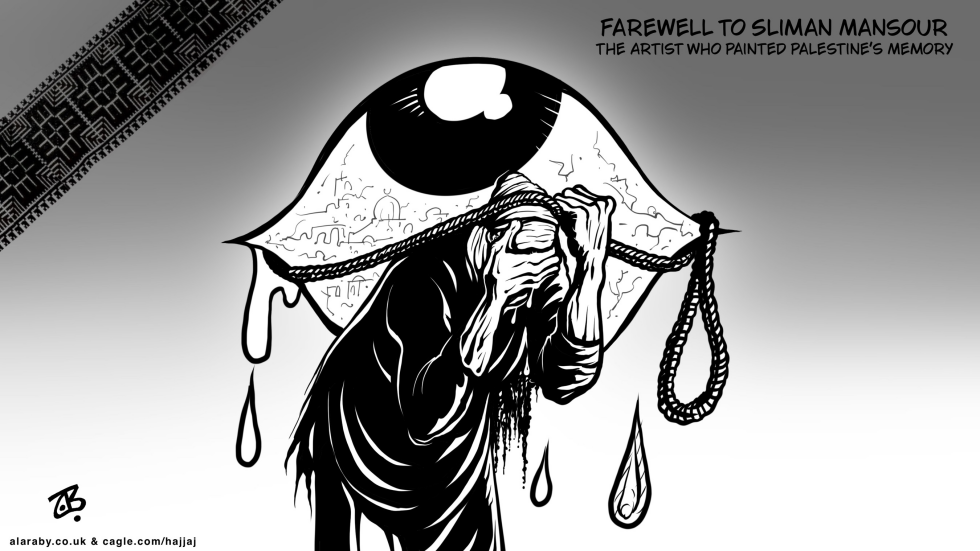
Sliman Mansour, the Palestinian artist known for works depicting national memory and identity, is remembered following his death. The tribute highlights his role in preserving cultural imagery amid ongoing regional tensions. The piece frames his legacy as a quiet act of resistance and remembrance.
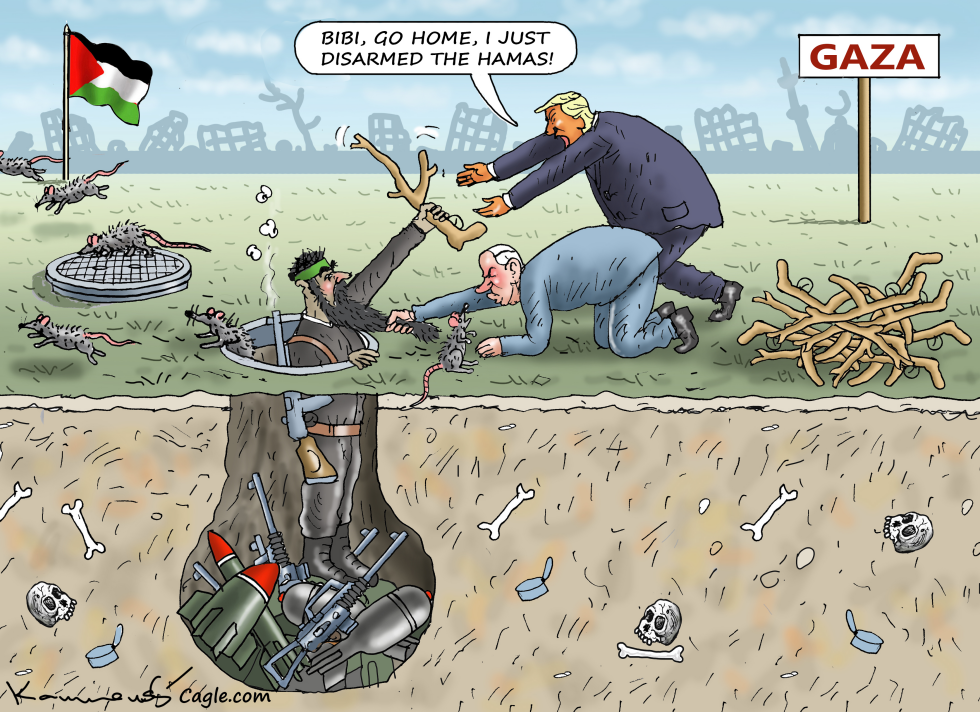
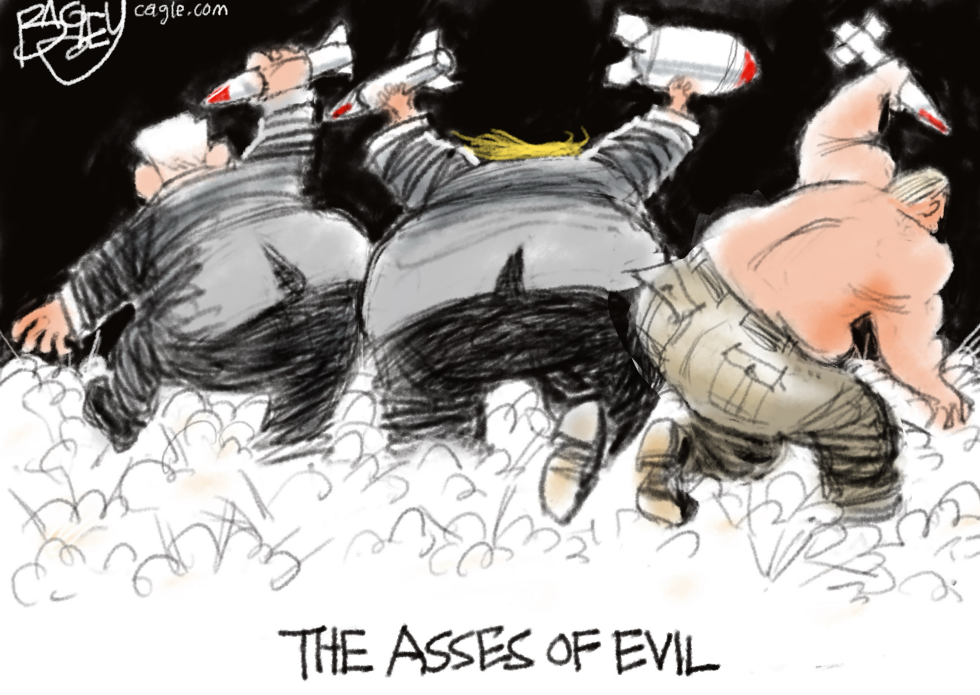
Donald Trump publicly claims to have disarmed Hamas while addressing Israeli Prime Minister Netanyahu. The assertion comes amid ongoing operations in Gaza where underground weapon stores remain active. The piece portrays the claim as premature given the scale of remaining armaments and the involvement of other U.S. figures in the effort.
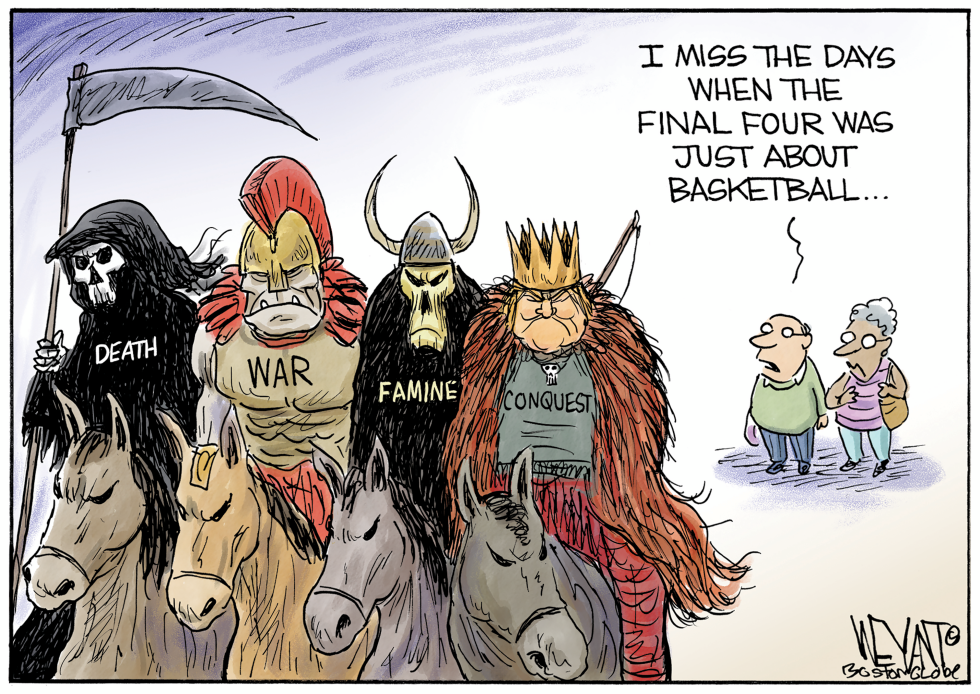
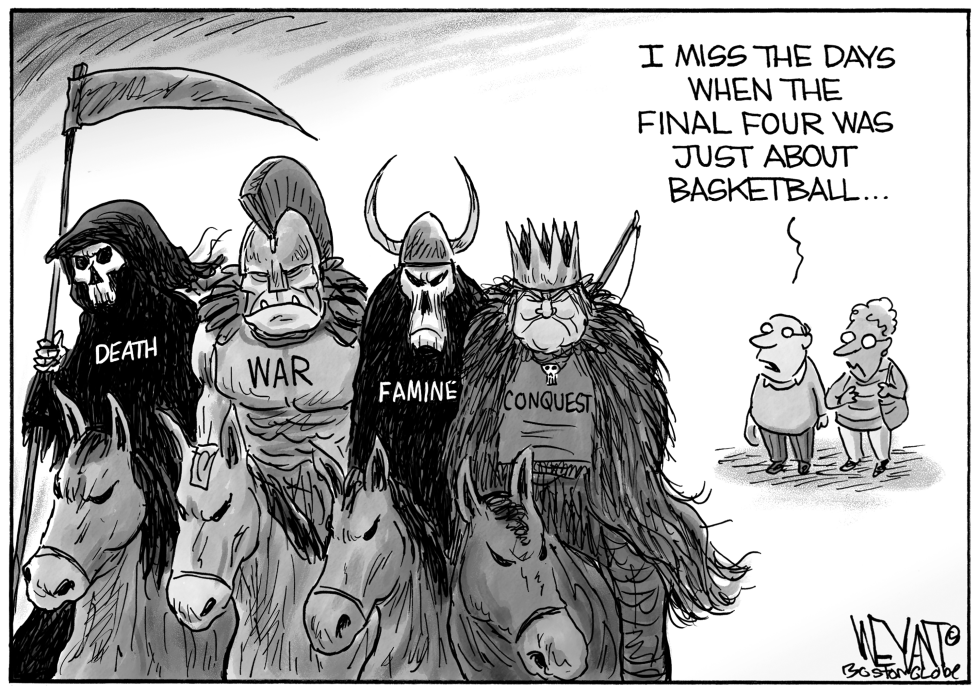
The April 2026 cartoon depicts the Four Horsemen of the Apocalypse marching forward during NCAA Final Four season. Their presence highlights how international conflicts eclipse traditional sports focus. A speech bubble expresses longing for basketball-only coverage while bystanders observe the shift.
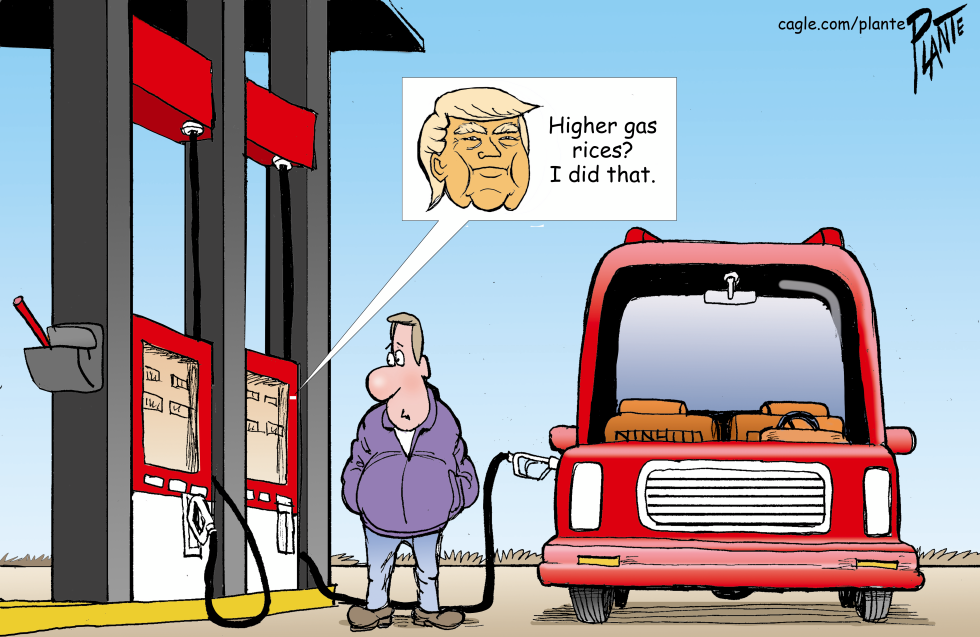
Bruce Plante's cartoon shows a gas pump topped with President Donald J. Trump's head, smirking as it says, 'Higher gas rices? I did that,' while a driver fuels his red truck. The image ties into tags like higher gas prices, war, Iran, Israel, Middle East, and energy crisis, poking at Trump's potential role in escalating fuel costs through foreign policy missteps. It's a straightforward jab, clear in its satire without overcomplicating the visuals. The dry humor lands on the absurdity of a politician claiming credit for economic pain at the pump. With tags covering UAE, Saudi Arabia, and other regional players, the cartoon nods to broader geopolitical tensions driving oil prices up. Editors see these kinds of cartoons circulate well when gas prices spike, reminding readers of the human cost in everyday routines.
Bruce Plante's cartoon depicts a typical American driver at a gas station, his purple car parked under the canopy, as he reacts with censored profanity to a coin-operated viewer. The sign reads 'TO SEE GAS PRICES DEPOSIT 25¢,' cleverly satirizing how #HighGasPrices have soared beyond easy visibility, like distant sights needing magnification. The man's USA shirt and coffee cup add a relatable everyman touch, emphasizing consumer shock. This piece fits into ongoing #FuelCosts debates, blending #InflationHumor with #EconomicSatire. Plante's style, straightforward and punchy, targets #EnergyPrices and their impact on daily life, making it shareable for #PoliticalCartoons enthusiasts. The dry humor underscores the absurdity without overstatement, a hallmark of syndicated work.