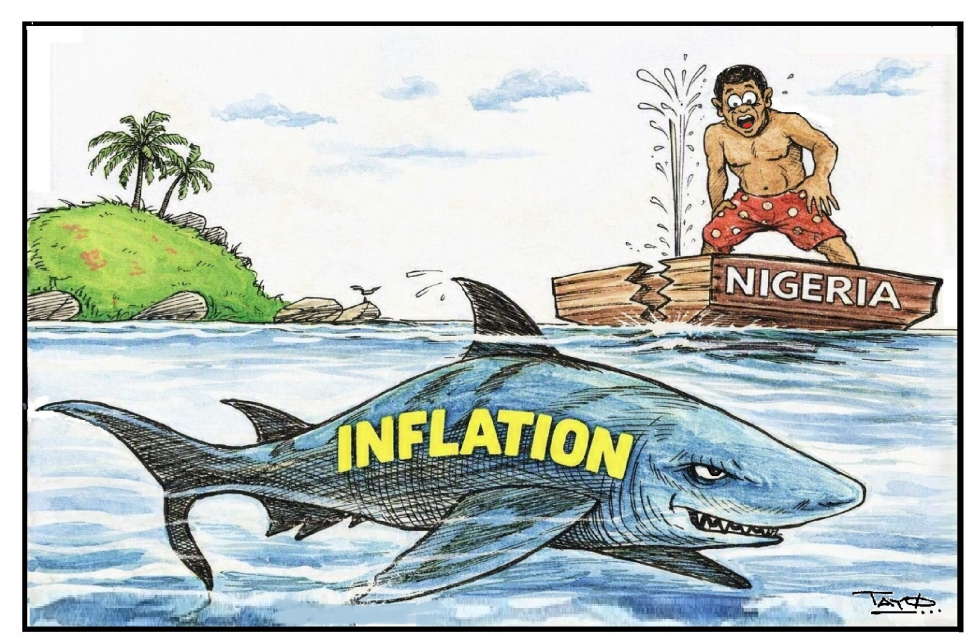
Nigeria continues to contend with sustained inflation and rising living costs. The piece responds to persistent price pressure on households and the strain it places on the wider economy. It presents inflation as a predatory force circling a vessel already taking on water.
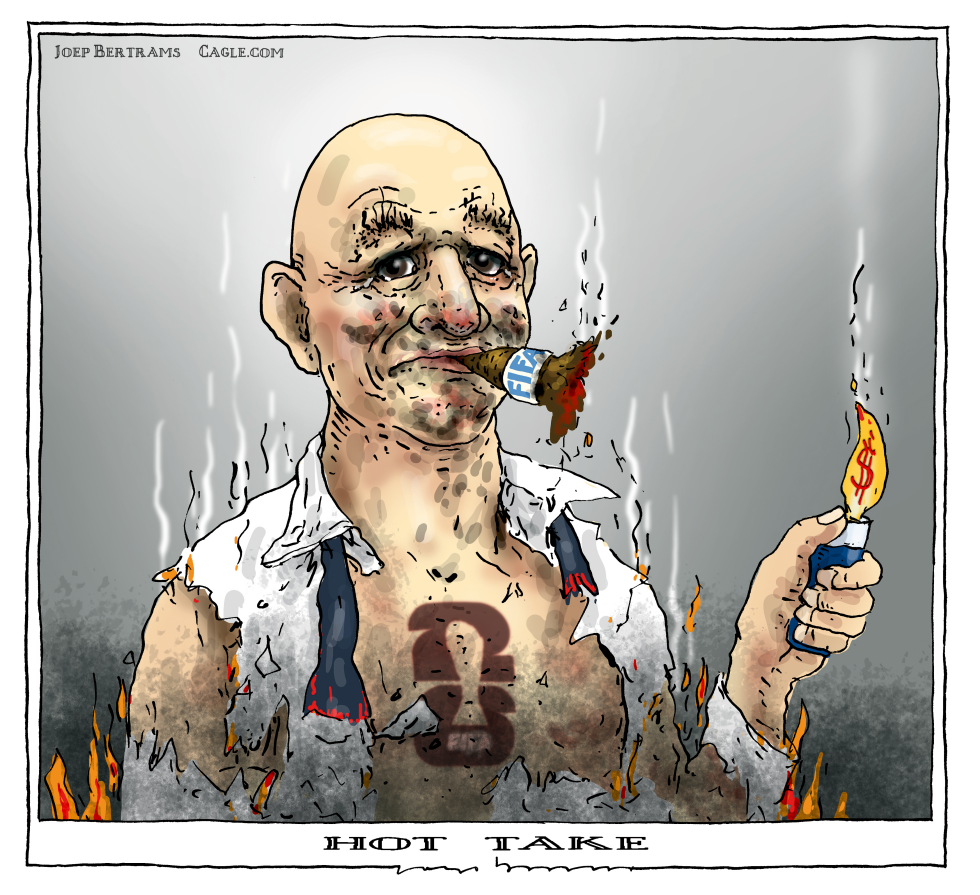
Elon Musk's public commentary on cryptocurrency markets continues to drive price swings and investor attention in 2026. His recent statements coincide with renewed volatility in Bitcoin trading. The editorial takes a critical view of how such high-profile interventions amplify market instability rather than stabilize it.
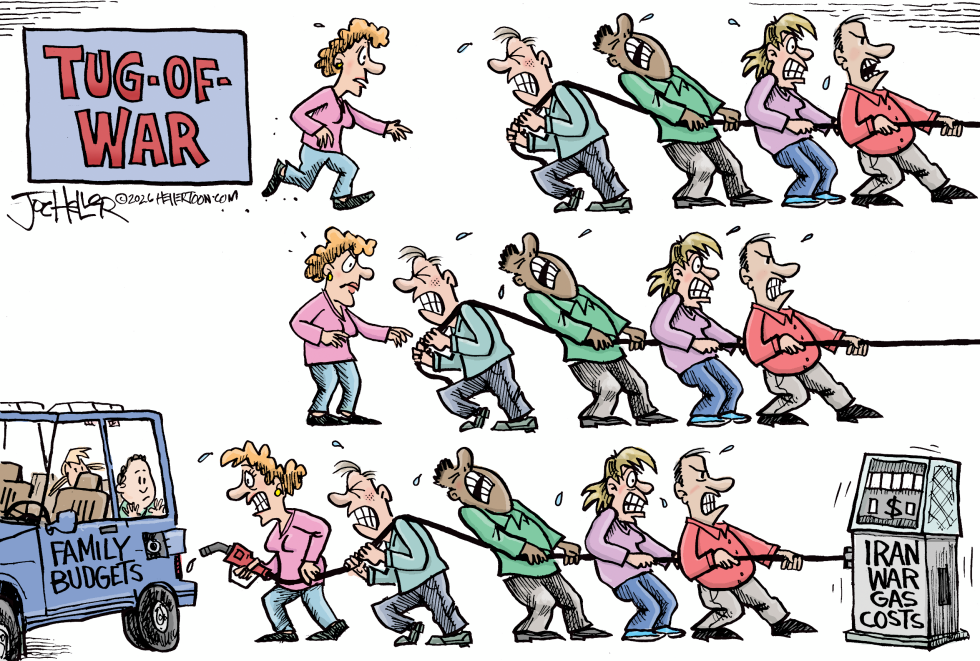
Rising gas prices linked to potential conflict with Iran are pressuring household budgets across the country. The cartoon illustrates the direct economic tug between military action abroad and everyday costs at the pump, arguing that families bear the immediate burden of such decisions.
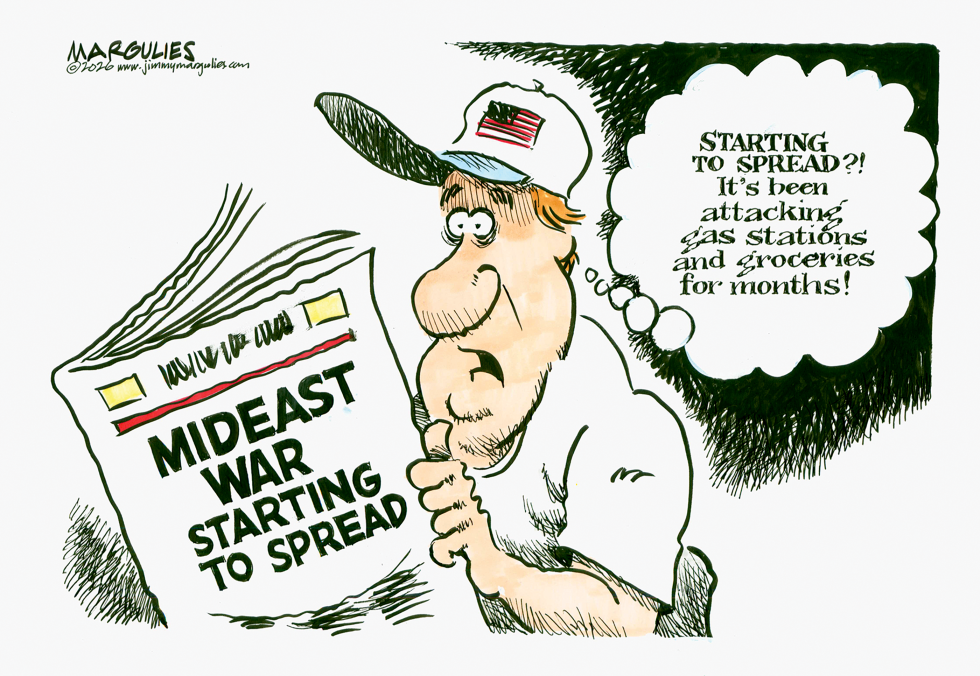
A newspaper headline declares the Mideast war starting to spread, prompting public reaction over its effects on daily costs. The piece highlights how energy and food prices have already risen due to ongoing regional conflict. It takes the position that the economic consequences for Americans have been evident long before any formal expansion of the fighting.
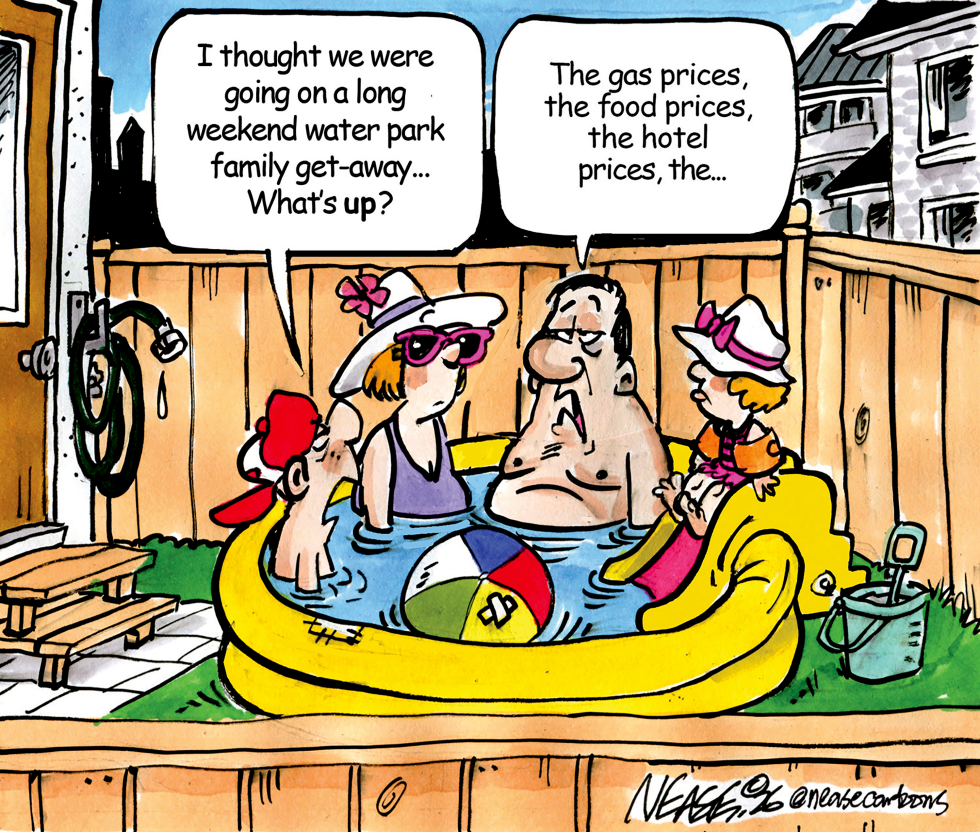
Families planning summer getaways face steep increases in gas, food, and hotel costs that disrupt long weekend plans. The piece highlights how these expenses push households toward simpler backyard alternatives while underscoring the persistent strain inflation places on everyday leisure.
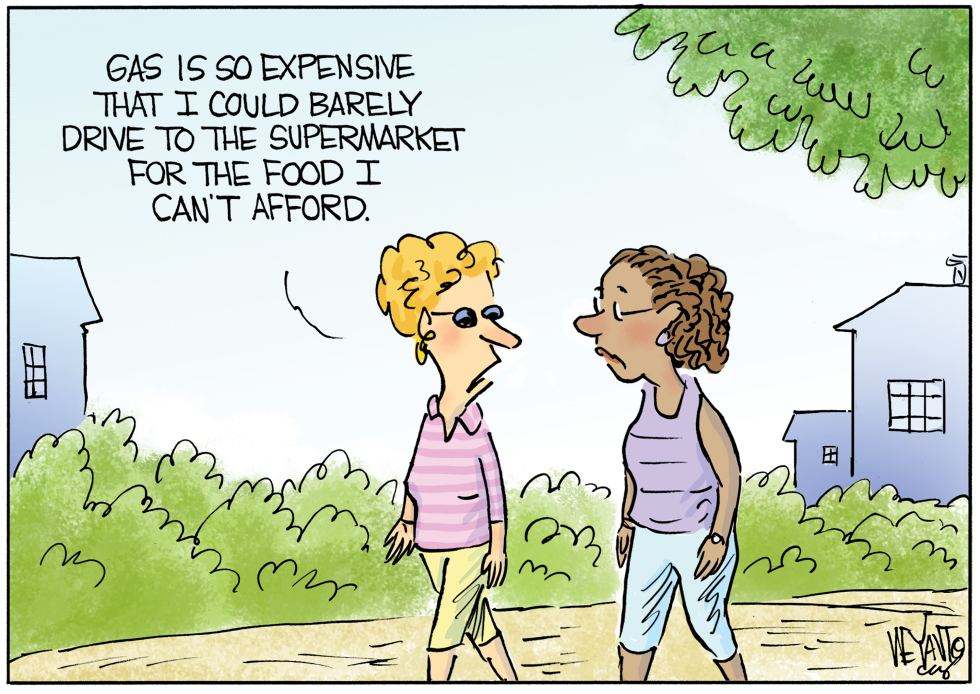
Elevated gasoline prices continue to squeeze household budgets by raising the cost of essential travel for groceries. Families report that filling the tank now competes directly with buying food, amplifying the effects of broader inflation on daily necessities. The editorial highlights how these intertwined expenses limit mobility and purchasing power for average consumers.
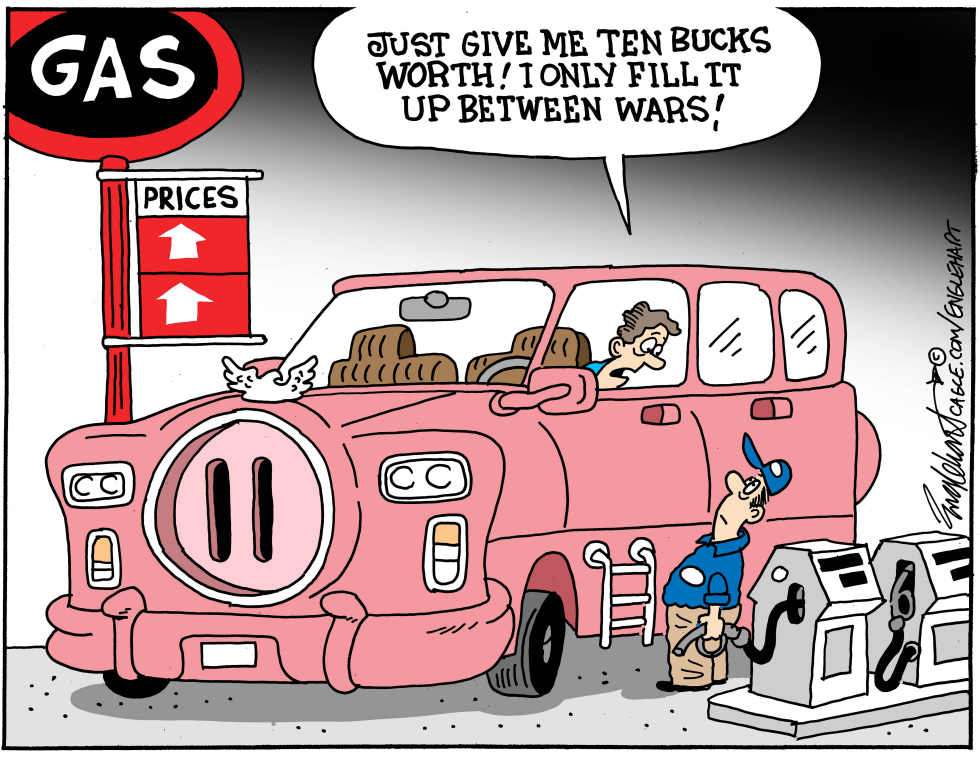
Gas prices continue climbing at stations nationwide, prompting drivers to make minimal purchases. The situation highlights ongoing pressure on household budgets from energy costs. The piece portrays the frustration with limited fills and references to external conflicts affecting supply stability.
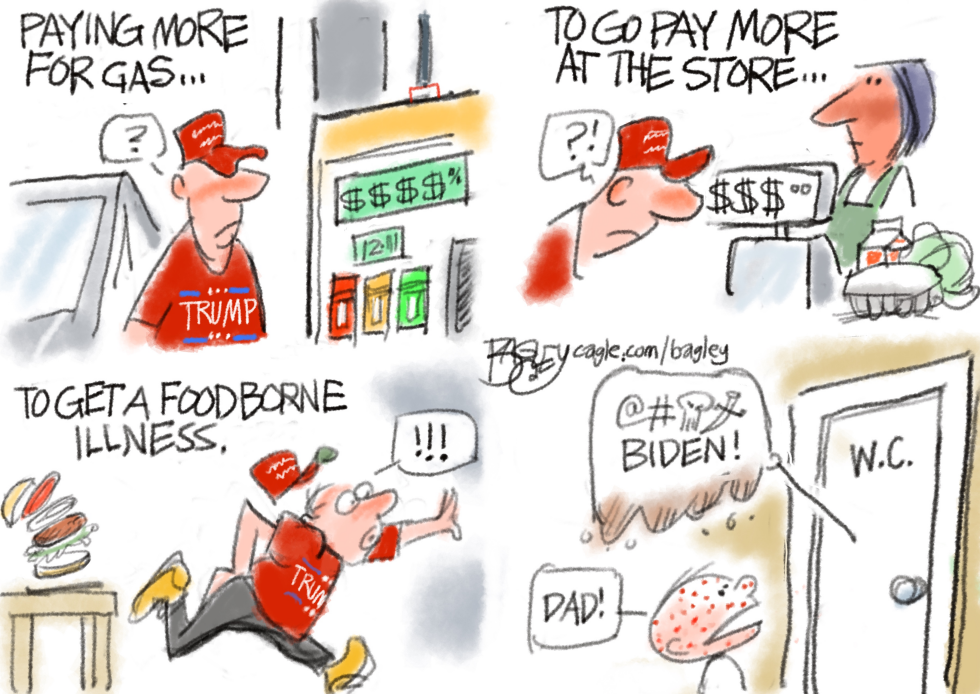
A Trump supporter encounters higher costs at the gas pump and grocery store plus a foodborne illness before directing blame toward Biden. The episode reflects persistent economic pressures on households and partisan finger-pointing that continues well after the 2024 election cycle. The cartoon highlights how some voters tie every inconvenience directly to the prior administration regardless of other factors at play.
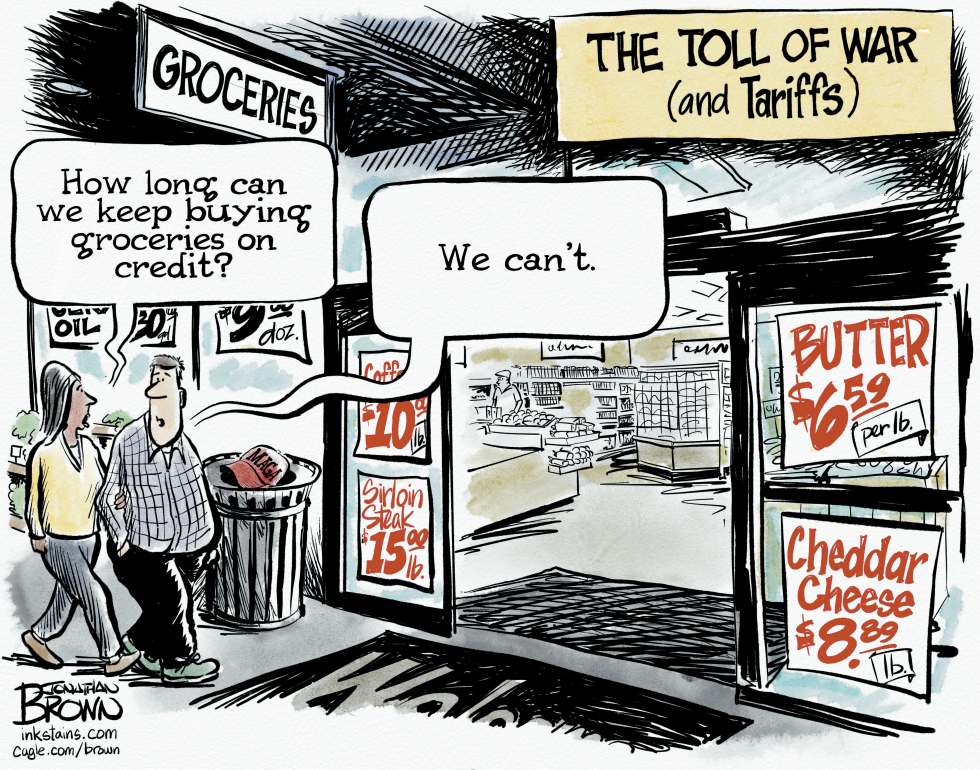
A political cartoon depicts a couple leaving a grocery store after learning they cannot continue buying food on credit. Signs inside show sharply higher prices for butter at $6.59 per pound, cheddar cheese at $8.89 per pound and sirloin steak at $15 per pound. A banner overhead reads The Toll of War (and Tariffs). The scene illustrates how ongoing conflict and trade barriers have driven up everyday food costs leaving households to rely on credit that is no longer sustainable.
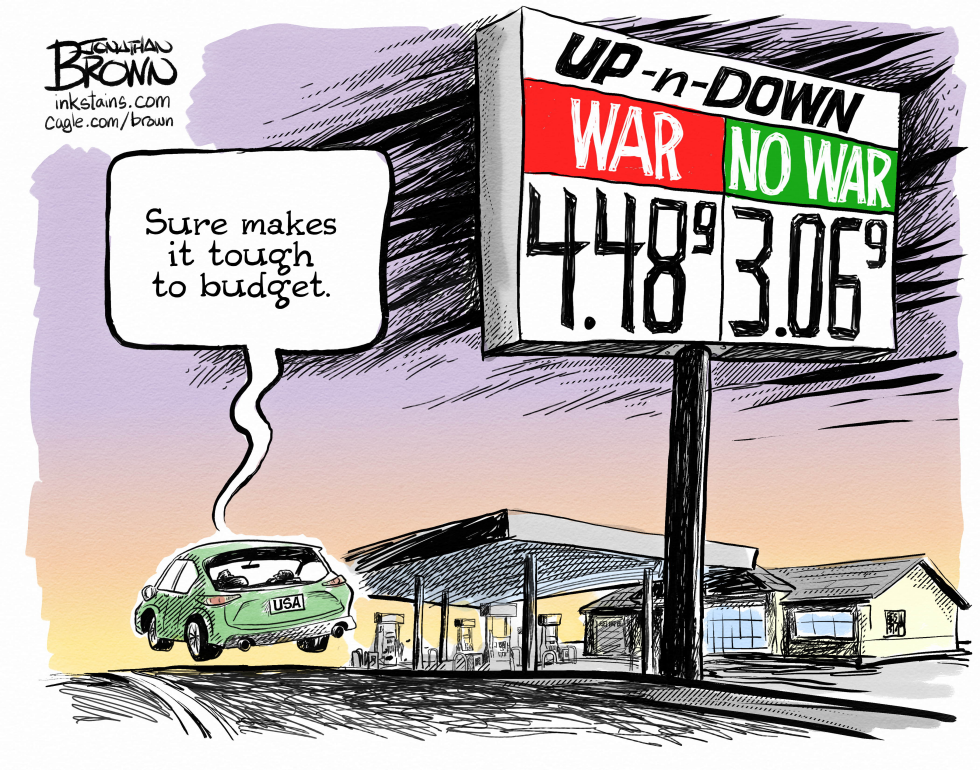
A gas station sign splits prices by war and no war labels, with the war column higher at 4.489 versus 3.069. A driver in a green car remarks on budgeting challenges while at the pumps.
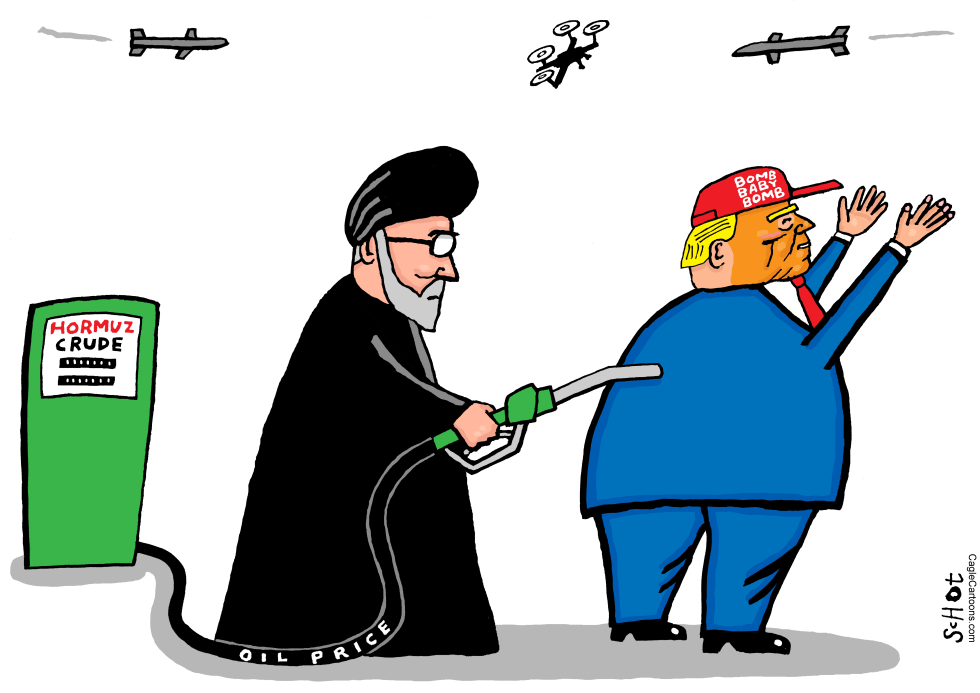
A robed Iranian figure operates a Hormuz crude gas pump with the hose labeled oil price inserted into the back of a blue suited Donald Trump wearing a red hat marked bomb baby bomb. Trump stands with both hands raised while military planes and a drone appear in the sky overhead.
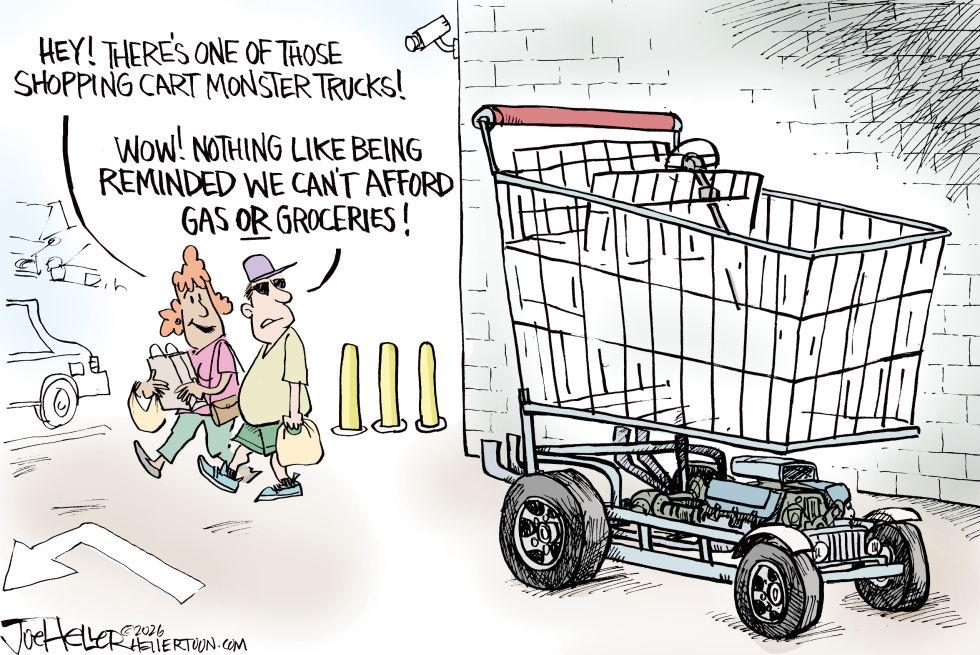
A modified shopping cart on large wheels draws comments from passersby about unaffordable gas and groceries. The scene on July 10 2026 captures ongoing economic strain from higher living costs. Passersby note the reminder of tight budgets for fuel and food. The image reflects persistent inflation concerns affecting household spending.
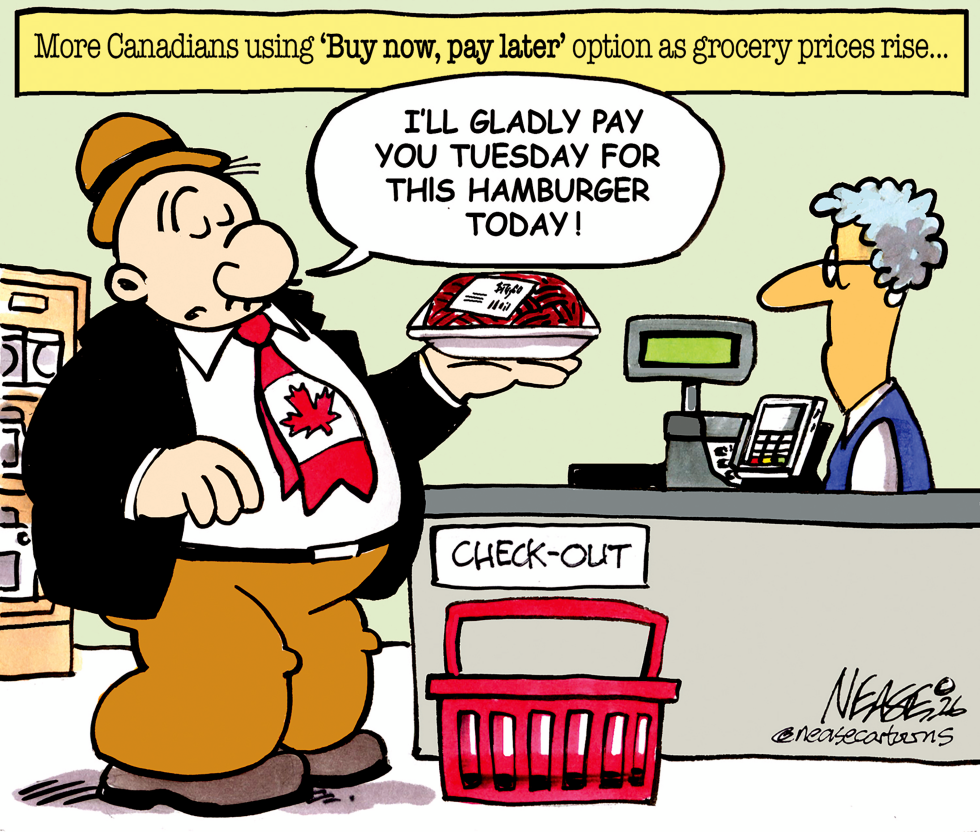
A cartoon published July 8, 2026, shows a Canadian shopper at a grocery checkout counter holding a package of hamburger meat while declaring he will gladly pay Tuesday for the item today. The scene references the classic Wimpy line and highlights growing use of buy now pay later services as grocery prices continue to climb in Canada.