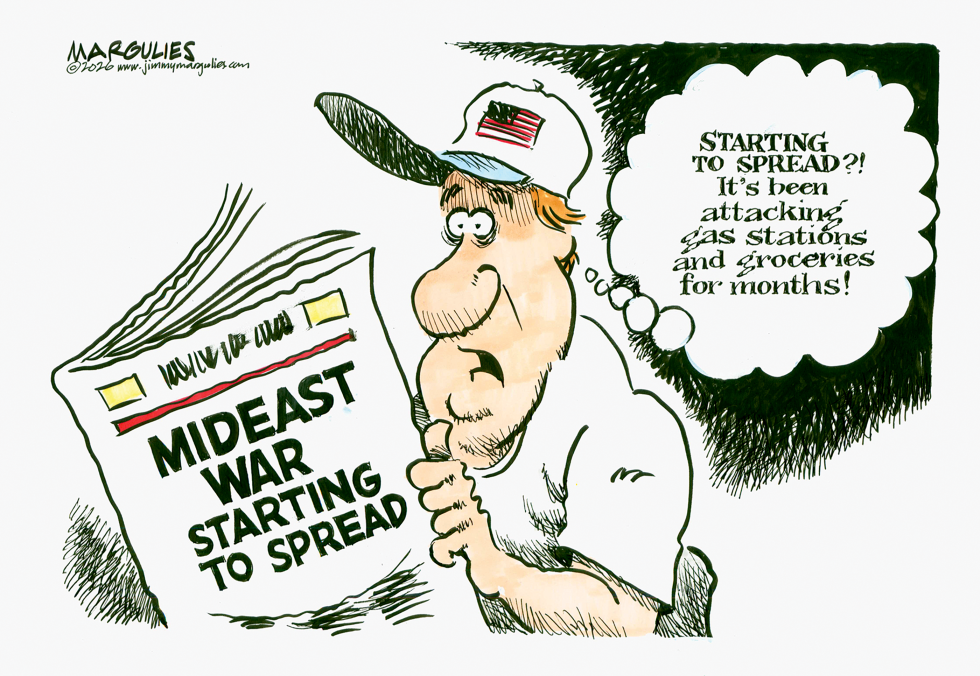
A newspaper headline declares the Mideast war starting to spread, prompting public reaction over its effects on daily costs. The piece highlights how energy and food prices have already risen due to ongoing regional conflict. It takes the position that the economic consequences for Americans have been evident long before any formal expansion of the fighting.
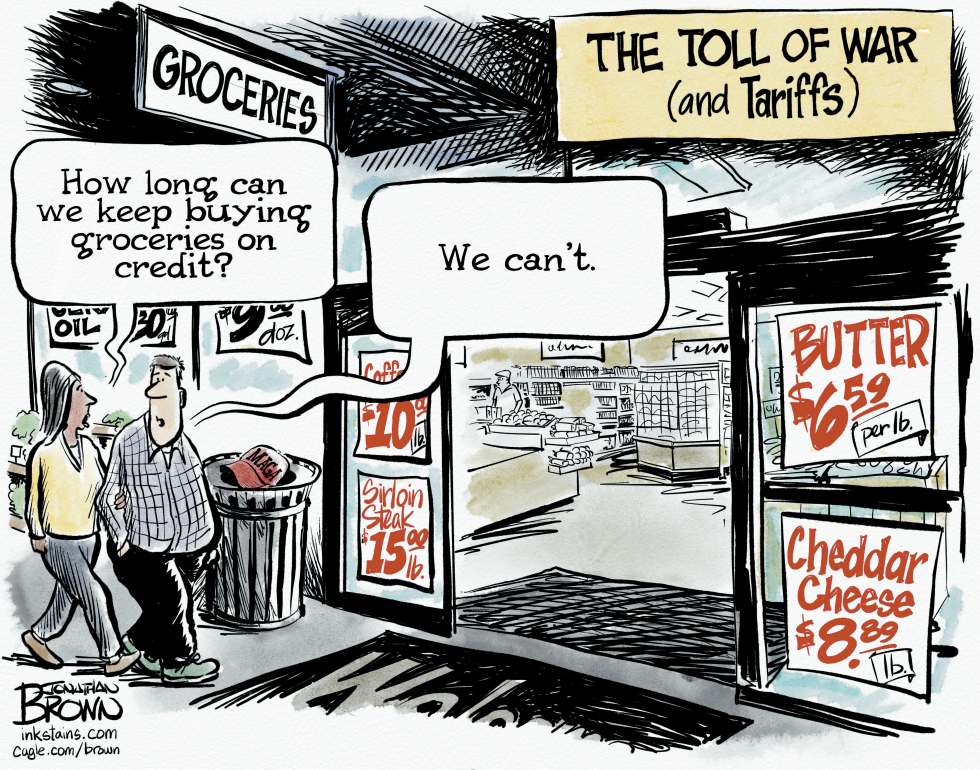
A political cartoon depicts a couple leaving a grocery store after learning they cannot continue buying food on credit. Signs inside show sharply higher prices for butter at $6.59 per pound, cheddar cheese at $8.89 per pound and sirloin steak at $15 per pound. A banner overhead reads The Toll of War (and Tariffs). The scene illustrates how ongoing conflict and trade barriers have driven up everyday food costs leaving households to rely on credit that is no longer sustainable.
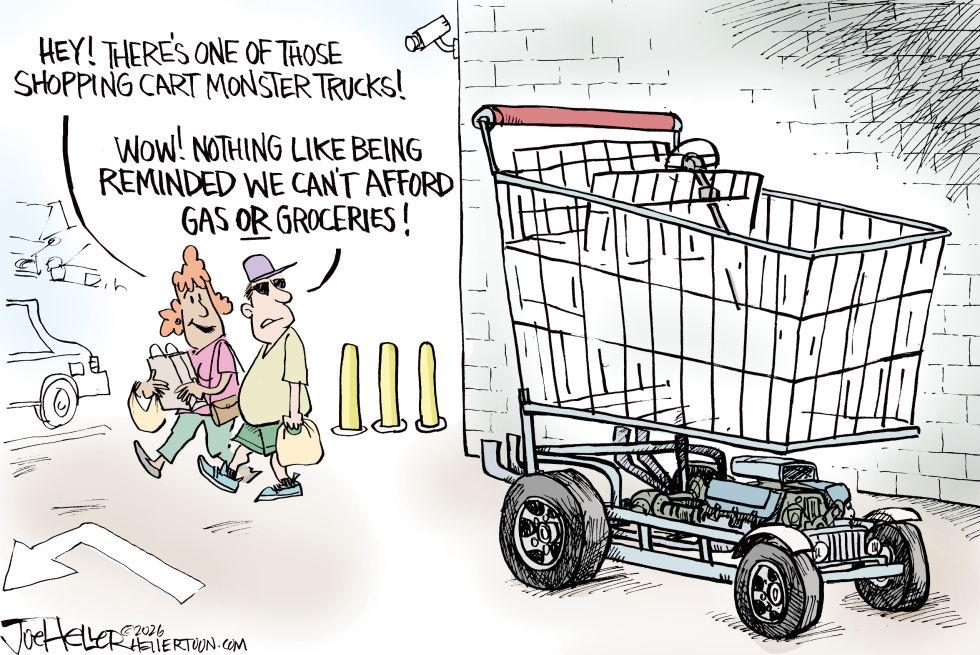
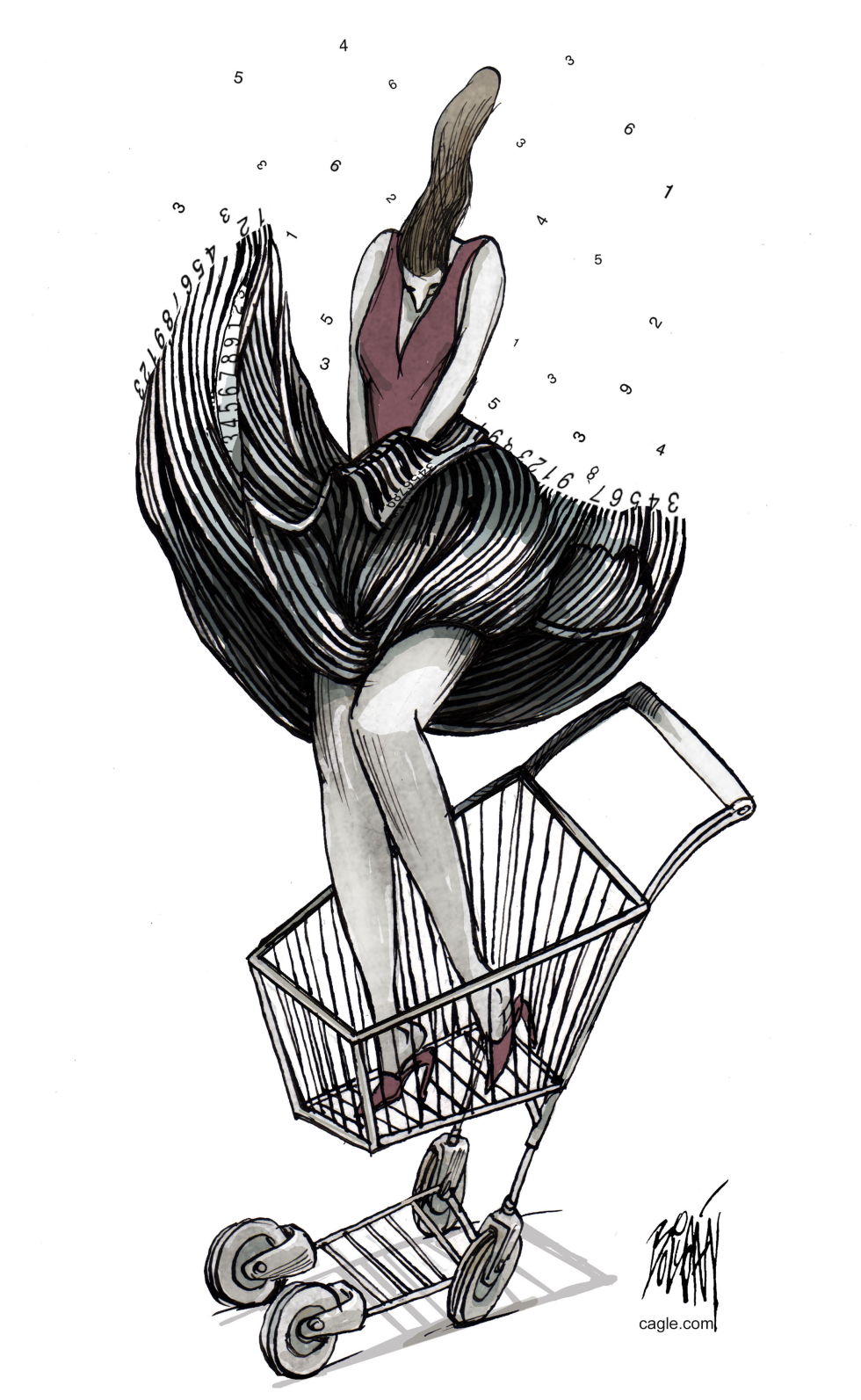
A modified shopping cart on large wheels draws comments from passersby about unaffordable gas and groceries. The scene on July 10 2026 captures ongoing economic strain from higher living costs. Passersby note the reminder of tight budgets for fuel and food. The image reflects persistent inflation concerns affecting household spending.
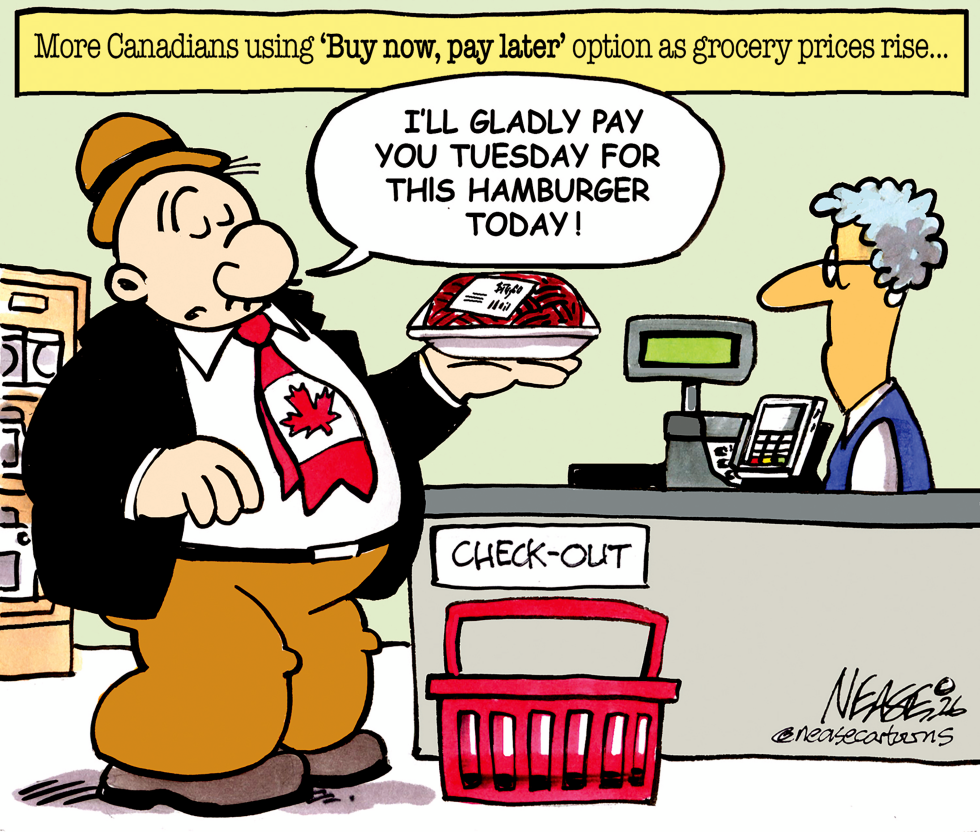
A cartoon published July 8, 2026, shows a Canadian shopper at a grocery checkout counter holding a package of hamburger meat while declaring he will gladly pay Tuesday for the item today. The scene references the classic Wimpy line and highlights growing use of buy now pay later services as grocery prices continue to climb in Canada.
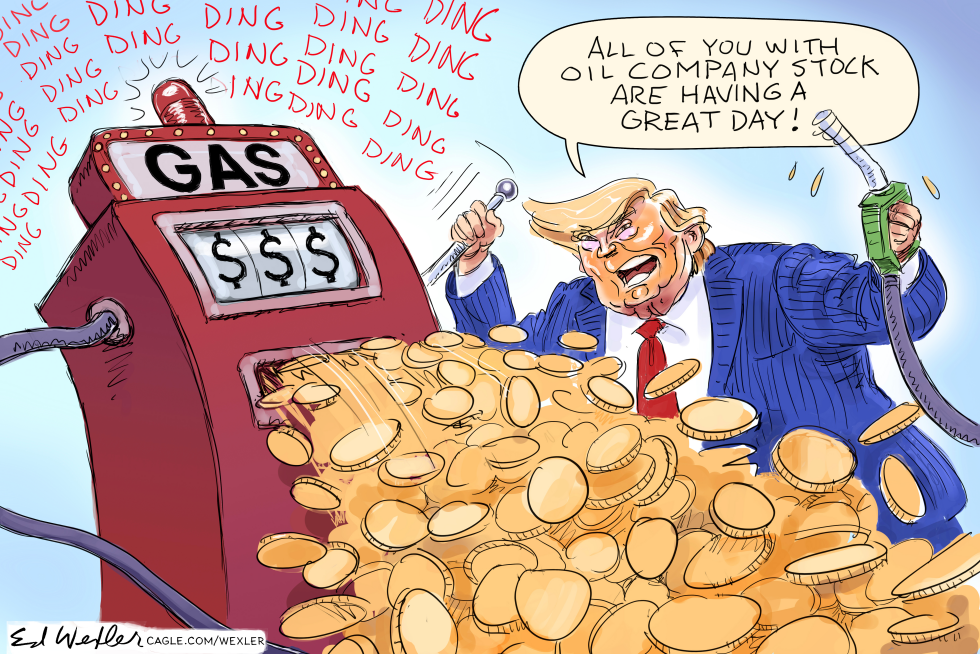
On March 17 2026 the cartoon depicts Donald Trump beside a gas pump dispensing coins instead of fuel. The pump display shows dollar signs while a speech bubble congratulates oil company stockholders. The scene references rising gas prices tied to Middle East tensions and conflict in Iran.
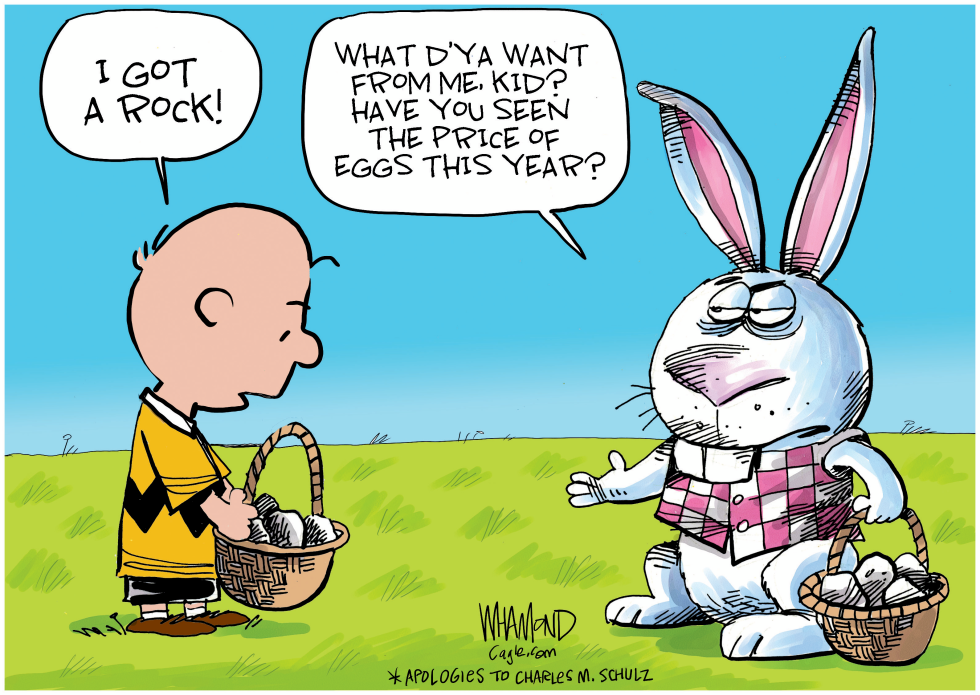
On April 3, 2023, Dave Whamond's cartoon shows Charlie Brown telling the Easter Bunny he got a rock, only for the rabbit to point to soaring egg prices. The Peanuts-style scene captures consumer frustration with grocery costs during the spring holiday season.
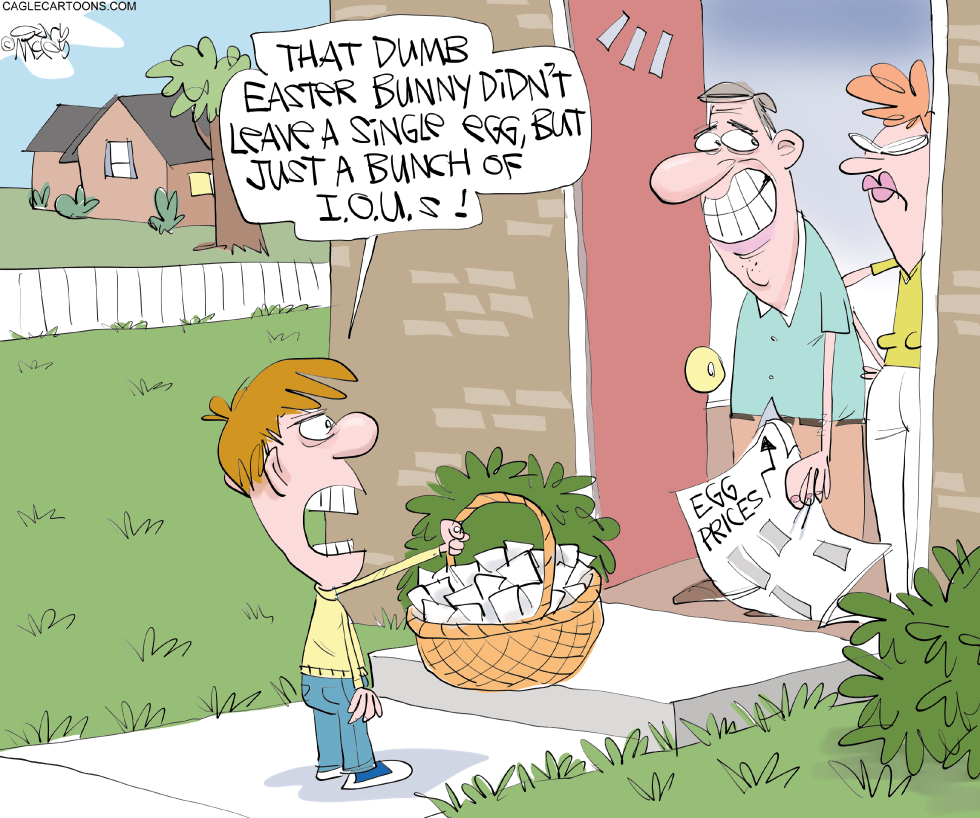
A young boy stands on a suburban lawn holding an Easter basket filled with IOUs instead of eggs. His speech bubble expresses disappointment in the Easter Bunny. Two adults stand in a doorway reviewing a newspaper headlined EGG PRICES with an upward arrow. The scene reflects the sharp rise in egg prices during spring 2023 driven by avian flu and supply issues.
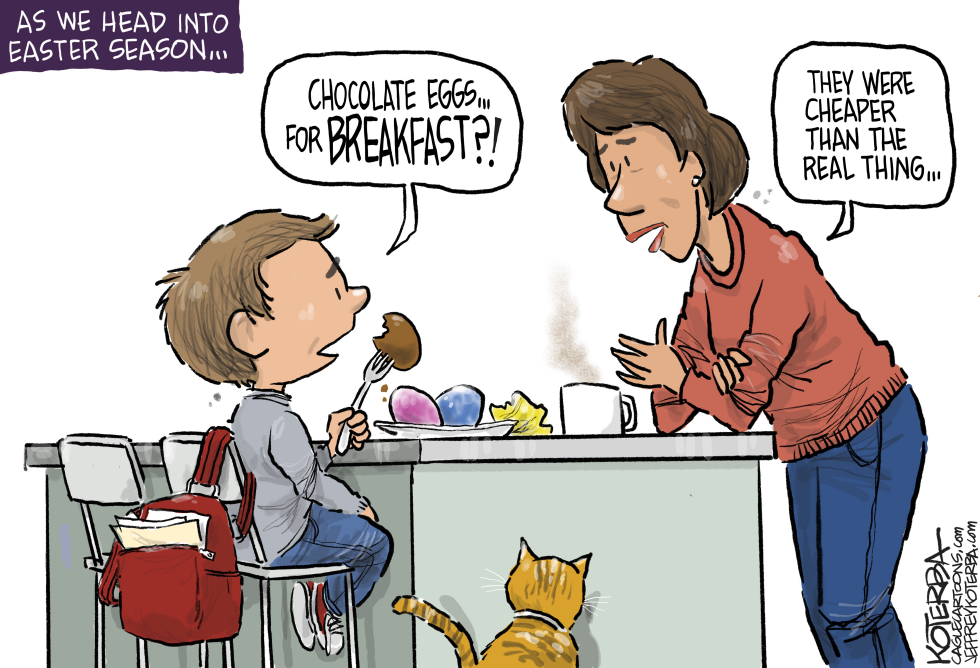
A mother and her son sit at a kitchen counter as the boy eats a chocolate Easter egg for breakfast. The mother explains that chocolate eggs cost less than real eggs right now. The scene is set against the backdrop of rising egg prices heading into Easter 2023. Bird flu outbreaks had reduced supply and driven costs higher across grocery stores. The cartoon captures a common household conversation about finding cheaper options for family meals.
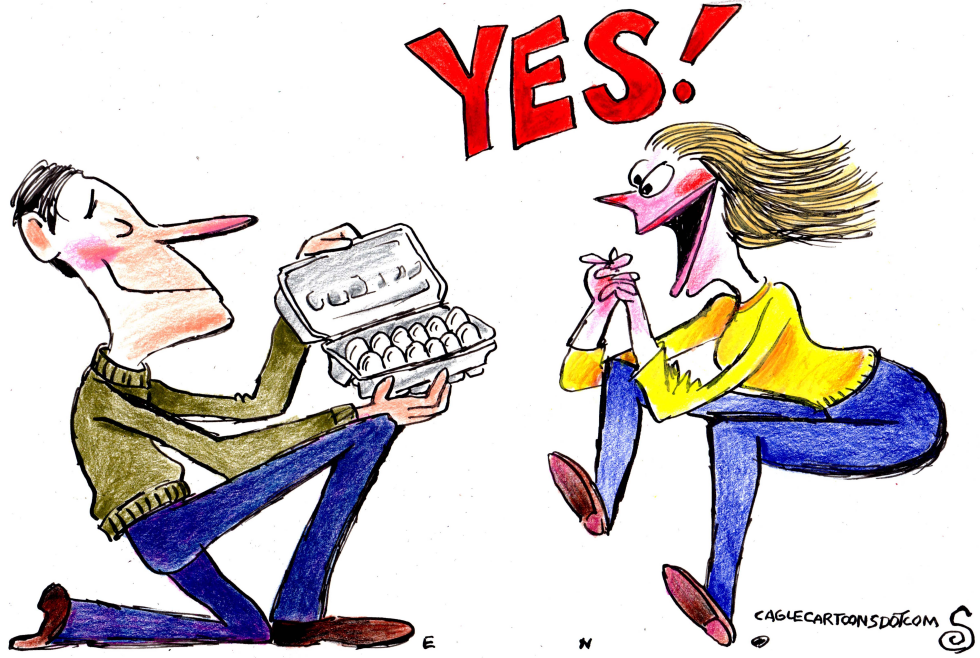
On January 14, 2023, a cartoon depicts a man on one knee presenting a carton of eggs to a woman who responds with an enthusiastic yes. The image references the sharp rise in egg prices driven by inflation and supply issues that winter. The visual substitutes the traditional ring with grocery staples to comment on household budget pressures.