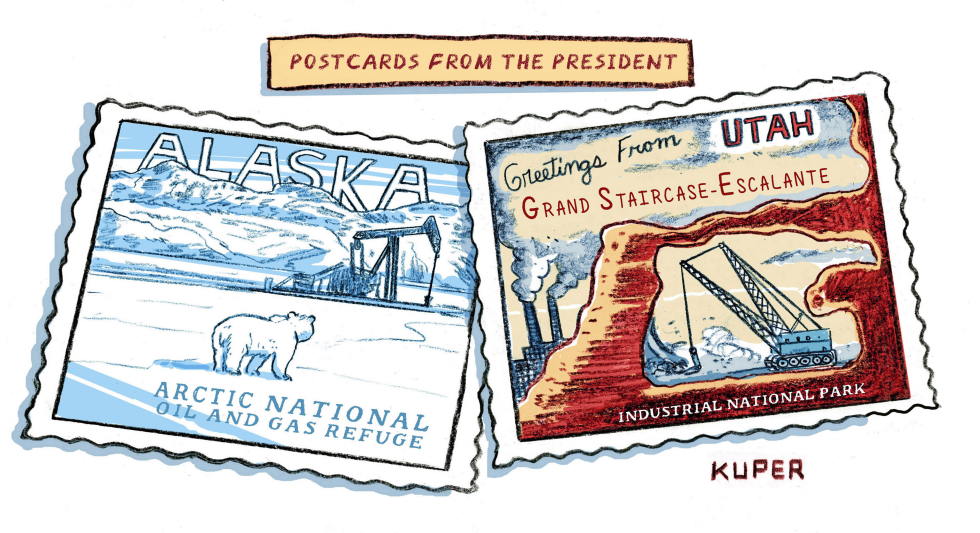
The president has advanced policies opening Arctic National Wildlife Refuge and Grand Staircase-Escalante to expanded oil and gas development. These moves prioritize domestic energy production over prior conservation designations. The editorial uses postcard imagery to critique the transformation of protected lands into industrial zones, arguing that short-term extraction gains undermine long-term environmental protections and public lands legacy.
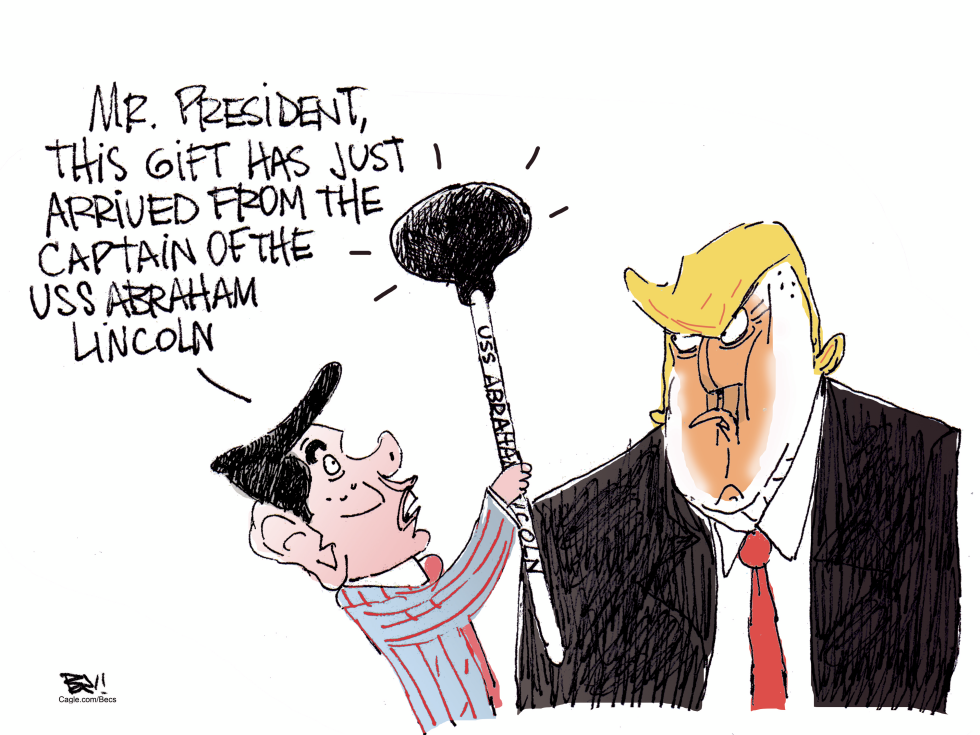
President Trump receives a ceremonial mallet sent by the captain of the USS Abraham Lincoln. The presentation occurs during routine military engagement with the White House. The gift underscores ongoing ties between the administration and naval forces. The editorial highlights the unusual nature of the item and questions its timing and purpose. It suggests the exchange reflects broader patterns in how the president interacts with the armed services.
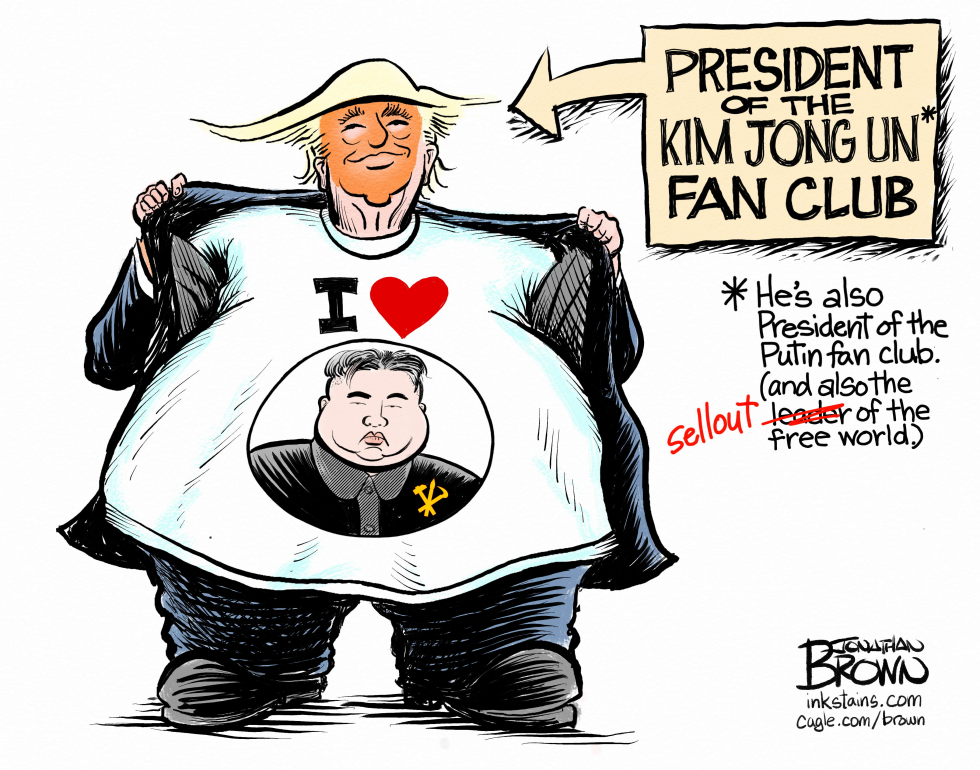
The image shows Donald Trump pulling open his jacket to reveal a white shirt bearing a portrait of Kim Jong Un inside a heart. An arrow points to a sign declaring him president of the Kim Jong Un fan club. Additional text notes his role in a Putin fan club and crosses out the word sellout next to a reference to leadership of the free world. The composition centers on the shirt reveal and the sign in the upper right.
The cartoon depicts a mother and son in a domestic setting where the son defends his use of vulgar language by citing the president's public example. The speech bubble from the son questions why he cannot use obscenities if the nation's leader does so without consequence. The scene includes household details such as a tablet in the mother's hands and mechanical parts on the wall. The argument highlights ongoing debates about language standards in public life and their influence on younger generations. The cartoon responds to recent discussions about presidential rhetoric and its broader societal effects.
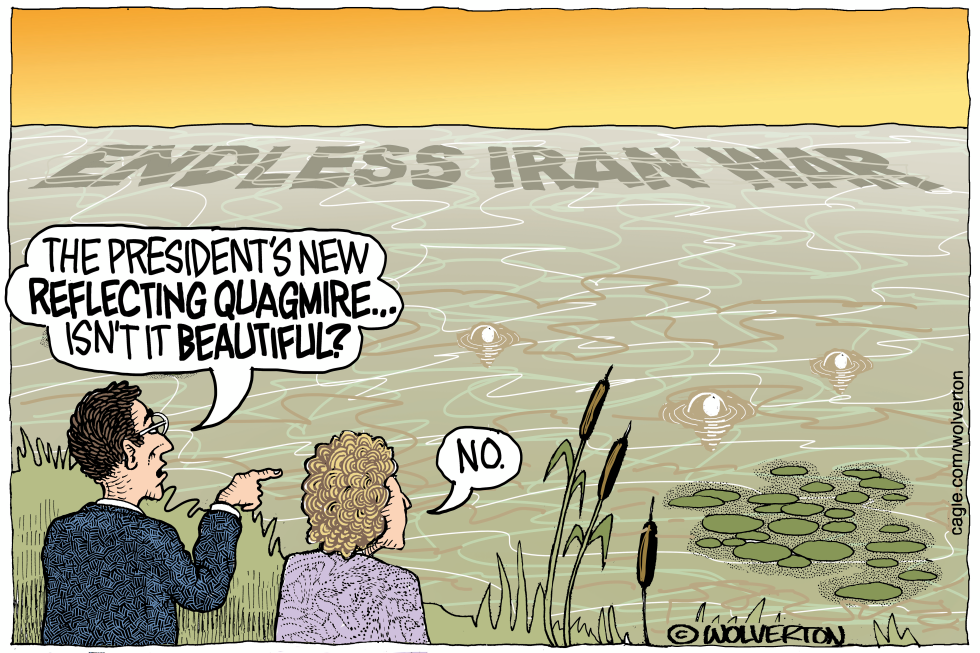
Ongoing debate surrounds U.S. policy toward Iran and the risk of prolonged military involvement in the Middle East. The situation highlights divisions over whether recent actions risk repeating past patterns of extended conflict. The piece argues that such engagement offers little to admire and merits outright rejection.
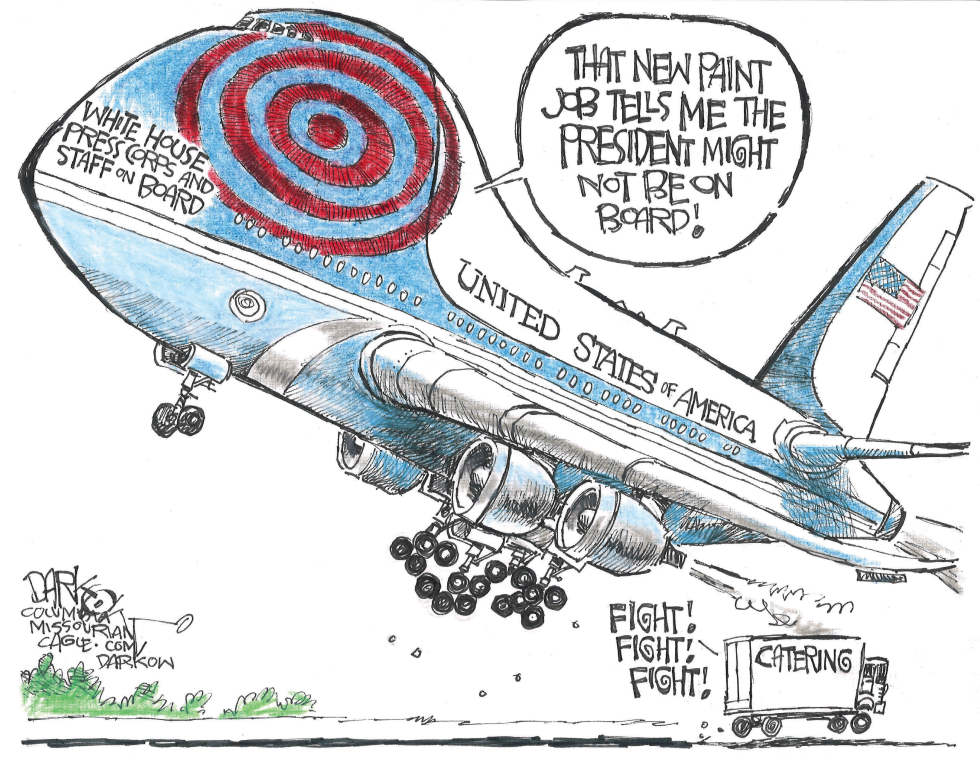
Air Force One appears with a large target painted on its upper fuselage while carrying White House press corps and staff. A nearby catering truck chants fight slogans as the plane descends. The image suggests the president may not be aboard the targeted aircraft. This visual plays on recent tensions surrounding presidential travel and security. The editorial stance highlights perceived risks or distancing from official duties.
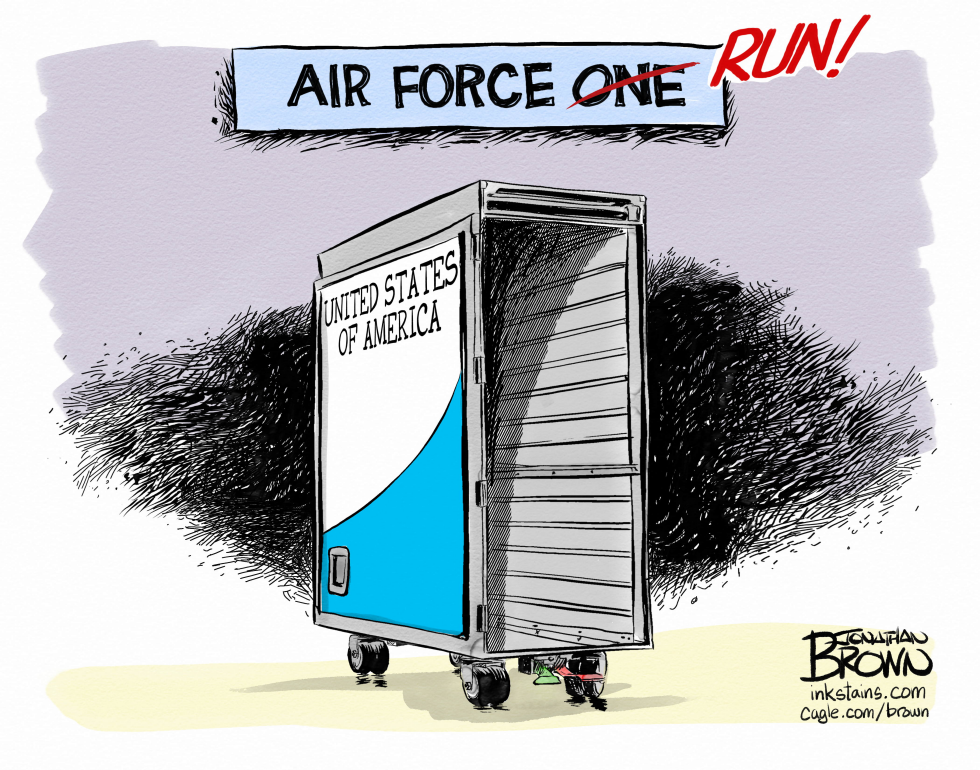
A wheeled airline catering cart occupies the center of the frame, painted in the livery of the presidential aircraft: white upper body, curved blue lower panel, and UNITED STATES OF AMERICA lettered down the side. Its full height door hangs open on empty wire shelving. Above it a pale blue placard reads AIR FORCE ONE, with ONE struck through in red and RUN! added beside that word in the same color. Two neckties poke out from between the casters underneath, one of them the long red tie Donald Trump is known for, the only trace of the men folded up inside. The drawing responds to reports that Trump sheltered in an airline galley cart against an assassination threat traced to Iran, turning the most recognizable branding in presidential aviation into an instruction to flee. Jonathan Brown signed the lower right corner alongside inkstains.com and Cagle.com/brown.
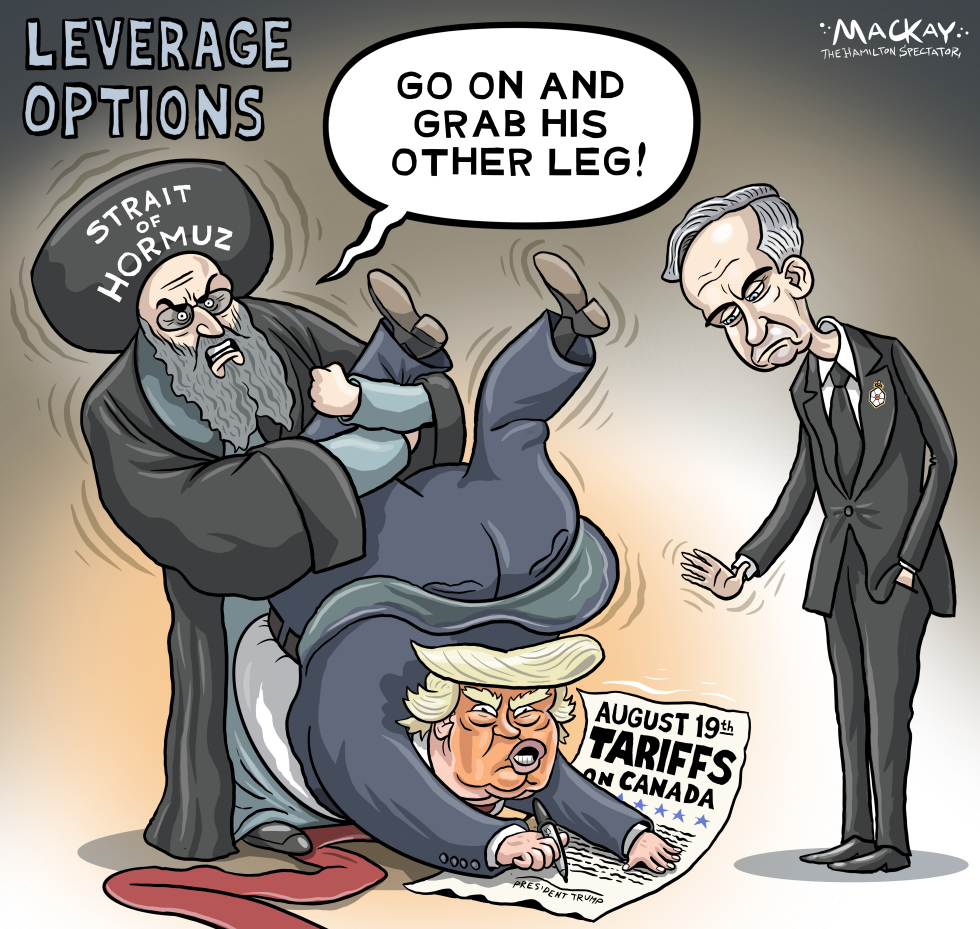
On August 12 2026 President Trump prepares to impose tariffs on Canada amid tensions involving the Strait of Hormuz. The move draws immediate pushback from Iran-linked actors seeking leverage. The piece argues that tariff policy invites risky entanglements that weaken U.S. position.
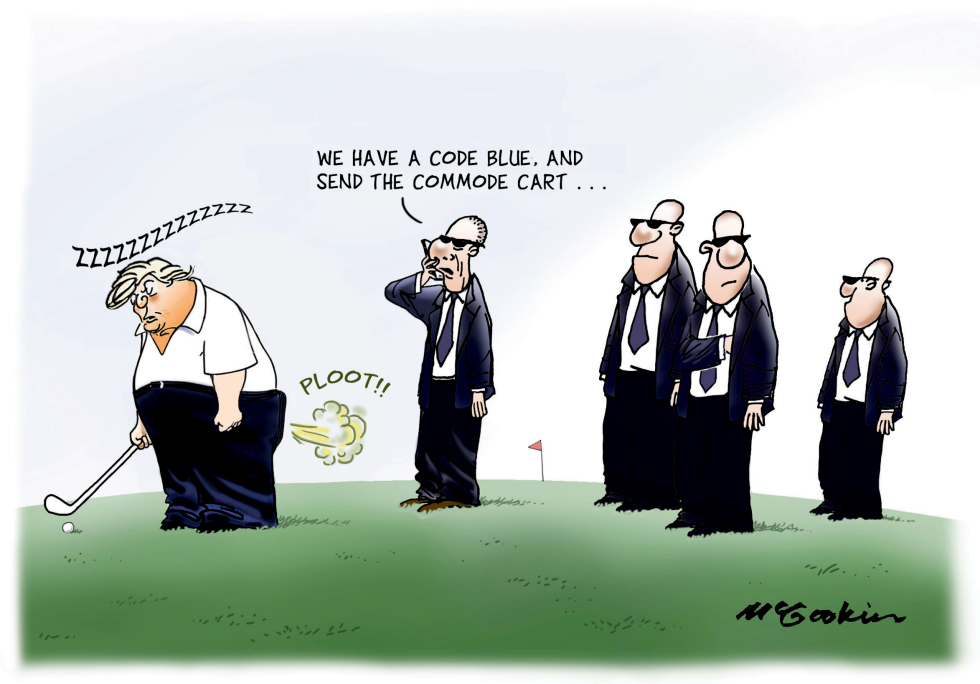
Donald Trump was depicted on a golf course in a scene showing him asleep while standing with a club. Secret Service agents responded to an emission by calling for a commode cart under code blue protocol. The episode highlights ongoing security protocols around the former president during leisure activities. The piece takes the position that such personal moments underscore the constant vigilance required of protective details.
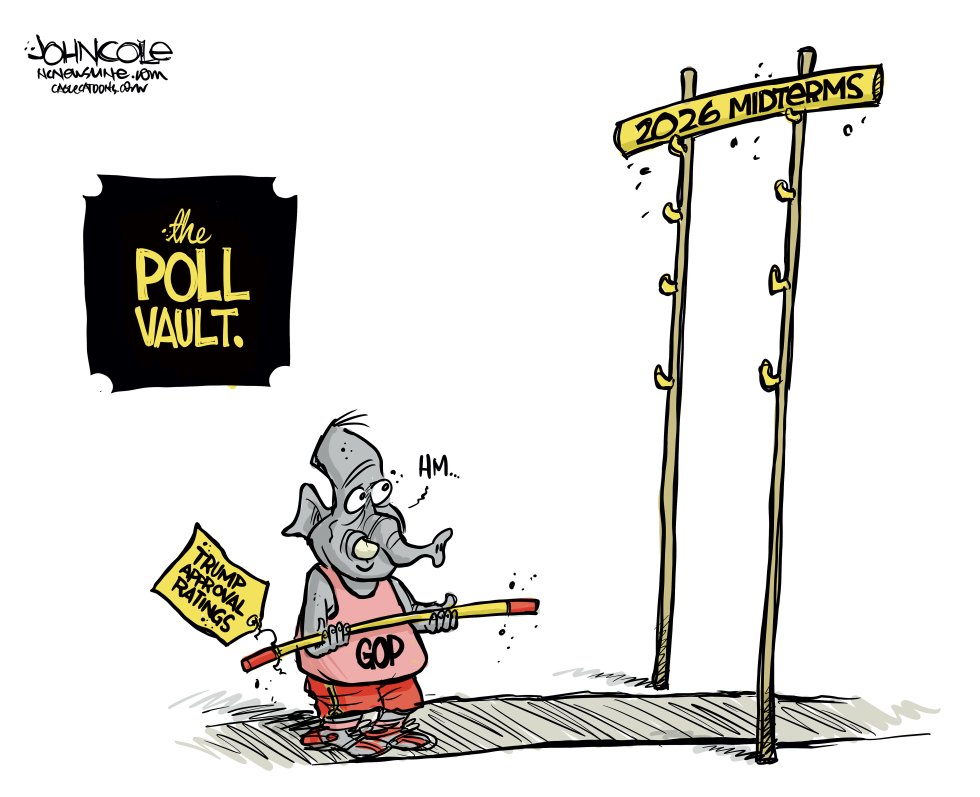
Republicans face the 2026 midterm elections with Donald Trump as a central figure whose approval ratings remain a key variable. Party strategists must decide how heavily to tie their candidates to the former president amid ongoing voter sentiment. The piece portrays the GOP as an athlete preparing to clear the midterm bar but questioning whether the available pole will suffice.
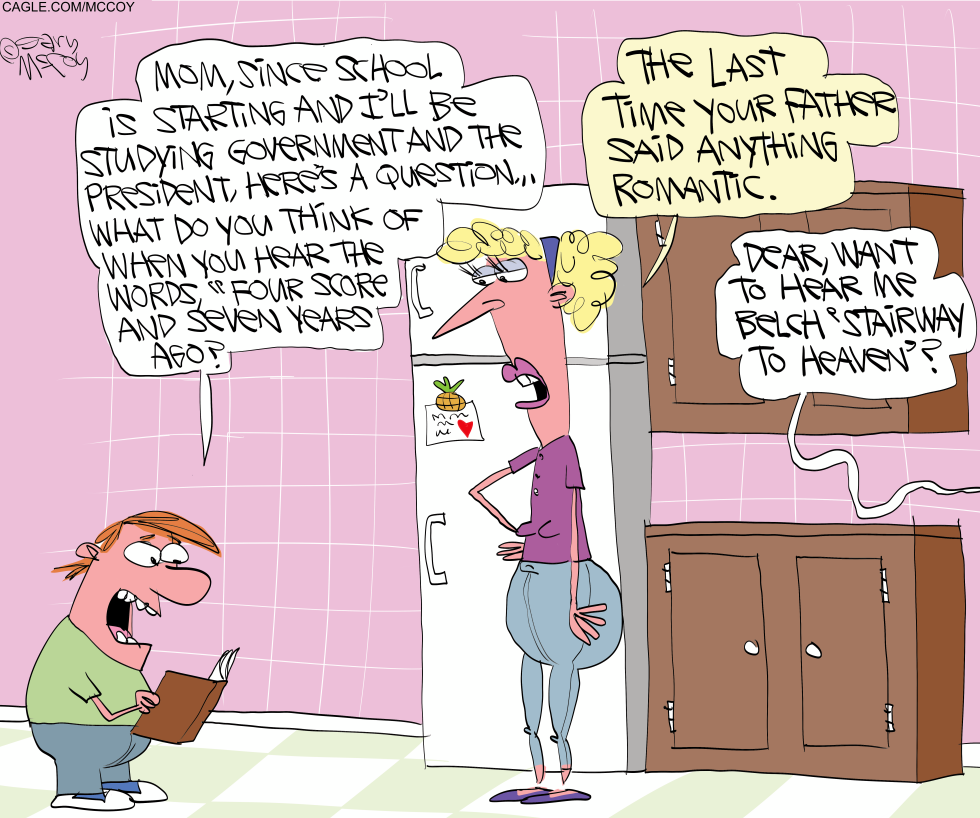
A child preparing for school asks his mother what she thinks of upon hearing Lincoln's famous opening line from the Gettysburg Address. Her reply points directly to the last time her husband said anything romantic. The father, hidden in a kitchen cabinet, responds by offering to belch the lyrics to Stairway to Heaven. The exchange highlights an ongoing household dynamic of mismatched expectations around affection and daily behavior.
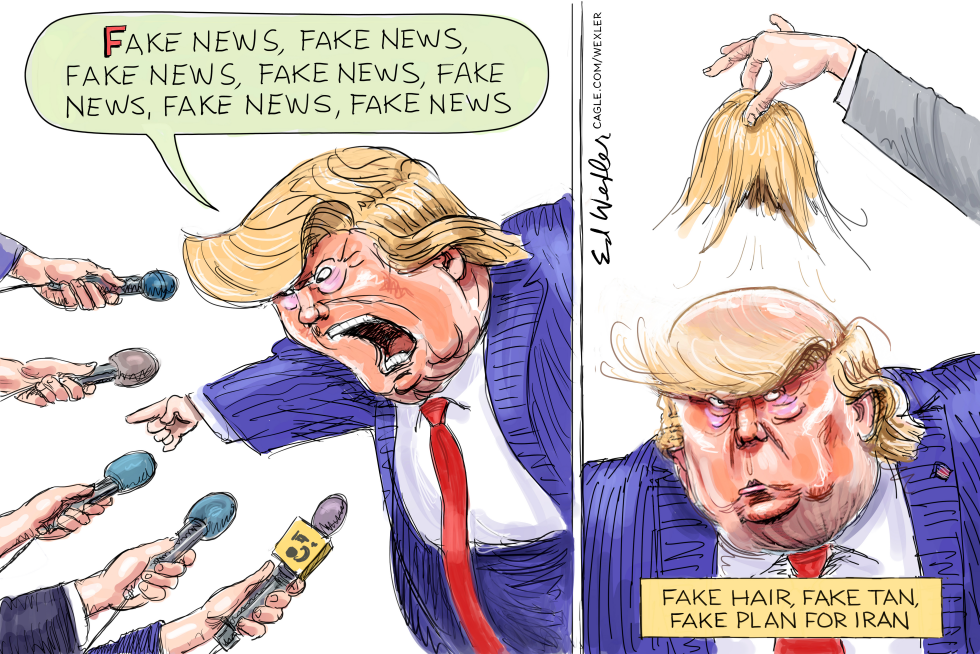
Donald Trump repeatedly labels media coverage as fake news during press encounters. The cartoon responds by questioning the authenticity of his appearance and his approach to Iran policy. It portrays the disconnect between his public statements and underlying realities.
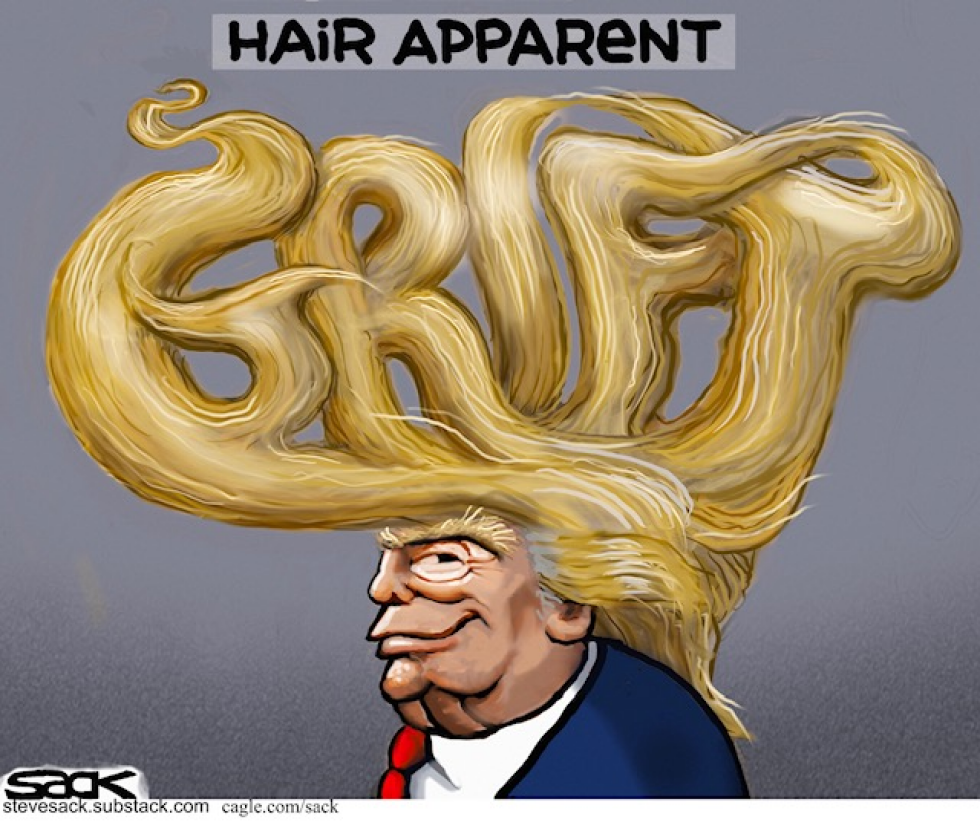
Donald Trump faces renewed scrutiny over business dealings and personal enrichment while holding office in 2026. Critics point to ongoing conflicts between his public role and private ventures. The editorial uses the hair visual to argue that self-dealing remains the defining feature of his leadership.
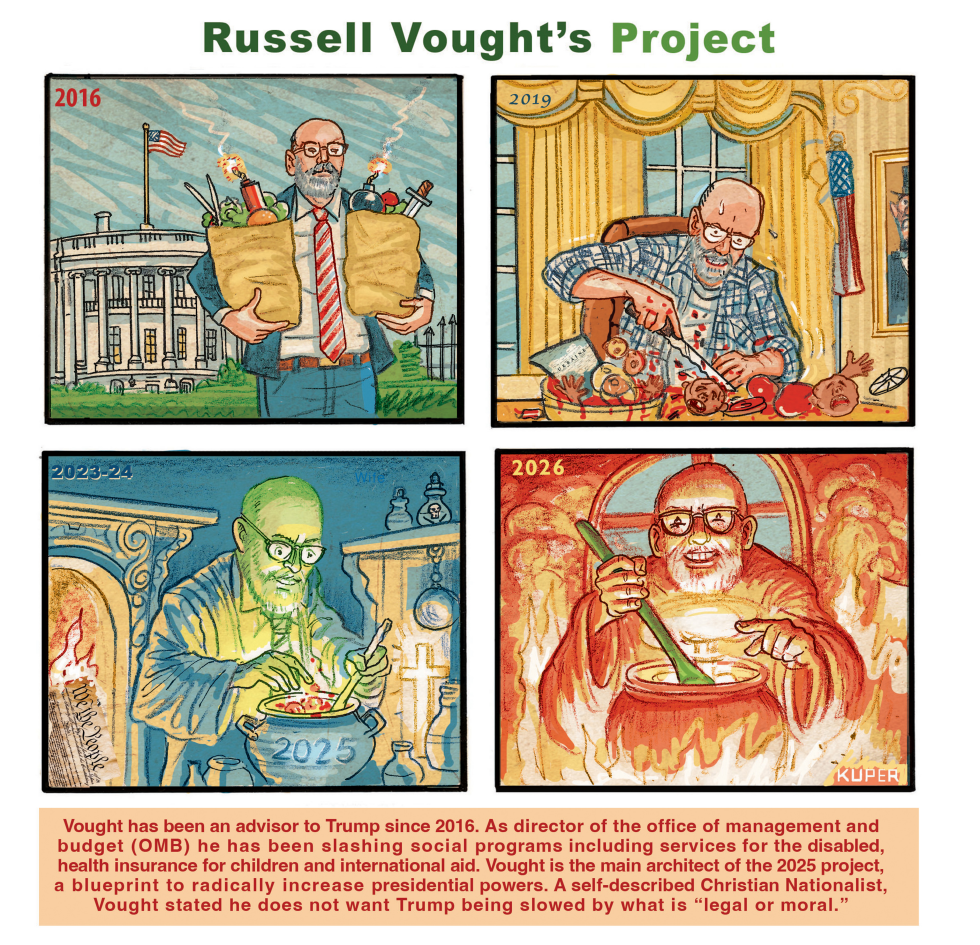
Russell Vought has served as a Trump advisor since 2016 and later directed the Office of Management and Budget, where he cut funding for disability services, children’s health insurance and foreign aid. He is the principal author of Project 2025, a plan to enlarge presidential authority. The cartoon presents his progression from 2016 through 2026 as a deliberate effort to remove legal or moral restraints on executive action.
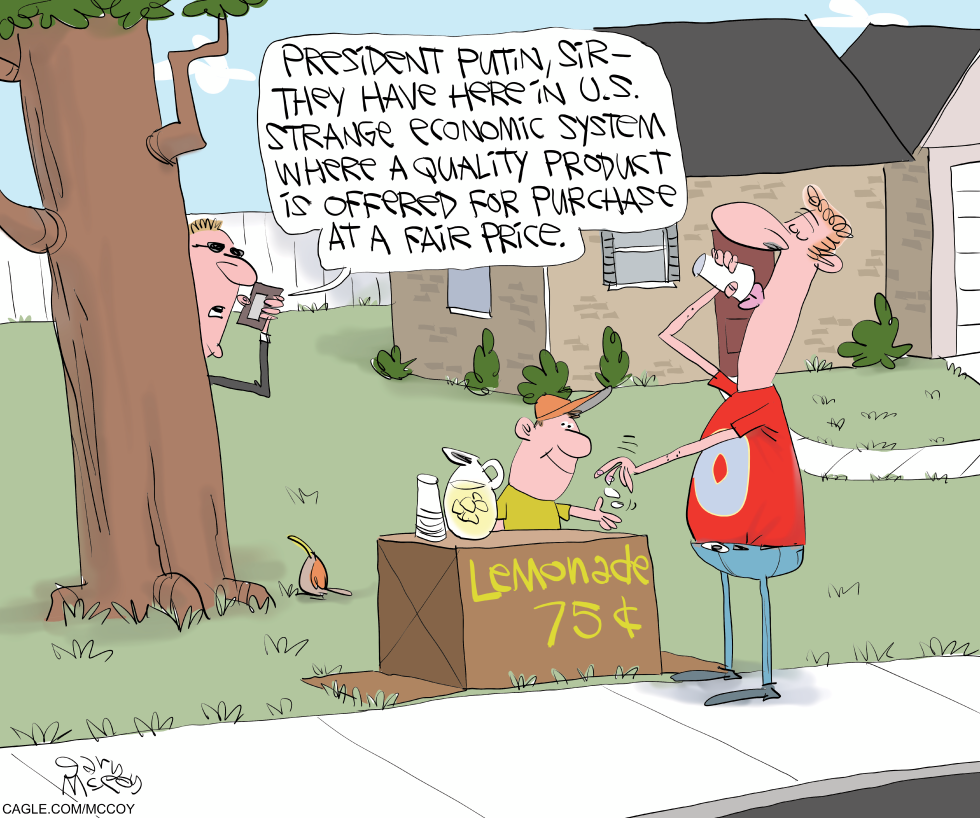
A cartoon depicts a man explaining the U.S. free-market system of offering quality goods at fair prices to President Putin during a phone call next to a child's lemonade stand. The scene underscores the perceived strangeness of American capitalism from a Russian perspective. The editorial position critiques the disconnect between market-driven economies and state-controlled systems.