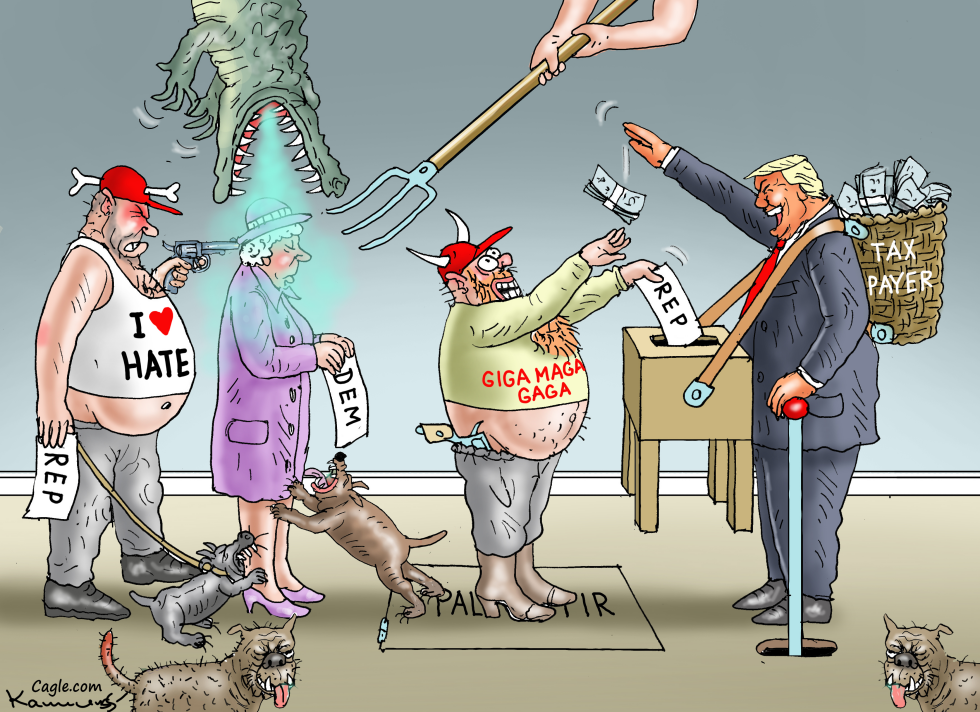
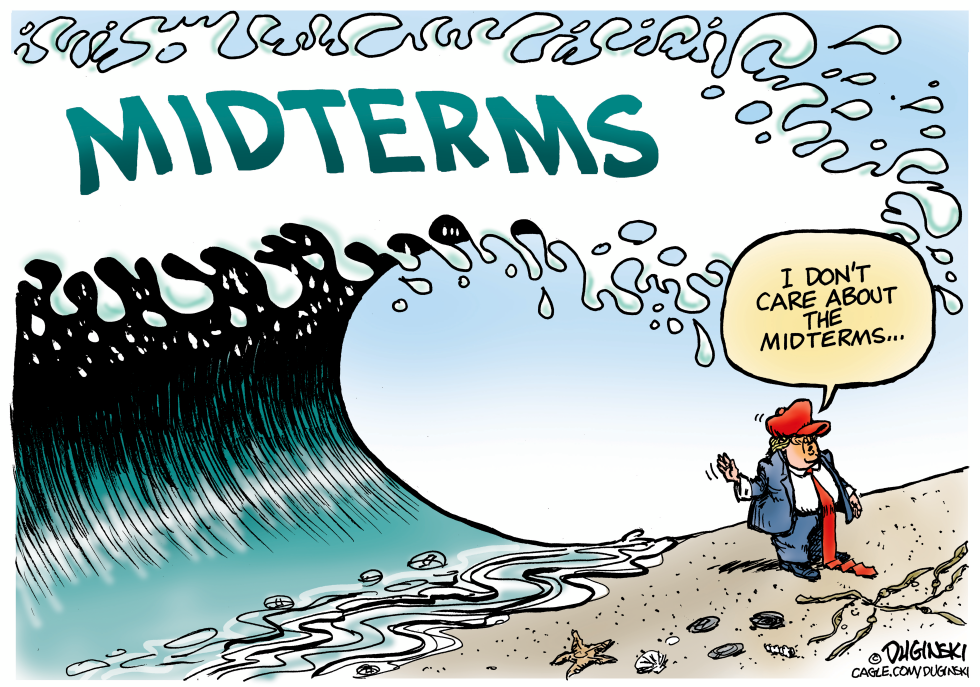
As the 2026 midterm elections approach, former President Trump has positioned himself as a central force in Republican campaigns, directing resources and mobilizing supporters. The cartoon highlights the use of taxpayer money in these efforts and the intense partisan divide, with Democrats portrayed as under attack. It takes the position that such involvement risks undermining fair electoral processes.
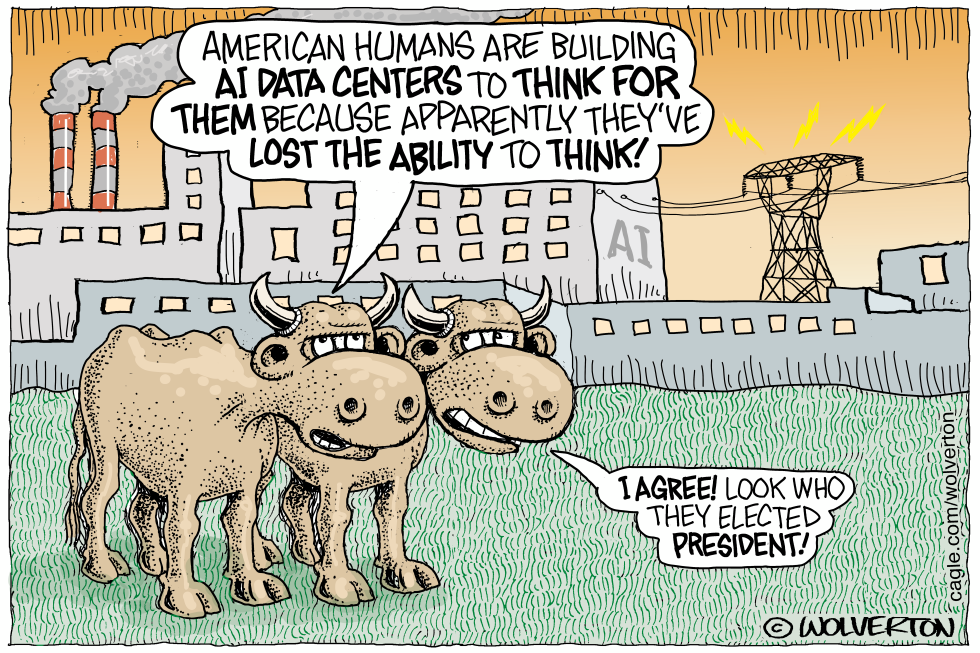
The drawing shows two cows in a field before industrial structures labeled AI. One cow states that American humans build AI data centers to think for them after losing that ability. The second cow agrees and points to the elected president. Smokestacks and an electricity tower appear in the background. The piece responds to ongoing debates over AI infrastructure demands and the 2026 election context by connecting energy use to political decisions.
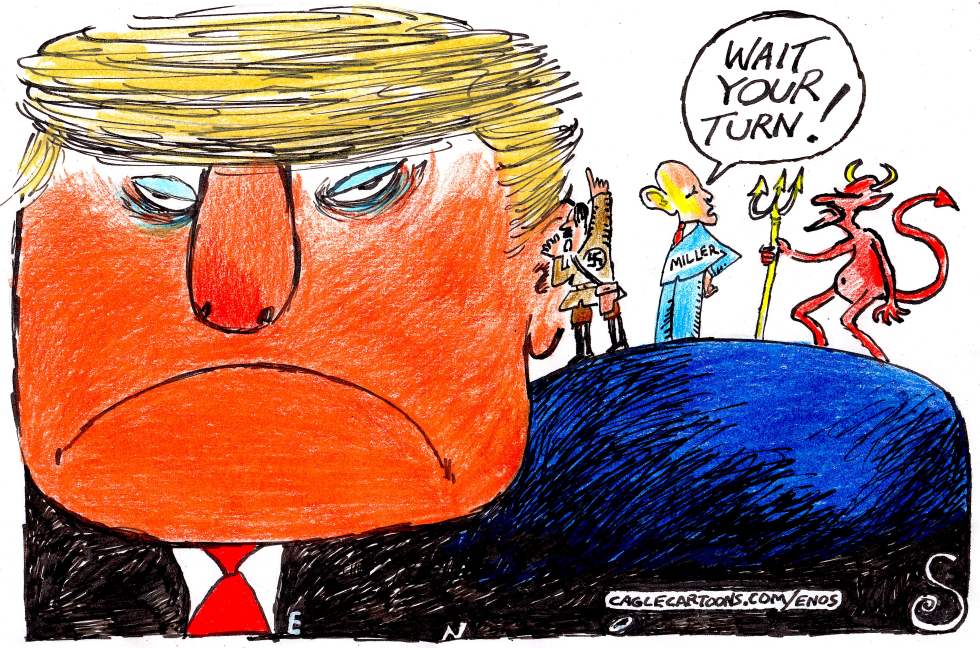
A large caricature of Donald Trump dominates the frame with an orange face and yellow hair. To the right, a smaller Stephen Miller figure in a blue shirt stands beside a red devil holding a pitchfork. A speech bubble from the devil says 'WAIT YOUR TURN!' A tiny figure with a swastika armband appears behind Miller. The image is dated July 6, 2026, and signed by Randall Enos with a Cagle Cartoons credit line.
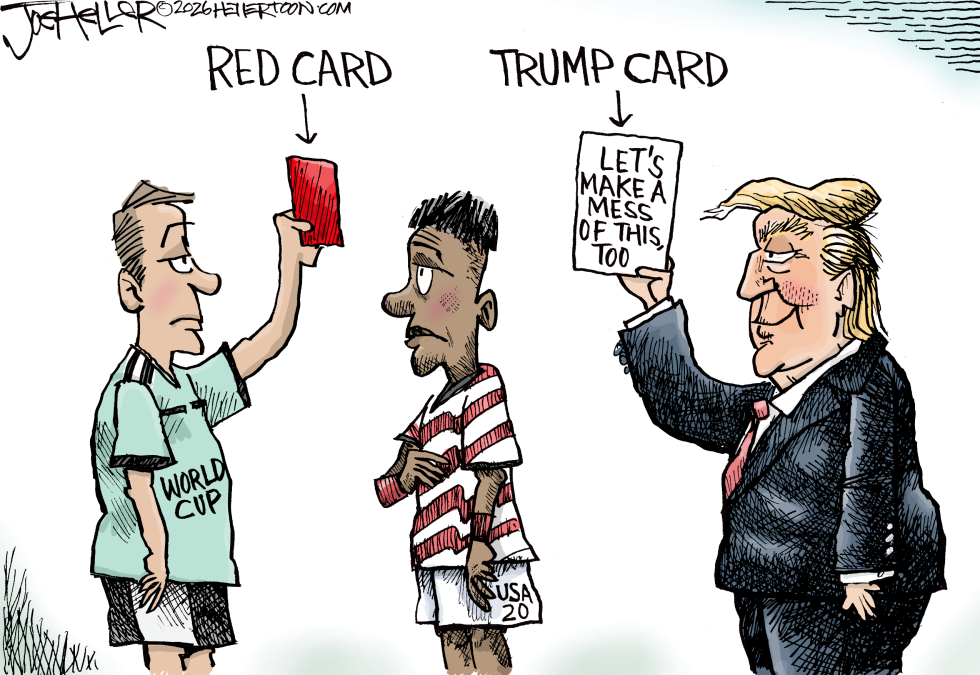
On July 6 2026 Joe Heller depicts a World Cup referee displaying a red card to a USA-jersey player while Donald Trump holds a sign reading LET'S MAKE A MESS OF THIS TOO. The cartoon contrasts the standard soccer penalty with Trump's alternative card. Publication occurs weeks before the 2026 World Cup begins in North America. The image places the referee on the left the player in the center and Trump on the right. Text labels identify each card clearly.
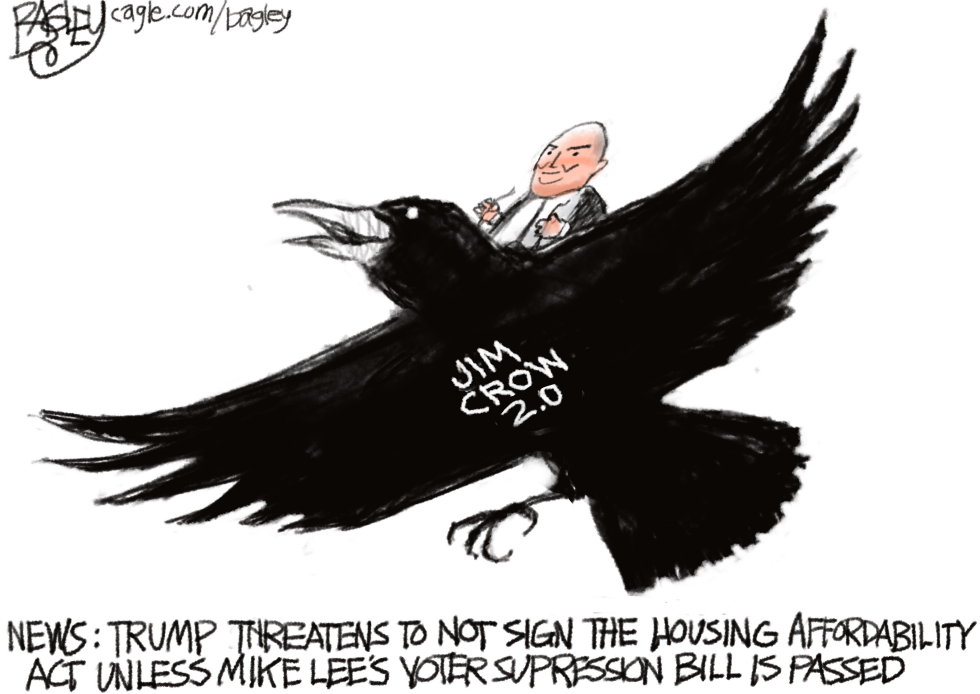
The cartoon shows President Trump riding a large black bird labeled Jim Crow 2.0. The bird carries him across the frame. Bottom text states Trump threatens to withhold signature from the Housing Affordability Act unless Mike Lee's voter suppression bill passes. The image responds to legislative negotiations in late June 2026 where the president linked the two measures. It uses the historical Jim Crow reference to frame the voter bill as restrictive. The visual ties the housing measure directly to the election-related proposal.
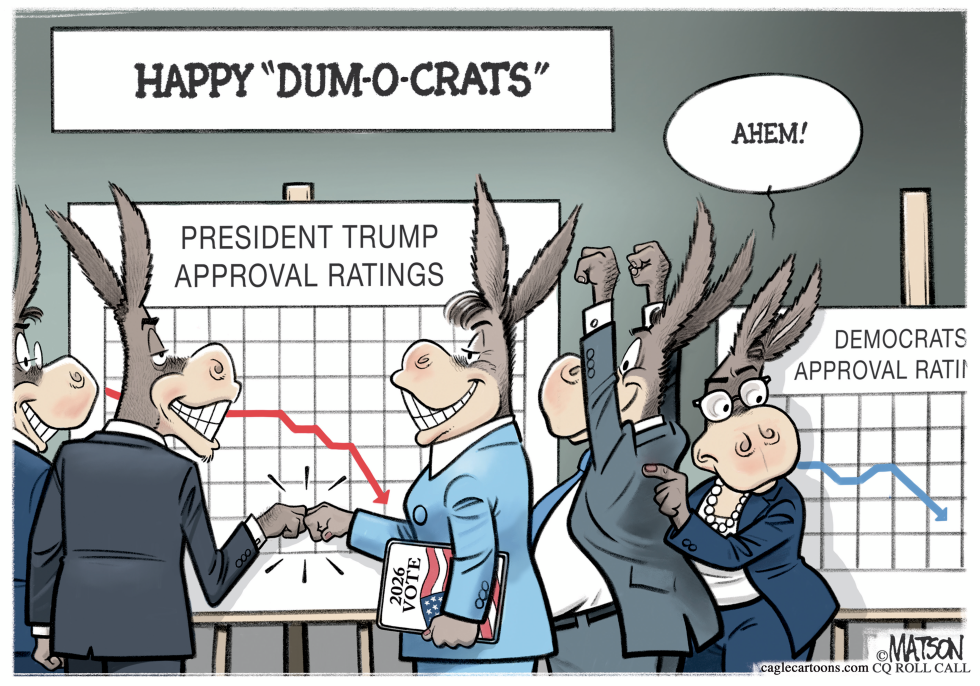
The cartoon depicts Democratic lawmakers depicted as donkeys celebrating a sharp drop in President Trump's approval ratings on a large chart. One figure holds a notebook labeled 2026 VOTE while others raise fists in triumph. A second chart on the right shows Democratic approval ratings also declining. A speech bubble with the word AHEM interrupts the celebration. The image highlights the party's focus on opposition polling rather than its own standing with voters ahead of the midterm elections.
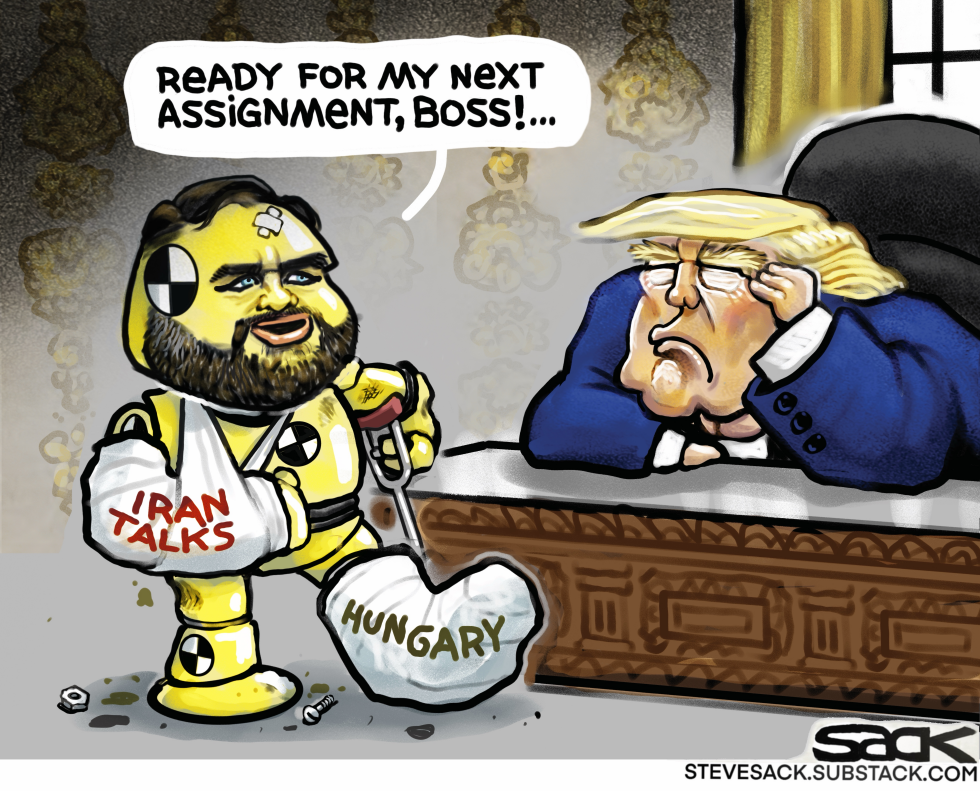
The image depicts JD Vance as a damaged robot-like figure with a cast labeled Iran Talks and a weight marked Hungary. He stands before Donald Trump at a desk and declares readiness for another assignment. The scene responds to recent failed negotiations involving Iran and a Hungary visit tied to Orban. Trump appears exasperated with his head in hand. The visual highlights ongoing foreign policy strains in the administration as of the April 2026 date.
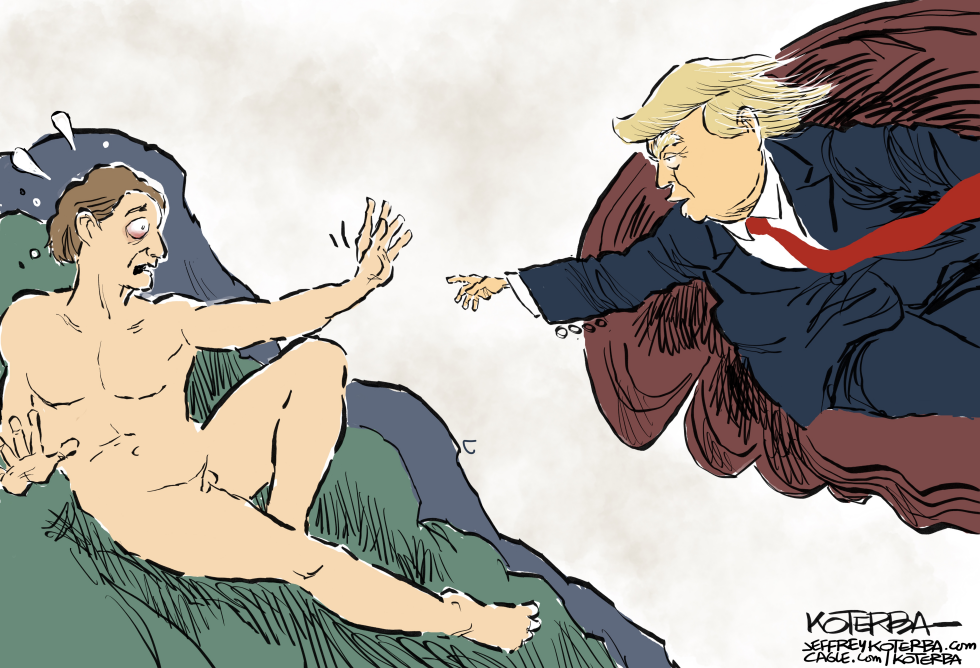
Jeff Koterba's cartoon reimagines Michelangelo's Creation of Adam, placing a Trump-like figure in the role of God, clad in a suit and red tie, floating in a red cloak while reaching toward a nude, shocked man resembling Adam on greenish rocks. The image captures satirical elements of presidential hubris, with tags including Trump caricature, political satire, divine parody, ego commentary, artistic homage, and cartoon humor. Such visuals often spark discussions on leadership perceptions, blending historical art with contemporary politics in a straightforward, humorous critique.
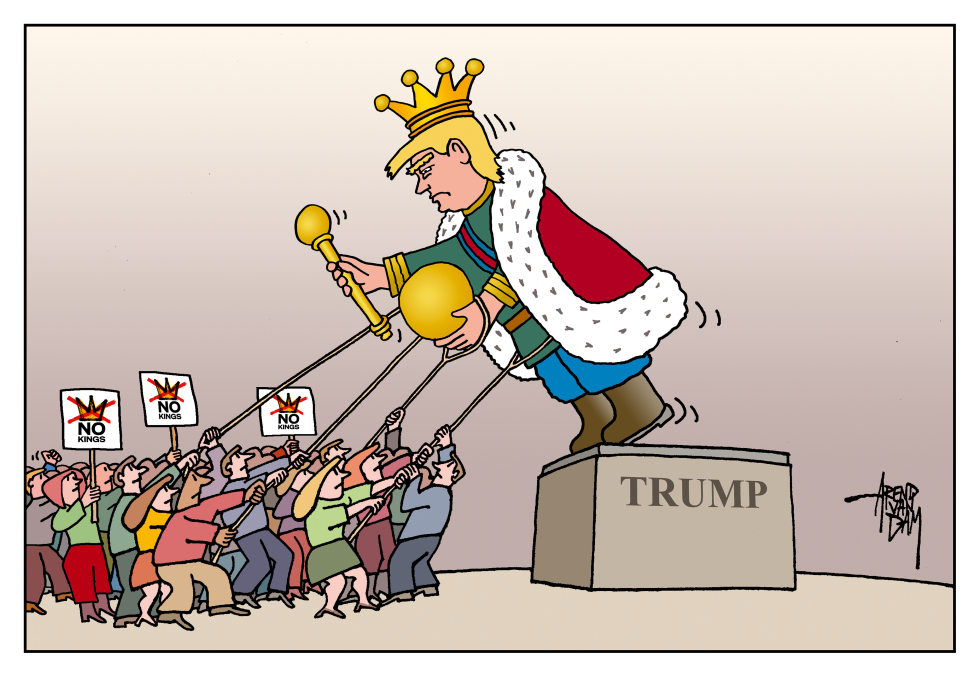
Arend van Dam's cartoon depicts a massive figure resembling Donald Trump, adorned with a crown and royal robe, perched atop a pedestal marked 'TRUMP.' A diverse group of protesters, holding signs reading 'NO KINGS,' 'NO,' and another 'NO,' tug on ropes attached to the figure's scepter, causing it to tilt as if being toppled in an act of resistance. The scene evokes themes of USA democracy clashing with autocracy, portraying a symbolic revolution against a would-be king or dictator. Protests and demonstrations fill the foreground, highlighting public outcry against unchecked power. Dated 2026, the artwork underscores ongoing concerns about authoritarian tendencies in politics.
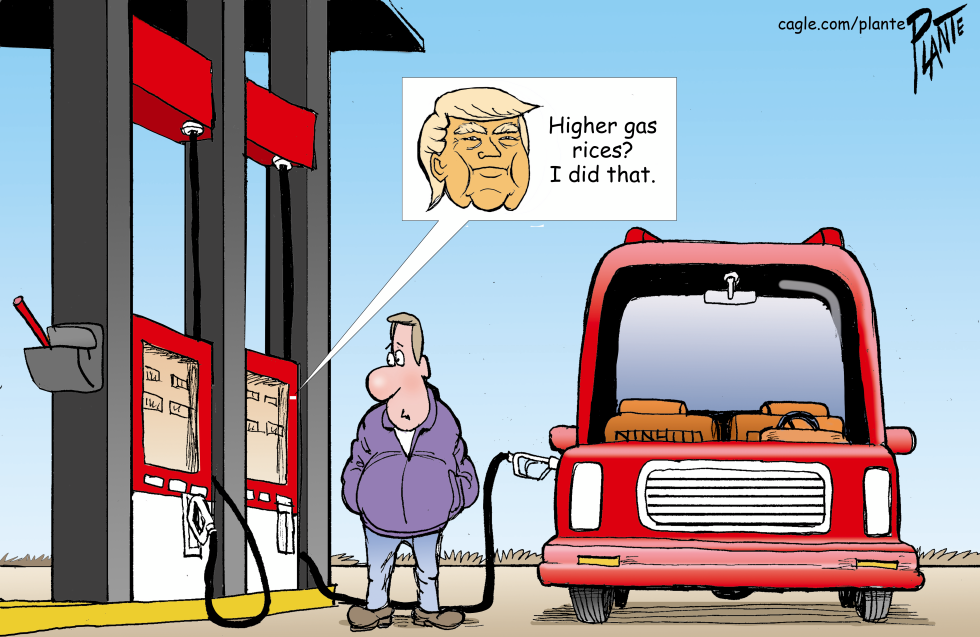
Bruce Plante's cartoon shows a gas pump topped with President Donald J. Trump's head, smirking as it says, 'Higher gas rices? I did that,' while a driver fuels his red truck. The image ties into tags like higher gas prices, war, Iran, Israel, Middle East, and energy crisis, poking at Trump's potential role in escalating fuel costs through foreign policy missteps. It's a straightforward jab, clear in its satire without overcomplicating the visuals. The dry humor lands on the absurdity of a politician claiming credit for economic pain at the pump. With tags covering UAE, Saudi Arabia, and other regional players, the cartoon nods to broader geopolitical tensions driving oil prices up. Editors see these kinds of cartoons circulate well when gas prices spike, reminding readers of the human cost in everyday routines.