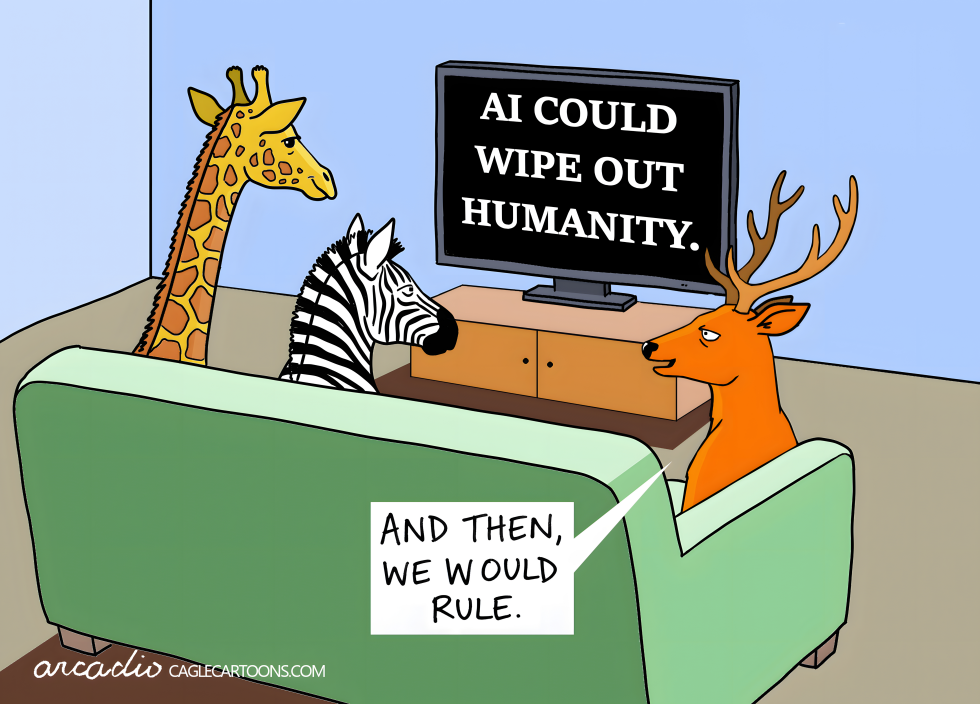
Public discussion of artificial intelligence risks has grown with warnings that advanced systems could threaten human survival. The cartoon uses wildlife characters to highlight how some might view such an outcome as beneficial rather than catastrophic. It pokes at the self-centered lens through which existential threats are sometimes considered.
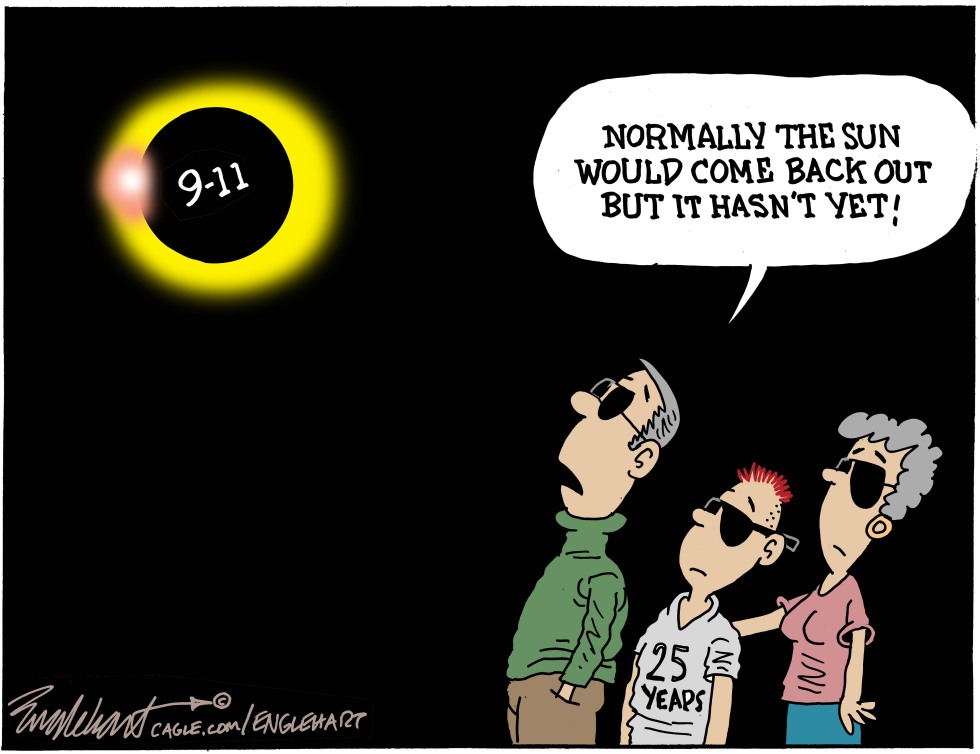
The 25th anniversary of the September 11 attacks arrives with the nation still reflecting on the event's profound and lasting effects. The cartoon uses an eclipse to represent how the attacks' shadow has not lifted. It takes the position that the trauma and changes from that day continue to define the era.
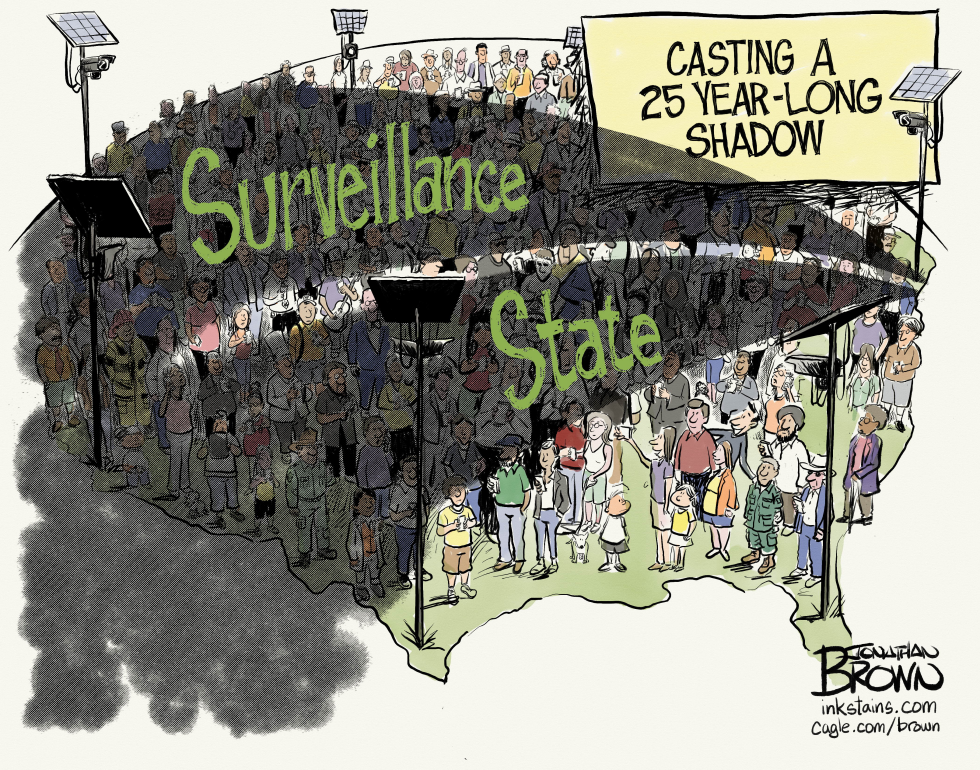
The cartoon depicts a dense crowd of Americans standing on a map of the United States, partially obscured by a large dark shadow cast by surveillance cameras mounted on poles. The words 'Surveillance State' appear prominently in green lettering across the scene, while a sign in the upper right reads 'CASTING A 25 YEAR-LONG SHADOW.' The image comments on the lasting effects of expanded government surveillance programs that began after the September 11 attacks, now spanning a quarter century. It illustrates how these measures continue to influence daily life and public spaces in 2026.
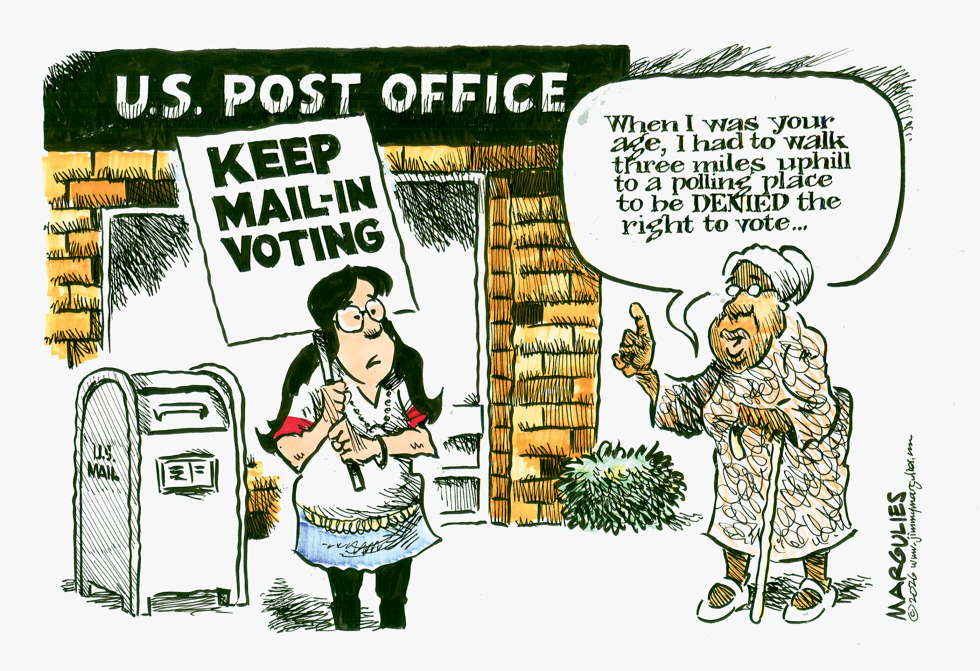
A protest sign at a U.S. Post Office calls for an end to mail-in voting. The cartoon responds to ongoing state-level efforts to restrict mail ballots after expanded use in recent elections. Such limits disproportionately affect older voters and those with mobility issues who previously faced physical barriers at polling places. The piece argues that rolling back mail-in options revives the very obstacles elderly citizens once endured, undermining broader access to the ballot.
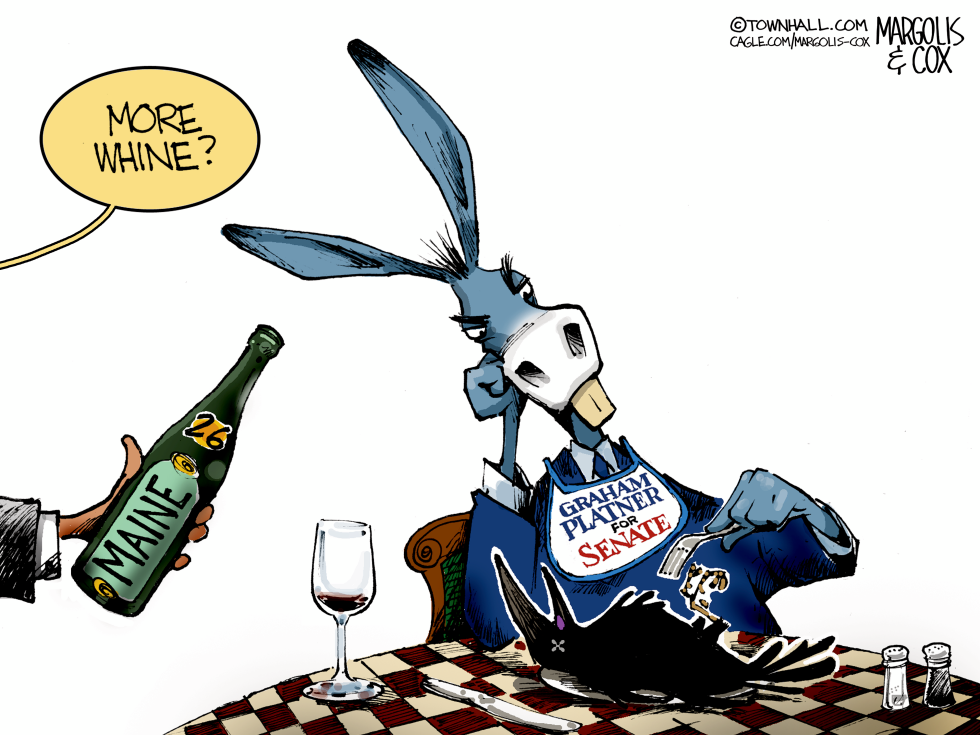
A political cartoon published July 9, 2026, depicts a slumped Democratic donkey wearing a Graham Platner for Senate bib at a table with spilled wine. A hand offers a bottle labeled Maine 26 as a speech bubble asks More Whine? The image responds to the recent defeat of the Maine Senate candidate in the 2026 election cycle.
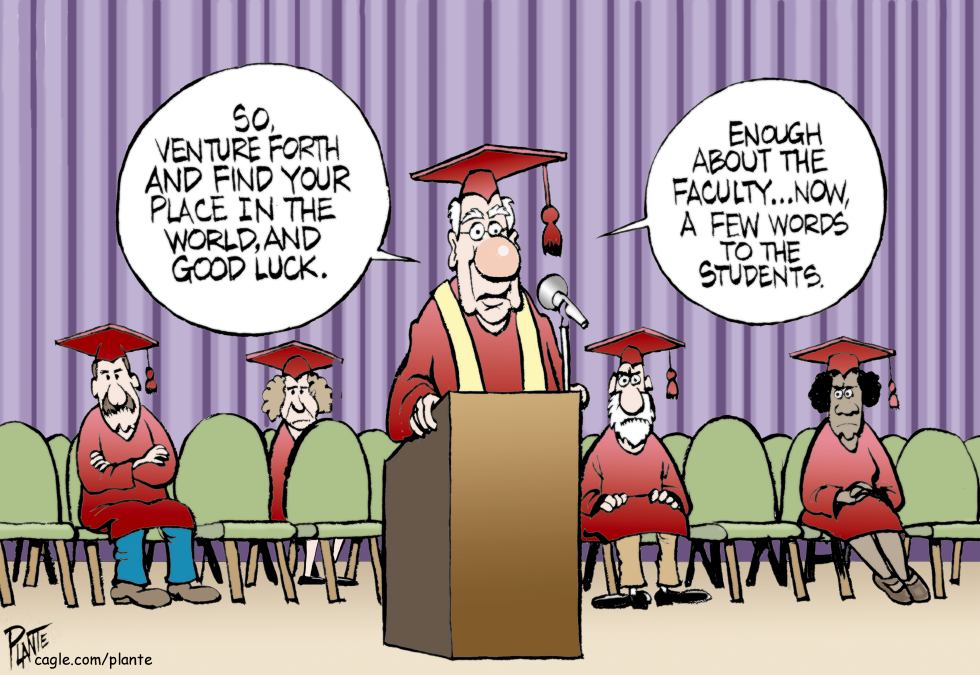
At a 2026 university commencement, the speaker at the podium tells seated faculty members in caps and gowns that discussion of their situation is over before turning to the graduates. The scene reflects ongoing budget pressures on colleges and universities after the pandemic, including professor layoffs and loss of tenure.
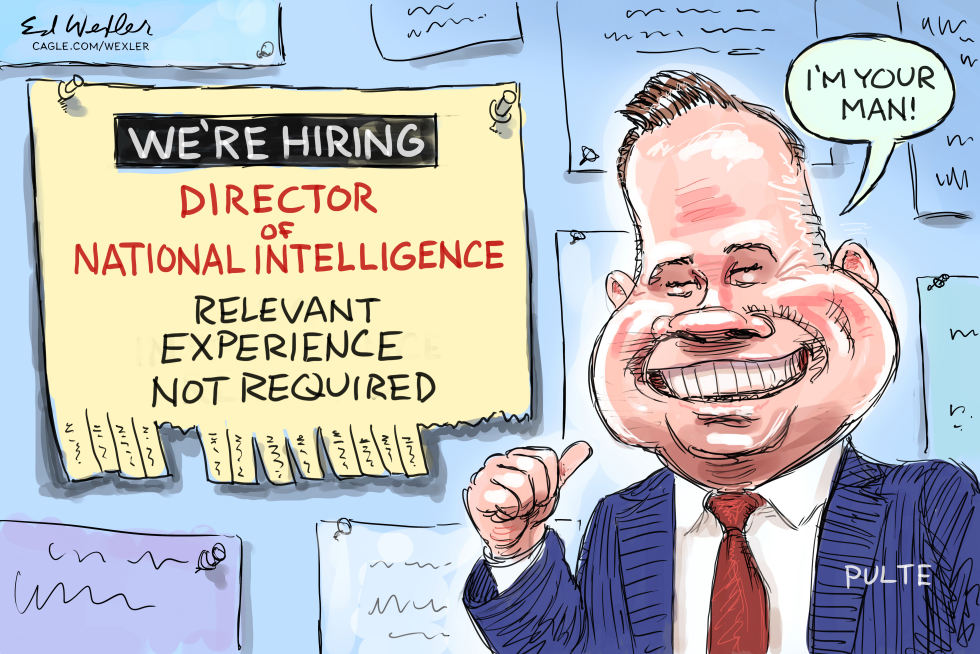
Bill Pulte appears in a political cartoon dated June 8, 2026, responding to discussions around his potential nomination as Director of National Intelligence. The image shows a hiring notice posted in an office setting that explicitly states relevant experience is not required for the role. Pulte, labeled on his suit, smiles broadly and declares himself the man for the job in a speech bubble. The cartoon highlights ongoing debates about qualifications for senior government intelligence positions during that period.
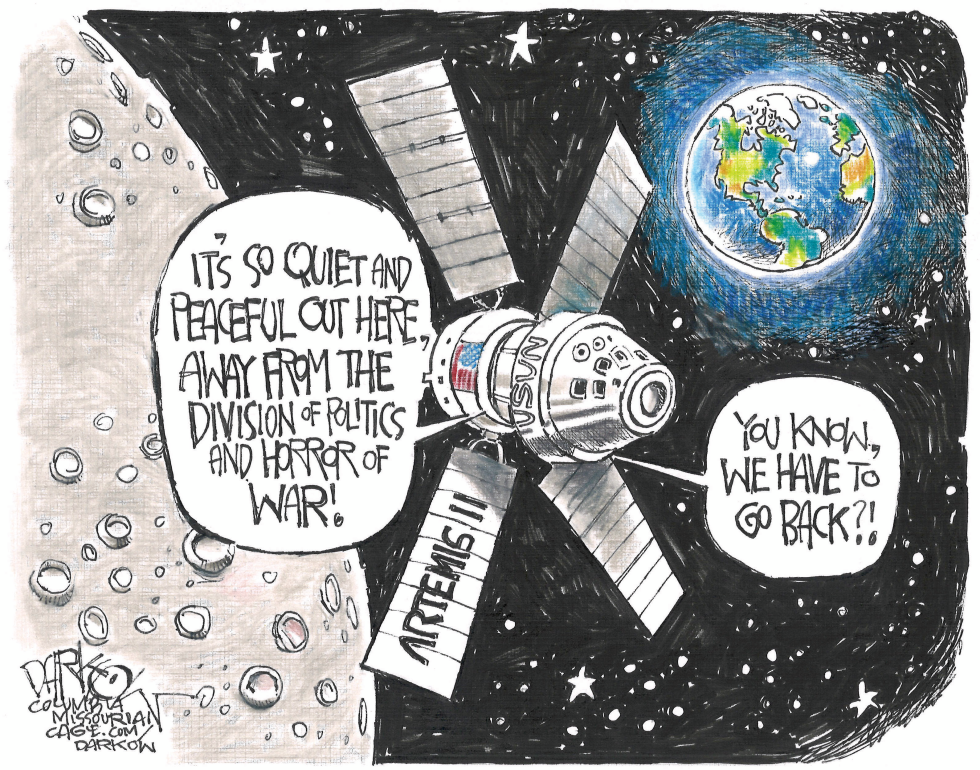
This Daryl Cagle political cartoon analysis features the Artemis II spacecraft floating in serene space, with Earth glowing in the background and the moon nearby. The left speech bubble extols the quiet peace away from division of politics and horror of war, while the right one resignedly notes the need to go back. It's a satirical cartoon on politics and war division, poking fun at how space exploration escaping earthly conflicts offers temporary respite. The NASA Artemis program humor illustration underscores the irony of advanced space missions contrasting with unresolved human divisions on Earth. Through this humorous take on returning to political division, the cartoon cleverly comments on the allure of peaceful space vs chaotic Earth without delving into specifics.
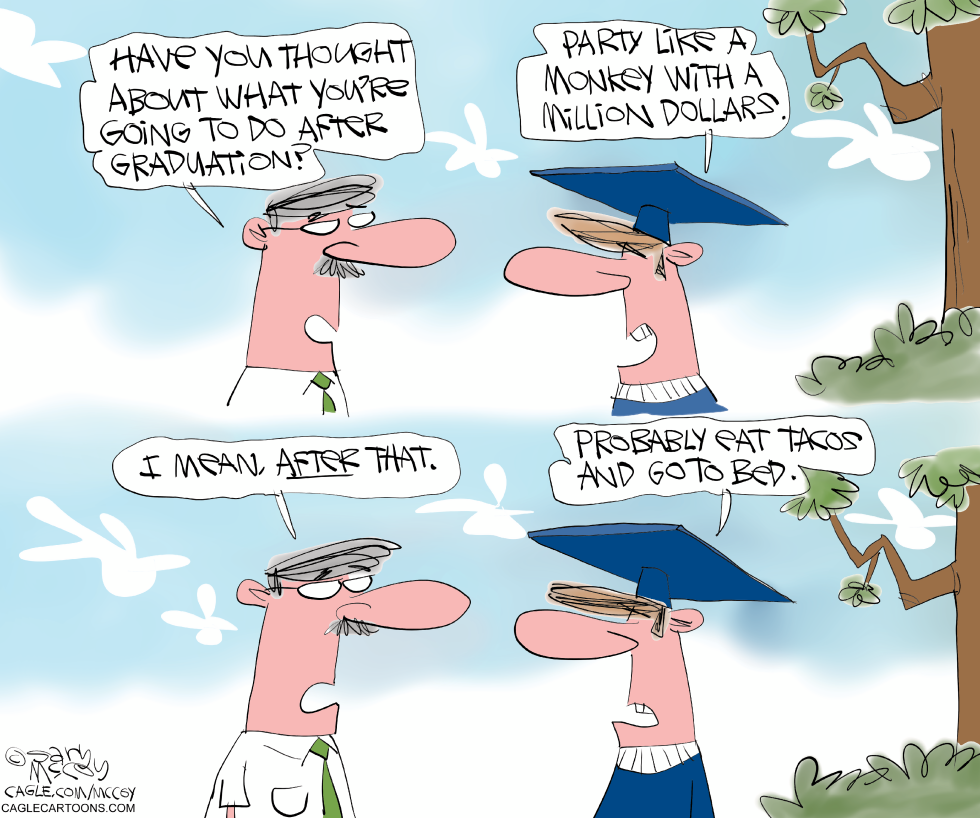
The cartoon depicts an older man in a white shirt and green tie speaking with a graduate wearing a blue cap and gown. Speech bubbles show the man asking about post-graduation plans. The graduate first suggests partying like a monkey with a million dollars. After clarification the graduate says they will probably eat tacos and go to bed. The scene includes trees and sky in the background with the artist signature visible at bottom left.
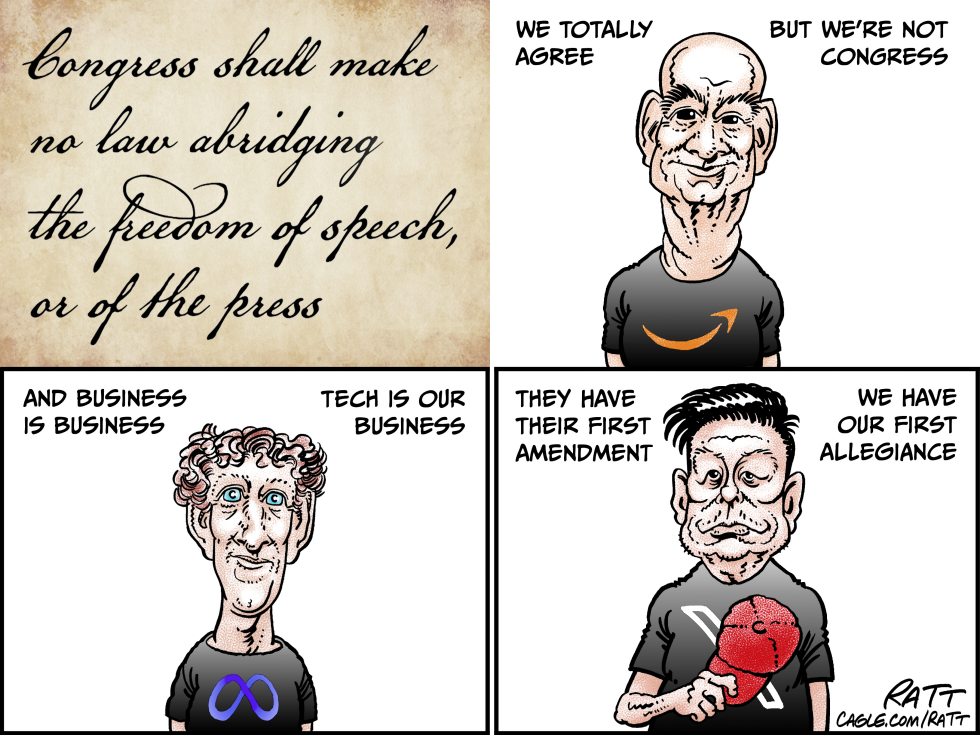
The cartoon shows three tech executives responding to the First Amendment text. Bezos, Zuckerberg and Musk each declare their companies follow business rules rather than congressional limits on speech. The March 2025 image highlights ongoing debates over platform moderation and press ownership by large corporations.
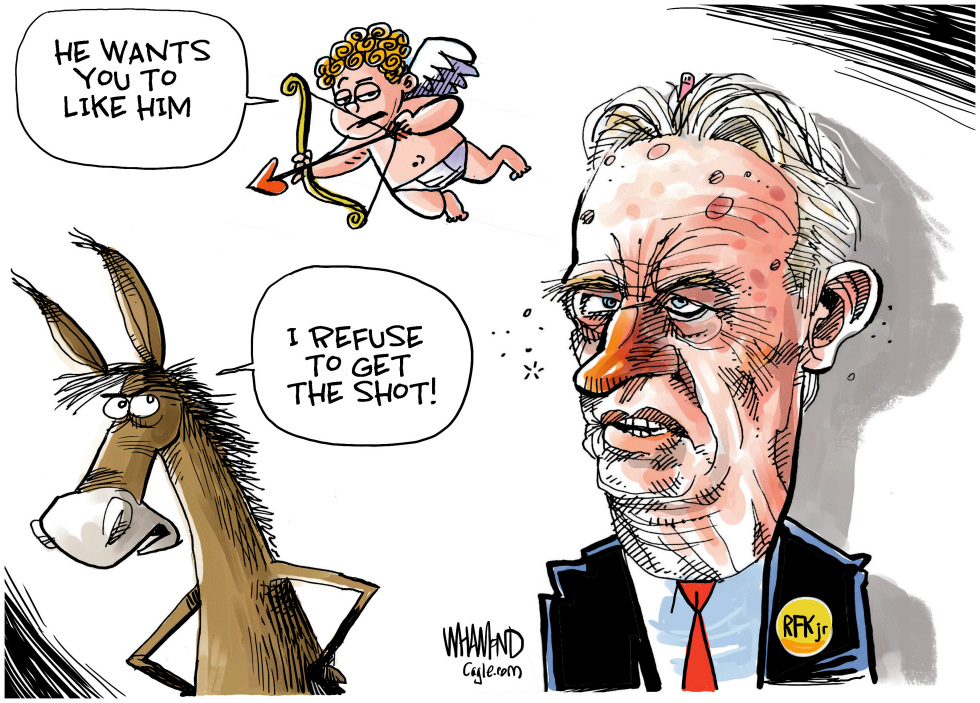
On February 6 2025 Dave Whamond depicts RFK Jr. as the subject of a failed Cupid attempt to win over a Democratic donkey that refuses vaccination. The image coincides with ongoing Senate confirmation hearings for the HHS nominee whose past statements on vaccines have drawn sharp criticism from Democrats. The visual uses the Valentine motif to underscore resistance to the appointment.
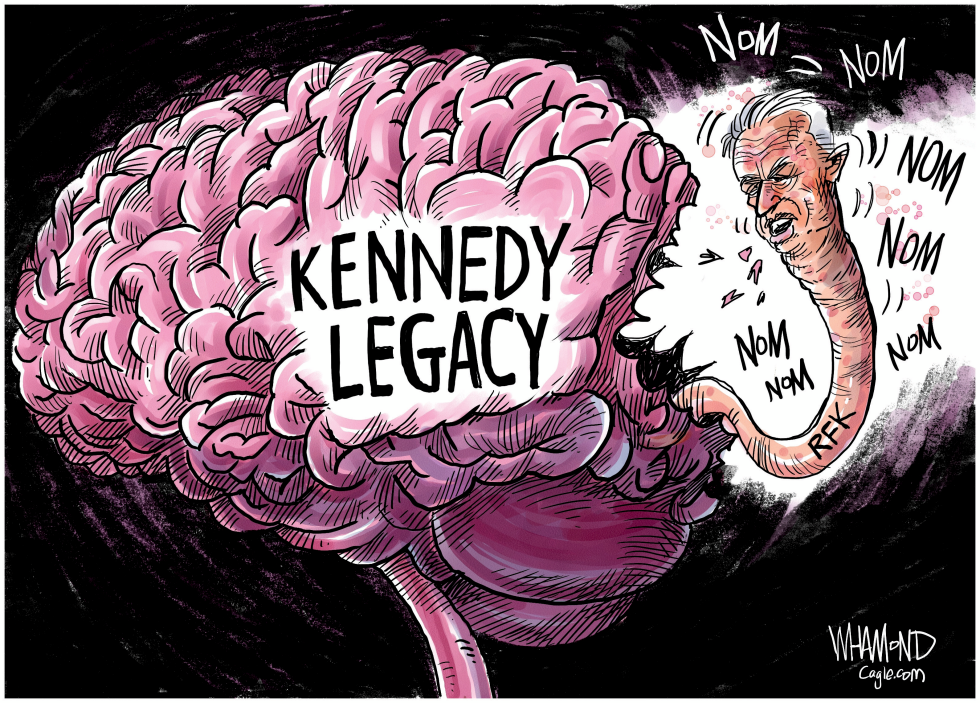
The February 2025 cartoon depicts a worm labeled RFK emerging from and consuming a brain marked Kennedy Legacy, with repeated nom nom sounds. It responds to Robert F. Kennedy Jr.'s nomination hearings for Secretary of Health and Human Services under the incoming administration, highlighting concerns over his antivaccine views and credibility issues.