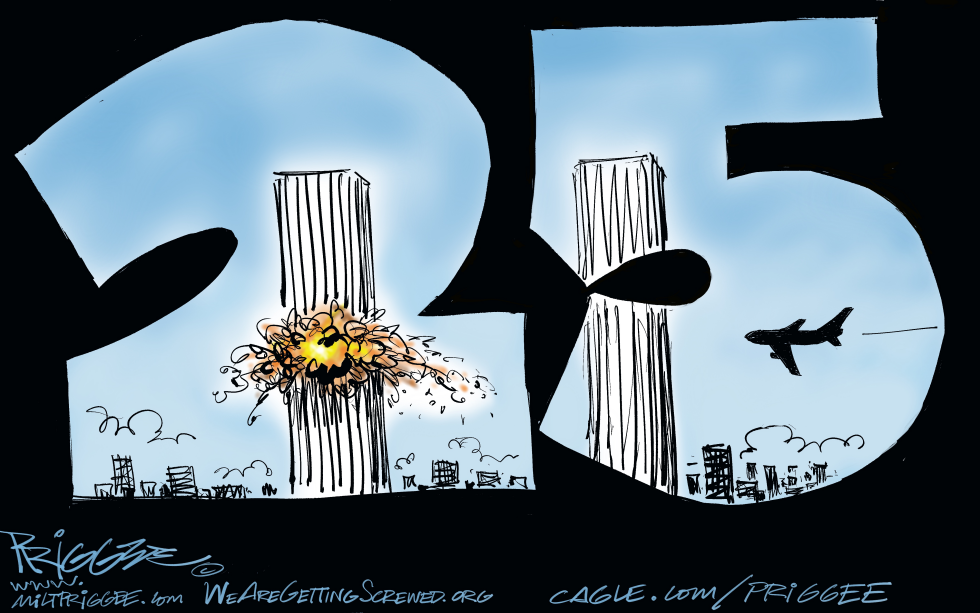
The cartoon commemorates the 25th anniversary of the September 11 attacks by embedding imagery of the Twin Towers and the hijacked plane within the large numerals. It serves as a stark visual reminder of the event's lasting national significance without additional commentary or figures.
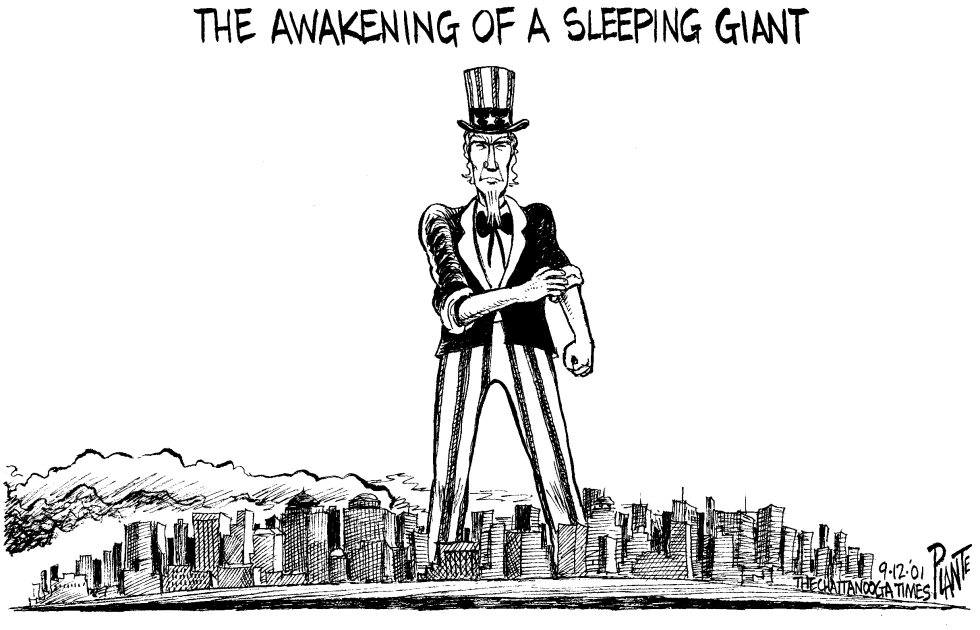
On September 11, 2001, al-Qaeda terrorists flew planes into the World Trade Center and the Pentagon, killing nearly 3,000 people. The attacks prompted an immediate national mobilization and the launch of the war on terror. The cartoon frames the United States as a sleeping giant now roused to action, reflecting the widespread view that the country would respond with unified strength and resolve.
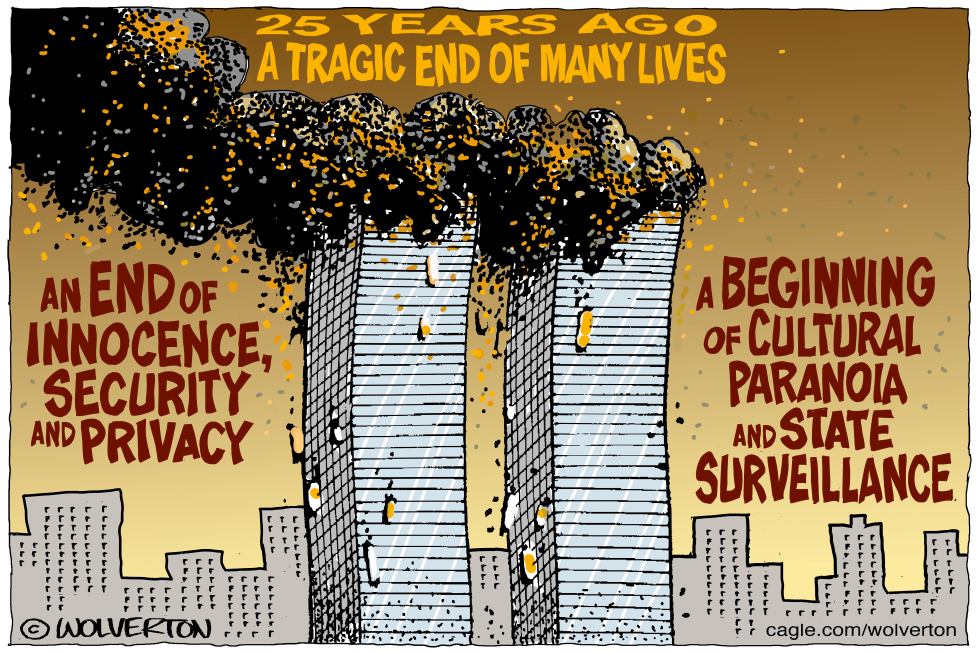
On the 25th anniversary of the September 11 attacks, the cartoon highlights the human tragedy while pointing to the subsequent expansion of state surveillance and erosion of privacy. The editorial position frames the attacks as both an end to national innocence and the start of heightened monitoring.
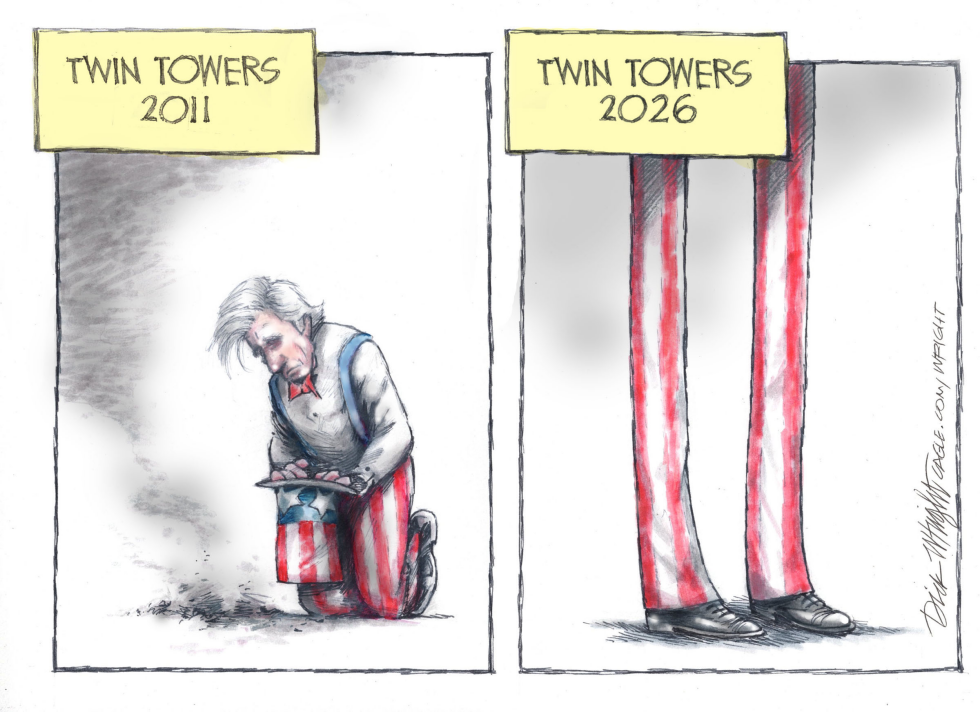
Fifteen years after the September 11 attacks, the United States continued to rebuild its physical and symbolic infrastructure. By 2026 the nation had completed major reconstruction projects at the World Trade Center site and restored a sense of forward momentum. The cartoon contrasts a bowed national figure in 2011 with an upright stance in 2026 to argue that the country has regained its footing and strength.
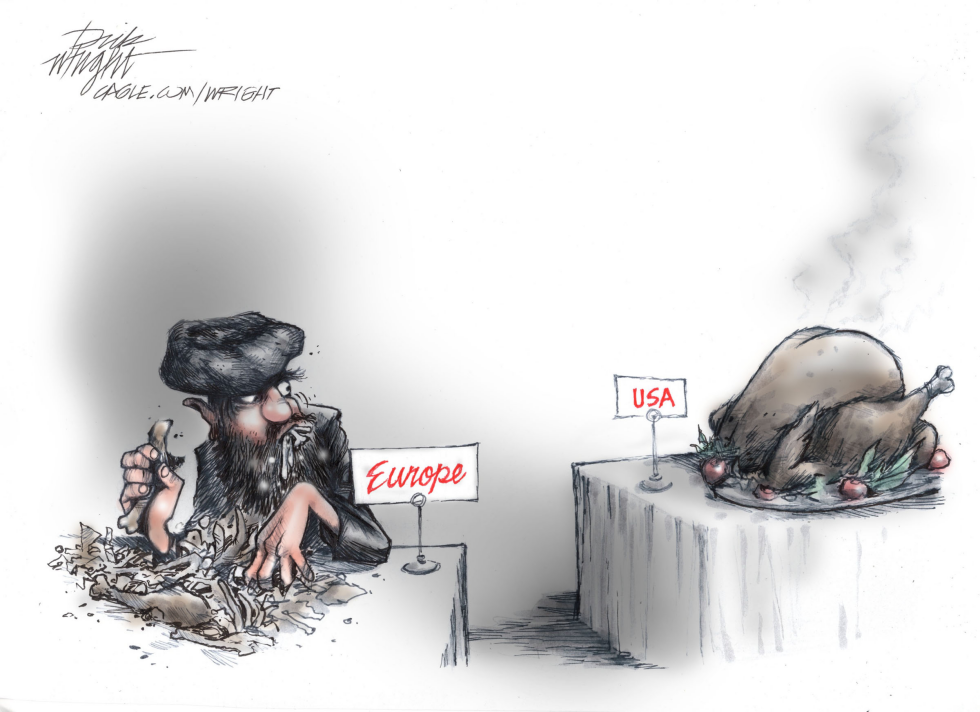
A foreign leader has stripped Europe bare and now eyes the United States as the next prize. The piece argues that unchecked expansionist momentum threatens American security and global stability.
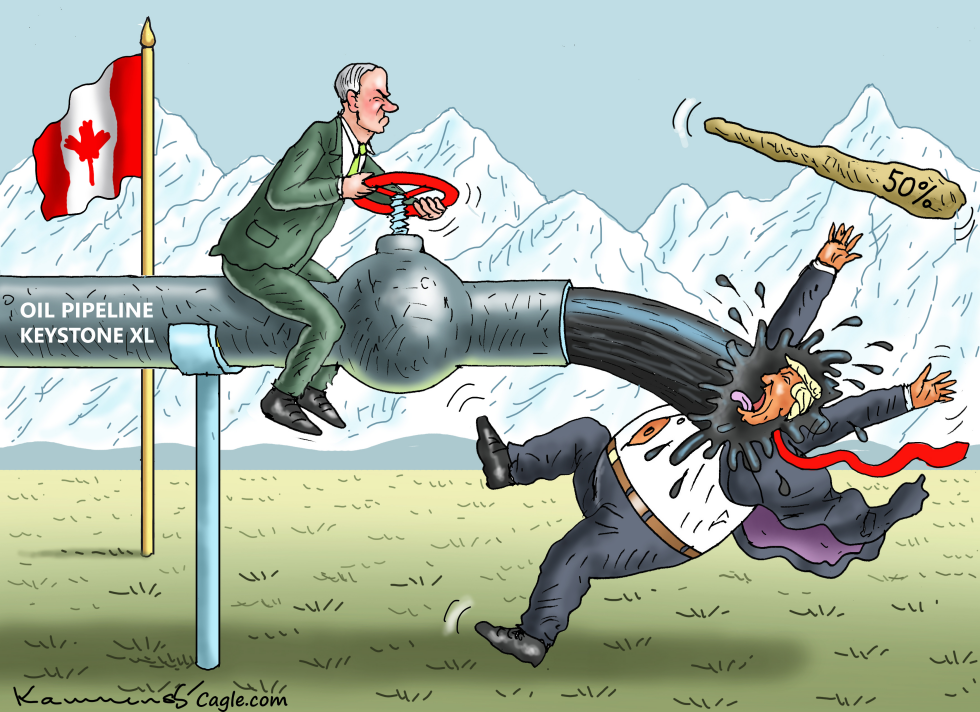
Canadian Prime Minister Mark Carney moves to restrict the Keystone XL pipeline in a direct action affecting U.S. interests tied to Donald Trump. The decision carries implications for cross-border energy flows and bilateral relations. The piece portrays the move as a targeted setback delivered through the pipeline controls.
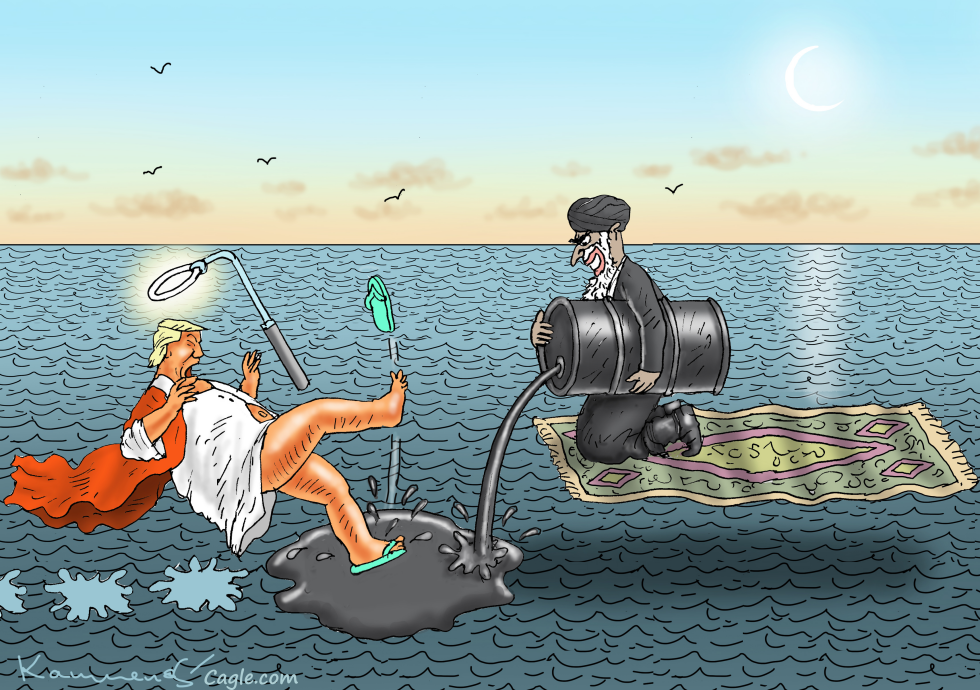
Donald Trump faces renewed friction with Iran over oil exports and sanctions enforcement. The administration's approach to Tehran has drawn criticism for mixed signals on energy deals and regional stability. The piece portrays the encounter as a self-inflicted setback for U.S. policy.
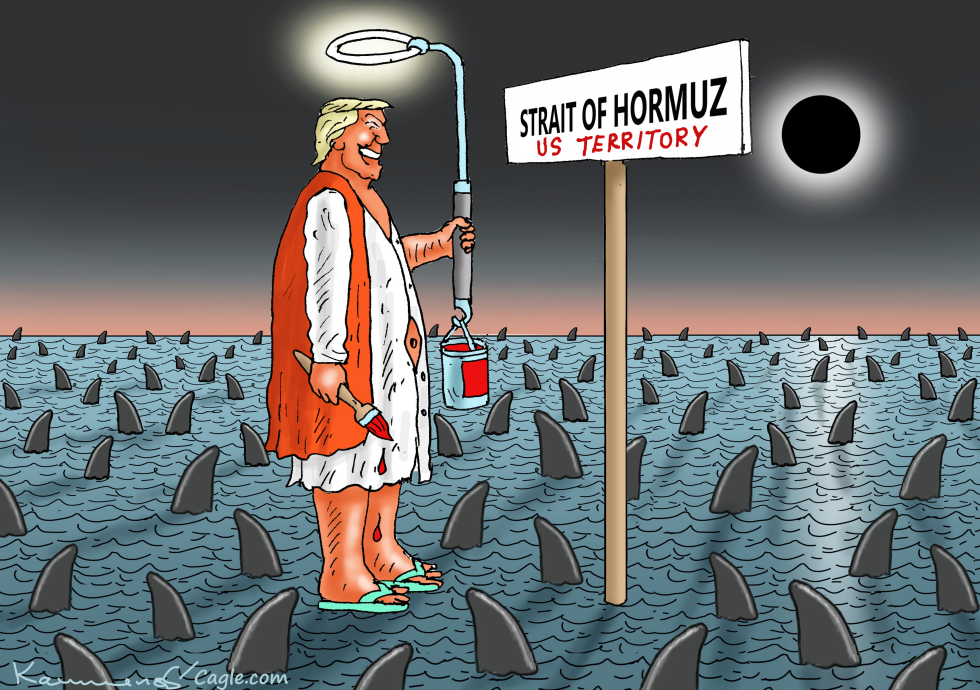
Donald Trump has asserted US sovereignty over the Strait of Hormuz, a critical waterway for global oil shipments. The move comes amid ongoing friction with Iran and other regional actors over navigation rights and energy security. Such a claim challenges established international maritime law and risks escalating tensions with multiple nations that rely on the passage. The editorial takes the position that the assertion is reckless and ignores the practical dangers and diplomatic fallout involved.
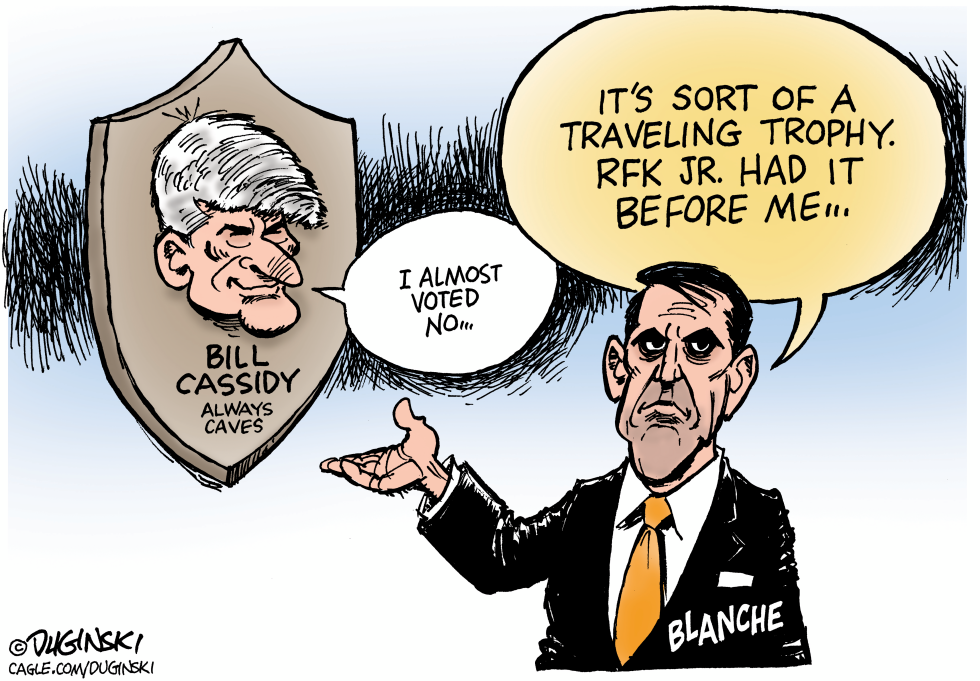
Todd Blanche, recently confirmed to a senior administration post, has mounted a shield bearing Sen. Bill Cassidy\'s likeness on his office wall. The Louisiana Republican, long viewed as a potential swing vote, backed the nomination despite earlier signals of hesitation. RFK Jr. reportedly displayed the same item during his own tenure. The arrangement underscores ongoing tensions within the GOP over loyalty tests and confirmation battles. The piece portrays Cassidy\'s support as another instance of yielding under pressure rather than a principled stand.
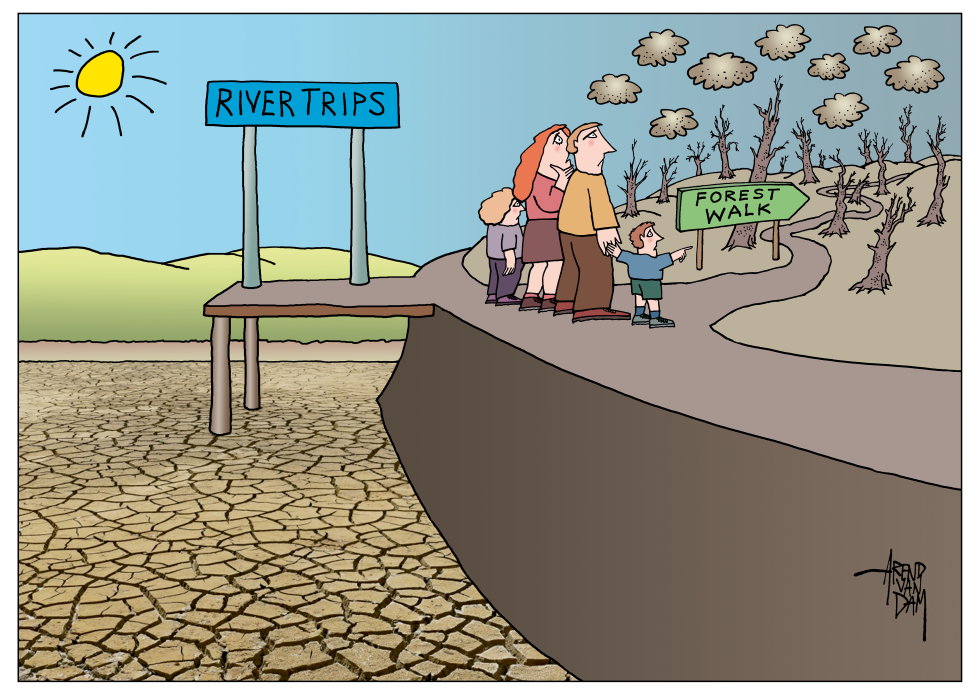
Persistent drought has left riverbeds cracked and forests withered across affected regions, undermining tourism and outdoor recreation. Families arriving for advertised river trips and forest walks instead encounter dry ground and dead trees. The piece highlights how climate-driven water shortages continue to disrupt normal seasonal activities without immediate policy relief in sight.
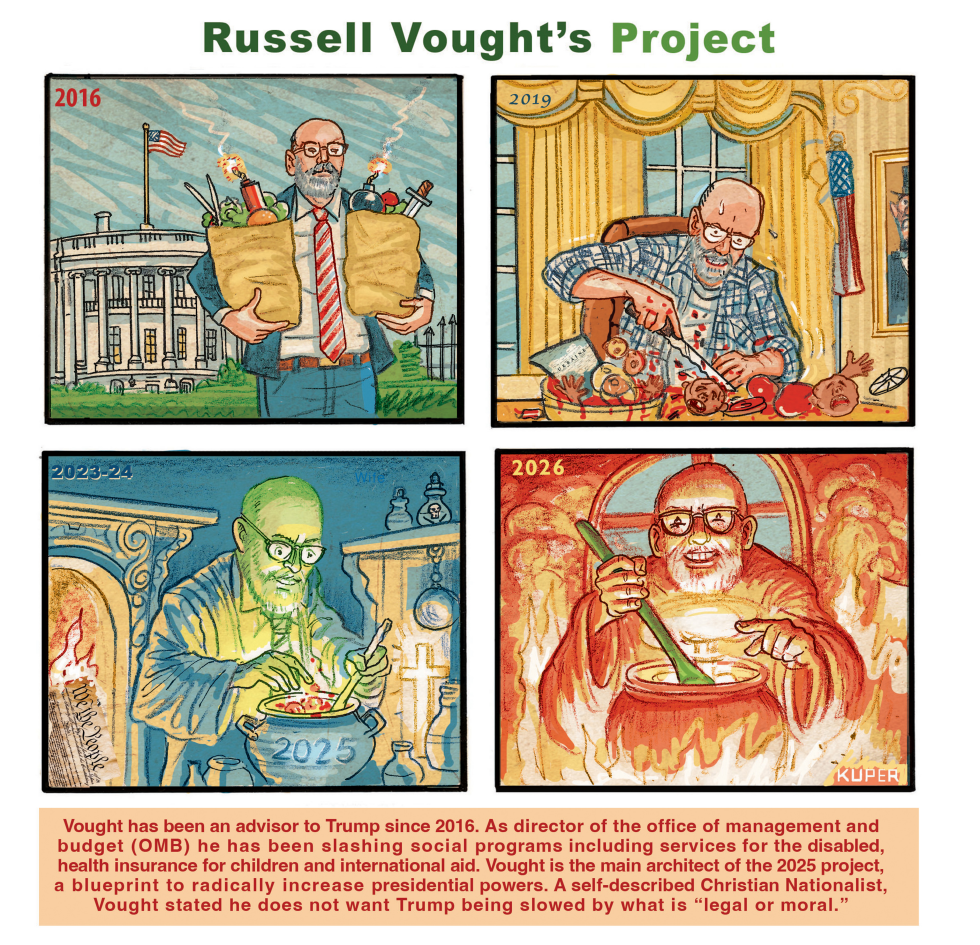
Russell Vought has served as a Trump advisor since 2016 and later directed the Office of Management and Budget, where he cut funding for disability services, children’s health insurance and foreign aid. He is the principal author of Project 2025, a plan to enlarge presidential authority. The cartoon presents his progression from 2016 through 2026 as a deliberate effort to remove legal or moral restraints on executive action.
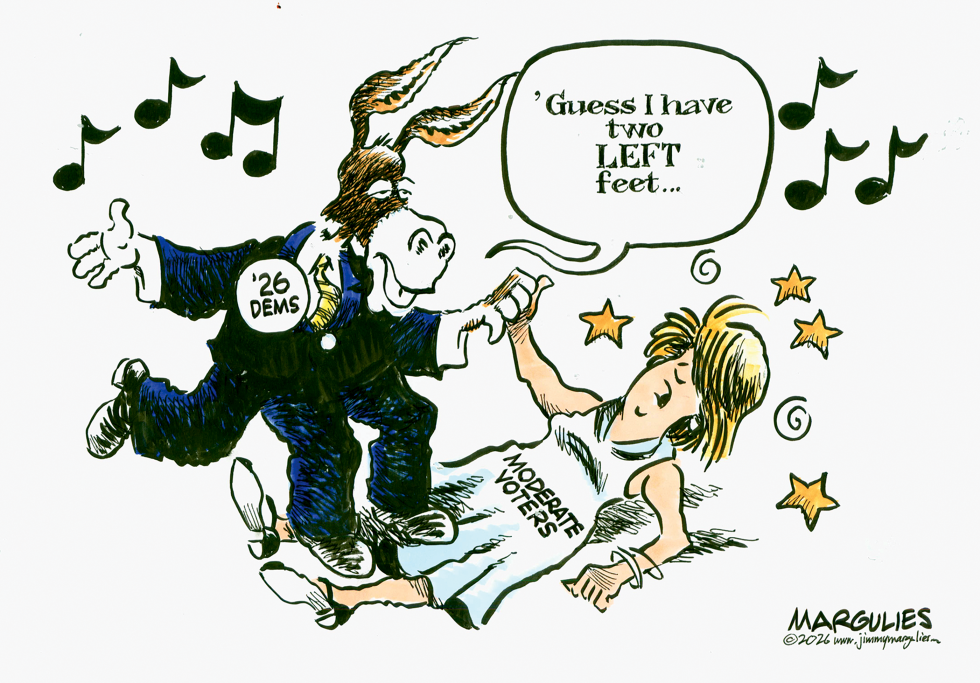
Democrats heading into the 2026 midterms face internal pressure to energize their base with progressive policies, yet this risks further distancing moderate voters essential for broader electoral success. The party has advanced left-leaning positions on issues like spending and social policy in recent cycles. Critics argue this approach prioritizes ideological purity over coalition building. The piece portrays the Democratic donkey as stepping on moderates while acknowledging its own missteps, highlighting the tension between base mobilization and centrist appeal.
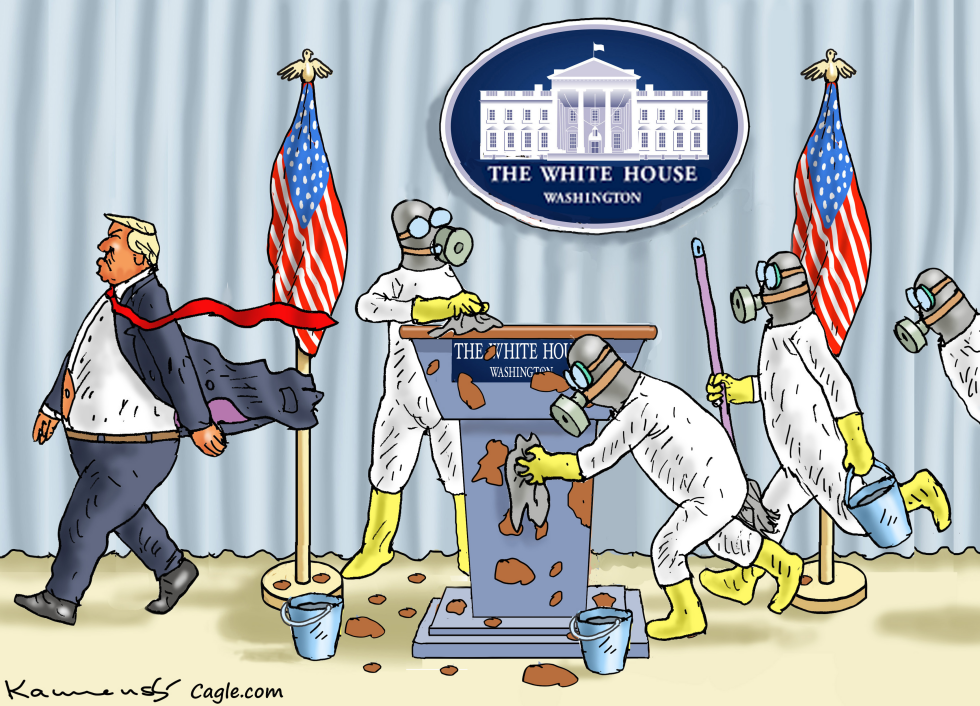
Donald Trump left the White House on August 4 2026 after his term. Hazmat-suited workers immediately began cleaning the podium and surrounding area marked with brown stains. The scene reflects the transition process and the physical state of the space left behind.
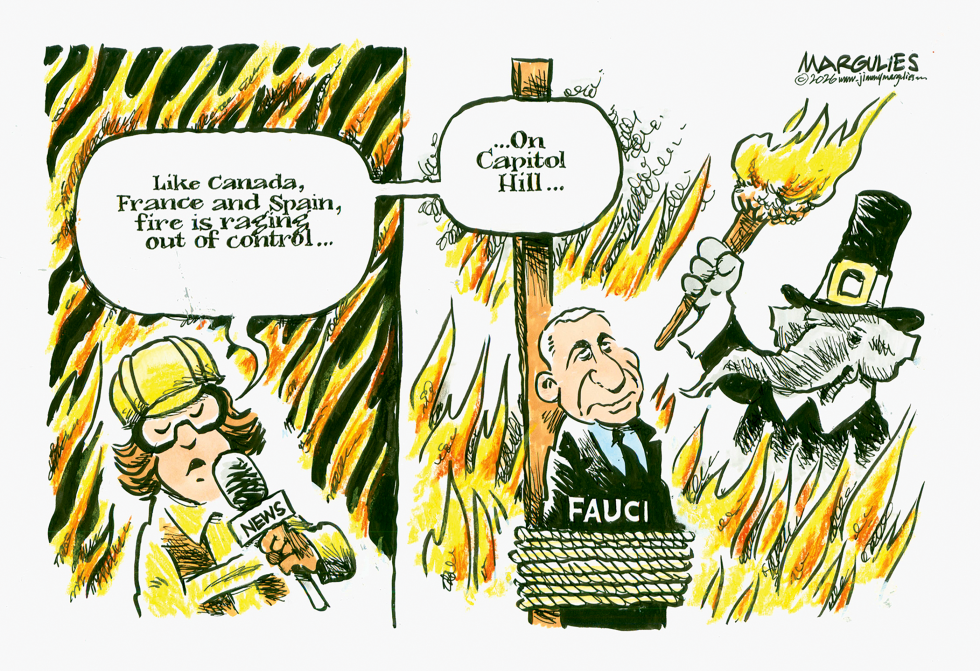
Anthony Fauci encountered renewed congressional pressure on Capitol Hill amid ongoing debates over public health decisions. Critics intensified attacks while supporters viewed the process as excessive. The piece portrays the scrutiny as an attempt to punish Fauci through symbolic means.
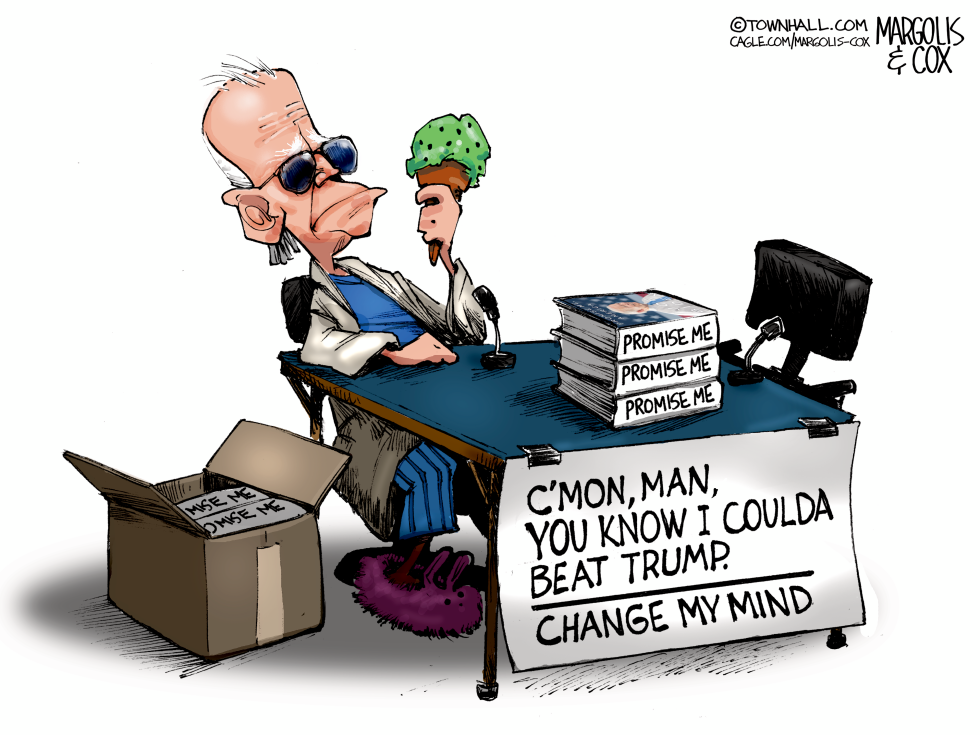
Former President Joe Biden has been promoting his memoir Promise Me, Dad in the months after the 2024 election. The book tour includes repeated assertions that he would have defeated Donald Trump in a head-to-head contest. The claim comes as Democrats continue to debate the factors behind their 2024 defeat. The editorial takes the position that Biden's insistence ignores the primary results and voter verdict that ended his candidacy.