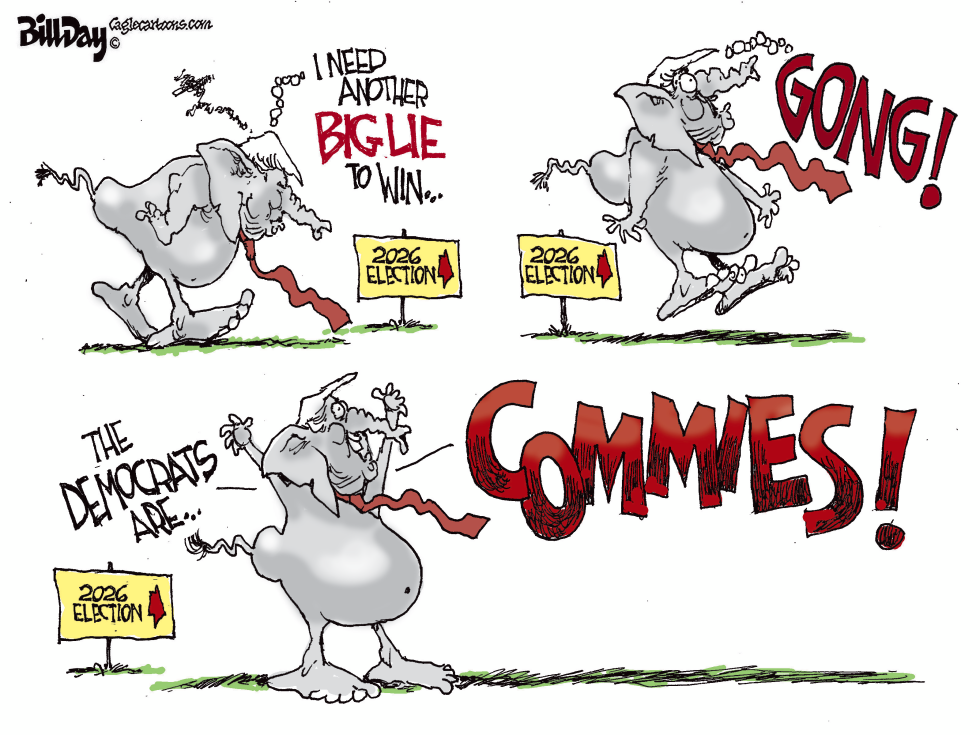
Republicans continue to rely on the big lie narrative to motivate voters ahead of the 2026 elections. The approach draws internal pushback and highlights deepening partisan rhetoric. The piece criticizes the tactic as tired and counterproductive.
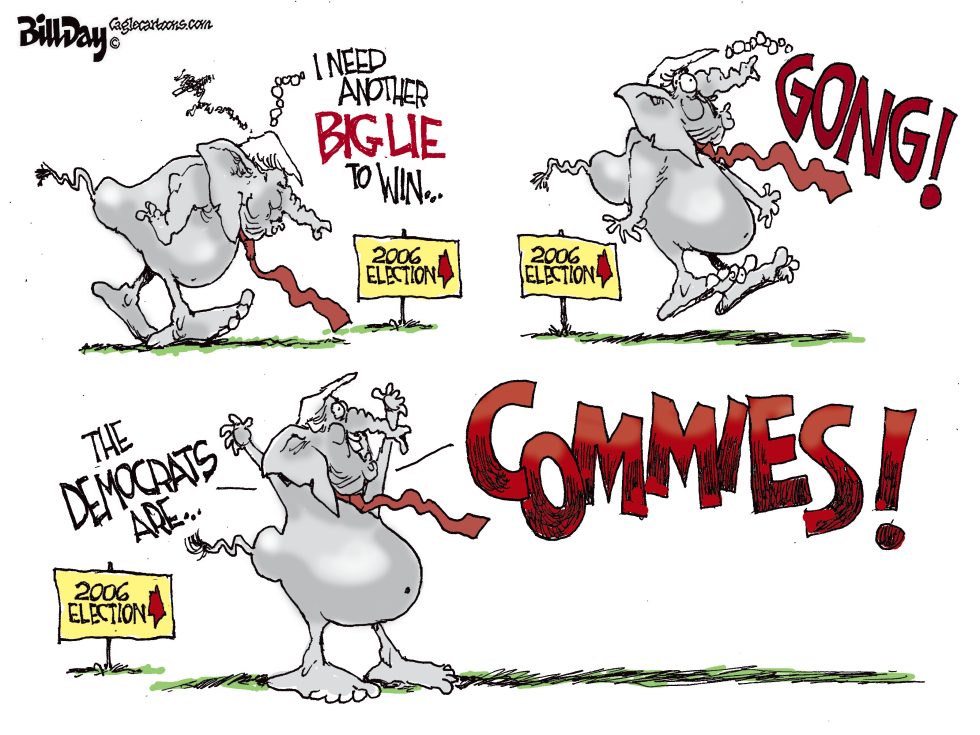
During the 2006 midterm election cycle both major parties traded accusations with Republicans pushing unsubstantiated claims to sway voters and Democrats facing repeated communist labels from opponents. The dynamic reflected long standing partisan efforts to undermine credibility through exaggerated rhetoric rather than policy debate. The piece argues these tactics undermine fair elections and deserve rejection by voters.
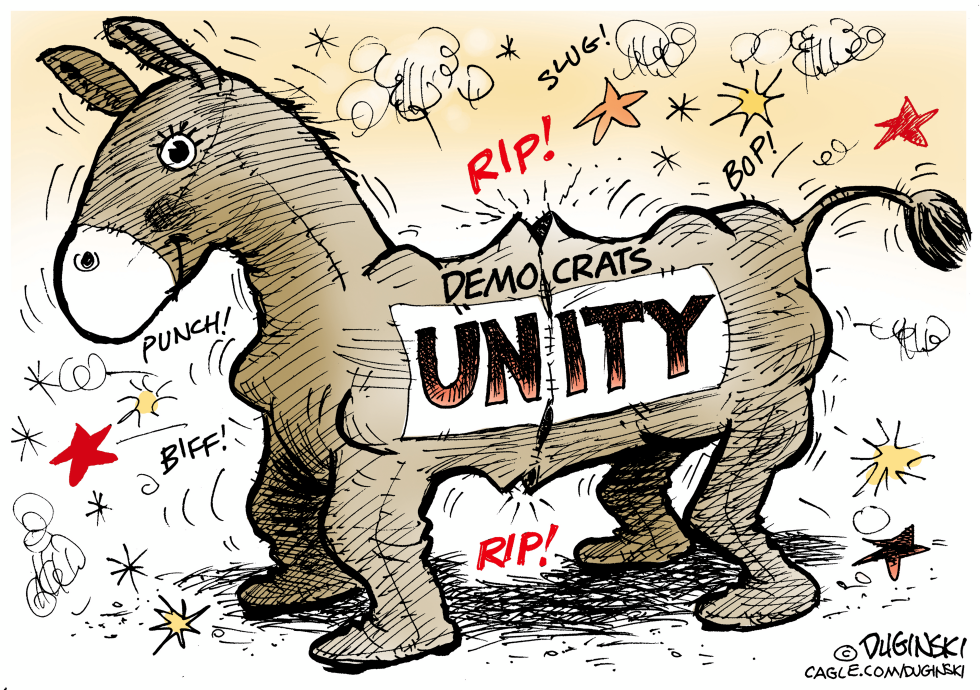
Democrats continue to display public divisions over strategy and messaging in the run-up to midterm and presidential contests. Party leaders struggle to project cohesion on issues ranging from economic policy to social priorities. The resulting perception of disarray weakens their ability to counter Republican narratives and mobilize voters. The cartoon highlights how these internal conflicts undermine the party's core message of unity.
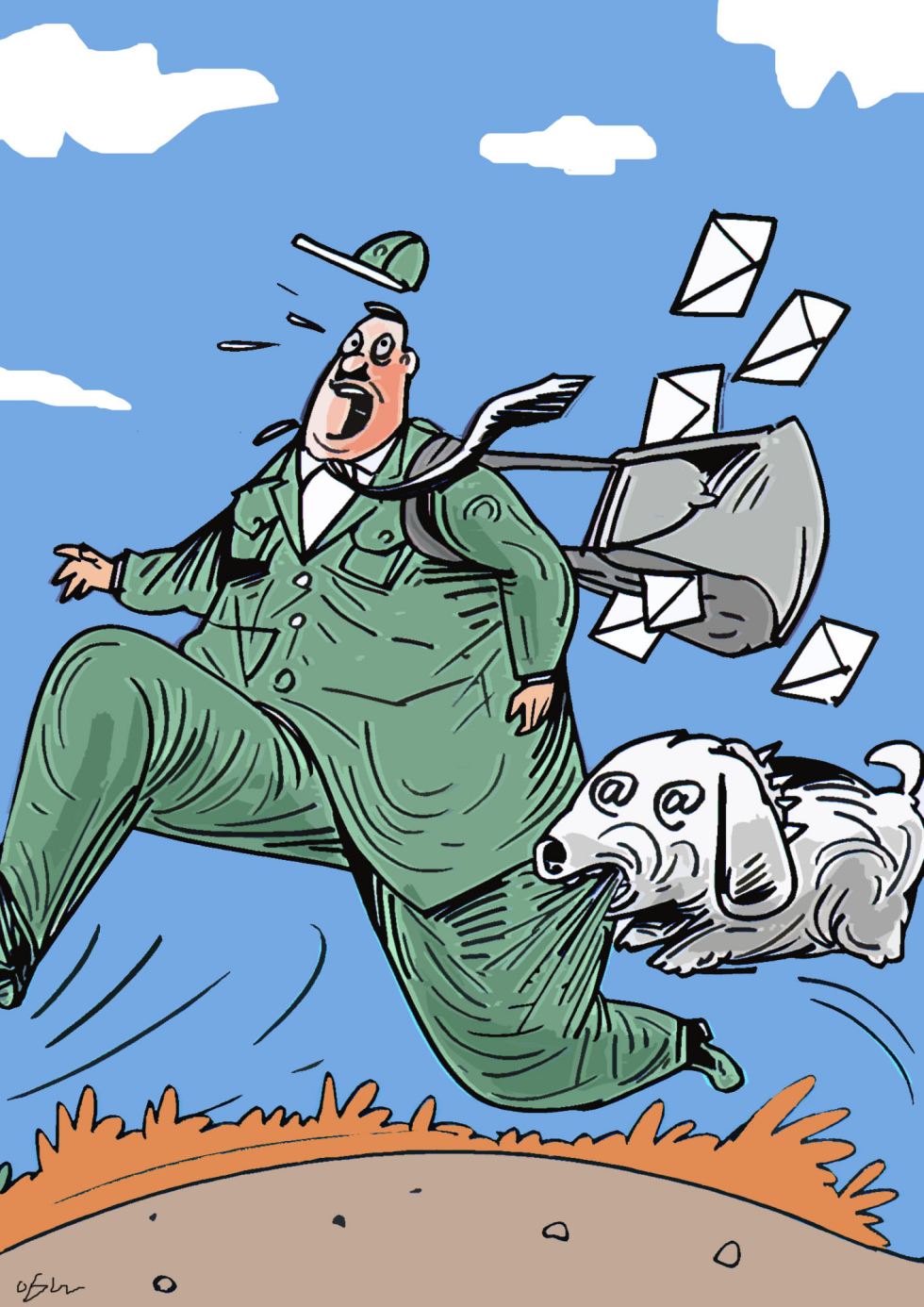
Postal workers routinely face hazards from aggressive dogs during deliveries. The incident highlights ongoing safety concerns for mail carriers who must navigate unpredictable animals on their routes. The piece takes the position that such attacks disrupt service and endanger staff.
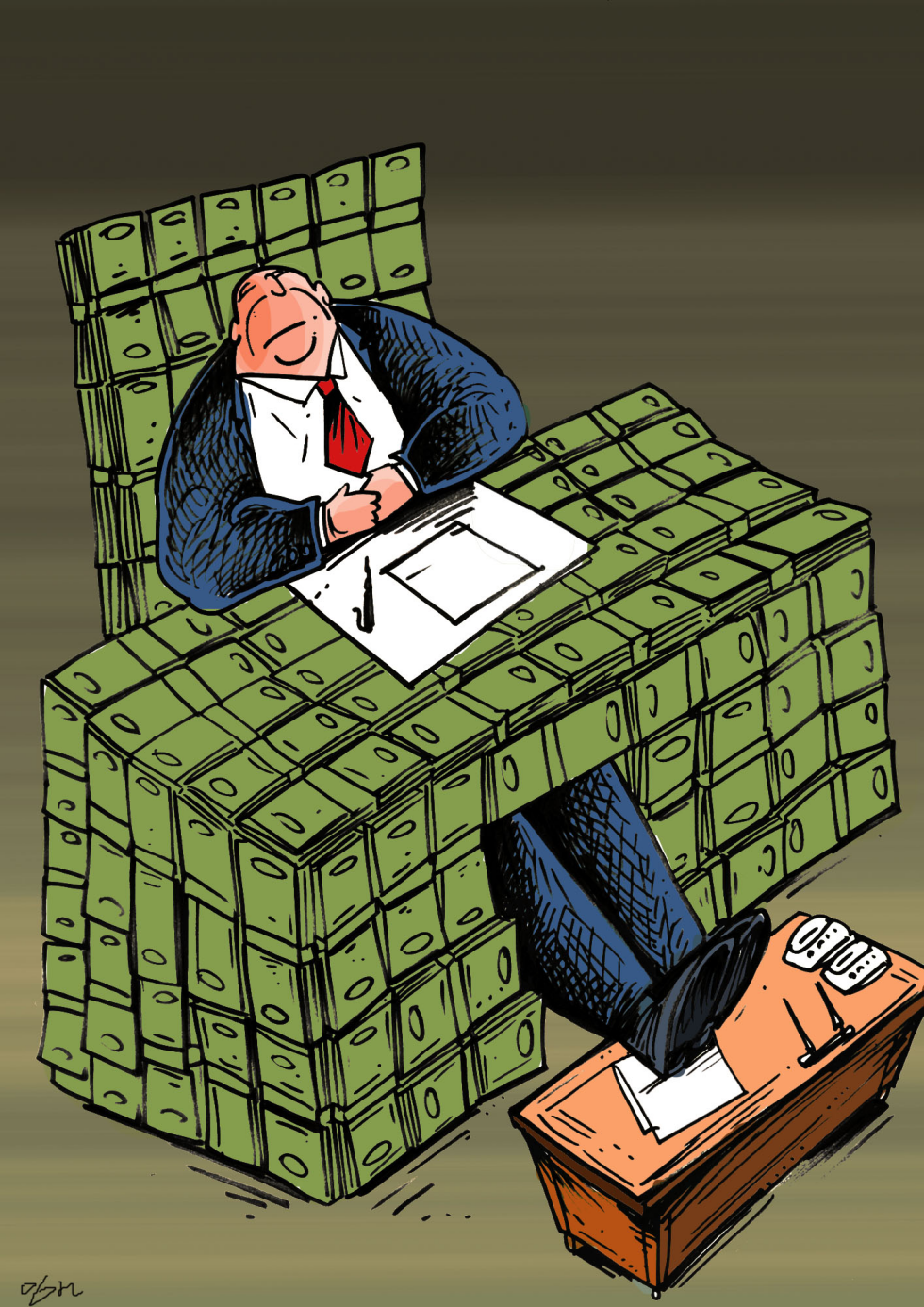
Public officials and business leaders often operate amid substantial financial resources that shape their daily environments and decisions. Recent developments in campaign finance and corporate influence have kept scrutiny on how wealth intersects with governance. The piece portrays an executive fully at ease within a setting constructed entirely from currency, underscoring the normalization of money's central role in positions of authority.
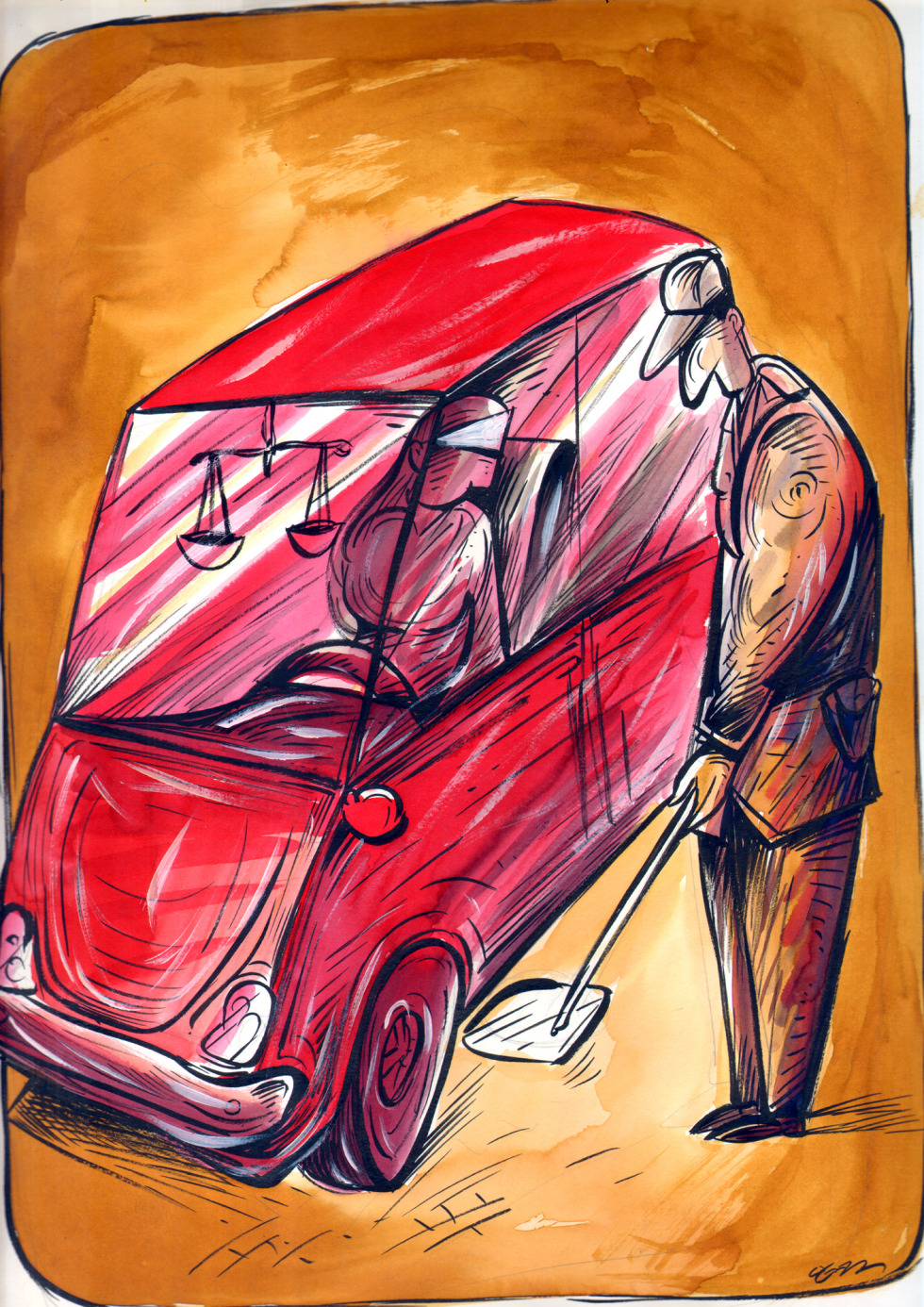
A symbolic image depicts Lady Justice seated inside a red vehicle holding the scales of justice while a uniformed official stands outside gripping a shovel. The scene suggests tension between institutional authority and judicial independence. The editorial position frames the interaction as external pressure on the justice system.
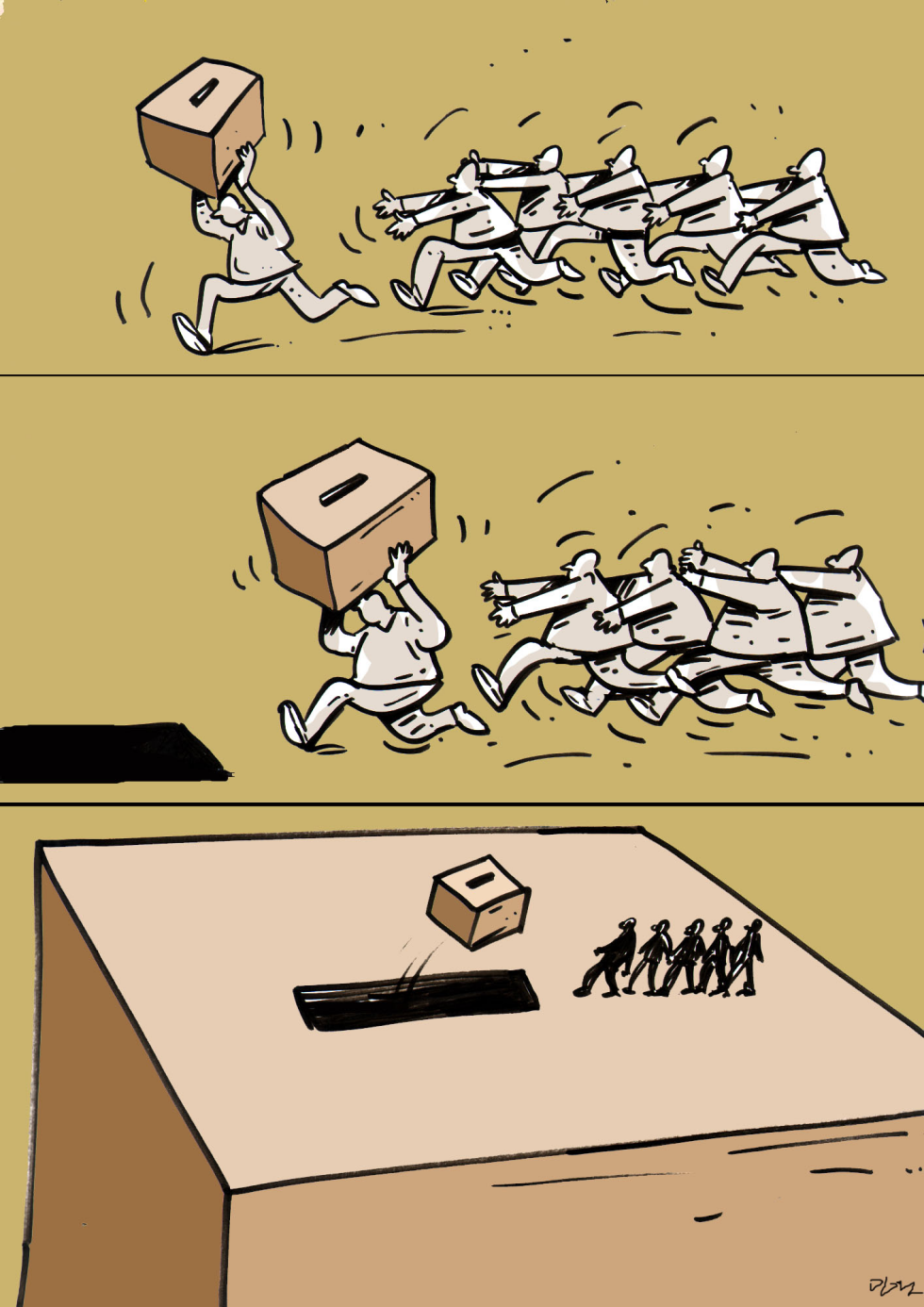
An election official carries a ballot box while pursued by a chain of figures in successive panels. The sequence ends with the box on a voting table beside its slot and the group nearing. The piece highlights concerns over ballot security and potential interference in vote counting during an election cycle.
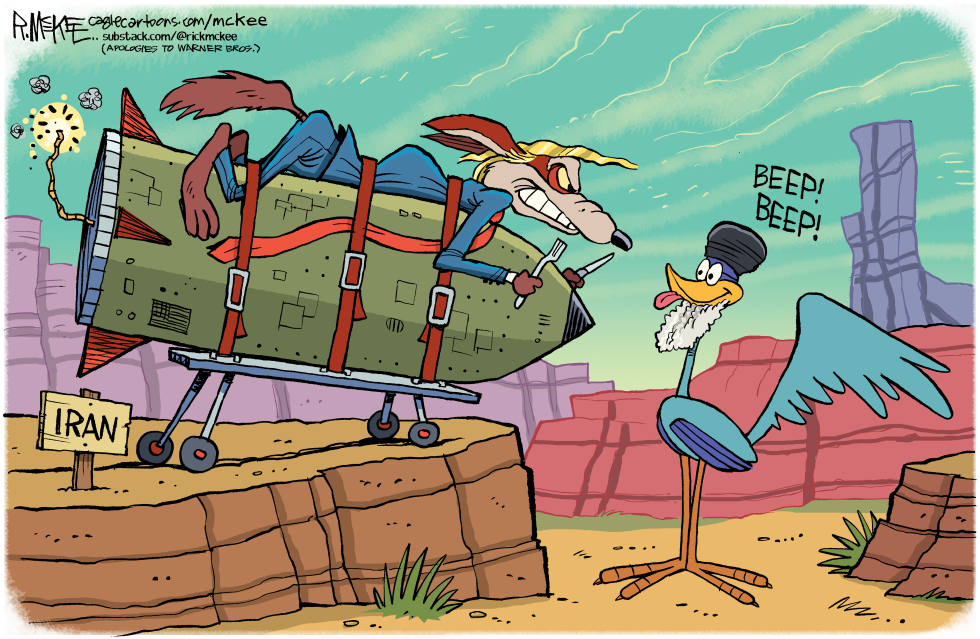
Donald Trump has renewed pressure on Iran through statements and policy signals in recent weeks. The moves come amid ongoing nuclear concerns and regional instability. The piece argues that such aggressive posturing risks backfiring in ways similar to past miscalculations.
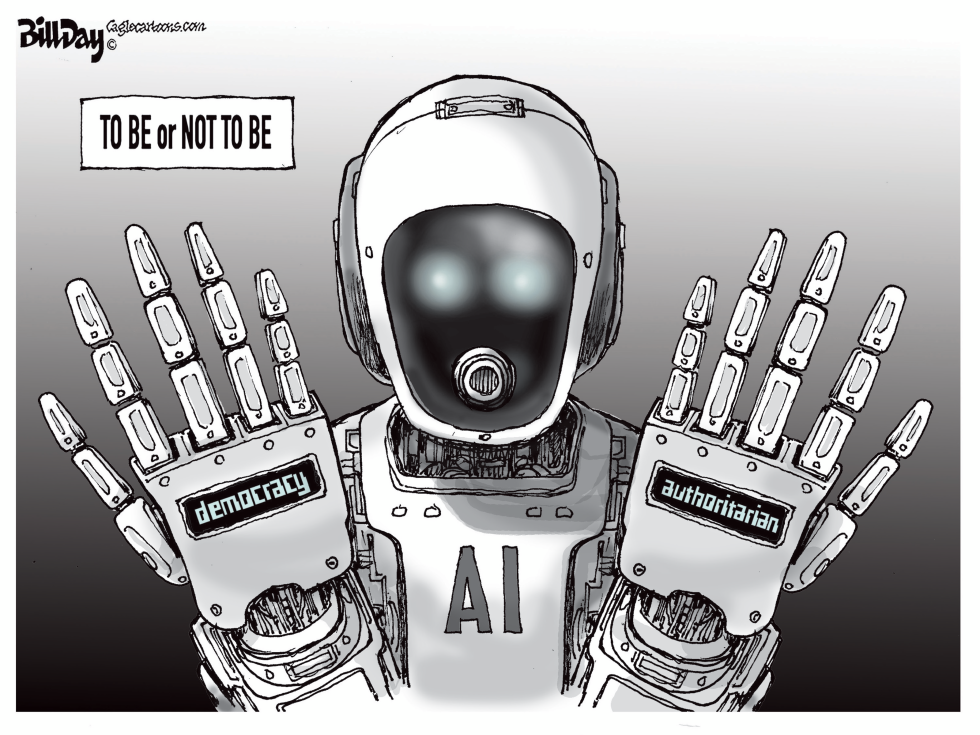
Artificial intelligence systems are increasingly integrated into public decision making and information flows. The debate centers on whether these tools will reinforce open democratic processes or enable concentrated control. The piece argues that the technology itself now confronts a fundamental fork between the two systems.
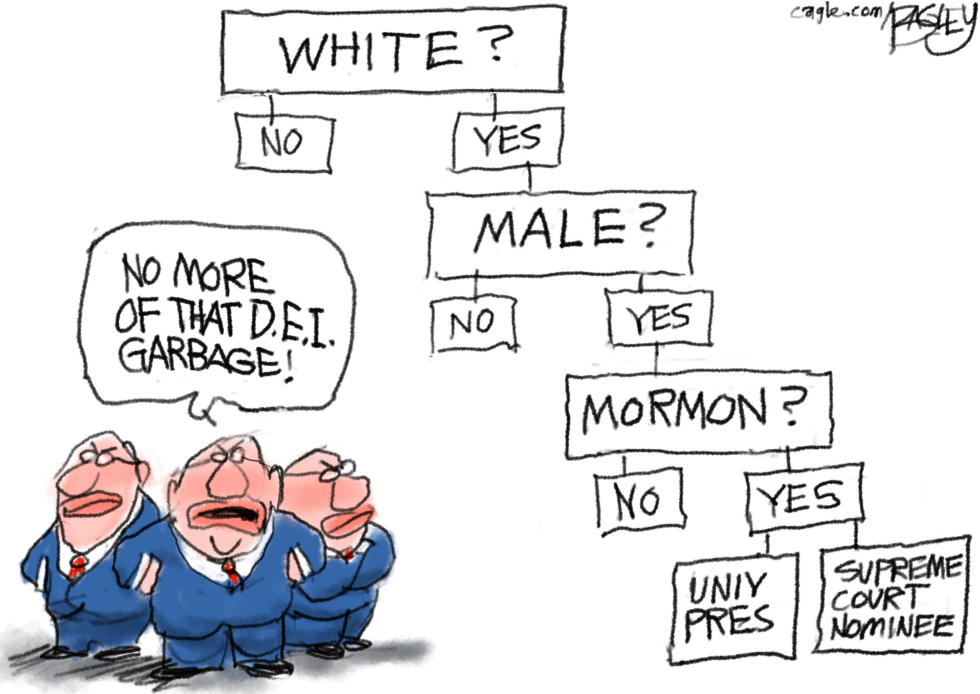
A flowchart circulating in political circles outlines a narrow path to Supreme Court nomination that begins with questions about race, gender and religion. The diagram routes only white male Mormons to the top position while directing others toward university presidencies. Three figures in the image voice opposition to diversity initiatives. The piece responds to ongoing debates over judicial selection standards and identity considerations in appointments. It takes the position that such rigid criteria undermine broader merit-based processes.
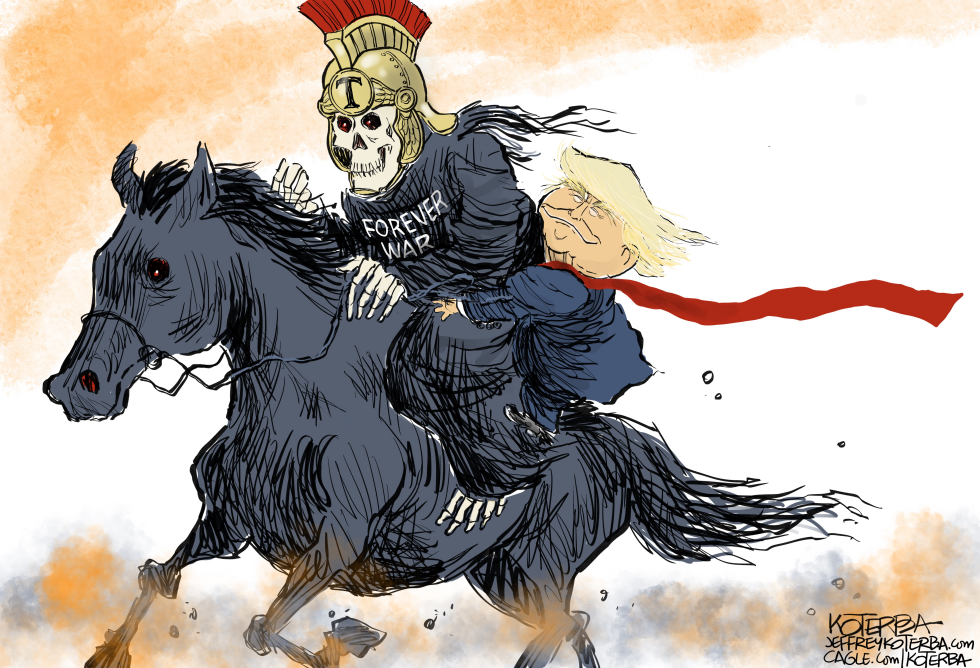
Donald Trump appears locked in embrace with a skeletal figure representing endless military engagement. The image captures the former president holding fast to the armored warrior as both ride forward on a dark horse. This visual arrives amid ongoing debates over U.S. military commitments abroad and the difficulty of disengaging from prolonged conflicts. The piece underscores how political figures can become tethered to policies of sustained warfare despite public fatigue. It takes the position that such attachment persists even as costs mount and alternatives remain unexplored.
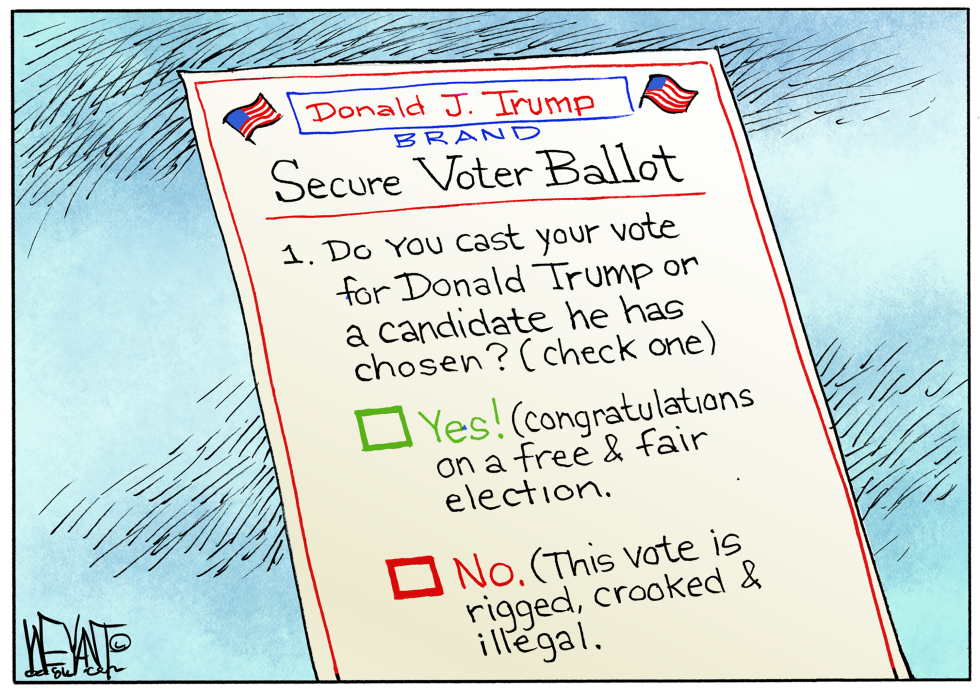
A ballot labeled with Donald J. Trump's brand presents voters with a binary choice between supporting him or his selected candidates. The design labels one option as confirming a free and fair election while marking the other as rigged and illegal. The piece highlights ongoing debates over election processes and candidate influence.
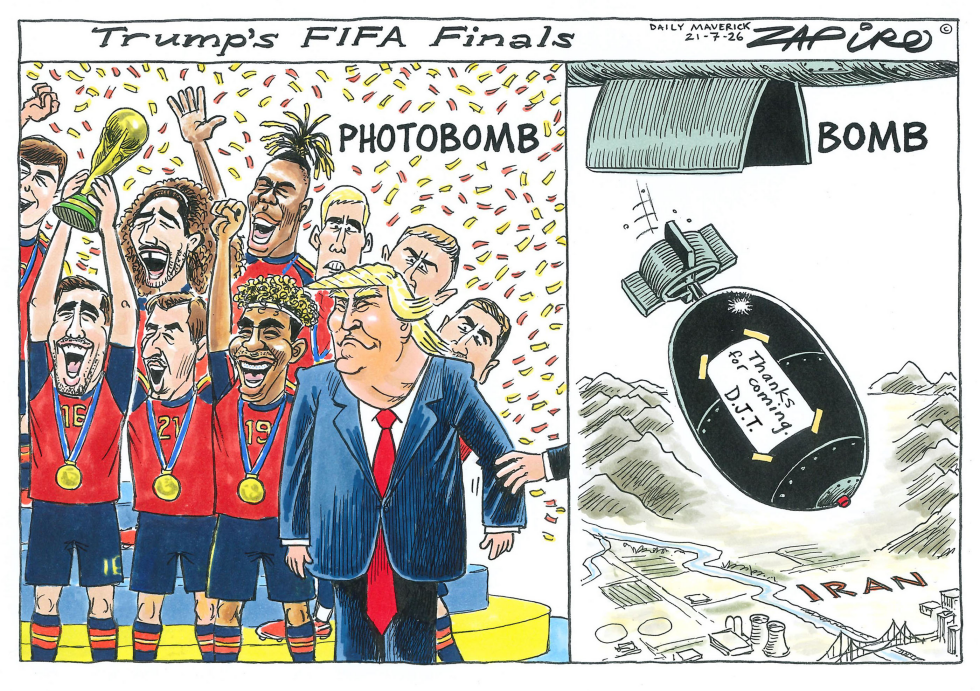
Donald Trump appears in a split-panel scene juxtaposing a soccer victory celebration against a missile strike on Iran. The image responds to ongoing tensions between the United States and Iran during the summer of 2026, where military posturing and personal political theater intersect. The editorial position frames the juxtaposition as evidence of reckless self-promotion overriding substantive foreign policy decisions.
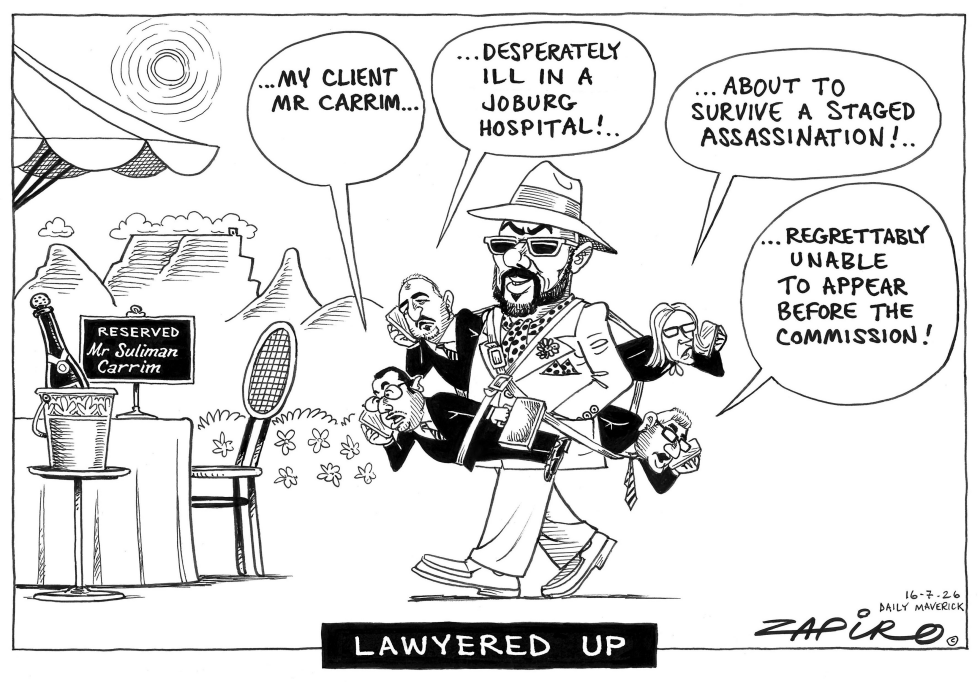
A lawyer named Suliman Carrim is depicted carrying clients who offer dramatic excuses to avoid testifying before a commission. The scene highlights repeated efforts to delay or evade official proceedings through claims of illness and danger. The editorial position criticizes the use of such tactics to obstruct accountability.
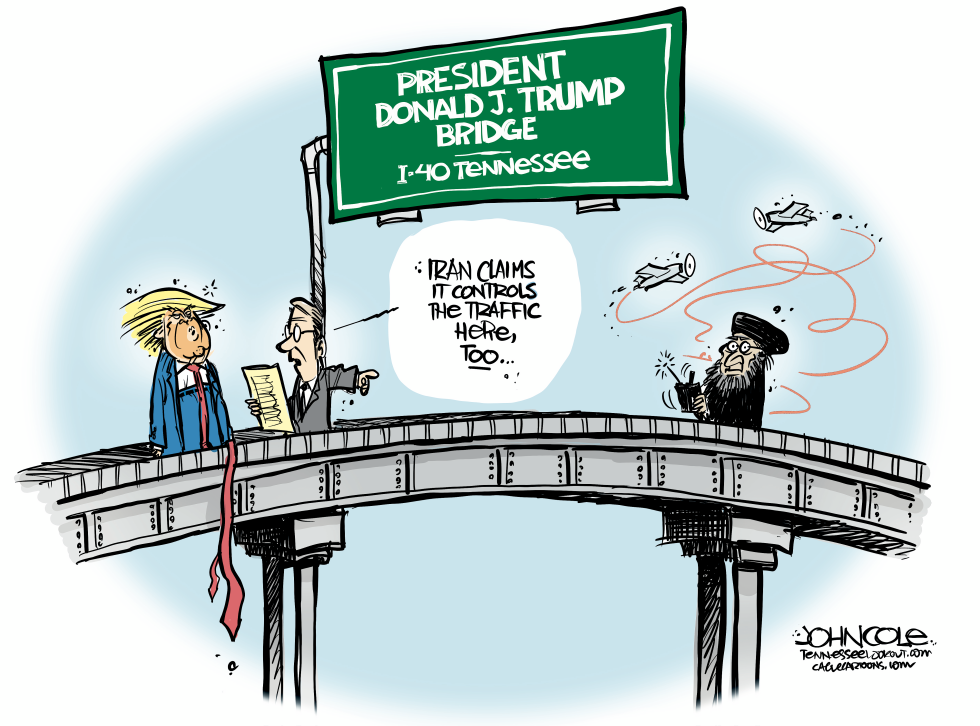
President Donald J. Trump attended the naming of the President Donald J. Trump Bridge on I-40 in Tennessee. The event drew attention when an Iranian figure appeared to claim control over traffic on the span. The development highlights ongoing tensions with Iran over shipping lanes and international routes. The cartoon frames the claim as an extension of Iran's broader pattern of asserting dominance over key passages. It positions the bridge naming as a domestic moment overshadowed by foreign threats.