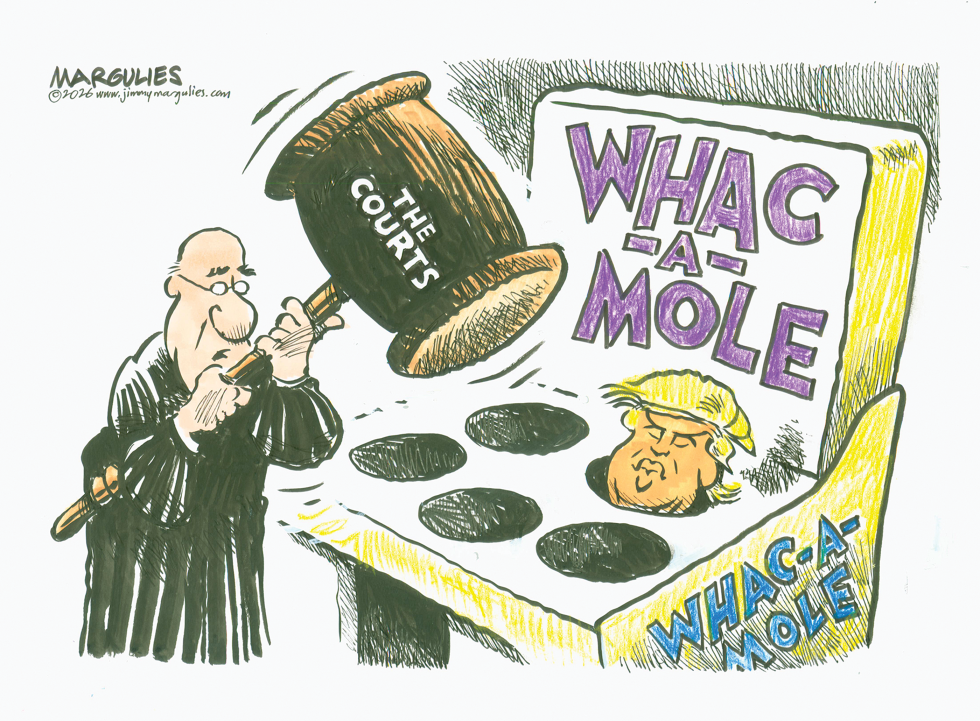
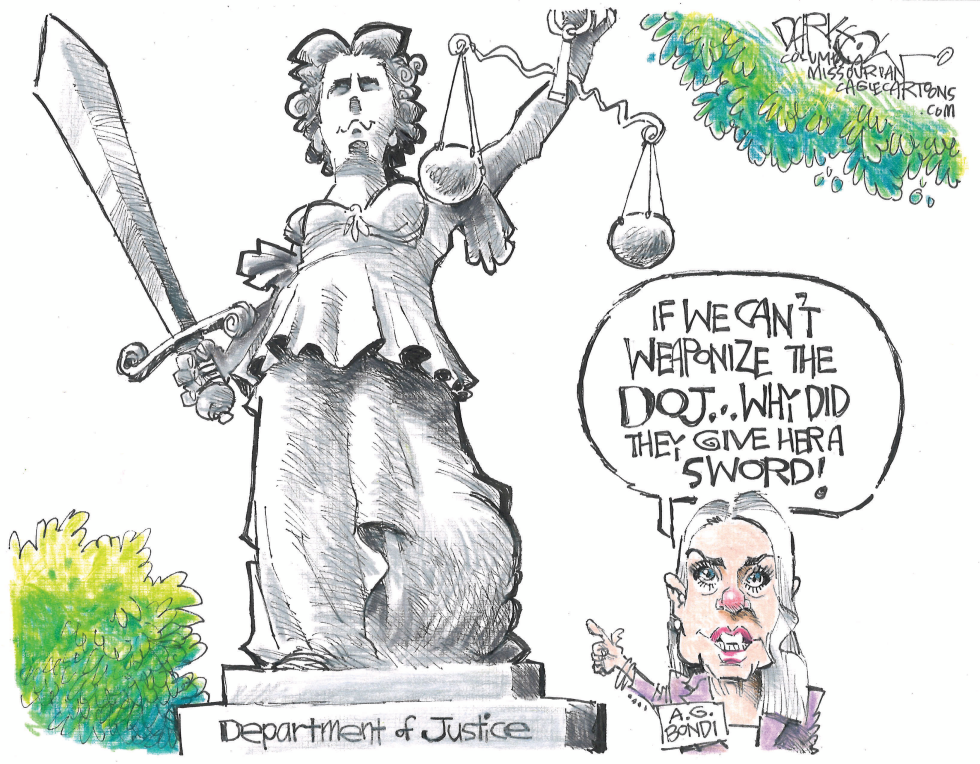
Courts have pursued multiple cases against Donald Trump in recent years, raising questions about timing and motivation ahead of elections. The editorial argues the legal actions resemble a repetitive game rather than measured justice.
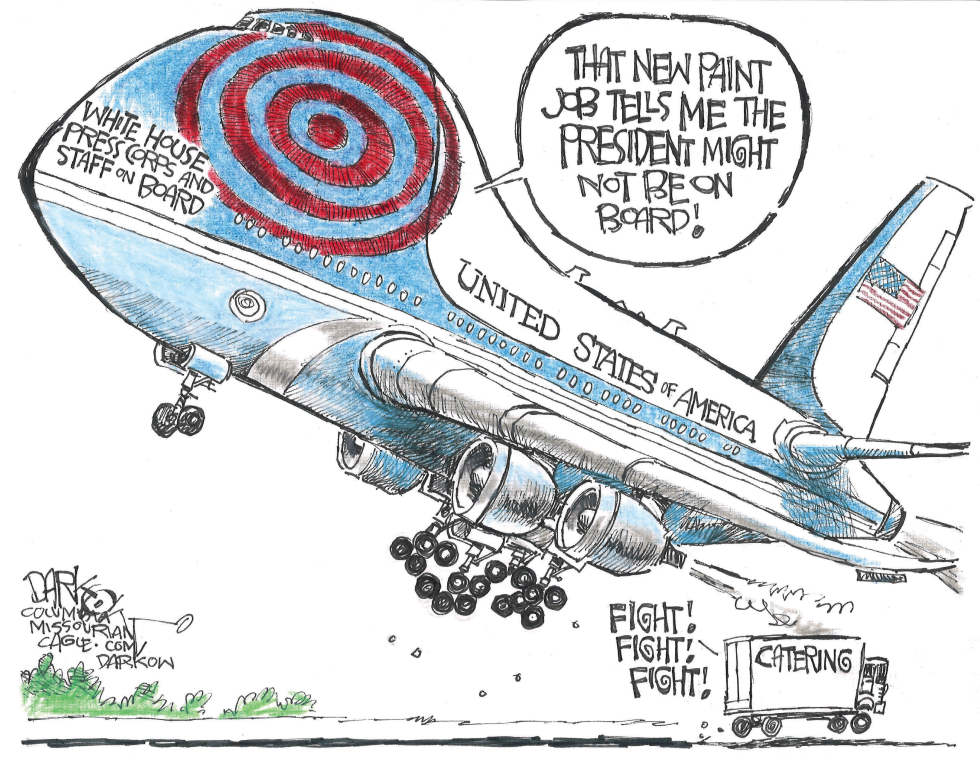
Air Force One appears with a large target painted on its upper fuselage while carrying White House press corps and staff. A nearby catering truck chants fight slogans as the plane descends. The image suggests the president may not be aboard the targeted aircraft. This visual plays on recent tensions surrounding presidential travel and security. The editorial stance highlights perceived risks or distancing from official duties.
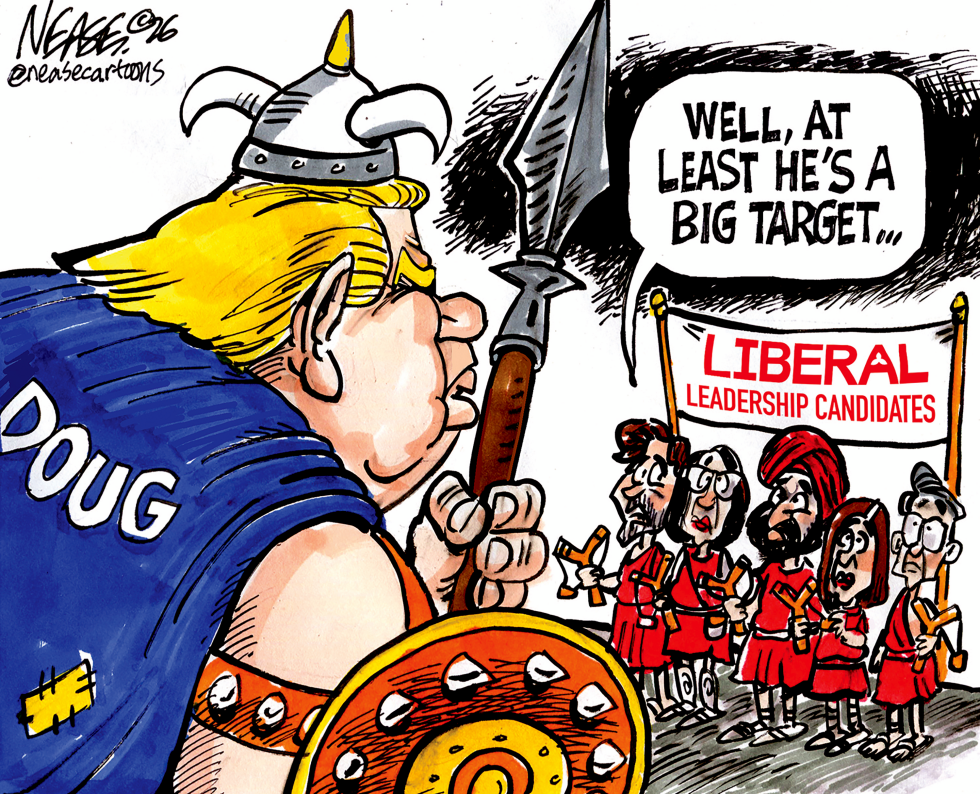
Liberal leadership candidates have identified a prominent opponent as their primary focus in an ongoing contest. The opponent, labeled Doug, appears as a large and visible figure in the political landscape. This dynamic highlights how one individual can dominate attention during a party’s internal selection process. The piece presents the situation as an opportunity for the candidates to rally around a clear adversary rather than internal divisions.
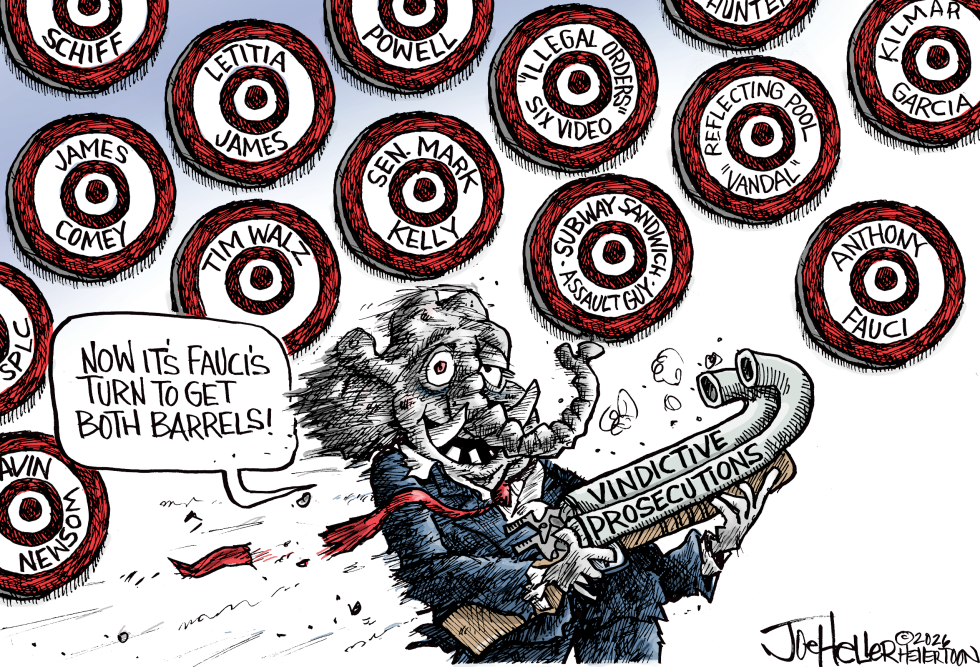
Donald Trump has signaled intent to pursue legal action against Anthony Fauci and other perceived opponents. The move extends a pattern of targeting figures from prior investigations and public disputes. The editorial portrays these actions as personal retribution rather than legitimate accountability.
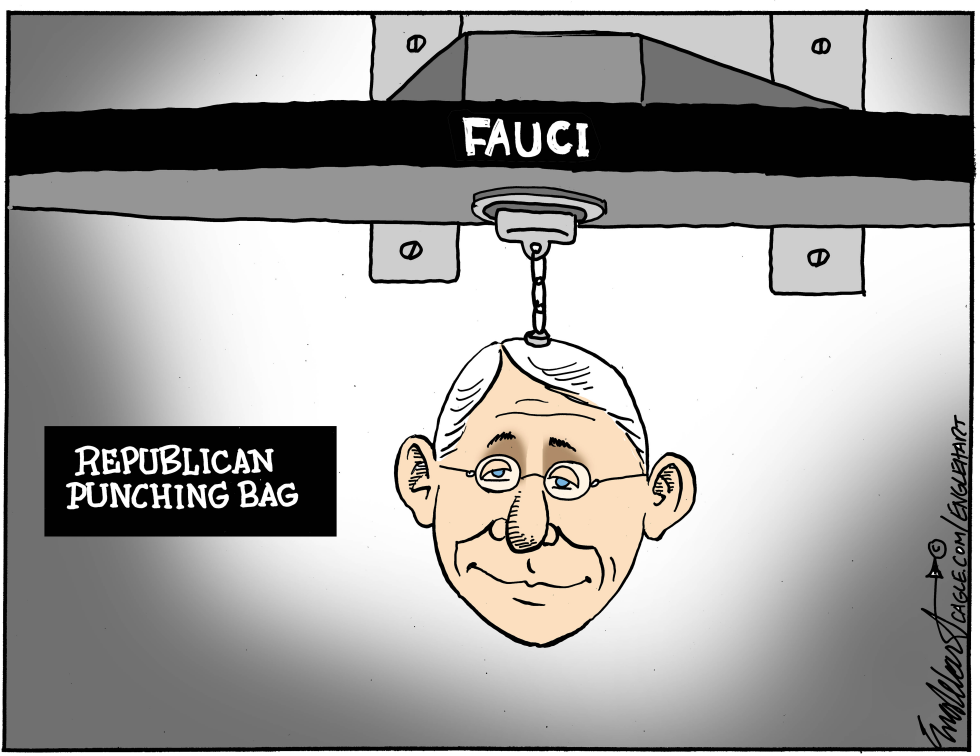
Republicans have long singled out Anthony Fauci for criticism over his role in shaping the nation's COVID-19 response. The pattern of attacks persists years after the height of the pandemic, keeping the former NIAID director in the spotlight. The editorial takes the position that these repeated assaults serve more as political theater than substantive policy debate.
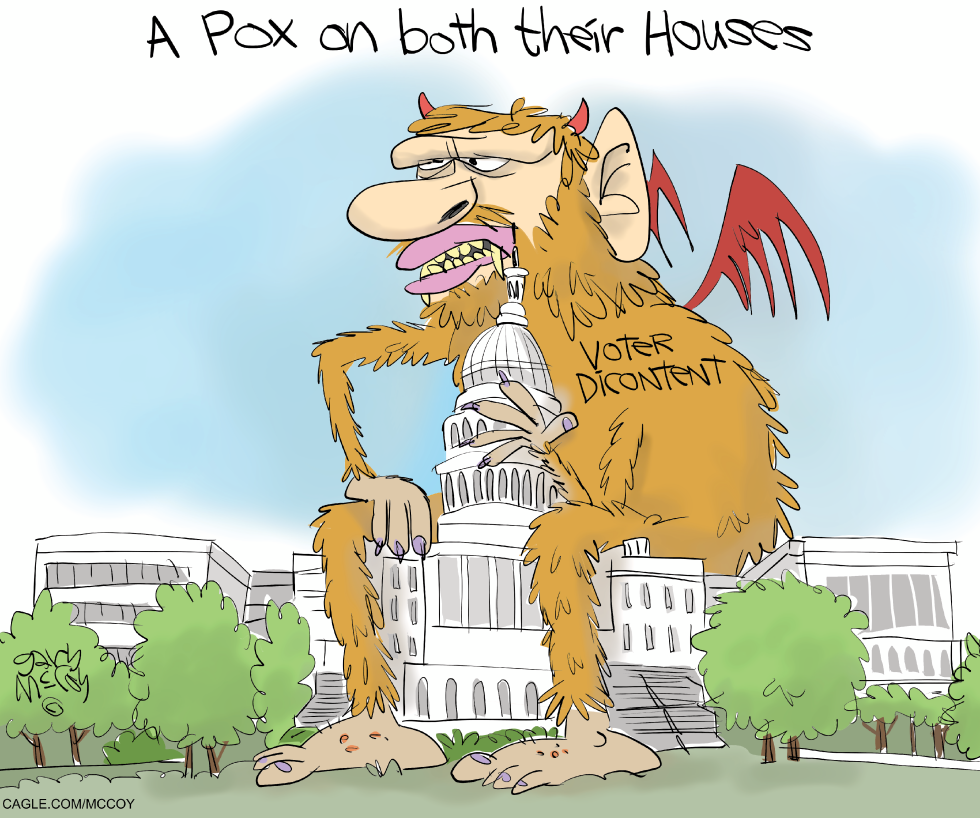
Voter frustration with Congress has grown amid stalled legislation and partisan gridlock on Capitol Hill. The piece portrays this sentiment as a towering monstrous force looming over the legislative branch. It argues that public anger targets both parties equally for failing to address key issues.
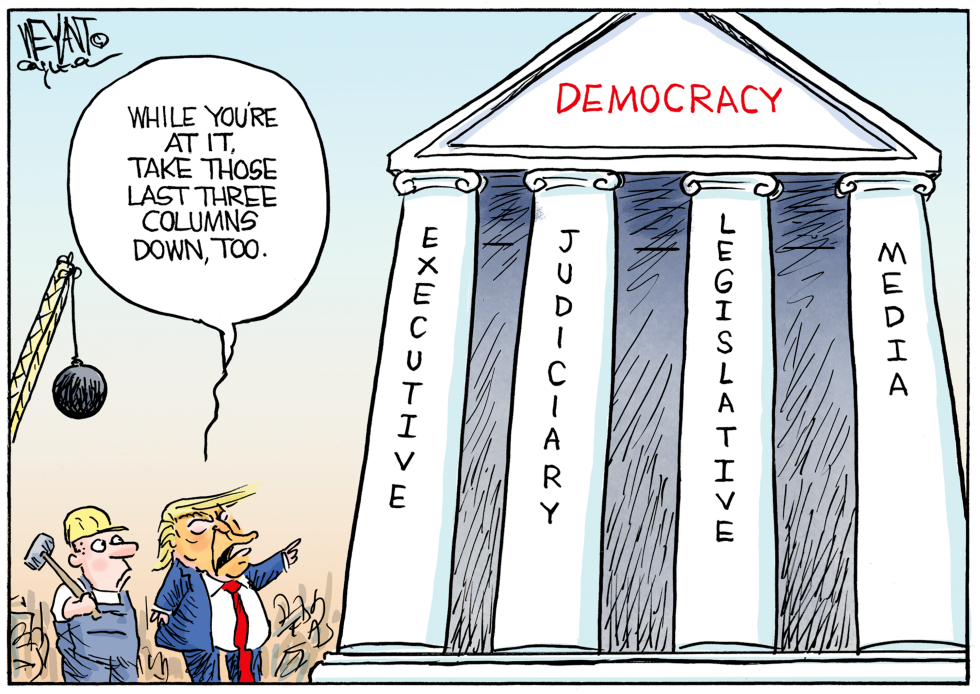
On July 12 2026 the cartoon depicts Donald Trump instructing a construction worker to demolish the judiciary legislative and media pillars of a structure labeled democracy. The executive pillar already stands removed. A wrecking ball crane looms on the left while Trump gestures emphatically from the foreground rubble. The image responds to ongoing debates over institutional checks and executive actions during the second Trump term.
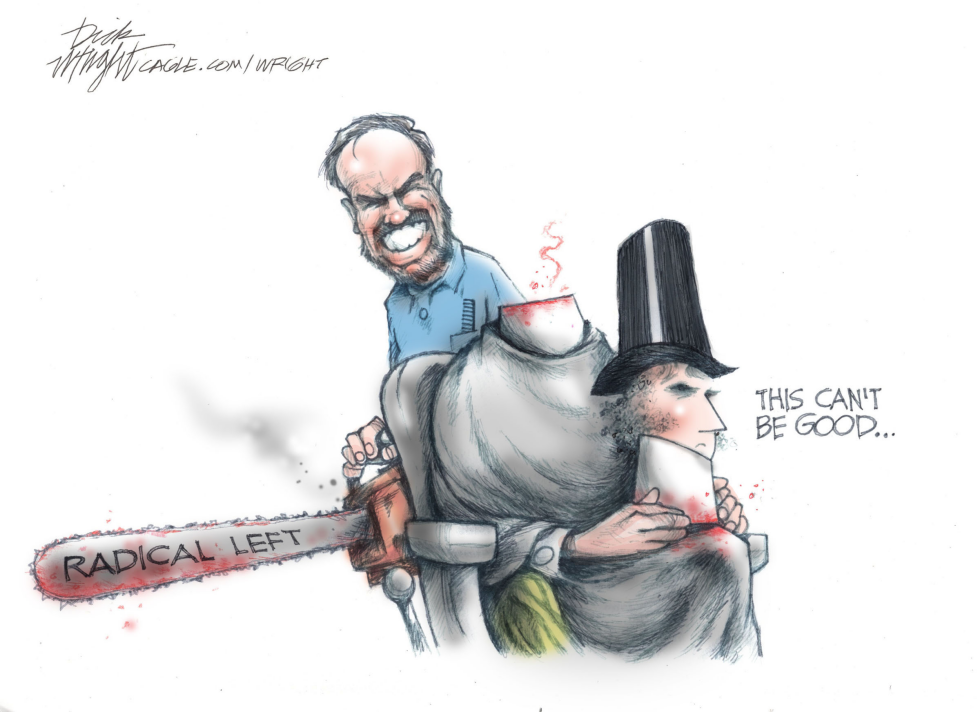
A cartoon published June 25 2026 shows a man labeled radical left operating a chainsaw against a top-hatted figure in formal clothes. Blood appears at the neck cut. The victim holds a document and comments on the situation. The artist Dick Wright signed the work with a cagle.com credit.
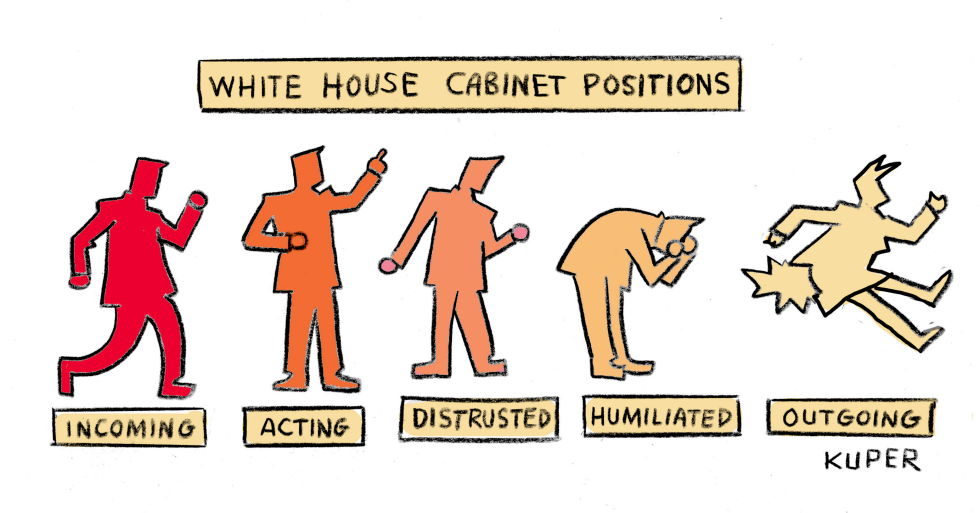
Peter Kuper nails the absurdity of Trump White House cabinet positions in this sharp cartoon. Five stylized figures march through stages: incoming in red, striding confidently; acting with a pointing gesture; distrusted standing still; humiliated bent over in shame; outgoing fleeing with a kick. Labels underscore the progression from promise to humiliation. Tags like cabinet turnover, political satire, administration instability, Trump firings, White House staff cycle, and executive distrust highlight the revolving door of appointments. It's a dry commentary on the chaos, where loyalty meets betrayal in quick succession. The simplicity amplifies the bite, making it perfect for syndication.
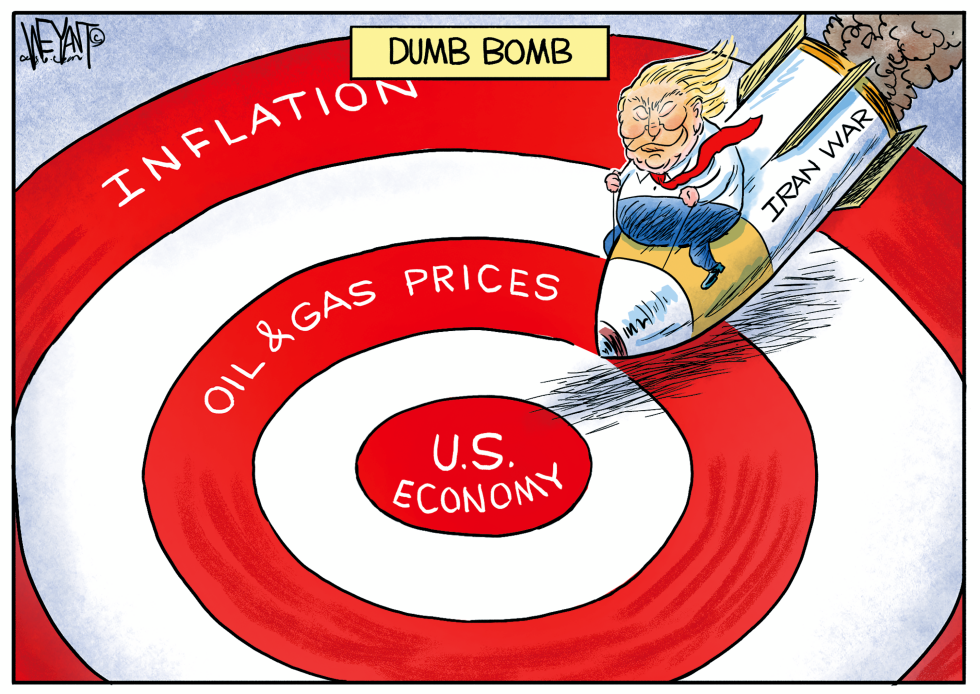
Christopher Weyant's cartoon shows a Donald Trump caricature astride a 'Dumb Bomb' labeled 'Iran War,' plummeting toward a red-and-white bullseye. The target's rings are inscribed with 'Inflation,' 'Oil & Gas Prices,' and at the center, 'U.S. Economy.' This setup highlights concerns over foreign policy decisions affecting domestic finances. The dry humor underscores the risks of impulsive actions in international affairs, with Trump's windswept hair and determined expression adding to the satirical edge. Tags like political cartoon, Trump Iran war, US economy satire, inflation oil prices, dumb bomb cartoon, and Christopher Weyant emphasize the image's relevance to current events.
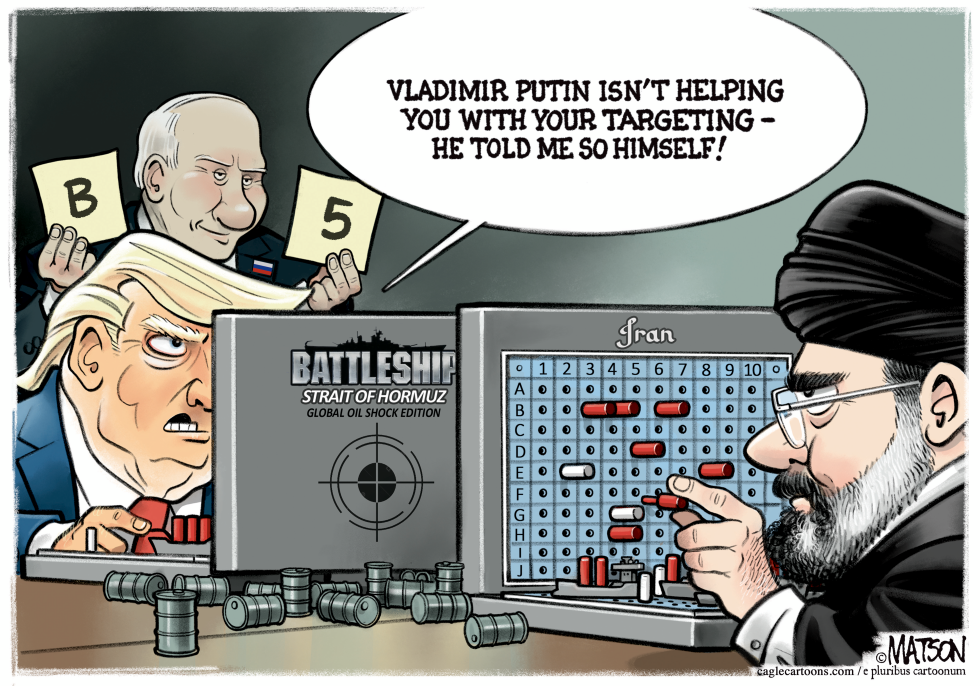
The cartoon shows Donald Trump, Vladimir Putin and Iran's Ayatollah Khamenei engaged in a Battleship match themed around the Strait of Hormuz and global oil shock. Putin holds B5 cards while denying help to Iran on targeting US assets, reflecting recent reports of Russian-Iranian military coordination and risks to international shipping and energy markets as of March 2026.
This Daryl Cagle cartoon features a white dove stylized with Donald Trump's iconic blonde hair and orange face, clutching an olive branch in its beak while defecating a white splat onto a pastel-colored map prominently labeled 'IRAN.' The political cartoon Trump Iran image blends symbols of peace with irreverent humor, as the Trump dove olive branch figure perches awkwardly over the country. Surrounded by vague outlines of neighboring regions in soft blues and beiges, the satirical map Iran defecating bird pokes fun at diplomatic tensions. The artist's signature 'DARYLCAGLE.COM' appears at the bottom, grounding the Trump hair bird cartoon in professional satire. This olive branch dove pooping artwork cleverly critiques foreign policy facades, making it a sharable gem in Middle East political humor circles. Overall, it's a witty take on how peace offerings can sometimes feel like mere dumps on international relations.
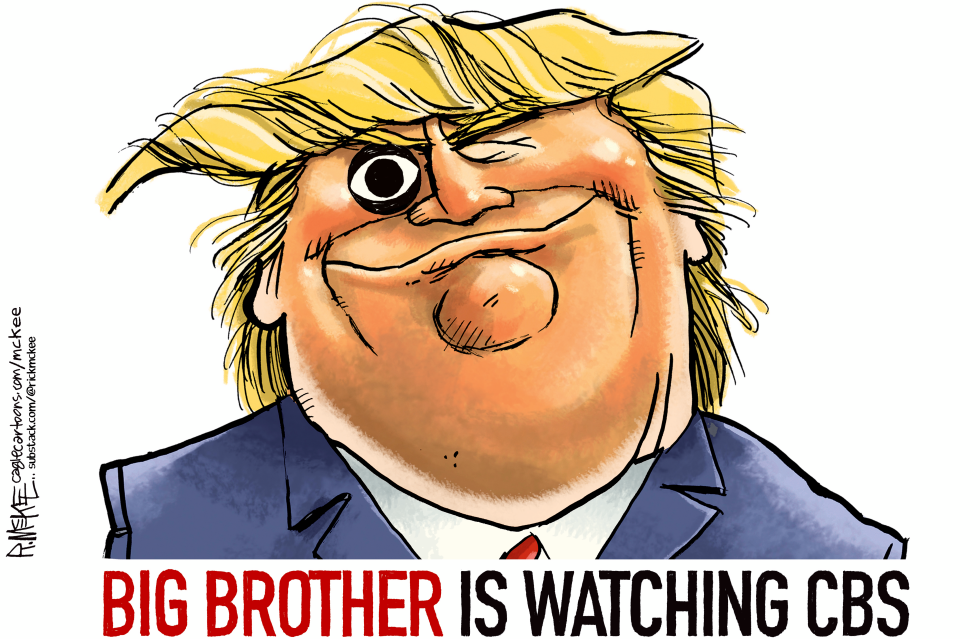
The illustration depicts Donald Trump with an exaggerated head and a single large eye, styled after the Big Brother figure from George Orwell's 1984. Bold text at the bottom declares Big Brother is watching CBS. The December 2025 piece appears amid ongoing tensions between the president-elect and major media outlets including CBS News and its 60 Minutes program.