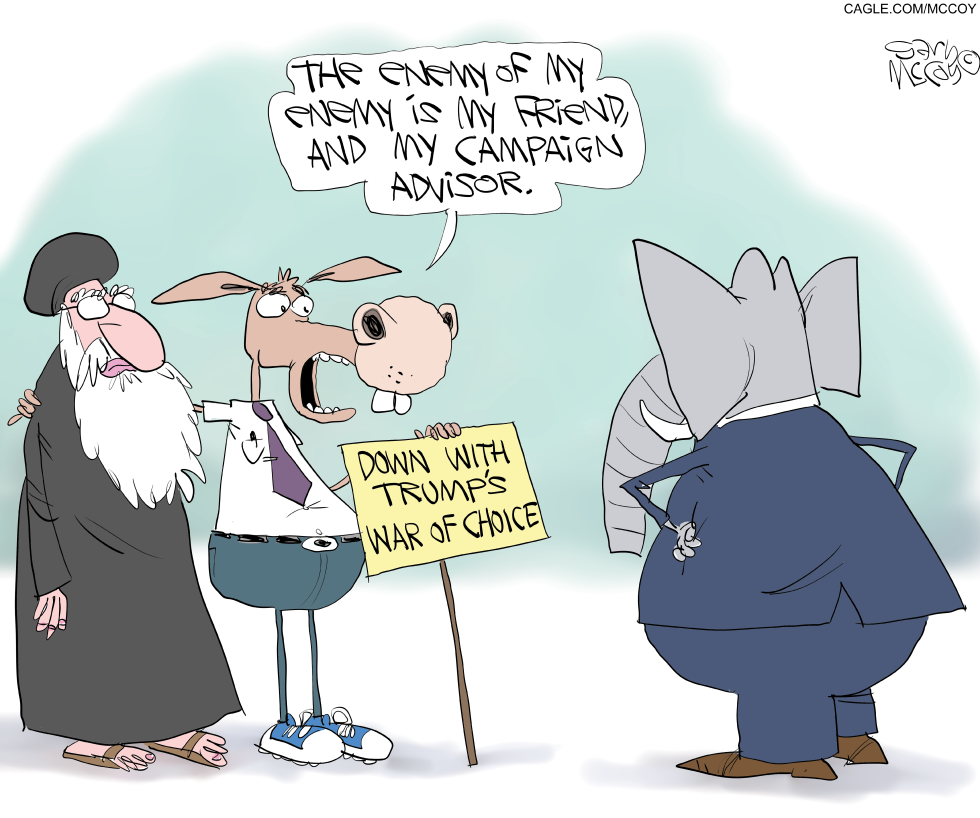
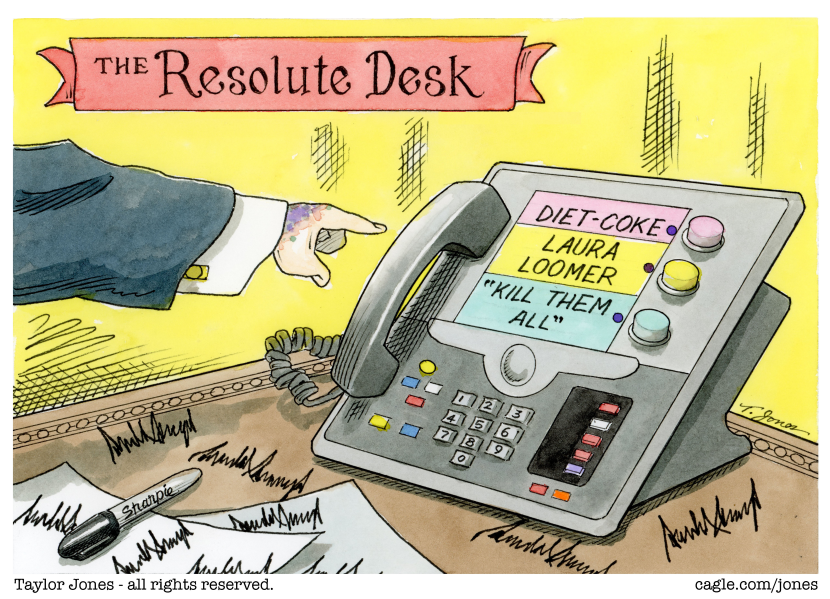
Democrats have signaled opposition to potential Trump administration actions toward Iran, framing them as unnecessary conflict. The alliance draws on shared criticism of U.S. policy in the Middle East. This dynamic highlights partisan divides over foreign engagement and raises questions about domestic political strategy. The piece portrays the partnership as opportunistic and shortsighted.
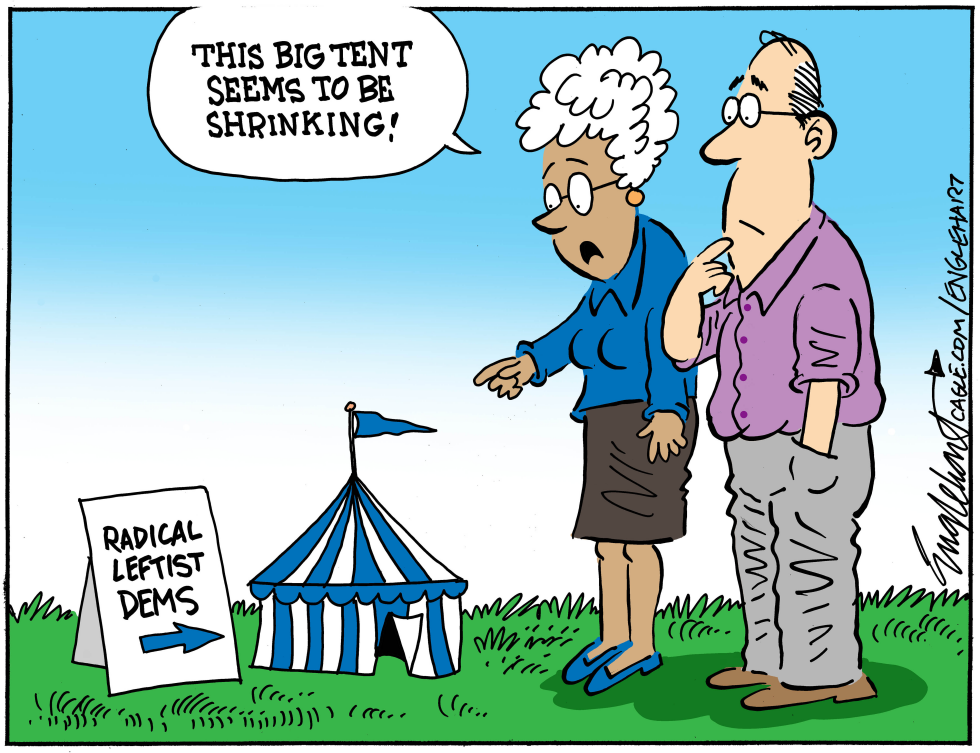
Democratic Party figures have grown concerned that the traditional big tent coalition is contracting as radical leftists consolidate control over the party's direction and messaging. The shift sidelines moderates and narrows the range of acceptable views within the organization. This dynamic raises questions about the party's ability to maintain broad electoral appeal in upcoming cycles. The editorial takes the position that the exclusionary turn is self-defeating and accelerates the party's isolation from mainstream voters.
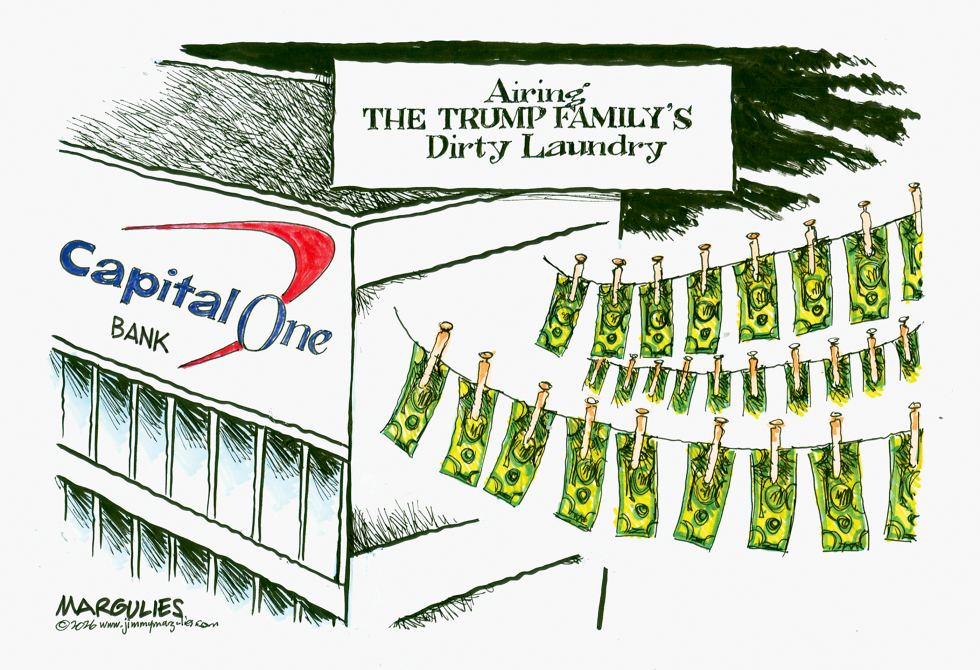
Questions persist over the Trump family's banking relationships and financial disclosures at Capital One. The bank has faced scrutiny for its handling of loans tied to the family businesses. These matters draw attention because they involve a former president and his relatives. Public records and legal filings continue to surface details about debts and repayments. The editorial takes the position that such financial entanglements warrant full transparency to maintain public trust in both political figures and major financial institutions.
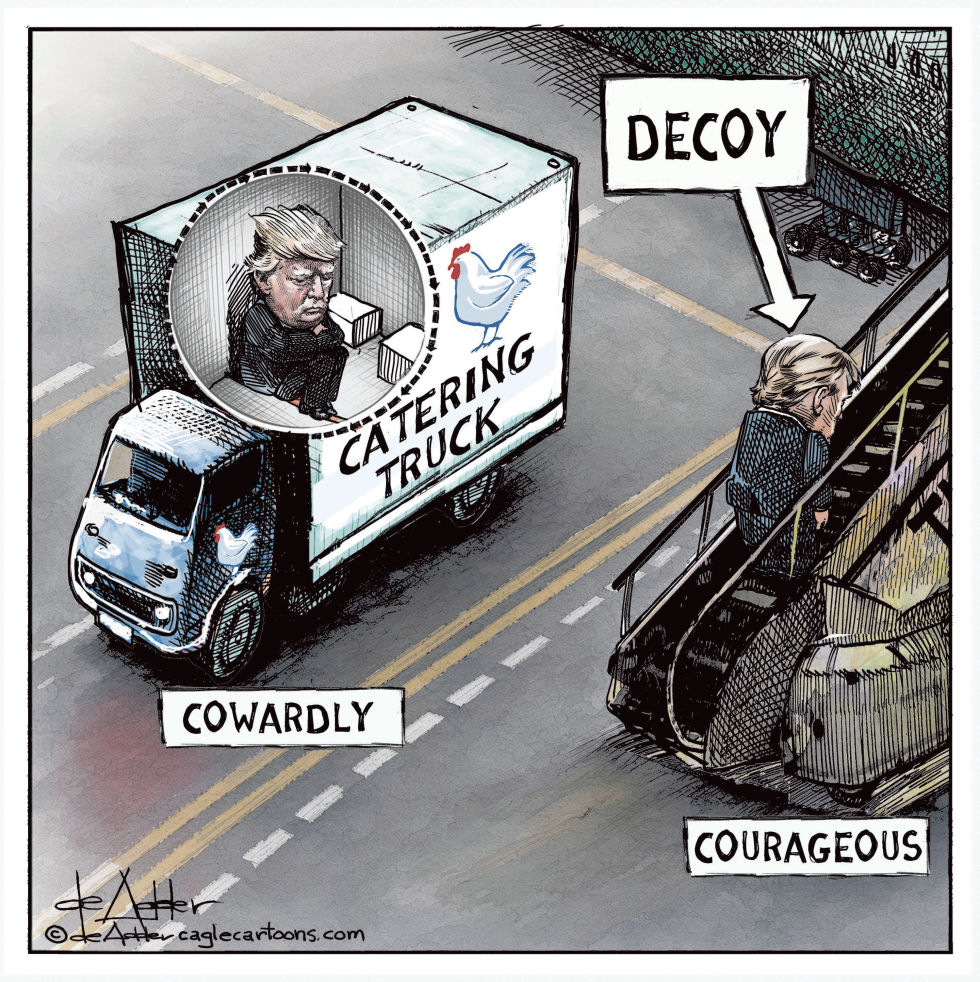
A political cartoon published August 11, 2026, depicts a catering truck marked as a decoy and cowardly, containing an image of Donald Trump. Hillary Clinton appears separately ascending stairs labeled courageous. The piece responds to ongoing partisan debates over leadership strength and personal resolve in electoral politics. It advances the argument that one figure projects weakness through avoidance while the other demonstrates bravery through direct action.
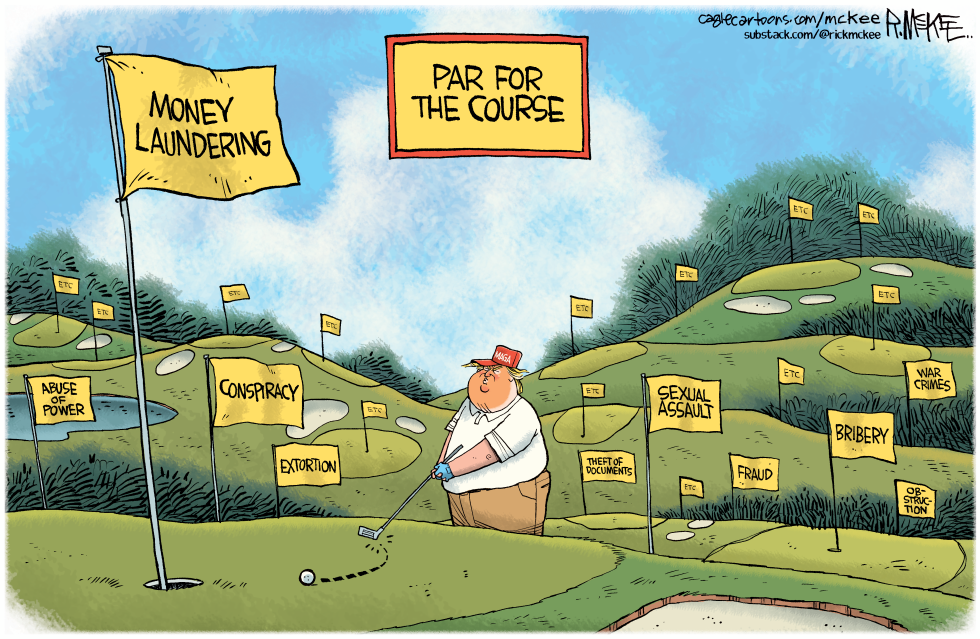
Donald Trump appears on a golf course in an editorial cartoon dated August 6 2026. Multiple yellow flags label alleged offenses including money laundering, conspiracy, extortion, sexual assault, bribery, fraud and obstruction. The piece responds to ongoing legal and political scrutiny of the former president. It frames these issues as routine for Trump through the visual metaphor of a golf course. The editorial position presents the allegations as expected elements of his record.
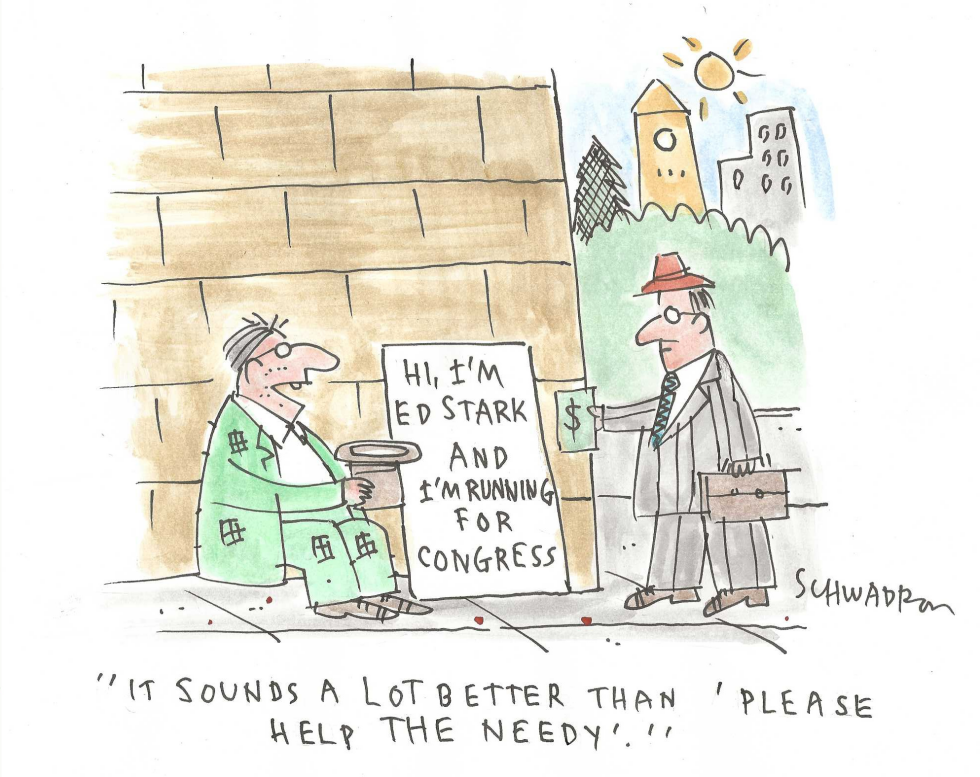
Ed Stark, identified on his campaign sign as a congressional candidate, sits on a sidewalk displaying his bid for office. A suited donor extends cash toward him. The scene highlights the routine nature of campaign fundraising. The piece frames the candidate's appeal as a more respectable version of street solicitation. It underscores how candidates routinely seek contributions to sustain their races.
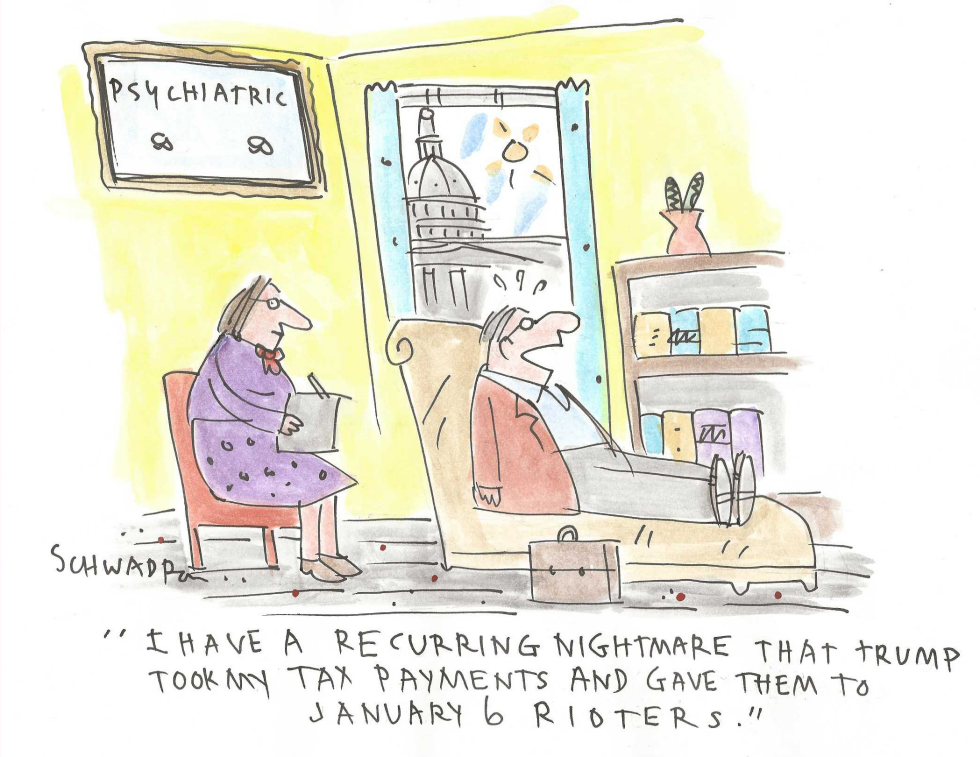
A patient describes a recurring nightmare in which former President Trump diverts tax payments to January 6 rioters. The session reflects persistent public concerns over accountability for the Capitol events and use of public funds. The piece portrays these fears as a continuing source of political unease.
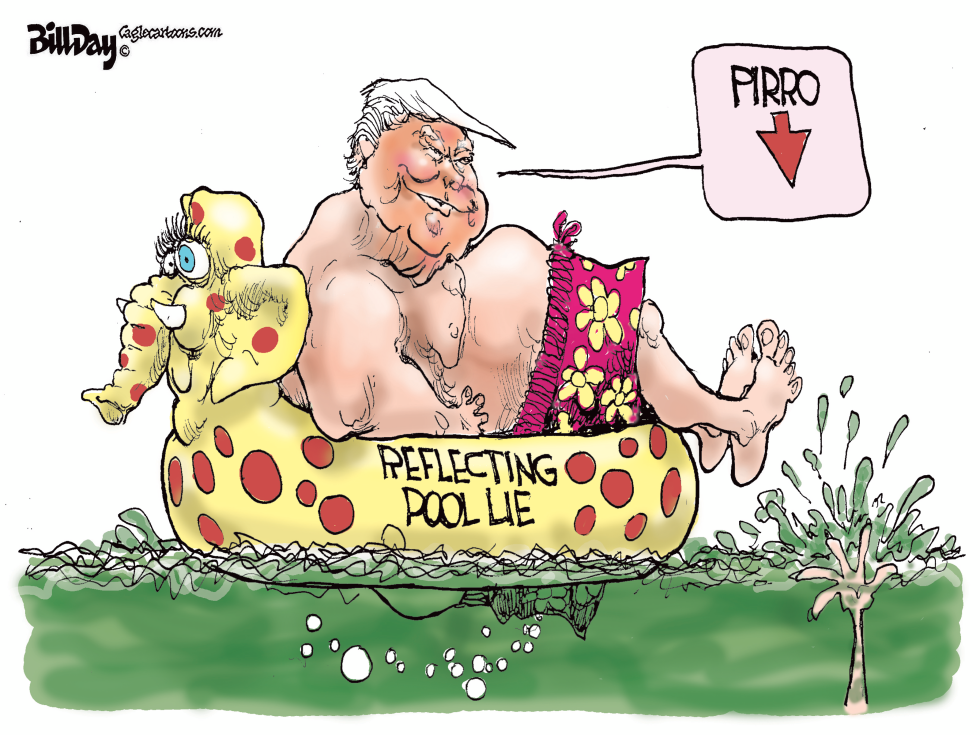
Donald Trump appears in a summer setting reclining on an inflatable labeled Reflecting Pool Lie. The image ties to ongoing questions about statements from the former president and associate Jeanine Pirro. Public attention remains on consistency of public remarks from political figures. The piece frames the scene as an illustration of evasion or distortion in political discourse.
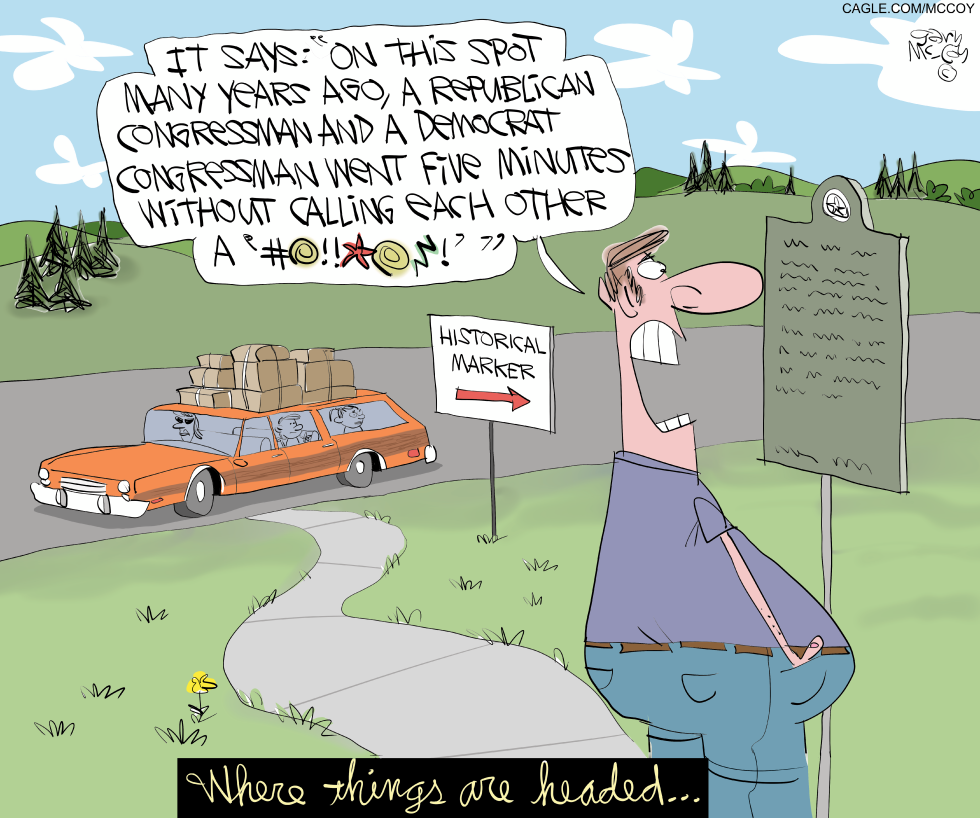
Congressional discourse has grown increasingly hostile in recent years, with members of both parties routinely trading insults rather than engaging on policy. The piece responds to this entrenched pattern by imagining a future roadside marker that treats a mere five minutes without profanity as a historic achievement worthy of commemoration. It underscores the low bar for civility in the current environment.
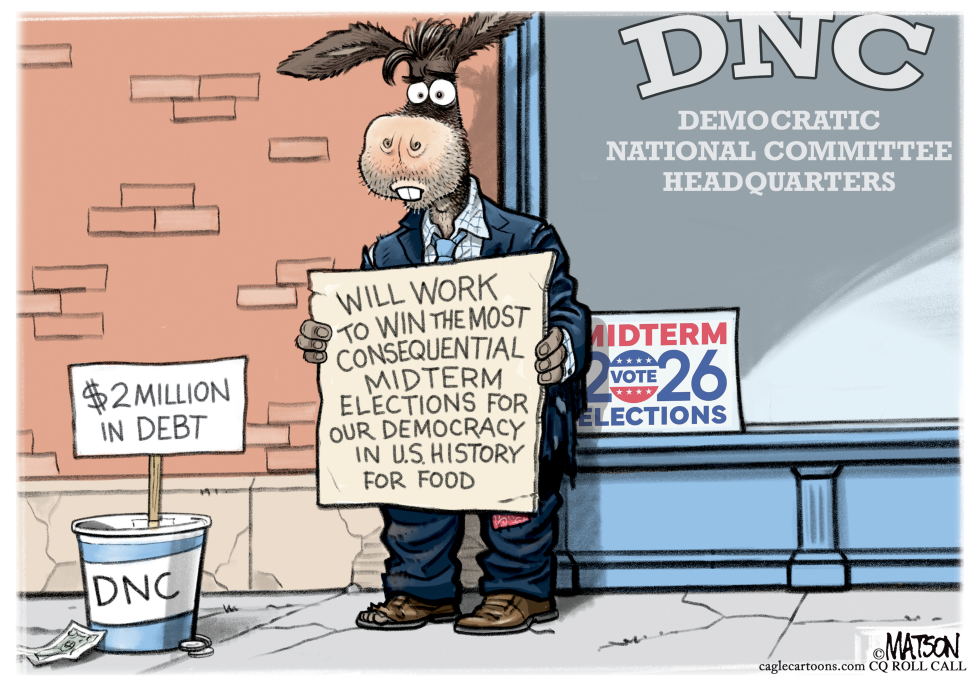
The Democratic National Committee faces a reported $2 million debt as it prepares for the 2026 midterm elections. The party headquarters displays signs of financial strain while promoting the contests as pivotal for democracy. The editorial position criticizes the DNC for prioritizing election rhetoric over addressing its fiscal problems.
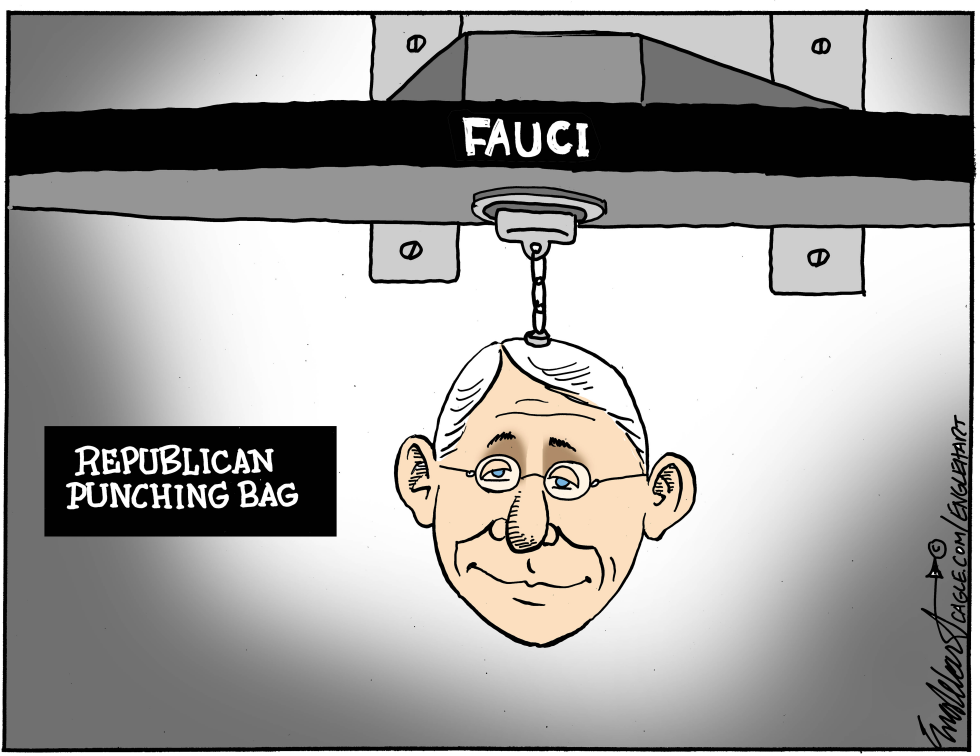
Republicans have long singled out Anthony Fauci for criticism over his role in shaping the nation's COVID-19 response. The pattern of attacks persists years after the height of the pandemic, keeping the former NIAID director in the spotlight. The editorial takes the position that these repeated assaults serve more as political theater than substantive policy debate.
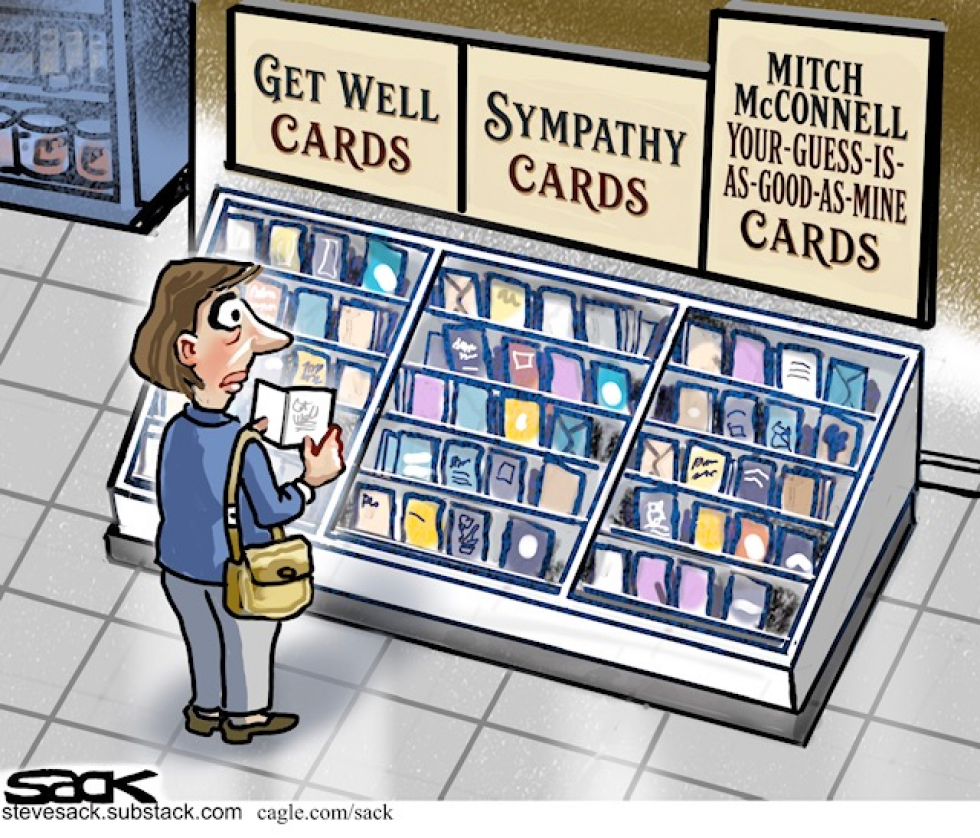
Questions about Mitch McConnell's health and future in Senate leadership have persisted into mid-2026. The Kentucky Republican has faced repeated absences and public episodes that fuel speculation about his capacity to continue. Colleagues in both parties watch closely because his position influences committee assignments and floor strategy. The uncertainty affects legislative timelines on appropriations and judicial matters. The piece argues that the situation leaves observers with little reliable information and treats the ambiguity itself as the central story.
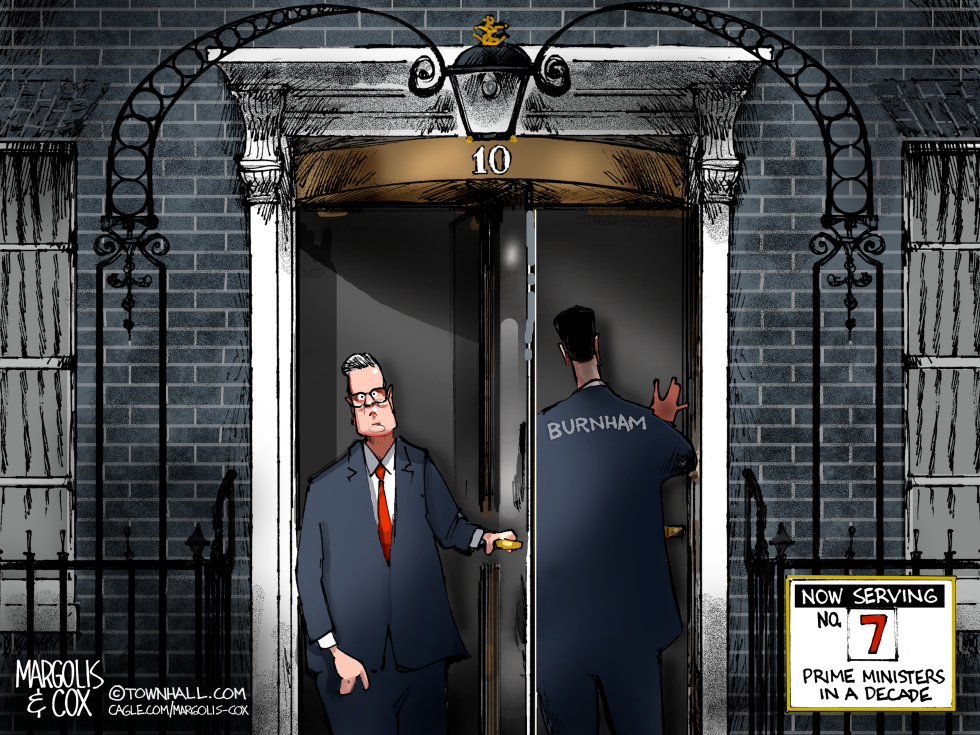
Keir Starmer exits the revolving door at 10 Downing Street while Andy Burnham enters from the opposite side. Starmer wears a dark suit with a red tie and glasses. Burnham has his name printed on the back of his jacket. A sign in the corner reads now serving number seven prime ministers in a decade. The image shows rapid leadership turnover at the United Kingdom government headquarters. It responds to ongoing political instability marked by multiple changes in the prime minister position over the past ten years, with the latest transition from Starmer to Burnham continuing the pattern of short tenures in the role.
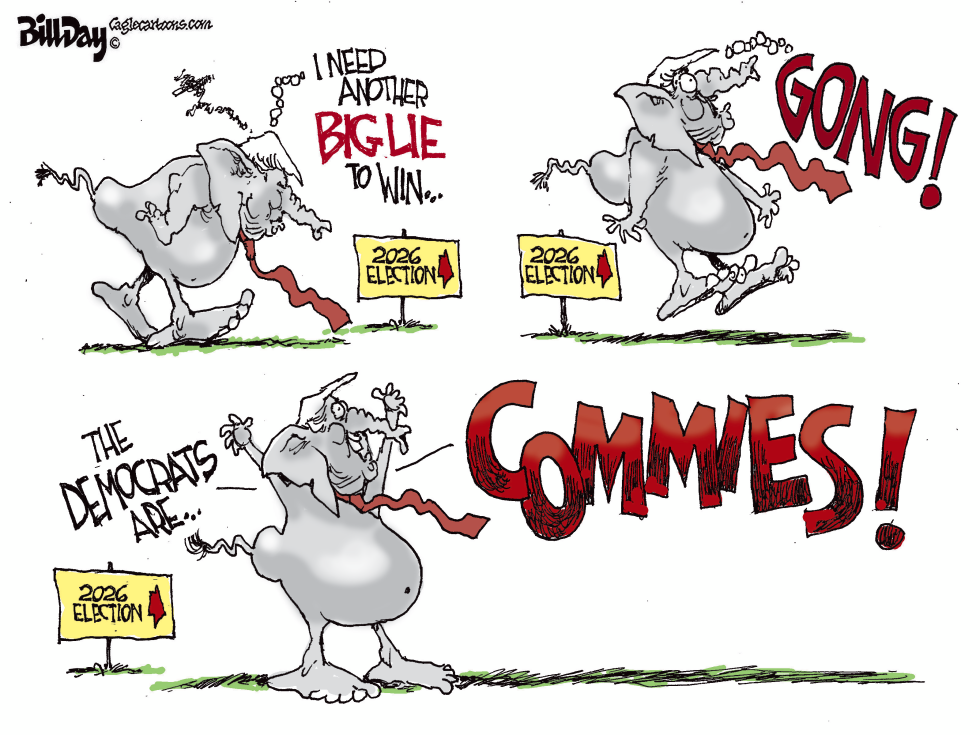
Republicans continue to rely on the big lie narrative to motivate voters ahead of the 2026 elections. The approach draws internal pushback and highlights deepening partisan rhetoric. The piece criticizes the tactic as tired and counterproductive.
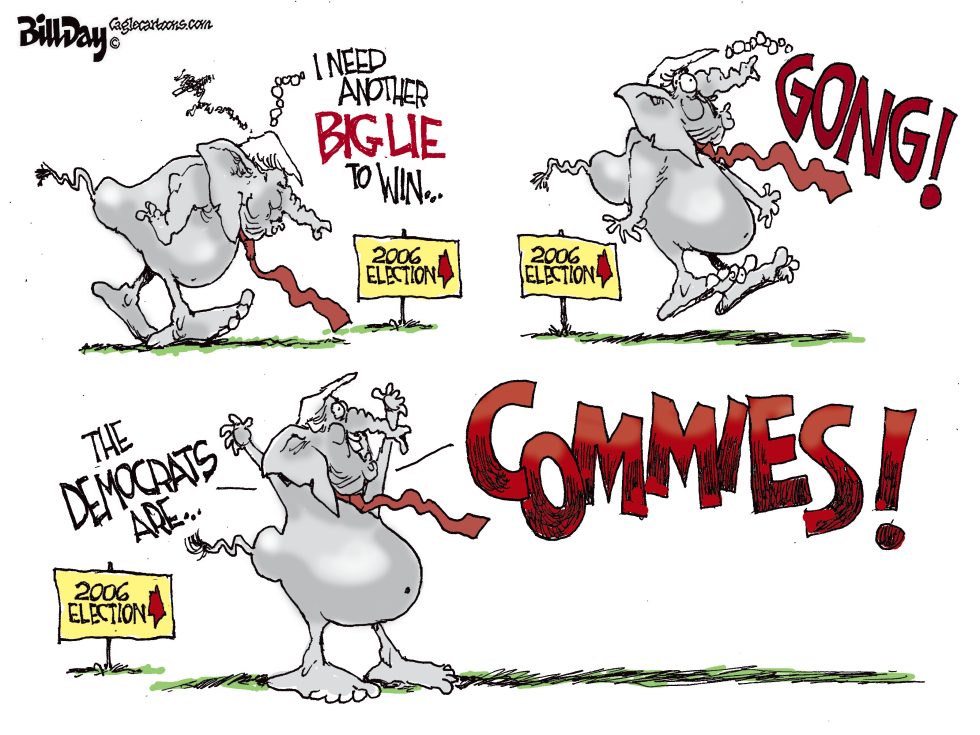
During the 2006 midterm election cycle both major parties traded accusations with Republicans pushing unsubstantiated claims to sway voters and Democrats facing repeated communist labels from opponents. The dynamic reflected long standing partisan efforts to undermine credibility through exaggerated rhetoric rather than policy debate. The piece argues these tactics undermine fair elections and deserve rejection by voters.