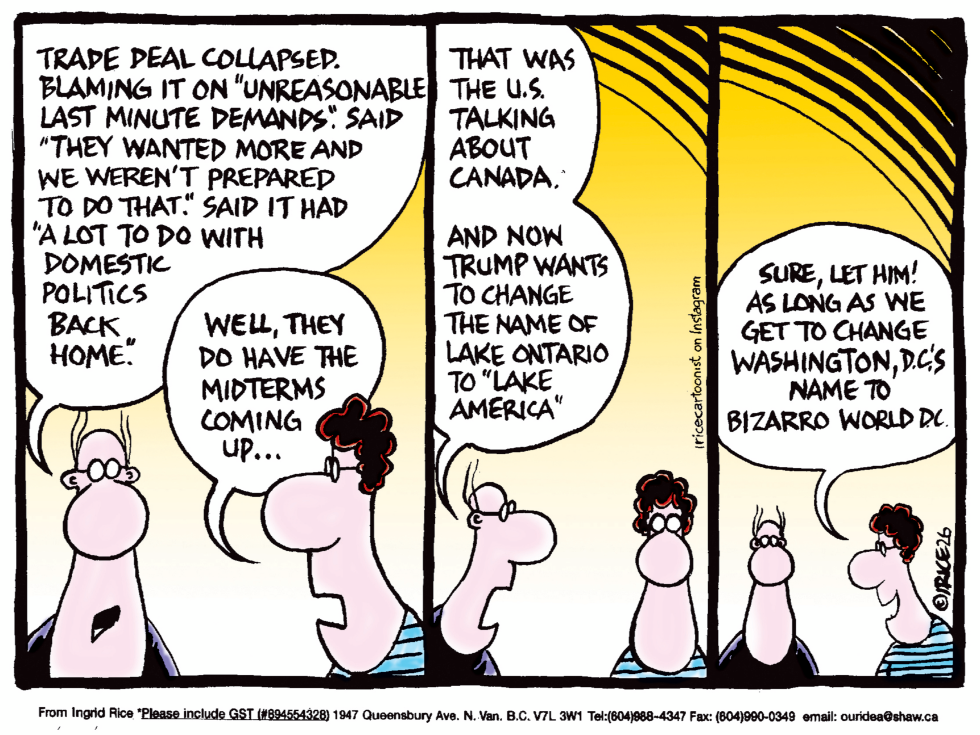
A Canada-U.S. trade deal collapsed after U.S. negotiators cited unreasonable last-minute demands and linked the failure to domestic politics ahead of midterms. President Trump then proposed renaming Lake Ontario to Lake America. Canadian officials responded by offering to rename Washington D.C. to Bizarro World DC if the change proceeds. The exchange highlights how trade tensions and political posturing are escalating between the two countries. The cartoon mocks the name-change idea as emblematic of broader dysfunction in bilateral relations.
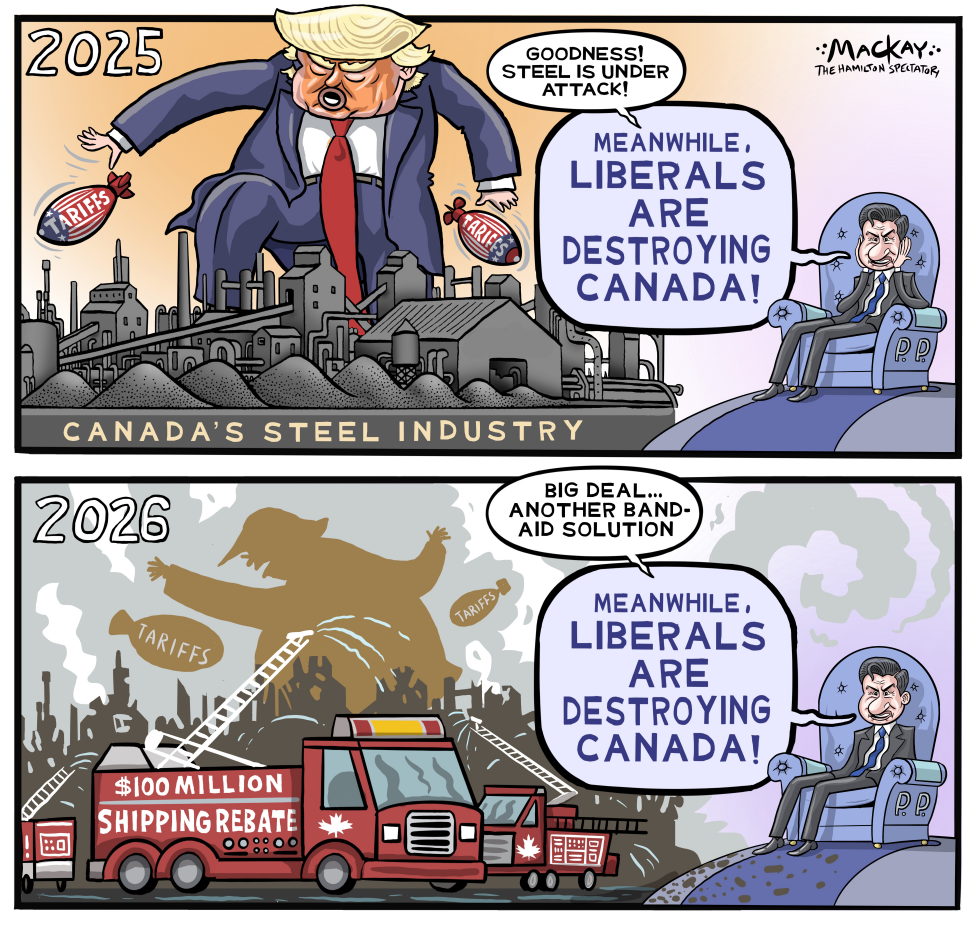
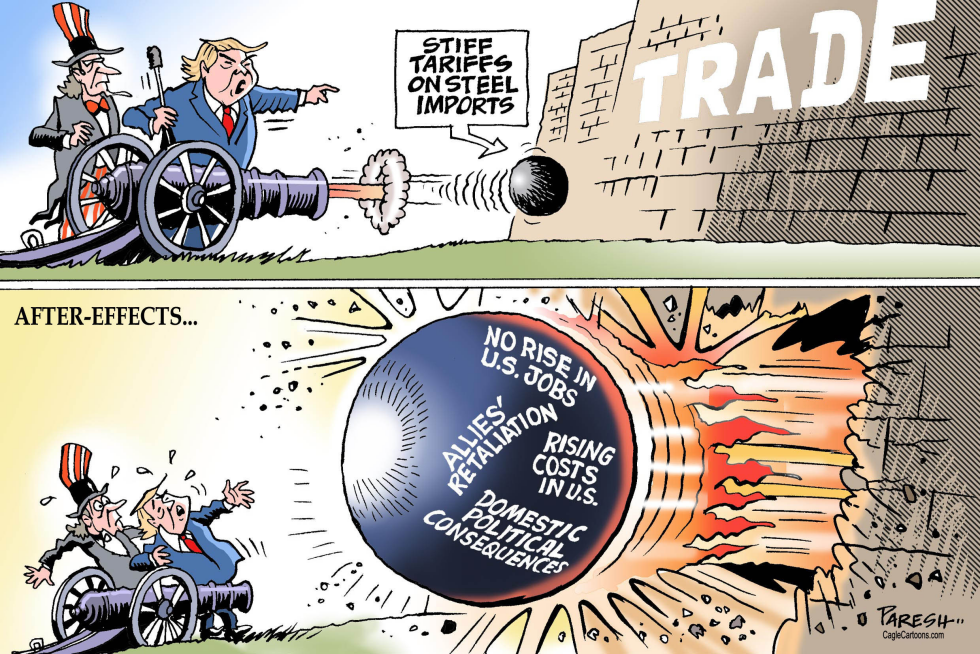
U.S. tariffs imposed on Canadian steel in 2025 triggered sharp declines in the domestic industry by 2026. The federal government responded with a $100 million shipping rebate. Conservative Leader Pierre Poilievre continued to focus attacks on the Liberal government rather than the trade shock. The cartoon argues this stance amounts to a repeated distraction from the core economic damage.
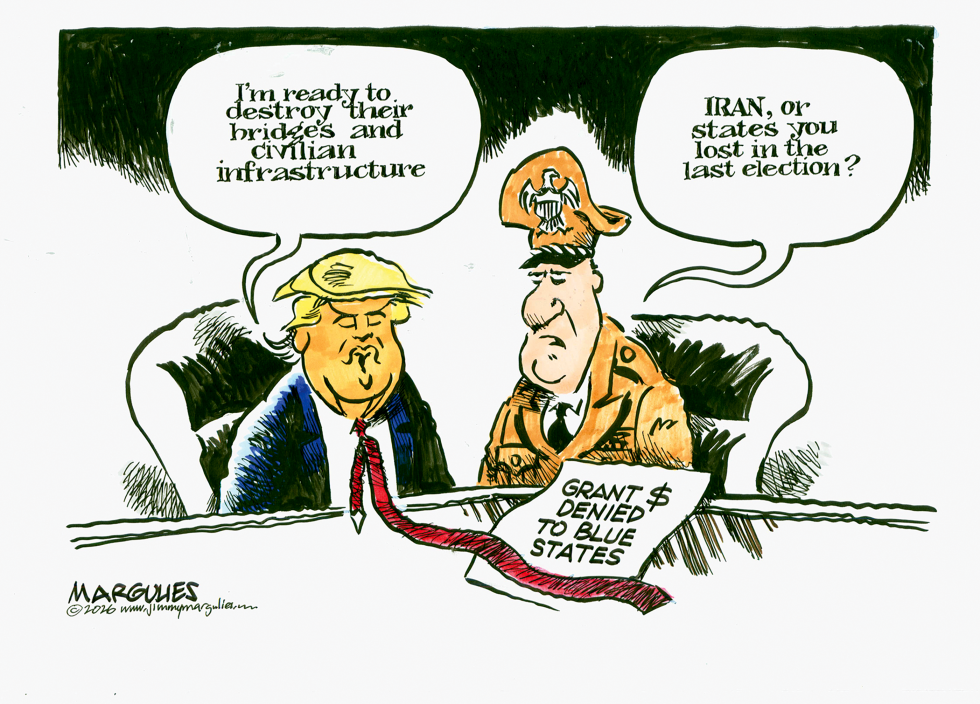
On July 28 2026 President Trump faces criticism for denying federal grants to states that voted against him in the prior election. The move raises questions about using infrastructure funding as political leverage. The cartoon portrays this as interchangeable with threats against Iran.
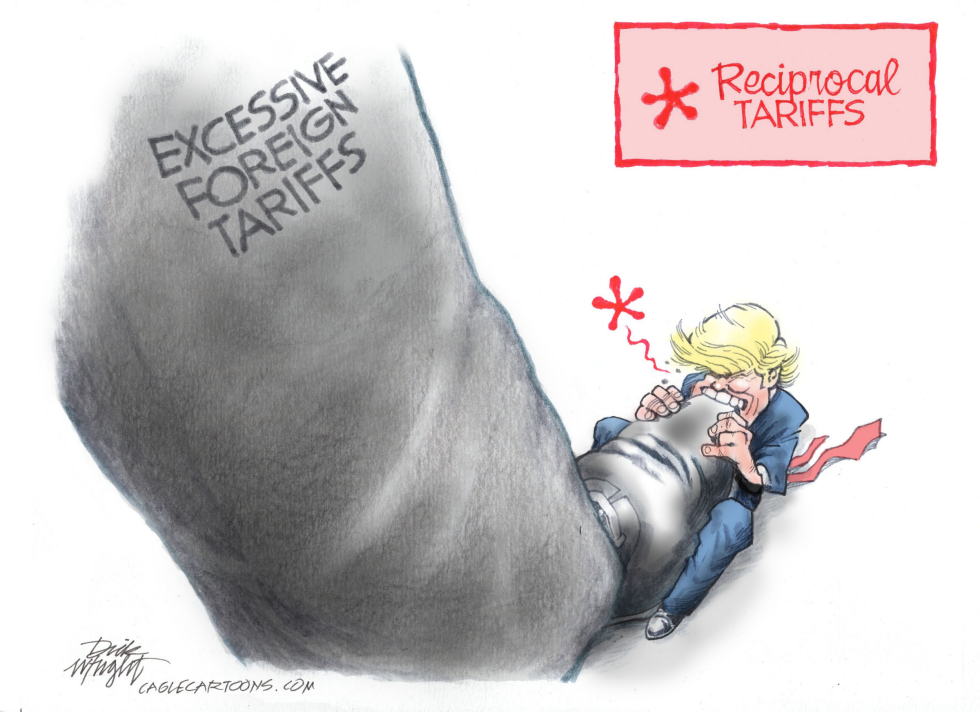
Dick Wright's cartoon captures the irony of reciprocal tariffs with a massive foot marked 'excessive foreign tariffs' descending on a caricatured Trump, who grimaces while clutching a metallic object. The red label 'Reciprocal TARIFFS' floats nearby, emphasizing the backlash from unfair trade policies. Trade deficits loom large as the foot represents international retaliation, potentially sparking a stock market downturn. In a tariff driven economy, the image satirizes how such measures invite excessive foreign tariffs, risking recession. The composition underscores the self-defeating nature of aggressive trade stances, with Trump's strained expression highlighting the pressure on domestic markets. This piece fits into ongoing debates on global trade imbalances.