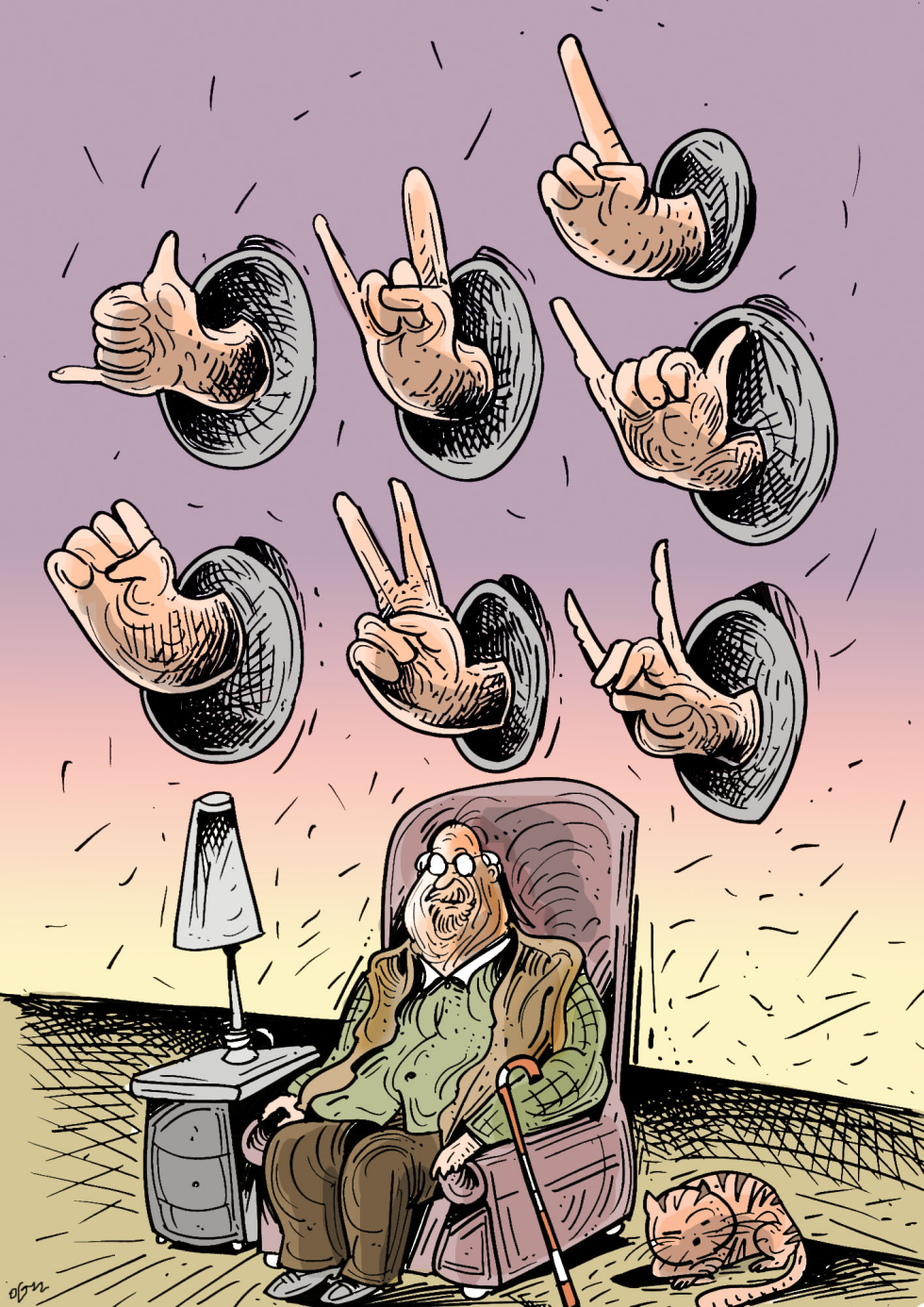
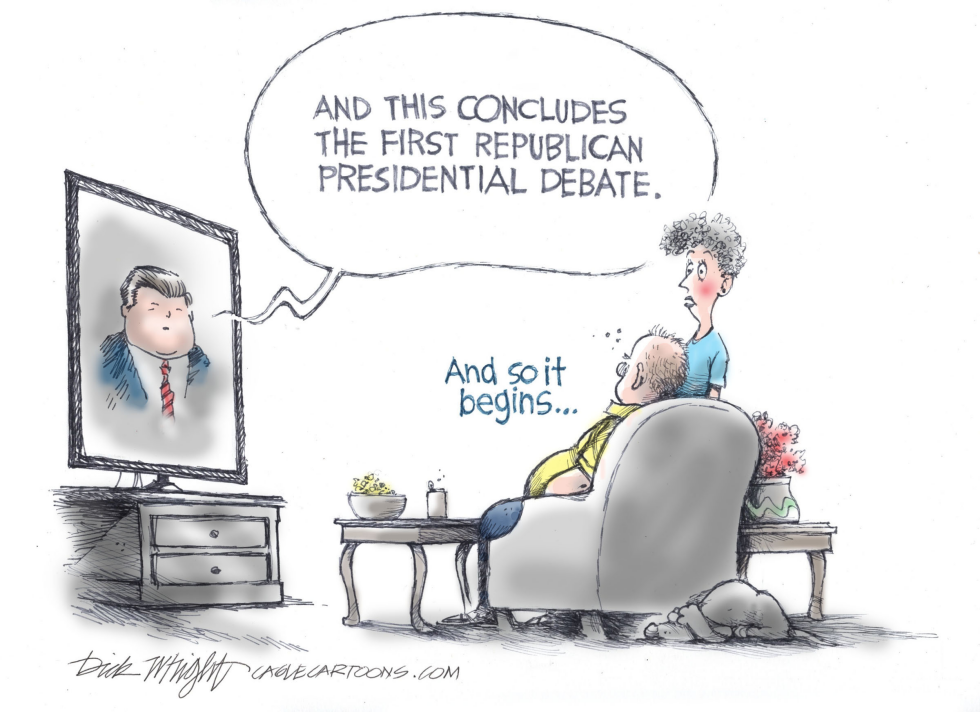
Public figures, particularly older officials in government roles, continue to face intense scrutiny and negative public reaction in 2026. Criticism has intensified through various channels, highlighting frustration with established leadership. The piece portrays an overwhelmed elderly man absorbing a barrage of dismissive gestures, underscoring the editorial view that such backlash reflects legitimate fatigue with unresponsive or out-of-touch figures in power.
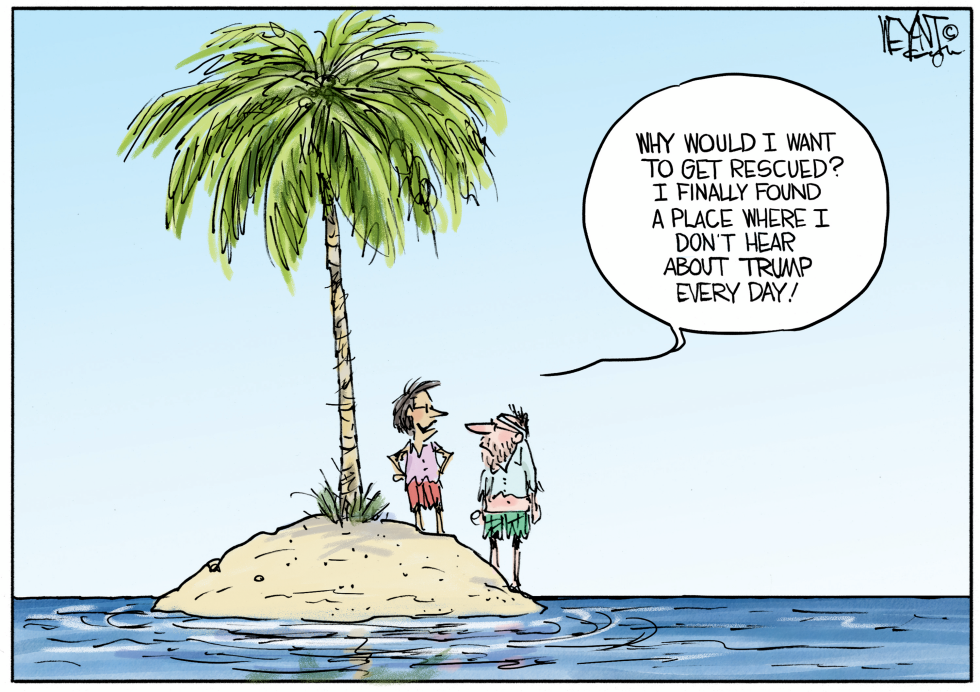
On June 29, 2026, a cartoon depicts two castaways on a tiny desert island with a single palm tree. One man in a speech bubble declares he has no interest in rescue because the location spares him daily mentions of Trump. The image captures widespread public exhaustion with political coverage centered on the former president during a period of intense media focus.
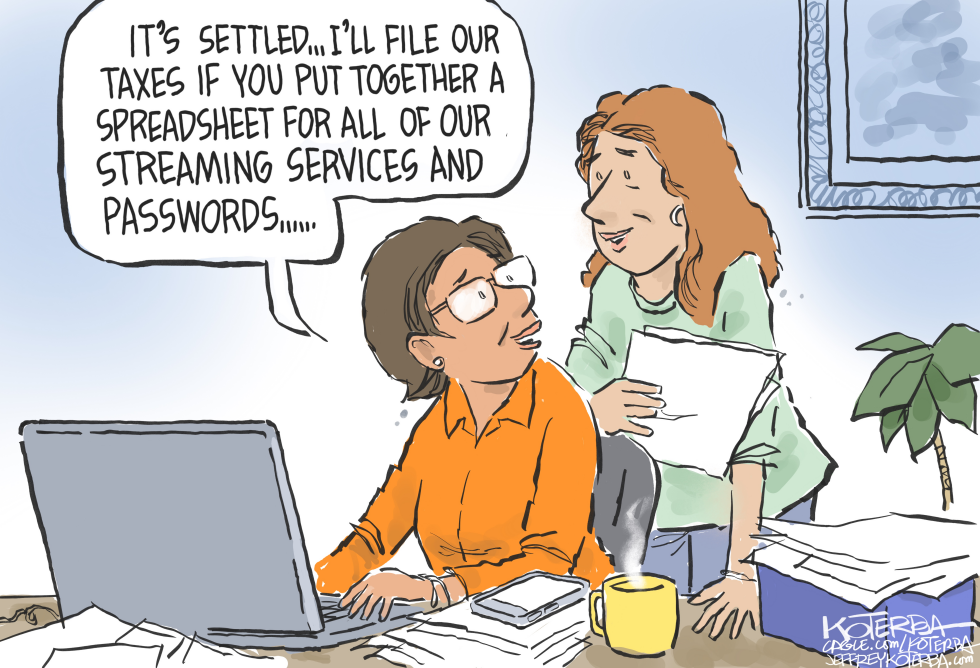
Jeff Koterba's cartoon shows a domestic scene where one woman at a laptop proposes a deal: she'll file taxes if the other compiles a spreadsheet for all their streaming services and passwords. The image highlights the growing complexity of managing multiple subscriptions in modern life, with elements like a steaming mug and scattered papers adding to the relatable chaos. Tags such as streaming services, passwords, taxes, spreadsheet, household division, and digital overload underscore the satire on how everyday tech tasks rival traditional burdens like tax preparation. The artwork keeps it light, poking fun at the password proliferation without diving into deeper politics.
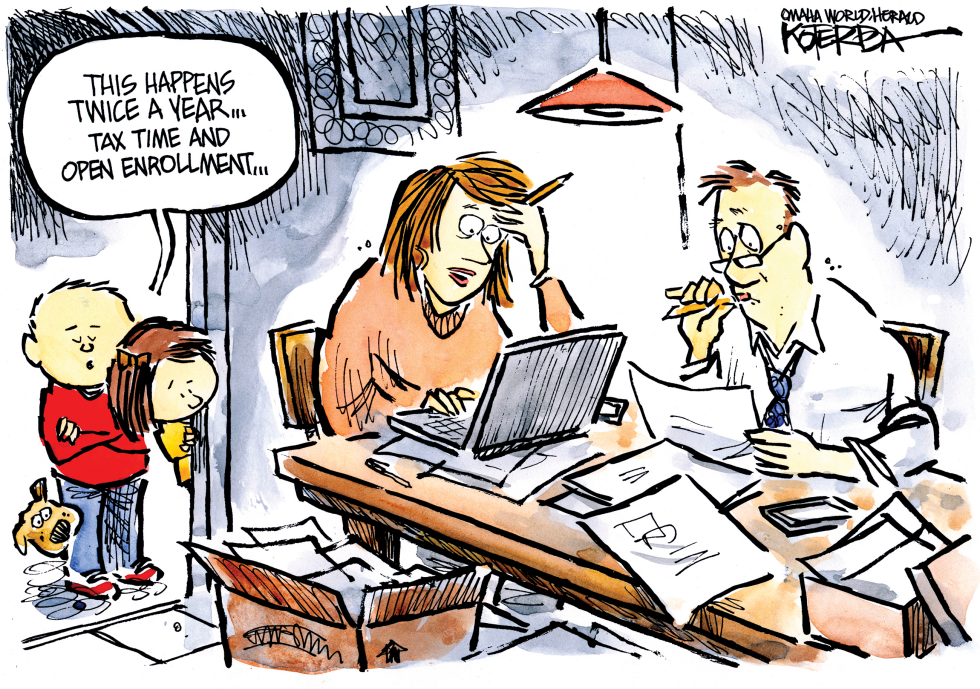
This political cartoon captures a family engulfed in the chaos of tax time and open enrollment, with a woman exclaiming about the twice-a-year ordeal while surrounded by papers, a laptop, and a box of forms. The scene highlights bureaucratic frustration, paperwork overload, and administrative burdens in a humorous light, featuring a man with glasses scrutinizing documents and children nearby. It's a sharp satire on how these annual rituals mimic each other in their soul-crushing complexity, poking fun at government-mandated headaches that afflict everyday Americans. With elements like a dangling light and scattered 'FORM' papers, the artwork underscores the universal dread of deadlines and deductions.
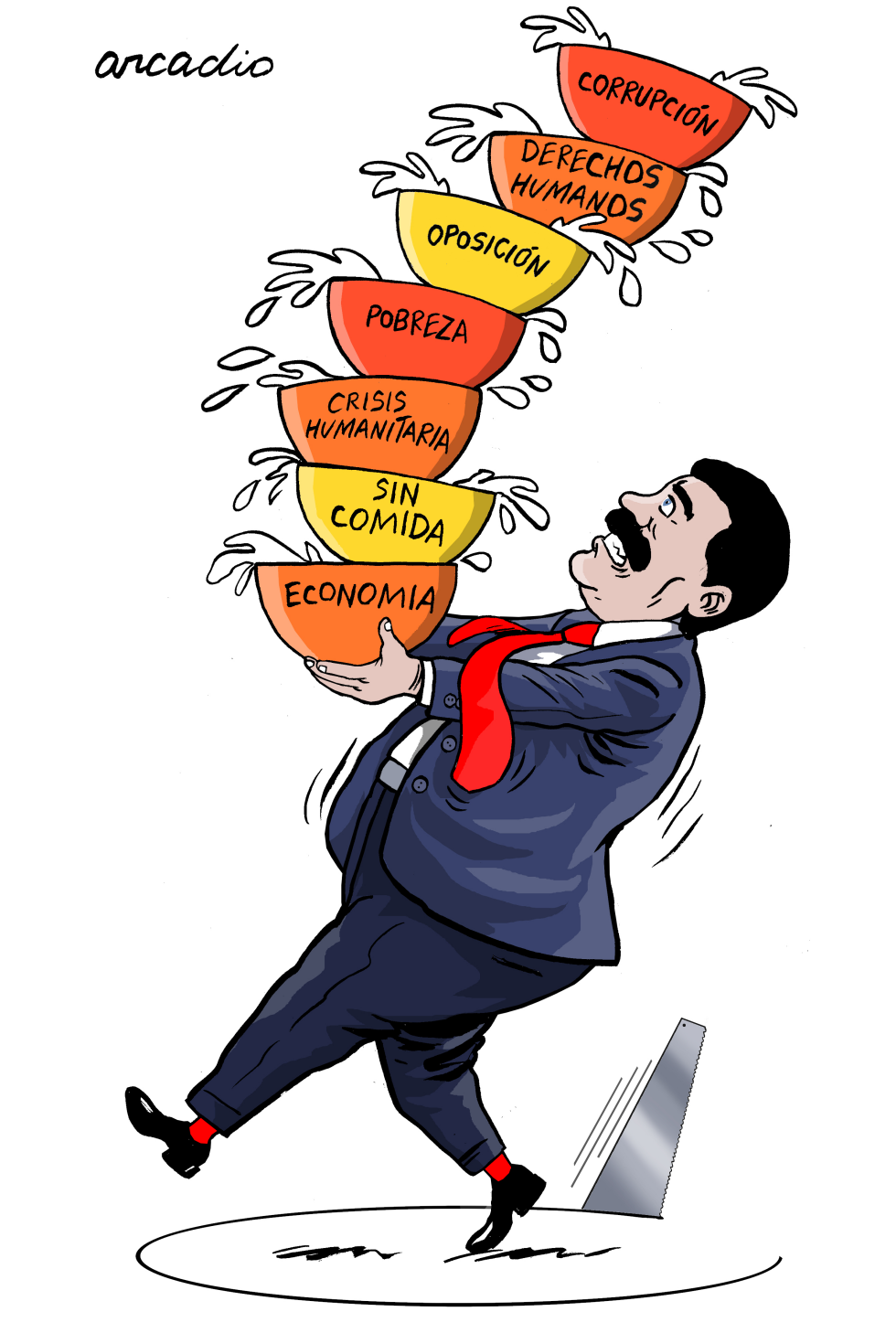
The cartoon shows a mustached man in a blue suit and red tie, balancing a teetering stack of bowls in shades of red, orange, and yellow, each labeled with words like corrupcion, derechos humanos, oposicion, pobreza, crisis humanitaria, sin comida, and economia. Liquid spills from the bowls as he leans forward, one foot raised toward a sharp saw blade on the ground. The image captures a sense of imbalance and impending fall, with the artist's signature 'arcadio' at the top. Tags like Maduro, dictadura, ecomomia, Latino America, and Venezuela frame the visible elements of stacked troubles. No hidden meanings jump out; it's straightforward visual metaphor for overload. Dry humor lies in the absurdity of the juggle.
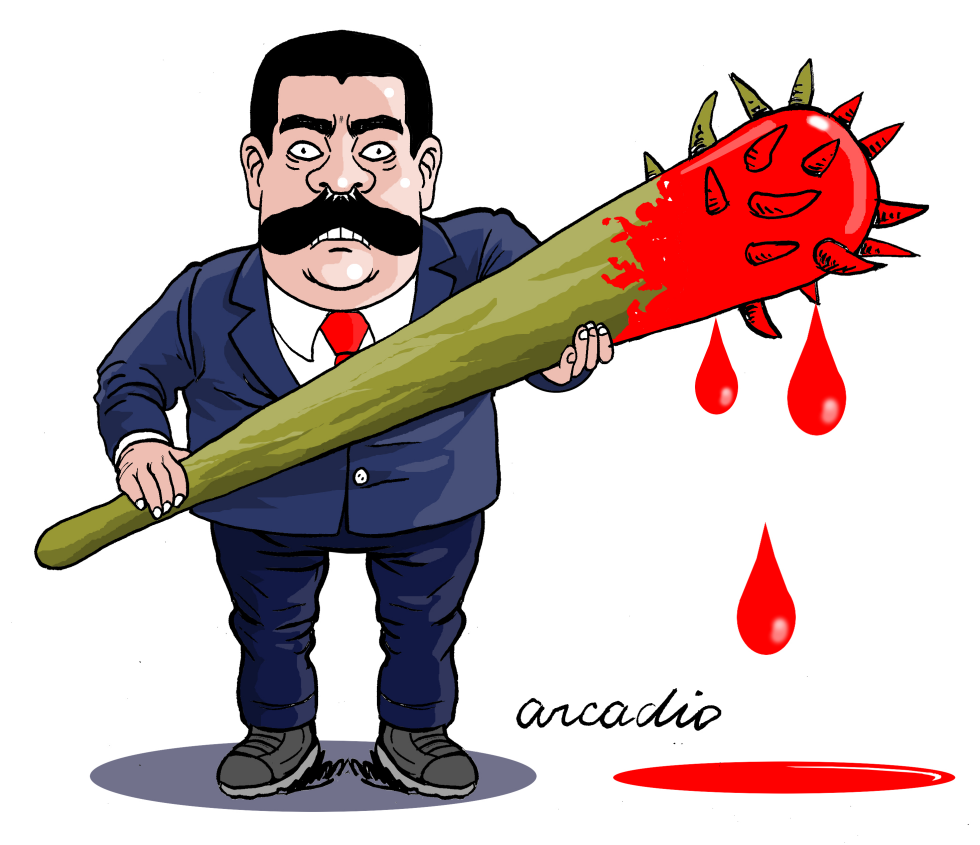
Arcadio Esquivel's 2019 cartoon portrays a figure resembling Nicolás Maduro, the Venezuelan leader, as a tyrant clutching a massive, spiked club smeared in red, dripping blood-like substance. The tags Maduro, Venezuela, tyrant, Latin America, dictator, and socialism frame this piece as a pointed critique of authoritarian rule. The man's stern expression and formal attire contrast with the brutal weapon, highlighting themes of power abuse. Published amid Venezuela's political turmoil, the image uses exaggerated features to satirize dictatorship. No text labels the figure directly, but the visual elements scream oppression. This work fits into broader Latin American political satire, emphasizing the bloody cost of socialist policies under Maduro's regime. The artist's signature anchors the simple composition, making it shareable for editorial pages.