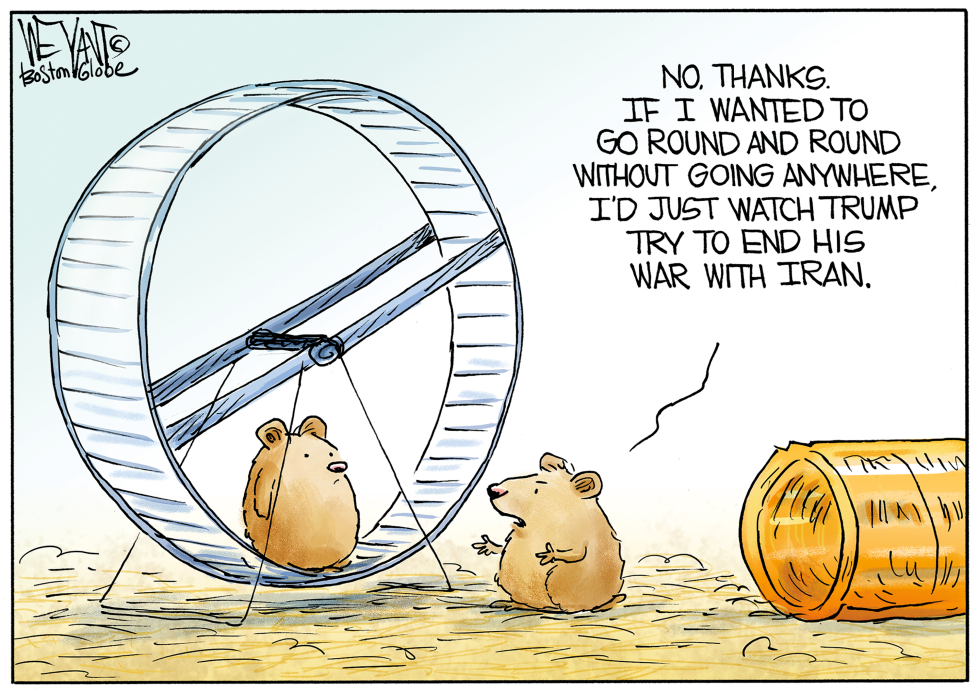
President Trump continues efforts to resolve the ongoing conflict with Iran through repeated diplomatic rounds. The situation remains stalled with no clear progress after multiple attempts. Observers note the repetitive nature of the process without advancement. The piece portrays the hamster's refusal as a commentary on the futility of the approach.
Donald Trump announced he had called off a major military strike on Iran in favor of a pending nuclear deal. The move drew immediate skepticism from Iranian officials who questioned both the threat and the agreement. The cartoon highlights the disconnect between the announcement and Tehran\'s response.
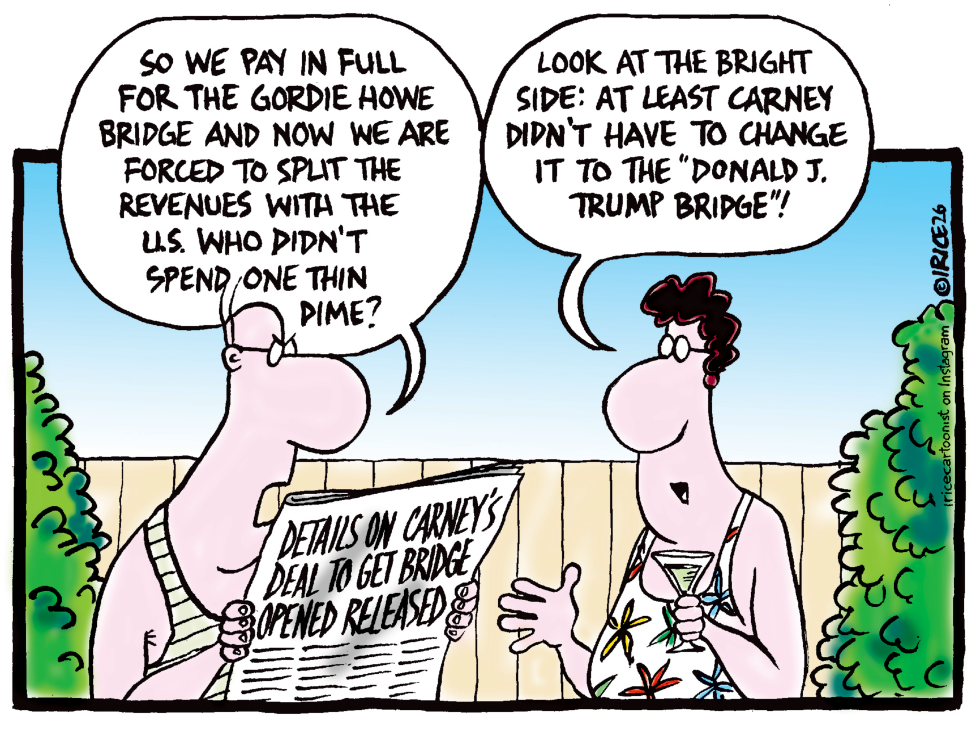
Details of a revenue-sharing agreement for the Gordie Howe Bridge between Canada and the United States have been released. The arrangement requires Canada to split toll revenues despite covering full construction costs. The editorial highlights public frustration with the terms and uses a reference to a potential Trump naming to underscore political sensitivities around the project.
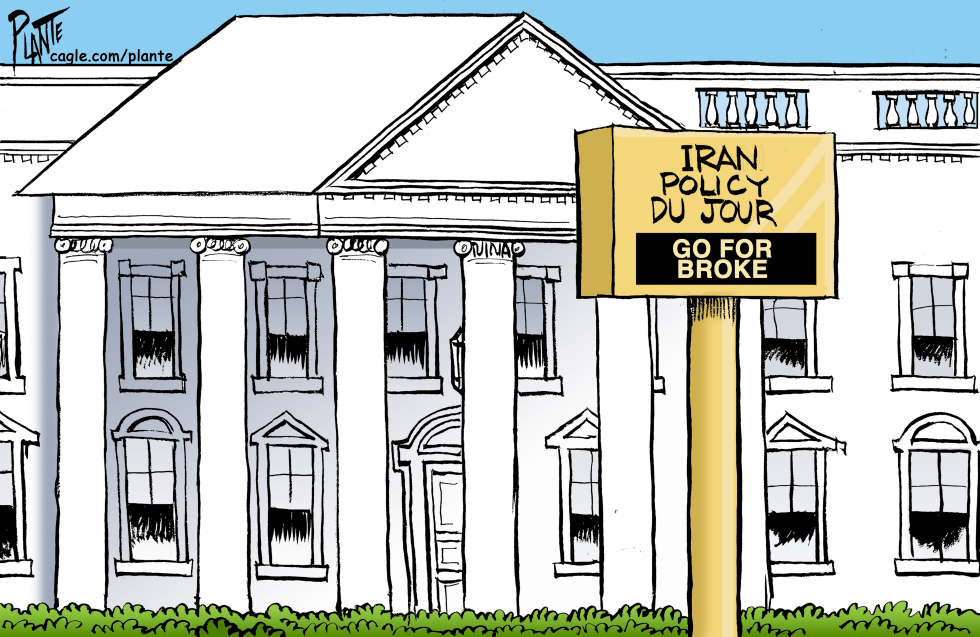
The White House has signaled a more aggressive posture toward Iran through public messaging that emphasizes risk-taking. The move comes amid persistent tensions over nuclear issues and regional influence. The editorial takes the position that such an approach lacks consistency and invites unnecessary escalation.
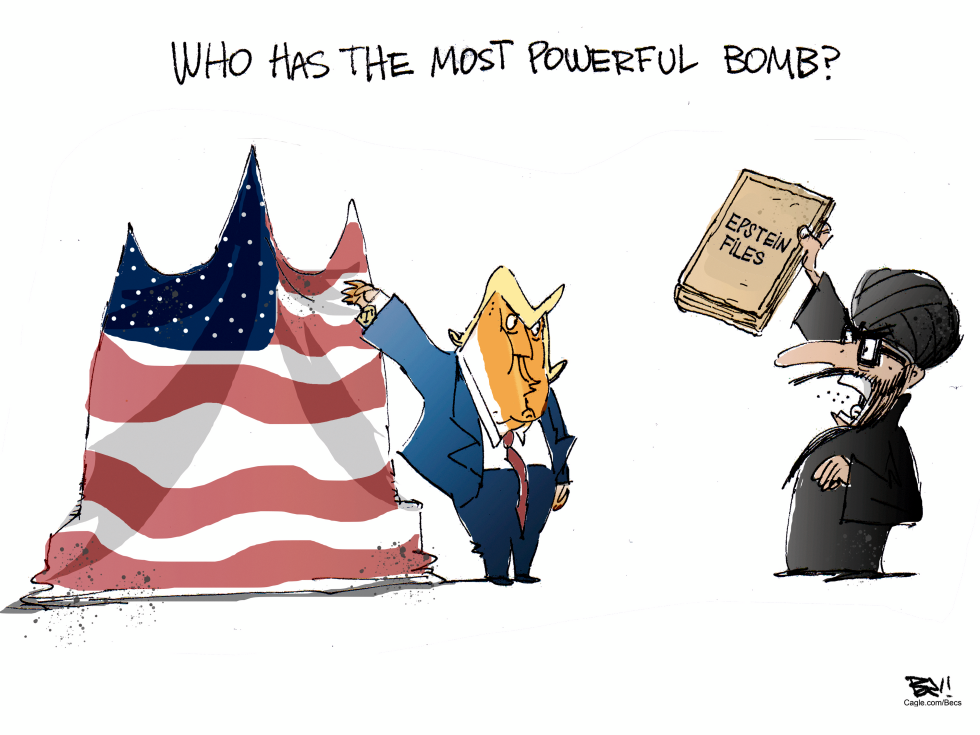
Leverage between the United States and Iran has long centered on nuclear capability and diplomacy. The piece sets that against domestic political pressure from document releases and investigations. It suggests the most damaging weapon in play may not be a military one.
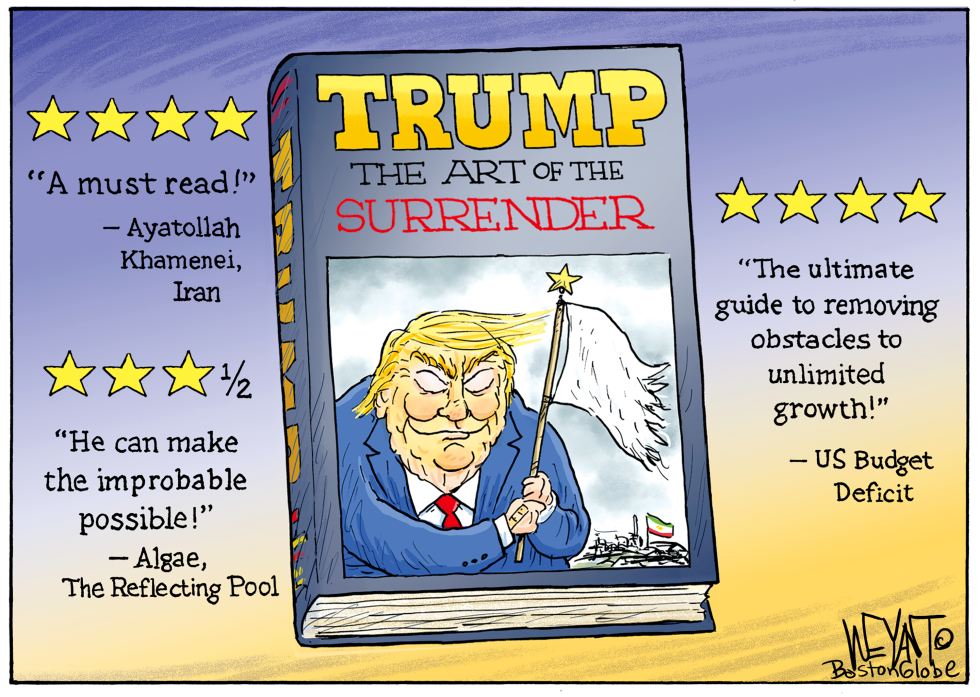
The June 28 2026 cartoon by Christopher Weyant shows a book titled Trump The Art of the Surrender. Donald Trump appears on the cover holding a white flag. Background includes an Iranian flag. Endorsements from Ayatollah Khamenei and the US Budget Deficit appear on either side with star ratings. The image responds to ongoing US Iran tensions and fiscal debates active in late June 2026.
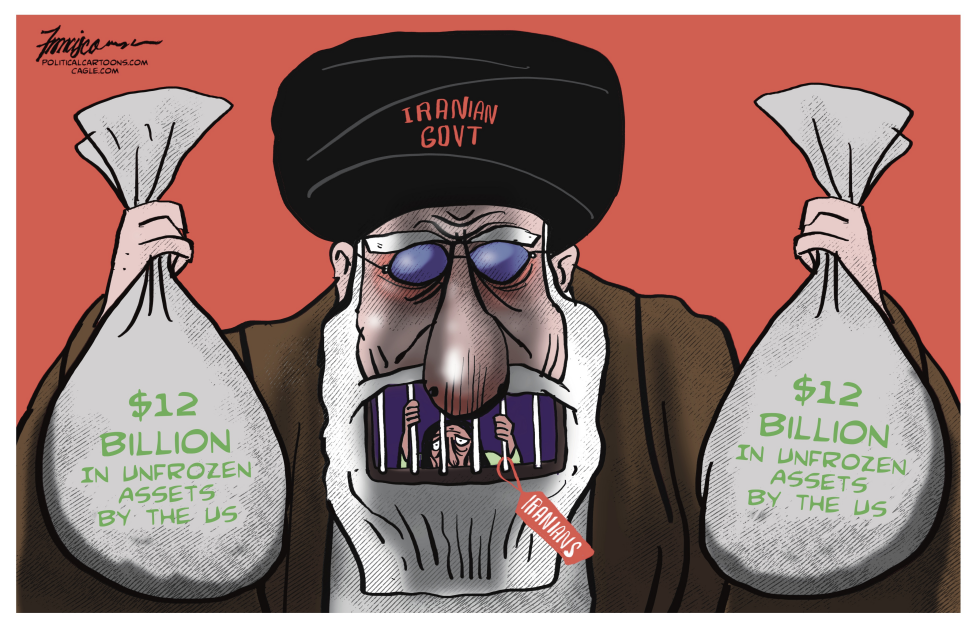
A political cartoon dated June 19, 2026, shows a figure representing the Iranian government holding two large sacks labeled $12 billion each in unfrozen US assets. The figure wears a black turban marked Iranian Govt. Small figures appear behind bars inside the mouth area, one tagged Iranians. The image responds to ongoing discussions about US policy on releasing Iranian government funds held abroad. It illustrates the contrast between the leadership receiving the money and the situation for ordinary citizens.
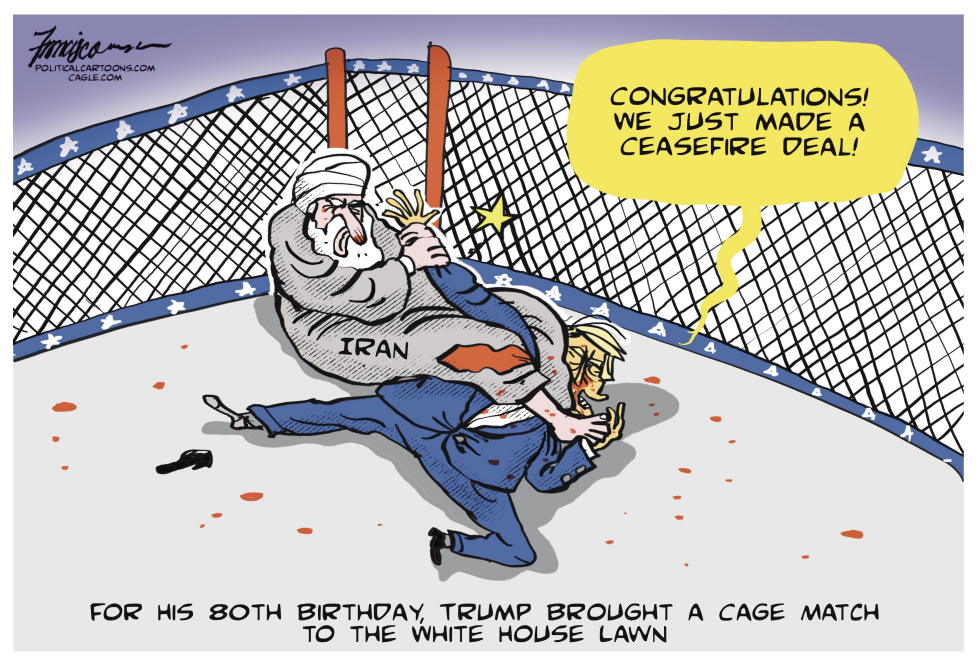
A cage match between the United States and Iran over a potential ceasefire deal has drawn attention amid ongoing Middle East tensions. The confrontation highlights the high stakes of direct engagement between the two nations. The piece portrays the encounter as a chaotic personal brawl rather than a measured diplomatic effort.
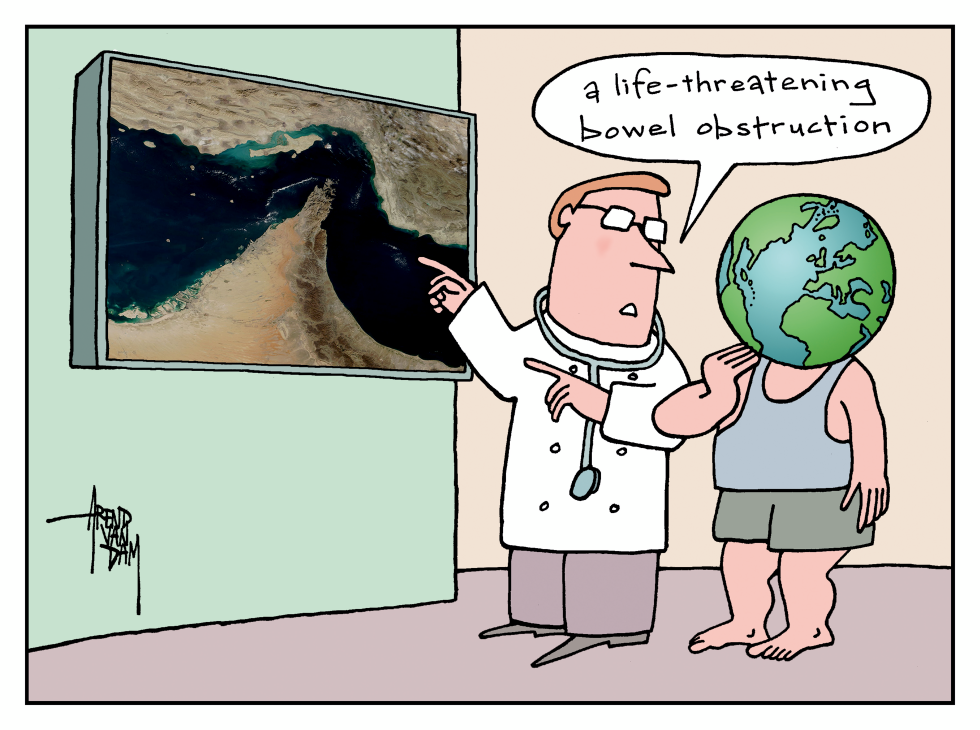
Arend van Dam\'s cartoon depicts a doctor diagnosing a child-like figure with a globe for a head, pointing to a screen showing the Strait of Hormuz as a life-threatening bowel obstruction. This visual metaphor ties into tags such as economy, world, oil, gas, obstruction, and war, illustrating how blockages in key trade routes threaten global stability. The barefoot patient in casual attire underscores vulnerability, while the doctor\'s serious demeanor adds dry humor to the geopolitical satire. Negotiations with ayatollahs and regime sanctions loom in the background, making the image a pointed commentary on how such conflicts create economic chokepoints. The overall composition blends medical analogy with international affairs for sharable impact.
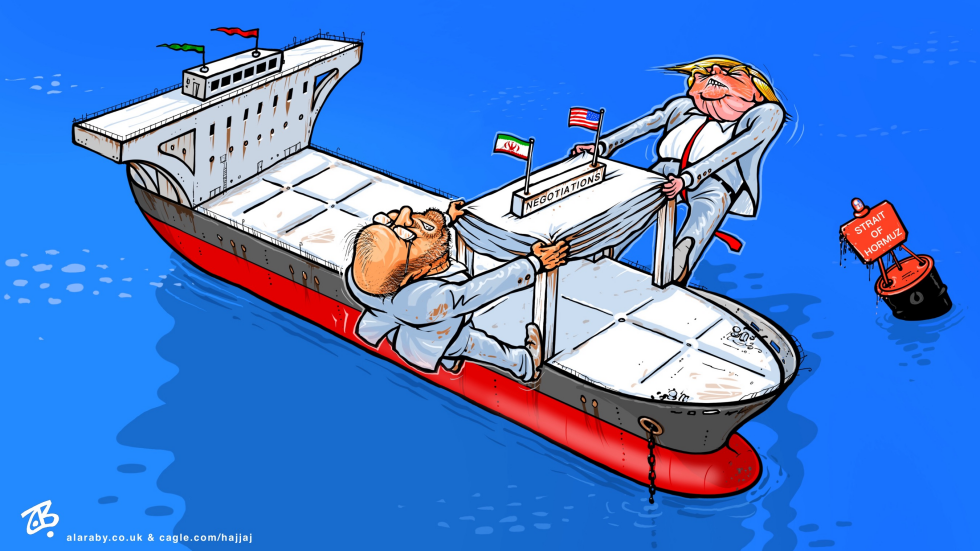
Emad Hajjaj\'s cartoon captures the tense Hormuz Strait negotiations between Trump and an Iranian figure on a massive tanker ship flying US and Iran flags. The scene shows them balancing a \'NEGOTIATIONS\' table on the tilting vessel, with an anchor chain and a leaking \'Strait of Hormuz\' buoy spilling oil. This Gulf war satire highlights the precarious talks amid potential sea block, where the ship appears damaged and unstable. Tags like ship, anchor, Gulf, war, tanker, talks underscore the maritime conflict theme. The dry humor lies in the literal sinking of diplomatic efforts.
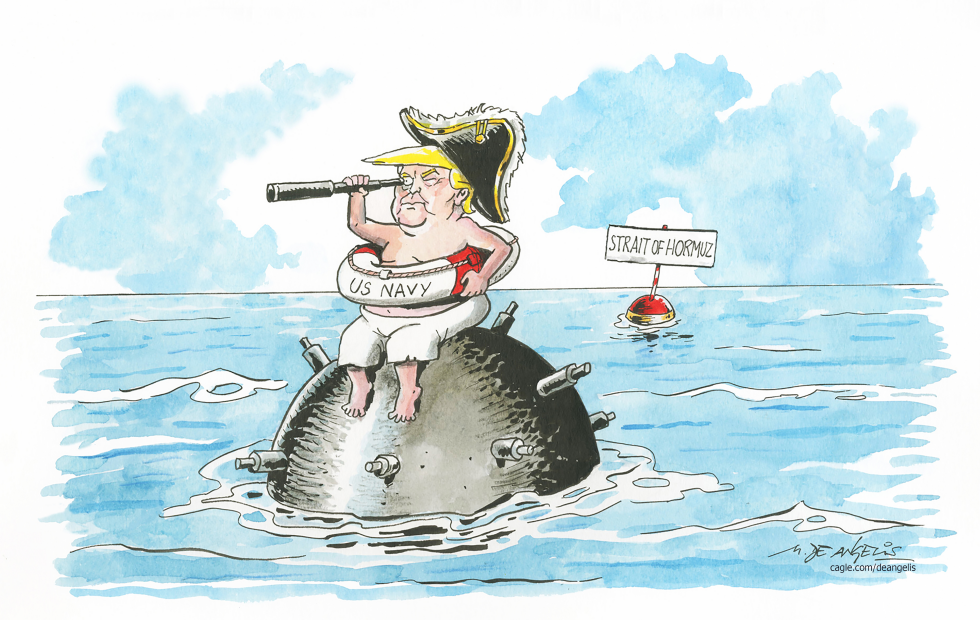
Marco De Angelis draws a caricature resembling Donald Trump, shirtless with a US NAVY life preserver, white shorts, and pirate hat, sitting on a large mine bobbing in blue waters. He holds a telescope to his eye, gazing out, while a small buoy nearby bears a Strait of Hormuz sign. The scene tags USA, IRAN, HORMUZ, NAVY, MINES, OIL, NEGOTIATIONS, FLEET, ALONE, ADMIRAL, MIDDLE EAST, WAR, capturing a sense of solitary watch in troubled seas. The dry humor underscores the absurdity of one man embodying an entire fleet, floating precariously on explosive hardware. Cartoons like this thrive on exaggeration, turning geopolitical standoffs into visual punchlines that newspapers love for their sharability.
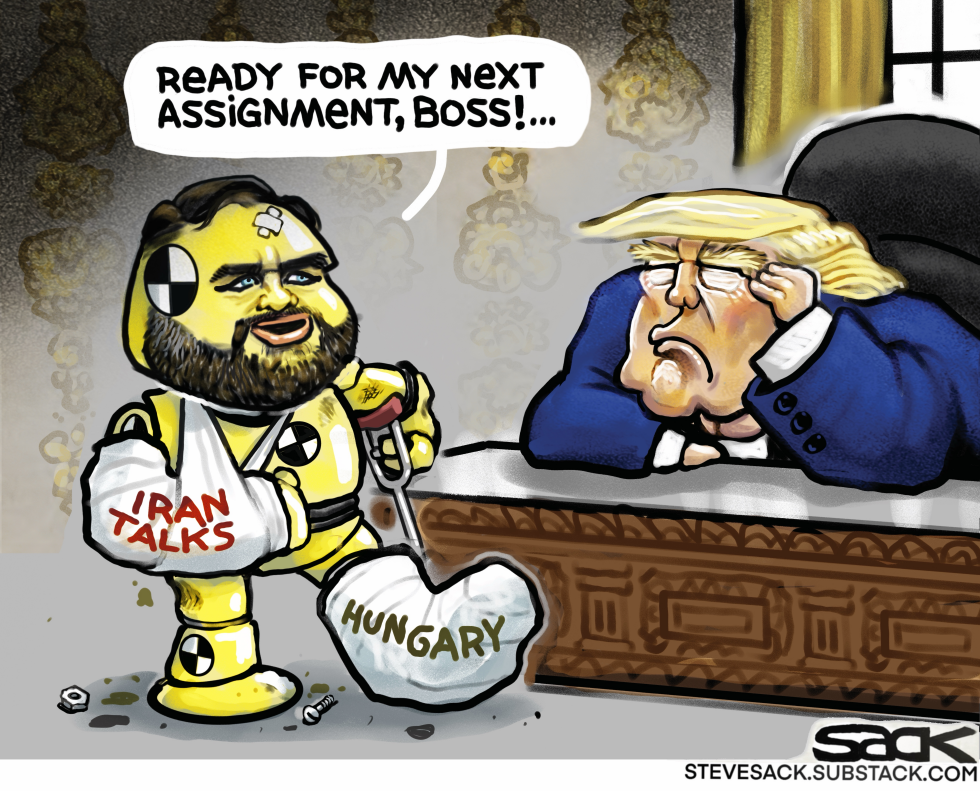
The image depicts JD Vance as a damaged robot-like figure with a cast labeled Iran Talks and a weight marked Hungary. He stands before Donald Trump at a desk and declares readiness for another assignment. The scene responds to recent failed negotiations involving Iran and a Hungary visit tied to Orban. Trump appears exasperated with his head in hand. The visual highlights ongoing foreign policy strains in the administration as of the April 2026 date.
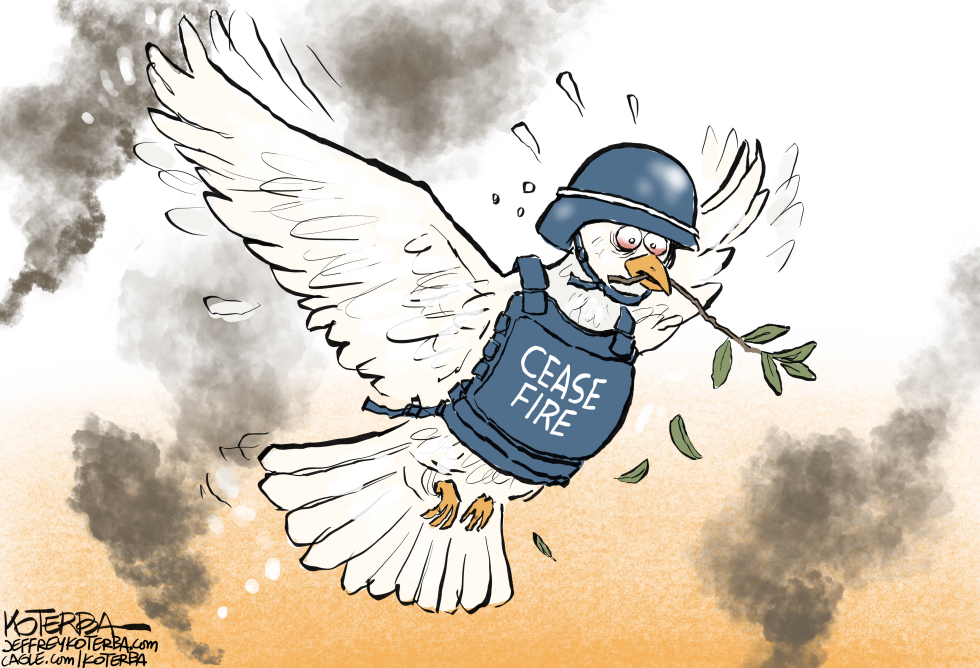
Jeff Koterba's cartoon shows a white dove, traditional symbol of peace, outfitted in a blue military helmet and a bulletproof vest marked 'CEASE FIRE.' The bird clutches an olive branch in its beak, eyes wide in surprise, as it navigates through billowing dark smoke clouds. This setup highlights the fragility of cease fire attempts in war zones, with the armored dove representing protected yet vulnerable peace initiatives. The orange-tinted background suggests a fiery landscape, emphasizing conflict's harsh reality. Tags like political cartoon, peace dove, cease fire vest, olive branch, war smoke, and satirical illustration capture the image's essence for SEO.
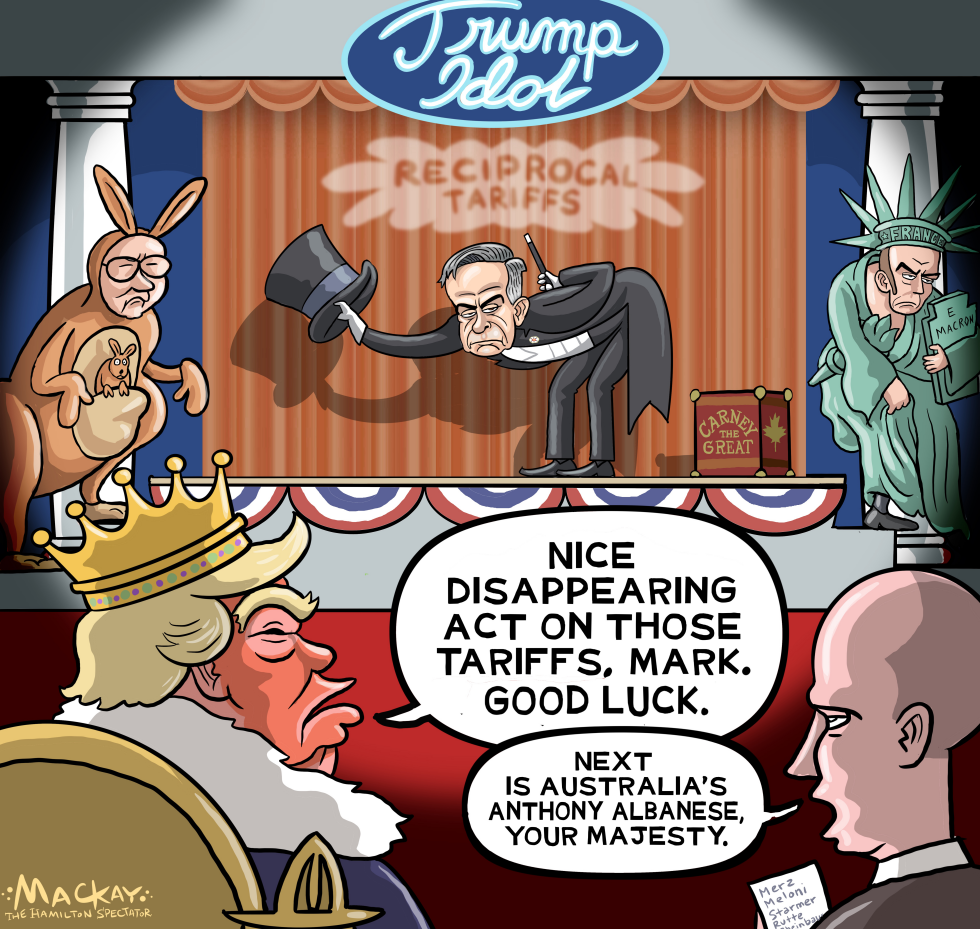
Graeme MacKay's cartoon depicts a stage parody of American Idol called Trump Idol, where a crowned Donald Trump judges world leaders performing acts related to reciprocal tariffs. A figure resembling Mark Carney bows in a top hat, having performed a disappearing act on tariffs, while a kangaroo-costumed character waits, labeled as Australia's Anthony Albanese. A Statue of Liberty figure holds a sign for E Macron France, and a box reads Carney The Great with a Canadian flag. The scene satirizes trade, diplomacy, economy, trust, and international relationships under Trump's strategy, with a bald advisor announcing the next act to 'Your Majesty.' The backdrop emphasizes reciprocal tariffs, blending protest and boycott themes in a humorous critique of USMCA and global partnerships.
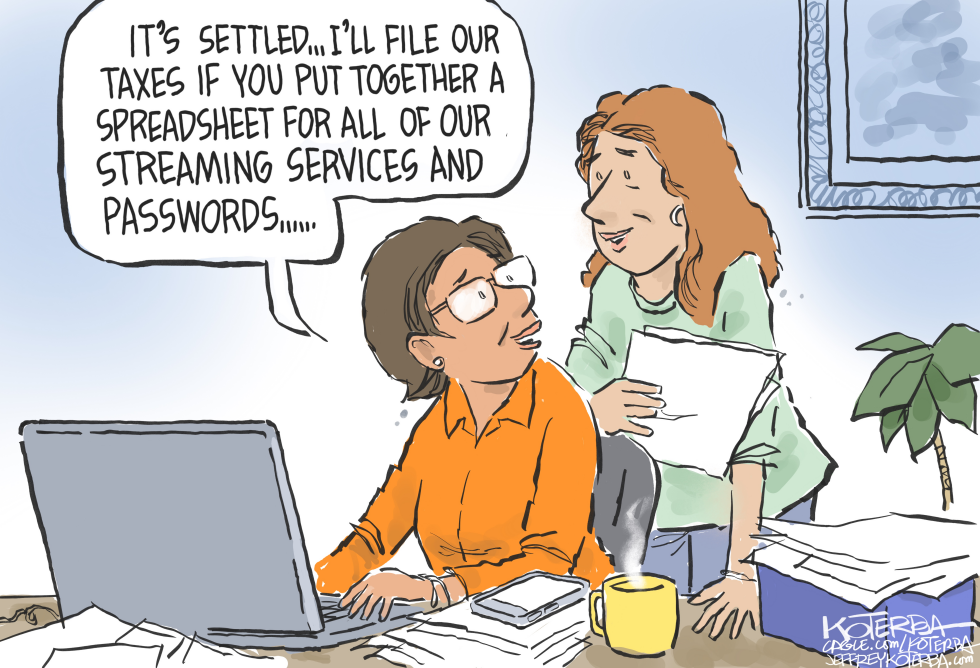
Jeff Koterba's cartoon shows a domestic scene where one woman at a laptop proposes a deal: she'll file taxes if the other compiles a spreadsheet for all their streaming services and passwords. The image highlights the growing complexity of managing multiple subscriptions in modern life, with elements like a steaming mug and scattered papers adding to the relatable chaos. Tags such as streaming services, passwords, taxes, spreadsheet, household division, and digital overload underscore the satire on how everyday tech tasks rival traditional burdens like tax preparation. The artwork keeps it light, poking fun at the password proliferation without diving into deeper politics.