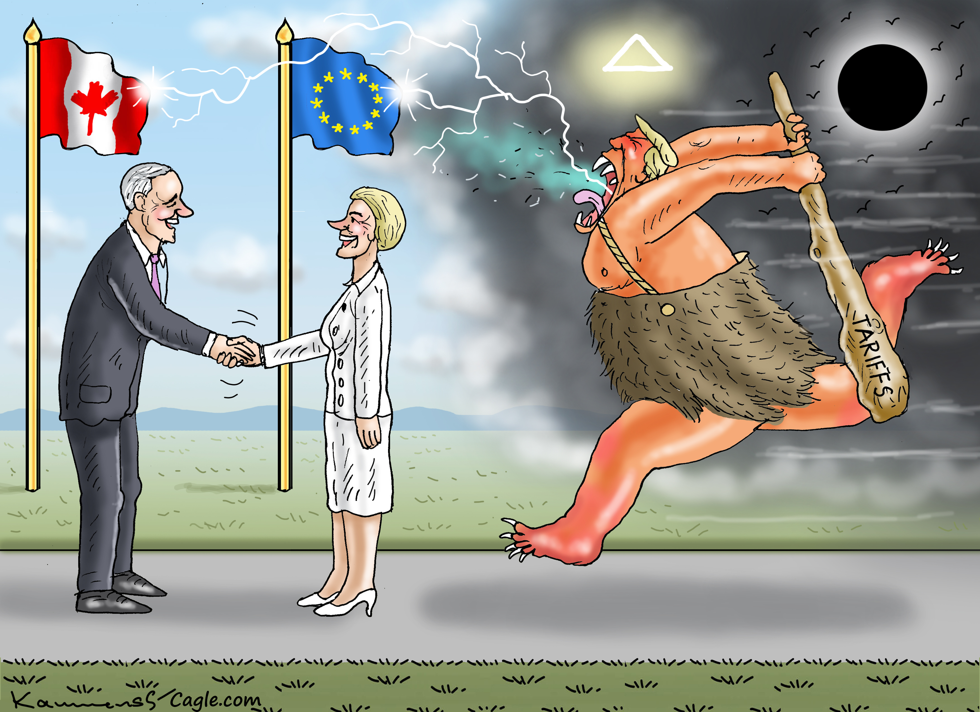
On September 17 2026 Canada and the European Union advanced a strengthened trade framework amid ongoing US tariff pressures. The agreement aims to boost economic cooperation and reduce reliance on American markets. President Trump responded with renewed threats of broad tariffs on allied imports. The move risks escalating trade friction across the Atlantic at a time when global supply chains remain fragile. The cartoon portrays the US stance as a primitive and self-defeating outburst that isolates Washington from its closest partners.
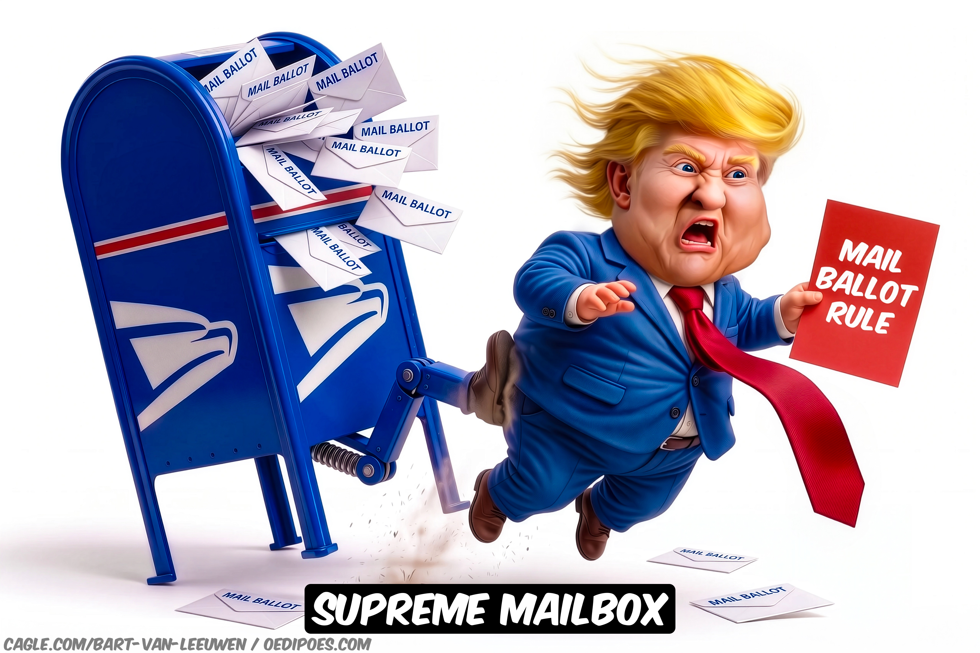
The cartoon shows Donald Trump angrily kicking a USPS mailbox, causing mail ballots to scatter, while clutching a sign labeled MAIL BALLOT RULE. The mailbox is labeled SUPREME MAILBOX at the base. Published on September 16, 2026, the image responds to debates over mail voting procedures and potential Supreme Court involvement in election rules. The visual metaphor illustrates opposition to expanded mail ballot access by depicting physical disruption of the postal system. Trump is caricatured with windblown hair and an open-mouthed expression of rage. Scattered ballots on the ground reinforce the theme of discarded votes. The piece uses the familiar USPS eagle logo and blue mailbox design for immediate recognition.
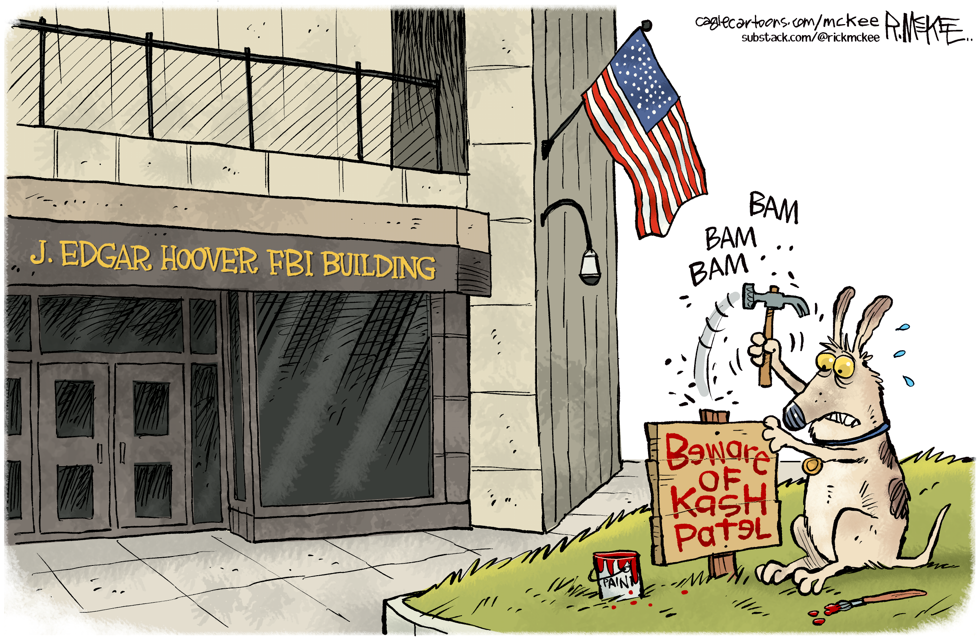
President-elect Trump has selected Kash Patel to lead the FBI, a move that has drawn scrutiny over the nominee's past statements on the bureau and plans for personnel changes. The cartoon portrays the appointment as a threat to the agency's independence, using the J. Edgar Hoover Building as the setting for a direct warning about Patel's influence.
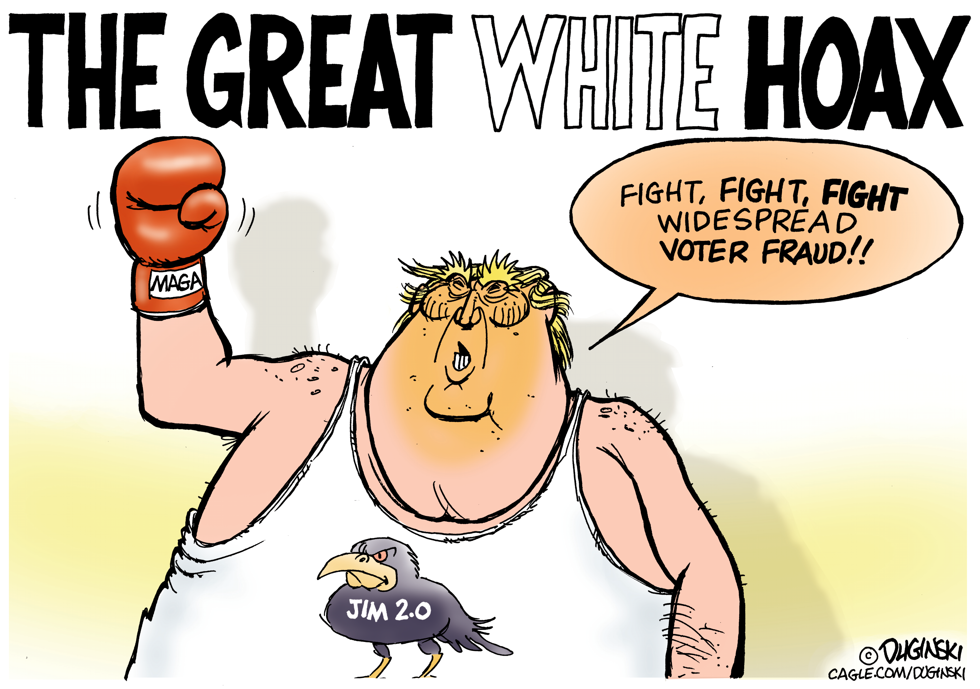
Donald Trump has renewed assertions of widespread voter fraud ahead of upcoming contests. The rhetoric revives familiar challenges to election administration and access rules. Such claims have repeatedly failed to produce evidence in court yet continue to shape public debate and legislative pushes. The cartoon frames the narrative as a deliberate distraction from actual barriers to voting. It positions the fraud talk as cover for renewed restrictions reminiscent of earlier suppression tactics.
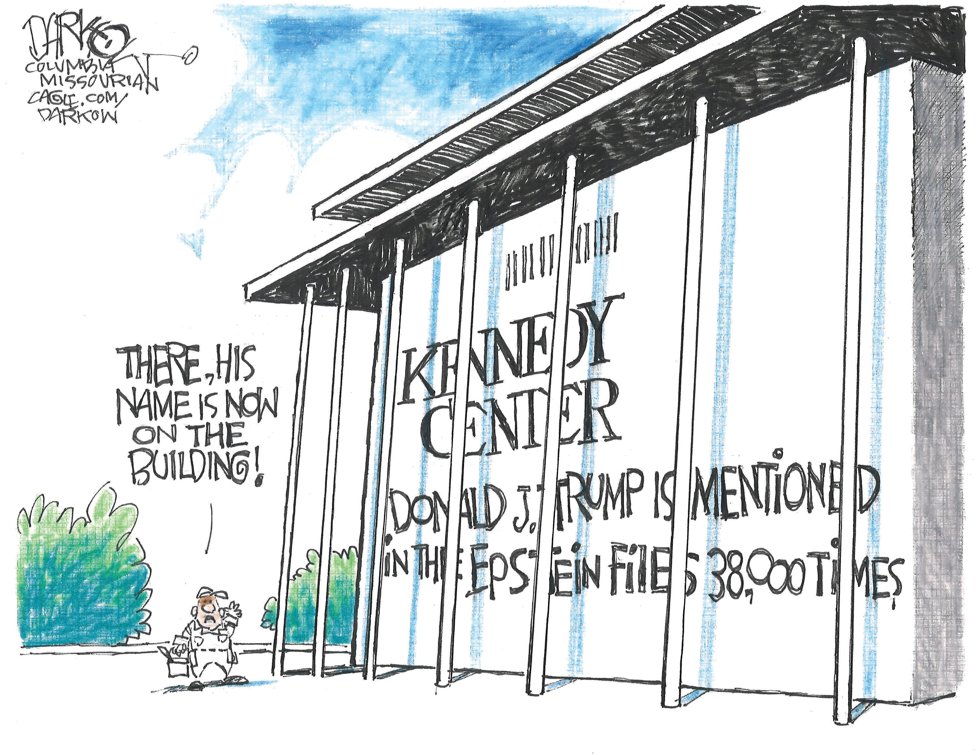
The Kennedy Center facade receives new lettering citing Donald J. Trump's 38,000 mentions in Epstein files. The addition follows a painter's declaration that the name now appears on the building. The piece frames the reference as the mechanism granting Trump association with the institution.
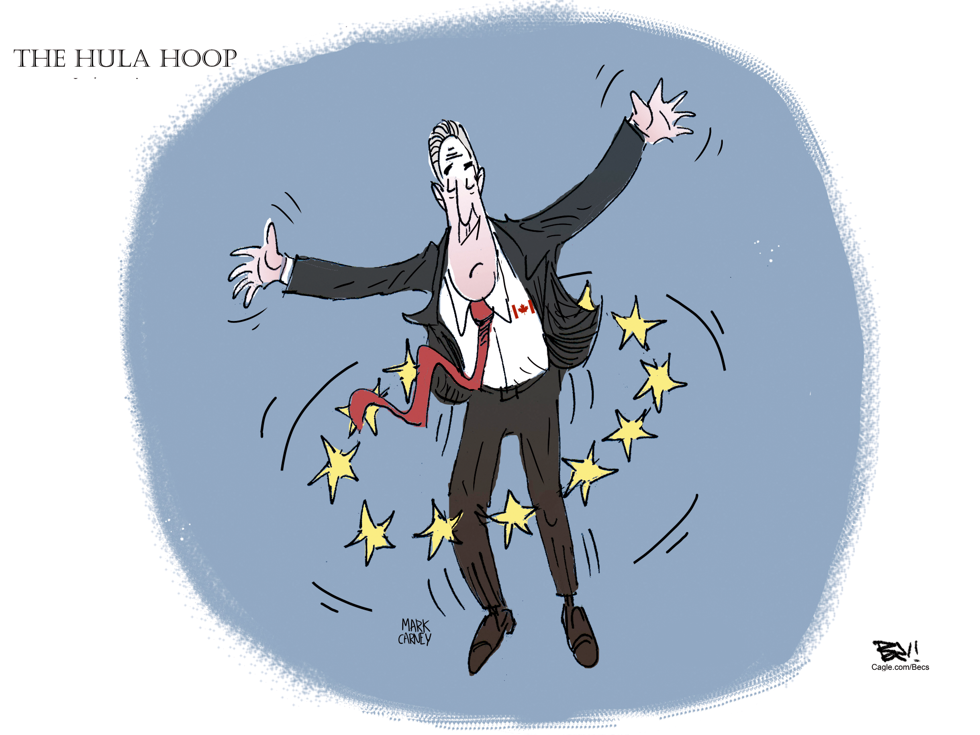
Mark Carney, a prominent Canadian figure with central banking experience, has positioned himself at the center of efforts to strengthen economic and diplomatic links between Canada and the European Union. Recent developments in trade negotiations and regulatory alignment have placed renewed focus on these ties, which matter for supply chains, investment flows, and geopolitical stability. The cartoon frames Carney's role as one of active management in this relationship, suggesting both opportunity and the need for careful coordination.
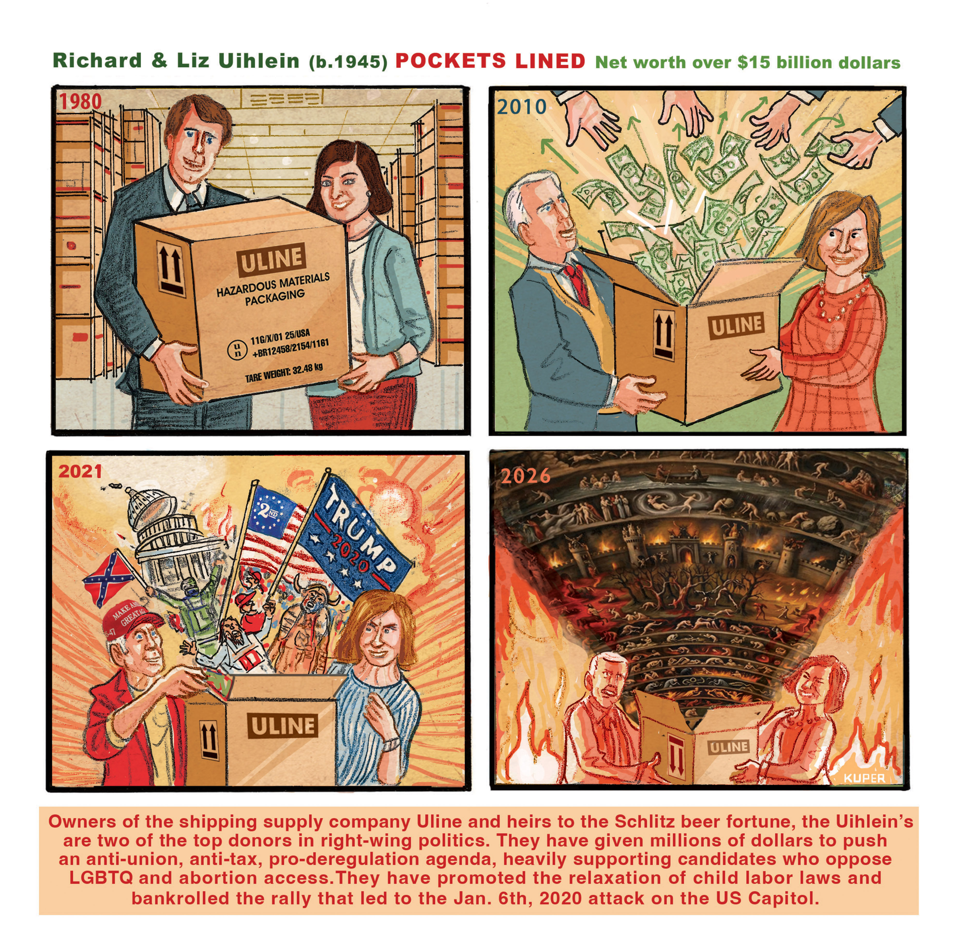
Richard and Liz Uihlein, heirs to the Schlitz fortune and owners of Uline, have donated millions to right-wing candidates and causes. Their support helped organize the January 6 rally and advanced anti-union, anti-tax, and anti-LGBTQ policies. The cartoon portrays their growing influence as corrosive to democratic norms.
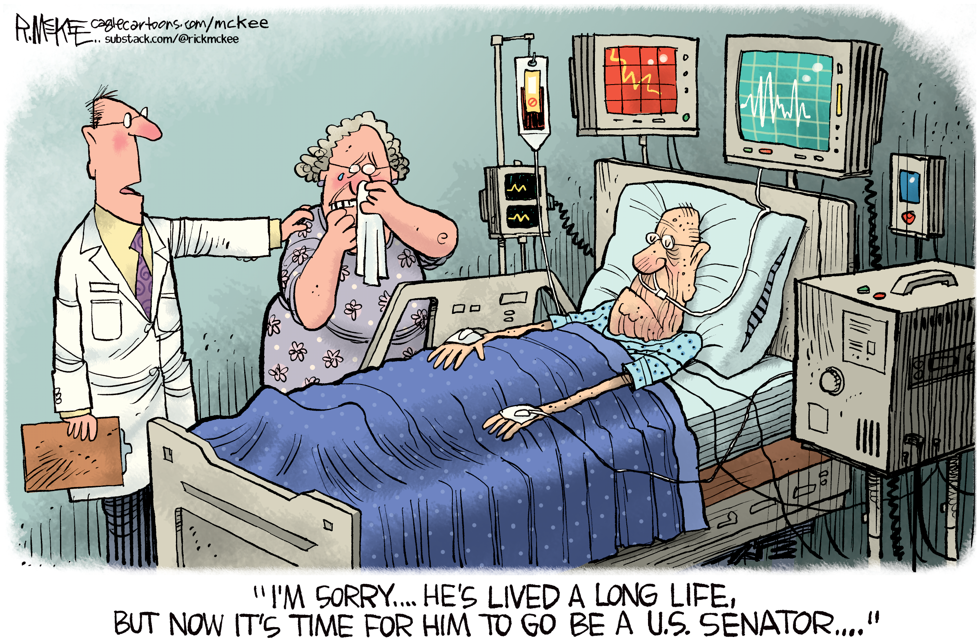
US senators continue serving well into advanced age and declining health, prompting renewed debate over whether longevity in office serves the public. The cartoon frames the Senate as a final posting for those whose physical condition would otherwise signal retirement from demanding roles. It takes the position that voters and parties tolerate or encourage this pattern rather than demanding younger replacements.
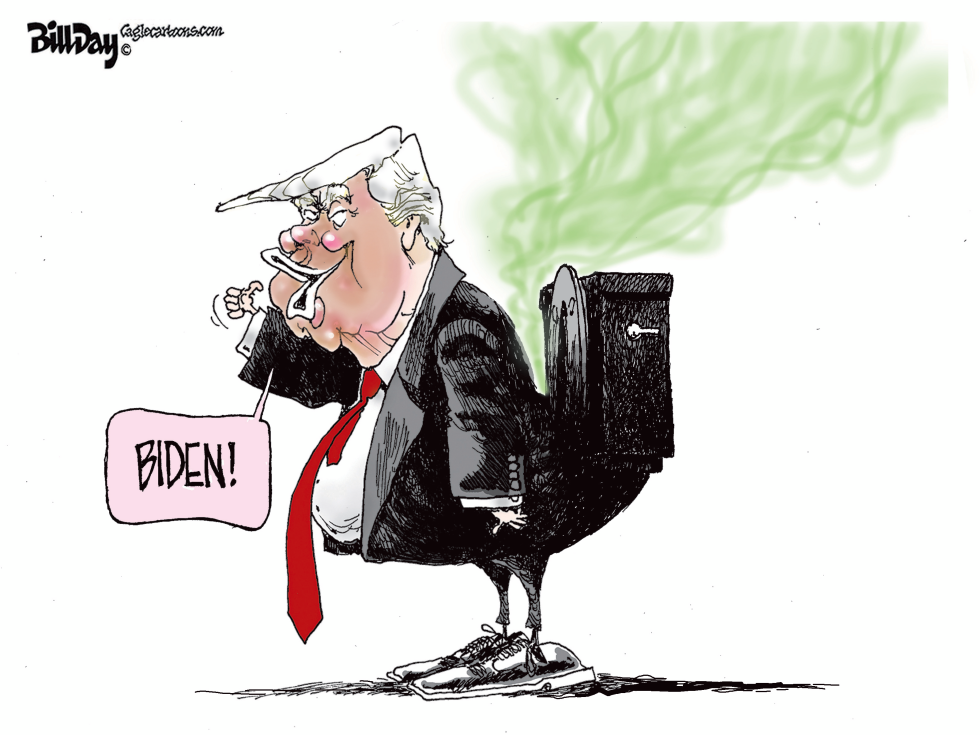
Donald Trump has repeatedly attributed policy shortcomings and political setbacks to his predecessor Joe Biden throughout 2026. This pattern continues a long-standing approach of shifting responsibility rather than addressing current challenges directly. The editorial position criticizes this tactic as evasive and unhelpful for resolving real governance problems.
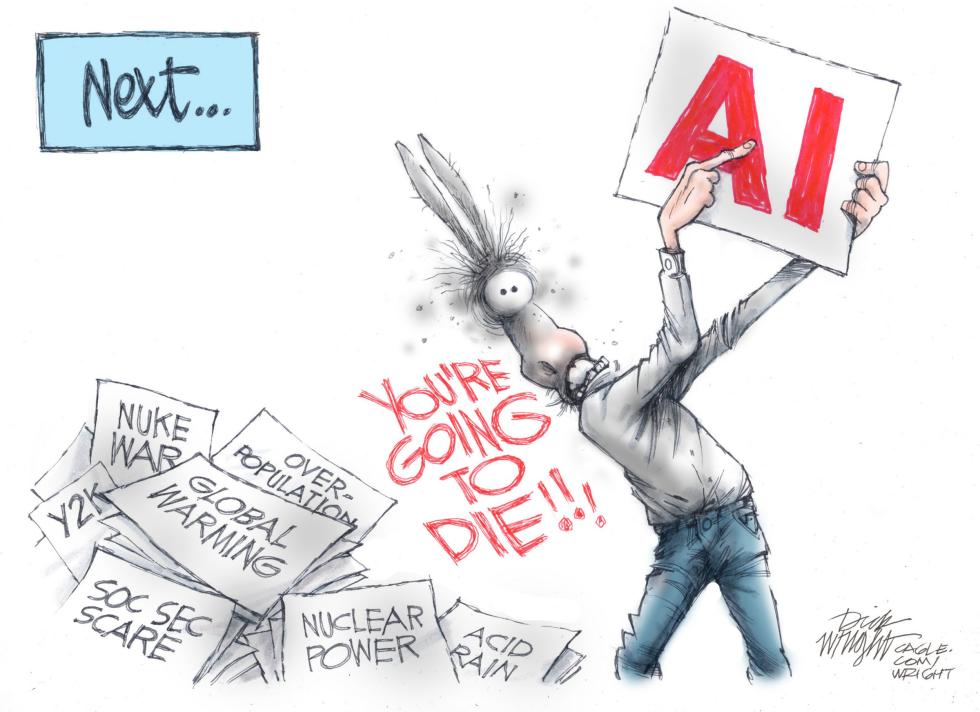
Democrats have renewed warnings that artificial intelligence poses an existential threat, echoing earlier alarms over Y2K, nuclear power, and climate change that later lost urgency. The pattern suggests political use of successive crises to maintain attention. The cartoon argues these claims recycle familiar tactics without new substance.
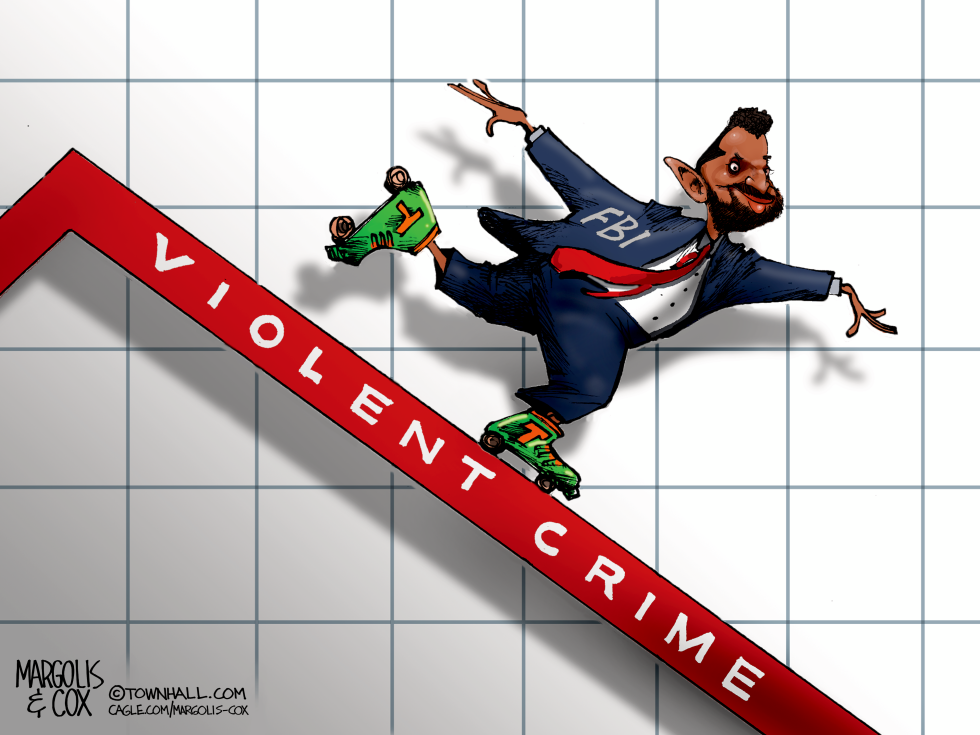
FBI statistics released around mid-2026 show violent crime continuing its downward trajectory across major categories. The decline matters because it affects public safety perceptions and resource allocation for law enforcement. The piece presents the trend as a clear, measurable improvement under federal tracking.
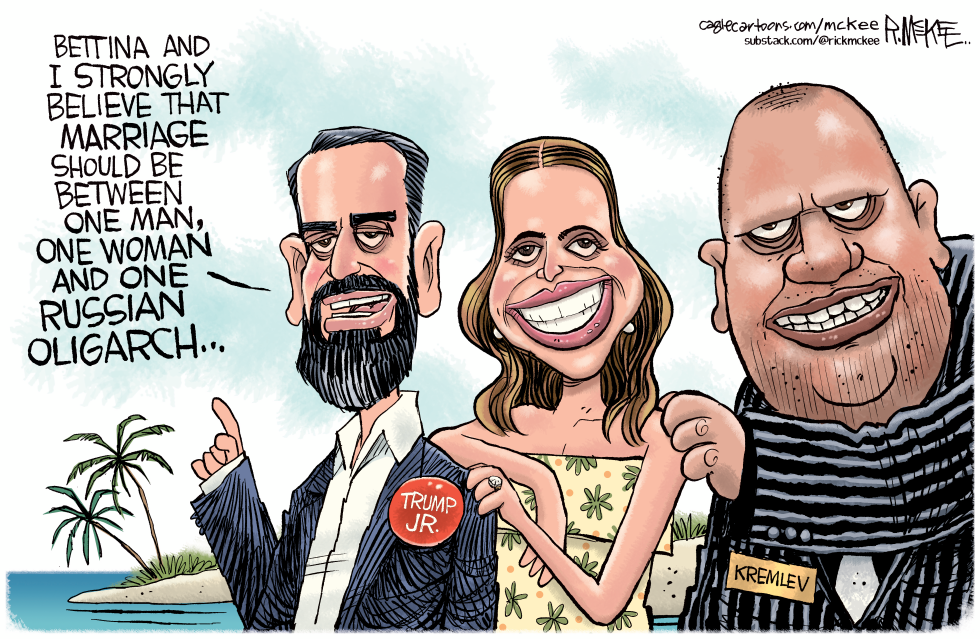
On September 15, 2026, commentary emerged around reports of Russian oligarch involvement in events tied to Donald Trump Jr. and Bettina. The development raises questions about foreign influence on the Trump family. The piece argues such connections undermine claims of independence from external interests.
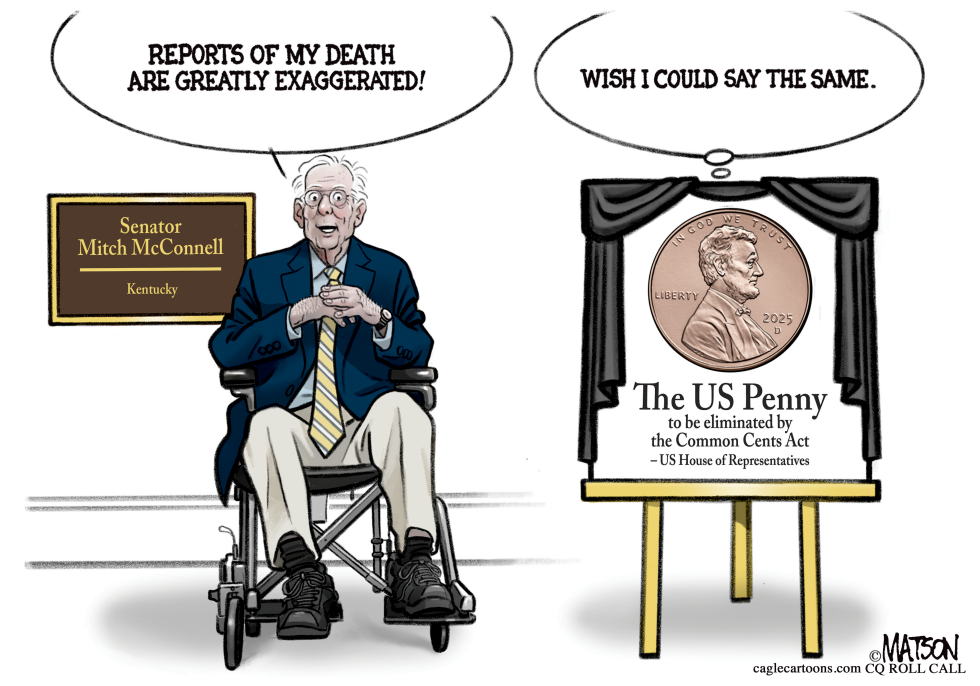
Senator Mitch McConnell returned to the Senate floor on September 15, 2026, after health-related absences, directly addressing rumors of his political demise. At the same time the House has advanced the Common Cents Act to eliminate the US penny. The move reflects ongoing efforts to modernize currency amid rising production costs. McConnell's return underscores his enduring influence in the chamber despite physical challenges. The cartoon uses a classic quote to juxtapose the senator's resilience against the penny's planned demise, suggesting one survives while the other does not.
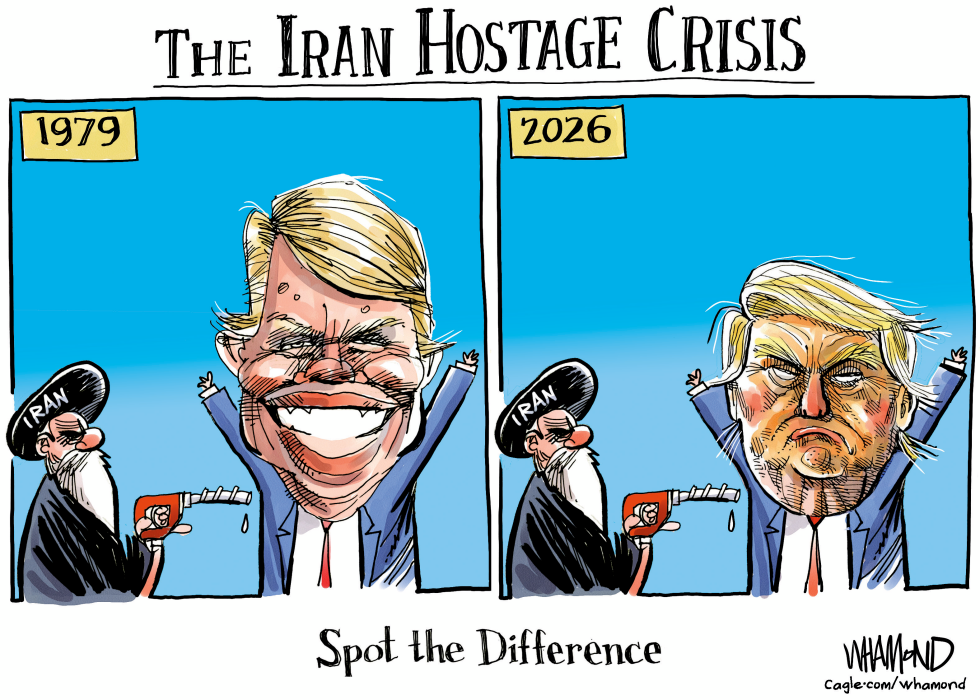
The cartoon splits the Iran Hostage Crisis into 1979 and 2026 panels. In the first Trump appears elated while an Iran-labeled figure holds a gas pump. In the second Trump looks distressed with the same figure present. The piece uses the visual contrast to comment on how Iran-related pressures affect US political figures differently over time.
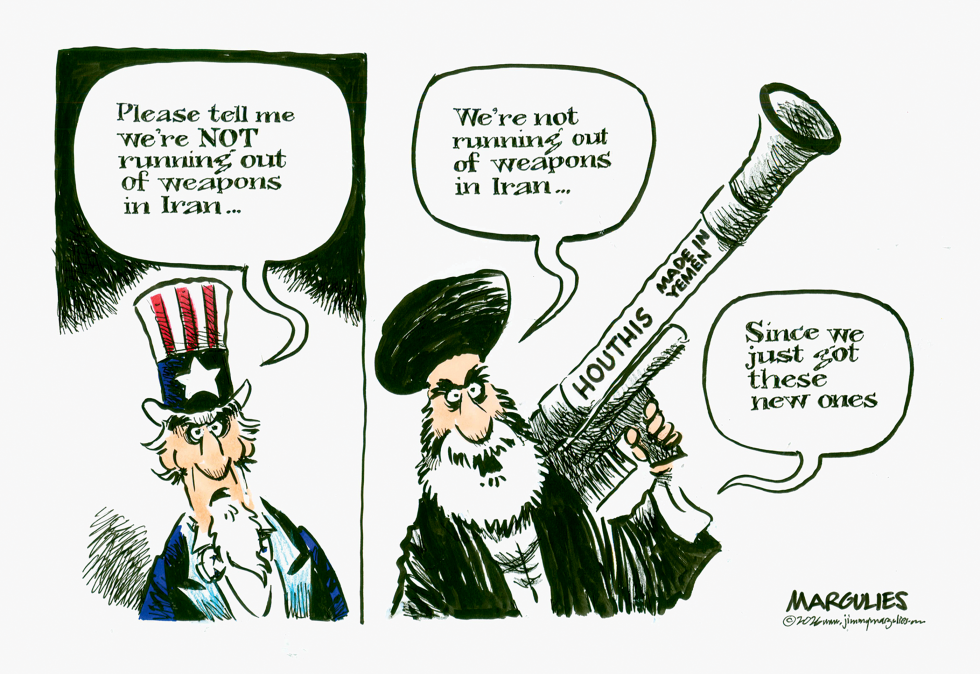
Reports indicate Houthi forces in Yemen have begun supplying missiles to Iran, addressing potential shortages in Iranian stockpiles. The development raises questions about regional arms flows and US policy responses in the Middle East. The cartoon highlights American concerns over whether Iran is truly facing weapons deficits, given the influx of Houthi-provided arms from Yemen. It portrays the situation as undermining claims of Iranian vulnerability while underscoring ongoing tensions in proxy dynamics.