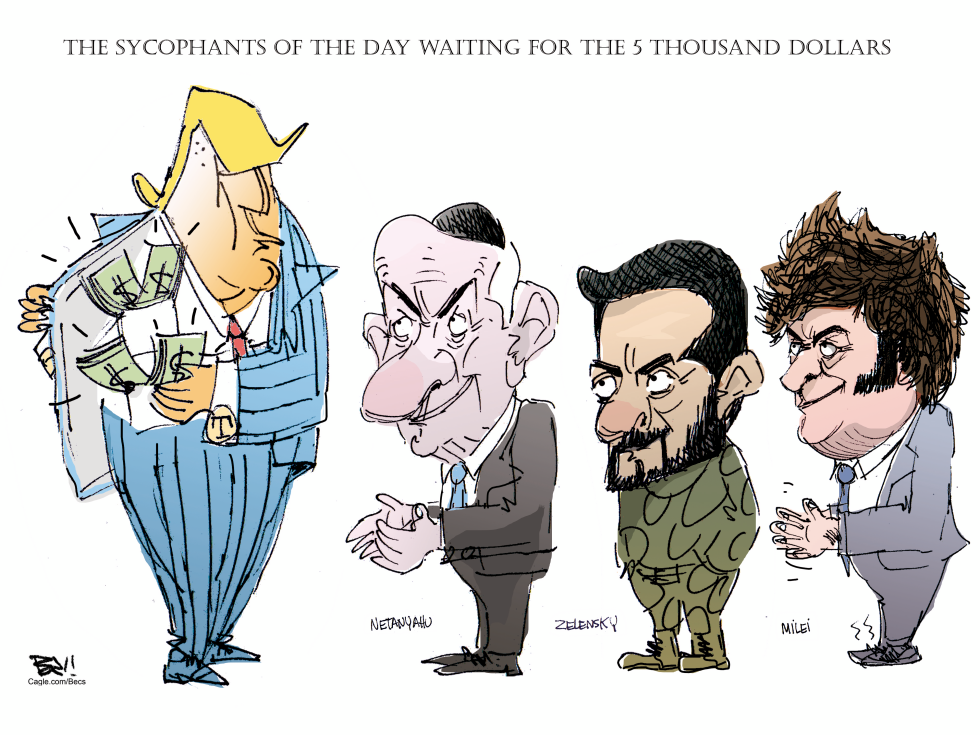
Donald Trump stands at the center of attention from Israeli Prime Minister Benjamin Netanyahu, Ukrainian President Volodymyr Zelensky and Argentine President Javier Milei. The scene reflects ongoing questions about how foreign leaders court favor with the U.S. president through displays of loyalty. The cartoon argues that these relationships reduce international diplomacy to transactional waiting for payoffs.
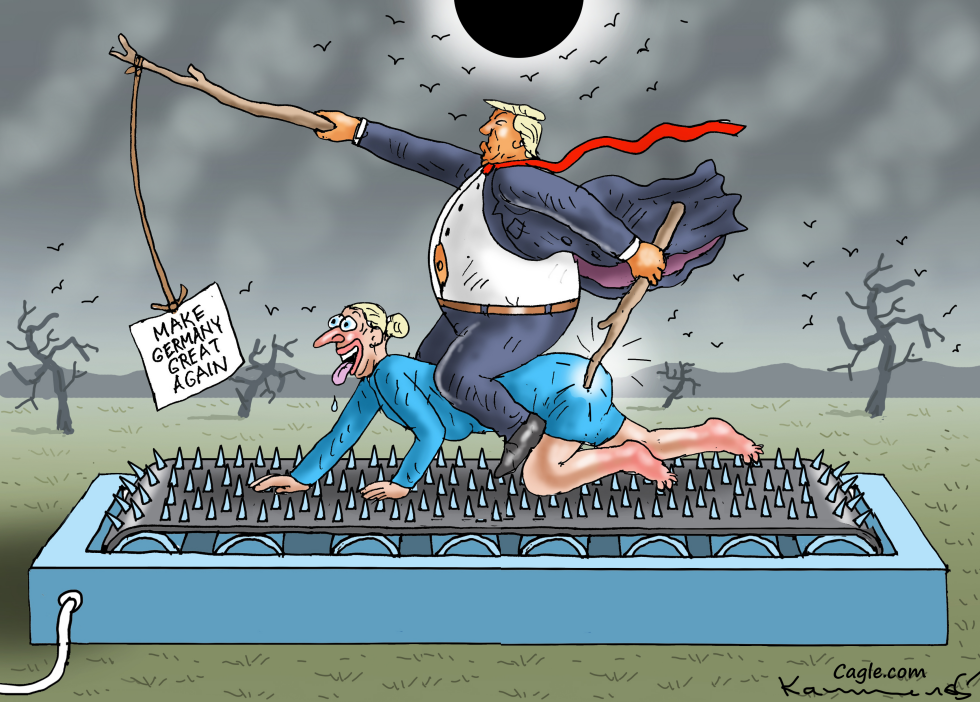
Donald Trump promotes a revival slogan aimed at Germany while Angela Merkel faces the consequences. The effort highlights ongoing tensions in transatlantic relations and questions about external influence on European domestic policy. The piece argues that such interventions impose unnecessary hardship without delivering benefits.
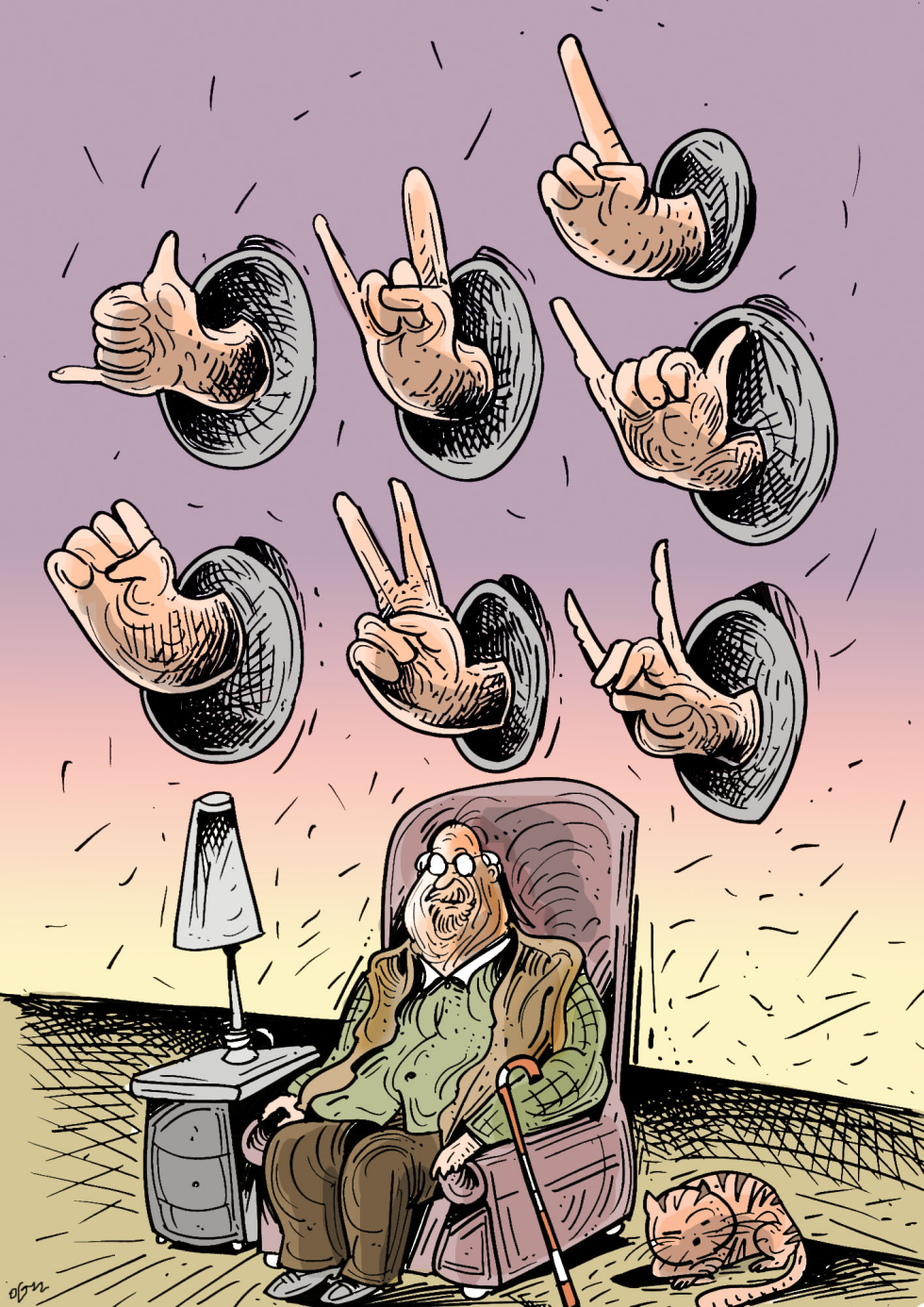
Public figures, particularly older officials in government roles, continue to face intense scrutiny and negative public reaction in 2026. Criticism has intensified through various channels, highlighting frustration with established leadership. The piece portrays an overwhelmed elderly man absorbing a barrage of dismissive gestures, underscoring the editorial view that such backlash reflects legitimate fatigue with unresponsive or out-of-touch figures in power.
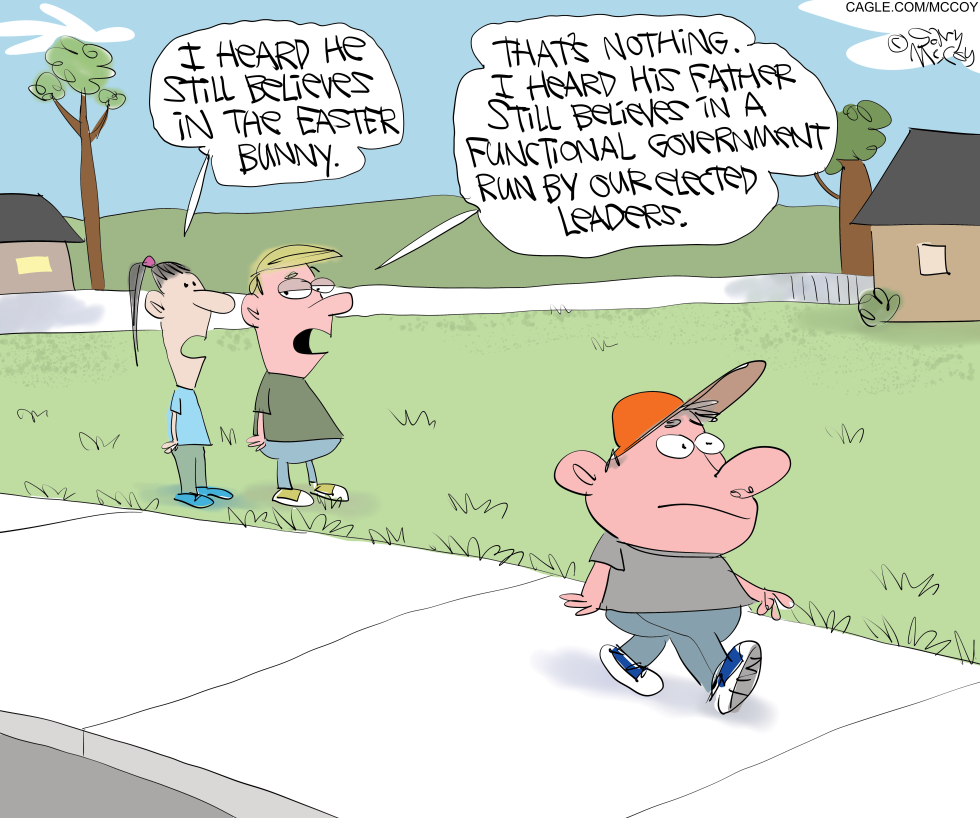
Public distrust in government institutions remains high as citizens question whether elected leaders can deliver effective results. Recent polls show widespread doubt about Congress and the executive branch functioning as intended. The cartoon captures this sentiment by likening such belief to childhood myths. It takes the position that expecting competent governance from current leaders is naive and unrealistic.
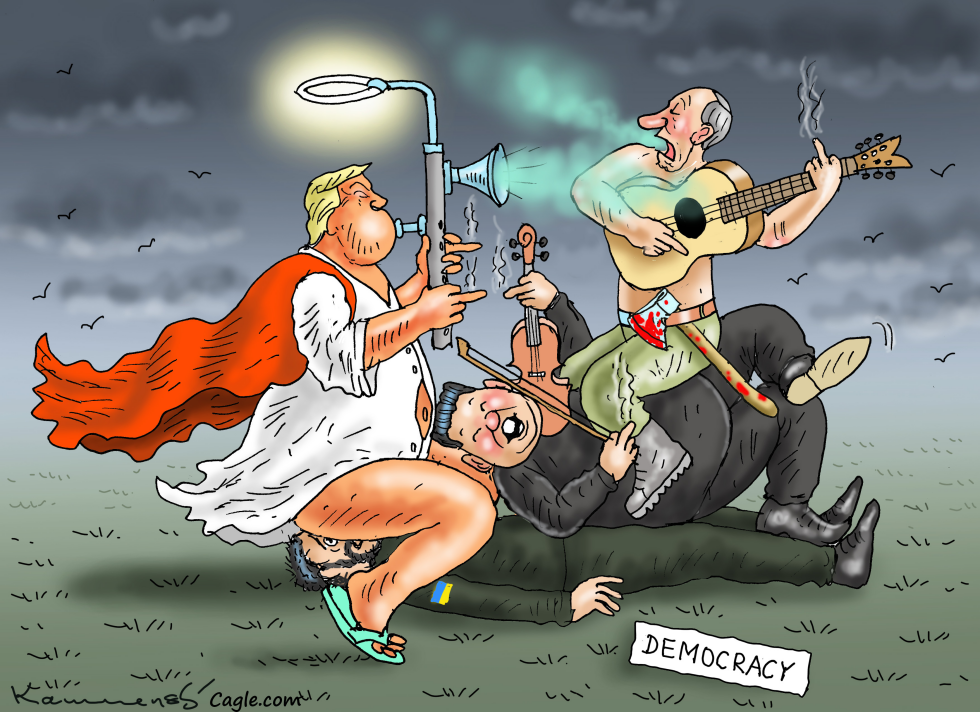
On August 21, 2026, the ongoing Ukraine conflict continued with no resolution in sight as U.S., Russian and Ukrainian leaders remained locked in diplomatic friction. The cartoon responds by depicting the three men as musicians whose finger-pointing and instruments create discord rather than harmony, underscoring the editorial view that personal posturing has overtaken substantive progress toward peace.
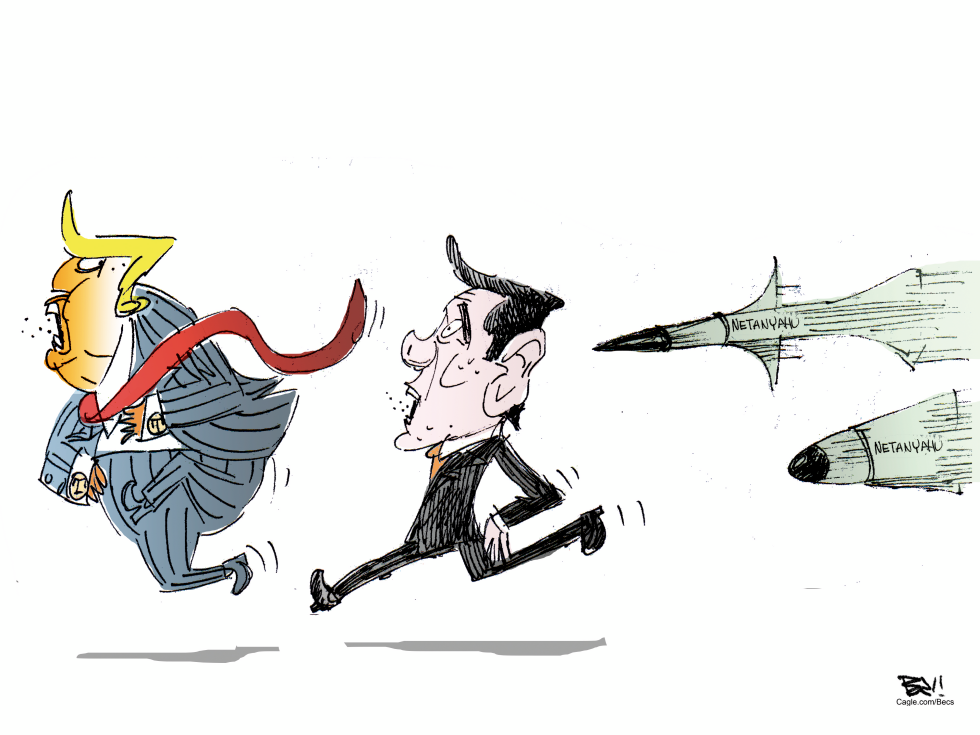
Donald Trump and Benjamin Netanyahu appear under pursuit in a scene tied to ongoing tensions in U.S.-Israel relations and regional security decisions. The image responds to the pattern of policy choices by both leaders that have drawn domestic and international criticism. It frames those choices as returning to affect the two men directly.
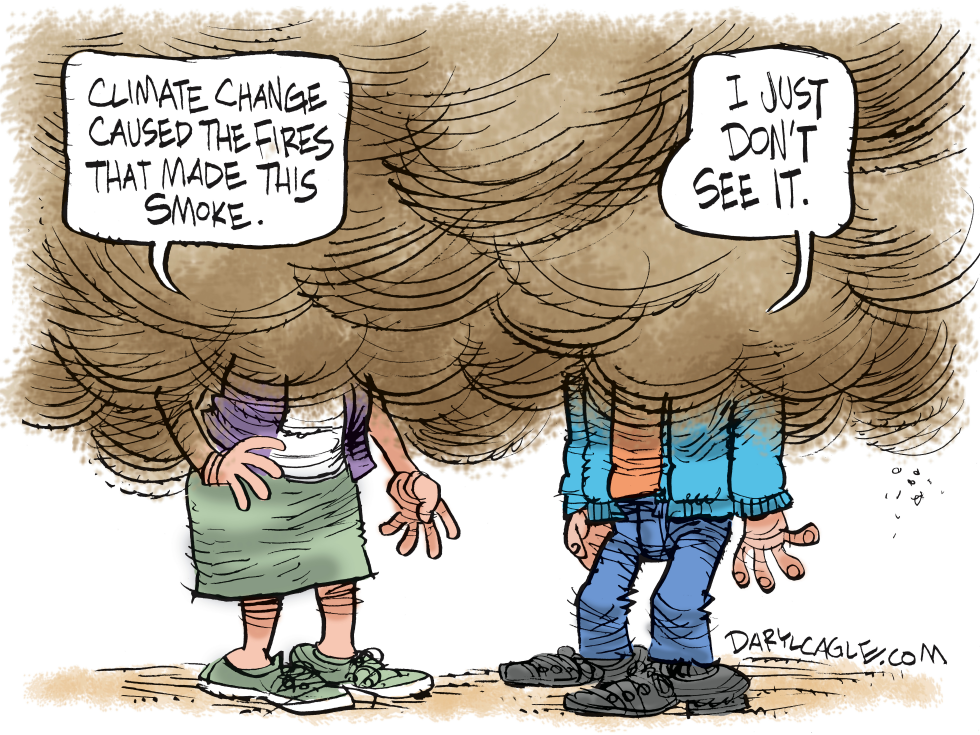
Canadian wildfires have produced widespread smoke affecting air quality across regions. The debate centers on whether climate change drives the fires or if other factors dominate. Public discourse shows persistent skepticism despite visible evidence. The piece highlights how some reject the link between rising temperatures and increased fire activity. It critiques the refusal to acknowledge observable environmental changes tied to climate patterns.
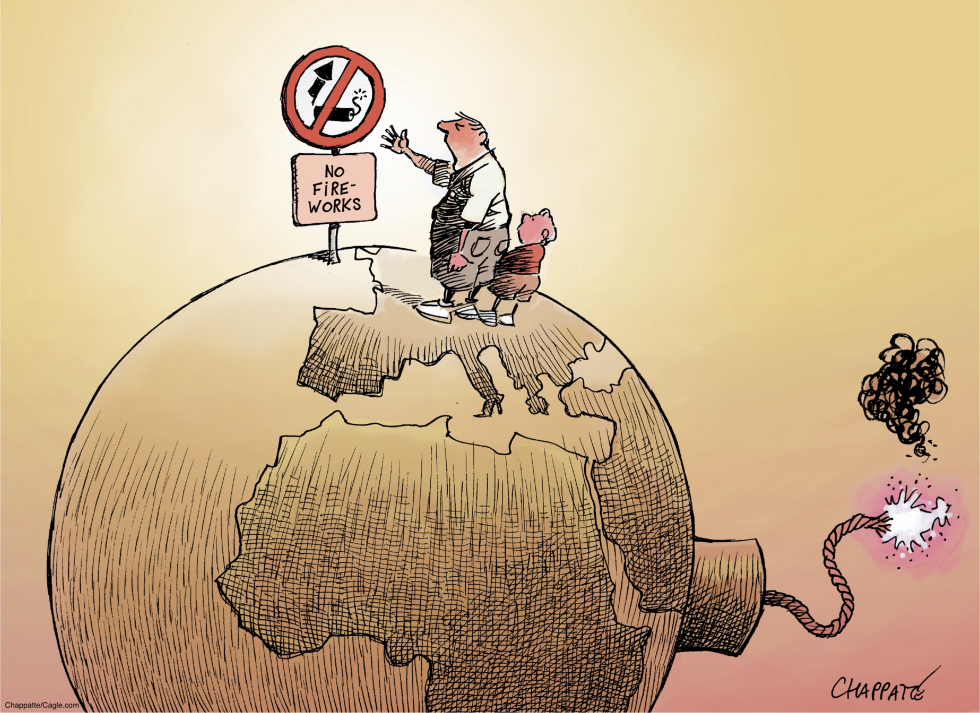
Global leaders continue to dismiss repeated scientific warnings about accelerating climate impacts even as extreme weather events intensify worldwide. The ongoing failure to curb emissions and adopt binding reductions leaves future generations exposed to rising temperatures, sea levels, and resource conflicts. The editorial argues that such willful disregard of clear danger signs amounts to reckless endangerment of the planet itself.
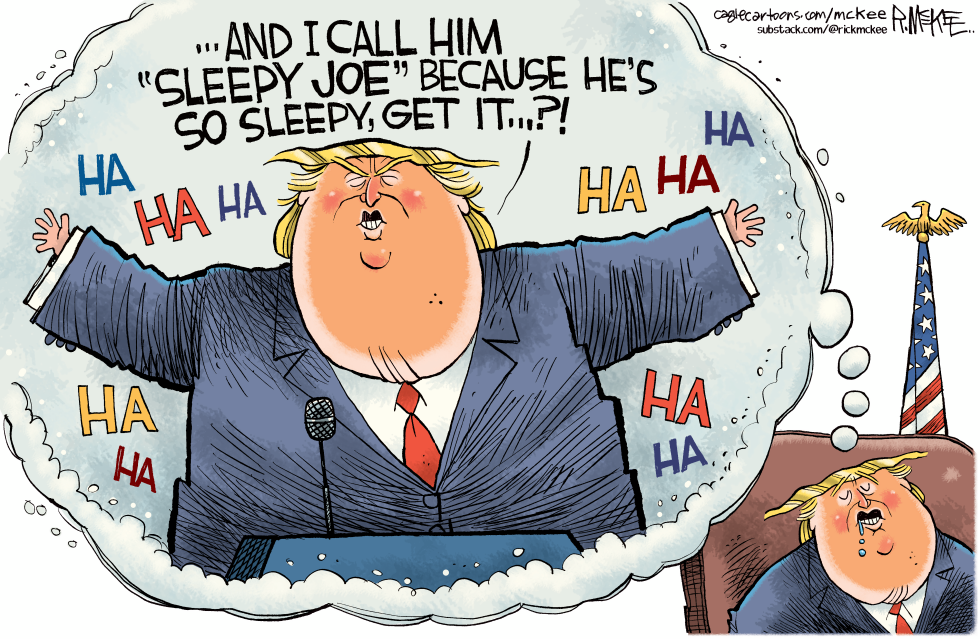
Donald Trump repeatedly labeled Joe Biden 'Sleepy Joe' during the 2024 campaign and beyond. The nickname stuck as a critique of Biden's energy and age. The cartoon responds by showing Trump himself unable to stay awake at the podium, underscoring perceived hypocrisy in the attack.
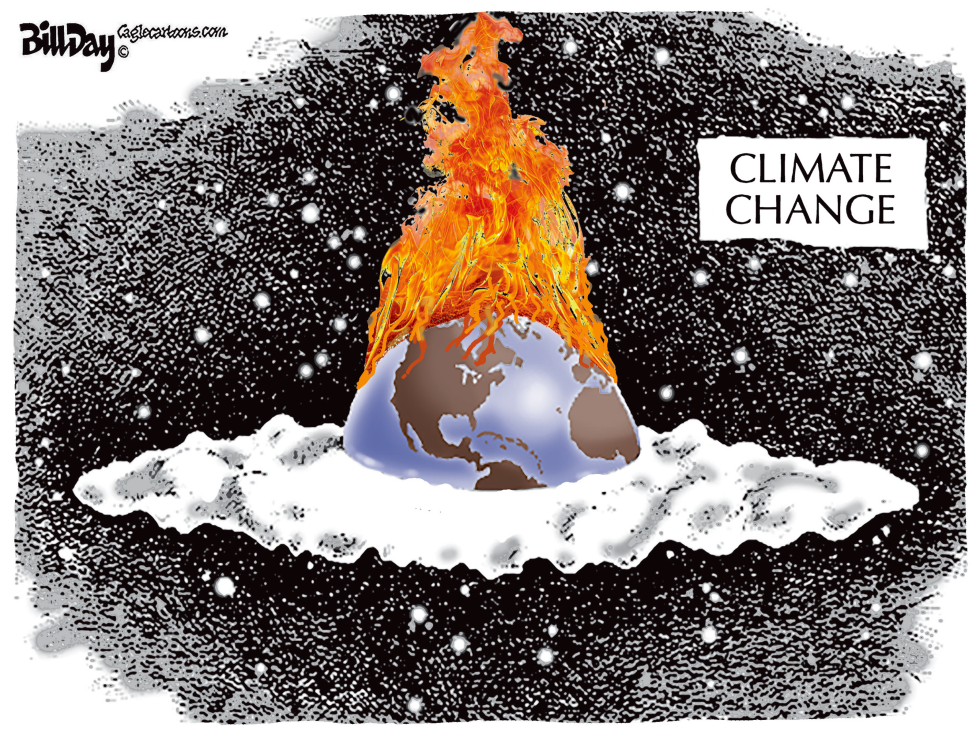
Ongoing global temperature records continue to climb in mid-2026 amid extreme weather events worldwide. Scientists and governments track accelerating impacts from greenhouse gas emissions. The cartoon underscores the direct link between human-driven climate change and planetary distress, presenting the crisis as an immediate and visible threat rather than a distant concern.
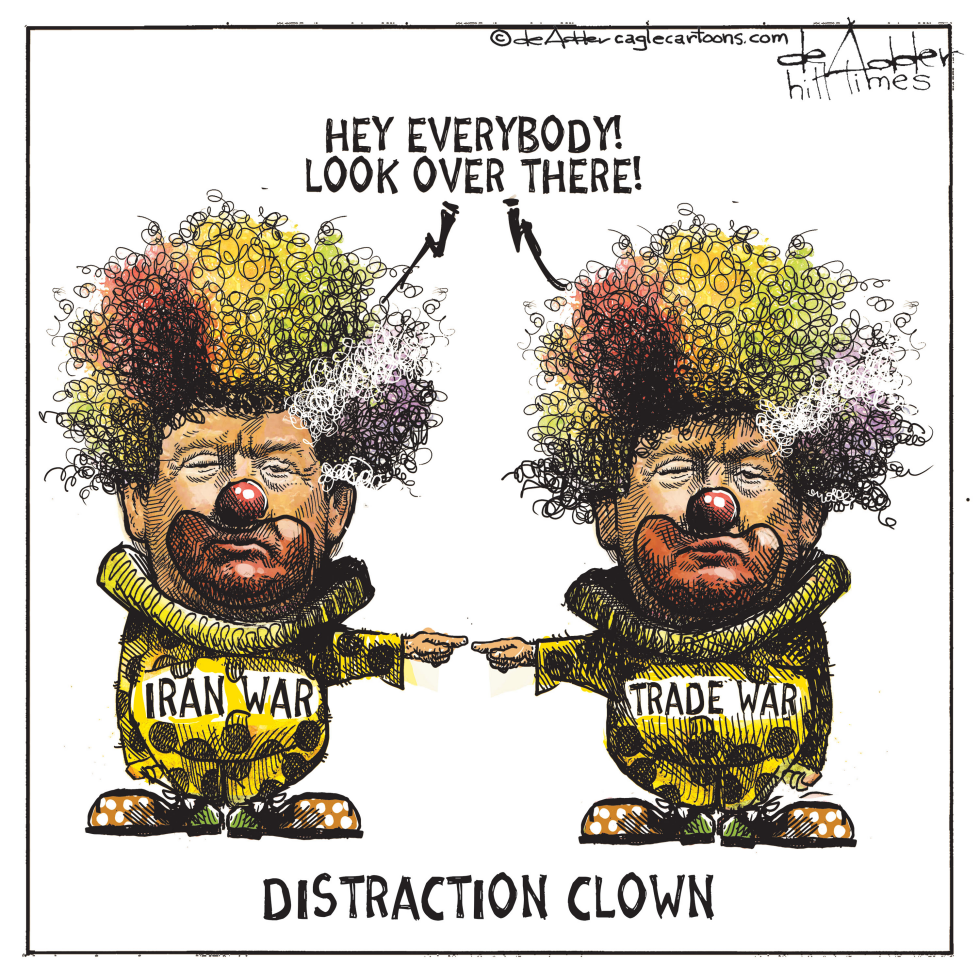
Public attention is being directed toward simultaneous Iran and trade conflicts as potential diversions from other issues. The editorial depicts the two crises as interchangeable distractions promoted by the same source. It argues that leaders are using these flashpoints to shift focus rather than address underlying problems.
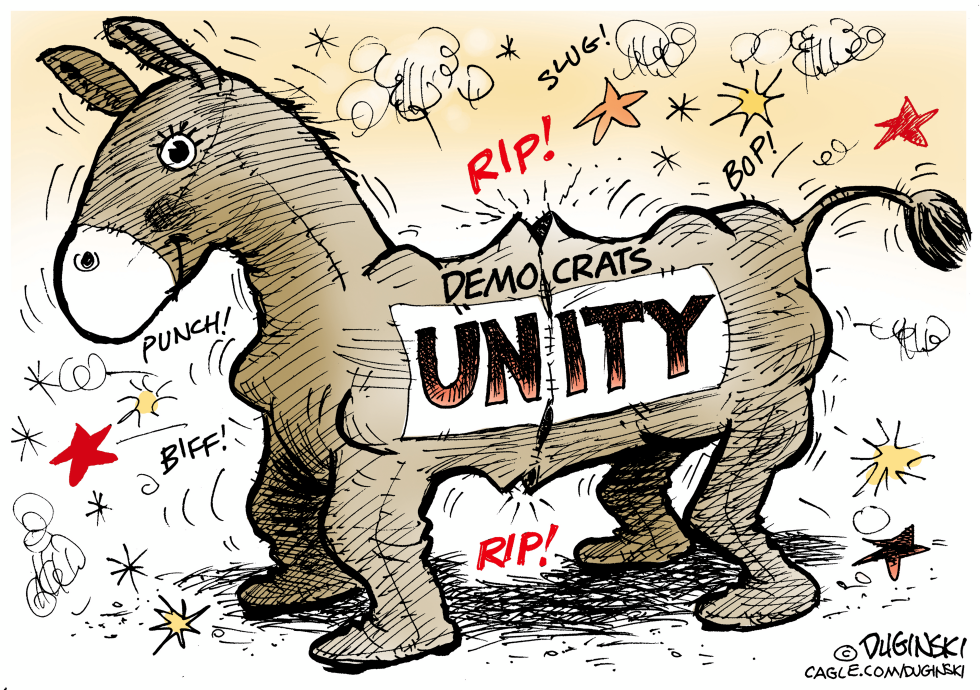
Democrats continue to display public divisions over strategy and messaging in the run-up to midterm and presidential contests. Party leaders struggle to project cohesion on issues ranging from economic policy to social priorities. The resulting perception of disarray weakens their ability to counter Republican narratives and mobilize voters. The cartoon highlights how these internal conflicts undermine the party's core message of unity.
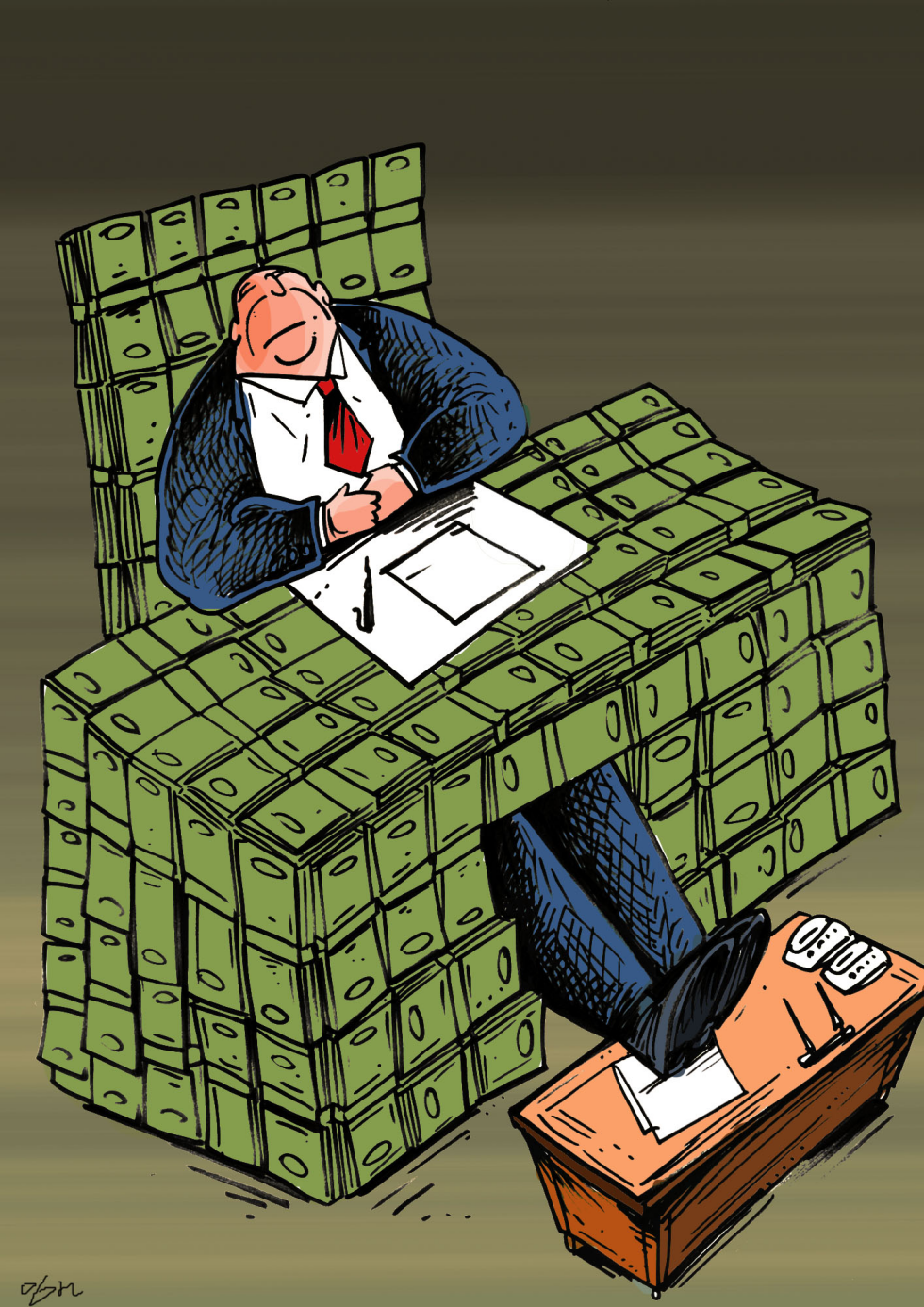
Public officials and business leaders often operate amid substantial financial resources that shape their daily environments and decisions. Recent developments in campaign finance and corporate influence have kept scrutiny on how wealth intersects with governance. The piece portrays an executive fully at ease within a setting constructed entirely from currency, underscoring the normalization of money's central role in positions of authority.
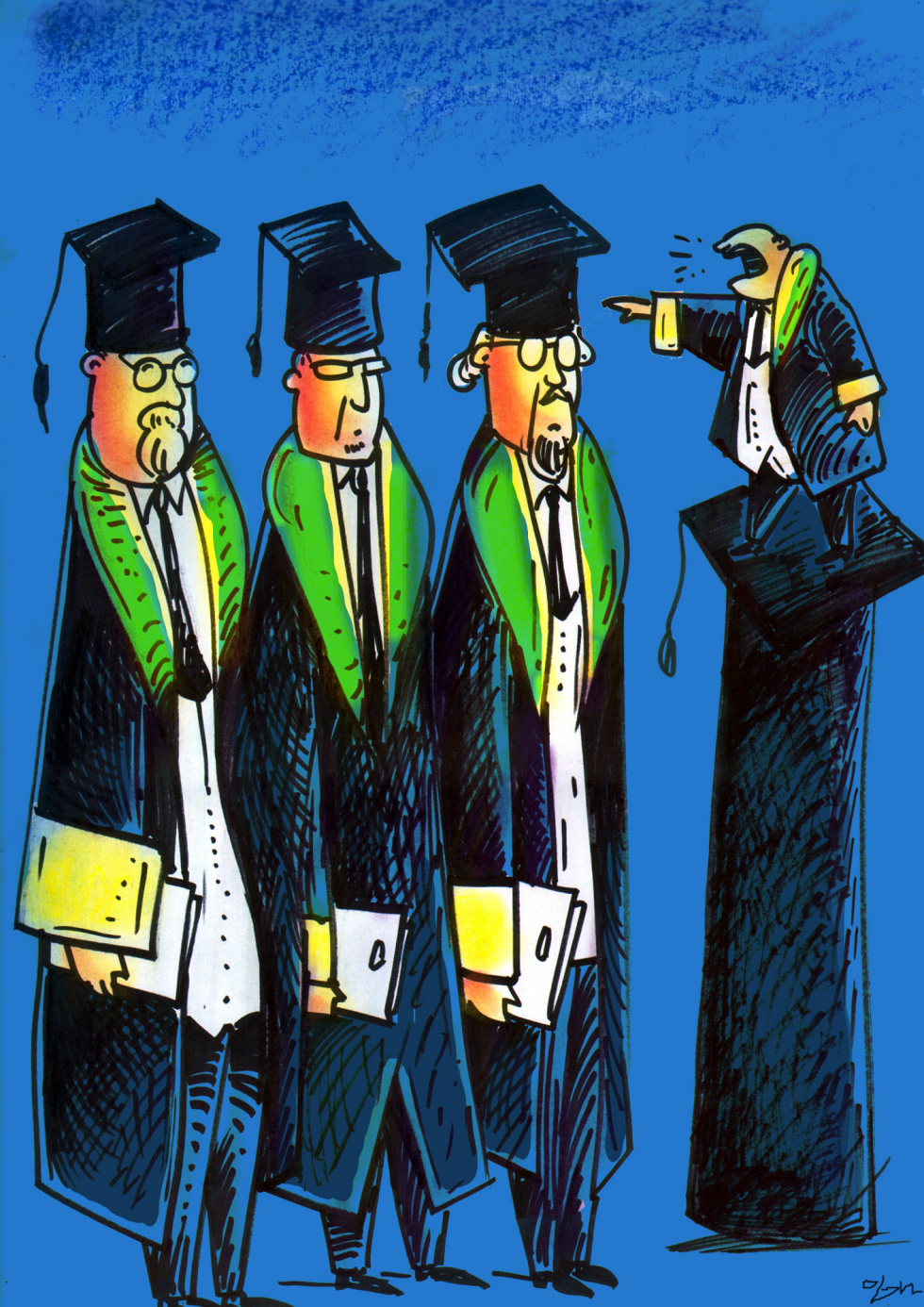
A university ceremony draws attention as an official delivers pointed remarks to administrators in academic attire. The exchange highlights ongoing tensions over leadership accountability and campus governance. The piece portrays the speaker as assertive in pressing the group on their responsibilities.
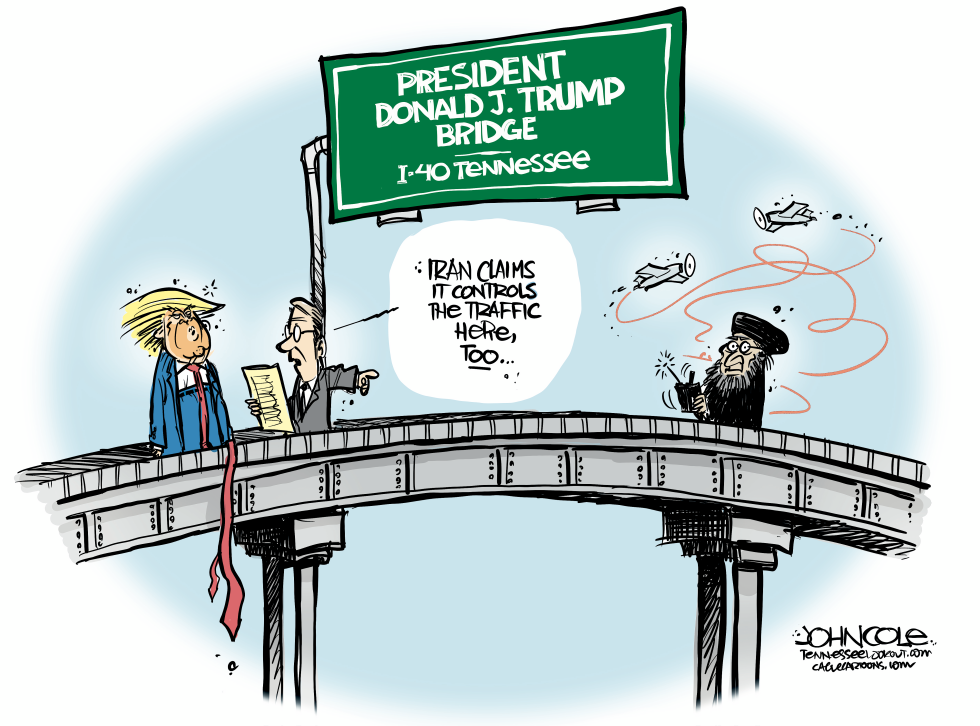
President Donald J. Trump attended the naming of the President Donald J. Trump Bridge on I-40 in Tennessee. The event drew attention when an Iranian figure appeared to claim control over traffic on the span. The development highlights ongoing tensions with Iran over shipping lanes and international routes. The cartoon frames the claim as an extension of Iran's broader pattern of asserting dominance over key passages. It positions the bridge naming as a domestic moment overshadowed by foreign threats.