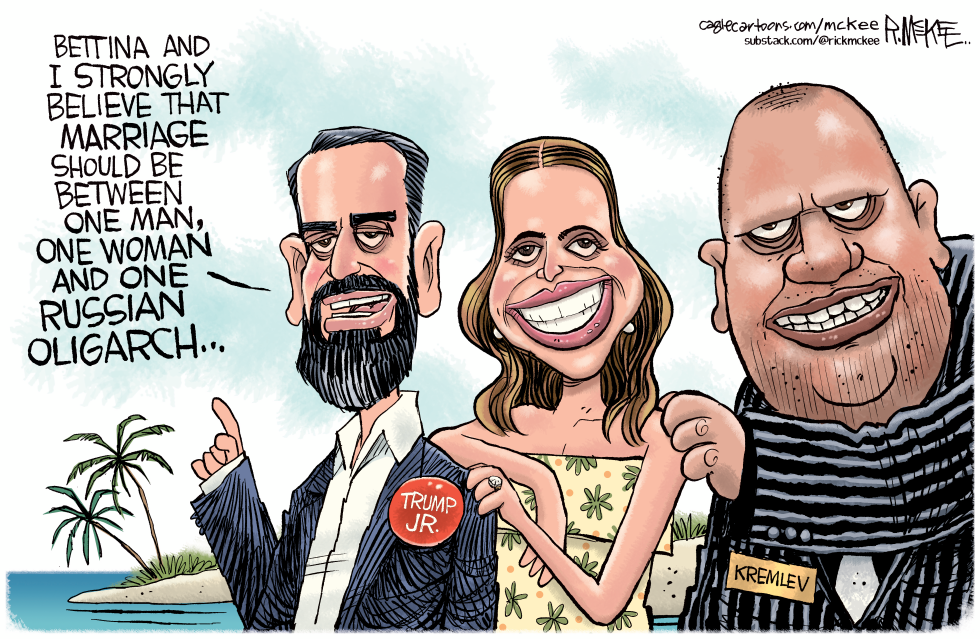
On September 15, 2026, commentary emerged around reports of Russian oligarch involvement in events tied to Donald Trump Jr. and Bettina. The development raises questions about foreign influence on the Trump family. The piece argues such connections undermine claims of independence from external interests.
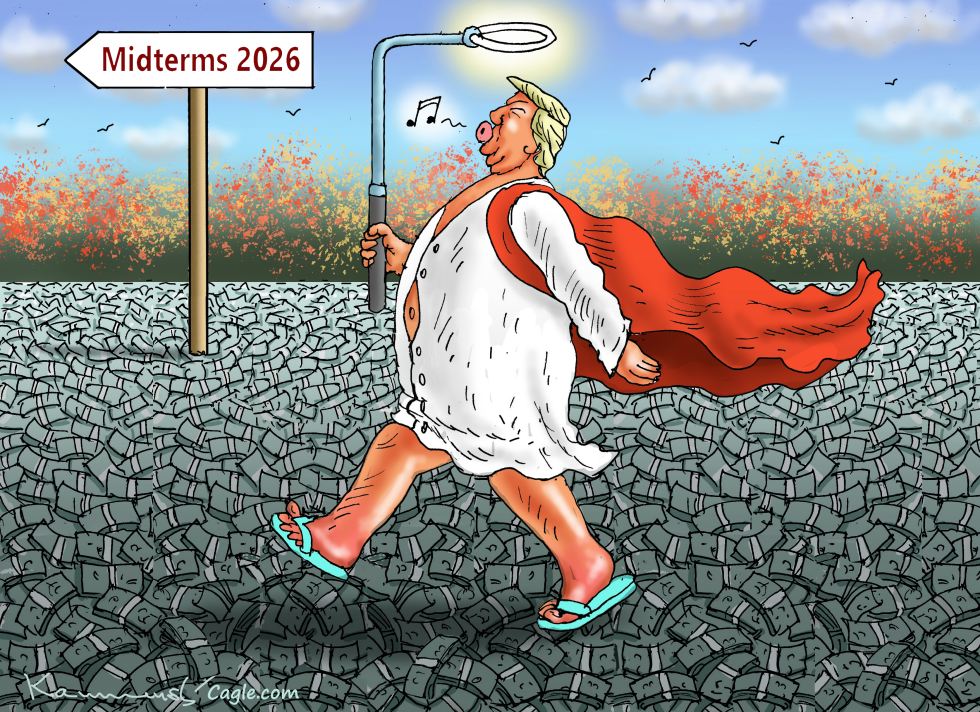
As the 2026 midterm cycle heats up, Donald Trump has positioned himself at the center of Republican fundraising efforts. Large donor contributions and party infrastructure have given GOP candidates a financial edge in key races. The cartoon portrays this advantage as a decisive factor heading into November. Critics argue the focus on money risks overshadowing policy substance. Supporters see the resources as essential to counter Democratic spending. The piece frames the cash flow as a clear path to victory for the MAGA-aligned slate.
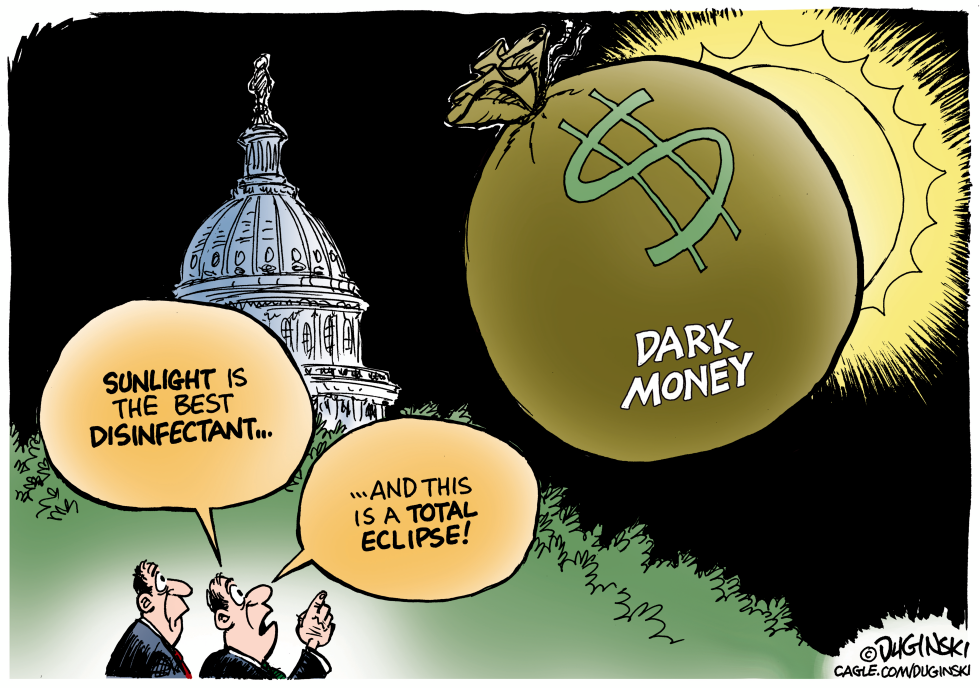
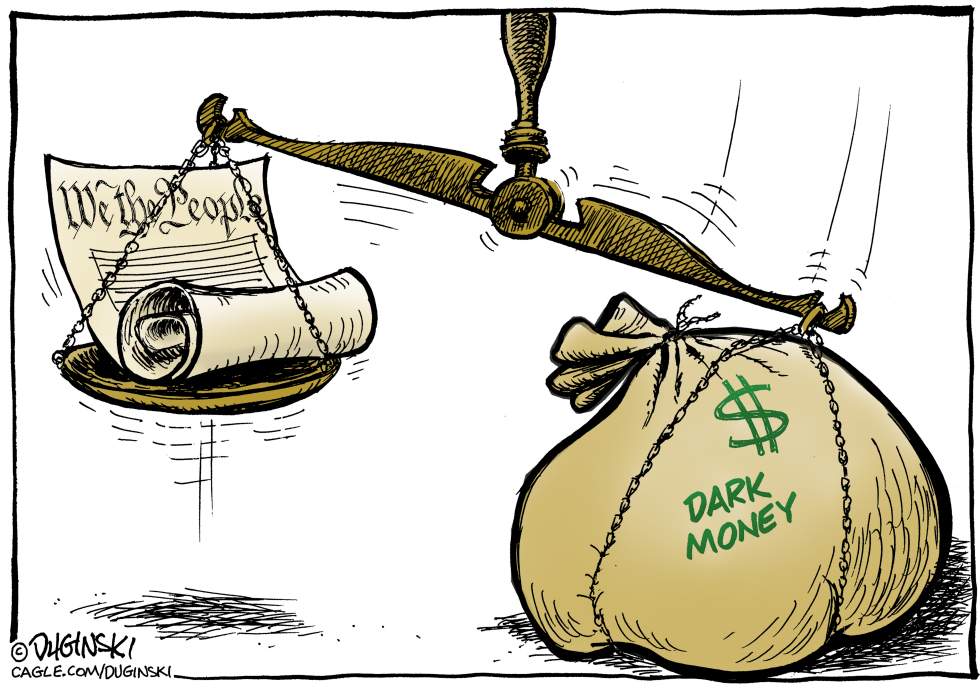
Dark money continues to shape congressional races and policy debates through undisclosed channels. Lawmakers face pressure to address donor secrecy amid calls for stronger disclosure rules. The cartoon argues that such funds directly undermine public oversight of government actions.
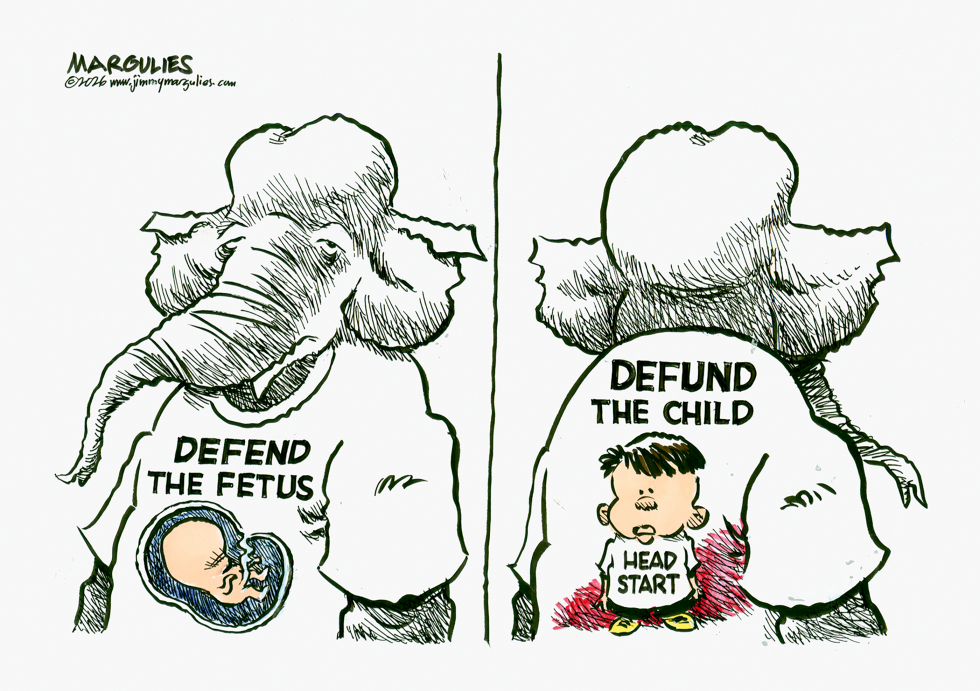
Republicans continue to champion fetal protections while proposing cuts to early childhood programs such as Head Start. The divide highlights ongoing debates over when government support for life begins and ends. The cartoon criticizes the inconsistency in prioritizing the unborn over living children in need of assistance.
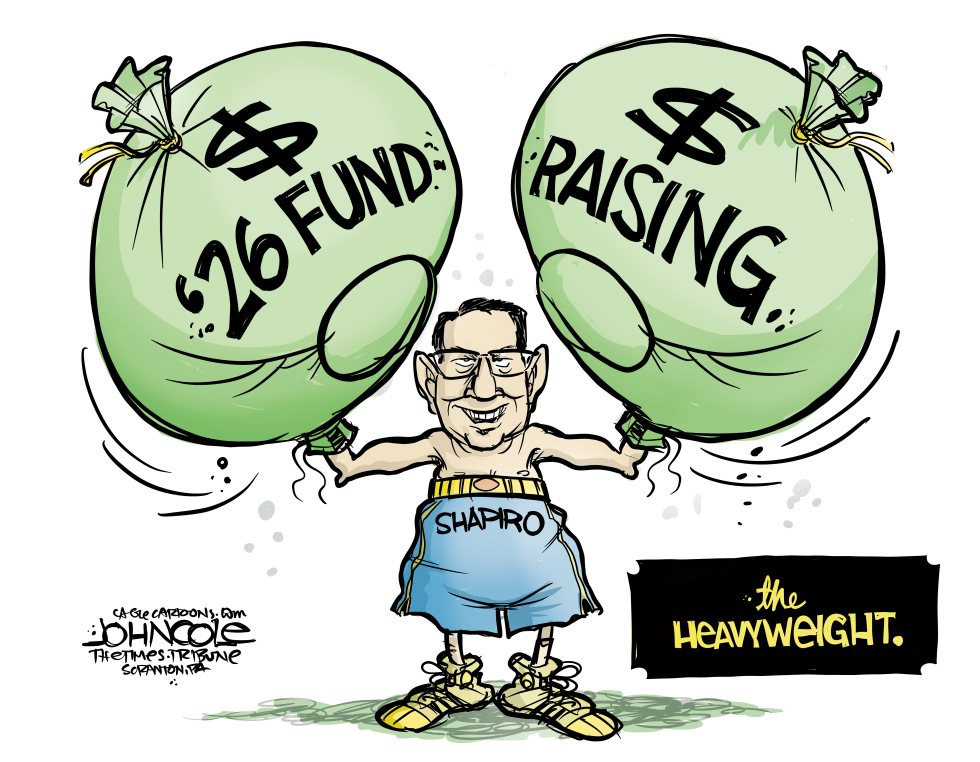
Ben Shapiro has built a substantial fundraising operation centered on a $26 fund and ongoing raising activities. The effort underscores the role of individual donors in sustaining prominent conservative media voices. The piece presents Shapiro as a dominant force in this arena.
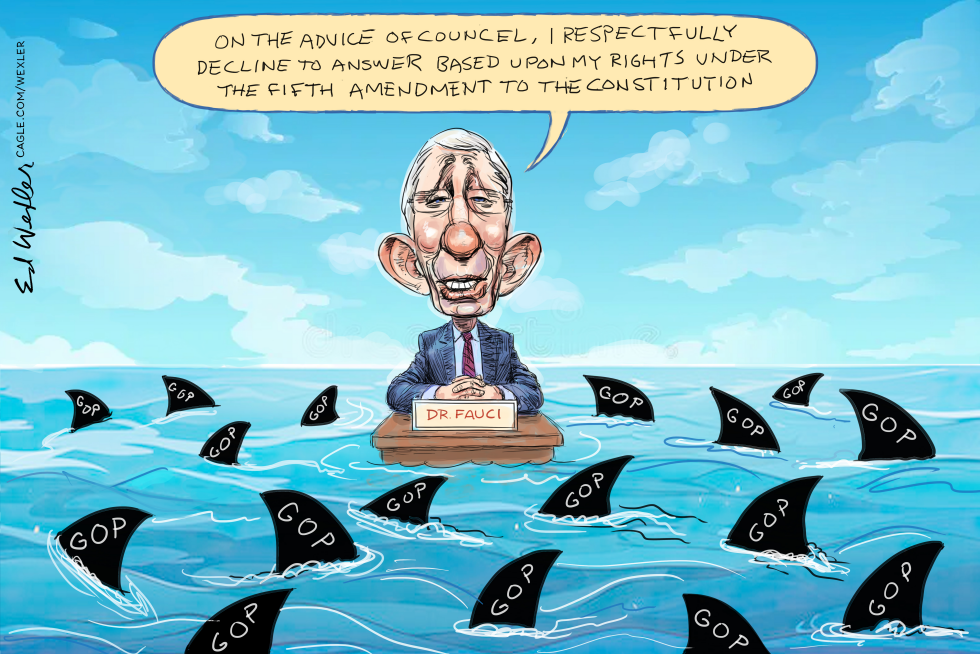
Dr. Anthony Fauci declined to answer questions at a House hearing, invoking his Fifth Amendment protections. The piece responds to Republican-led scrutiny of his role in pandemic-era public health decisions. It depicts the proceeding as a hostile setting rather than a neutral fact-finding exercise.
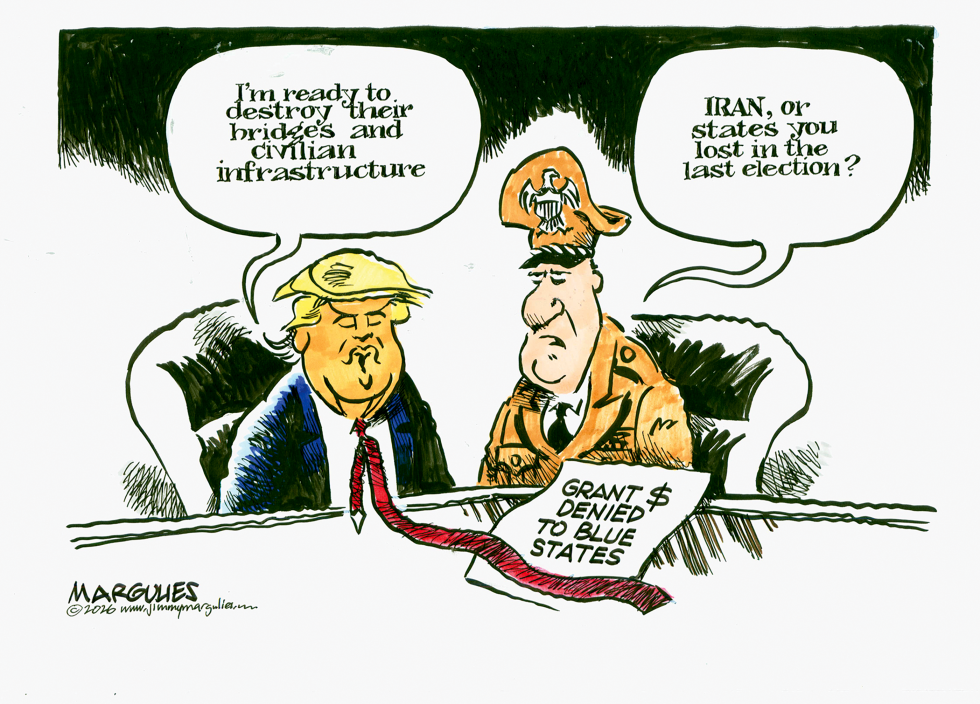
On July 28 2026 President Trump faces criticism for denying federal grants to states that voted against him in the prior election. The move raises questions about using infrastructure funding as political leverage. The cartoon portrays this as interchangeable with threats against Iran.
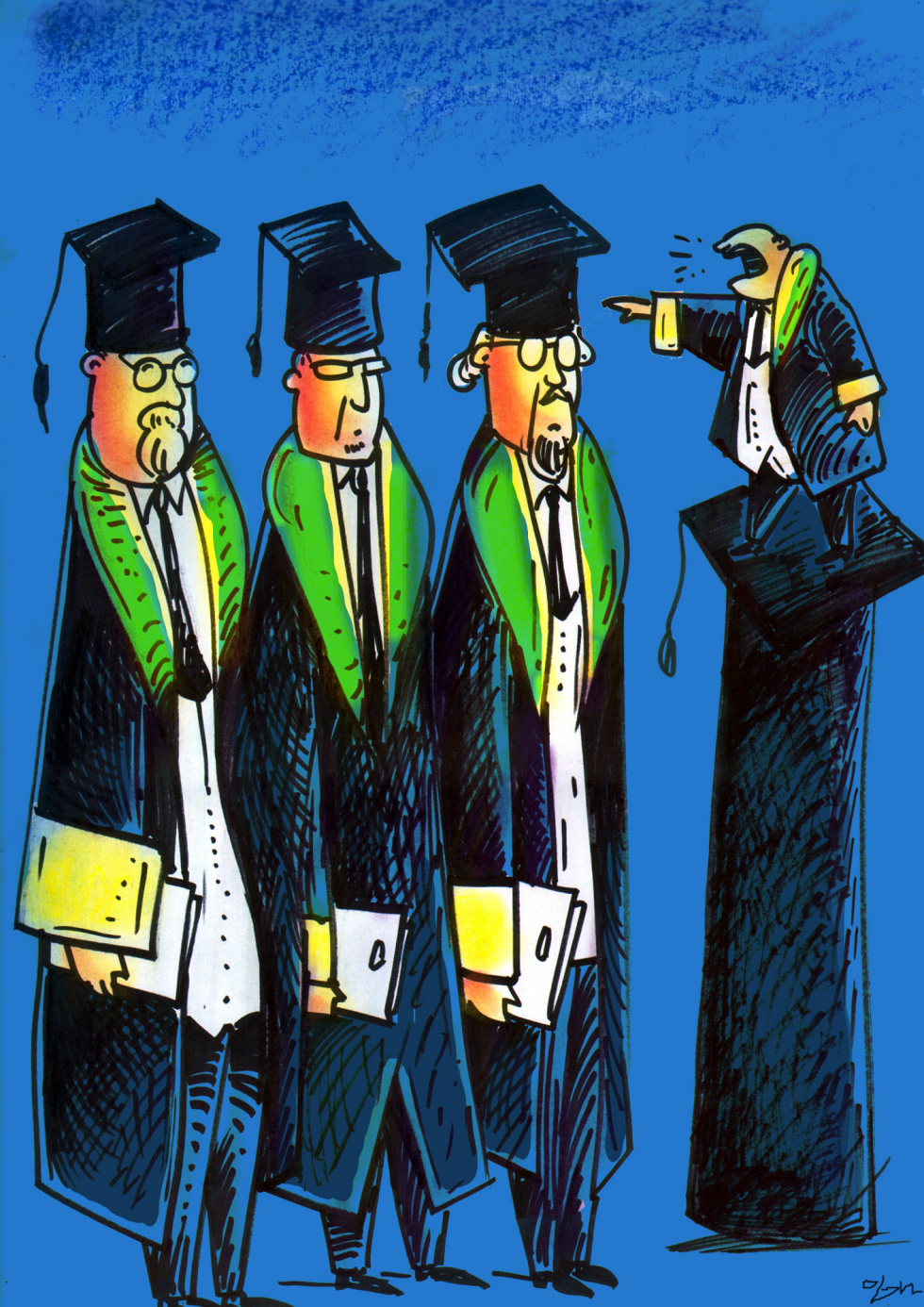
A university ceremony draws attention as an official delivers pointed remarks to administrators in academic attire. The exchange highlights ongoing tensions over leadership accountability and campus governance. The piece portrays the speaker as assertive in pressing the group on their responsibilities.
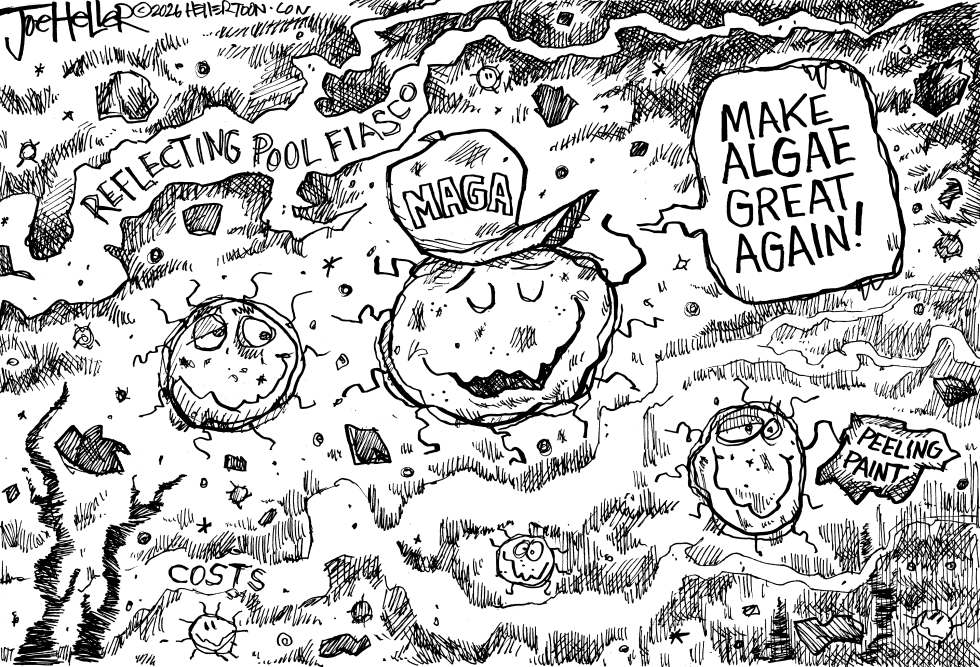
A political cartoon depicts the National Mall reflecting pool overrun by personified algae blobs bearing a MAGA label and the slogan Make Algae Great Again. Cracked surfaces, peeling paint signs, and scattered costs labels underscore ongoing maintenance problems. The June 2026 image uses visual exaggeration to comment on infrastructure shortcomings at a prominent federal site.
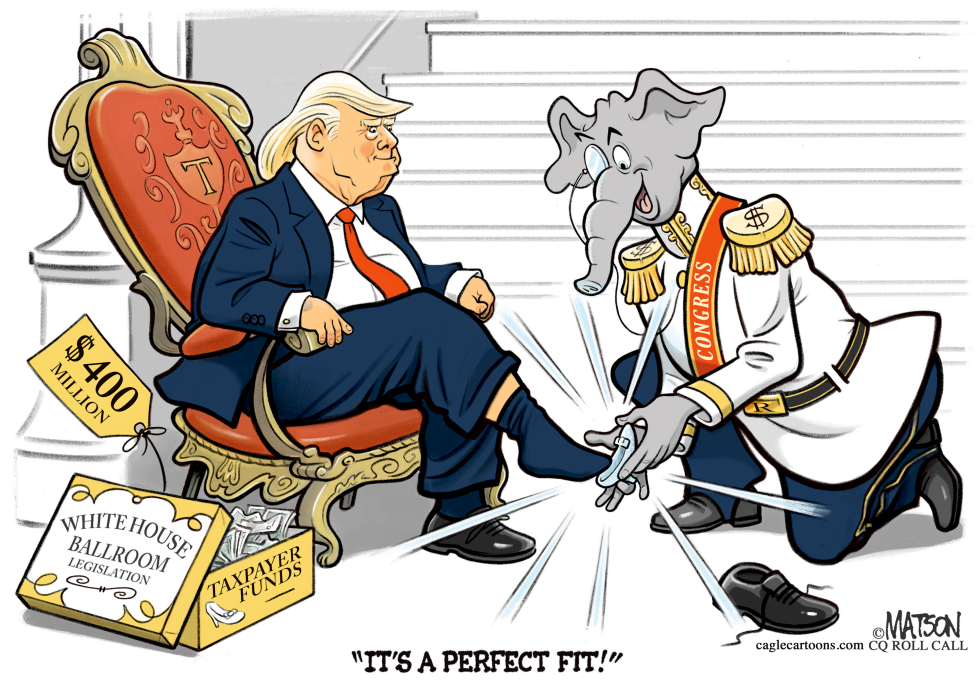
RJ Matson's cartoon depicts President Trump as Cinderella, lounging on a throne while a grinning Congress elephant, adorned with a sash and dollar-sign epaulets, slips a black shoe onto his foot, exclaiming 'It's a perfect fit!!' A box labeled 'White House Ballroom' overflows with 'Taxpayer Funds,' and a $400 million tag dangles nearby. This sharp satire targets Congressional Republicans' approval of hefty taxpayer funding for White House upgrades, echoing the fairy tale but with a political twist on government spending and Donald Trump's influence. The White House Correspondents Association Dinner at the Hilton Hotel lurks in the background tags, highlighting budget priorities amid fiscal debates.
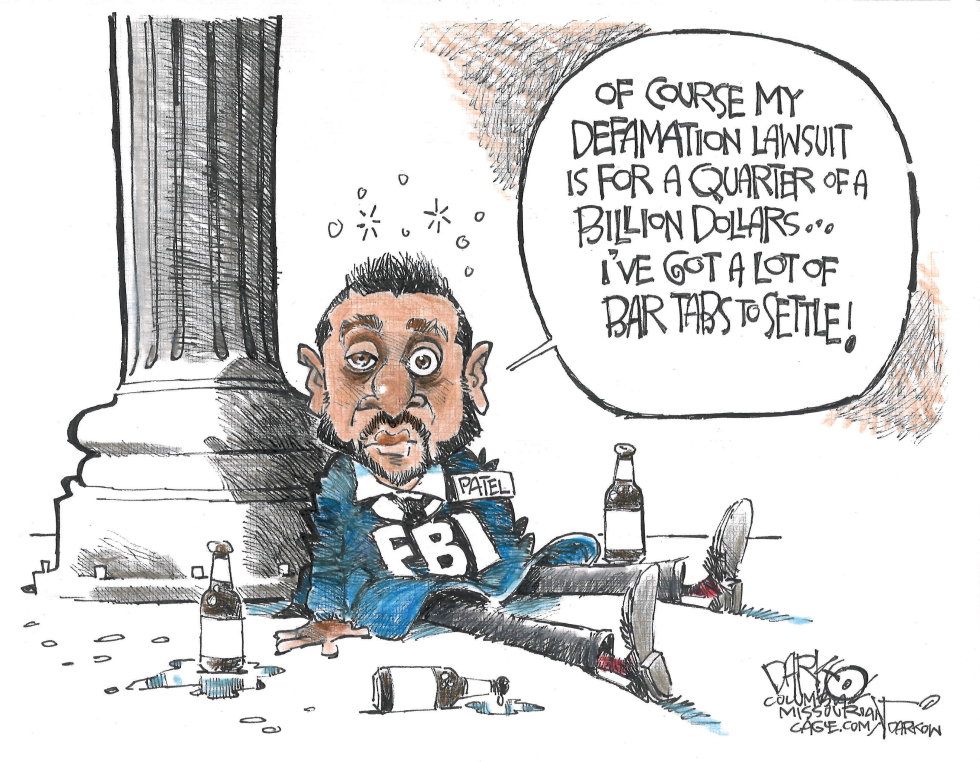
John Darkow's cartoon captures Kash Patel in a state of drunkenness, leaning against a grand pillar with empty beer bottles scattered around, his suit jacket labeled FBI and a name tag reading Patel. The speech bubble delivers the punchline about his defamation lawsuit being for a quarter of a billion dollars to settle bar tabs, tying into themes of DOJ, justice department, and availability. This piece offers a sharp satirical commentary on Patel's potential role as FBI director, using booze as a metaphor visible in the littered bottles and dazed expression. The artwork stays grounded in the visible elements, avoiding speculation, and highlights the humor in exaggerated features and setting.
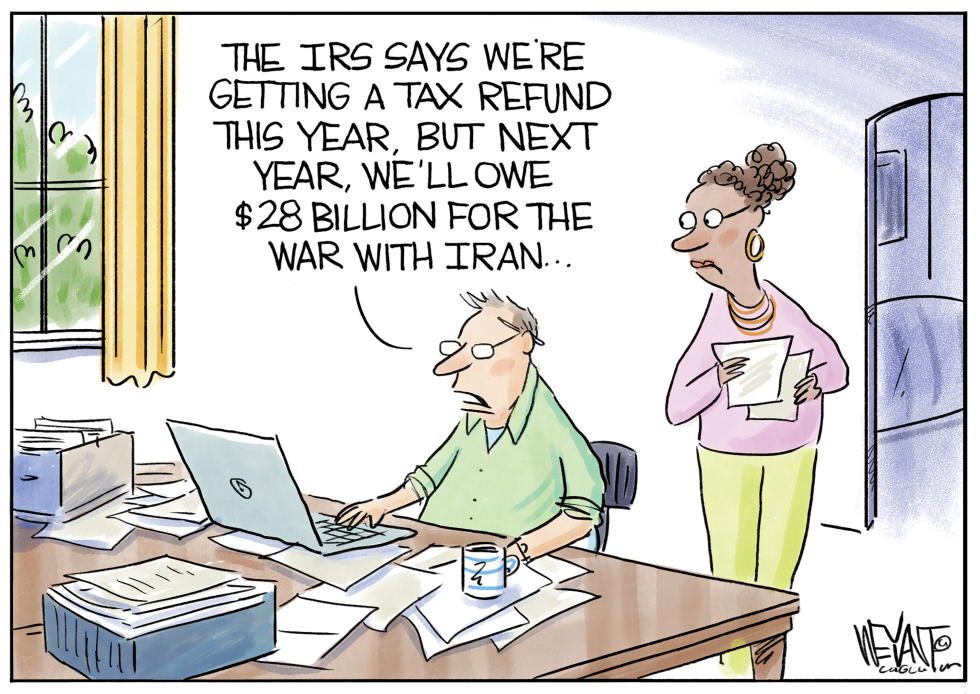
Dive into this biting political cartoon tax refund piece where a woman, holding papers, informs a laptop-working man about their IRS windfall this year, only to drop the bomb of owing $28 billion next for the war with Iran. The satirical cartoon Iran war vibe captures the absurdity of US taxes funding wars, with cluttered desks and exasperated expressions underscoring the humorous take on federal spending. It's a classic taxpayer burden Iran conflict jab, poking fun at government spending satire while illustrating the disconnect between personal finances and massive military expenses. Through cartoon about military expenses, it cleverly critiques fiscal policy in an office setting, making the war with Iran taxpayer joke both relatable and irreverently insightful for viewers pondering editorial cartoon fiscal policy.
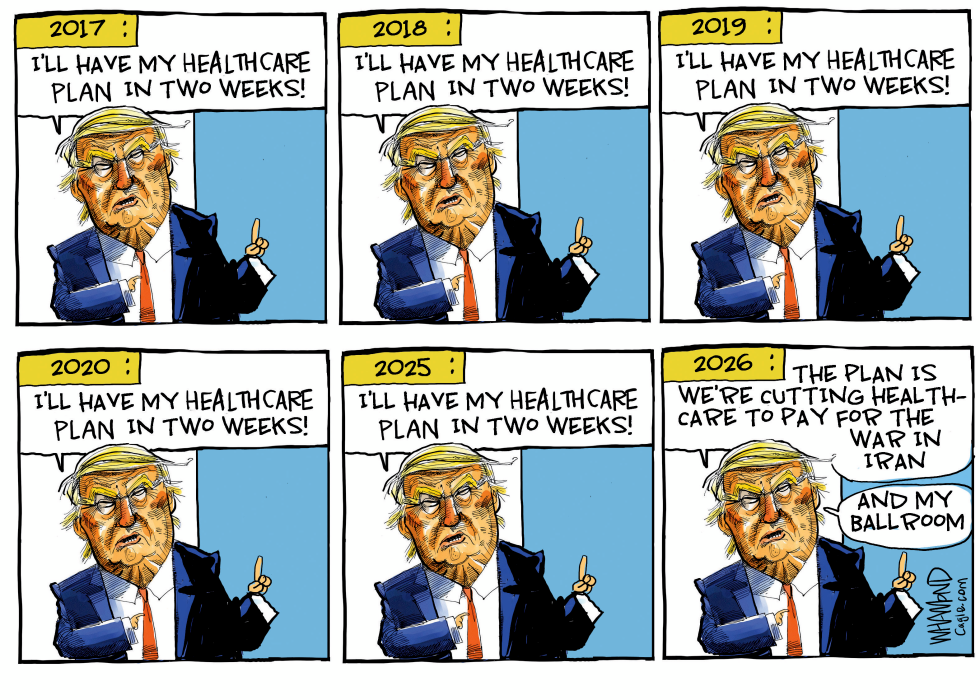
Dave Whamond's political cartoon depicts a recurring figure with distinctive blonde hair and suit, pointing emphatically while promising a healthcare plan 'in two weeks' from 2017 through 2025. The sequence builds to a 2026 punchline where the promise shifts to cutting healthcare to fund a war in Iran and a personal ballroom. This Trump healthcare plan political cartoon employs dry humor to critique endless delays and misplaced priorities. The US politics war funding criticism underscores how domestic needs like healthcare reform delay comic strip give way to military spending in this Republican healthcare policy parody. The endless two weeks promise meme captures the frustration with unfulfilled pledges in a sharp, sequential format.