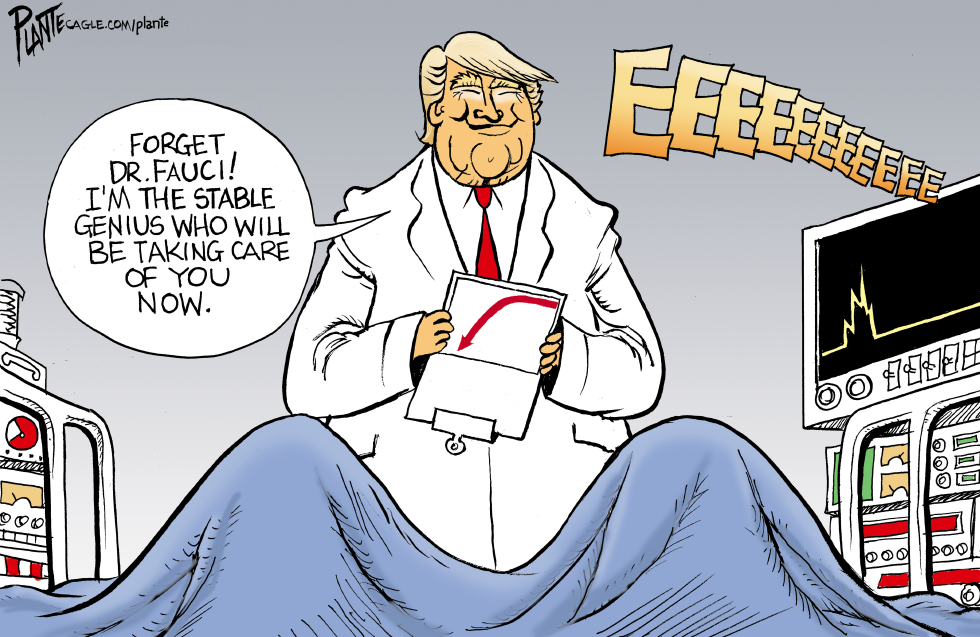
Donald Trump appears in a physician's coat asserting control over patient care and dismissing Dr. Fauci. The depiction occurs amid ongoing debates over federal health policy leadership and executive influence on medical decisions. The piece argues that such assertions risk undermining established expertise in public health administration.
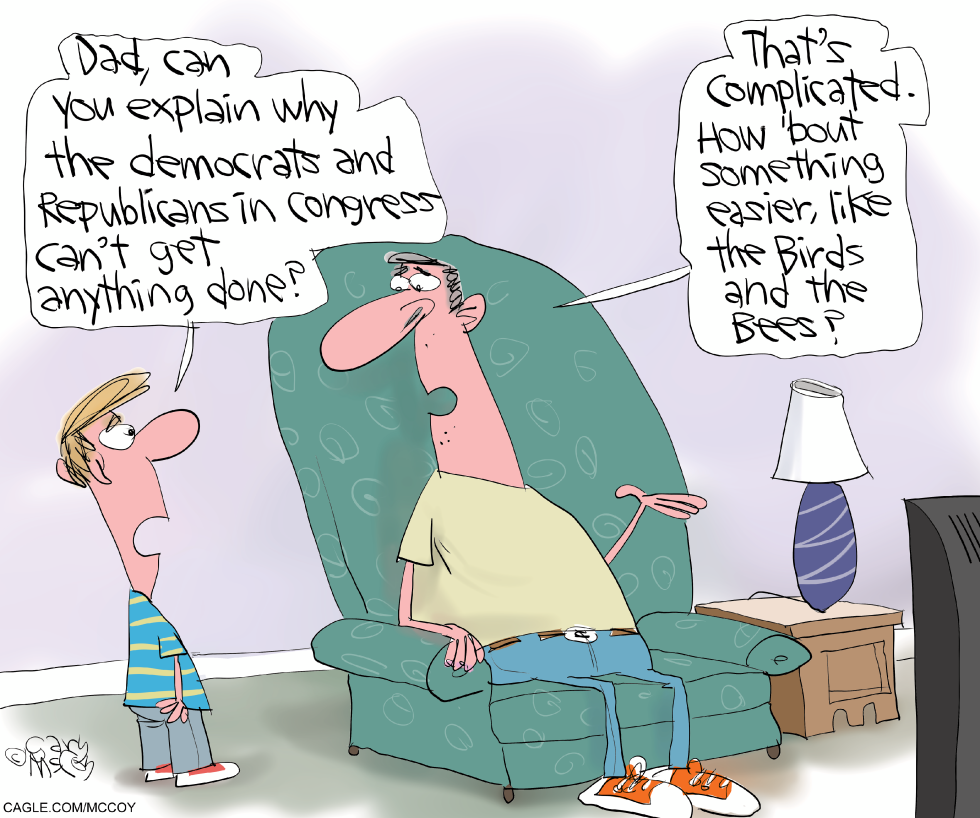
Congress remains stalled on major legislation amid ongoing partisan divisions between Democrats and Republicans. Lawmakers struggle to advance bills on key issues despite public frustration with inaction. The deadlock highlights deep divisions that prevent compromise on budgets, infrastructure, and other priorities. The cartoon portrays a father deflecting his son's inquiry about this dysfunction by redirecting to an easier subject, underscoring how even basic explanations of congressional gridlock prove too difficult to tackle directly.
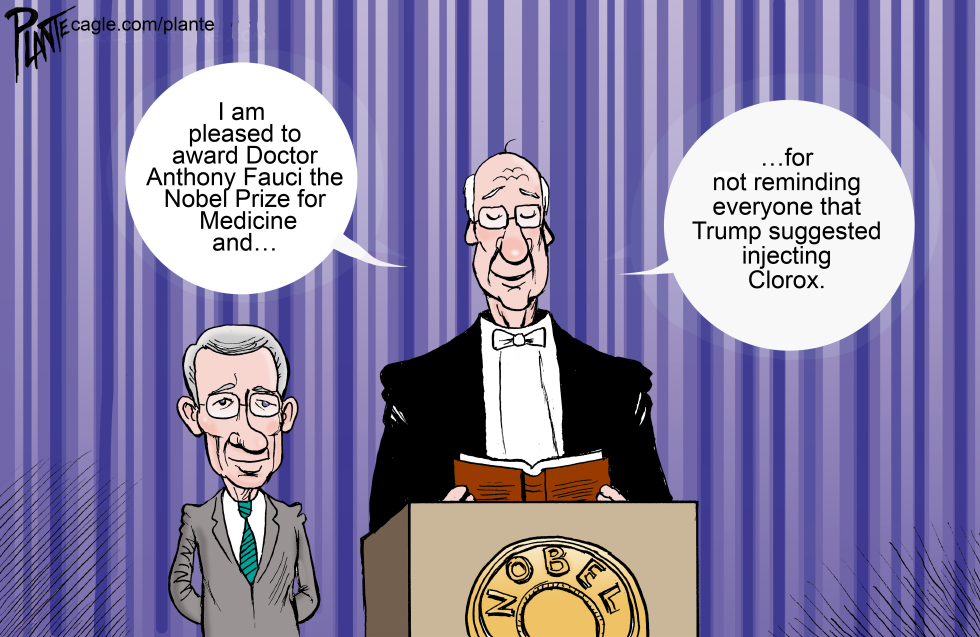
A Nobel Prize presentation for Dr. Anthony Fauci highlights his public health role during the COVID-19 period. The ceremony focuses on his contributions to medicine while avoiding reference to earlier statements from former President Trump about potential treatments. The moment underscores ongoing public debate over pandemic messaging and leadership accountability. The editorial position frames the award as recognition tied to selective memory rather than solely scientific achievement.
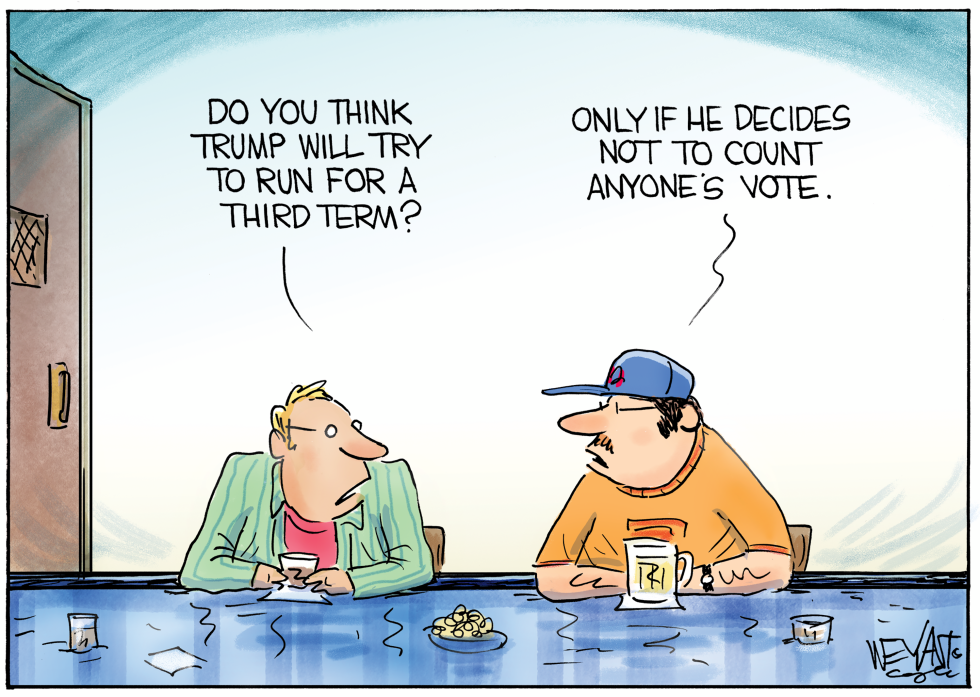
Discussions about a potential third term for Donald Trump continue in 2026 amid ongoing questions about electoral processes and term limits. The cartoon captures public skepticism regarding whether votes would be respected in any such effort. It takes the position that any attempt would hinge on disregarding voter input rather than following constitutional norms.
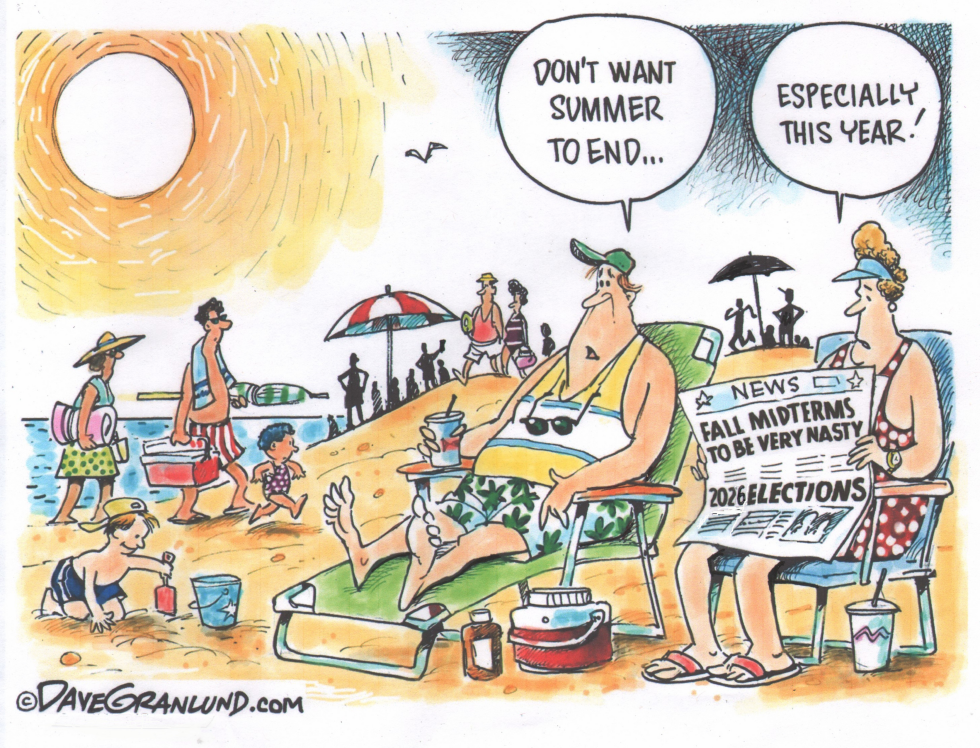
With the 2026 midterm elections approaching, voters across the country are bracing for contentious races that could reshape Congress. The campaigns are already shaping up to be unusually heated, with both parties mobilizing aggressively. This dynamic matters because control of the House and Senate will influence policy on spending, investigations, and presidential priorities for the remainder of the term. The piece takes the position that many citizens would rather avoid the coming political battles altogether.
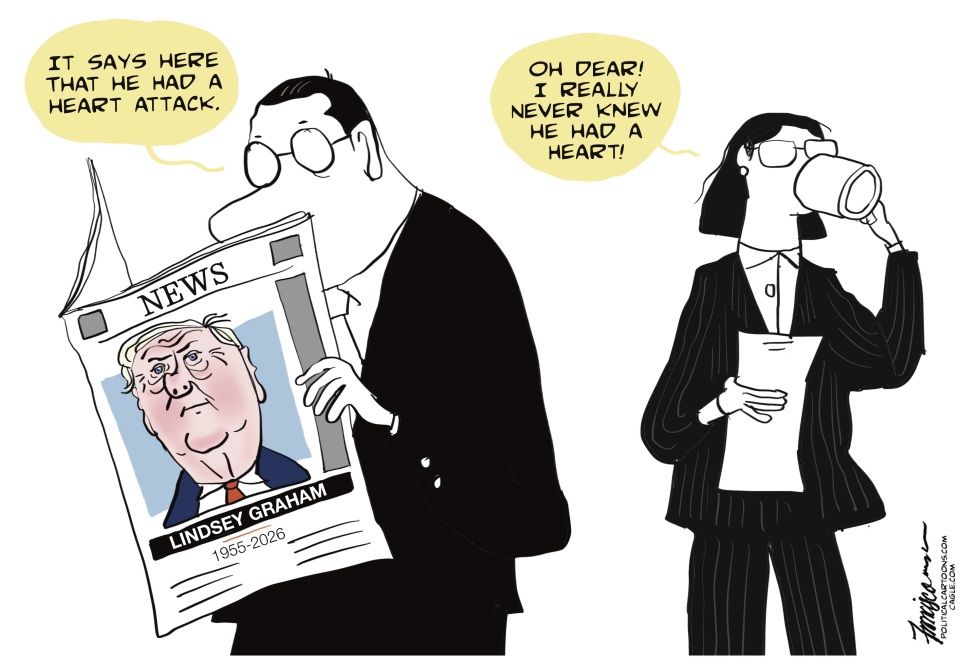
A man reads a newspaper reporting Lindsey Graham's heart attack and death in 2026. A woman standing nearby reacts with surprise that the senator had a heart at all. The exchange highlights the swift and pointed responses from political figures to the obituary.
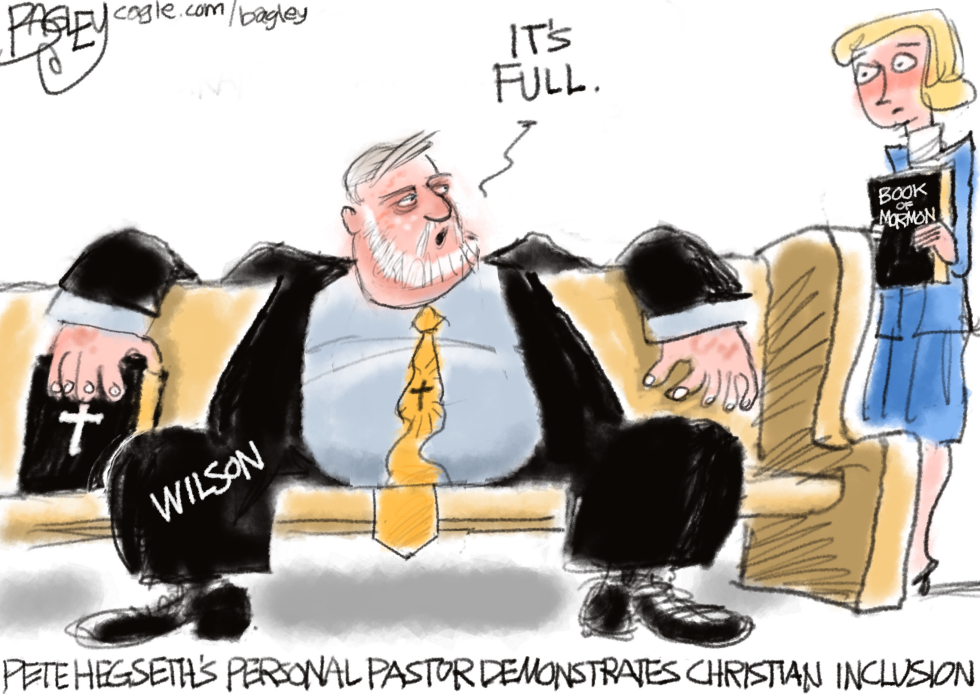
The July 2026 cartoon depicts Pastor Wilson seated on a couch holding a cross-emblazoned book and stating it is full. A woman stands nearby offering the Book of Mormon. The caption states that Pete Hegseth's personal pastor demonstrates Christian inclusion. The image responds to ongoing discussions about religious boundaries and denominational acceptance tied to the defense secretary nominee's faith advisors.
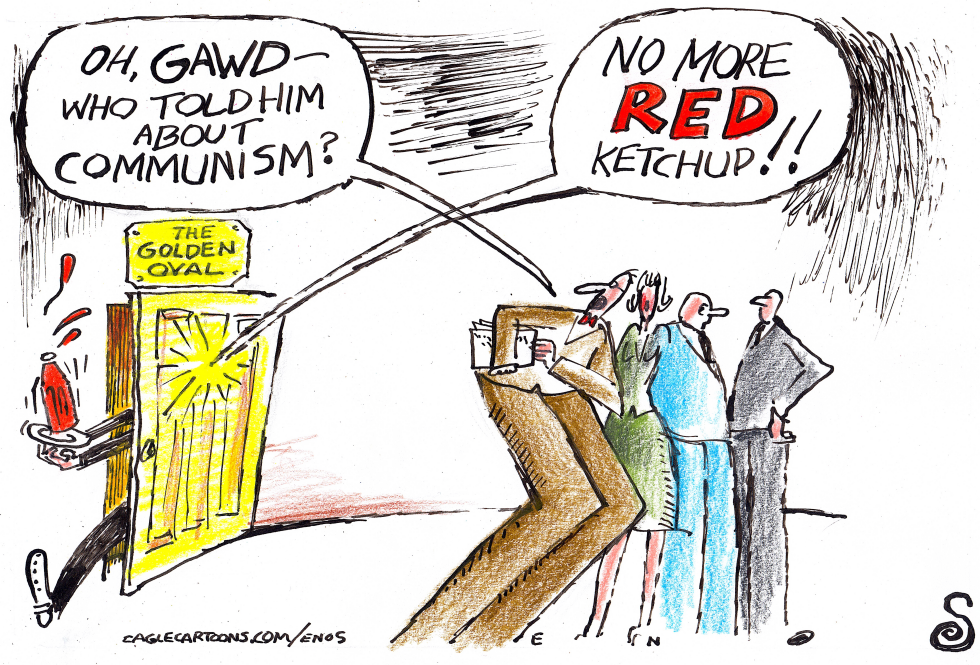
A yellow door marked The Golden Oval stands open with a red ketchup bottle spilling onto the floor. Nearby figures react with speech bubbles expressing shock at a communism reference and a demand to end red ketchup. The July 2026 image from Randall Enos highlights the condiment as the trigger for the exchange.
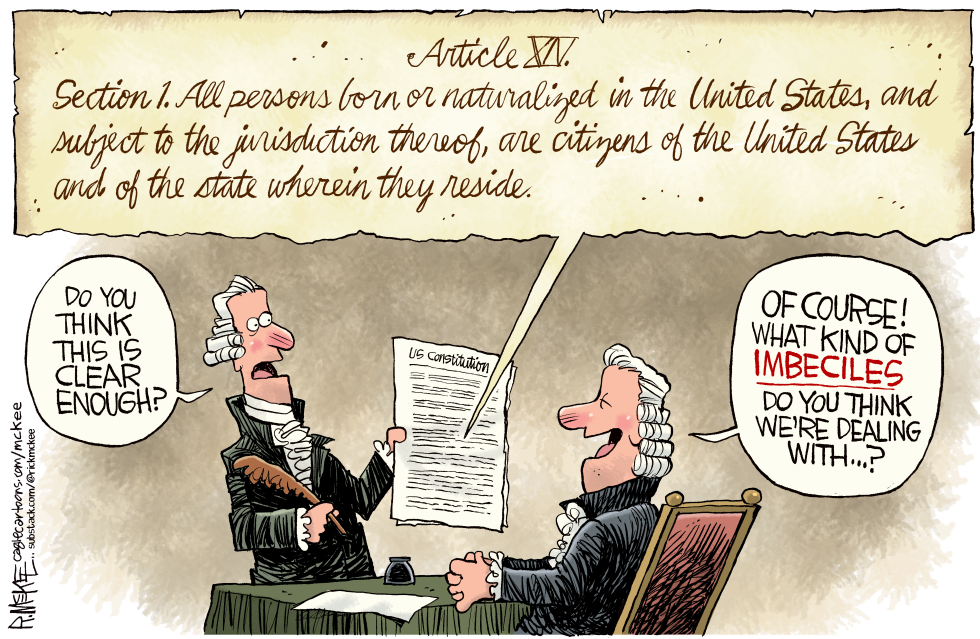
The cartoon shows two Founding Fathers seated at a table with the text of Article XIV of the US Constitution displayed above them. One figure points to the document and asks if the language on citizenship is clear enough. The other responds that only imbeciles would question it. The scene uses speech bubbles to highlight the debate over birthright citizenship provisions in the 14th Amendment.
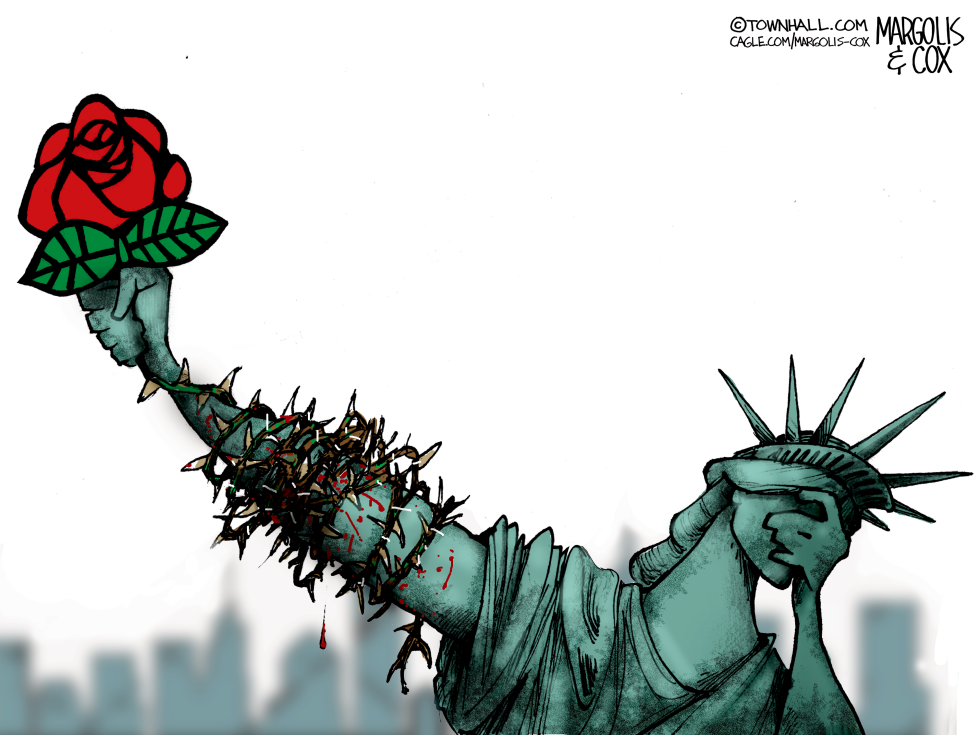
The image shows the Statue of Liberty with her raised arm entangled in barbed wire that draws blood, holding a large red rose in place of the traditional torch. Her other hand covers her face as the New York skyline fades behind her. The work responds to ongoing debates over socialist symbolism in American public imagery on the June 2026 date. The visual replaces the torch with the rose, a traditional emblem of socialism, while the barbed wire suggests entrapment or harm. Artist credit appears in the upper right corner.
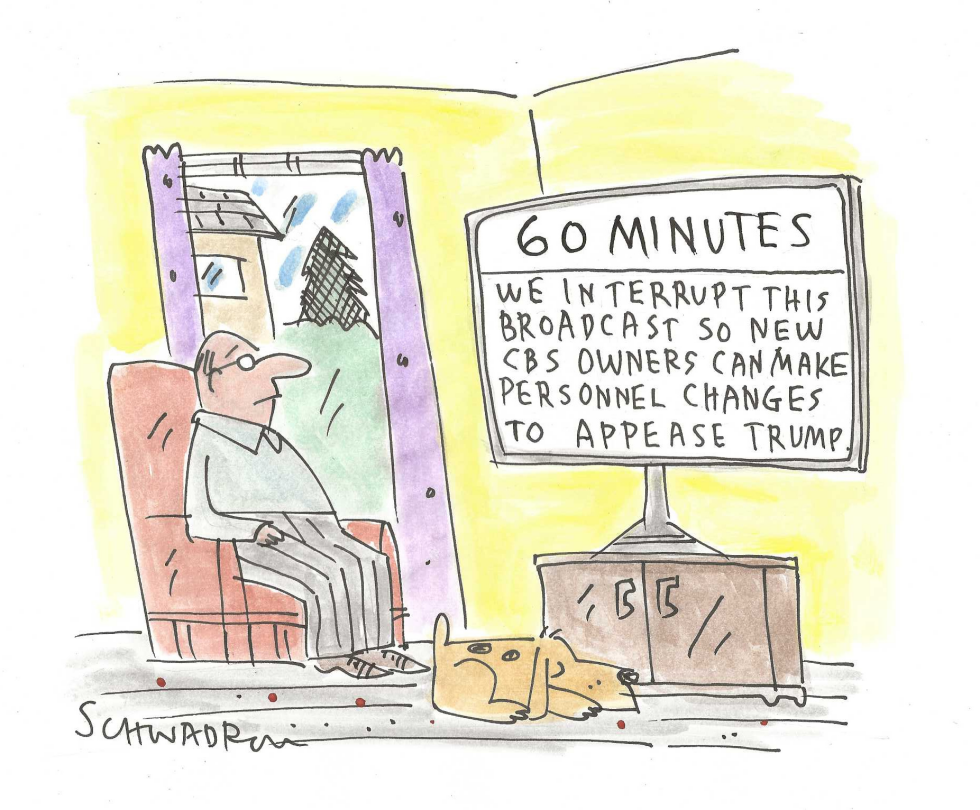
The cartoon depicts a viewer watching an on-screen announcement from 60 Minutes that interrupts the broadcast for personnel changes at CBS to appease Trump. The scene shows the television set displaying the message while the viewer remains seated and a dog lies on the floor. The date of June 2026 places the image in a period of ongoing discussion about media ownership and external political pressure on news outlets.
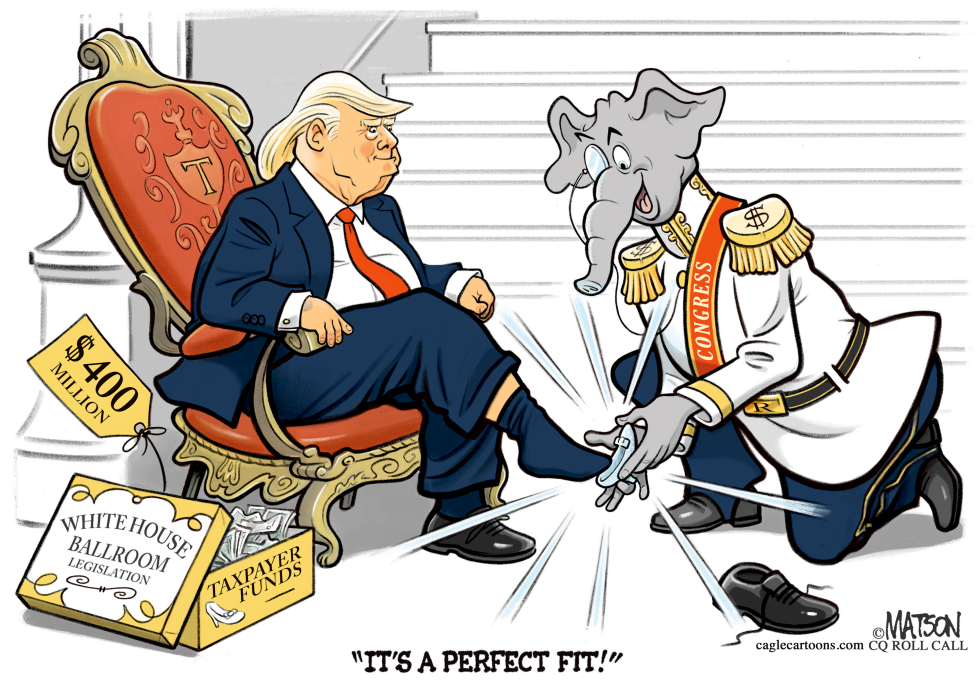
RJ Matson's cartoon depicts President Trump as Cinderella, lounging on a throne while a grinning Congress elephant, adorned with a sash and dollar-sign epaulets, slips a black shoe onto his foot, exclaiming 'It's a perfect fit!!' A box labeled 'White House Ballroom' overflows with 'Taxpayer Funds,' and a $400 million tag dangles nearby. This sharp satire targets Congressional Republicans' approval of hefty taxpayer funding for White House upgrades, echoing the fairy tale but with a political twist on government spending and Donald Trump's influence. The White House Correspondents Association Dinner at the Hilton Hotel lurks in the background tags, highlighting budget priorities amid fiscal debates.
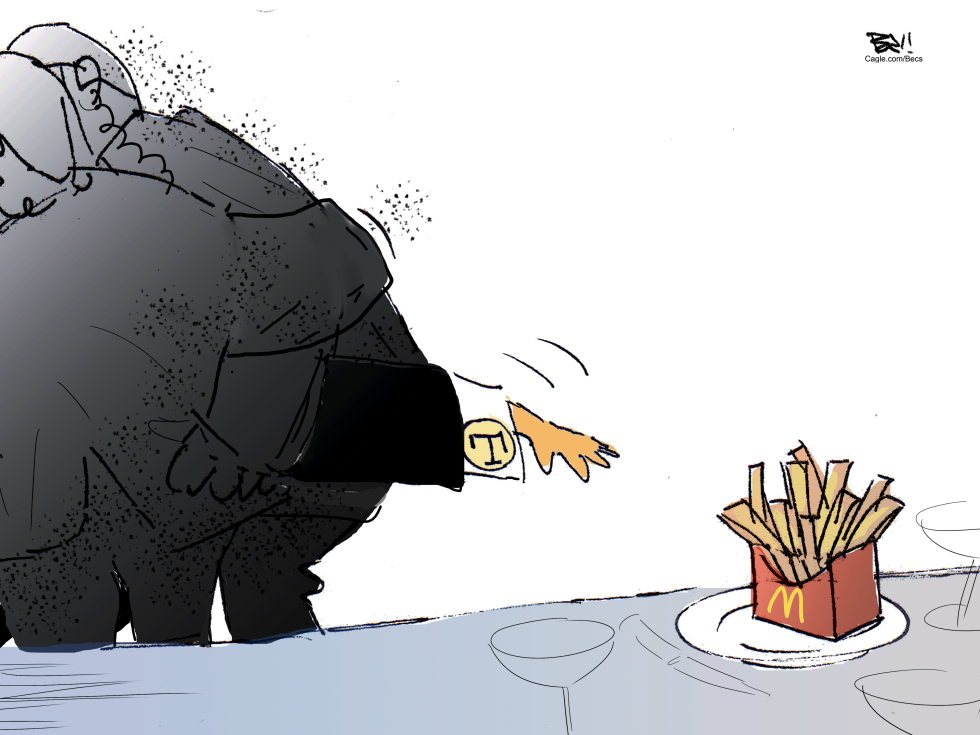
This political cartoon shows a bulky figure in a dark suit, viewed from behind, with a hand bearing a cufflink labeled TRUMP reaching out toward a red box of McDonalds fries overflowing on a white plate. The scene is set on a table with stemmed glasses, and there's a dusting of particles on the figure's shoulder. Incorporating tags such as Donald Trump Administration USA, attack, Hilton Hotel, shooting, terrorist, lone wolf, the image pokes fun at familiar tropes of excess and impulse. The artist's signature Becs and Cagle.com/Becs appear in the corner, grounding it in syndicated cartoon tradition. Such drawings often go viral for their sharp, relatable jabs at public figures. At around 100 words, this summary captures the essence without overreaching what's drawn.
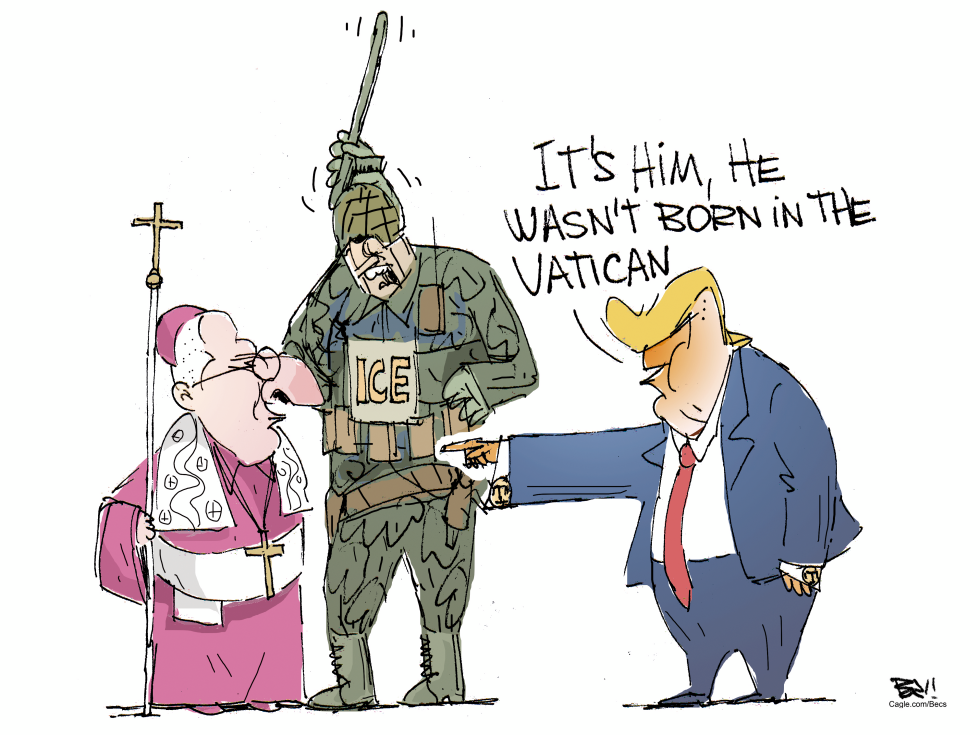
This cartoon shows Donald Trump accusing the Pope of not being born in the Vatican, with an ICE agent poised for action. The tags highlight themes of incompetent narcissistic leadership in US politics, blending Vatican imagery with immigration enforcement. Trump's pointing finger and the Pope's surprised expression drive the satire, while the ICE label on the agent's vest ties into border control debates. Such cartoons often poke at figures like Trump and the Pope to underscore absurdities in power dynamics. With elements of humor targeting narcissism and incompetence, it fits broader discussions on US-Vatican relations and policy follies.