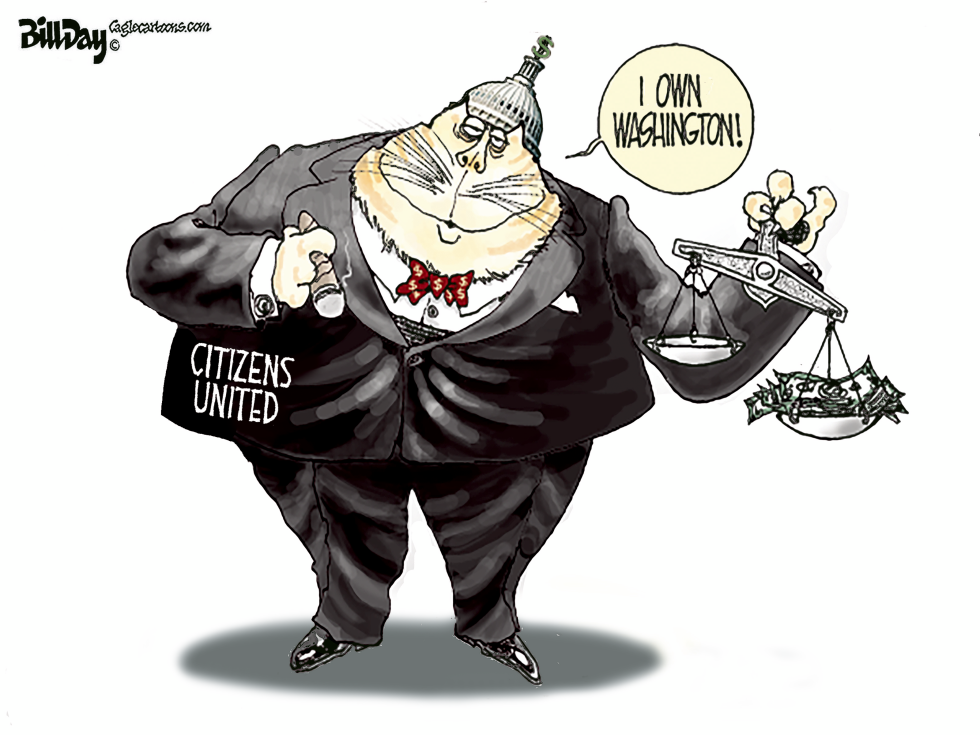
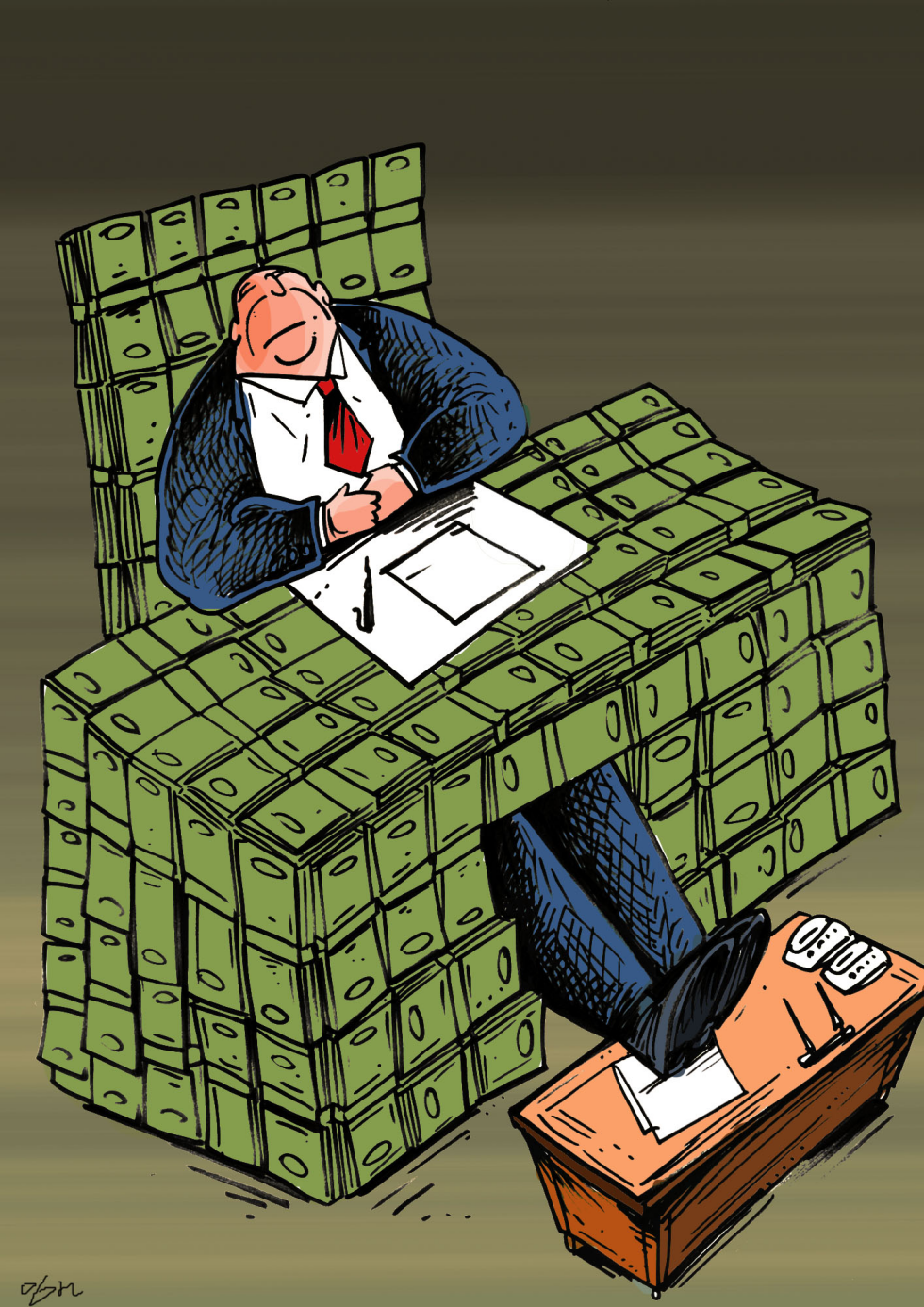
The 2010 Citizens United Supreme Court ruling opened the door to unlimited independent expenditures by corporations and unions in elections. Critics argue the decision amplified the voice of wealthy donors and special interests over average voters. The cartoon responds to the ongoing effects of that precedent by depicting a powerful corporate figure claiming control of the capital. It highlights how the ruling has reshaped campaign finance and public trust in government institutions.
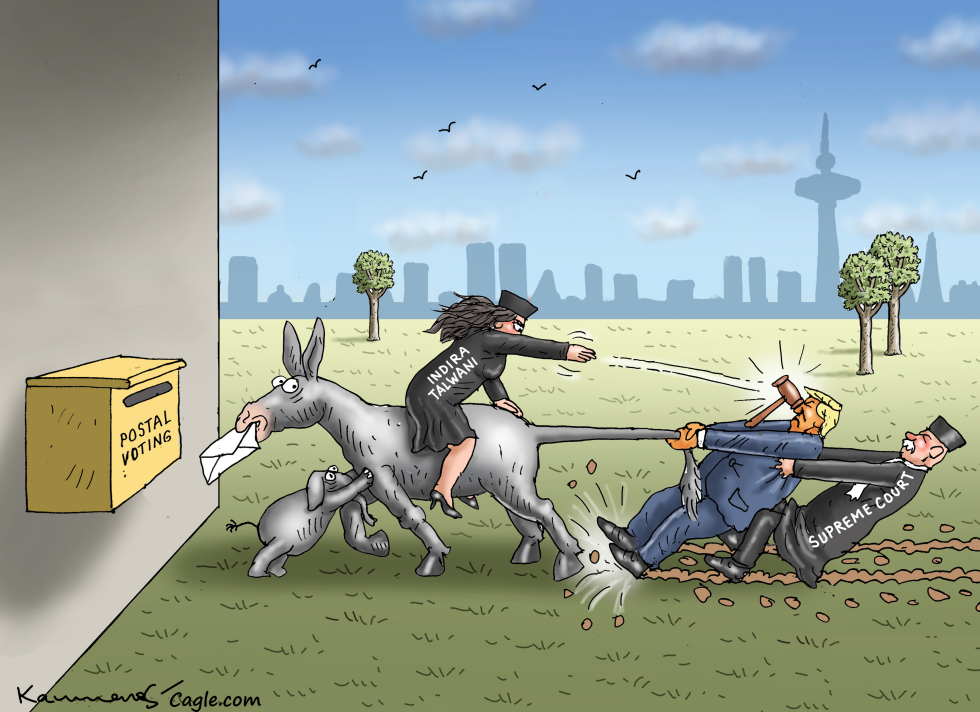
A political cartoon shows federal Judge Indira Talwani riding a Democratic donkey labeled with postal voting while dragging two Supreme Court justices across a field near the Space Needle. The image responds to ongoing disputes over postal voting rules and federal court involvement in election procedures. Talwani, a U.S. District Judge, has issued rulings affecting voting access in recent cases. The cartoon uses the donkey as a party symbol and a yellow ballot box to illustrate the conflict between lower court decisions and the Supreme Court. The visual argument centers on judicial power in election law matters active in 2026.
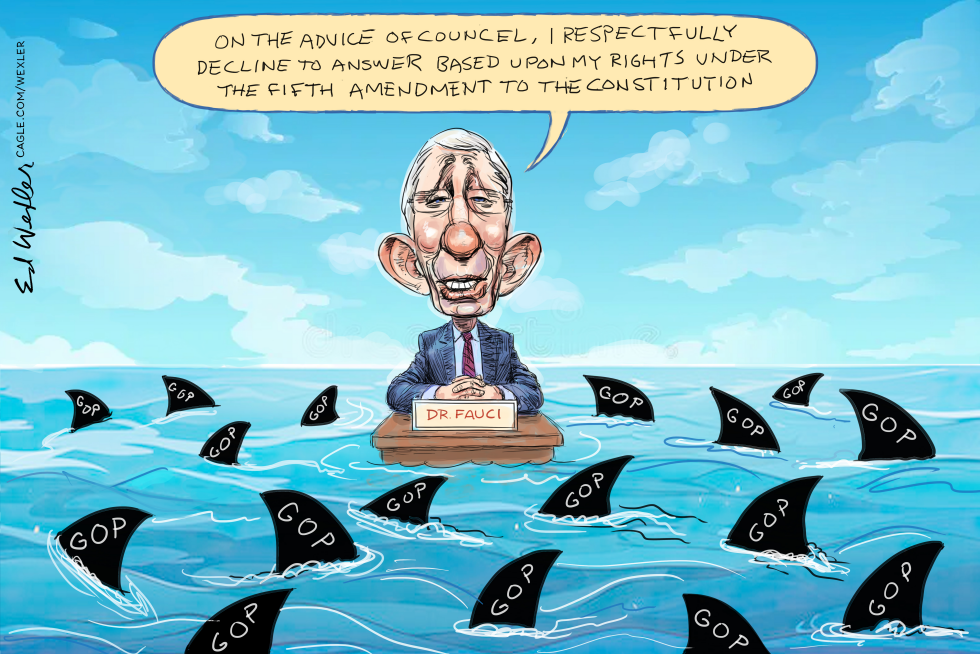
Dr. Anthony Fauci declined to answer questions at a House hearing, invoking his Fifth Amendment protections. The piece responds to Republican-led scrutiny of his role in pandemic-era public health decisions. It depicts the proceeding as a hostile setting rather than a neutral fact-finding exercise.
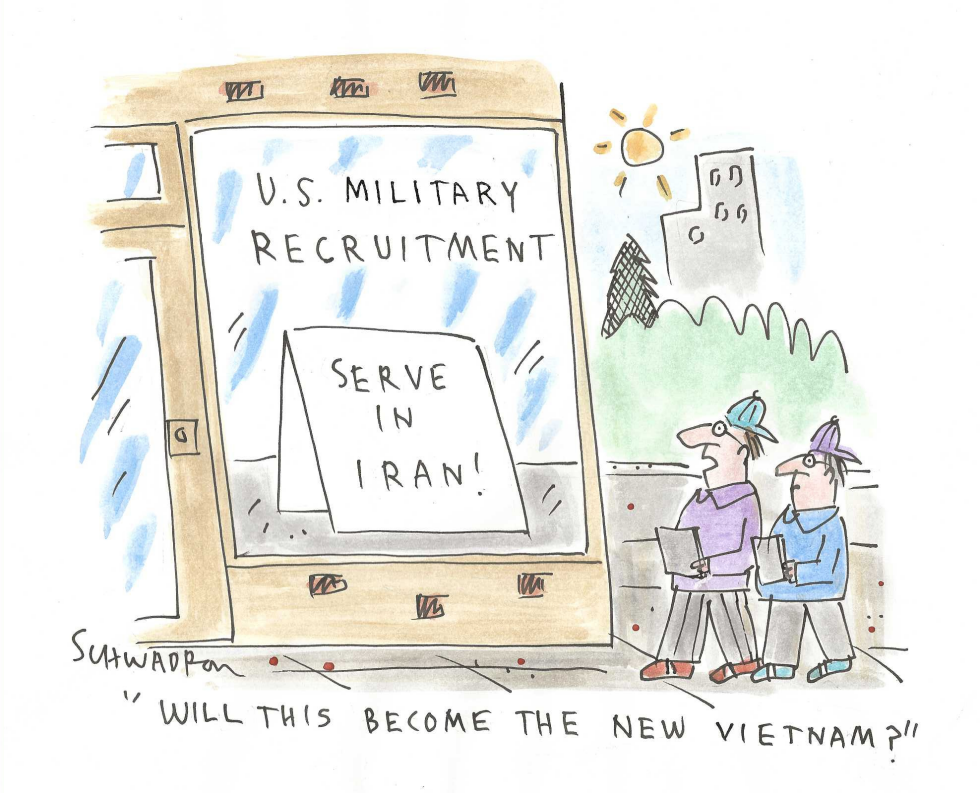
U.S. military recruitment efforts have begun highlighting opportunities to serve in Iran, prompting public questions about potential escalation. The move comes amid ongoing regional tensions and draws direct comparisons to the Vietnam War era. Observers worry the campaign signals a shift toward deeper U.S. military commitments overseas. The editorial takes the position that such recruitment tactics risk repeating past mistakes by underestimating public resistance to prolonged conflicts.
Public officials and business leaders often operate amid substantial financial resources that shape their daily environments and decisions. Recent developments in campaign finance and corporate influence have kept scrutiny on how wealth intersects with governance. The piece portrays an executive fully at ease within a setting constructed entirely from currency, underscoring the normalization of money's central role in positions of authority.
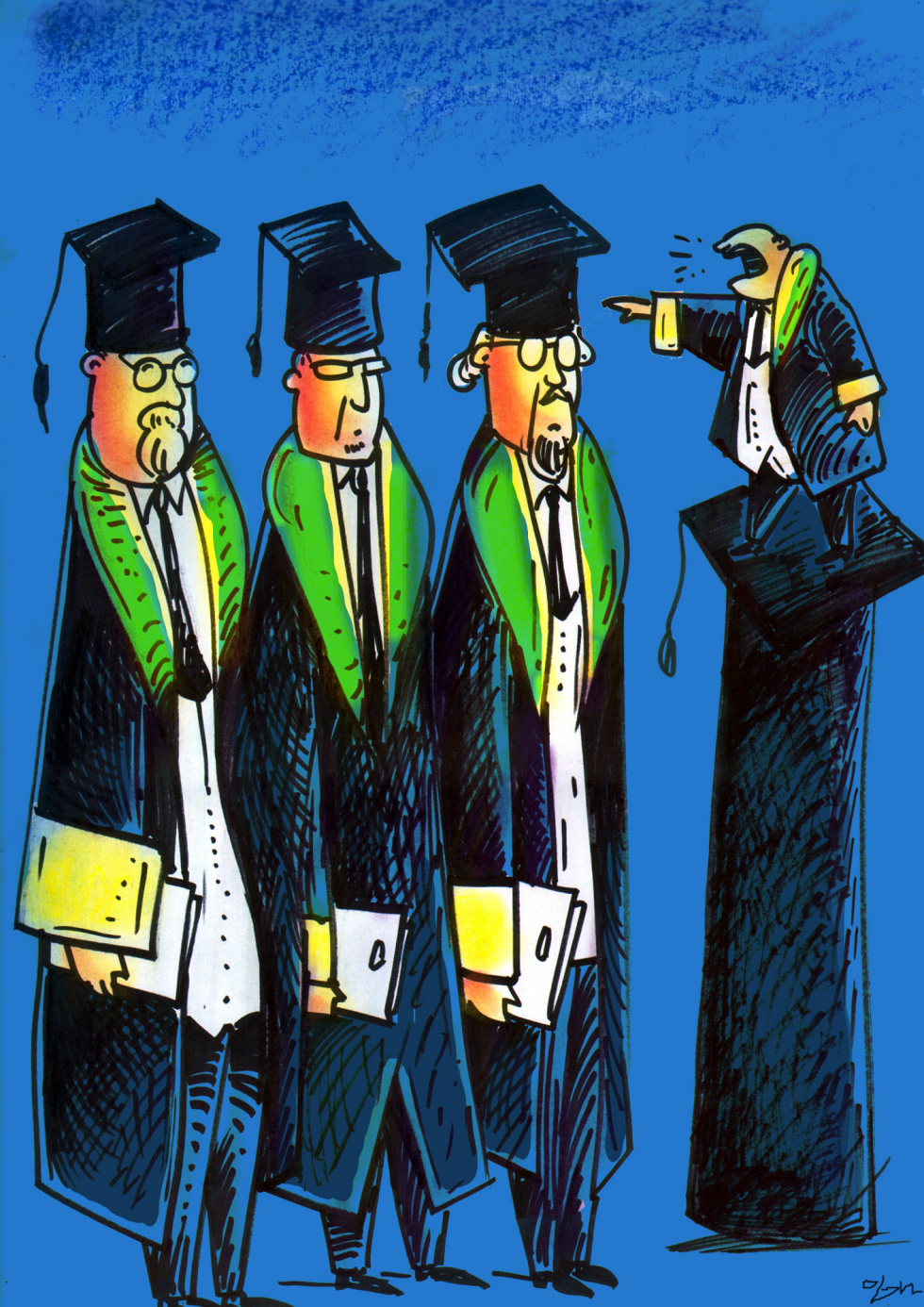
A university ceremony draws attention as an official delivers pointed remarks to administrators in academic attire. The exchange highlights ongoing tensions over leadership accountability and campus governance. The piece portrays the speaker as assertive in pressing the group on their responsibilities.
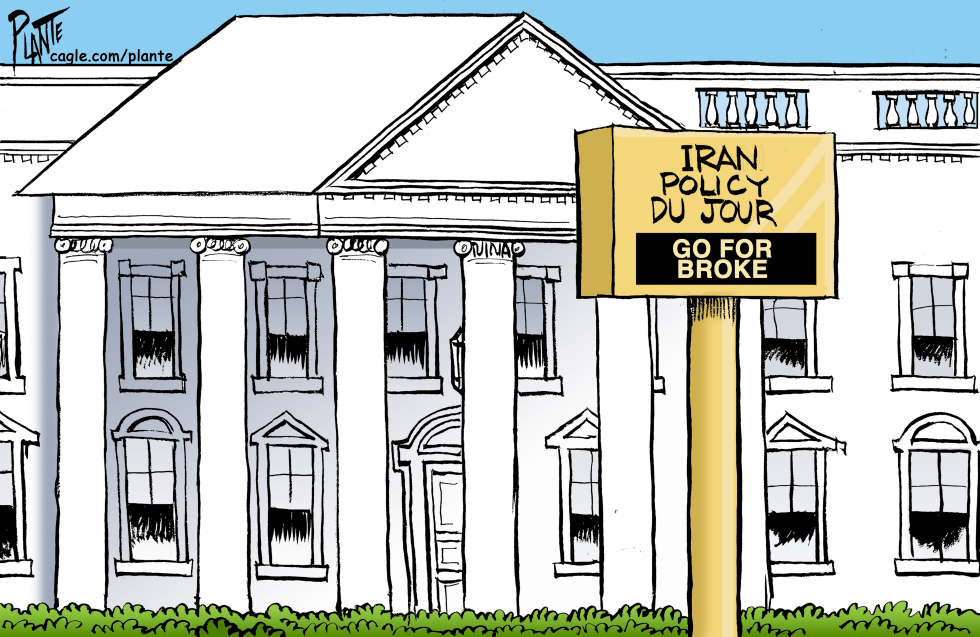
The White House has signaled a more aggressive posture toward Iran through public messaging that emphasizes risk-taking. The move comes amid persistent tensions over nuclear issues and regional influence. The editorial takes the position that such an approach lacks consistency and invites unnecessary escalation.
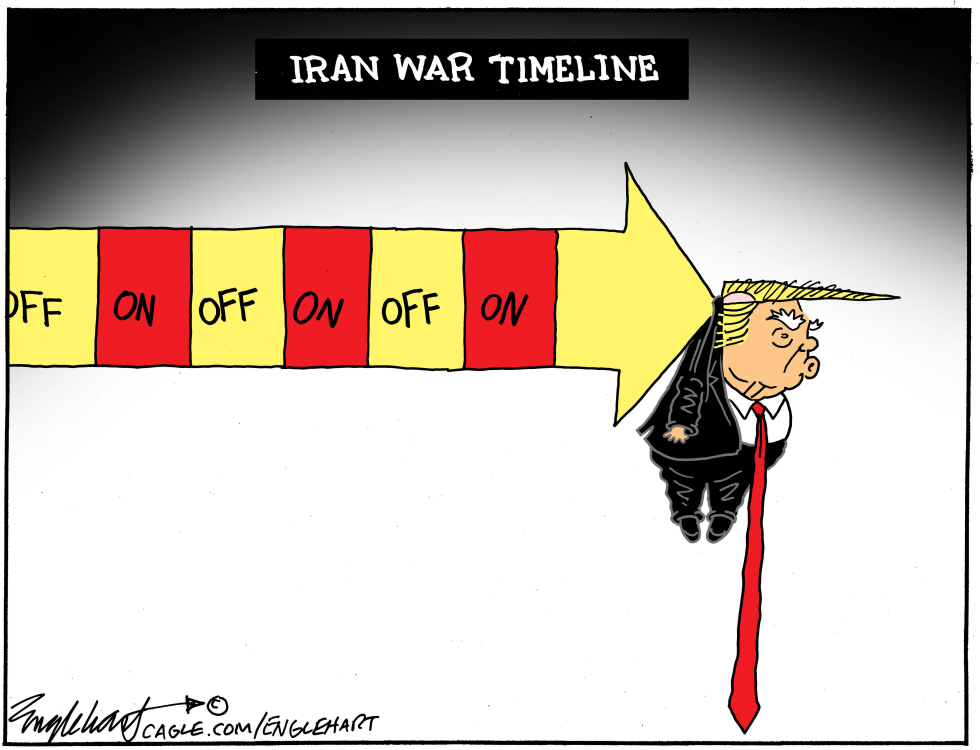
Donald Trump has repeatedly signaled shifting positions on potential military action against Iran in recent months. The timeline of statements shows repeated reversals between confrontation and restraint. Observers note the pattern raises questions about consistency in U.S. foreign policy toward Tehran. The piece portrays the back-and-forth as an erratic sequence with the latest signal pointing toward engagement.
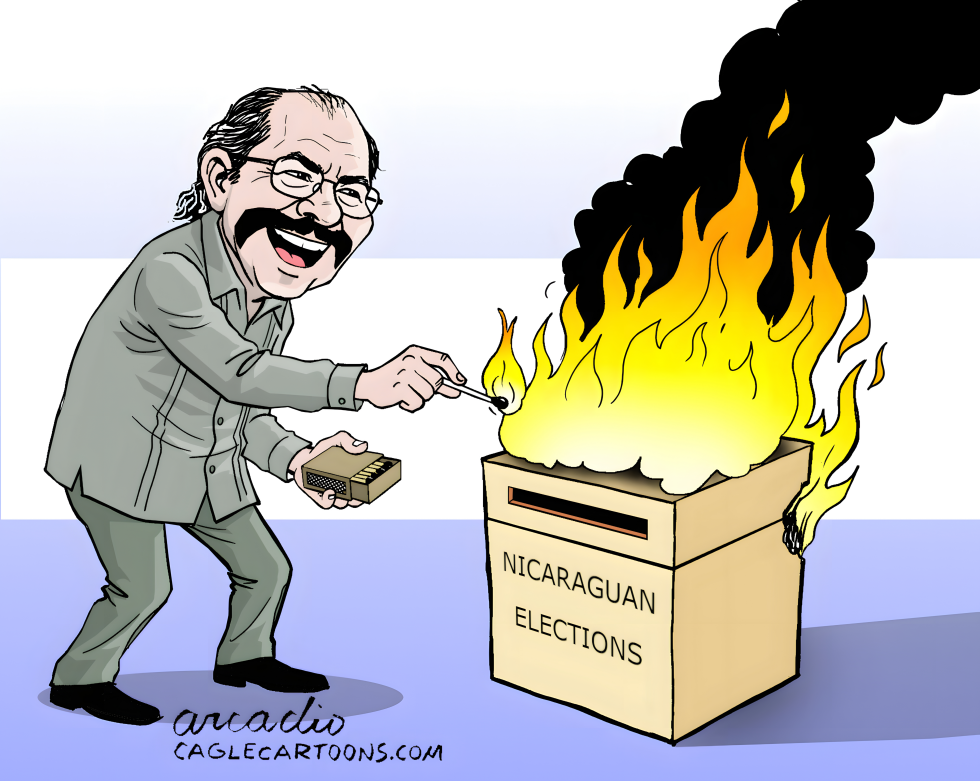
Nicaraguan President Daniel Ortega has publicly stated there will be no more elections, a move that solidifies his long-term grip on power. The declaration comes amid ongoing concerns over democratic backsliding in the Central American nation. This development matters because it removes any remaining avenues for political opposition and citizen participation in governance. The accompanying editorial takes the position that Ortega's action represents a deliberate destruction of democratic institutions rather than a legitimate policy choice.
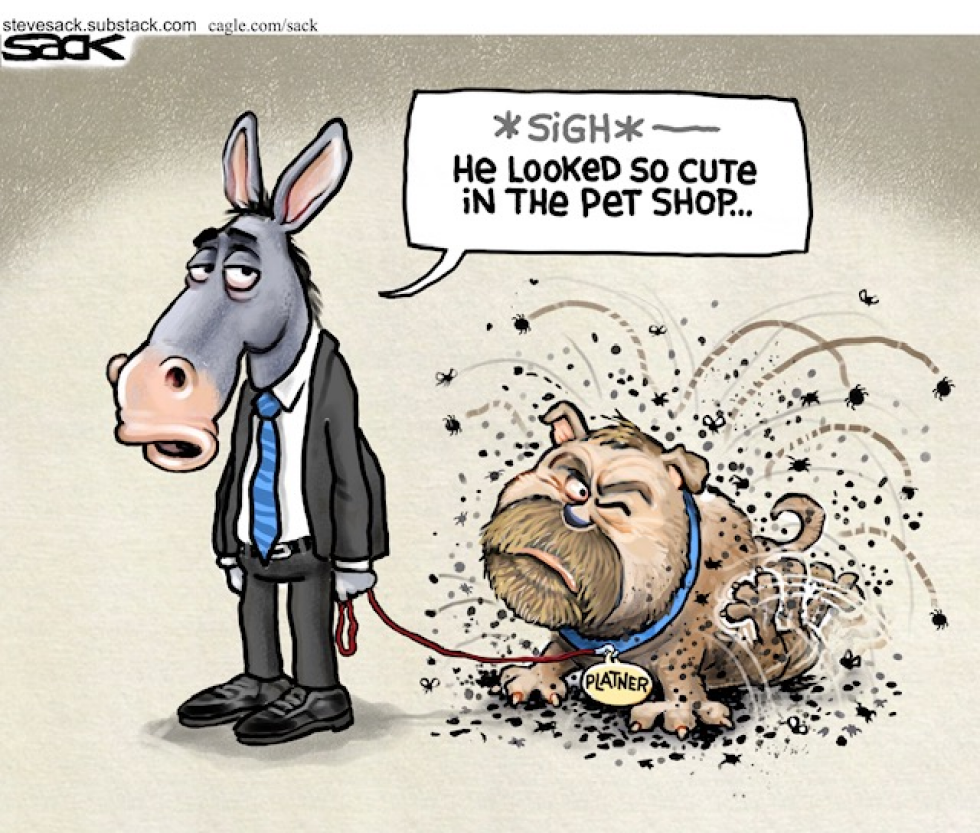
A suited donkey on a leash holds a flea-infested bulldog named Platner on the publication date of July 9, 2026. The donkey sighs about the pet shop appearance while bugs swarm the scene. The image uses standard party symbols to depict buyer remorse over a recent political choice.
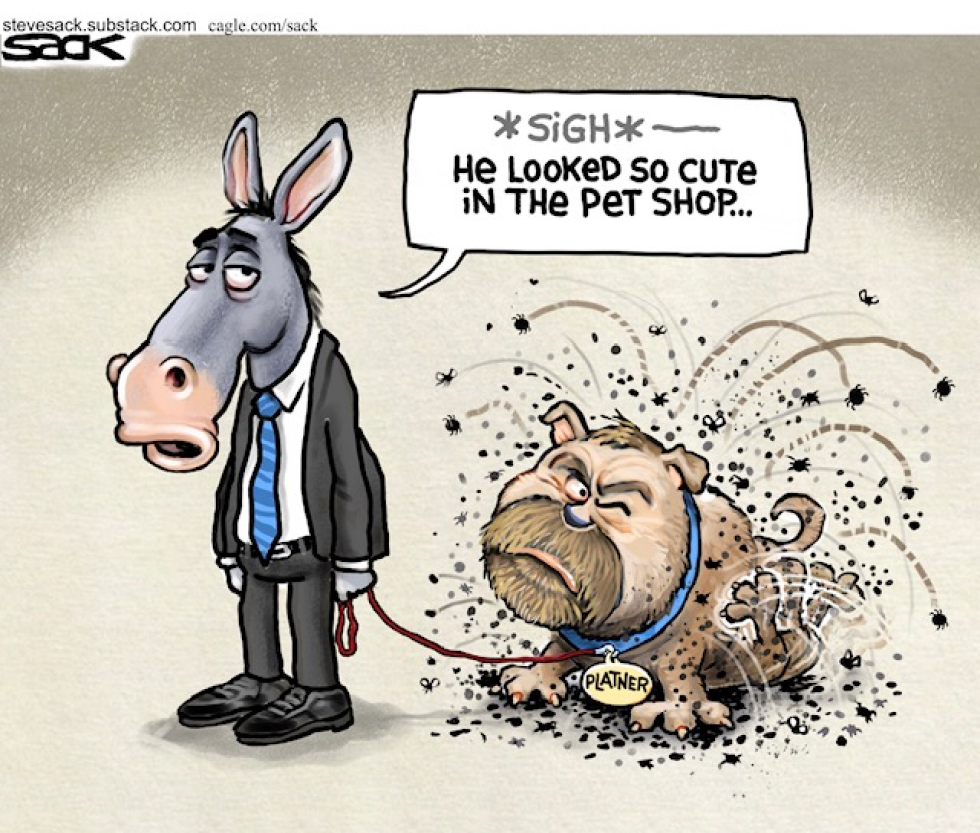
A Democratic donkey on a leash holds a flea-infested dog tagged Platner and expresses regret over its pet shop purchase in this July 8 2026 cartoon by Steve Sack. The visual shows the dog scratching amid a cloud of fleas as the donkey sighs that it looked cute at the store. The image comments on recent political developments involving candidate selection within the party.
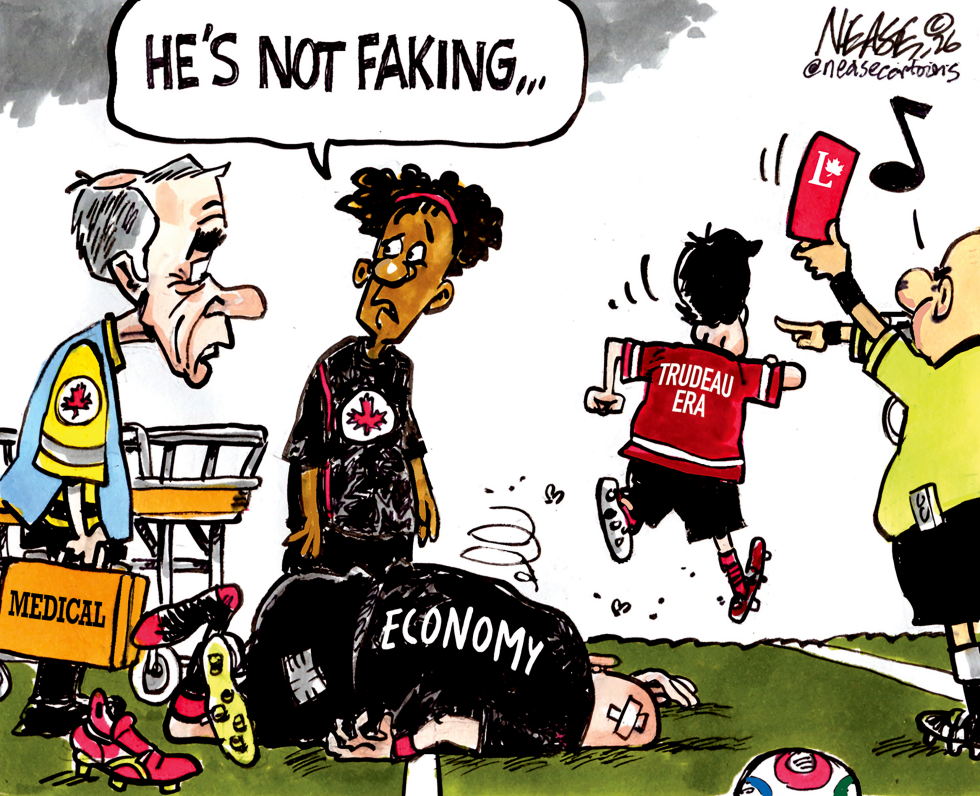
A political cartoon depicts Canadian Prime Minister Justin Trudeau being shown a red card by a referee during a soccer match. The Canadian economy appears as an injured player on the ground receiving attention from medical staff. Trudeau wears a jersey labeled TRUDEAU ERA while fleeing the scene. The referee holds up a red card marked with an L. A speech bubble states HE'S NOT FAKING. The image responds to ongoing economic challenges facing Canada in mid 2026.
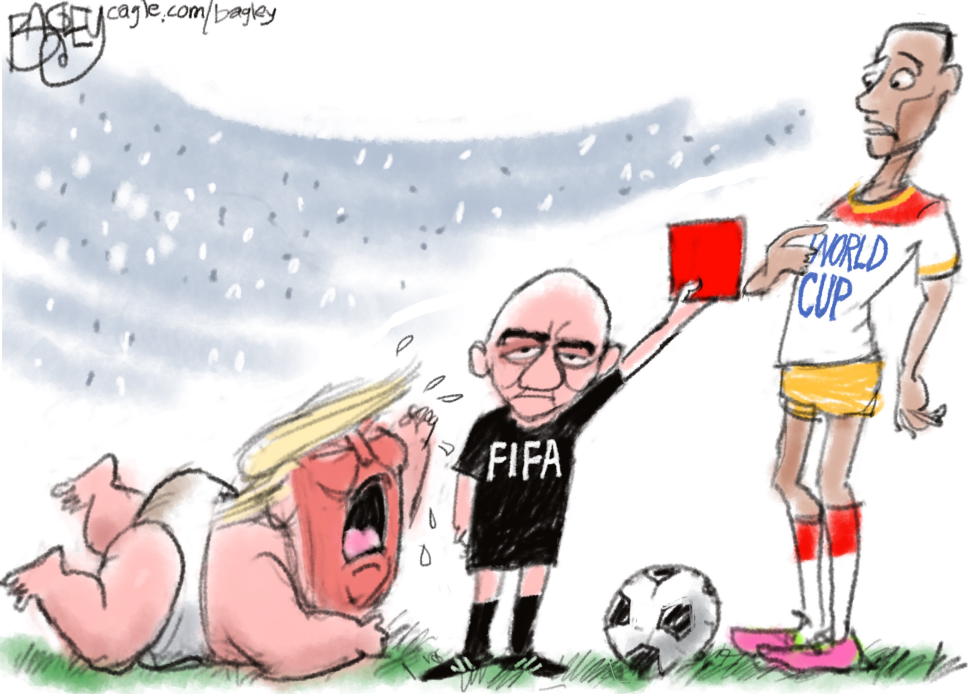
On July 6, 2026, a cartoon depicts a FIFA referee brandishing a red card at a diapered figure resembling Donald Trump sprawled on a soccer field. The oversized infant wails while a player wearing a World Cup jersey stands to the side. A soccer ball rests nearby on the grass. The scene references ongoing tensions around the 2026 World Cup hosting and political figures associated with the event.
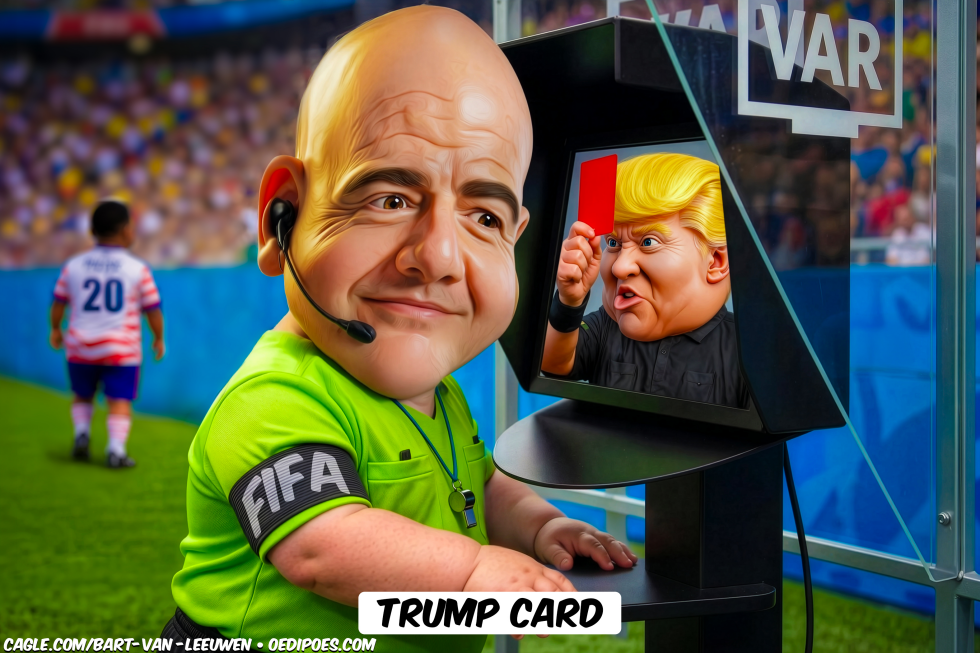
A FIFA referee in a green jersey stands beside a VAR monitor on a soccer pitch July 6 2026 and reviews footage of Donald Trump holding a red card. A player wearing number 20 appears in the background on the field. The monitor shows the former president with raised hand and the setup includes a Trump Card label. The scene places the review process inside a stadium during the World Cup tournament. This presentation connects the ejection decision mechanism to the presence of a prominent political figure at the event without additional context or prior incidents specified.
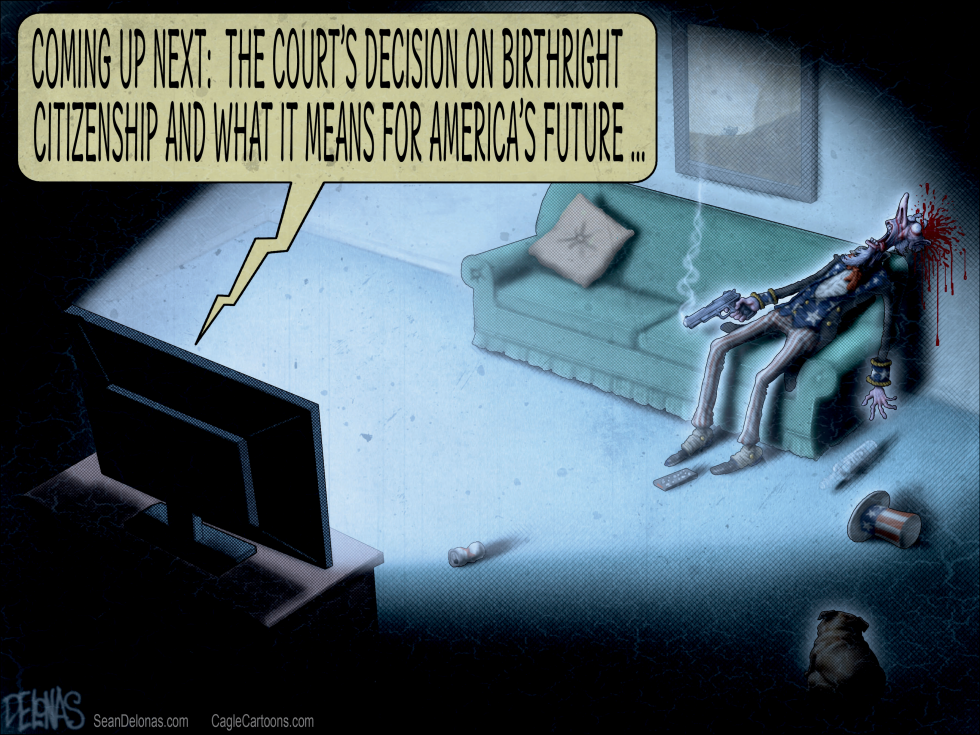
A political cartoon dated July 4, 2026, previews a Supreme Court decision on birthright citizenship. The image shows the figure of Uncle Sam slumped dead on a living room couch with a gunshot wound to the head and blood on the wall. A television in the foreground carries a news teaser about the ruling and its implications for America's future. Scattered items include a handgun, remote control, and top hat on the floor. The cartoon uses stark lighting and a speech bubble to frame the scene as an imminent broadcast segment.