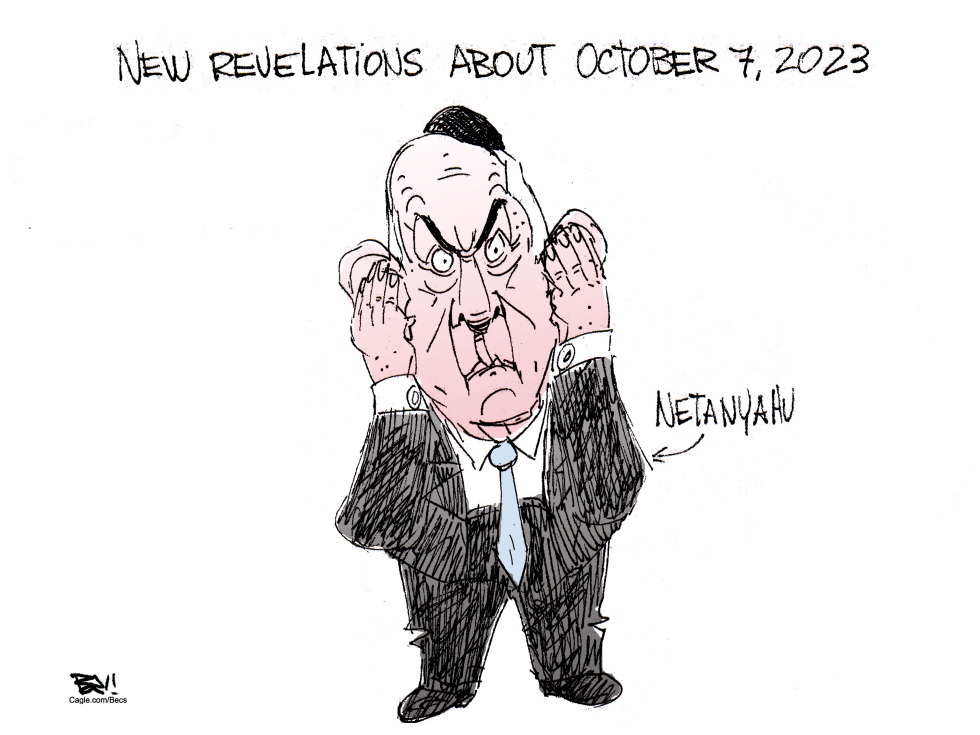
New details have surfaced regarding intelligence and preparedness failures ahead of the October 7, 2023 Hamas attacks. Israeli Prime Minister Benjamin Netanyahu has drawn criticism for appearing to dismiss these updates rather than address them directly. The ongoing debate centers on political responsibility for the deadliest attack in Israel's history and the government's handling of subsequent inquiries. Netanyahu's approach risks deepening public distrust in leadership during a period of heightened regional tension. The cartoon portrays this stance as deliberate avoidance of uncomfortable facts.
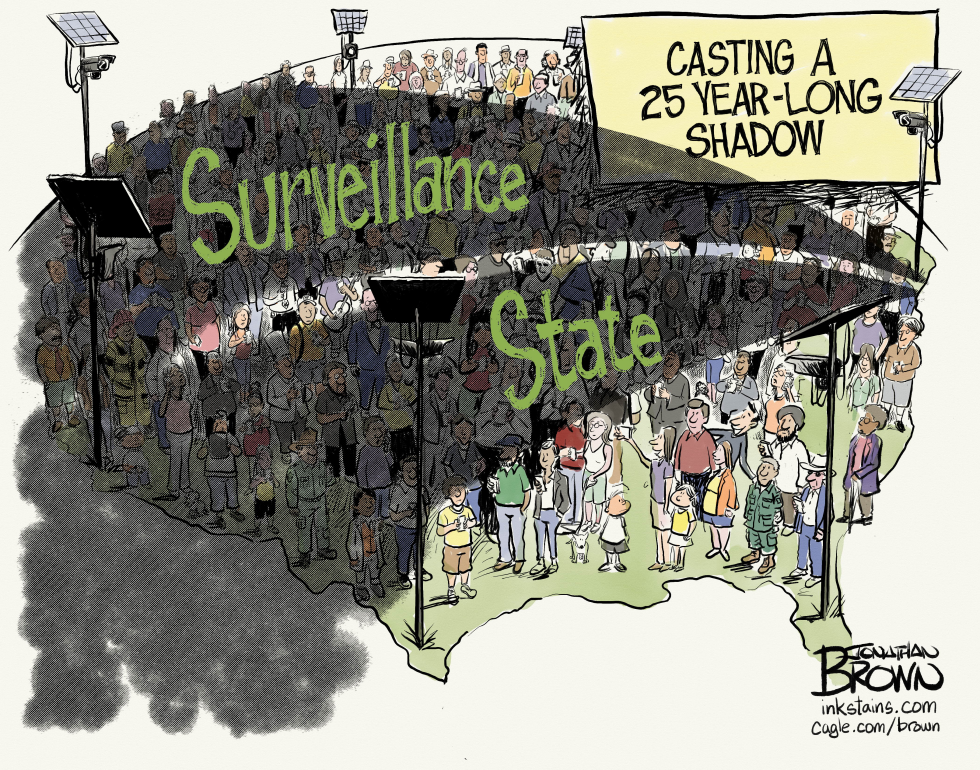
The cartoon depicts a dense crowd of Americans standing on a map of the United States, partially obscured by a large dark shadow cast by surveillance cameras mounted on poles. The words 'Surveillance State' appear prominently in green lettering across the scene, while a sign in the upper right reads 'CASTING A 25 YEAR-LONG SHADOW.' The image comments on the lasting effects of expanded government surveillance programs that began after the September 11 attacks, now spanning a quarter century. It illustrates how these measures continue to influence daily life and public spaces in 2026.
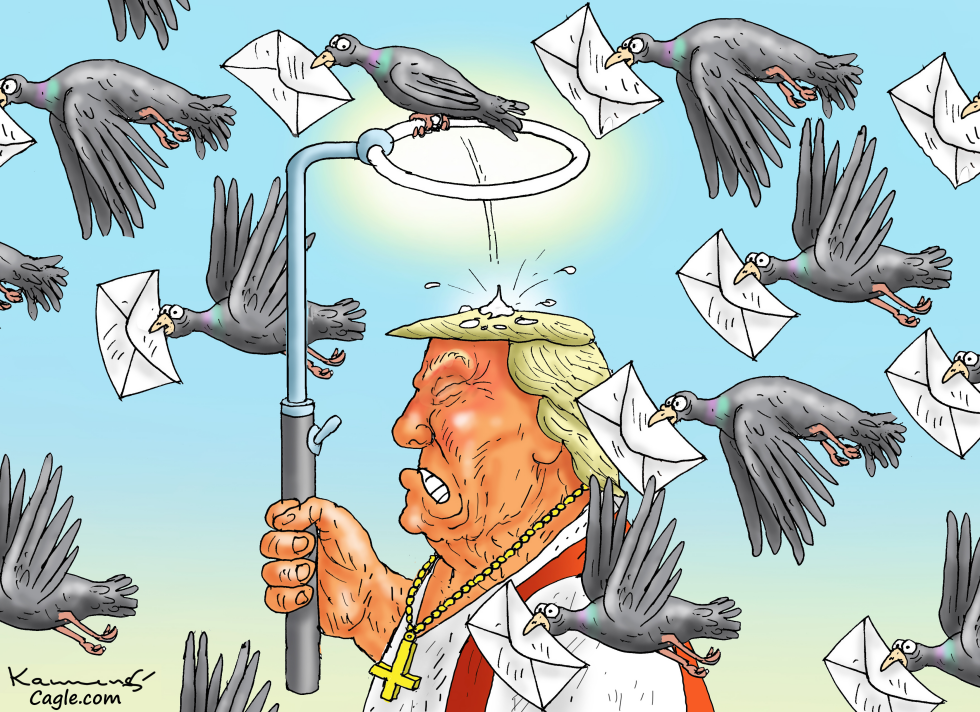
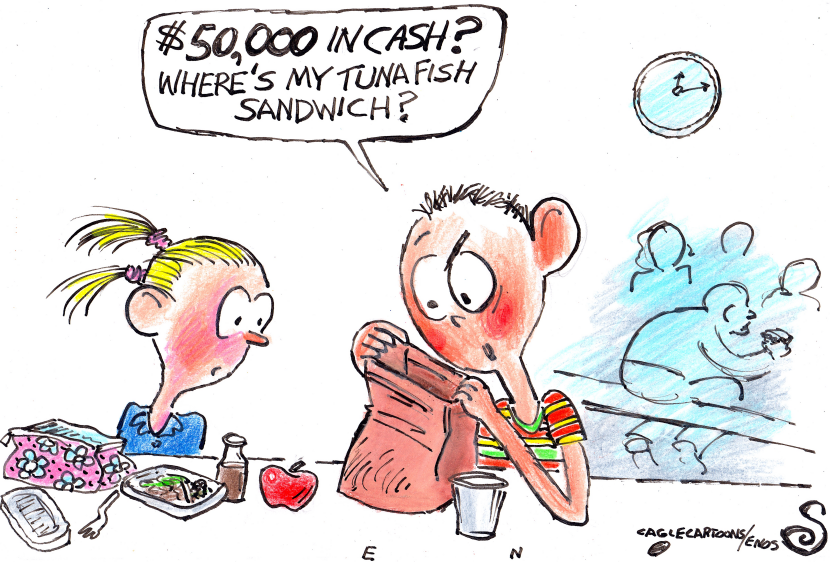
Donald J. Trump continues to draw intense public and political attention in 2026. Recent developments around mail services and communications have placed him at the center of fresh criticism. Observers note the volume of correspondence and commentary directed at him. The editorial position frames these pressures as deserved scrutiny over his conduct and influence.
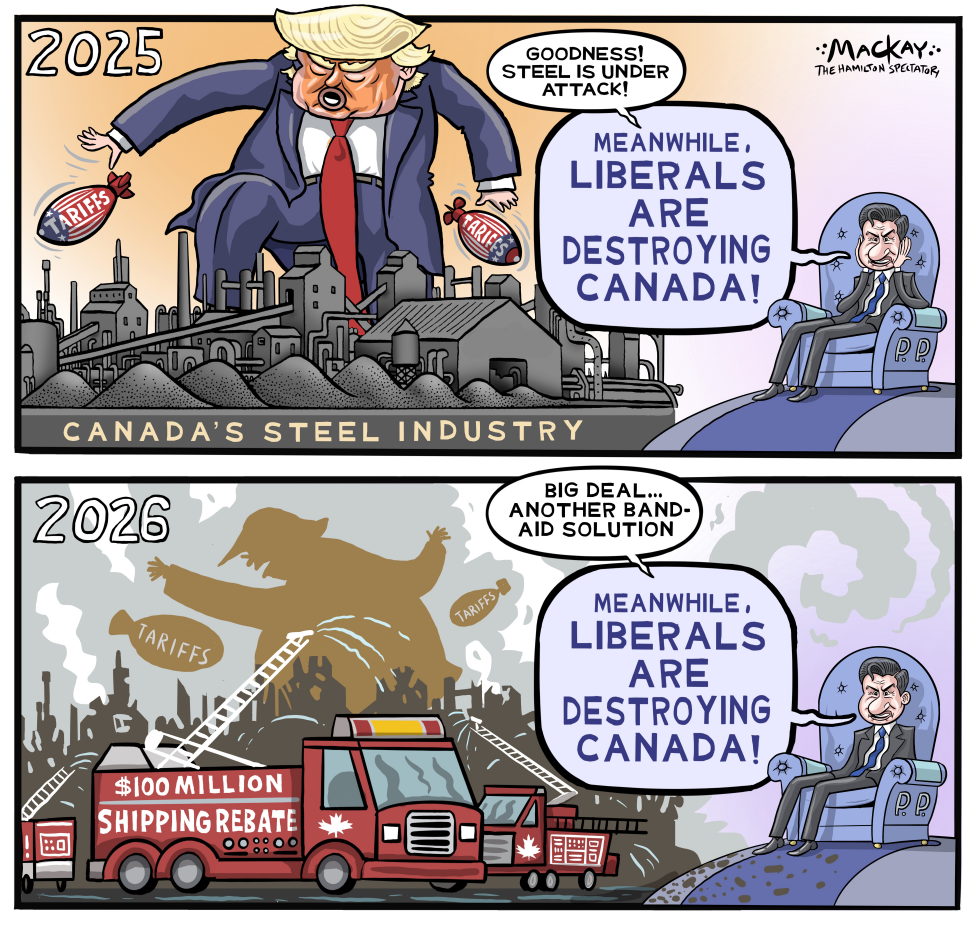
U.S. tariffs imposed on Canadian steel in 2025 triggered sharp declines in the domestic industry by 2026. The federal government responded with a $100 million shipping rebate. Conservative Leader Pierre Poilievre continued to focus attacks on the Liberal government rather than the trade shock. The cartoon argues this stance amounts to a repeated distraction from the core economic damage.
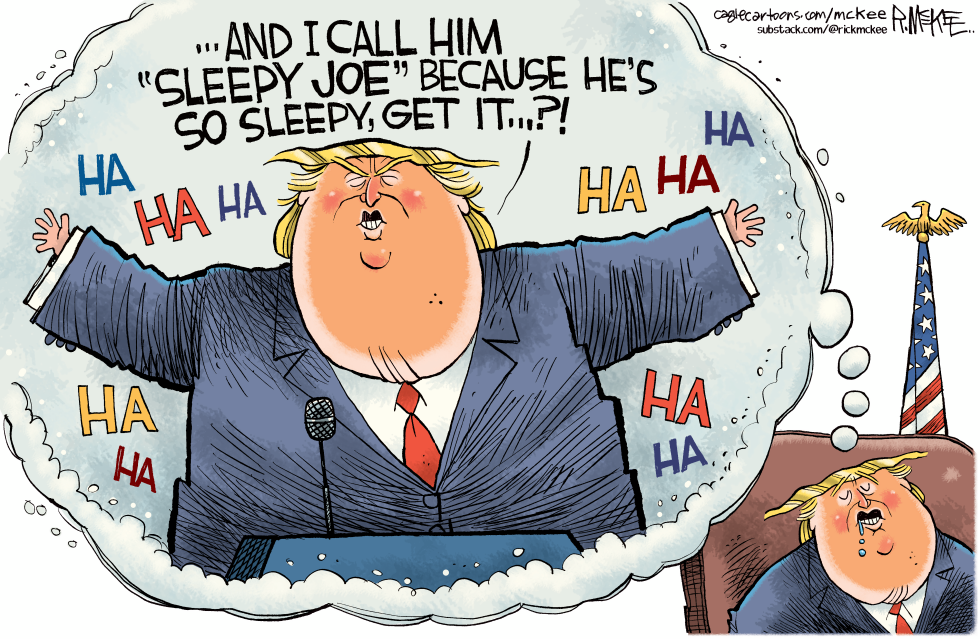
Donald Trump repeatedly labeled Joe Biden 'Sleepy Joe' during the 2024 campaign and beyond. The nickname stuck as a critique of Biden's energy and age. The cartoon responds by showing Trump himself unable to stay awake at the podium, underscoring perceived hypocrisy in the attack.
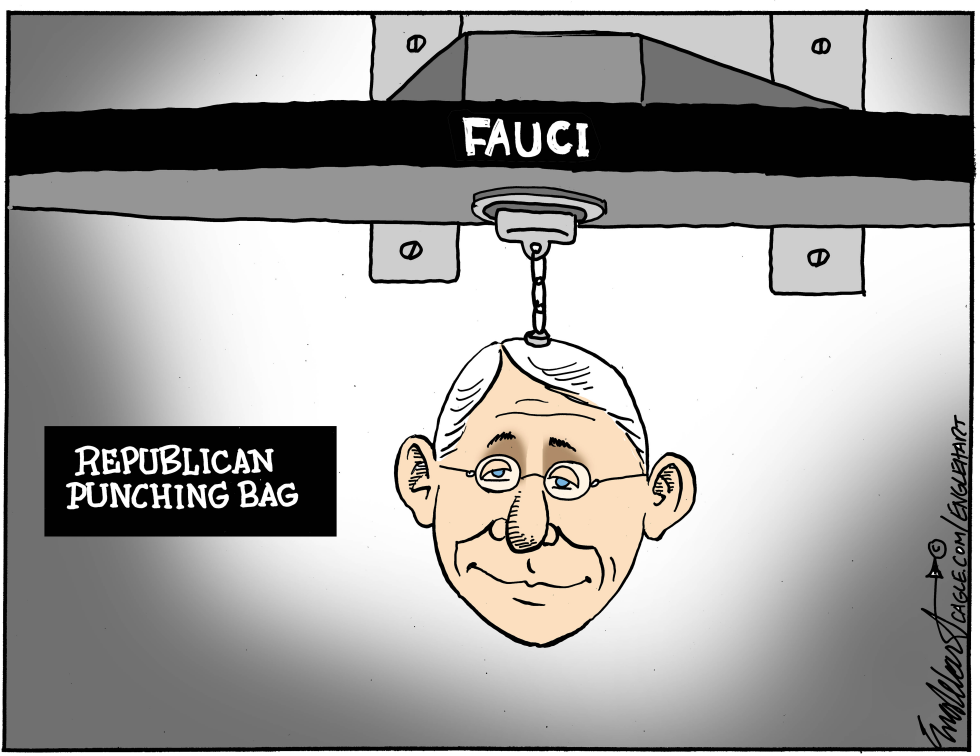
Republicans have long singled out Anthony Fauci for criticism over his role in shaping the nation's COVID-19 response. The pattern of attacks persists years after the height of the pandemic, keeping the former NIAID director in the spotlight. The editorial takes the position that these repeated assaults serve more as political theater than substantive policy debate.
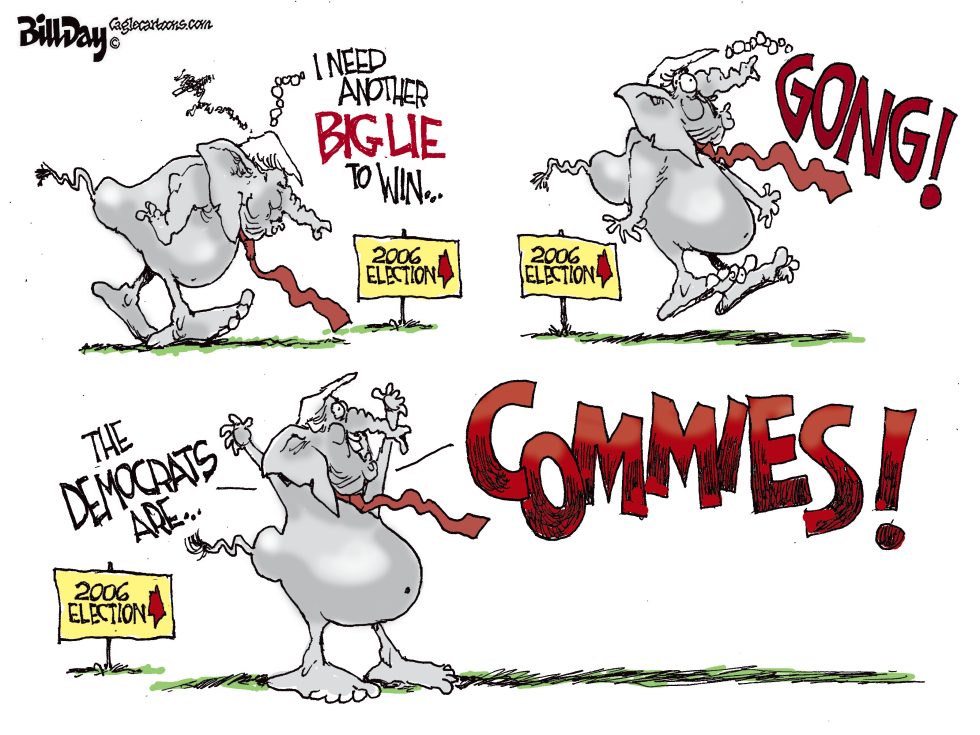
During the 2006 midterm election cycle both major parties traded accusations with Republicans pushing unsubstantiated claims to sway voters and Democrats facing repeated communist labels from opponents. The dynamic reflected long standing partisan efforts to undermine credibility through exaggerated rhetoric rather than policy debate. The piece argues these tactics undermine fair elections and deserve rejection by voters.
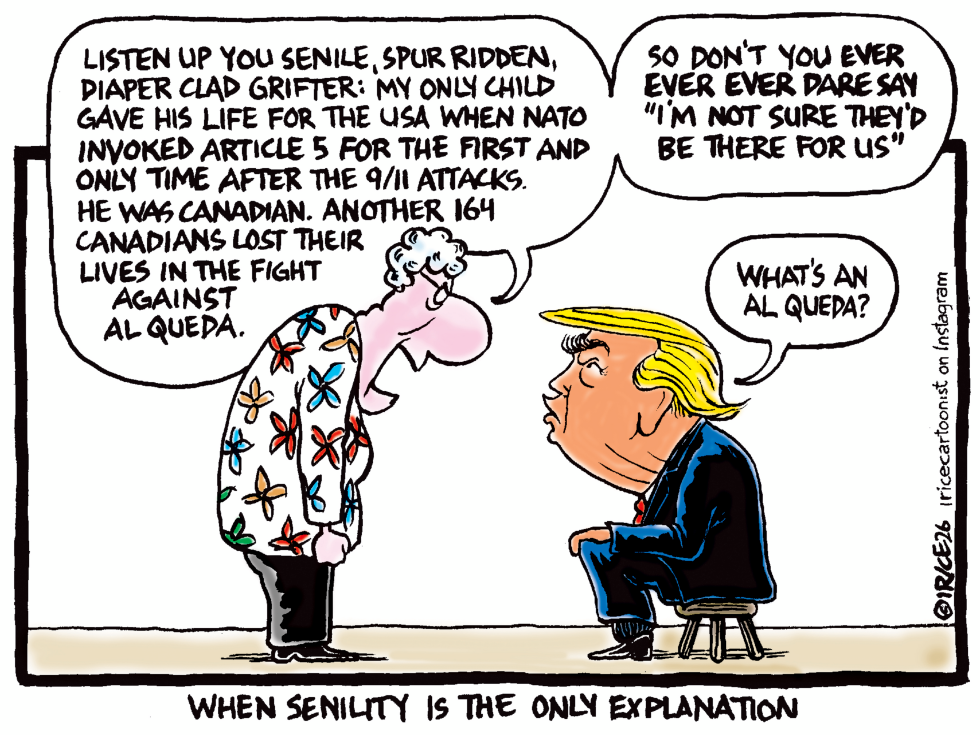
A political cartoon dated July 12, 2026, shows Donald Trump seated on a stool responding to a lecture about Al Qaeda and NATO's Article 5 invocation after 9/11. The standing figure, wearing a floral shirt, recounts the death of a Canadian child and 164 other Canadians in the fight. Trump replies by asking what an Al Qaeda is. The bottom caption reads when senility is the only explanation. The image highlights a direct confrontation over historical facts tied to the 9/11 attacks and alliance commitments.
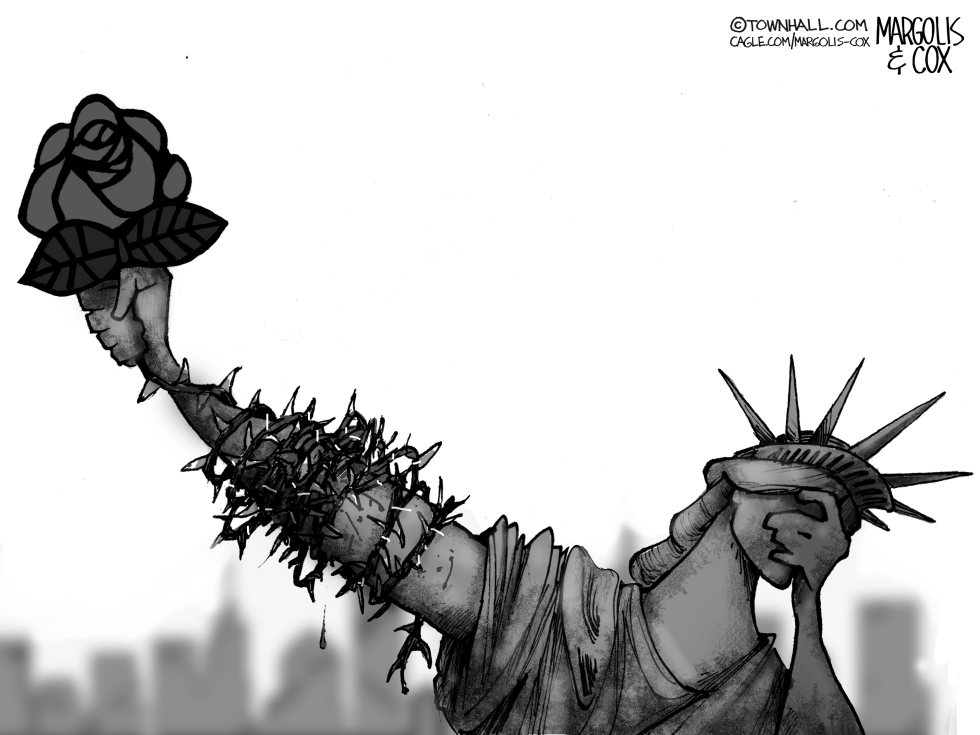
The illustration depicts the Statue of Liberty with a thorny rose vine tightly wrapped around her raised arm, the hand clutching a large rose. Her other hand covers her face as a single drop falls from the arm. A city skyline appears in the background. The work is credited to Margolis & Cox and published via Townhall and Cagle on June 24, 2026.
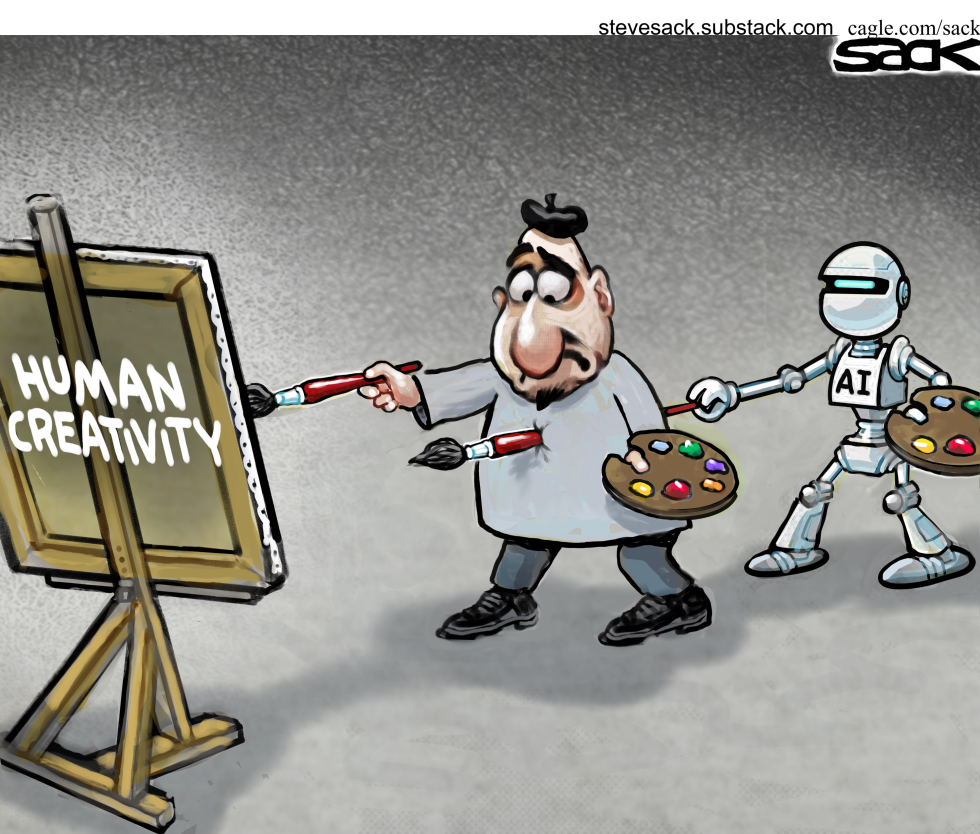
The cartoon depicts a human artist in a beret being attacked by a robot marked AI while painting the words HUMAN CREATIVITY on an easel. The robot holds a palette and extends a brush toward the artist in a stabbing motion. This visual responds to ongoing discussions about artificial intelligence tools generating images and displacing traditional artists. The scene uses the easel text and the robot label to frame the conflict between human work and machine output. Publication occurred on June 2, 2026, during continued public debate on AI capabilities in creative fields.
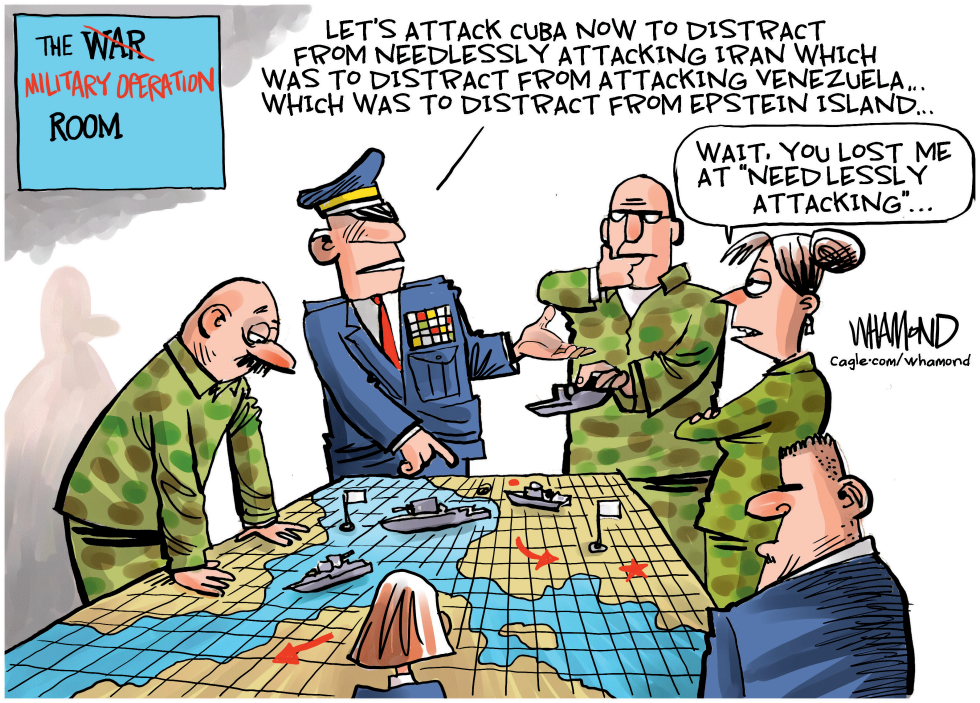
Dave Whamond's political cartoon depicts a group of military officials in a war room, gathered around a map with toy ships, discussing a chain of distractions starting from attacking Cuba to cover needless attacks on Iran, which distracted from Venezuela, looping back to Epstein Island. The scene captures the absurdity with one figure pointing at the map and another expressing confusion over 'needlessly attacking.' This satirical illustration uses dry humor to comment on convoluted military strategies and political diversions, incorporating elements like crossed-out 'War' sign replaced by 'Military Operation Room' for added irony. Tags like political satire, war distractions, foreign policy cartoon, Epstein Island reference, military humor, and endless distraction chain emphasize the cartoon's sharp critique.
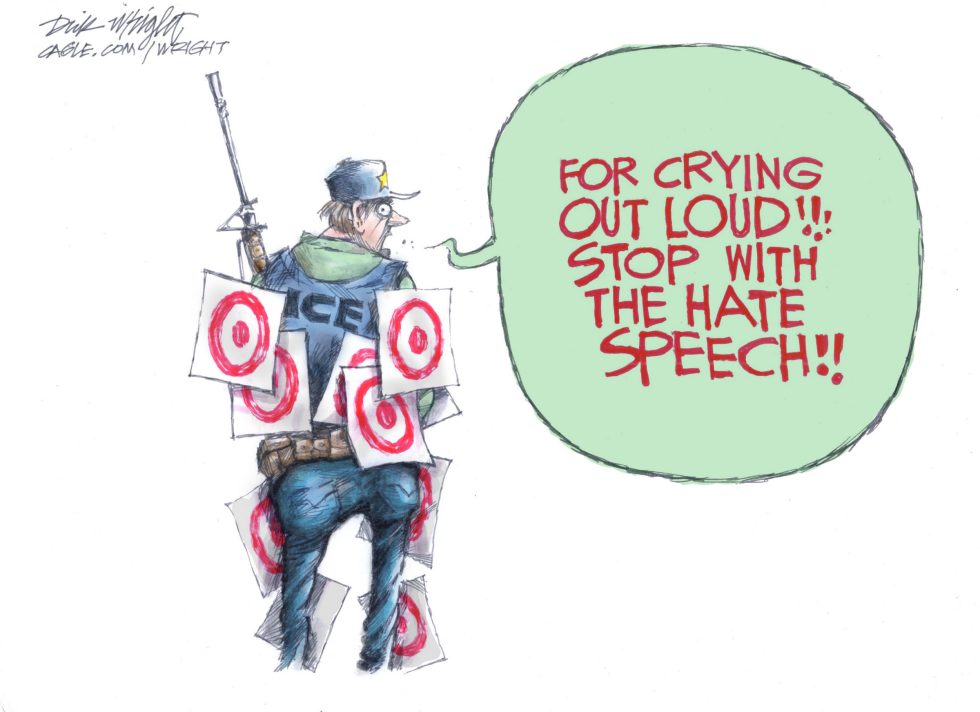
An ICE agent appears with multiple paper targets affixed to his back and legs while holding a rifle. The figure speaks out against hate speech directed at immigration enforcement. The image responds to ongoing debates over sanctuary policies and reported incidents involving agents in 2025.