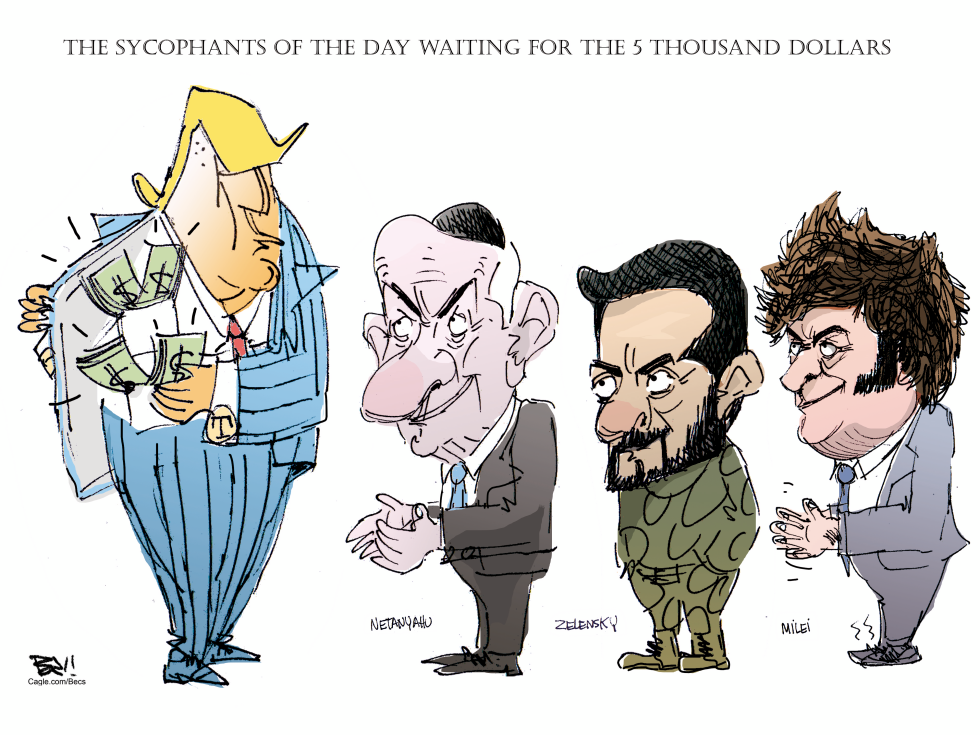
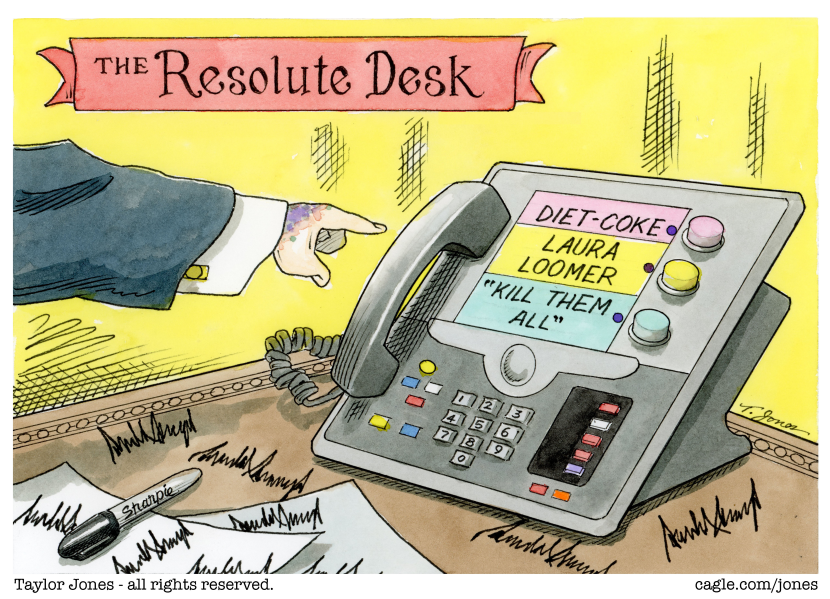
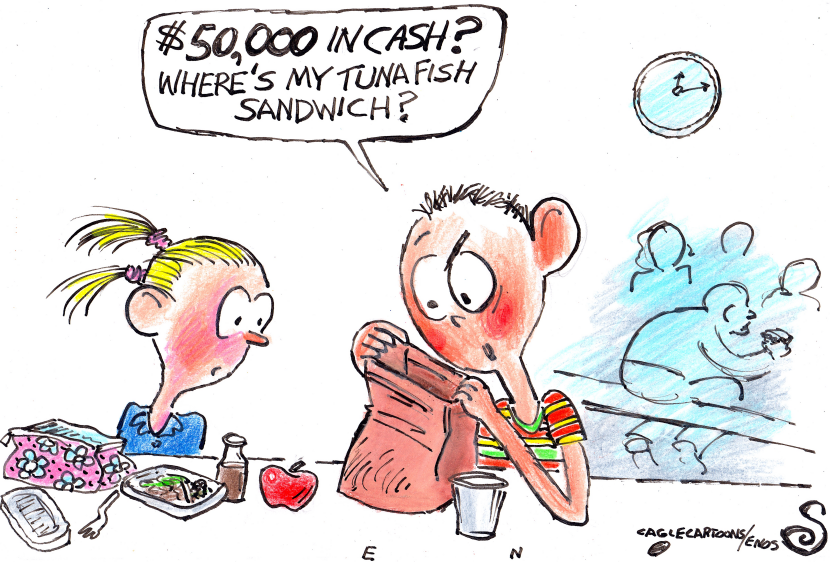
Donald Trump stands at the center of attention from Israeli Prime Minister Benjamin Netanyahu, Ukrainian President Volodymyr Zelensky and Argentine President Javier Milei. The scene reflects ongoing questions about how foreign leaders court favor with the U.S. president through displays of loyalty. The cartoon argues that these relationships reduce international diplomacy to transactional waiting for payoffs.
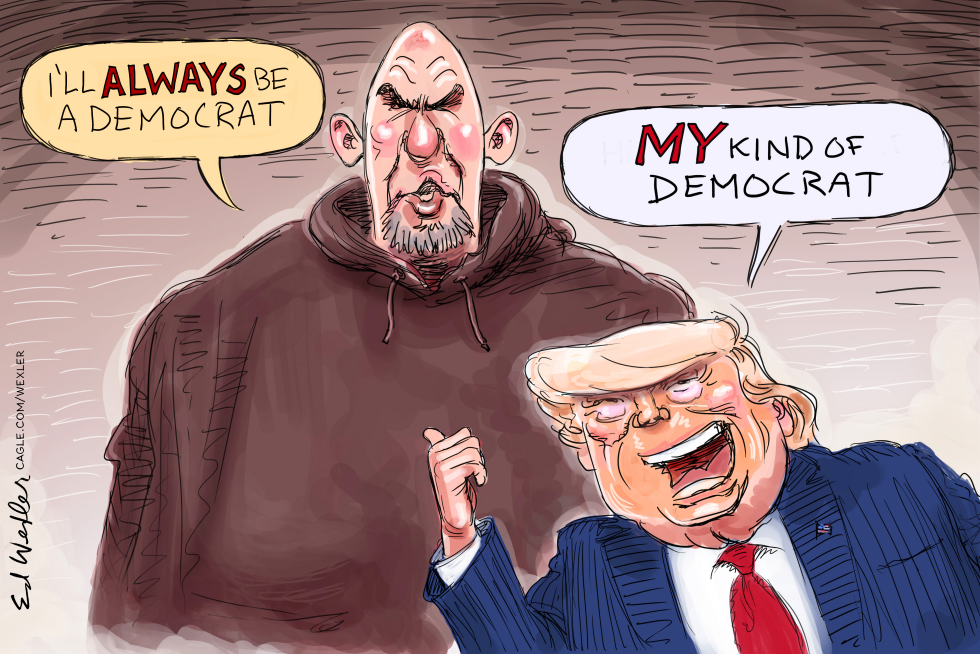
Donald Trump publicly endorsed a Democrat who declared he would always remain in the party. The statement drew attention because it came from a figure outside Trump's usual base. Observers noted the remark as part of ongoing efforts to attract voters across traditional lines. The cartoon presents the exchange as evidence that Trump sees value in Democrats who refuse to change affiliation. It frames the moment as revealing Trump's strategic tolerance for opposition loyalty when it suits his purposes.
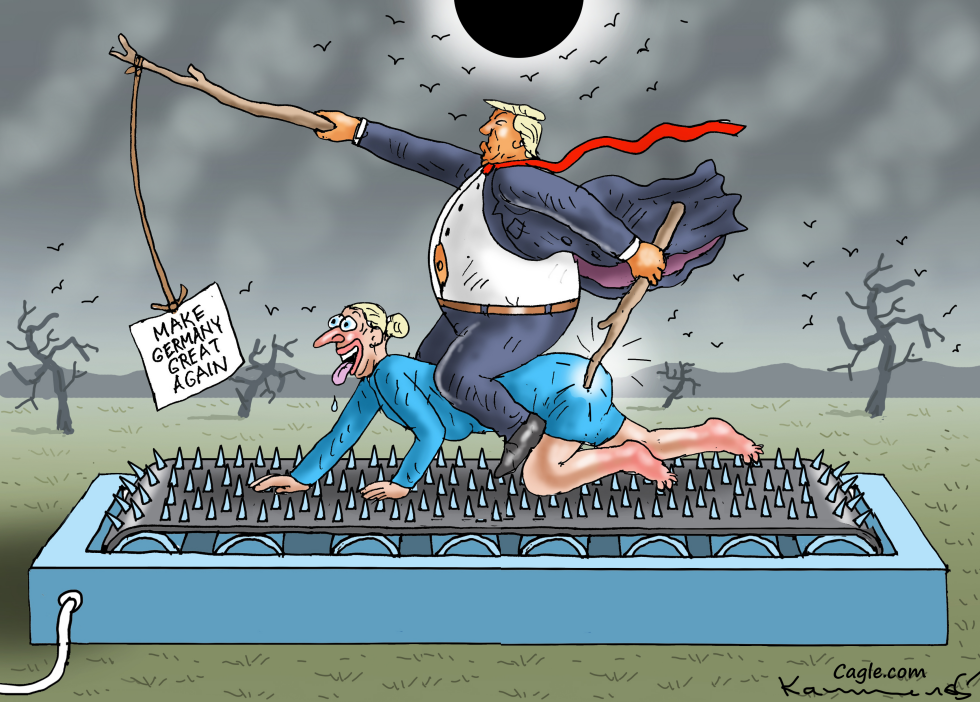
Donald Trump promotes a revival slogan aimed at Germany while Angela Merkel faces the consequences. The effort highlights ongoing tensions in transatlantic relations and questions about external influence on European domestic policy. The piece argues that such interventions impose unnecessary hardship without delivering benefits.
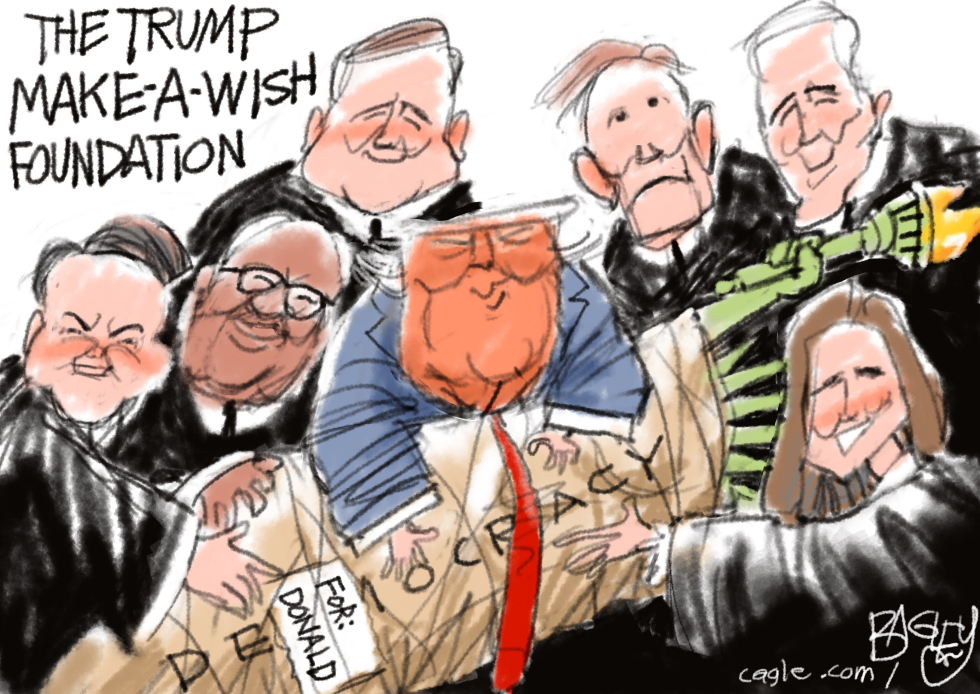
Donald Trump appears at the center of a Make-A-Wish style scene in which democracy itself is presented as a personal gift. The image responds to ongoing concerns in 2026 about executive overreach and institutional erosion under the Trump administration. Critics argue that norms protecting fair elections and checks on power face direct pressure. The cartoon frames these developments as self-serving rather than public-spirited. It takes the position that such actions treat democratic structures as items to be claimed rather than preserved.
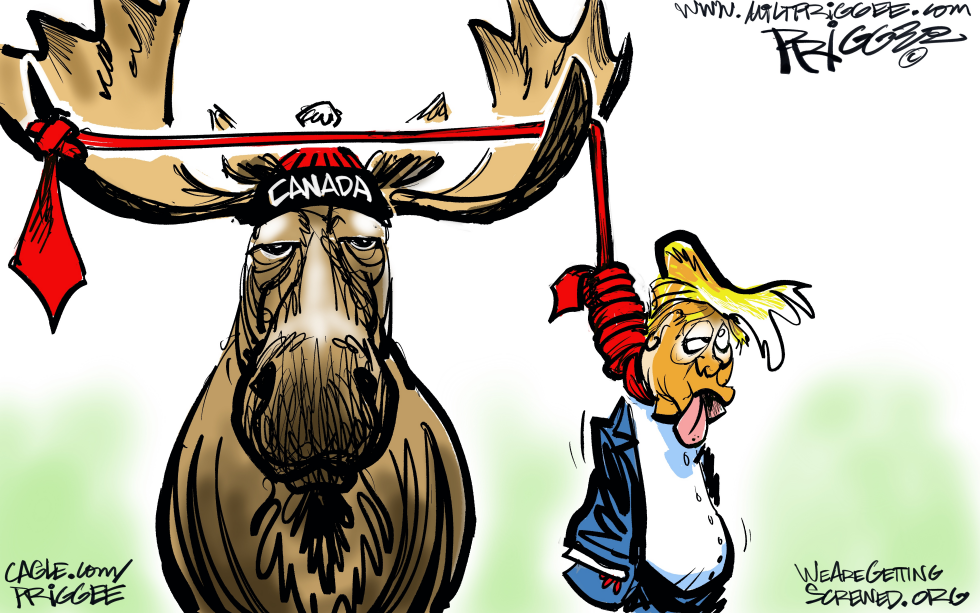
The cartoon shows a large moose labeled Canada with a weary expression as a caricature of Donald Trump yanks on its antler using a red strap. The moose wears a black cap with Canada written on it and has a red bar across its antlers. Trump appears disheveled with tongue out and sweat drops. Text at the bottom reads WEAREGETTINGS CREWED.ORG suggesting Canada feels exploited. Published on September 3 2026 the piece addresses US Canada relations under renewed Trump influence on trade and diplomacy.
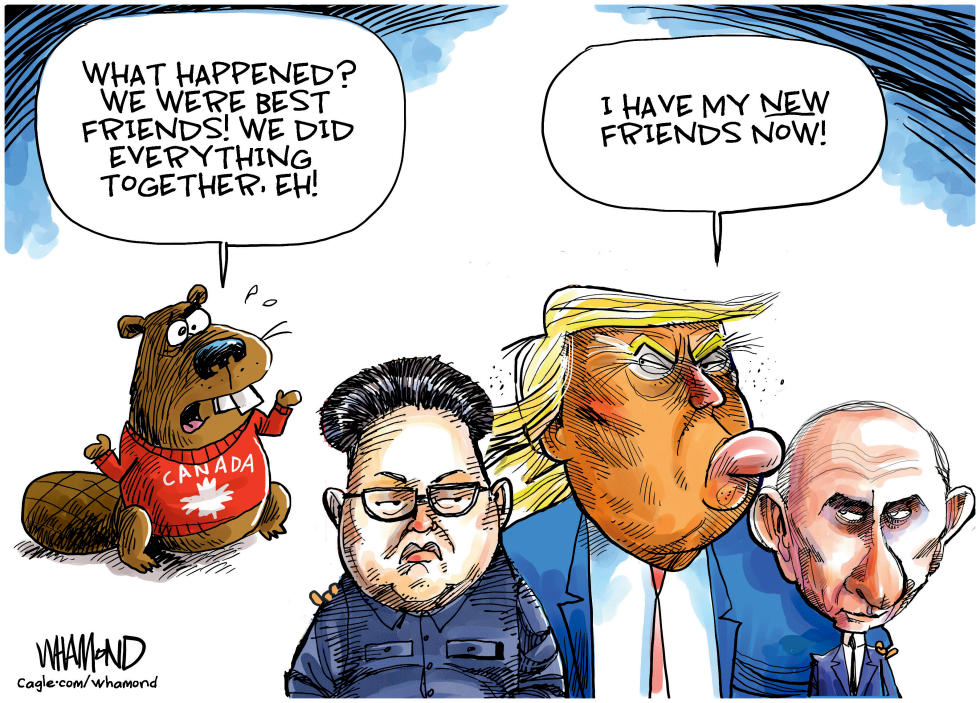
President Trump has redirected diplomatic priorities toward closer ties with Russian President Vladimir Putin and North Korean leader Kim Jong Un. Traditional partners such as Canada now face reduced engagement. The move reflects a broader realignment in U.S. foreign policy that favors authoritarian counterparts over longstanding democratic allies. Observers note the shift carries risks for trade, security cooperation, and international norms. The editorial position criticizes the pivot as shortsighted and damaging to established relationships.
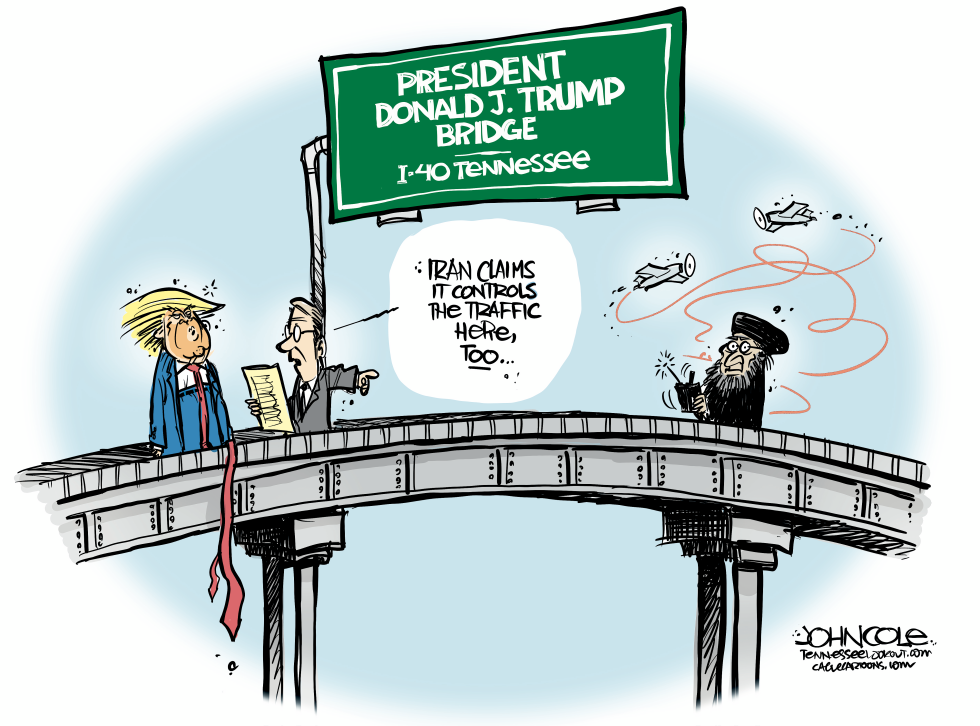
President Donald J. Trump attended the naming of the President Donald J. Trump Bridge on I-40 in Tennessee. The event drew attention when an Iranian figure appeared to claim control over traffic on the span. The development highlights ongoing tensions with Iran over shipping lanes and international routes. The cartoon frames the claim as an extension of Iran's broader pattern of asserting dominance over key passages. It positions the bridge naming as a domestic moment overshadowed by foreign threats.
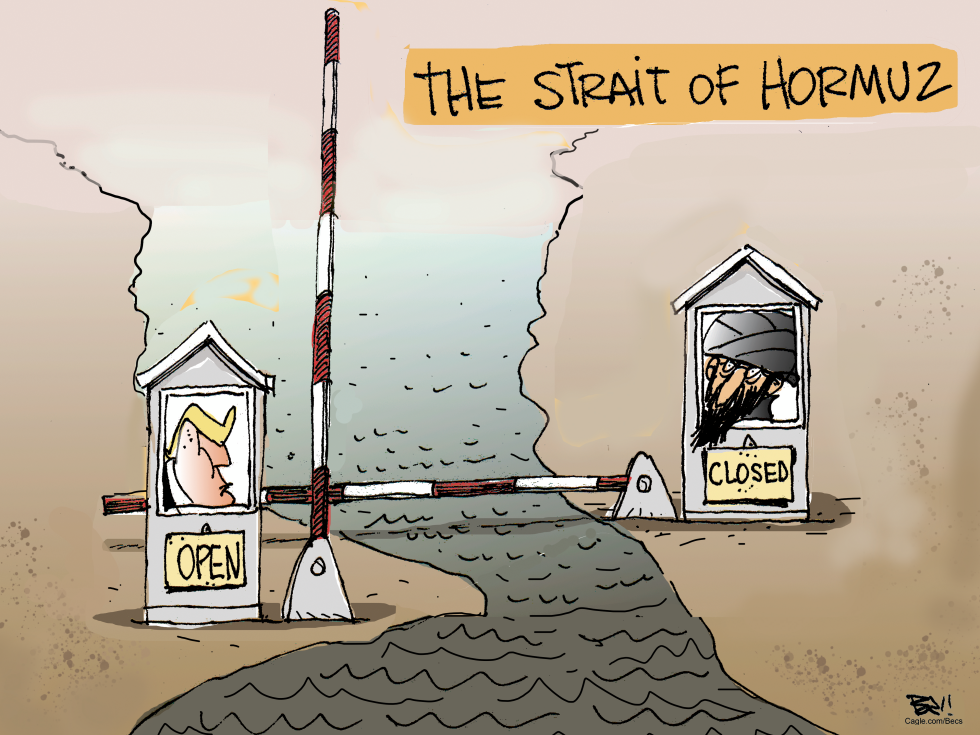
The Strait of Hormuz remains a flashpoint for global oil transit as the United States and Iran maintain opposing stances on access. Donald Trump positions an open checkpoint while an Iranian official signals closure. The editorial highlights the standoff's direct impact on energy markets and shipping security.
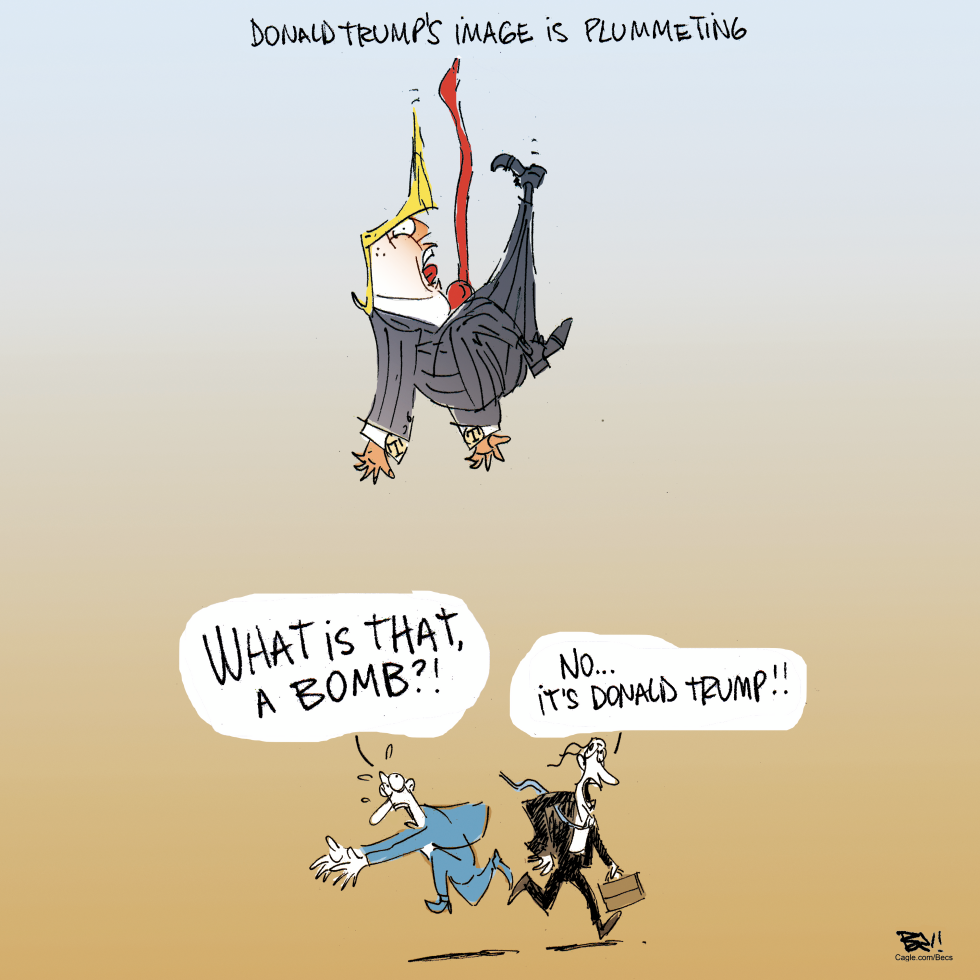
The cartoon depicts a figure with yellow hair and red tie, clearly caricaturing Donald Trump, diving headfirst from the sky like a falling bomb, mouth agape and limbs flailing. Below, two suited men run in panic, one asking if it's a bomb, the other identifying it as Trump. The title declares 'Donald Trumps Image is Plummeting,' playing on the pun of falling popularity. This piece skewers the Trump administration in the US for saying one thing then another, coming off as perverse and arrogant. It portrays him as thinking he's a king, the absolute tyrant of the world, with Europe and the world fed up. The dry humor lands through the visual metaphor, emphasizing global exasperation.
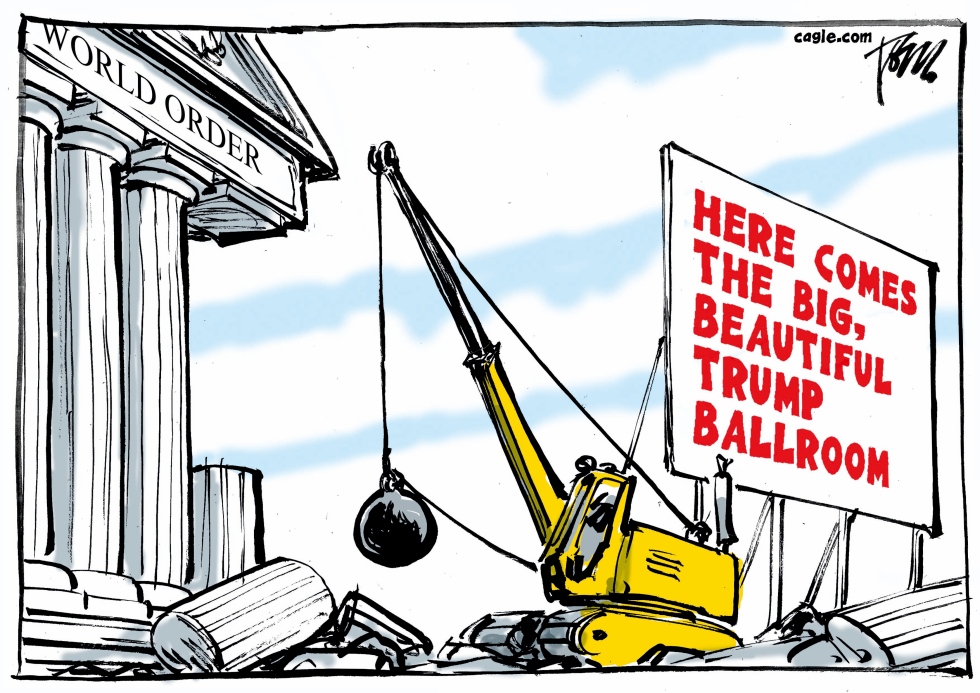
The cartoon depicts a classical building labeled 'World Order' being demolished by a yellow crane's wrecking ball, with debris scattering below and a prominent sign announcing 'Here Comes the Big, Beautiful, Trump Ballroom.' Tags like world order, NATO rift, allies, unreliable, chaos, and tariffs underscore the imagery of disruption. The scene captures a straightforward visual metaphor for upheaval, with broken columns and rubble emphasizing destruction. No characters appear, keeping the focus on structural collapse. Europe and Asia tags suggest broader implications, while the dry humor lies in rebranding ruin as a luxurious ballroom. Oil prices and economy tags tie into the fallout, making it a pointed commentary on global shifts.
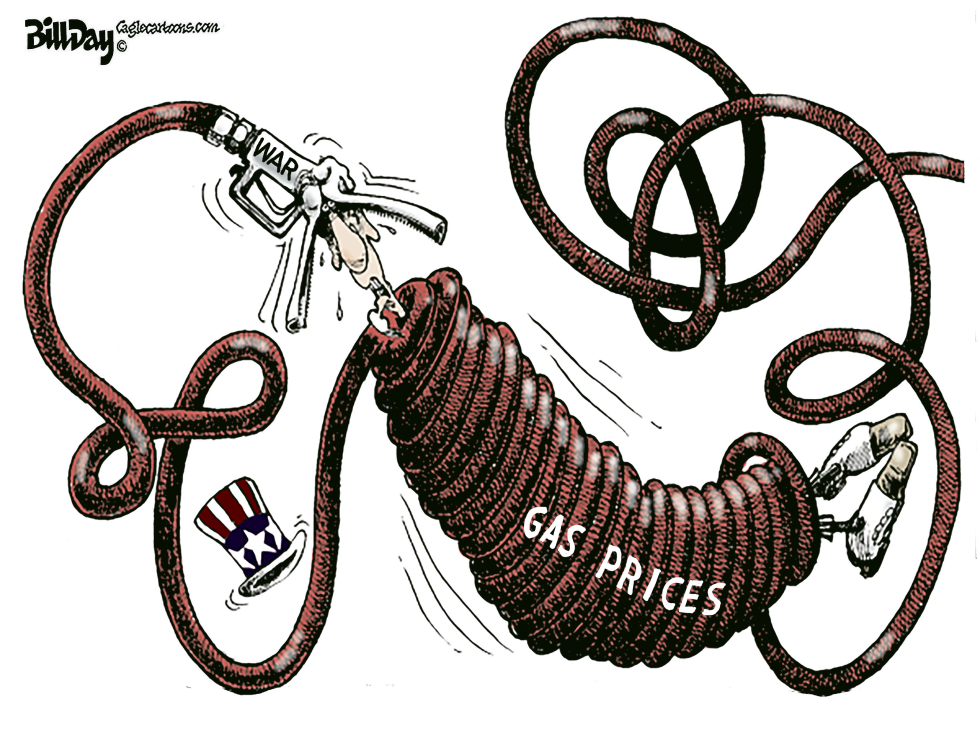
Bill Day's cartoon depicts a gas pump nozzle marked 'WAR' aggressively pumping into a twisted red hose that forms a noose-like figure labeled 'GAS PRICES,' with arms and legs dangling, suggesting strangulation. An Uncle Sam hat adorned with the American flag falls away, emphasizing national impact. This satirical image ties into tags like gas prices, Iran war, gas pump, Strait of Hormuz, and NATO, highlighting how military conflicts drive up fuel costs. The coiled hose resembles a hanged person, underscoring economic peril from oil disruptions. Day's style uses bold lines and clear labels for immediate visual punch, a staple in political cartoons that critique policy fallout.
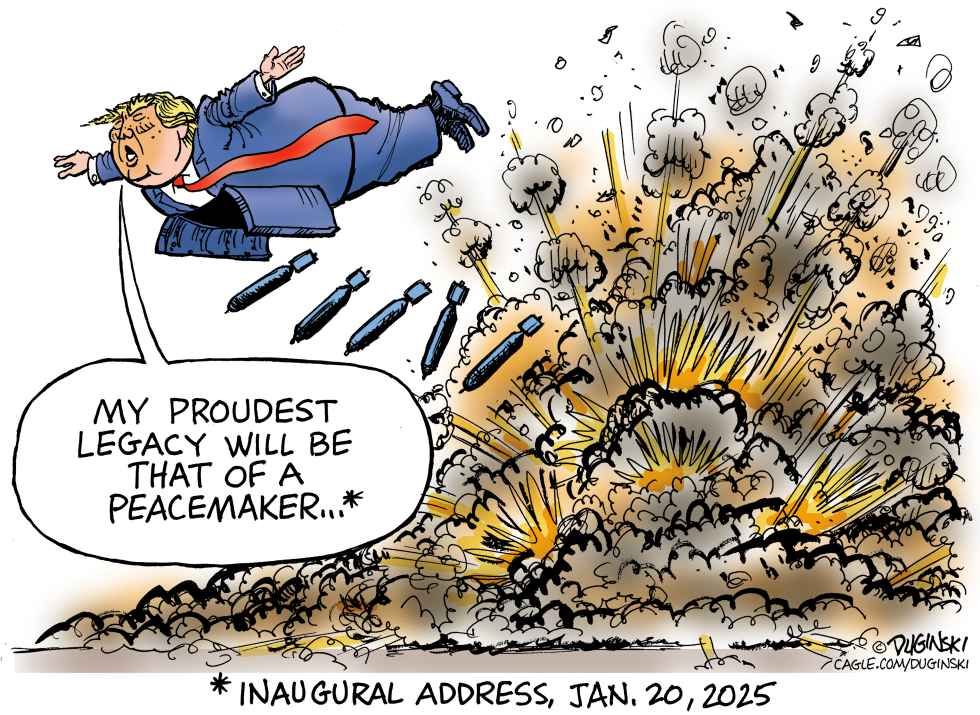
Duginski holds Trump accountable for his campaign promise to end wars within 24 hours of taking office. The Los Angeles Times illustrator catalogs the ongoing conflicts that remain unresolved. The broken promise imagery reflects sustained journalistic skepticism of Trump's foreign policy boasts.
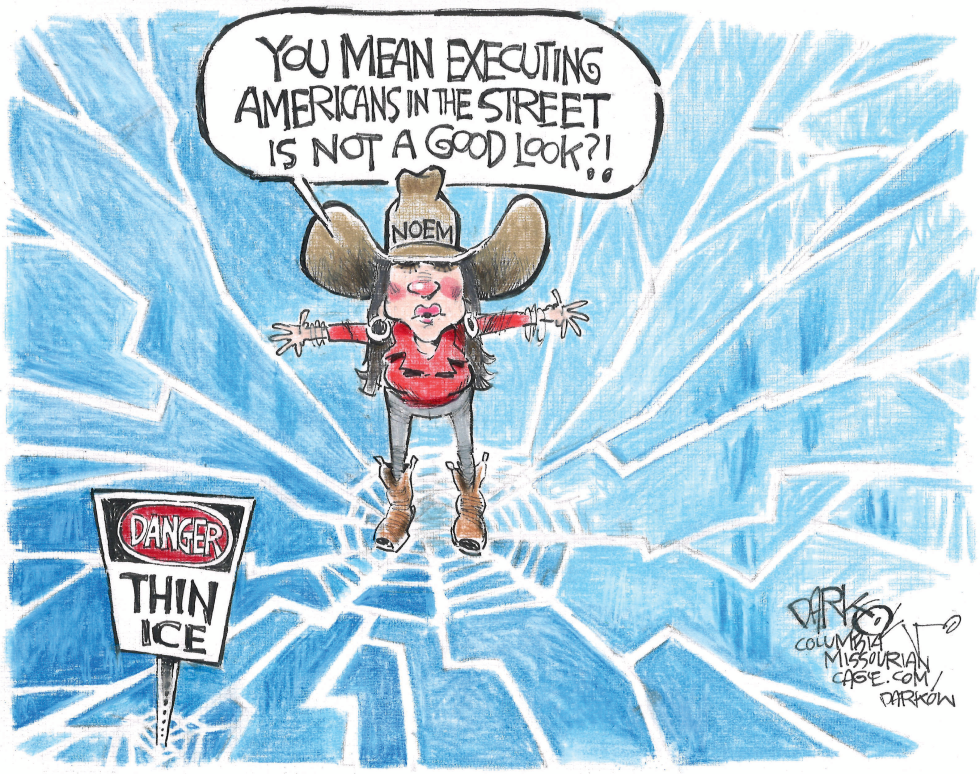
This Kristi Noem cartoon captures the South Dakota governor in a precarious position on thin ice, her hat emblazoned with 'NOEM' as she incredulously asks if executing Americans in the street isn't a good look. The image, a sharp political satire, alludes to the ongoing presidential immunity debates surrounding Donald Trump, where his allies like Noem find themselves on shaky ground. With the 'DANGER THIN ICE' sign prominently featured, the artwork highlights the risks of endorsing extreme views on executive power. Amid Noem's own memoir backlash involving her dog-killing anecdote, this thin ice metaphor amplifies the GOP backlash she's facing. The humorous political art style underscores the absurdity, making it a viral cartoon potential hit. Overall, it's a biting commentary on conservative politics satire in American discourse.
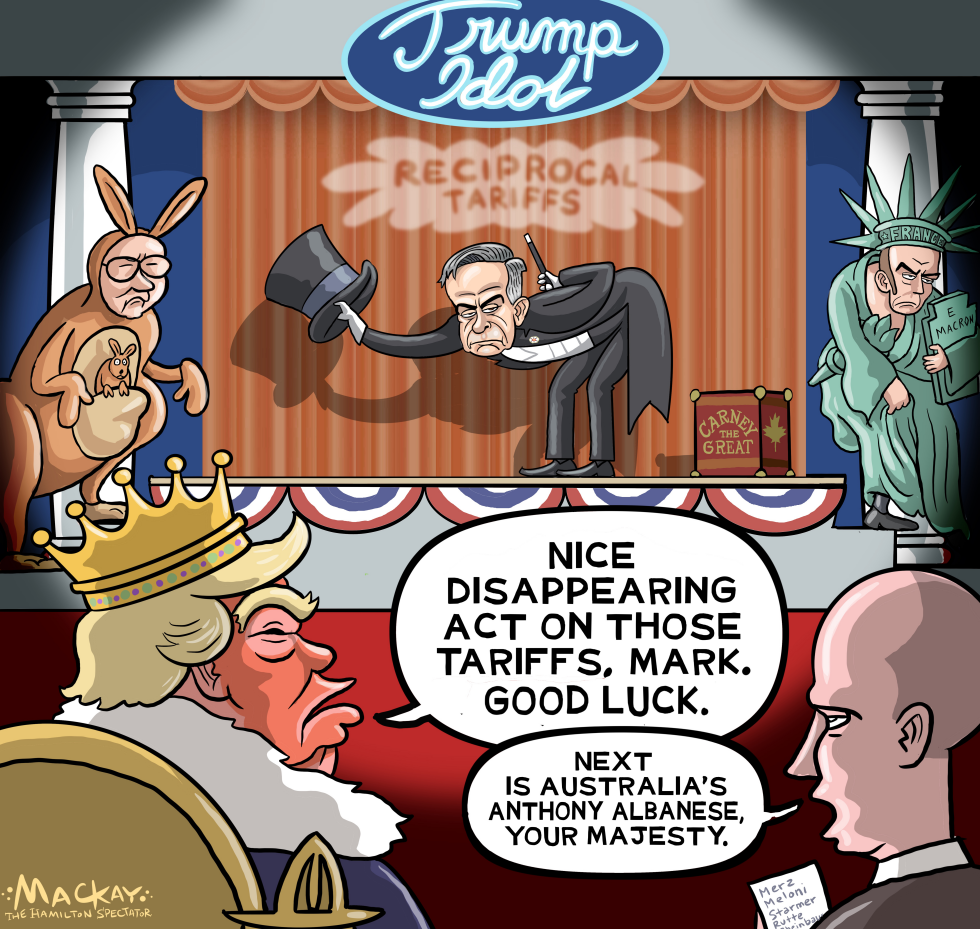
Graeme MacKay's cartoon depicts a stage parody of American Idol called Trump Idol, where a crowned Donald Trump judges world leaders performing acts related to reciprocal tariffs. A figure resembling Mark Carney bows in a top hat, having performed a disappearing act on tariffs, while a kangaroo-costumed character waits, labeled as Australia's Anthony Albanese. A Statue of Liberty figure holds a sign for E Macron France, and a box reads Carney The Great with a Canadian flag. The scene satirizes trade, diplomacy, economy, trust, and international relationships under Trump's strategy, with a bald advisor announcing the next act to 'Your Majesty.' The backdrop emphasizes reciprocal tariffs, blending protest and boycott themes in a humorous critique of USMCA and global partnerships.