Rising student skepticism about academic effort stems from widespread predictions that AI and automation will eliminate many jobs before today's students graduate. The cartoon responds to this dynamic by showing a student using those forecasts to shrug off a poor grade. It highlights how fears of technological displacement may undermine motivation in schools. The piece suggests such excuses reflect a broader cultural shift where traditional education credentials appear less relevant. The editorial stance questions whether this mindset accelerates the very problems it cites.
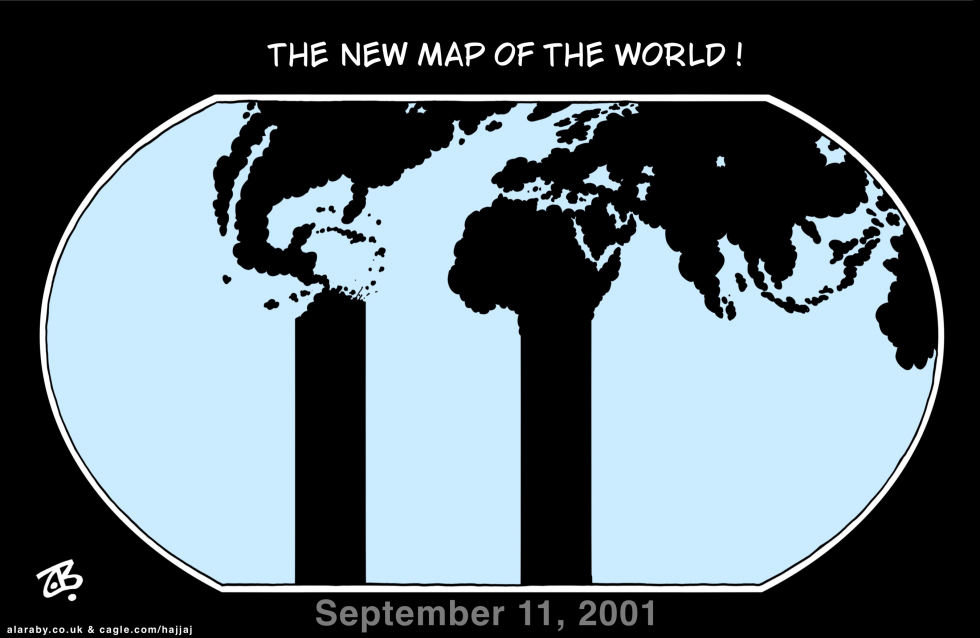
September 11, 2001, attacks on the World Trade Center and Pentagon killed nearly 3,000 people and triggered two decades of wars, surveillance expansions, and realignments in global alliances. The cartoon marks the anniversary by depicting the towers as continents emitting smoke, arguing that the event created an entirely new geopolitical order still felt today.
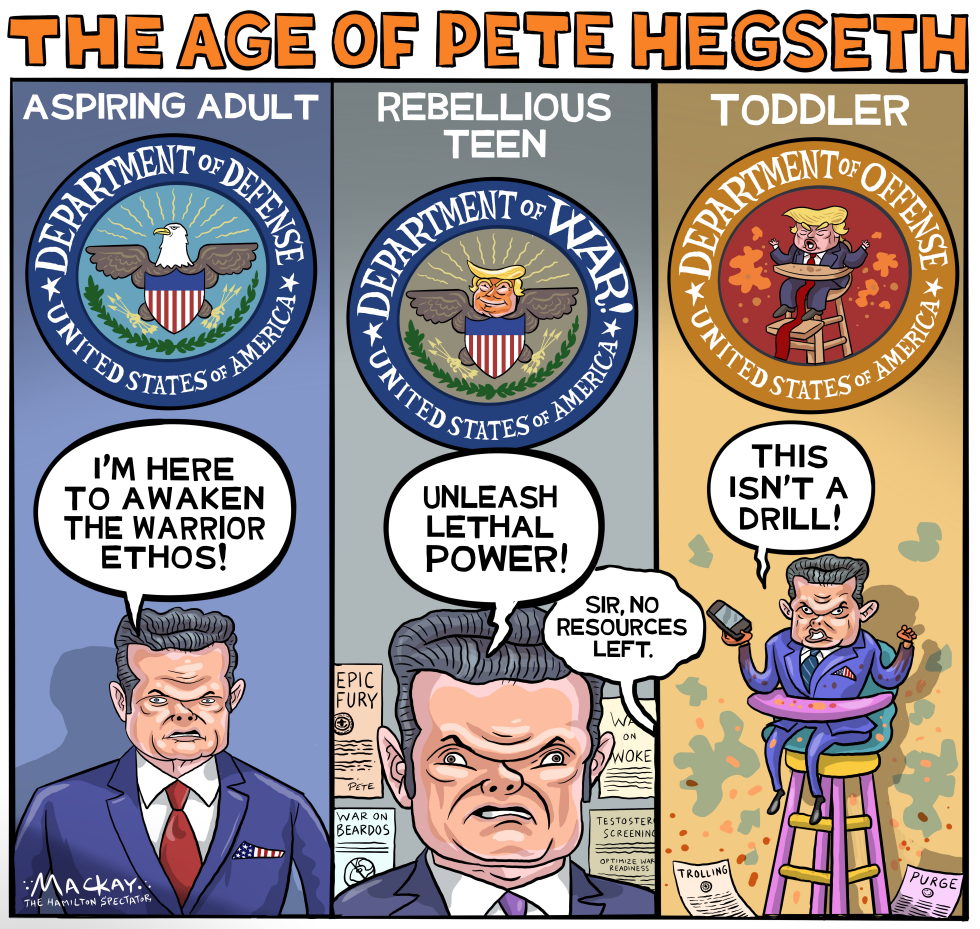
The cartoon by Graeme MacKay portrays Pete Hegseth's progression through three stages at the Pentagon under President Trump. In the first panel Hegseth pledges to awaken the warrior ethos at the Department of Defense. The middle panel shows him calling to unleash lethal power while an aide reports no resources remain. The final panel depicts a toddler Trump at the Department of Offense with Hegseth as a frantic aide amid papers about testosterone screening and purges. The work comments on the Trump administration's approach to military leadership and policy priorities as of September 2026.
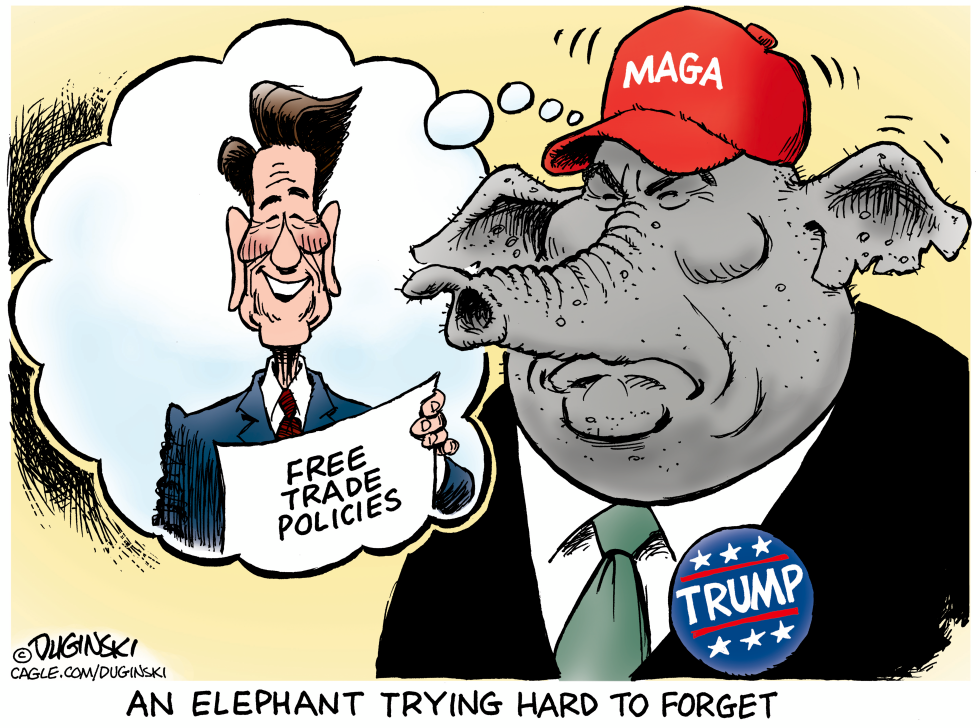
Republicans under Donald Trump have moved away from Ronald Reagan's free trade advocacy toward protectionist policies. The shift reflects internal party tensions over economic strategy and global engagement. The cartoon criticizes the GOP for abandoning a core Reagan principle in favor of current leadership priorities.
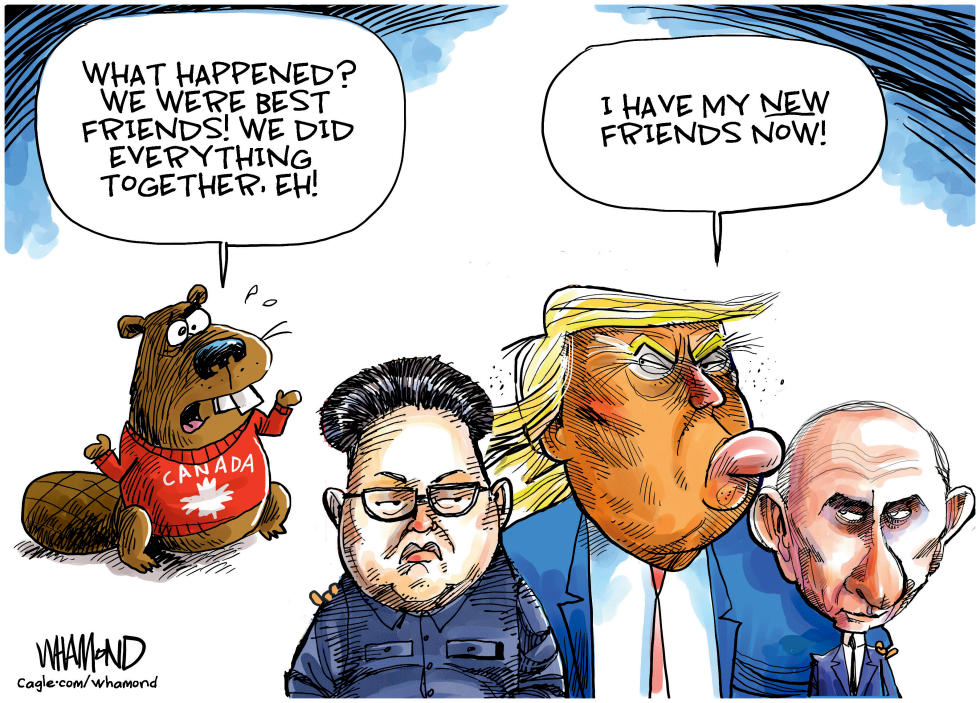
President Trump has redirected diplomatic priorities toward closer ties with Russian President Vladimir Putin and North Korean leader Kim Jong Un. Traditional partners such as Canada now face reduced engagement. The move reflects a broader realignment in U.S. foreign policy that favors authoritarian counterparts over longstanding democratic allies. Observers note the shift carries risks for trade, security cooperation, and international norms. The editorial position criticizes the pivot as shortsighted and damaging to established relationships.
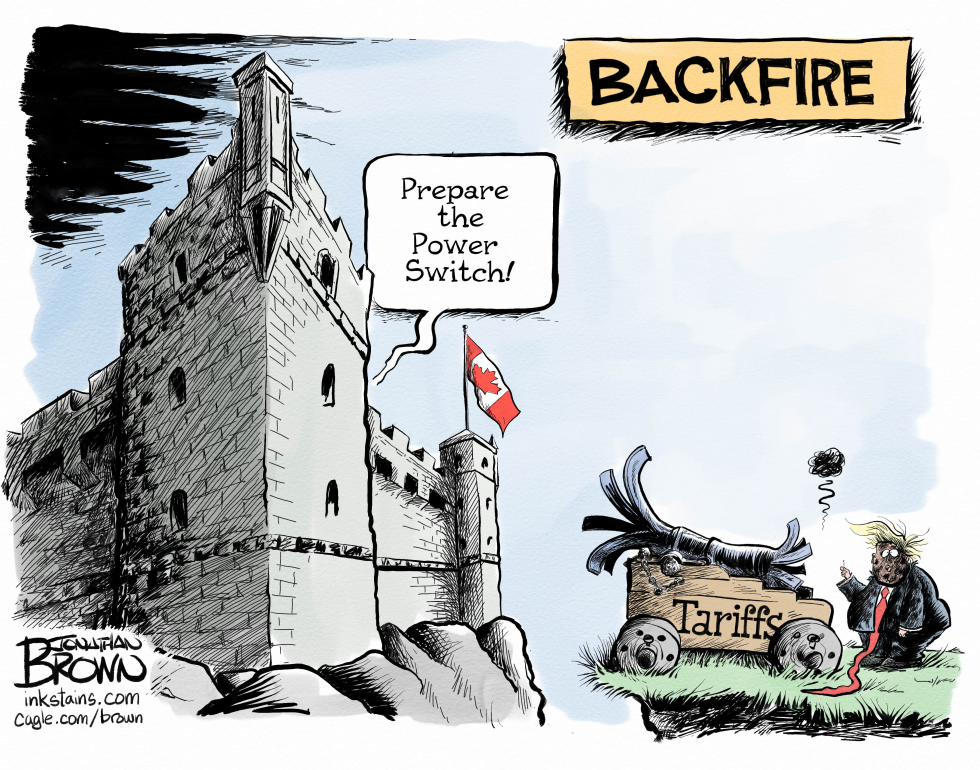
The cartoon shows a Canadian castle flying its flag while a cannon labeled Tariffs explodes backward toward a figure resembling Donald Trump. The scene responds to ongoing trade tensions where U.S. tariffs on Canadian goods prompted retaliatory measures. The visual emphasizes the policy rebounding on its originator rather than achieving intended pressure.
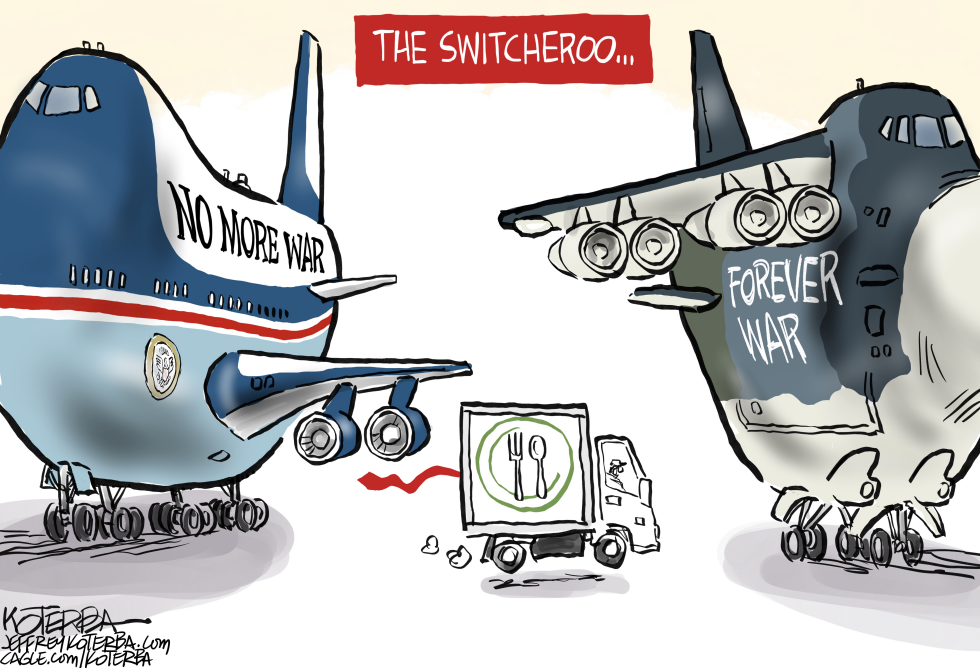
A political shift in military posture draws attention as commitments move from ending wars to sustaining them indefinitely. The editorial critiques the reversal as a cynical about-face on foreign engagements.
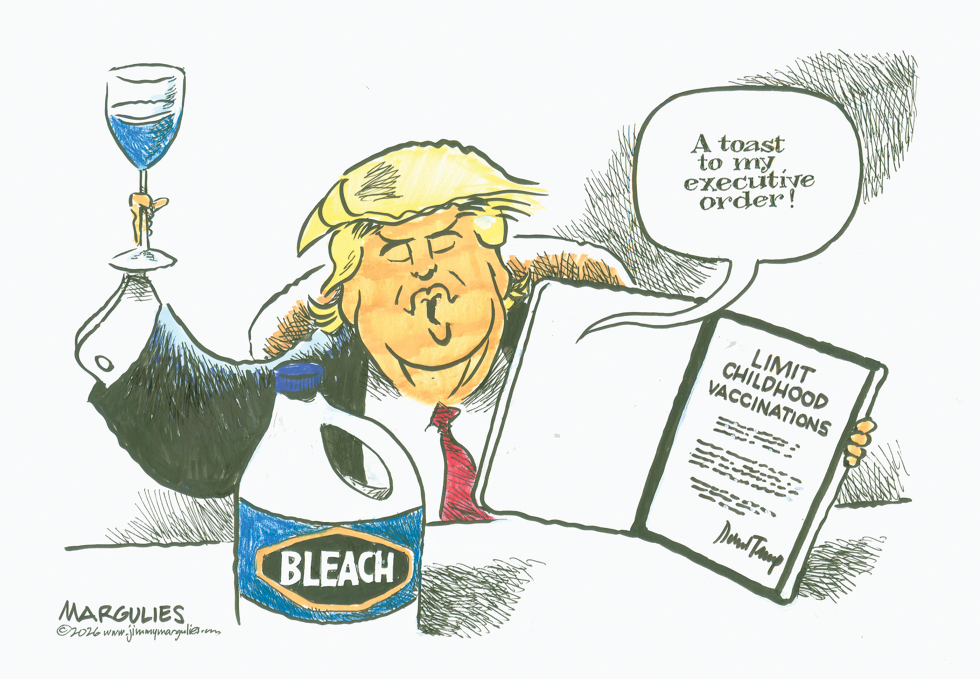
President Donald Trump signed an executive order limiting childhood vaccinations on or around August 2026. The move drew immediate attention for its potential impact on public health access and immunization rates nationwide. Critics argued the policy could increase disease risks for children while supporters framed it as protecting parental choice. The editorial uses the bleach toast imagery to critique the decision as reckless and disconnected from established medical guidance.
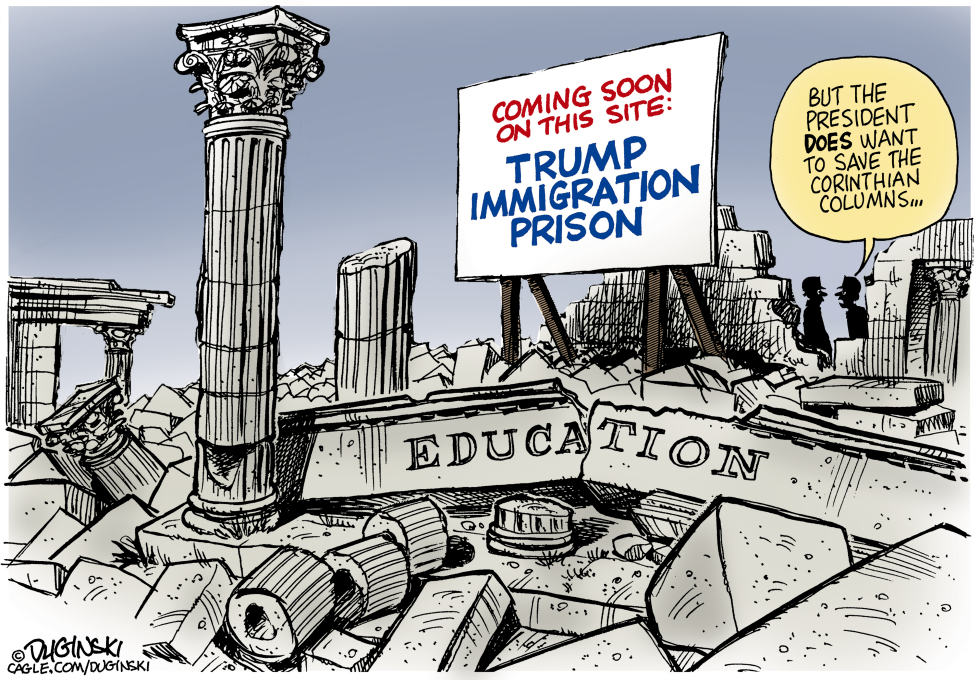
The Trump administration has moved to repurpose a site previously tied to education programs for a new immigration detention facility. The shift reflects ongoing policy emphasis on border enforcement over domestic education support. The piece argues that selective preservation of symbolic elements masks broader institutional damage.
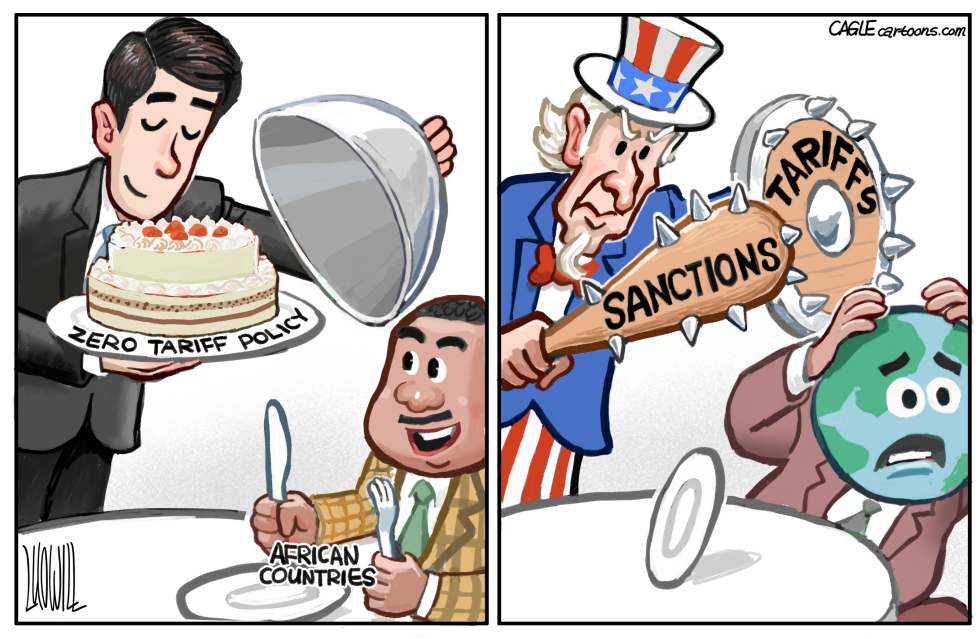
The United States has extended a zero-tariff policy offer to African nations amid ongoing global trade tensions. This move stands in contrast to simultaneous use of tariffs and sanctions against other trading partners. The policy highlights selective economic engagement by Washington. The editorial position criticizes the inconsistency between the overture to Africa and the punitive approach applied more broadly.
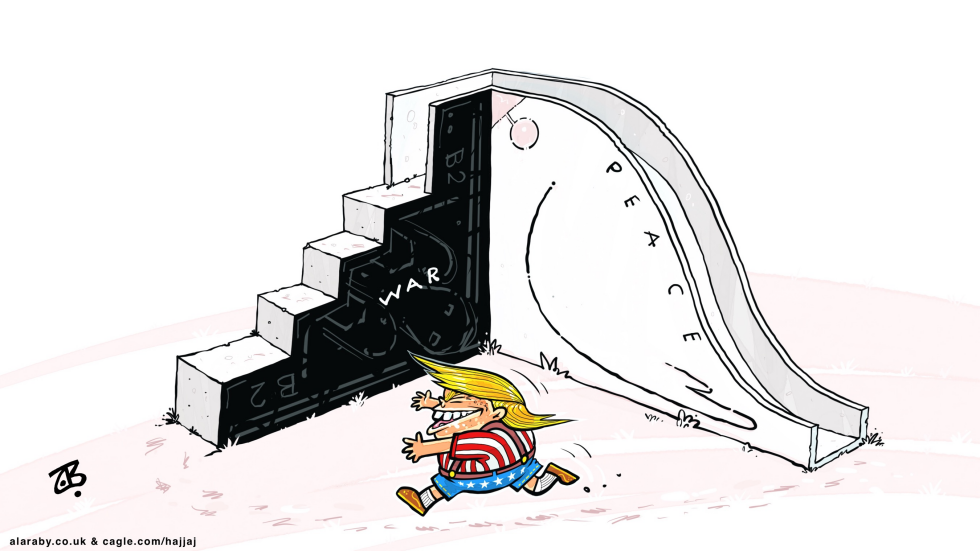
Donald Trump, holding the presidency on the August 2026 publication date, faces renewed questions over military commitments abroad. Recent developments in defense policy have highlighted tensions between continued operations and diplomatic overtures. The piece responds to this dynamic by depicting the president moving away from a war-associated structure toward a peace option. It frames the shift as an abrupt retreat from prior positions rather than a deliberate policy choice. The editorial stance criticizes the move as inconsistent and driven by political expediency instead of strategic consistency.
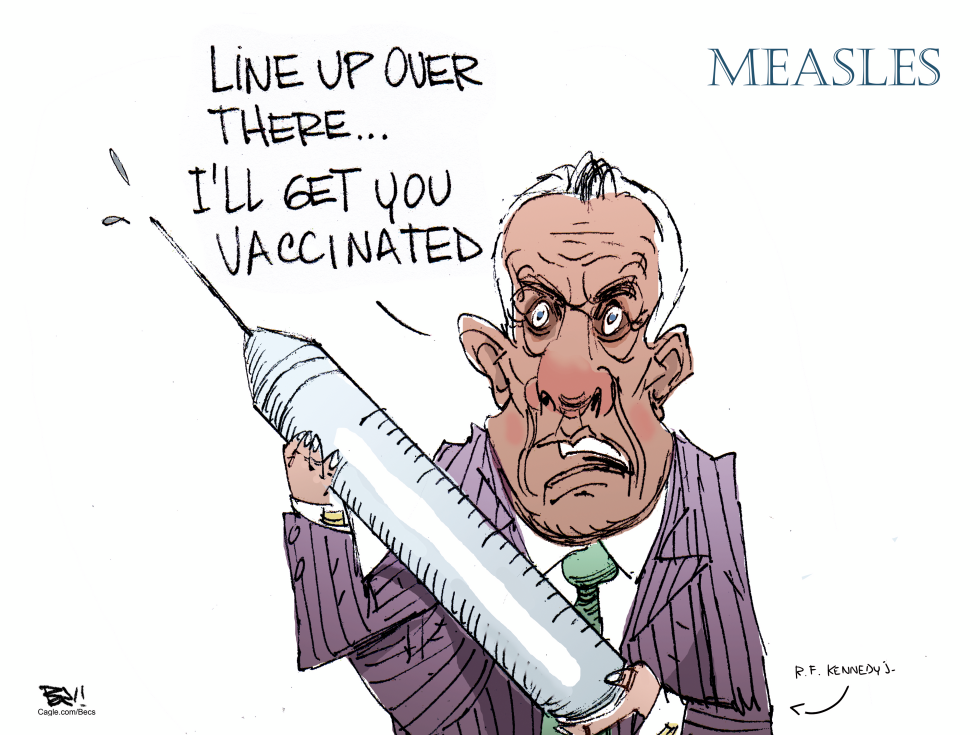
Robert F. Kennedy Jr., serving as a top health official in 2026, faces scrutiny over a sudden push for measles vaccinations. The move comes as cases rise and public skepticism lingers from prior stances. The editorial argues the policy reversal exposes inconsistent leadership on immunization.
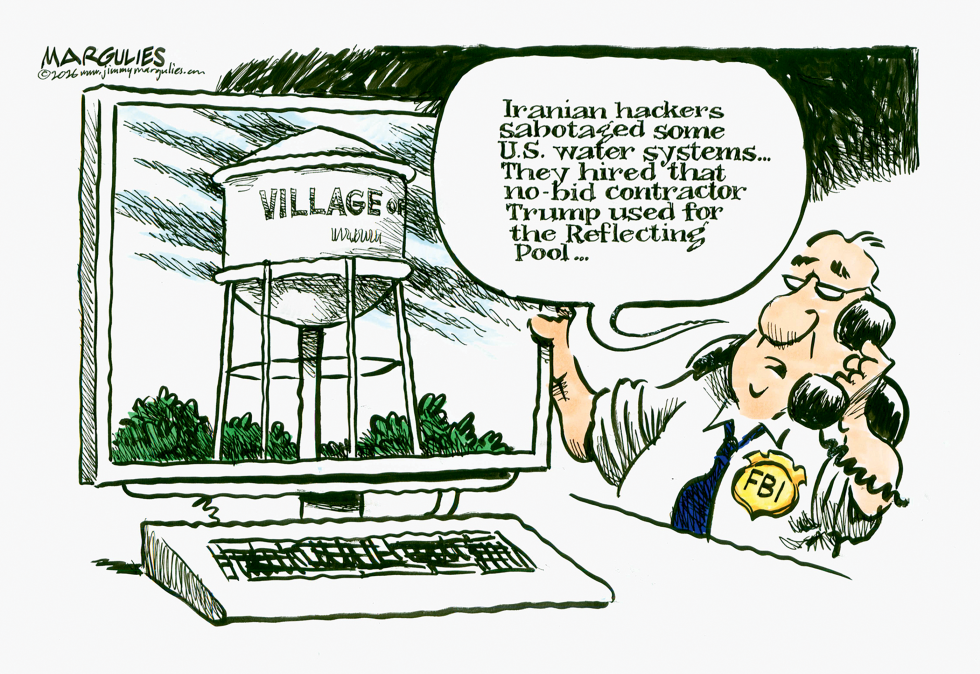
The FBI has attributed recent sabotage of U.S. water systems to Iranian hackers while highlighting their use of a no-bid contractor previously employed by Trump on the Reflecting Pool. The claim surfaces amid ongoing concerns over critical infrastructure vulnerabilities and contractor oversight. This development raises questions about procurement practices and accountability in federal responses to foreign cyber threats. The editorial position criticizes the reliance on such contractors and questions the logic of the blame assignment.
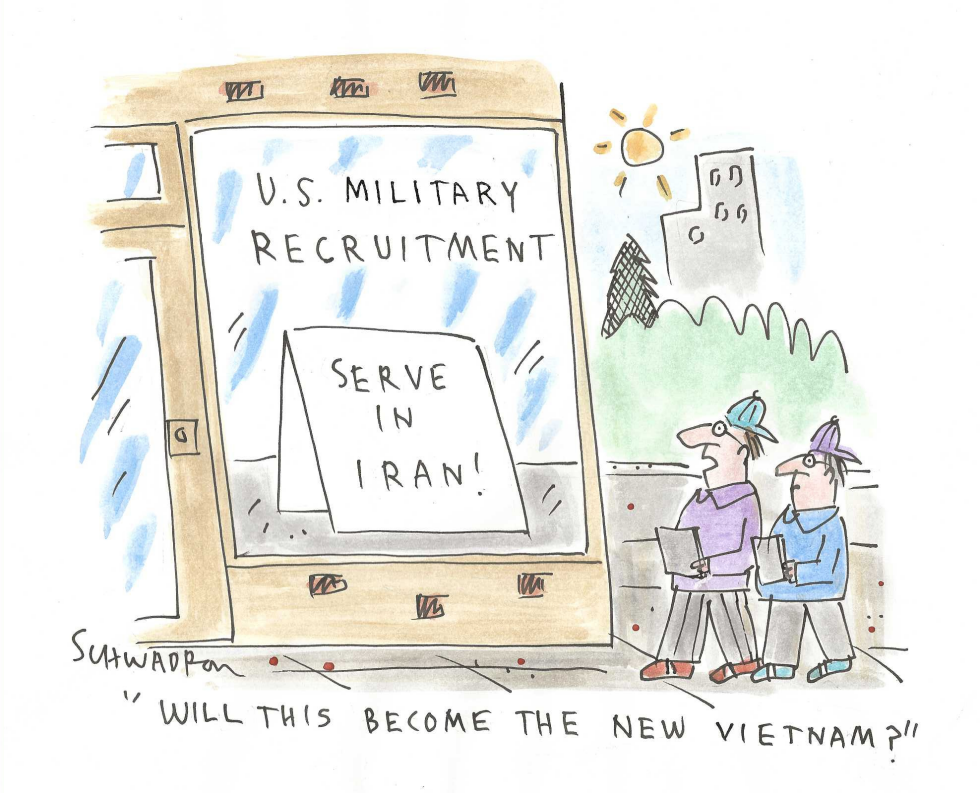
U.S. military recruitment efforts have begun highlighting opportunities to serve in Iran, prompting public questions about potential escalation. The move comes amid ongoing regional tensions and draws direct comparisons to the Vietnam War era. Observers worry the campaign signals a shift toward deeper U.S. military commitments overseas. The editorial takes the position that such recruitment tactics risk repeating past mistakes by underestimating public resistance to prolonged conflicts.
Dr. Anthony Fauci appeared before Congress on matters tied to prior public health leadership. Lawmakers pressed for details on past decisions. The editorial takes the position that such testimony demands full transparency regardless of prior status.