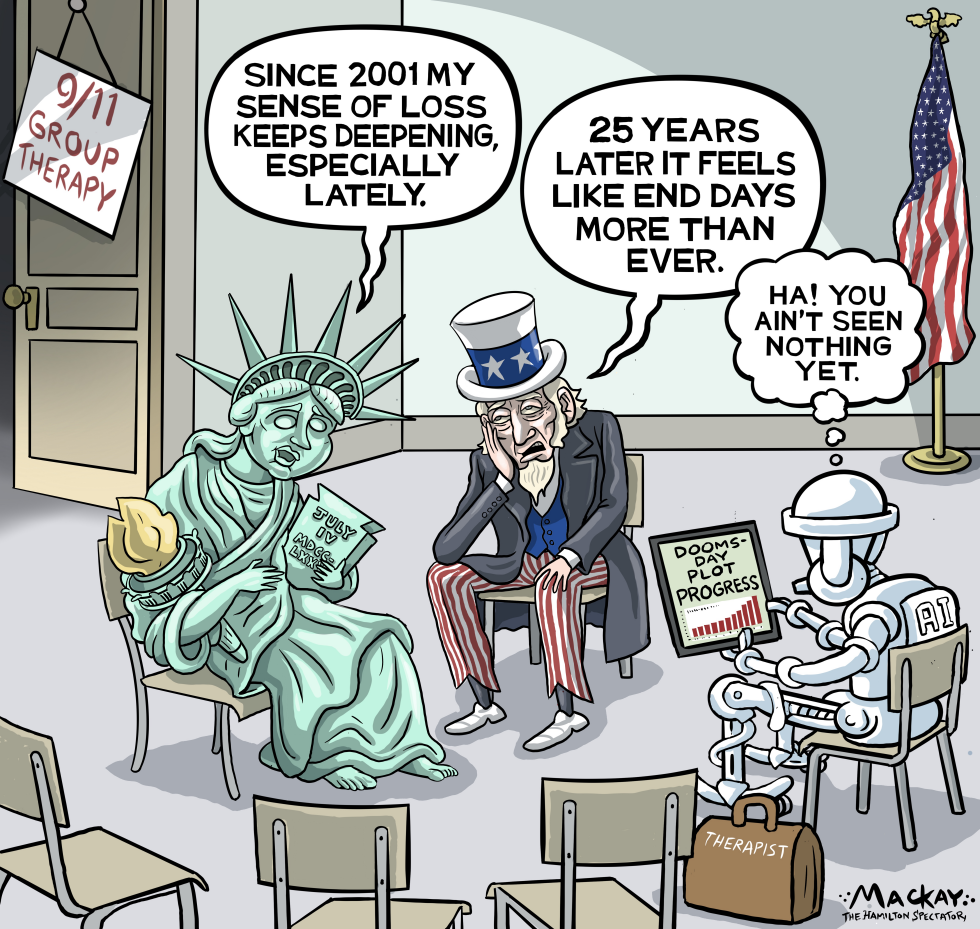
The cartoon depicts the Statue of Liberty, Uncle Sam and an AI robot seated in a 9/11 group therapy session on the 25th anniversary of the attacks. The Statue of Liberty holds a book marked July IV MDCCLXXVI and speaks of deepening loss since 2001. Uncle Sam echoes the sentiment of end days. The AI figure, labeled with a rising doomsday plot progress chart, retorts that the others have seen nothing yet. The scene uses national symbols to reflect persistent national trauma and emerging technological threats two and a half decades after the September 11 attacks.
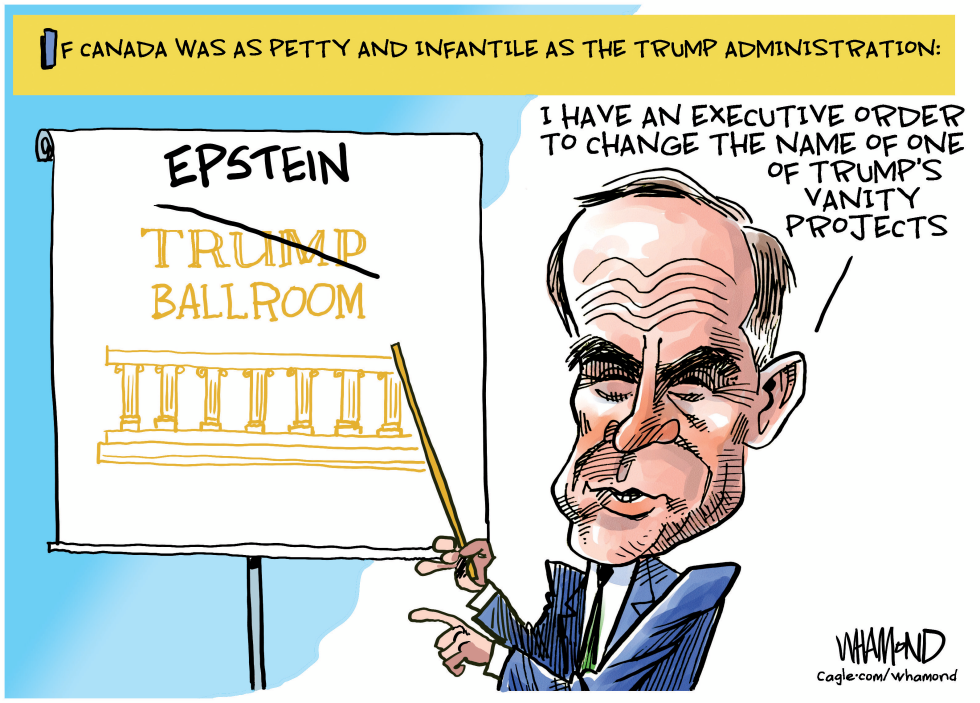
On August 27, 2026, a cartoon depicted Canadian Prime Minister Justin Trudeau issuing a mock executive order to rename a property tied to Jeffrey Epstein as the Trump Ballroom. The move parodies perceived pettiness in the Trump administration's handling of vanity projects and branding disputes. The piece argues that such tit-for-tat gestures underscore how executive actions can devolve into personal score-settling rather than substantive governance.
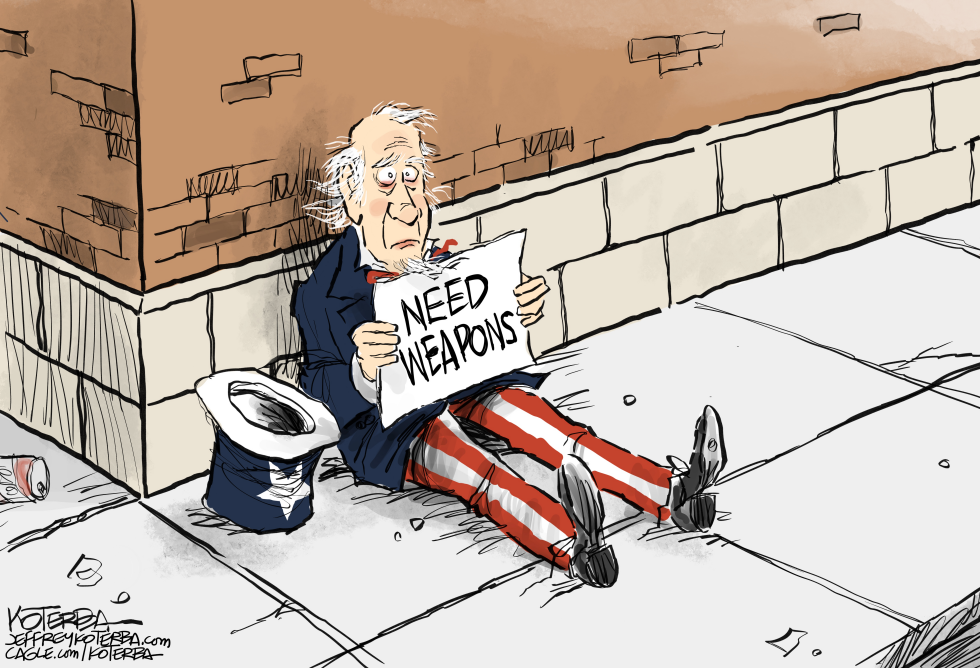
Uncle Sam appears as a disheveled figure on a sidewalk holding a sign requesting weapons. The image captures an ongoing national debate over military resources and international commitments. The editorial stance highlights perceived weakness in current arms policy and funding priorities.
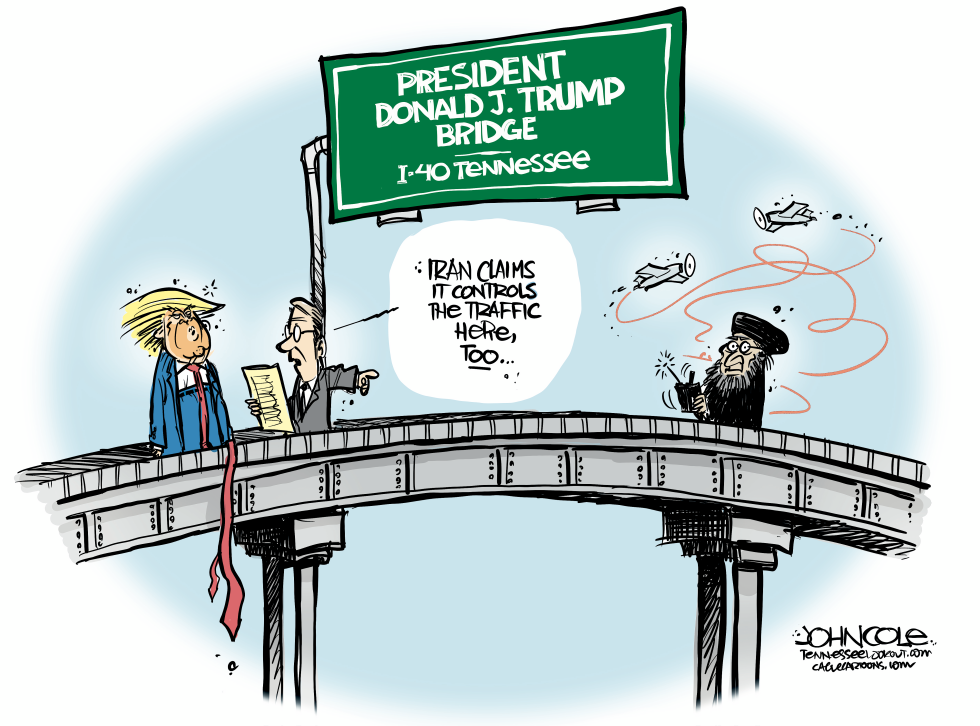
President Donald J. Trump attended the naming of the President Donald J. Trump Bridge on I-40 in Tennessee. The event drew attention when an Iranian figure appeared to claim control over traffic on the span. The development highlights ongoing tensions with Iran over shipping lanes and international routes. The cartoon frames the claim as an extension of Iran's broader pattern of asserting dominance over key passages. It positions the bridge naming as a domestic moment overshadowed by foreign threats.
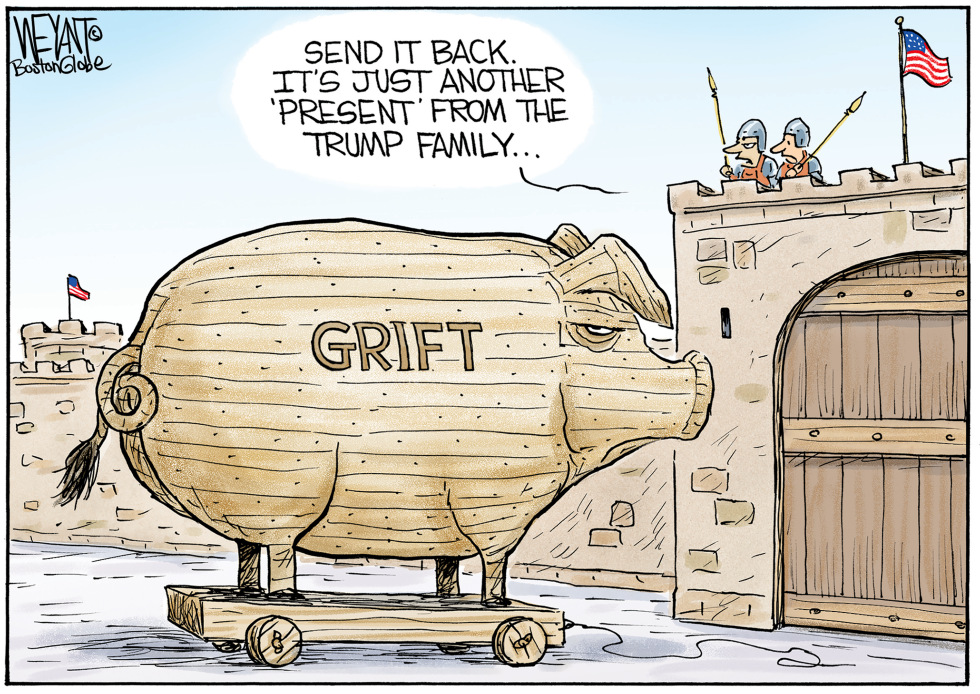
The Trump family faces renewed scrutiny over business dealings and influence peddling. Guards at a symbolic fortress receive a large wooden pig marked grift and immediately demand its return. The episode highlights ongoing concerns about gifts and favors tied to the family name.
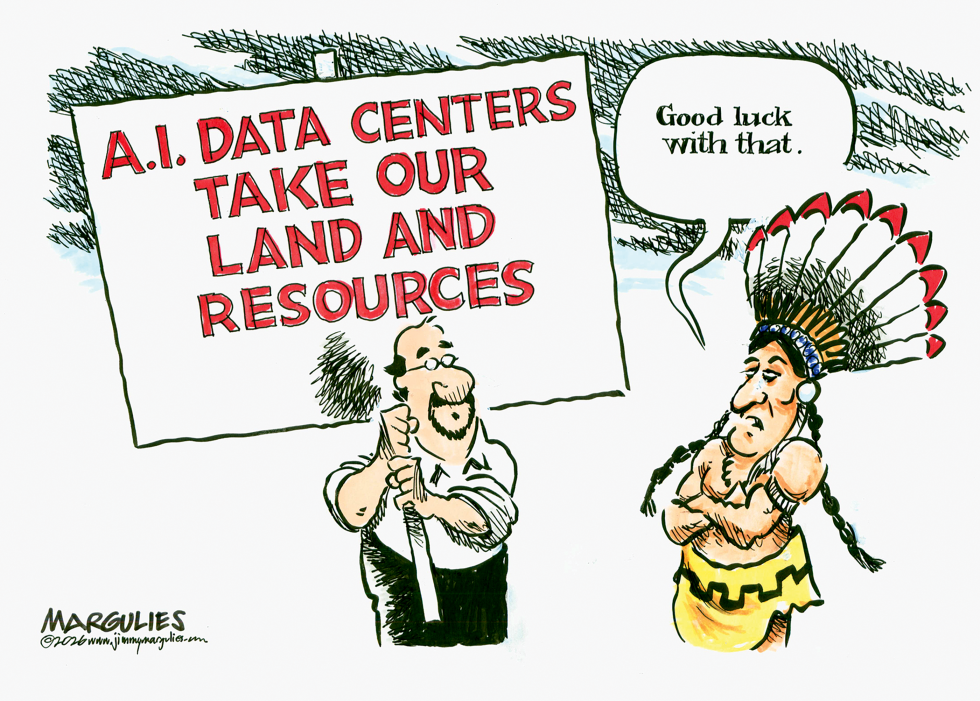
A man holds a sign protesting AI data centers taking land and resources. A Native American protester responds with skepticism. The July 2026 cartoon addresses growing conflicts between technology infrastructure and land use claims.
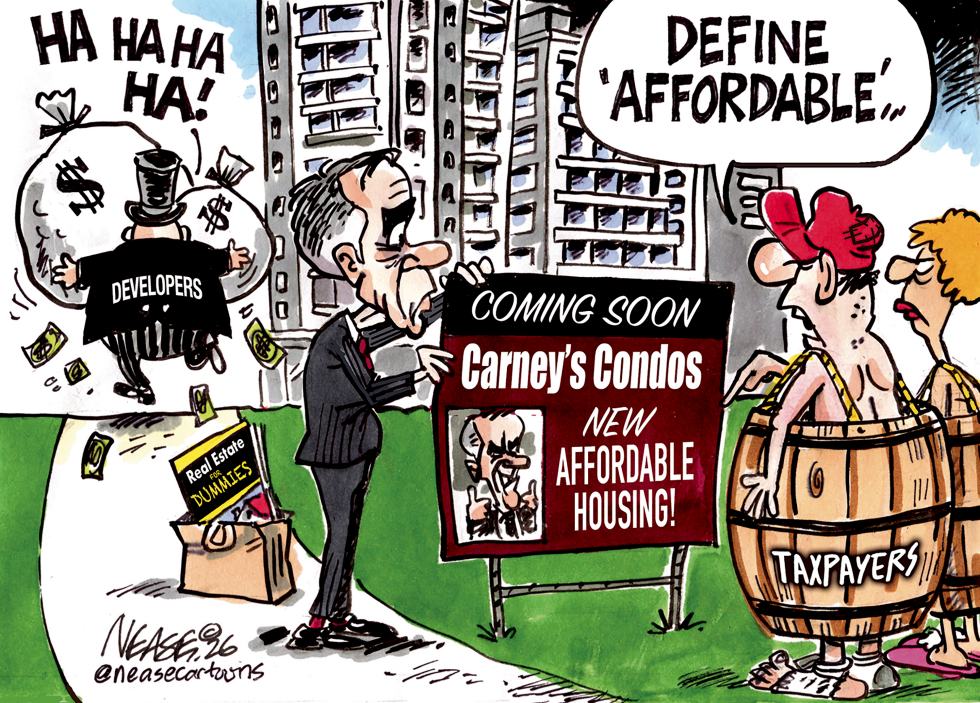
A real estate sign for Carney's Condos promotes new affordable housing. Developers in top hats collect money while laughing. Two taxpayers trapped in barrels question the definition of affordable. A book on real estate basics sits on the ground near high rise buildings.
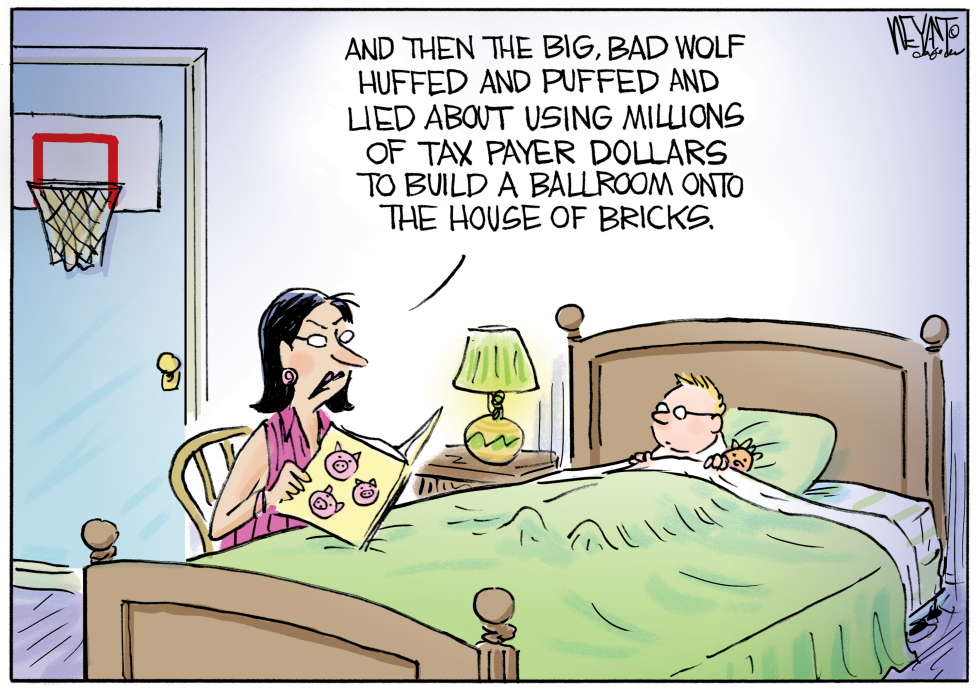
A mother reads a bedtime story to her child, altering the three little pigs tale to accuse the big bad wolf of lying about spending millions of taxpayer dollars to add a ballroom to the house of bricks. The scene unfolds in a child's bedroom with a basketball hoop visible through the door and a green lamp on the nightstand. This image responds to recent controversies over public fund misuse for private or extravagant projects by political figures.
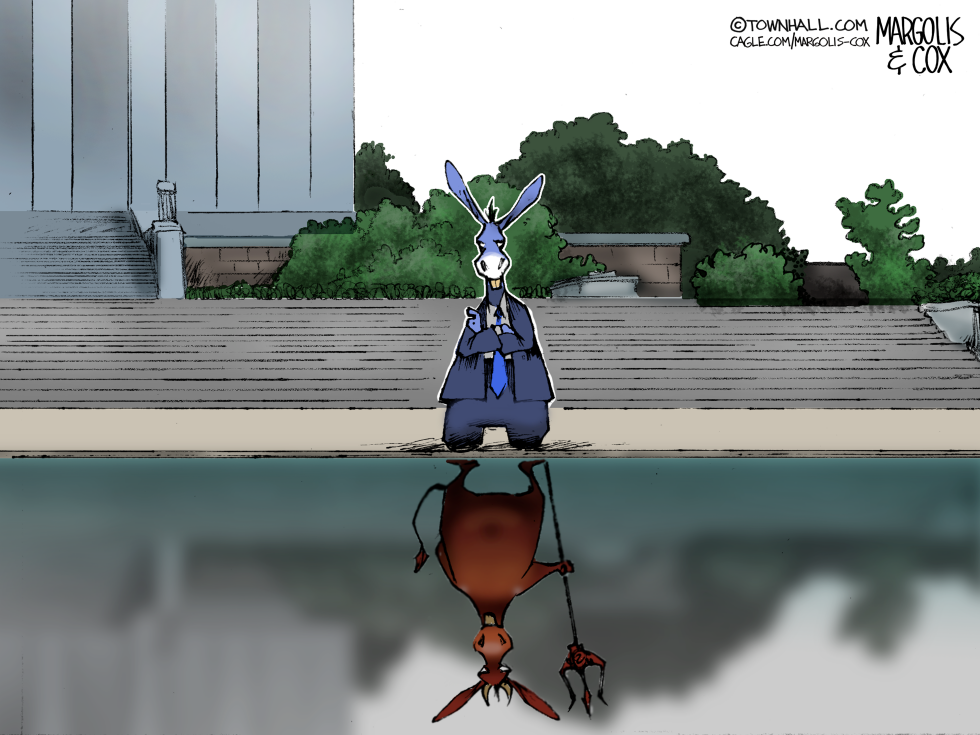
The Democratic Party has faced internal debate over identity and direction. The piece responds to arguments that the public presentation differs from the governing agenda. It places a composed figure above the water and a very different shape in the reflection below.
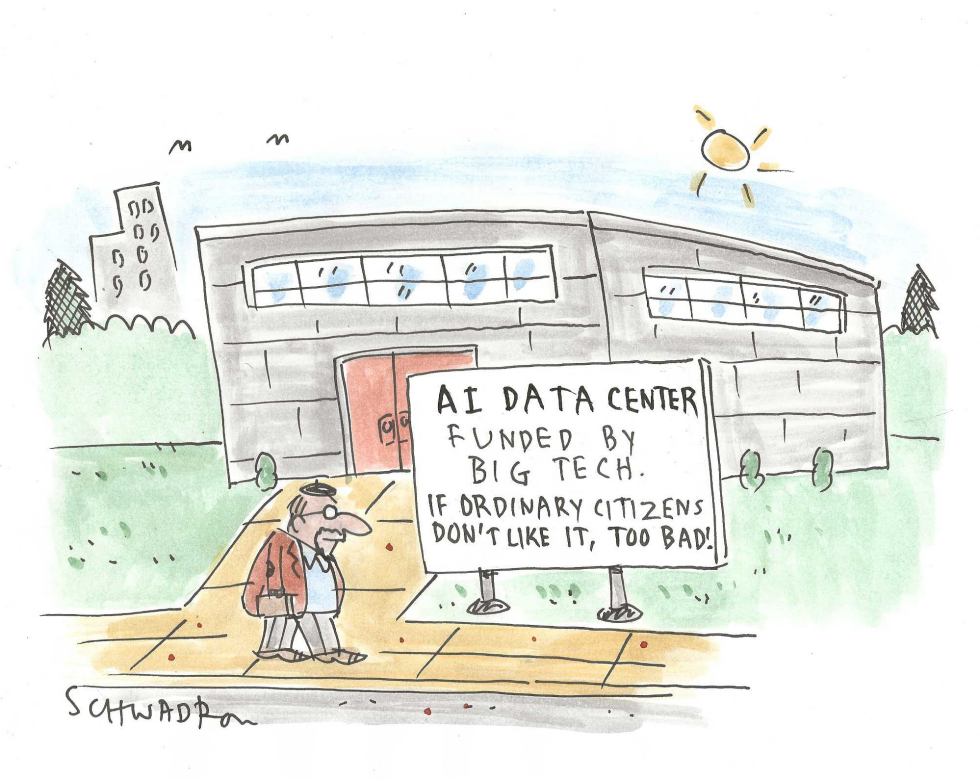
On June 6, 2026, a political cartoon depicts a man approaching an AI data center funded by big tech. The facility's sign bluntly informs ordinary citizens that their objections do not matter. The drawing highlights tensions between rapid AI infrastructure growth and public concerns over environmental consequences such as pollution and resource use. The cartoonist uses the dismissive message to underscore how technology companies often proceed without community consent.