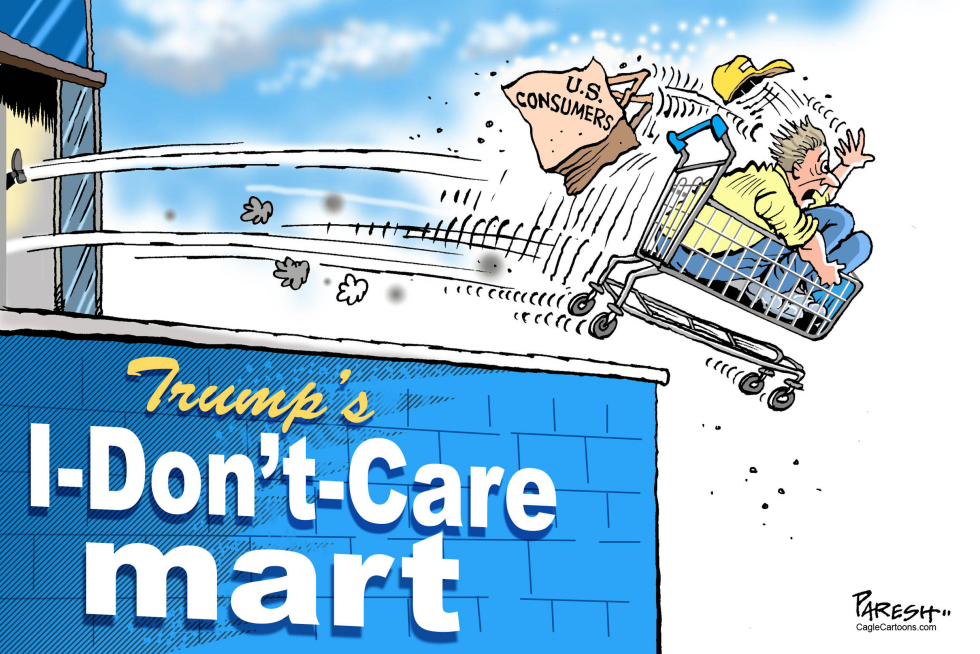
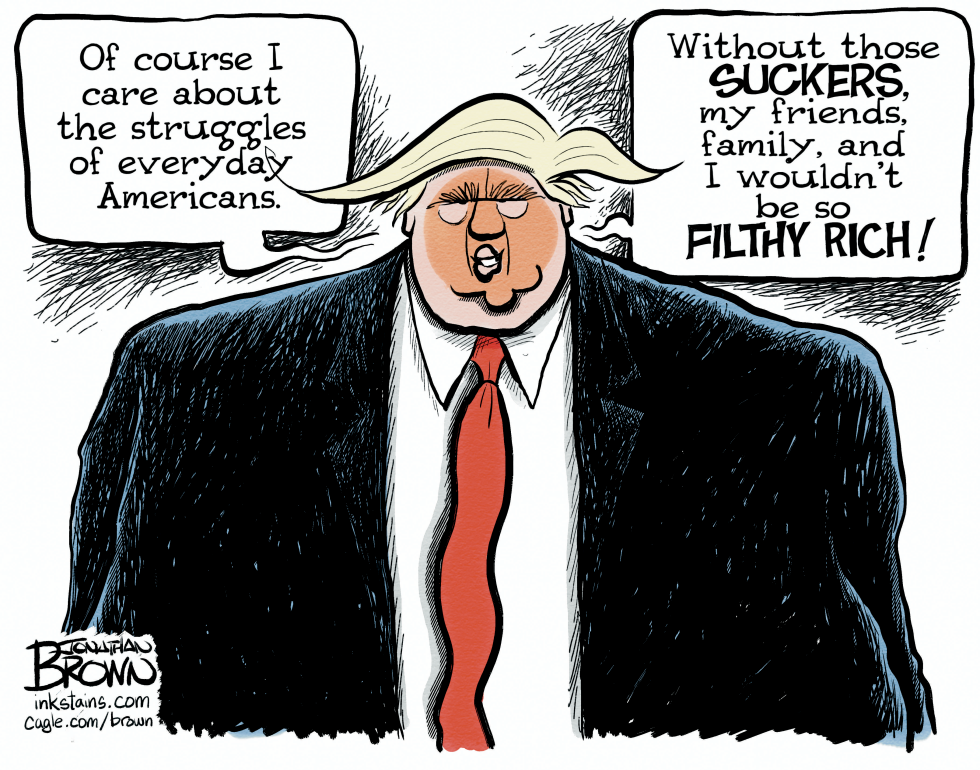
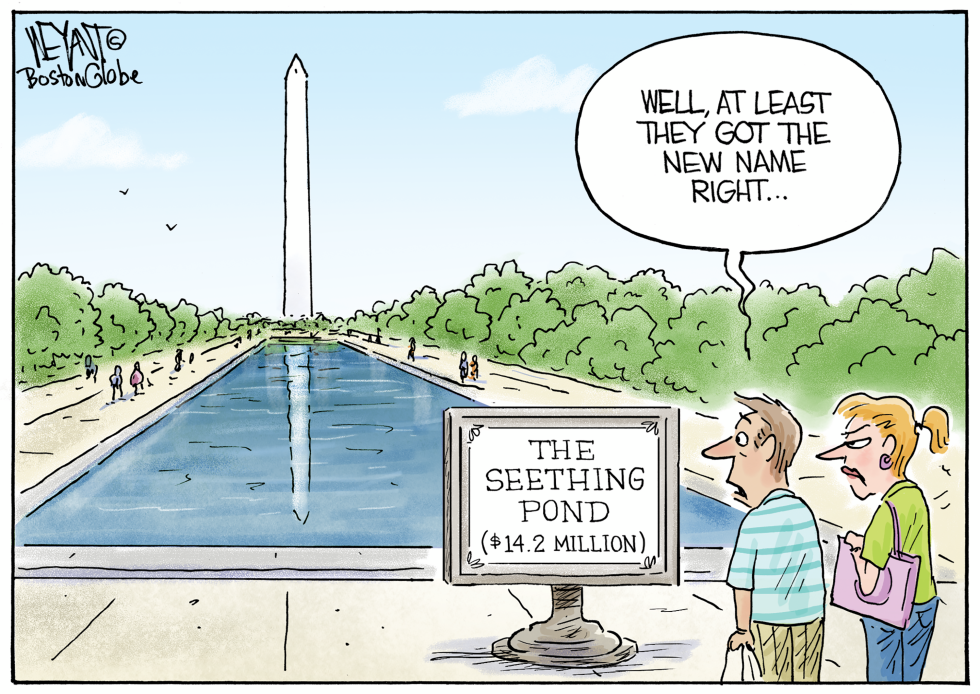
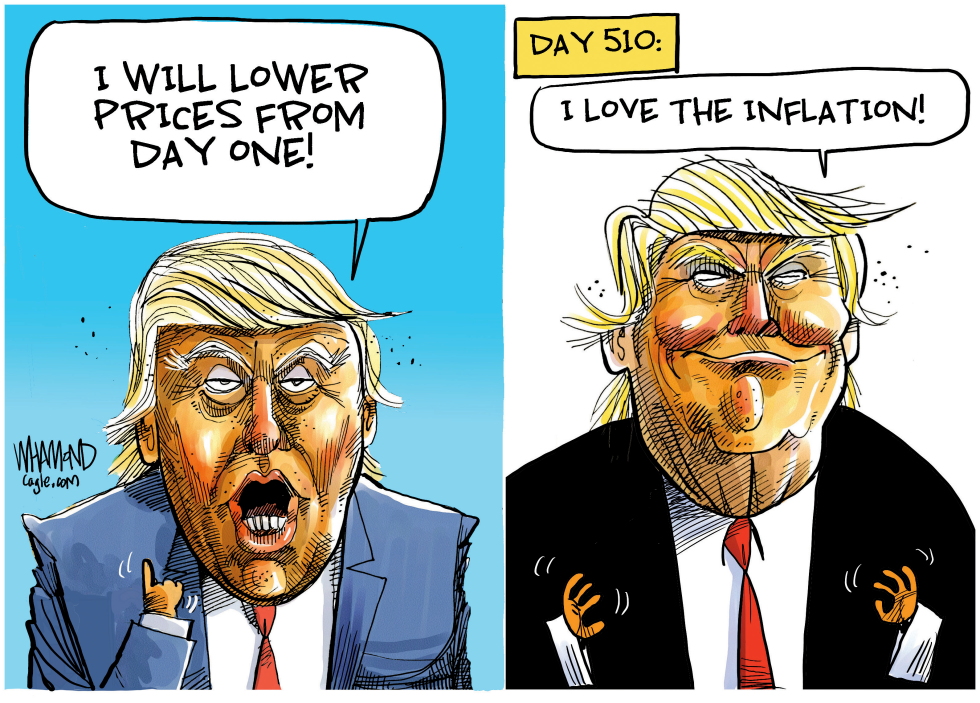
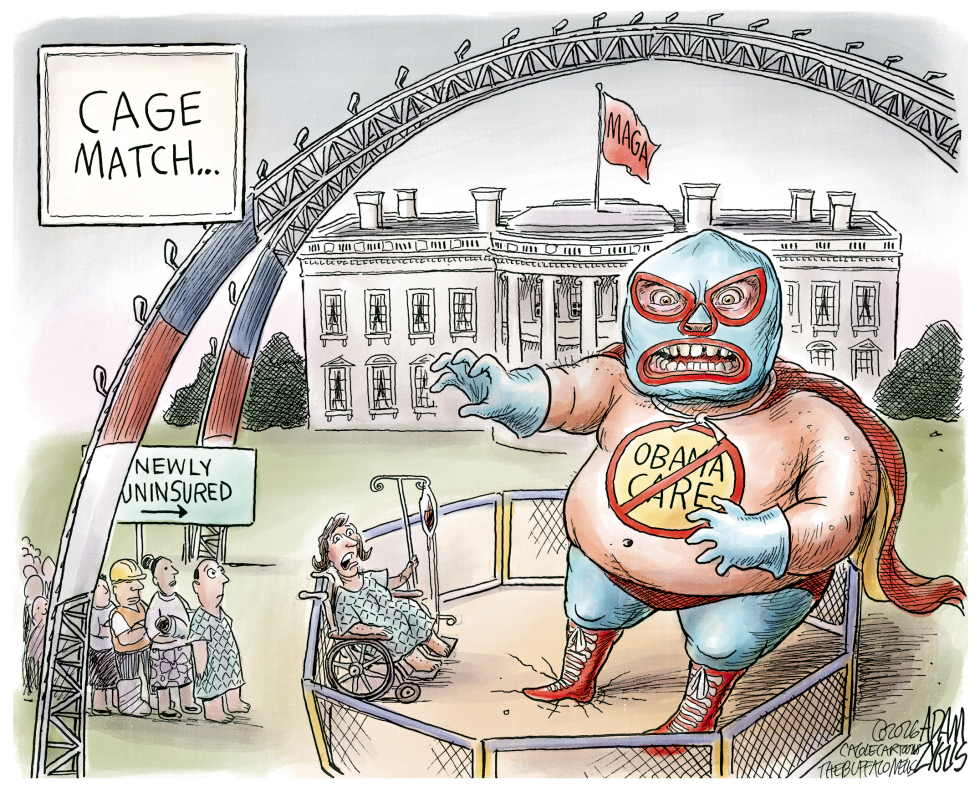
Trump administration policies on trade and spending have contributed to higher prices for everyday goods. American households face increased costs at stores as tariffs and other measures take effect. The cartoon argues these policies prioritize other goals over consumer welfare and leave families paying more.
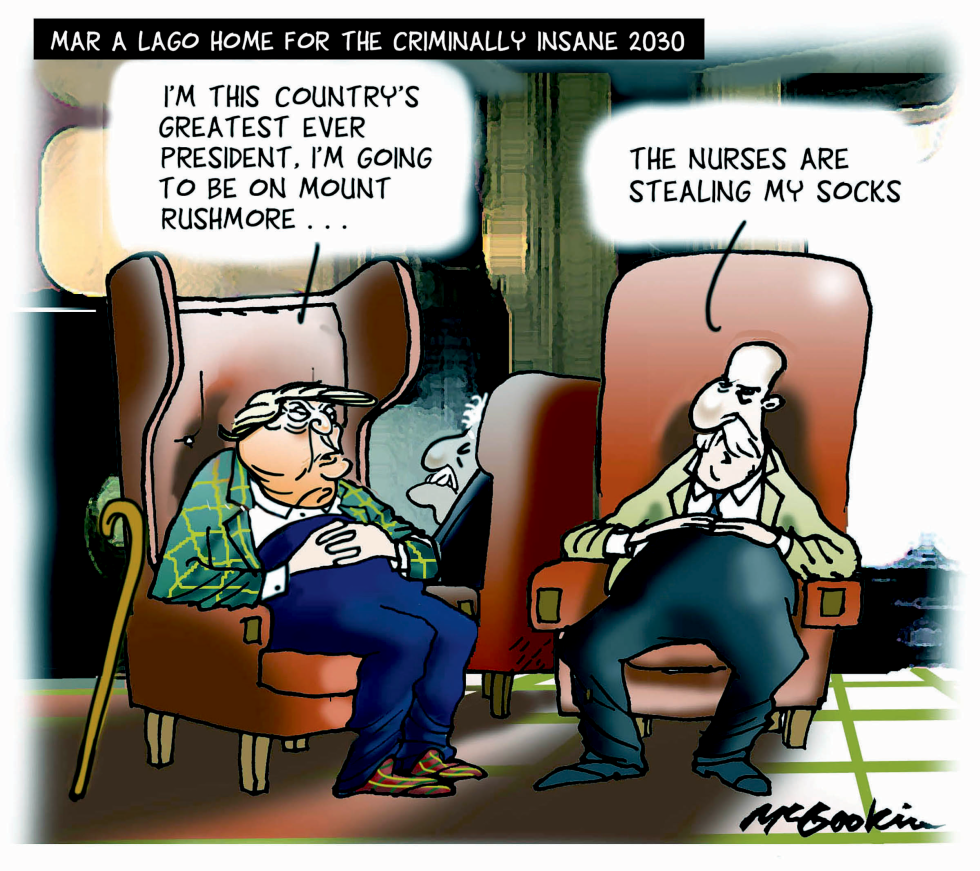
Donald Trump asserts he remains the nation's greatest president and belongs on Mount Rushmore while confined in a 2030 Mar-a-Lago facility for the criminally insane. A fellow resident counters with claims that nurses steal his socks. The piece frames both statements as equivalent delusions, underscoring the cartoon's view that Trump's self-aggrandizing rhetoric has crossed into clinical territory.
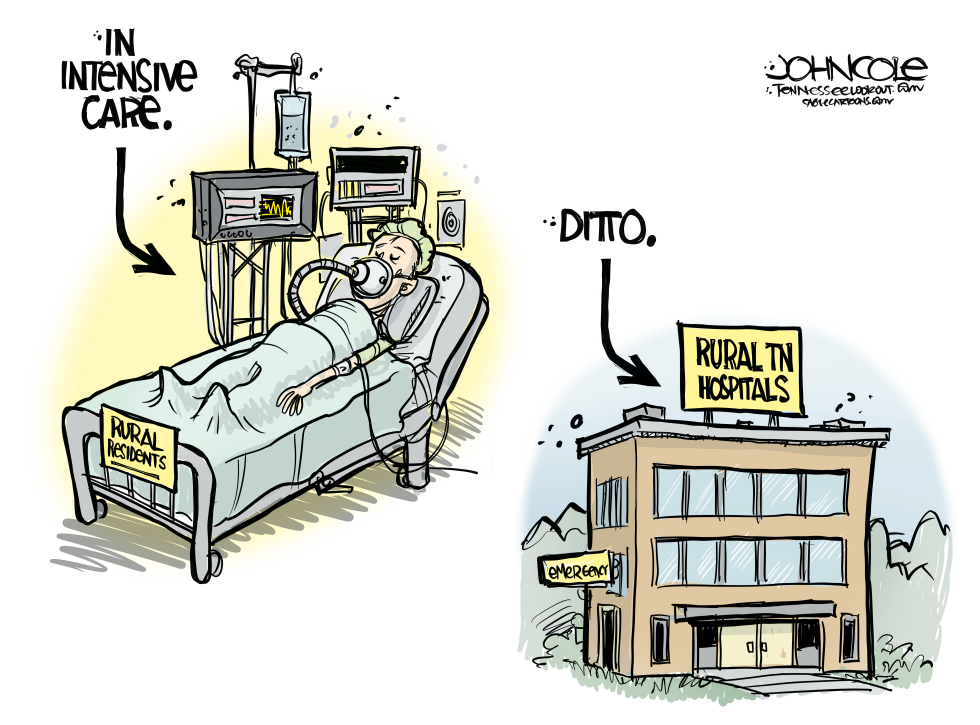
Rural hospitals across Tennessee continue to operate under severe financial pressure, with several facilities at risk of reducing services or closing. The situation affects access to emergency and intensive care for residents in remote areas. The piece argues that the hospitals themselves require urgent intervention to remain viable.
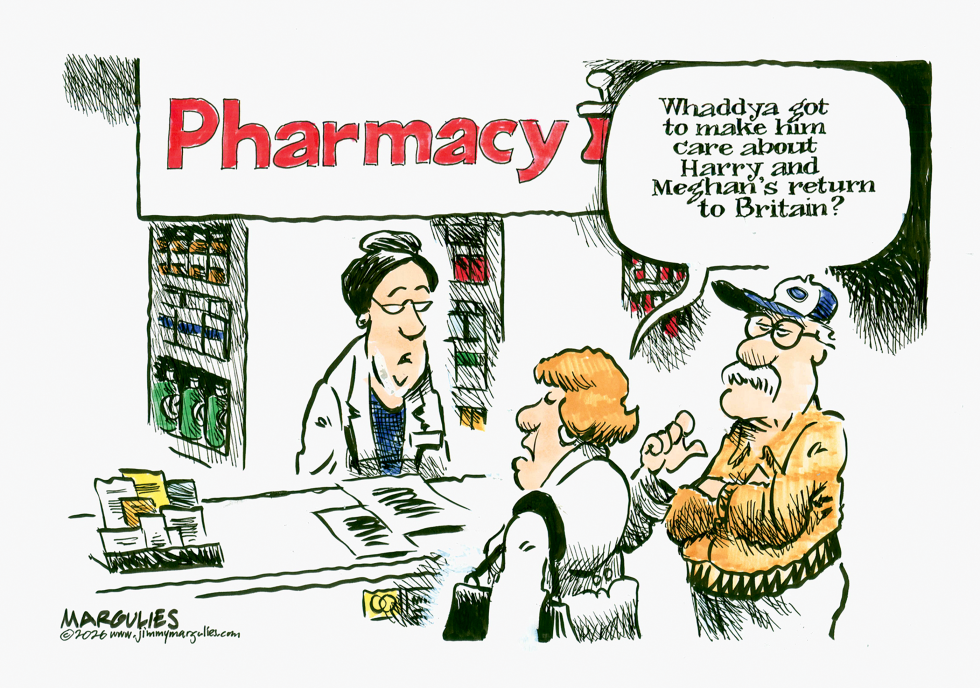
A customer at a pharmacy counter asks the pharmacist what remedy exists to generate interest in Prince Harry and Meghan Markle's return to Britain. The exchange underscores ongoing public fatigue with the couple's media coverage and royal family dynamics. The piece frames the query as a symptom of broader disengagement from the story.
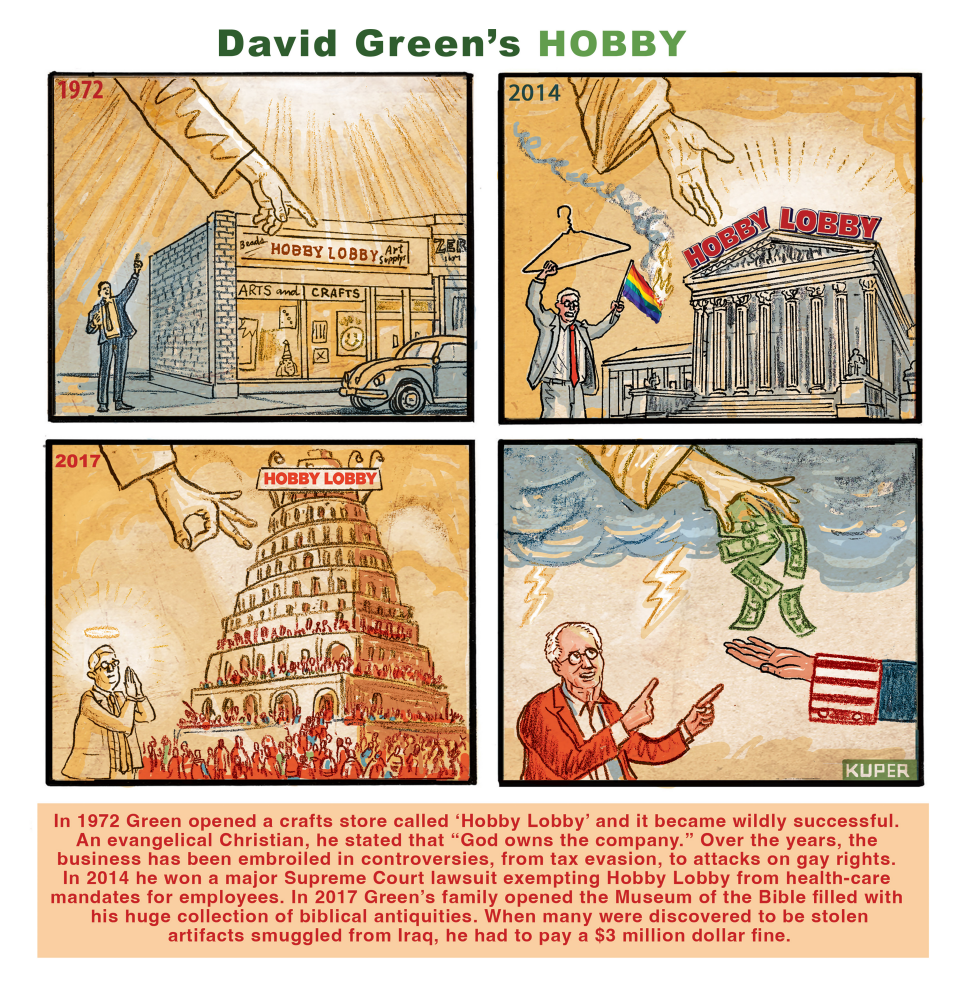
David Green opened Hobby Lobby in 1972 and built it into a major chain while declaring God owns the company. The business faced repeated controversies including a 2014 Supreme Court case on health care mandates and a 2017 Bible Museum scandal involving smuggled Iraqi artifacts that resulted in a $3 million fine. The piece presents these events as a pattern of legal and ethical issues tied to the company's evangelical leadership.
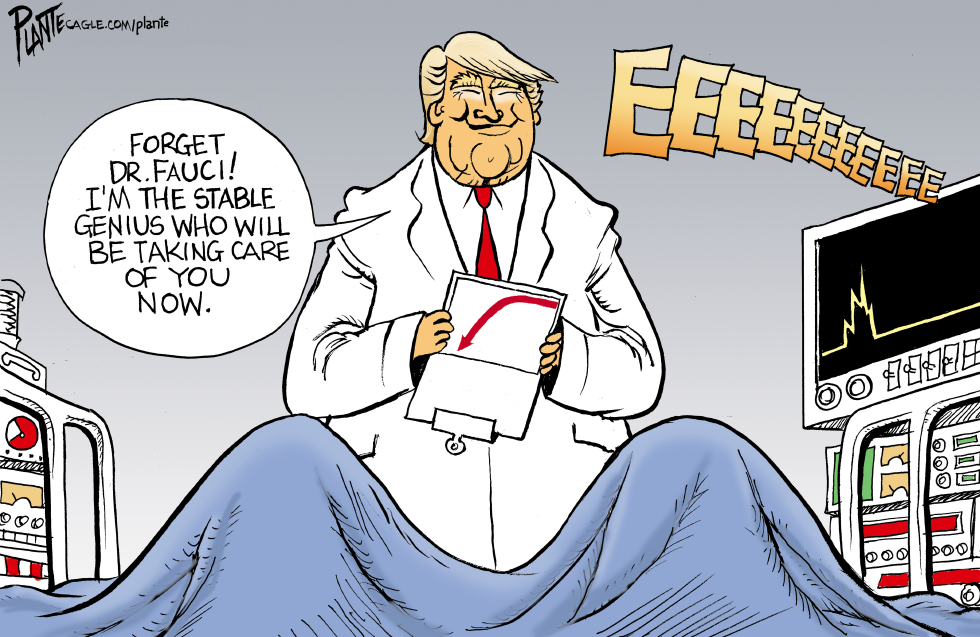
Donald Trump appears in a physician's coat asserting control over patient care and dismissing Dr. Fauci. The depiction occurs amid ongoing debates over federal health policy leadership and executive influence on medical decisions. The piece argues that such assertions risk undermining established expertise in public health administration.
Families continue to face elevated grocery costs in 2026 as inflation lingers on staples like bread. Shoppers at checkout counters encounter humorous but pointed reminders of affordability struggles. The editorial highlights how routine purchases now require creative financing solutions. It critiques the ongoing economic pressure on households. The piece argues that such conditions reflect deeper failures in containing living expenses.
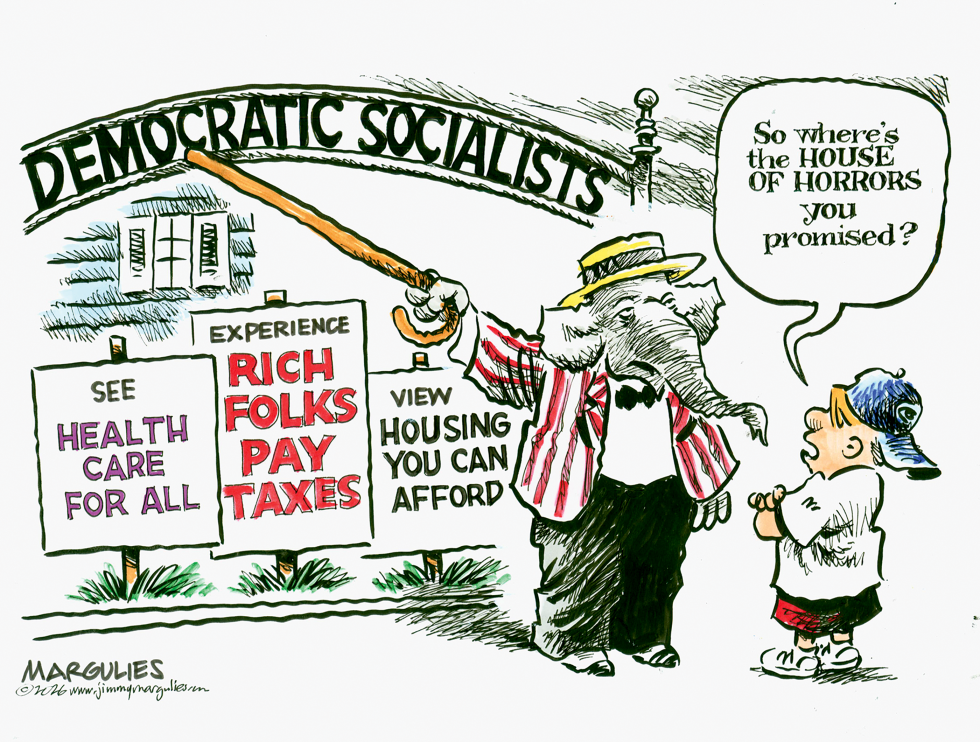
An elephant representing Republicans conducts a tour of attractions labeled Democratic Socialists on July 1 2026. Three signs advertise health care for all, taxes paid by the rich and housing that average people can afford. A young visitor in a cap asks where the house of horrors is that was promised. The scene uses the classic elephant symbol to frame policy offerings as ordinary exhibits rather than frightening outcomes.
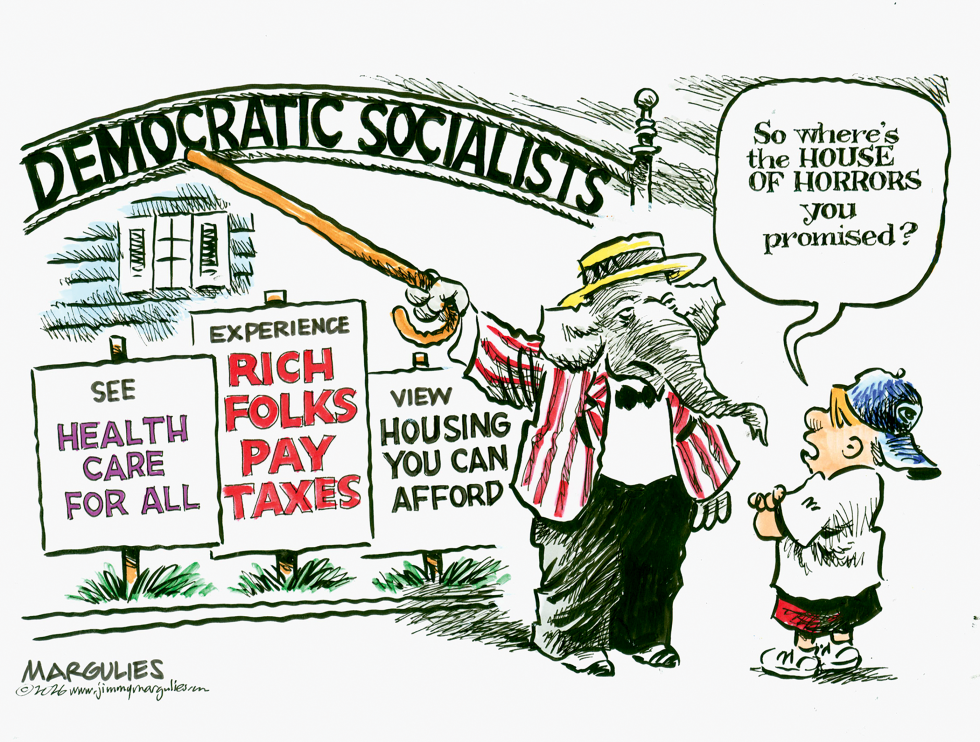
An elephant dressed as a barker stands at a Democratic Socialists booth displaying signs for health care for all, rich folks paying taxes, and housing you can afford. The figure holds a pointer toward the arch and addresses a child visitor. The child asks where the house of horrors is located. The scene is set outdoors with a building facade visible behind the signs. Publication occurred on July 1 2026.