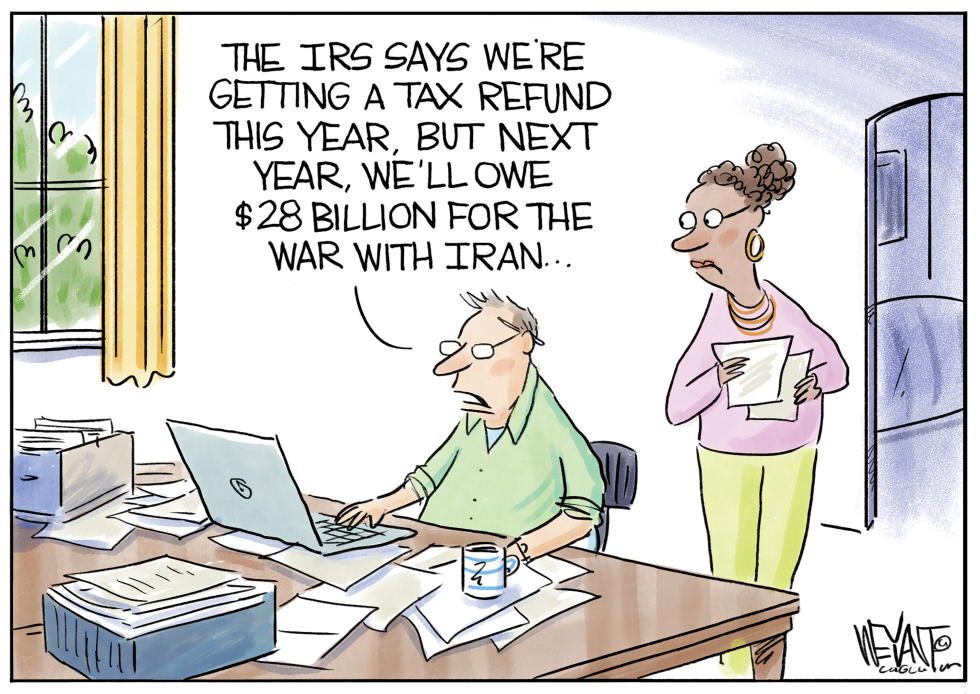
Dive into this biting political cartoon tax refund piece where a woman, holding papers, informs a laptop-working man about their IRS windfall this year, only to drop the bomb of owing $28 billion next for the war with Iran. The satirical cartoon Iran war vibe captures the absurdity of US taxes funding wars, with cluttered desks and exasperated expressions underscoring the humorous take on federal spending. It's a classic taxpayer burden Iran conflict jab, poking fun at government spending satire while illustrating the disconnect between personal finances and massive military expenses. Through cartoon about military expenses, it cleverly critiques fiscal policy in an office setting, making the war with Iran taxpayer joke both relatable and irreverently insightful for viewers pondering editorial cartoon fiscal policy.
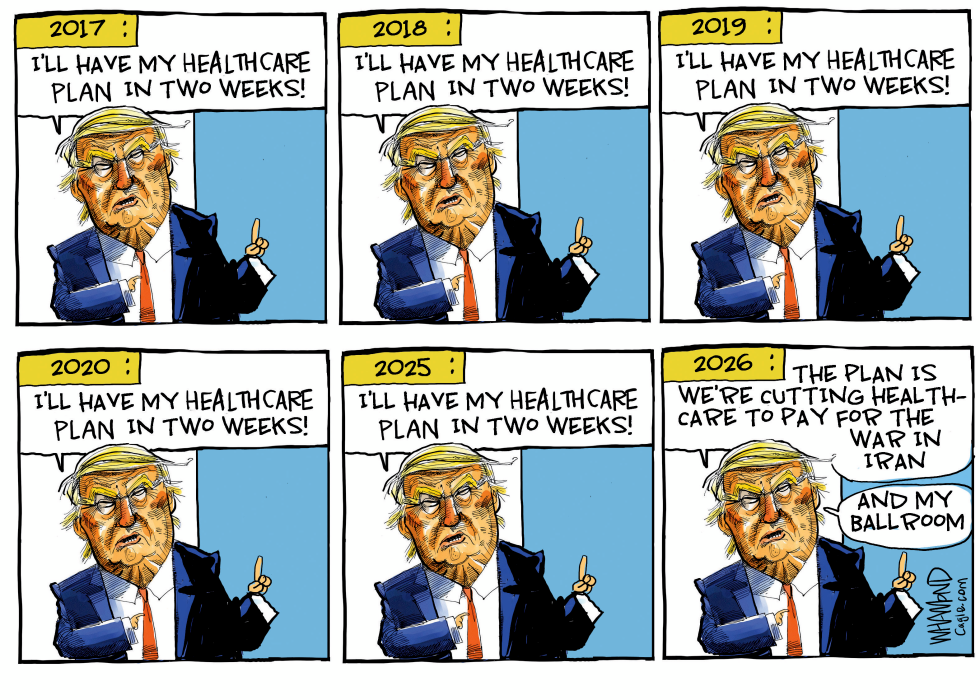
Dave Whamond's political cartoon depicts a recurring figure with distinctive blonde hair and suit, pointing emphatically while promising a healthcare plan 'in two weeks' from 2017 through 2025. The sequence builds to a 2026 punchline where the promise shifts to cutting healthcare to fund a war in Iran and a personal ballroom. This Trump healthcare plan political cartoon employs dry humor to critique endless delays and misplaced priorities. The US politics war funding criticism underscores how domestic needs like healthcare reform delay comic strip give way to military spending in this Republican healthcare policy parody. The endless two weeks promise meme captures the frustration with unfulfilled pledges in a sharp, sequential format.
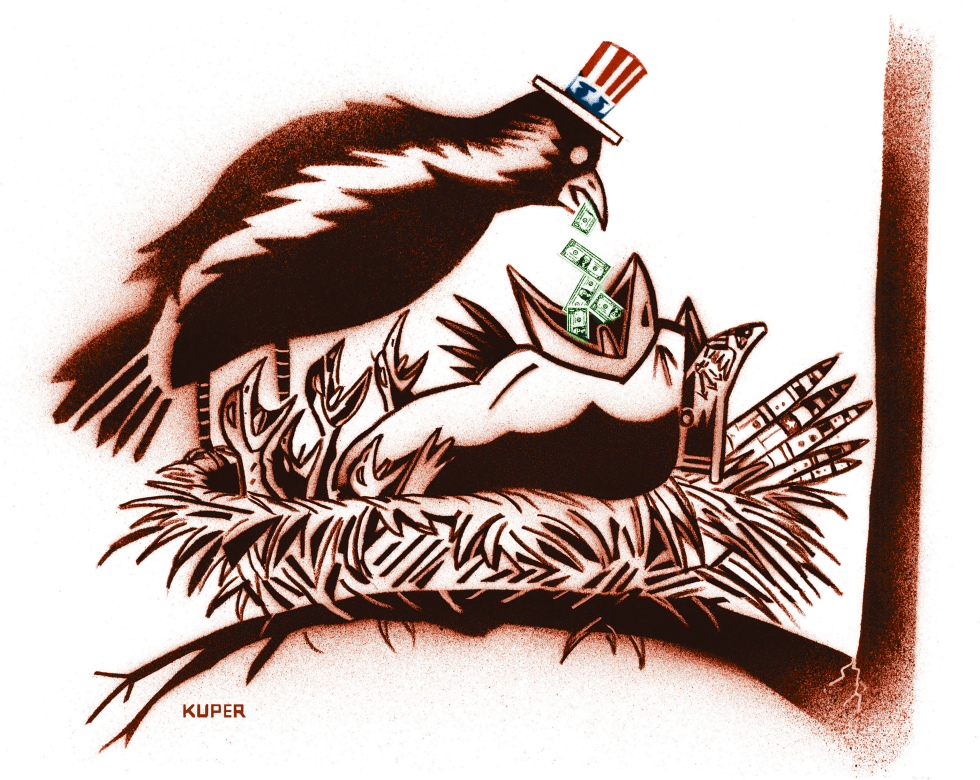
The cartoon shows a large bird wearing an Uncle Sam hat placing dollar bills into the beak of a smaller bird nestled with military hardware. This imagery addresses the ongoing federal budget debate where defense allocations increase while funding for social programs such as SNAP, school lunches, and healthcare faces reductions. The work responds to recent policy discussions involving figures like Pete Hegseth and Kristi Noem on immigration enforcement and military matters. It underscores tensions between national security spending and domestic welfare needs as of the September 2025 publication date.