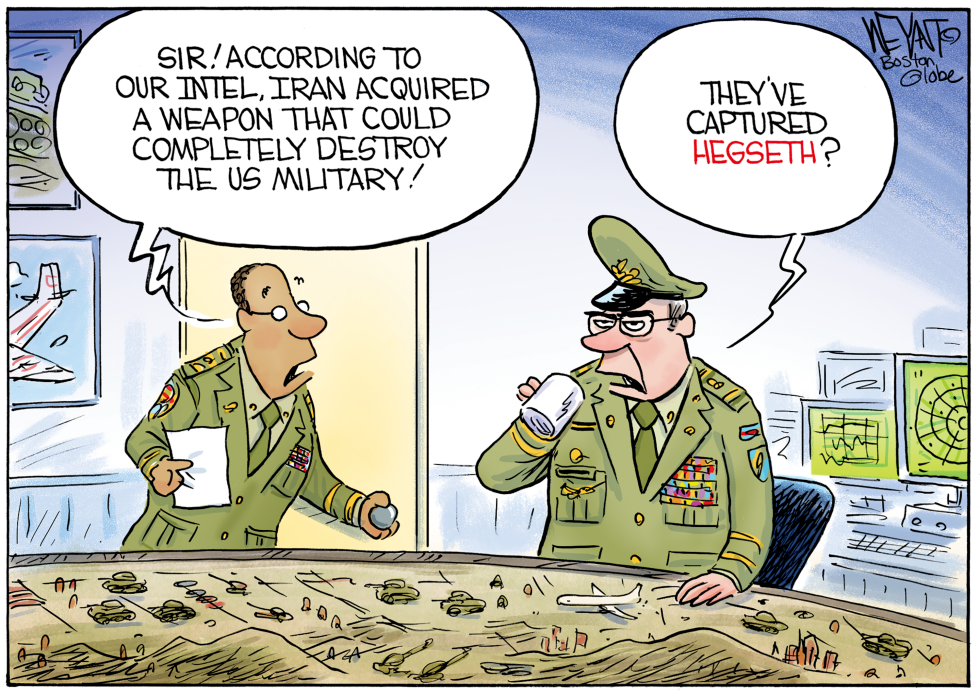
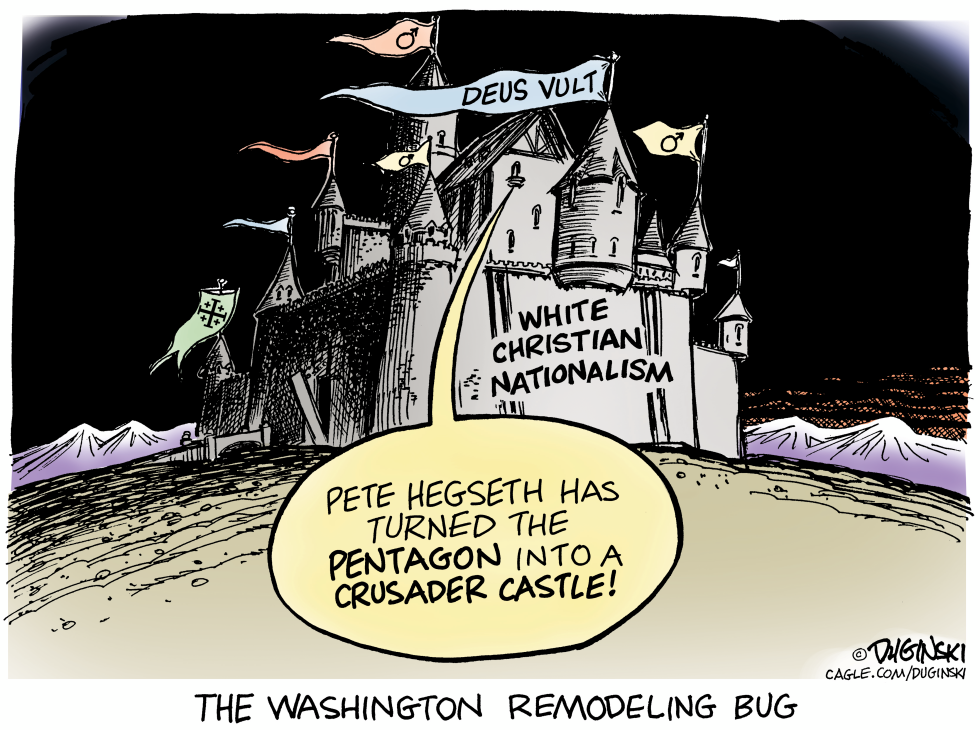
On September 16 2026 a cartoon depicted two US military officers reacting to intelligence about an Iranian weapon capable of destroying the American military. The senior officer immediately identifies Pete Hegseth as the captured asset in question. The piece responds to ongoing debate over Hegseth's fitness for senior defense leadership and questions whether his presence undermines readiness more than external adversaries.
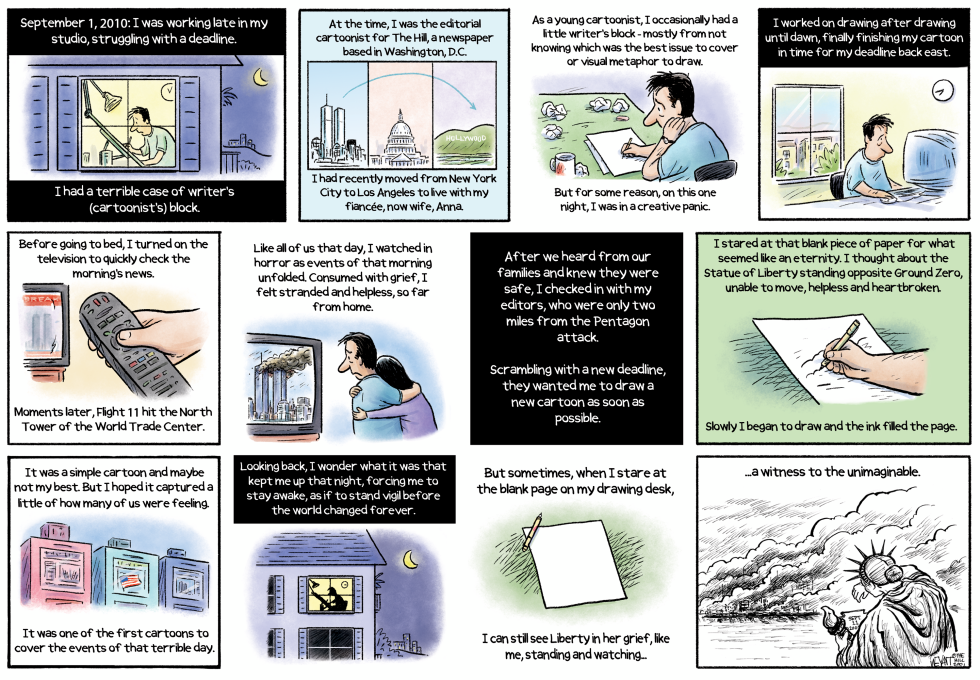
On September 11, 2001, editorial cartoonist Christopher Weyant faced a sudden deadline shift after the attacks on the World Trade Center and Pentagon. Working from Washington, D.C., he checked on family and editors before creating one of the earliest cartoons responding to the events. The piece shows his personal struggle with a blank page that night and the resulting image of the Statue of Liberty standing vigil opposite Ground Zero. The cartoon marks the 25th anniversary by revisiting how the attacks altered the nation and the artist's own sense of purpose.
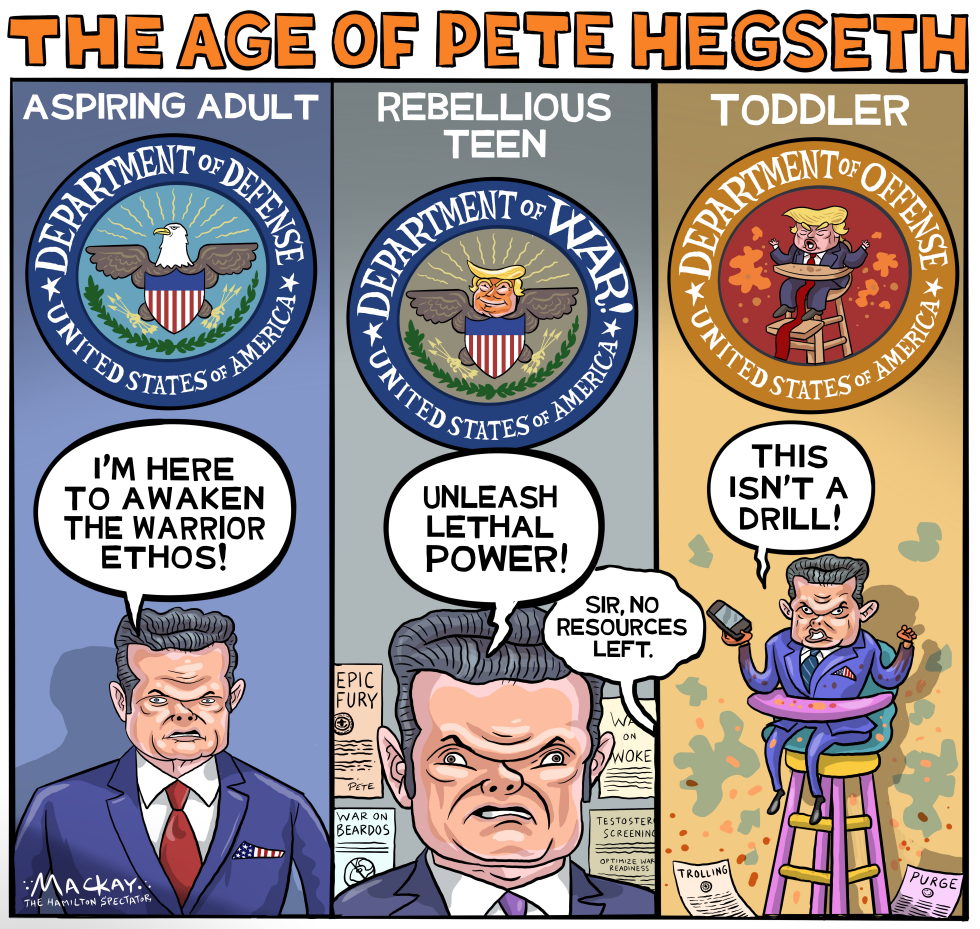
The cartoon by Graeme MacKay portrays Pete Hegseth's progression through three stages at the Pentagon under President Trump. In the first panel Hegseth pledges to awaken the warrior ethos at the Department of Defense. The middle panel shows him calling to unleash lethal power while an aide reports no resources remain. The final panel depicts a toddler Trump at the Department of Offense with Hegseth as a frantic aide amid papers about testosterone screening and purges. The work comments on the Trump administration's approach to military leadership and policy priorities as of September 2026.
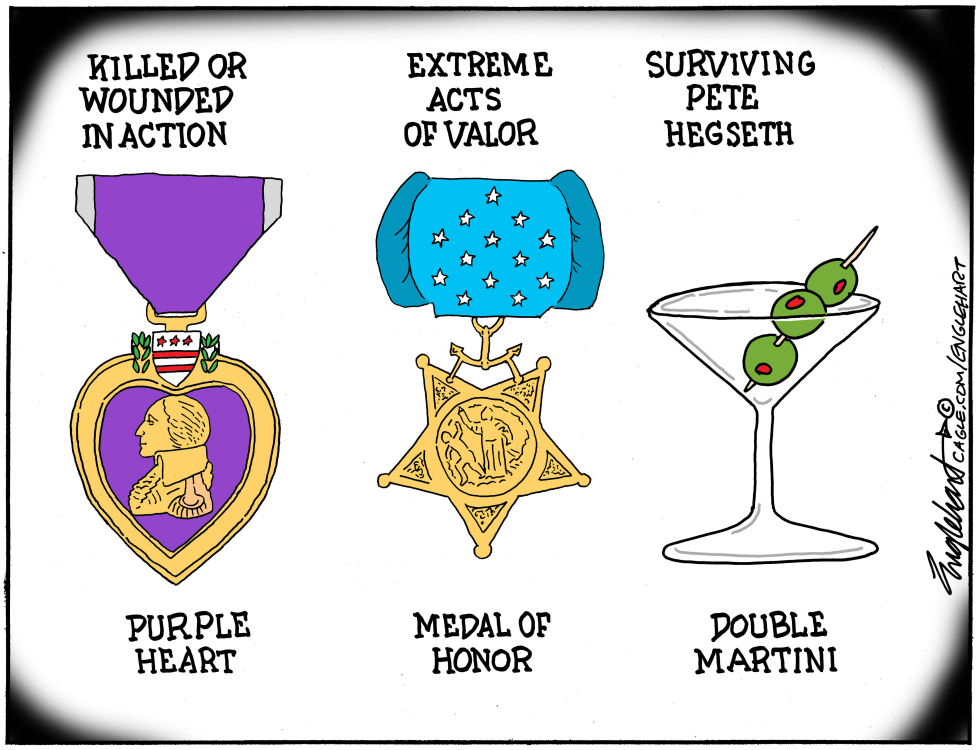
Pete Hegseth's nomination for a senior defense post in 2026 revived questions about his military service record and personal conduct. Critics highlighted past statements and behavior that some viewed as disqualifying for oversight of the armed forces. The cartoon responds by equating endurance under Hegseth with a dubious achievement on par with battlefield valor awards.
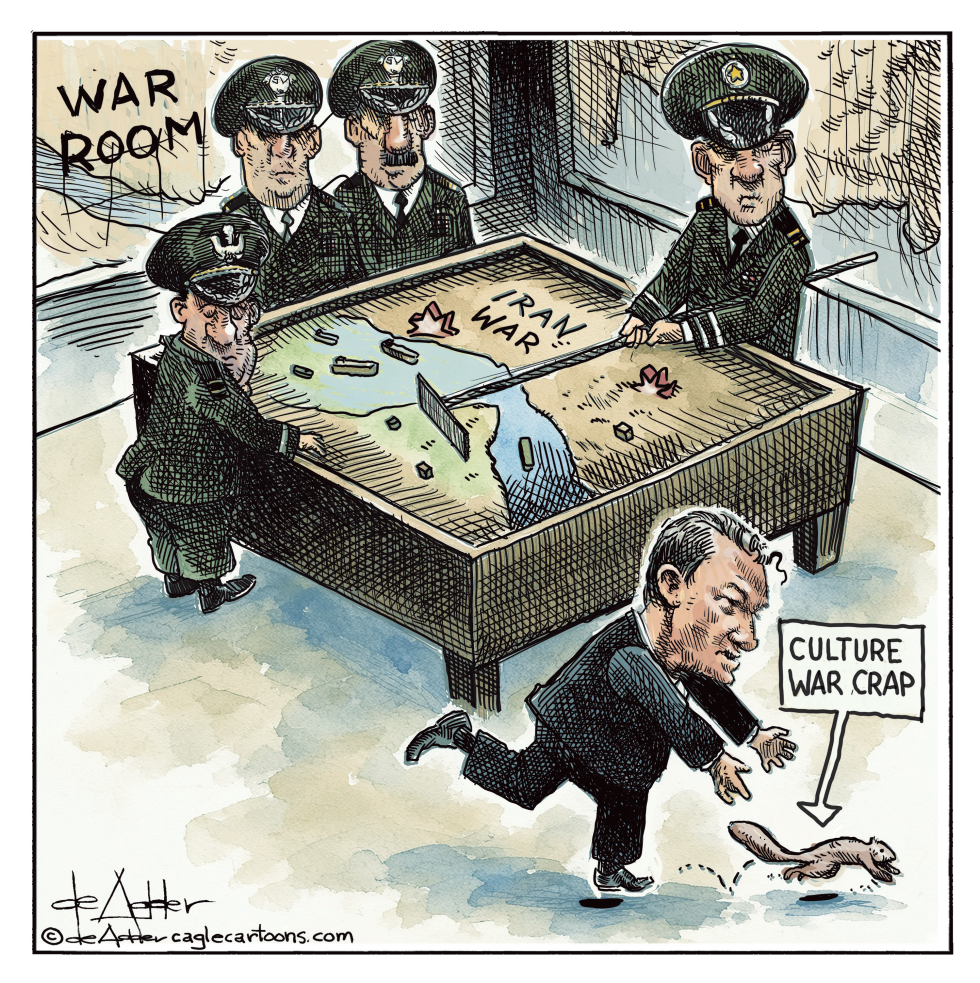
Defense Secretary Pete Hegseth has drawn scrutiny for emphasizing culture war issues while military planners address potential Iran contingencies. The cartoon depicts him pursuing a squirrel marked culture war crap instead of joining officers at the Iran war table. Critics argue this reflects a pattern of prioritizing domestic cultural battles over strategic readiness. The piece suggests such focus undermines effective leadership in the Pentagon. It critiques the administration's approach to balancing internal politics with national security demands.
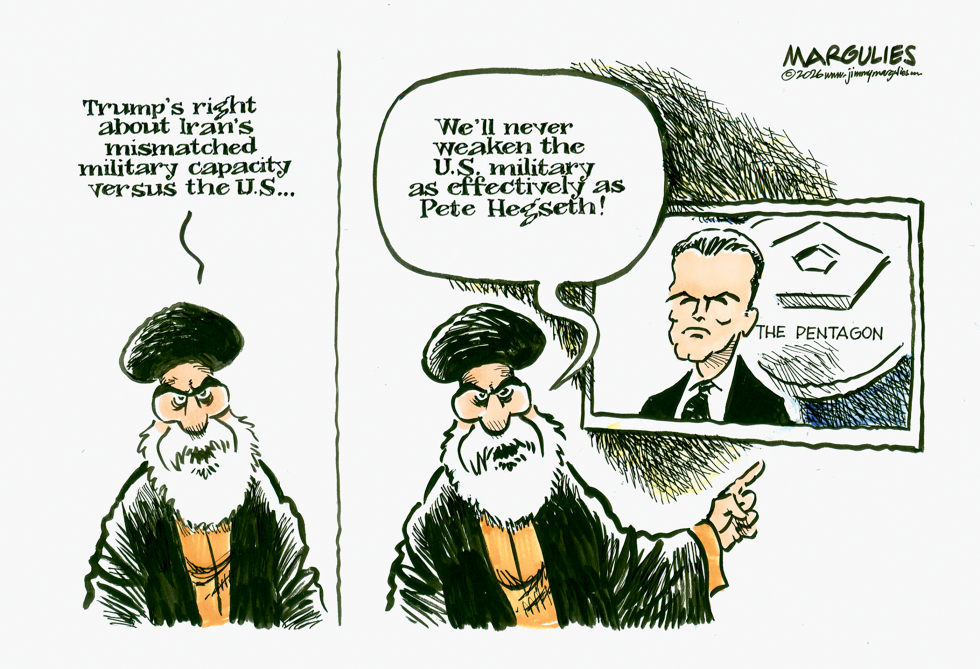
On September 2, 2026, an editorial cartoon shows Iran's Ayatollah endorsing Pete Hegseth's leadership at the Pentagon by claiming he weakens the US military more effectively than Iran could. The piece references Trump's prior assessment of Iran's inferior military capacity. It highlights concerns over Hegseth's qualifications and potential damage to US defense readiness under the Trump administration. The cartoon argues that Hegseth's appointment poses a greater internal threat to American military strength than external adversaries like Iran.
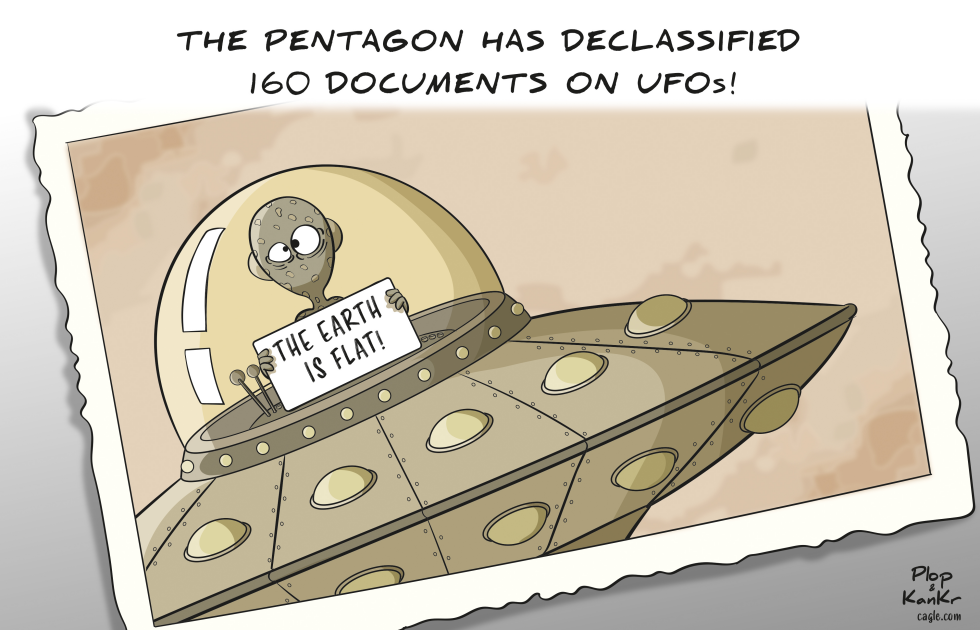
The cartoon depicts an alien emerging from a UFO while holding a sign declaring the Earth is flat. Text above notes the Pentagon has declassified 160 documents on UFOs. The image uses the recent release of government files to highlight ongoing flat earth beliefs in a humorous way. It responds to public interest in UFO disclosures by showing an extraterrestrial endorsing a fringe theory. The visual ties the declassification directly to the alien's claim without additional context.
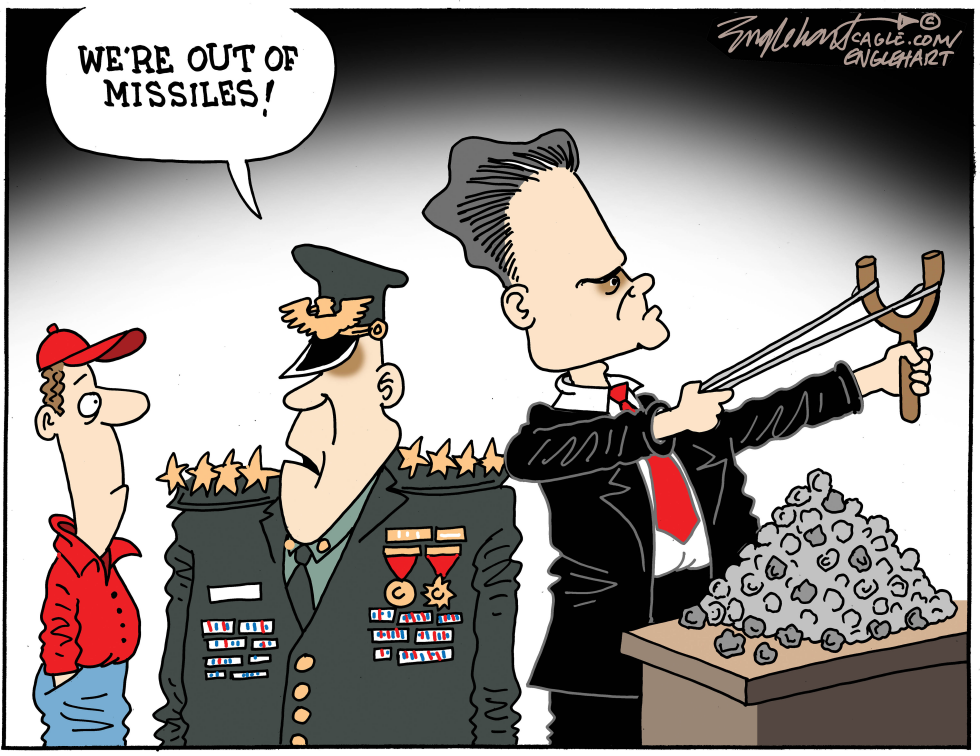
The Pentagon confronts depleted missile inventories during active defense needs. Officials explore improvised options including slingshots loaded with rocks. The development highlights supply chain strains and readiness questions for U.S. forces. The piece criticizes the situation as a failure of planning and resource allocation.
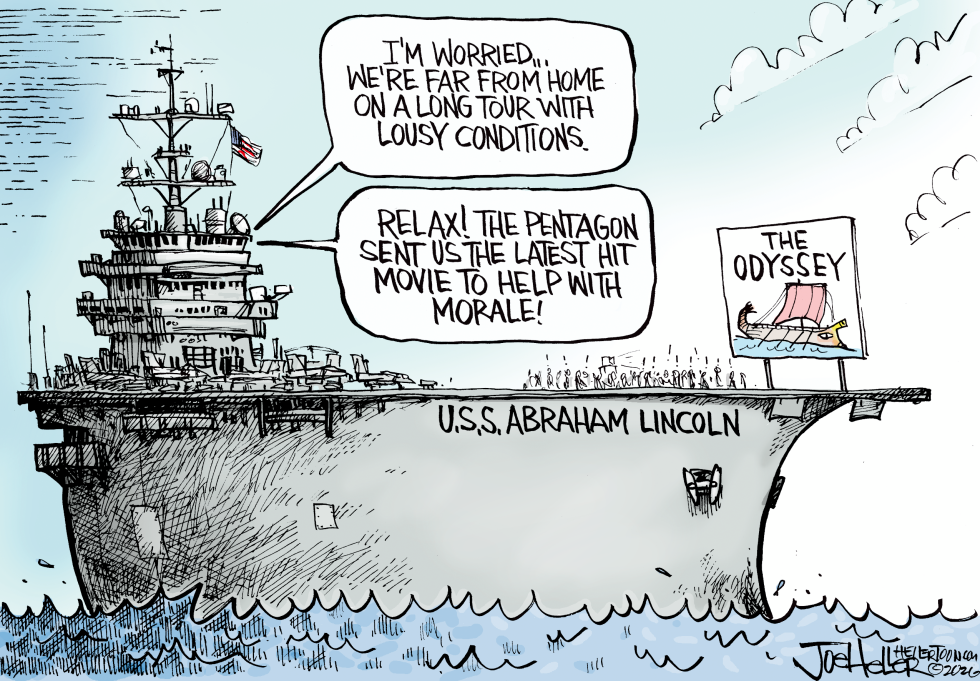
Sailors aboard the USS Abraham Lincoln have raised concerns about extended deployments far from home and substandard living conditions at sea. The Pentagon's response involves screening the film The Odyssey to improve morale among the crew. This approach highlights ongoing challenges in maintaining readiness during prolonged naval operations. The editorial takes the position that such gestures fall short of addressing core issues like crew welfare and rotation schedules.
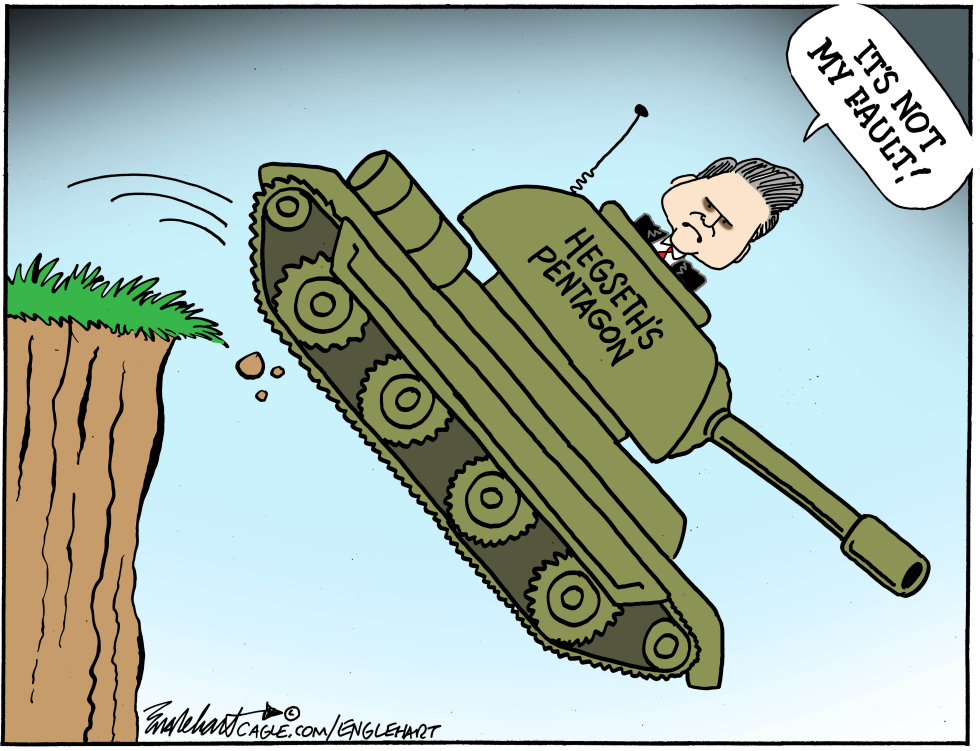
Pete Hegseth serves as Defense Secretary in 2026 amid ongoing questions about Pentagon management and readiness. The tank labeled with his name edges toward a cliff, reflecting institutional instability. The piece argues that leadership accountability remains absent despite visible risks to the department.
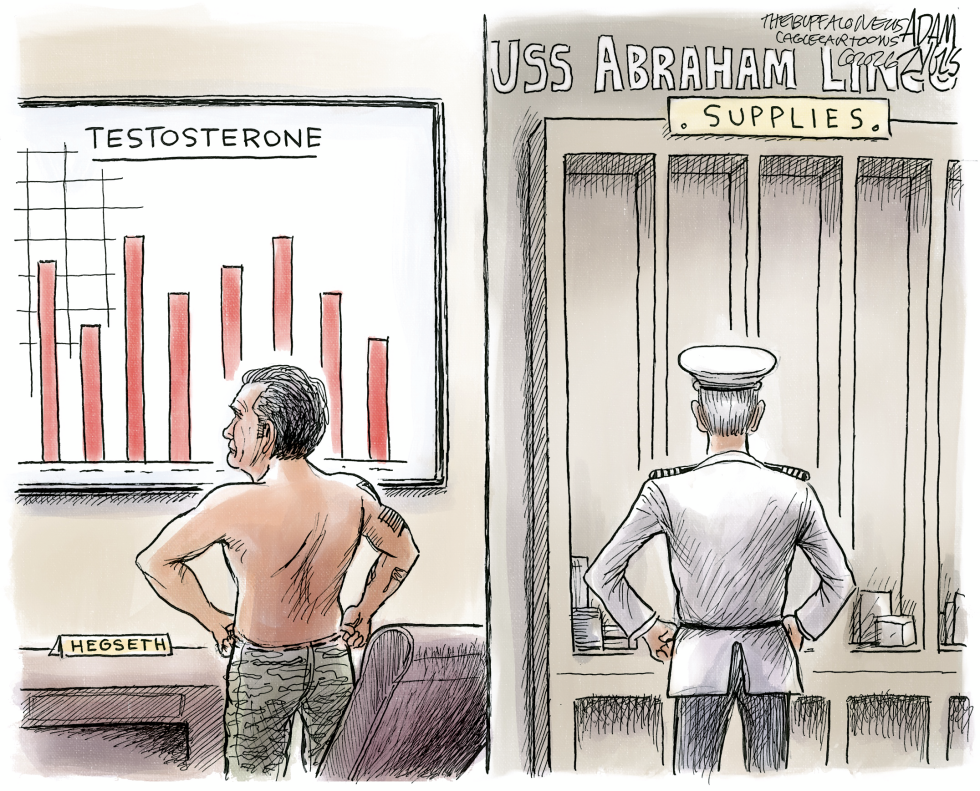
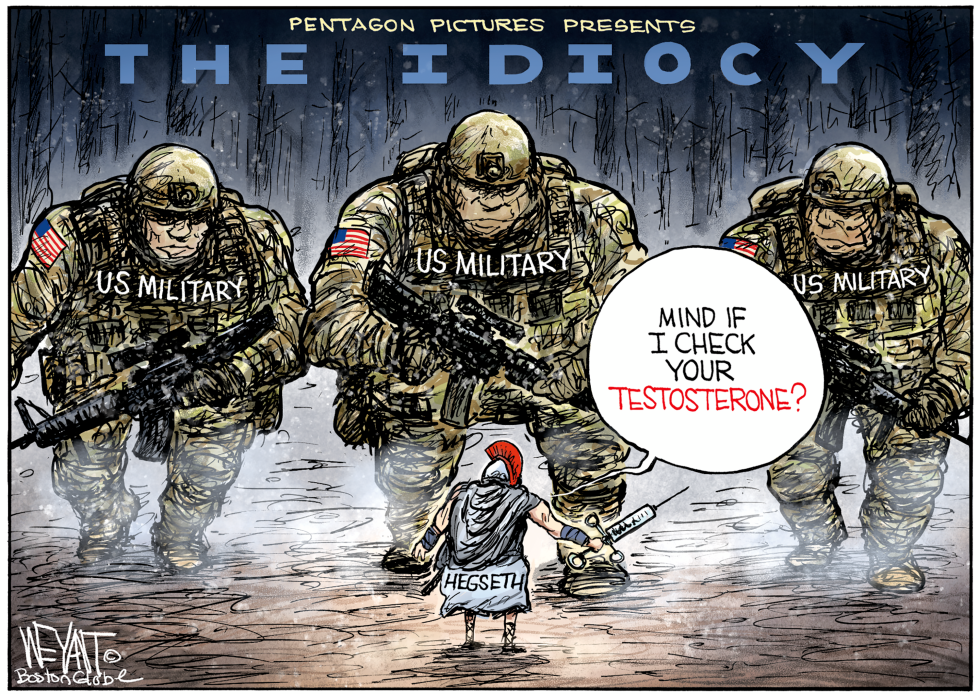
Defense Secretary Pete Hegseth has directed new scrutiny of testosterone levels across US military units. The move comes as the Pentagon reviews physical readiness standards for combat roles. Critics argue the focus distracts from broader readiness issues while supporters say it enforces accountability. The editorial takes the position that such micromanagement undermines troop morale and operational effectiveness.
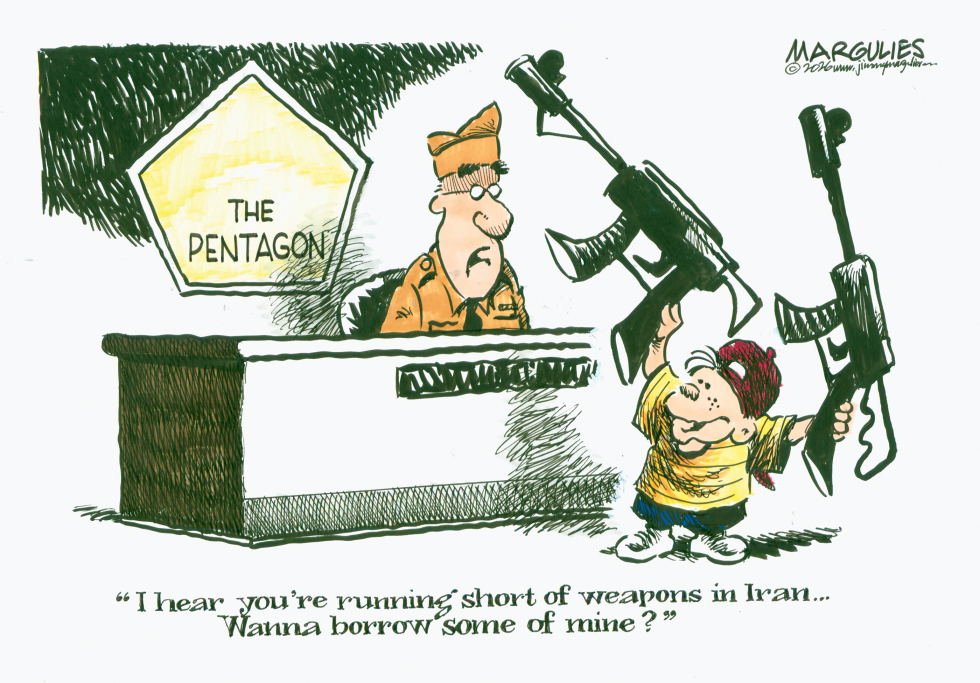
A Pentagon officer receives an unsolicited offer of rifles from a child citing shortages in Iran. The exchange underscores ongoing U.S. concerns over arms flows and regional stability in the Middle East. No specific recent policy shift or confirmed shortage has been verified in the days leading to publication. The piece frames the Pentagon as open to unconventional sources for military support. It critiques reliance on external or irregular suppliers in foreign policy decisions.
On June 11 2026 Donald Trump appears as a soccer referee in a cartoon rejecting national team entries to the World Cup. He stamps passports from Somalia Mexico Canada and Iran with large rejected marks while holding the trophy. A dejected figure with a globe for a head stands nearby on the pitch.