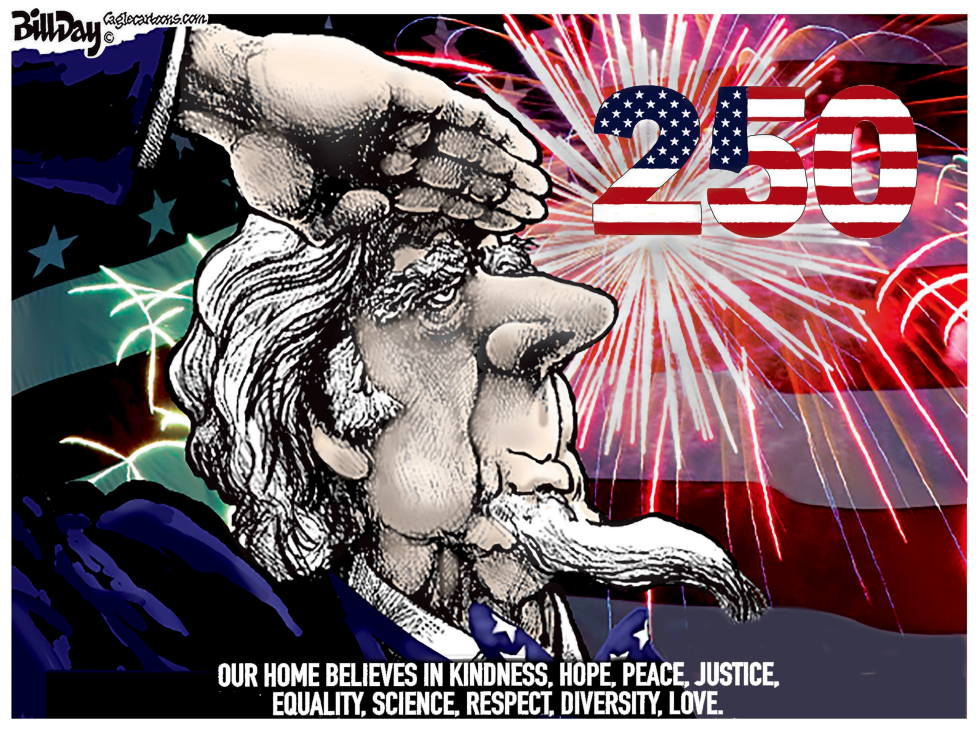
The image depicts a historical figure saluting against a backdrop of American flag and fireworks on June 30, 2026. The 250th anniversary of the United States approaches, and the cartoon emphasizes national values listed in a bottom banner: kindness, hope, peace, justice, equality, science, respect, diversity and love. The composition uses red, white and blue tones with celebratory pyrotechnics to frame the gesture.
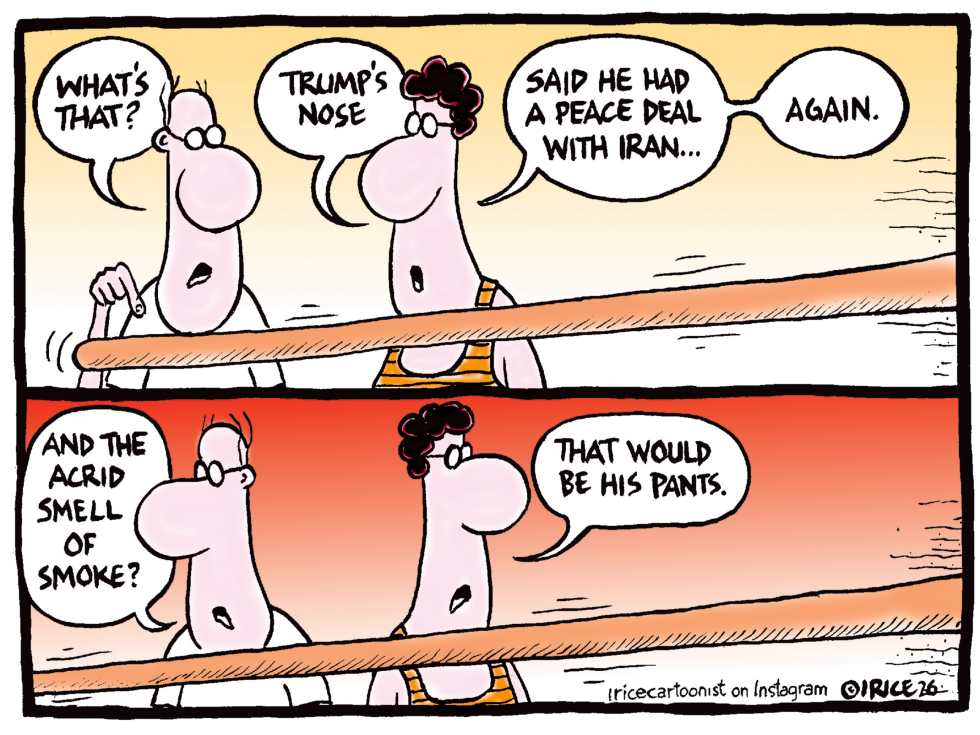
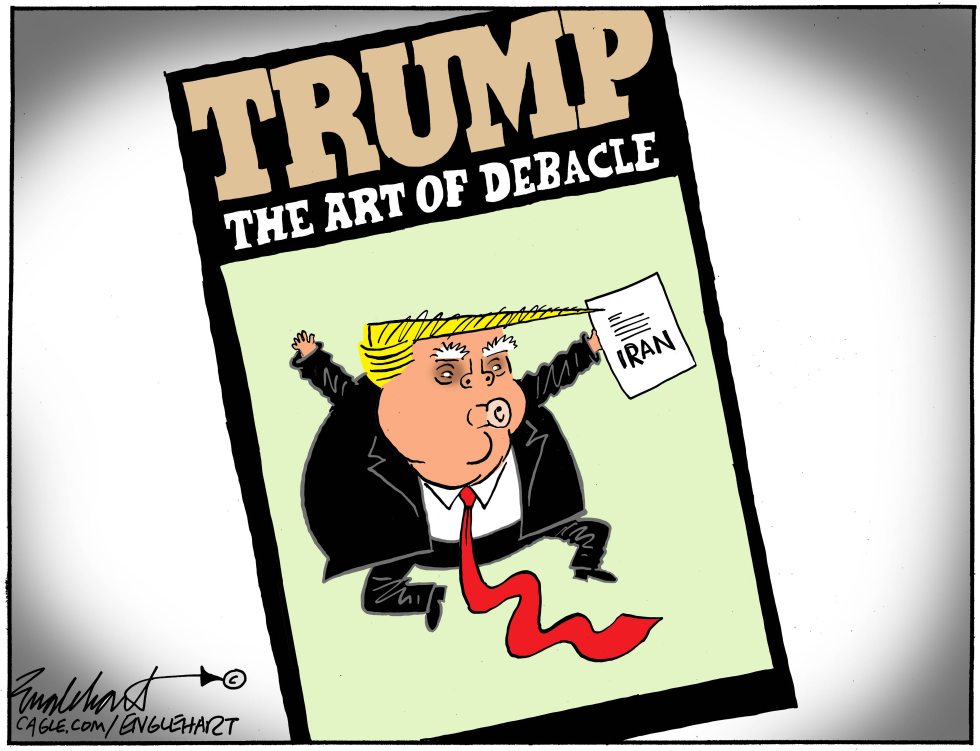
Two figures stand at a railing and react to news of a Trump peace deal with Iran. The first points out an odd smell while the second attributes it to burning pants. The exchange occurs in two stacked panels with speech bubbles capturing the dialogue. The scene responds to recent claims about negotiations involving Iran. Publication occurred on June 26 2026.
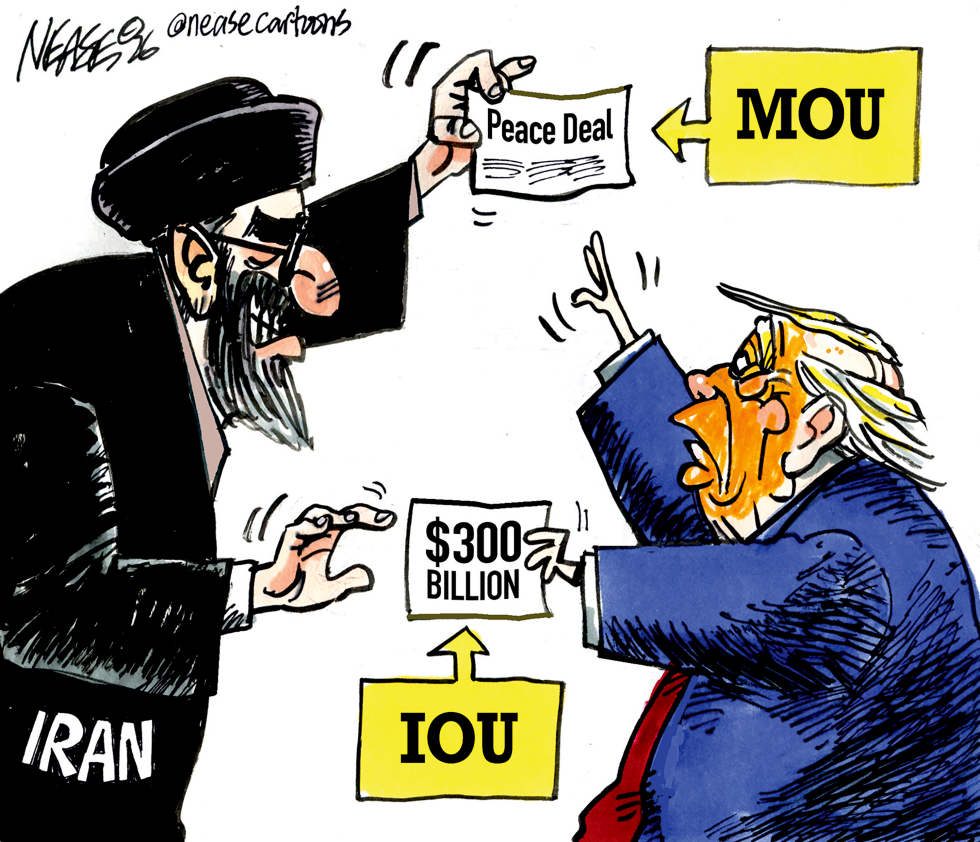
Nease, a Canadian cartoonist, examines the hidden costs of the peace agreements being brokered by Trump across multiple conflict zones. The cartoon suggests that peace achieved through coercion and abandonment of allies carries enormous human costs. The accounting metaphor frames diplomacy as a transactional exercise with losers.
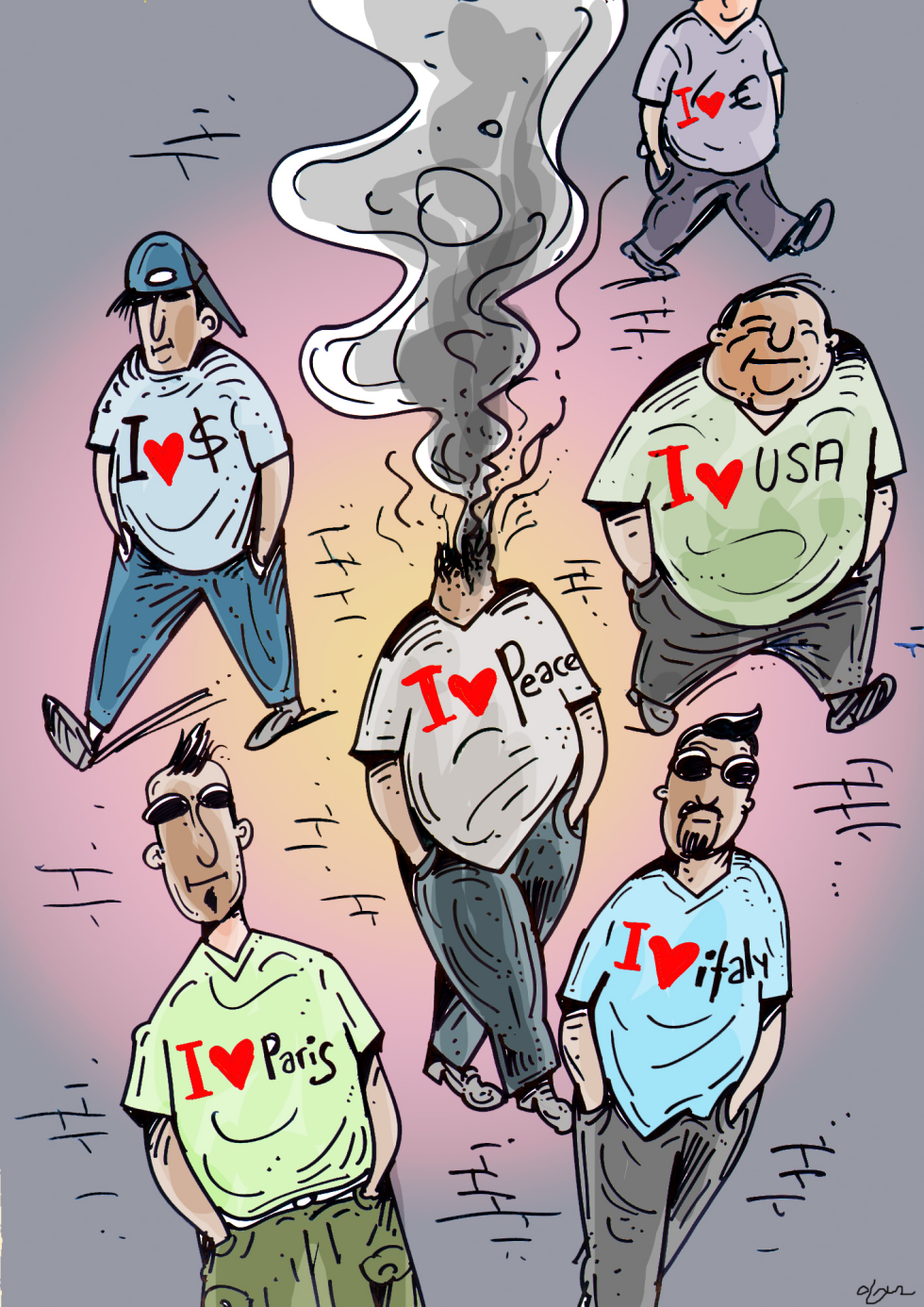
A figure wearing an I love peace shirt shows smoke rising from the head, suggesting hidden danger amid claims of nonviolence. Surrounding individuals display shirts loving money, Paris, the USA, Italy and the euro. The scene highlights contradictions between stated ideals and actions in public discourse around security threats.
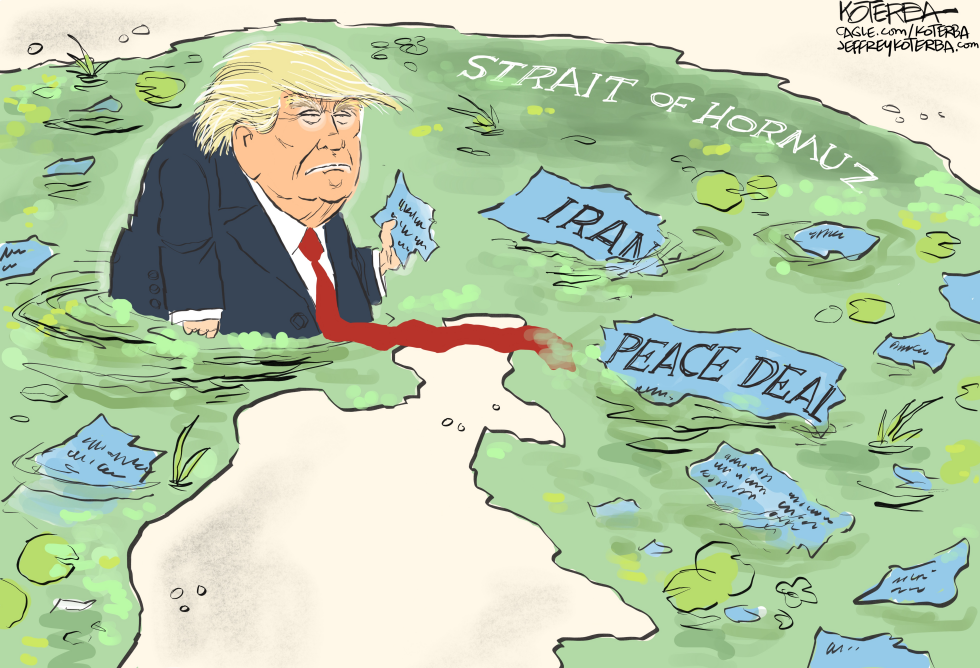
Koterba depicts Trump's Iran peace deal as already decomposing, covered in algae like a sunken shipwreck. The cartoon suggests the deal was hollow or insincere from the start, deteriorating almost immediately. The organic decay imagery implies diplomatic agreements built on false foundations cannot survive.
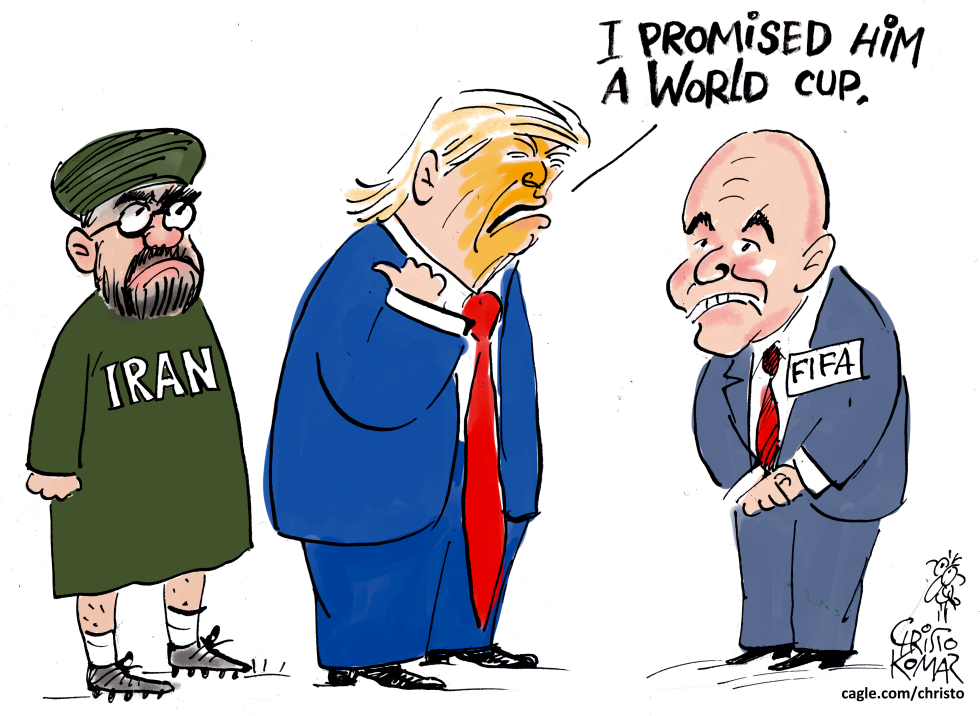
On June 21 2026 the cartoon depicts Donald Trump assuring a figure labeled Iran of a World Cup win while a FIFA official looks on with concern. The scene references Trump's past statements on international deals and the upcoming tournament hosted partly in the United States.