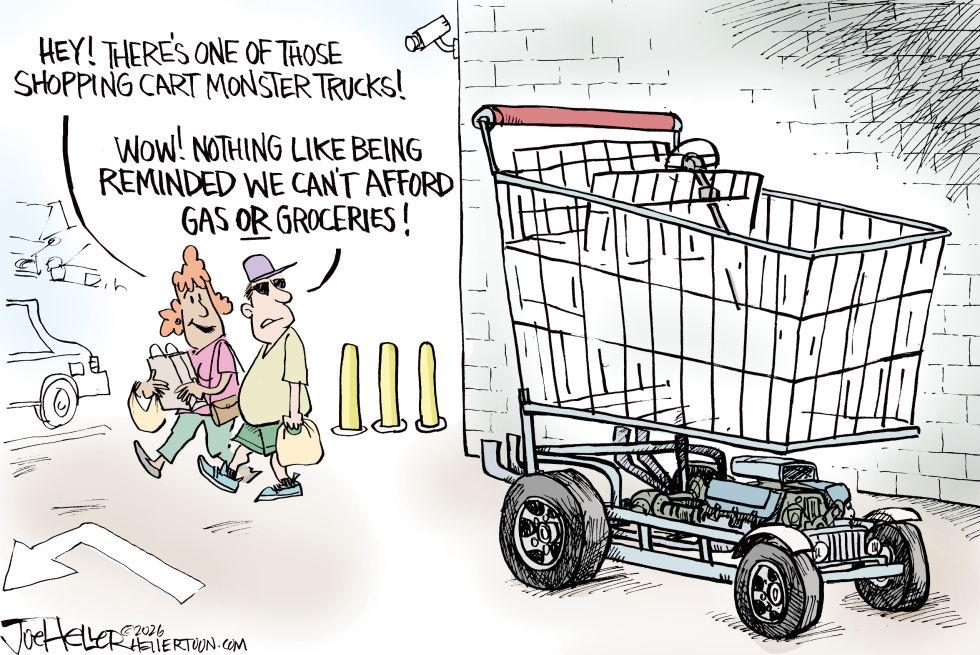
A modified shopping cart on large wheels draws comments from passersby about unaffordable gas and groceries. The scene on July 10 2026 captures ongoing economic strain from higher living costs. Passersby note the reminder of tight budgets for fuel and food. The image reflects persistent inflation concerns affecting household spending.
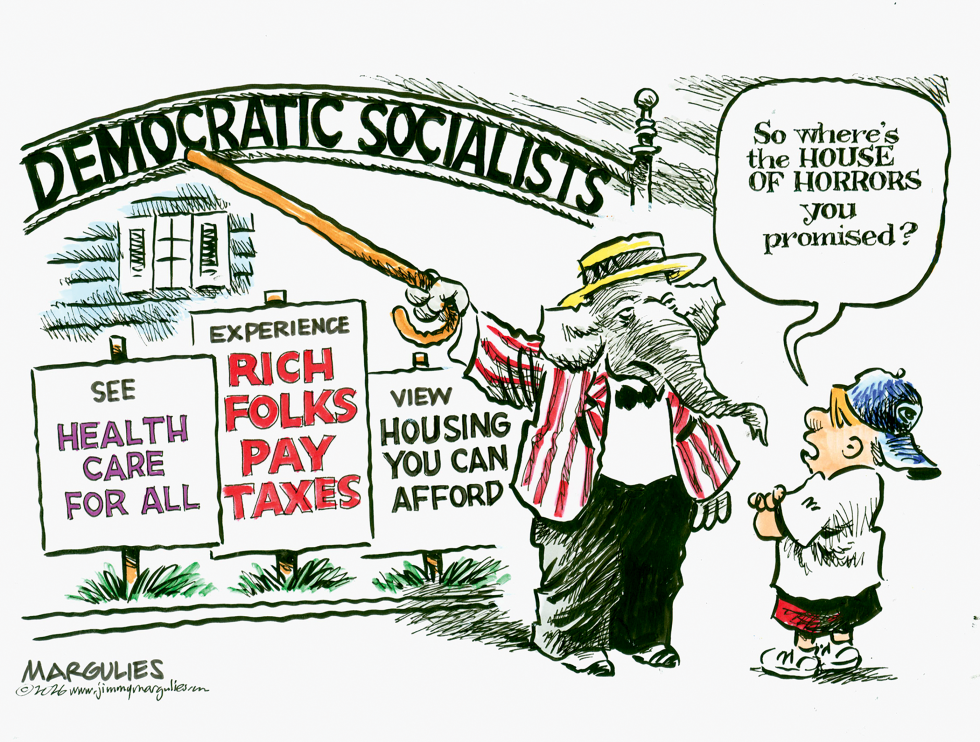
An elephant dressed as a barker stands at a Democratic Socialists booth displaying signs for health care for all, rich folks paying taxes, and housing you can afford. The figure holds a pointer toward the arch and addresses a child visitor. The child asks where the house of horrors is located. The scene is set outdoors with a building facade visible behind the signs. Publication occurred on July 1 2026.
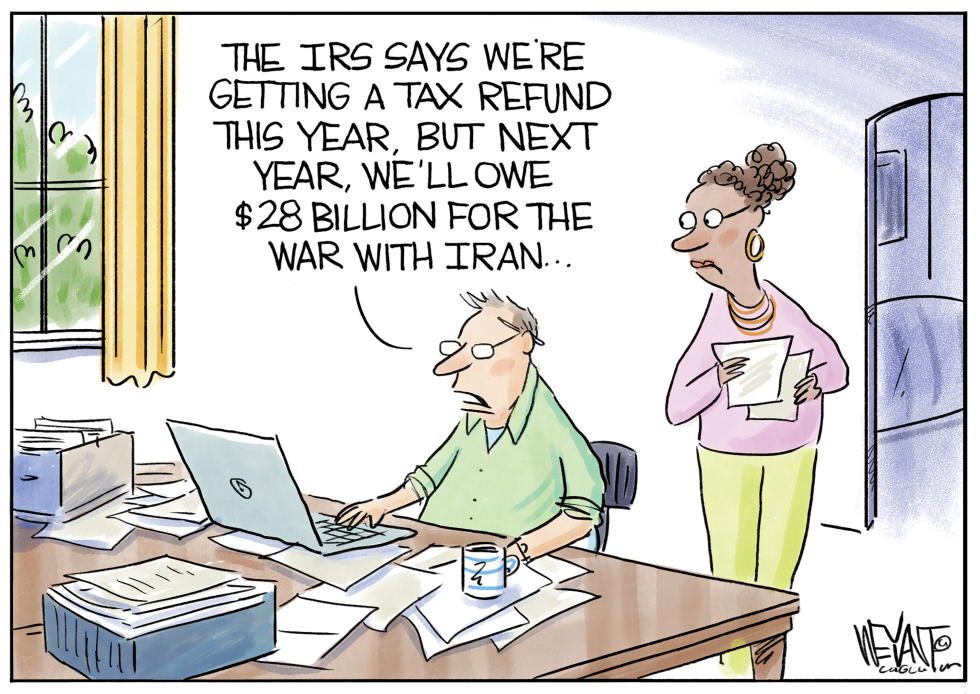
Dive into this biting political cartoon tax refund piece where a woman, holding papers, informs a laptop-working man about their IRS windfall this year, only to drop the bomb of owing $28 billion next for the war with Iran. The satirical cartoon Iran war vibe captures the absurdity of US taxes funding wars, with cluttered desks and exasperated expressions underscoring the humorous take on federal spending. It's a classic taxpayer burden Iran conflict jab, poking fun at government spending satire while illustrating the disconnect between personal finances and massive military expenses. Through cartoon about military expenses, it cleverly critiques fiscal policy in an office setting, making the war with Iran taxpayer joke both relatable and irreverently insightful for viewers pondering editorial cartoon fiscal policy.
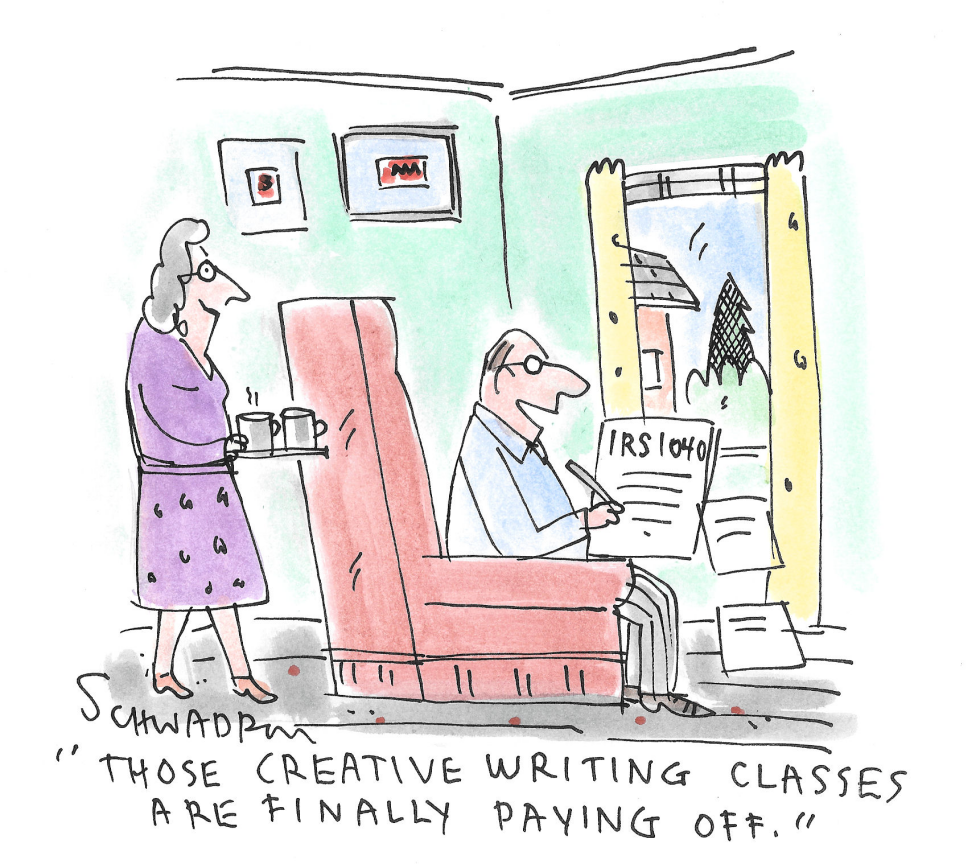
This tax season humor cartoon depicts an older man seated in a red armchair, penning details on an IRS 1040 form, as his wife stands nearby with a tray of steaming cups, delivering the punchline about creative writing classes paying off. The satirical view of income tax returns captures a domestic scene tax time parody, where the husband channels his educational investments into what appears to be an imaginative approach to tax filing. With a humorous take on tax preparation creativity, the illustration pokes fun at the notion of turning literary flair into fiscal advantage, all set against a simple indoor backdrop with wall art and a window view. The witty commentary underscores how seemingly unrelated skills like those from creative writing classes can 'pay off' in unexpected ways, especially during the dreaded tax season. Artist signature 'Schwadron' adds a touch of authenticity to this political cartoon on tax evasion creativity.
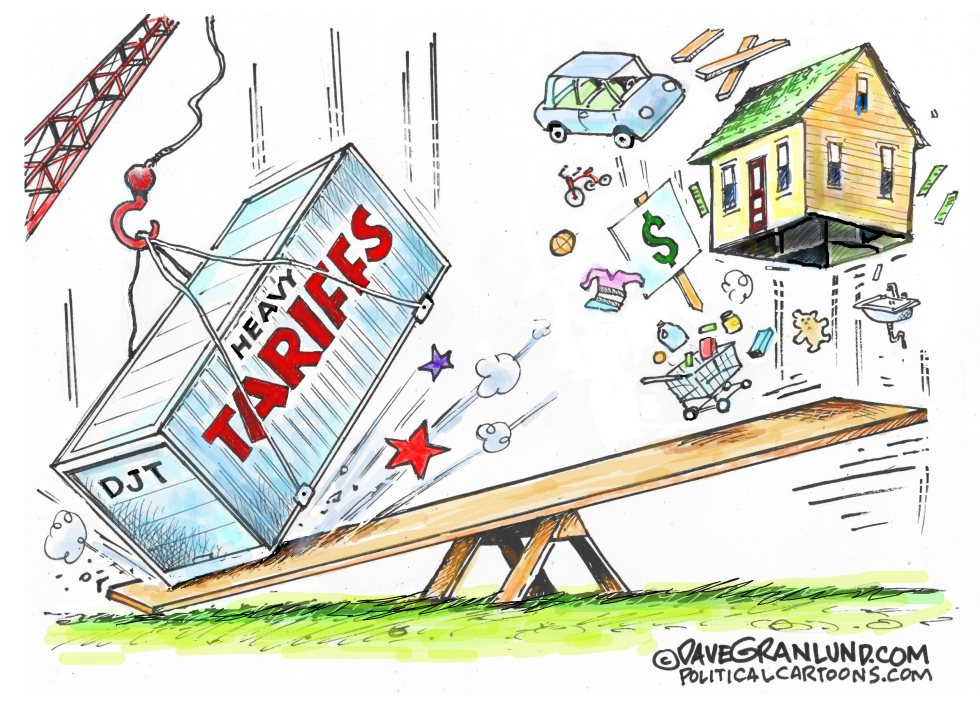
The cartoon depicts a seesaw with a heavy tariffs crate marked DJT on the descending side. Everyday goods including vehicles and homes fly upward on the opposite end. This illustrates how tariffs increase costs for middle income households and farmers in 2025.
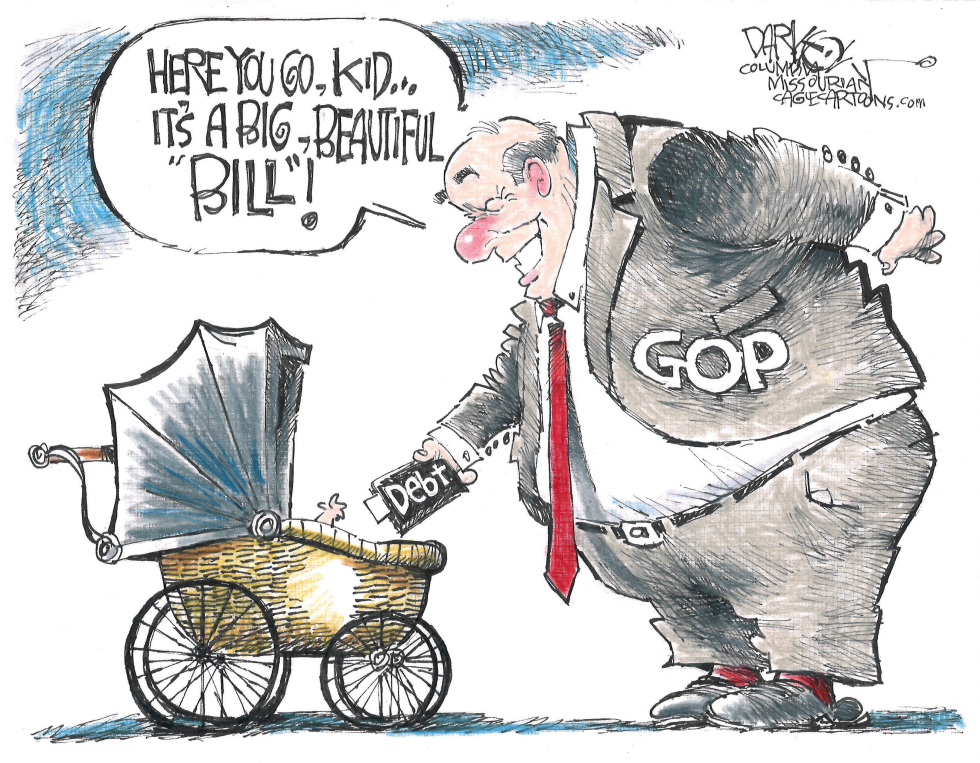
The cartoon illustrates the rollout of a major GOP budget bill nicknamed the big beautiful bill. It shows billionaires in an exclusive club while a tuxedoed figure presents a $3.8 trillion debt scroll to a distressed man holding a please help sign. The piece critiques how tax cuts for the wealthy add trillions to the national debt with costs passed to middle and lower income groups.
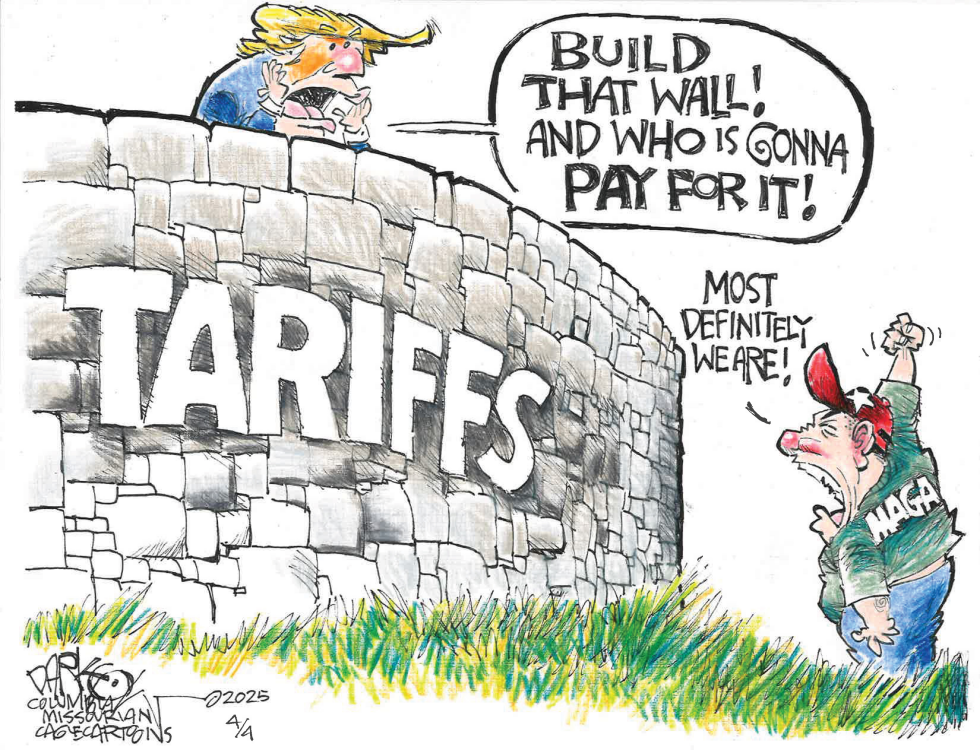
The cartoon shows a blond-haired man atop a stone wall marked 'TARIFFS,' shouting 'Build that wall! And who is gonna pay for it!' A red-hatted figure in a 'MAGA' shirt below responds 'Most definitely we are!' This setup draws a parallel to familiar chants, underscoring tariffs as a burden on consumers. Tags like Trump, tariffs, build the wall, MAGA, inflation, economy, trade war, backfire, and recession frame the scene. The dry humor lies in the obvious irony, where supporters unwittingly acknowledge the cost. Composition keeps it simple, with grassy base and bold lettering for impact. Such cartoons thrive on timely policy jabs, making this one sharable amid ongoing trade debates.