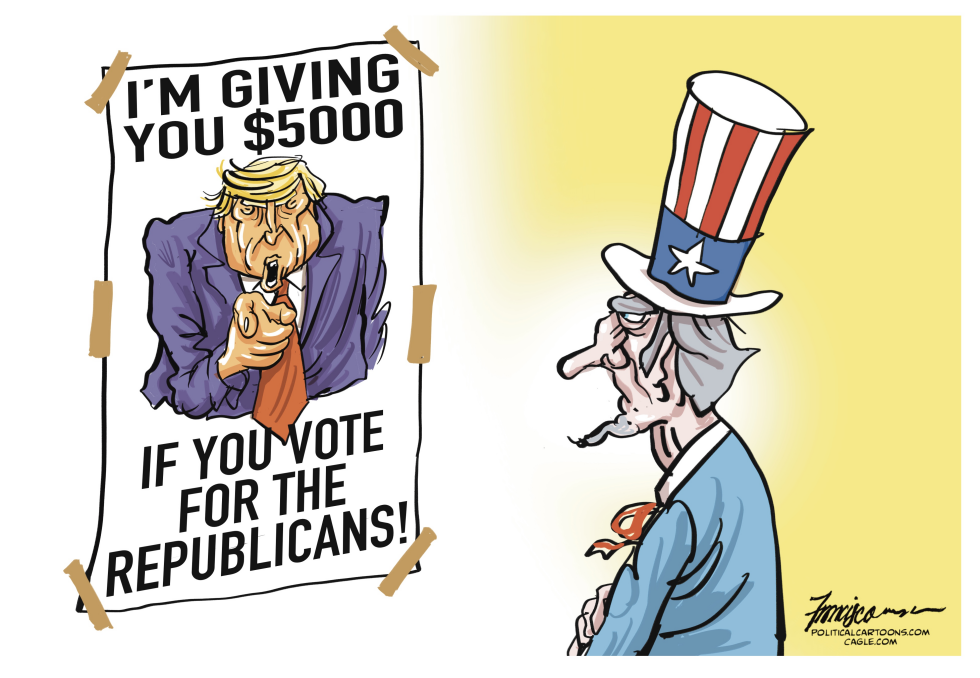
Donald Trump has floated direct cash payments to voters who support Republican candidates. The proposal surfaces weeks before the 2026 midterms and draws immediate scrutiny over its legality and intent. Critics argue the move risks turning elections into auctions. Supporters frame it as economic relief. The cartoon depicts the offer as a blunt transaction that leaves traditional symbols of American integrity uneasy.
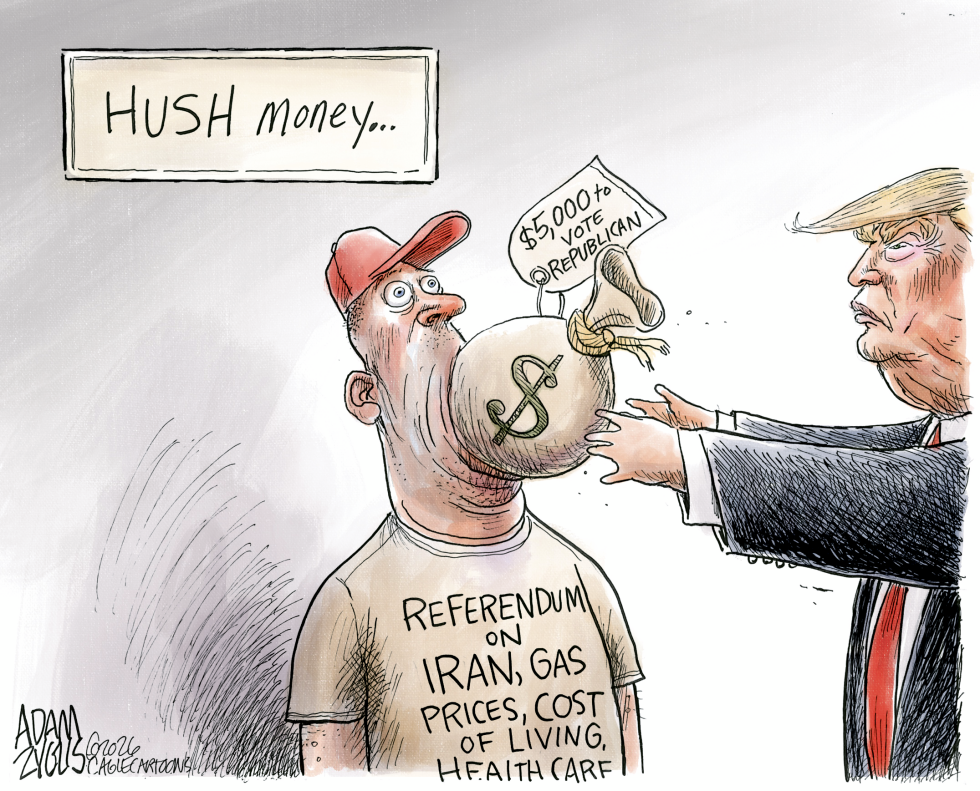
The cartoon shows Donald Trump handing a large bag of cash labeled as hush money to a man in a referendum shirt covering Iran, gas prices, cost of living and health care. A tag on the bag promises $5,000 to vote Republican. The scene responds to ongoing debates over election integrity and foreign policy issues involving Iran as of September 2026. It uses the visual metaphor of a bribe to comment on alleged attempts to influence voter priorities through financial incentives.
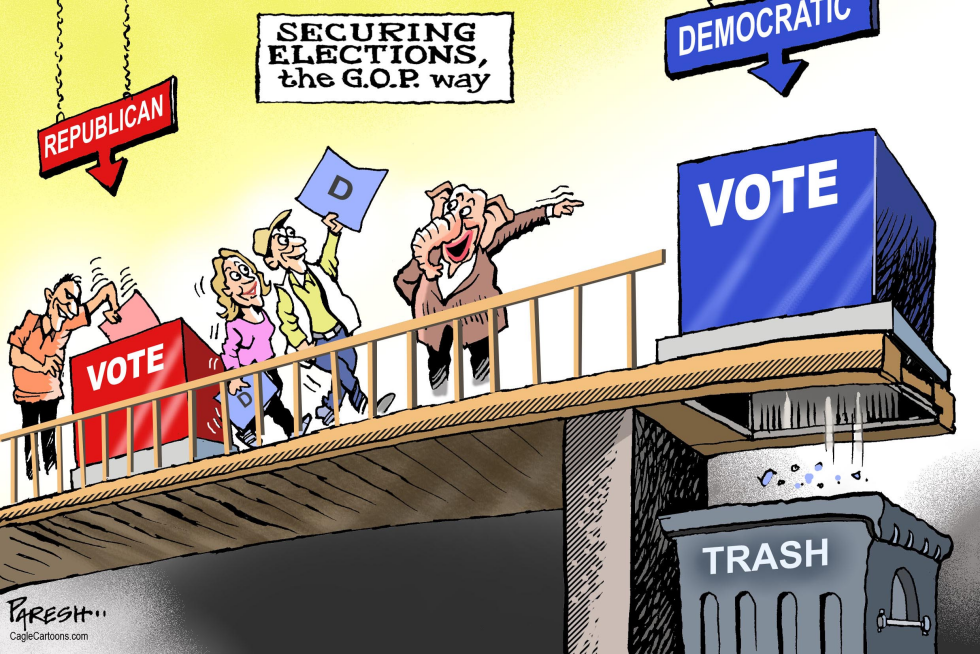
The cartoon depicts Republicans on a platform guiding a large blue vote box labeled Democratic into a trash can below while a red Republican vote box remains on the structure. A sign reads Securing Elections the G.O.P. way. The elephant symbol of the GOP points toward the action as figures including one holding a D flag stand nearby. The image comments on claims of election integrity by showing ballots from one party discarded. This reflects ongoing partisan debates over voting procedures and access as of the 2026 publication date.
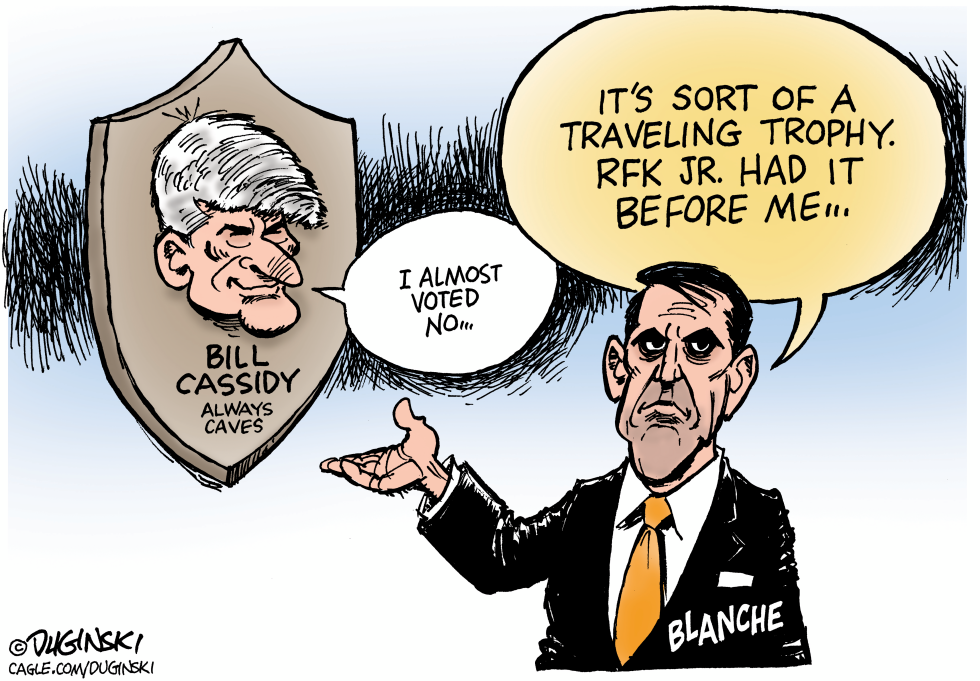
Todd Blanche, recently confirmed to a senior administration post, has mounted a shield bearing Sen. Bill Cassidy\'s likeness on his office wall. The Louisiana Republican, long viewed as a potential swing vote, backed the nomination despite earlier signals of hesitation. RFK Jr. reportedly displayed the same item during his own tenure. The arrangement underscores ongoing tensions within the GOP over loyalty tests and confirmation battles. The piece portrays Cassidy\'s support as another instance of yielding under pressure rather than a principled stand.
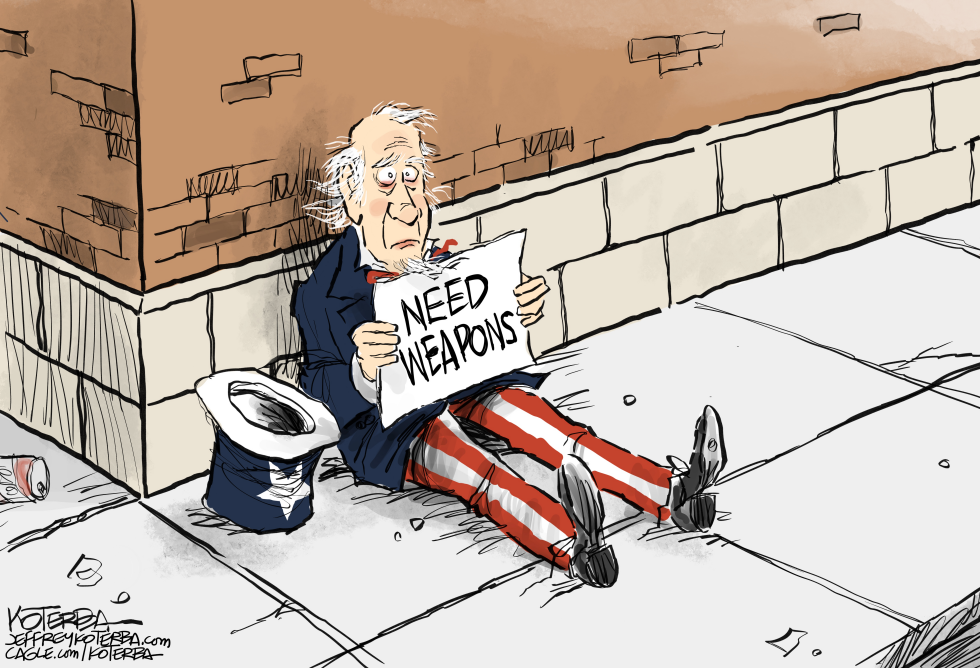
Uncle Sam appears as a disheveled figure on a sidewalk holding a sign requesting weapons. The image captures an ongoing national debate over military resources and international commitments. The editorial stance highlights perceived weakness in current arms policy and funding priorities.
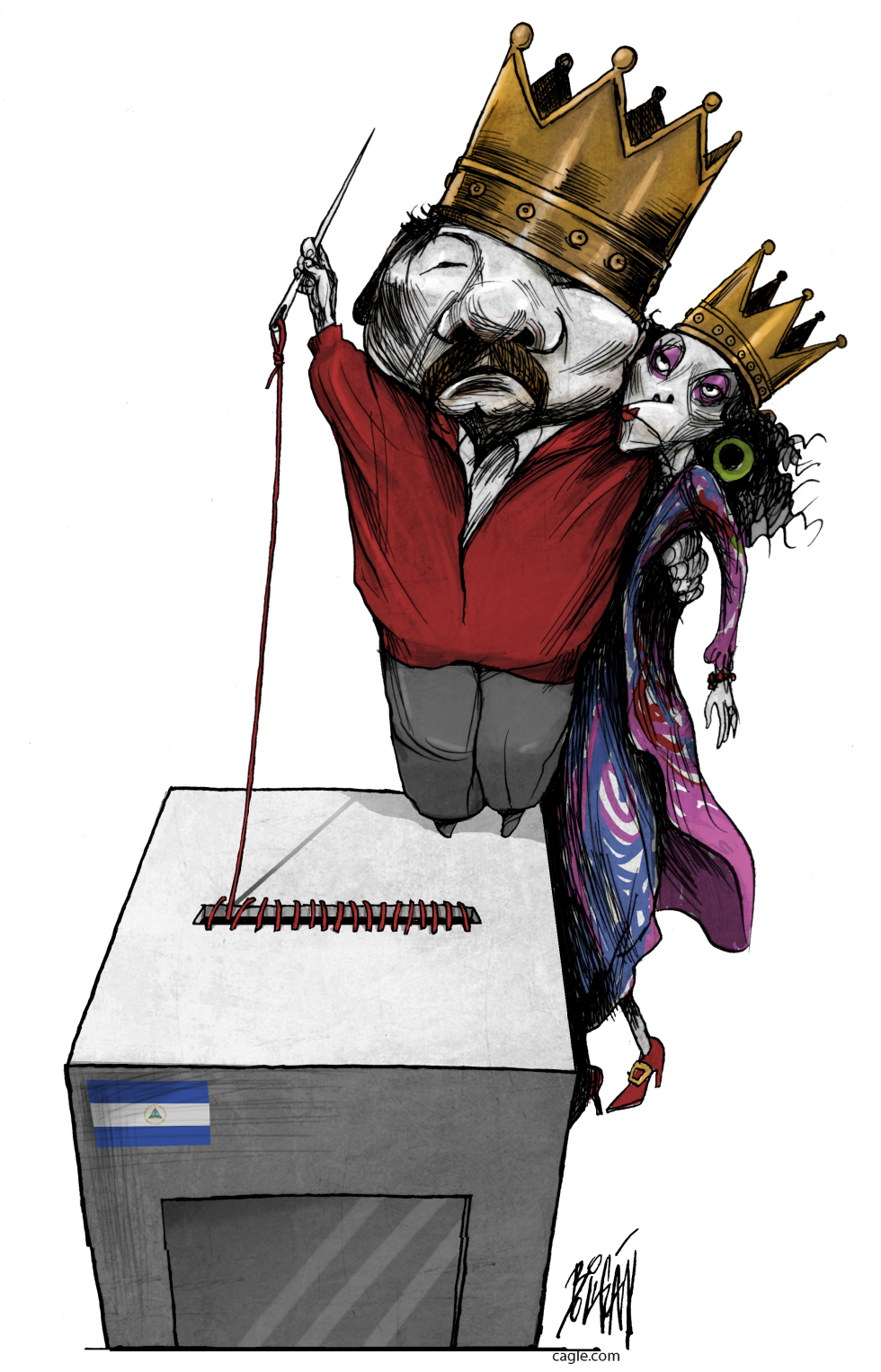
Nicaragua's Daniel Ortega and Rosario Murillo have consolidated power by sidelining elections and installing family rule. The move entrenches their long hold on government and eliminates meaningful opposition. The piece portrays them as self-crowned monarchs who treat the ballot box as their throne.
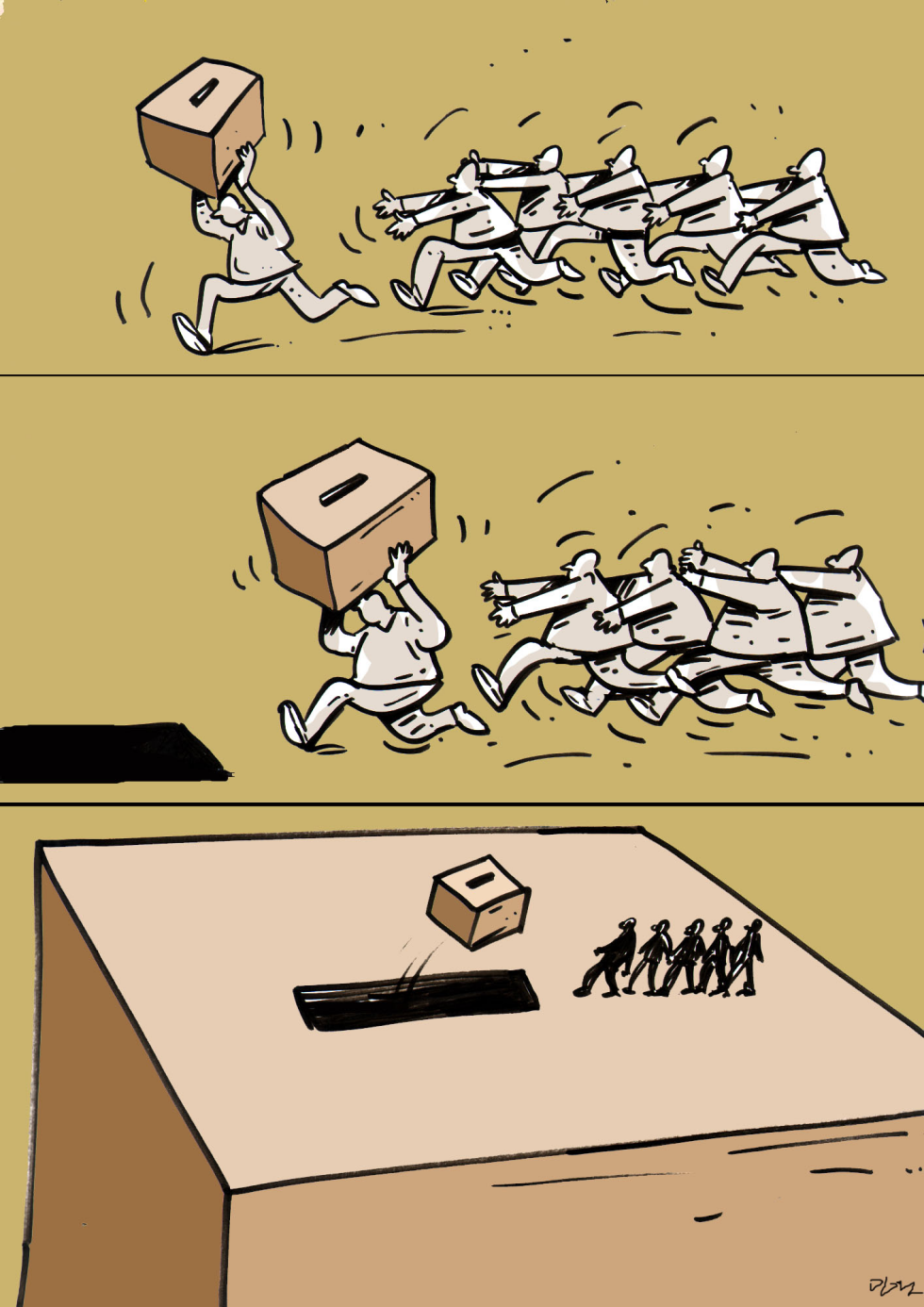
An election official carries a ballot box while pursued by a chain of figures in successive panels. The sequence ends with the box on a voting table beside its slot and the group nearing. The piece highlights concerns over ballot security and potential interference in vote counting during an election cycle.
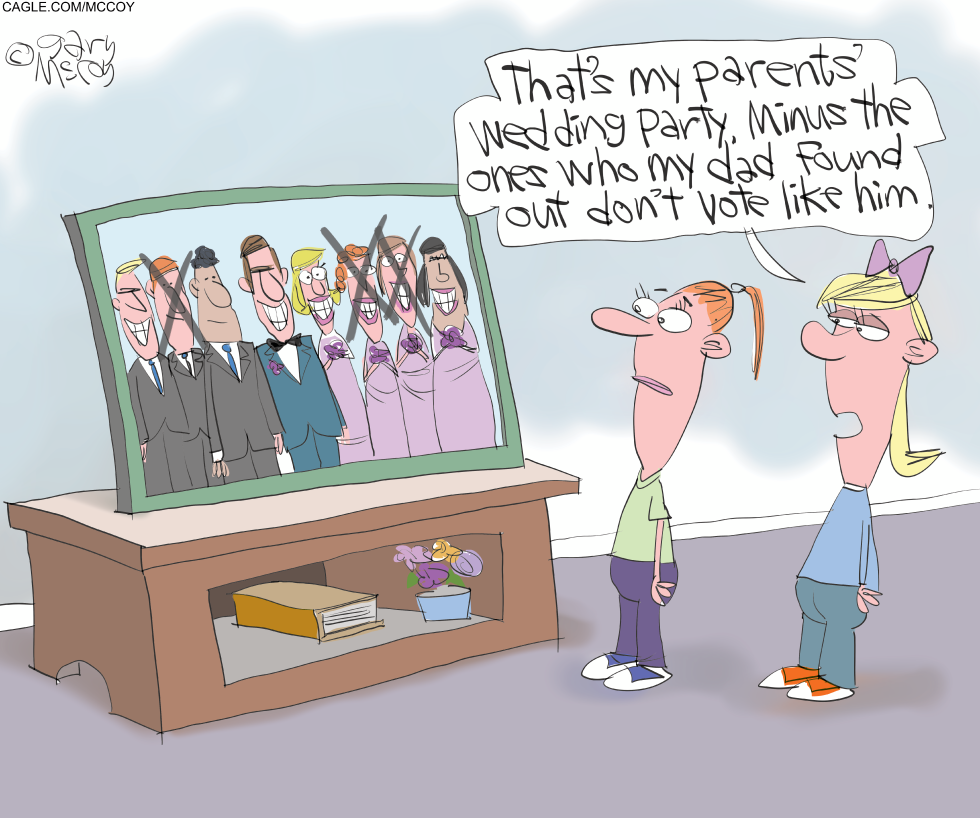
A television displays a wedding party photo with multiple guests marked out by large X's. Two children stand in front of the screen. The girl with the ponytail explains that her father removed family members from the wedding party after discovering they do not vote the same way he does. The scene highlights how political disagreements can fracture family events and relationships.
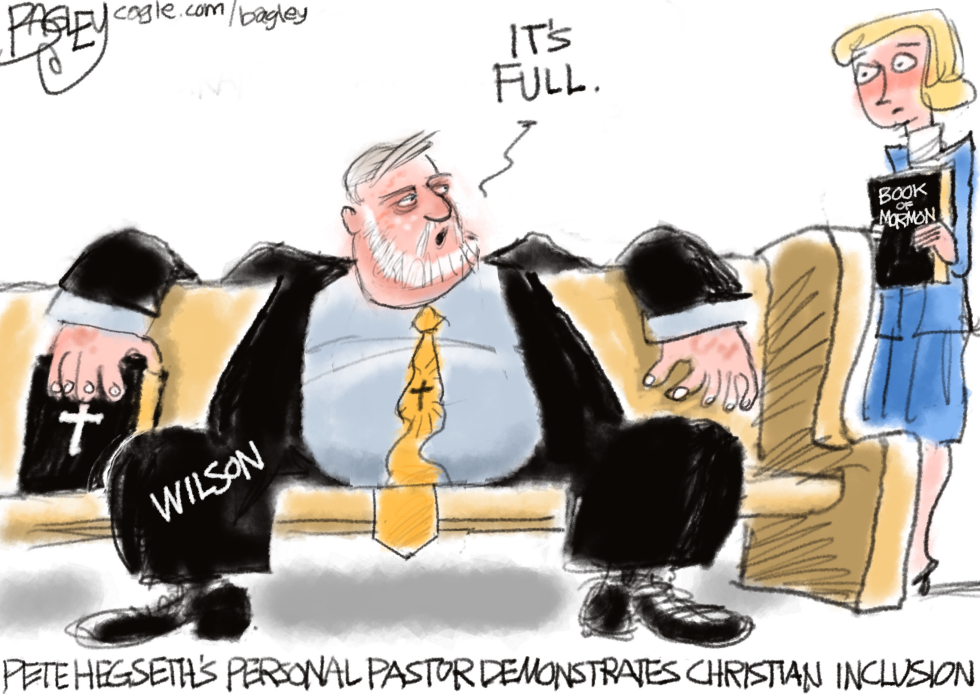
The July 2026 cartoon depicts Pastor Wilson seated on a couch holding a cross-emblazoned book and stating it is full. A woman stands nearby offering the Book of Mormon. The caption states that Pete Hegseth's personal pastor demonstrates Christian inclusion. The image responds to ongoing discussions about religious boundaries and denominational acceptance tied to the defense secretary nominee's faith advisors.
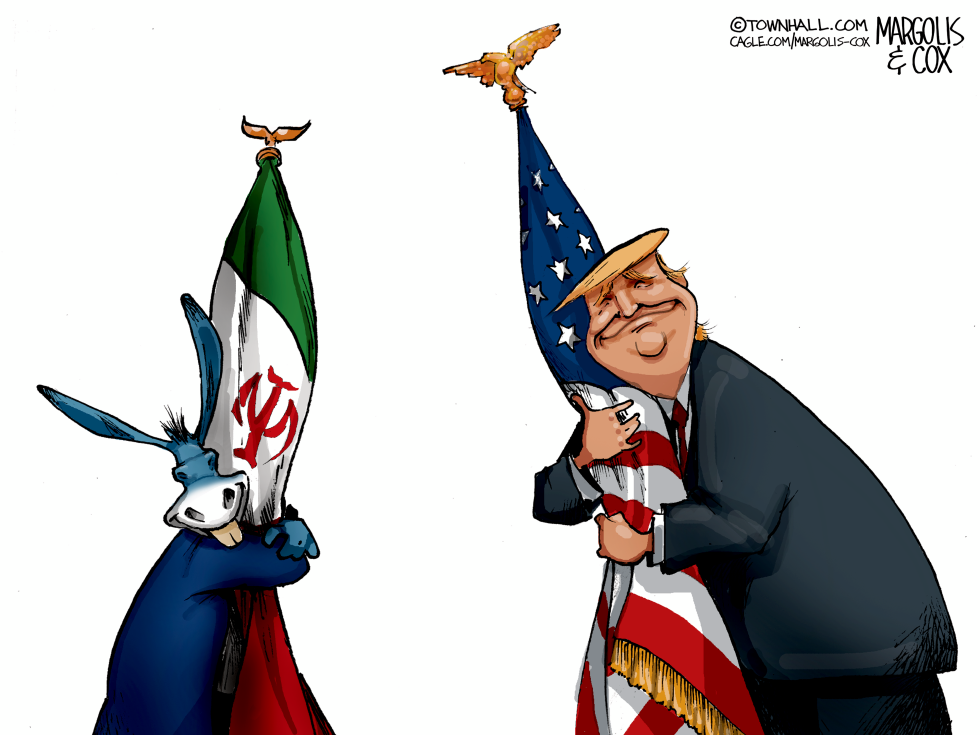
On June 21, 2026, the Margolis & Cox cartoon depicts Donald Trump wrapped in the American flag with an eagle perched above, facing a Democratic donkey wrapped in a flag resembling Italy's but marked with a hammer and sickle. The image responds to ongoing partisan debates over national identity and ideological leanings during the 2026 election cycle. Trump appears in a dark suit, smiling while holding the flag, while the donkey faces away. The visual argument centers on symbols of patriotism versus communism. Publication occurred via Townhall and Cagle.