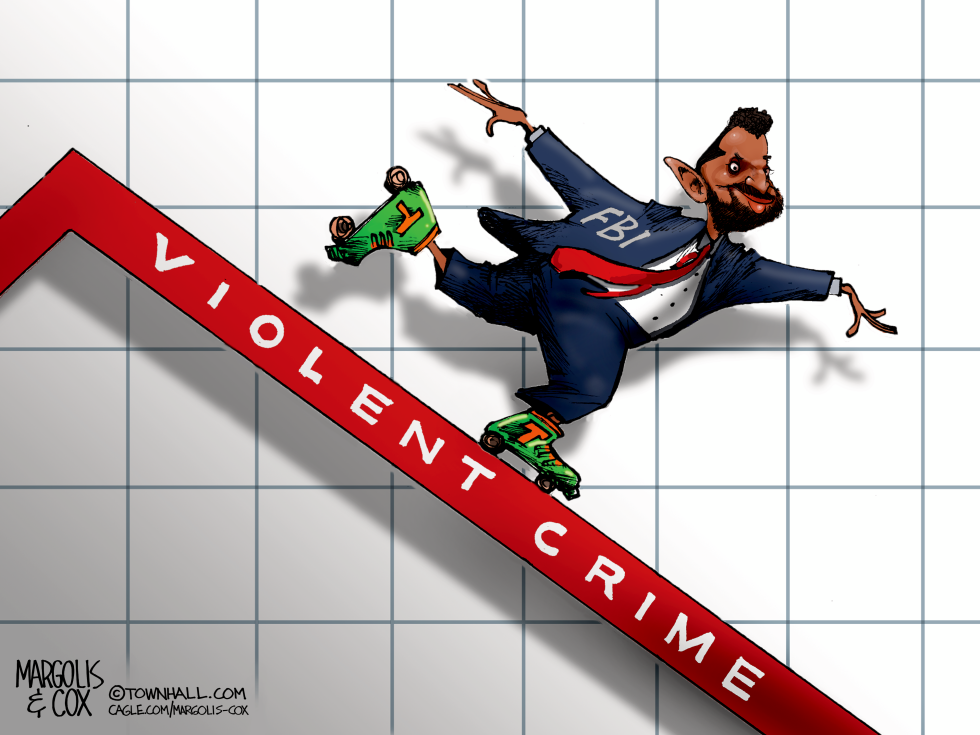
FBI statistics released around mid-2026 show violent crime continuing its downward trajectory across major categories. The decline matters because it affects public safety perceptions and resource allocation for law enforcement. The piece presents the trend as a clear, measurable improvement under federal tracking.
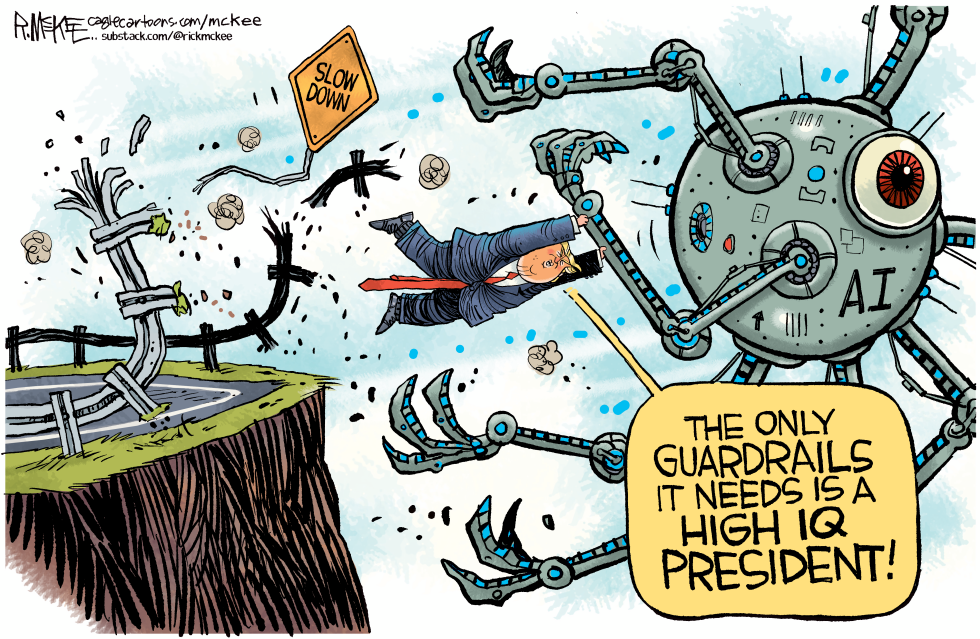
Donald Trump has repeatedly downplayed the need for formal AI regulations, arguing that a capable leader with high intelligence is sufficient oversight. The position comes as rapid AI development raises concerns over safety, bias, and uncontrolled systems. Critics say the stance leaves the public exposed to untested technologies with broad societal impact. The cartoon presents this view as dangerously dismissive of structural safeguards.
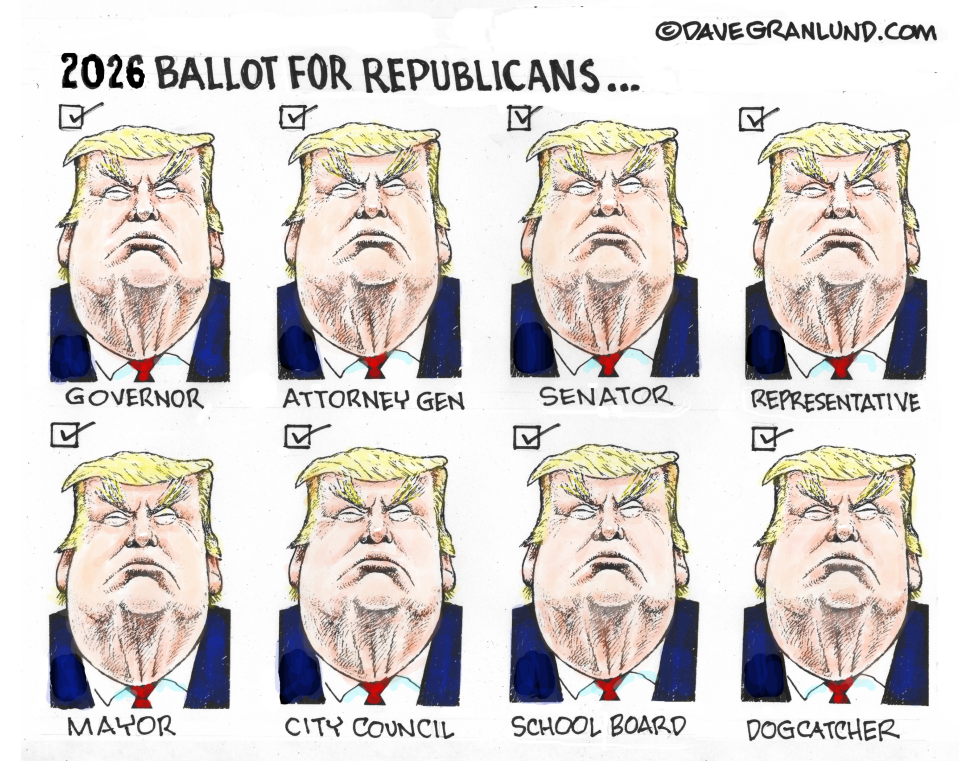
The cartoon depicts eight identical caricatures of Donald Trump filling every position on a 2026 Republican ballot, from governor and attorney general down to dogcatcher. Each image carries a checkmark, underscoring the editorial point that Trump loyalty has become the sole qualification for GOP candidates at every level. Published September 11, 2026, the image comments on the ongoing consolidation of Republican primaries around Trump-aligned figures ahead of the midterm cycle. The visual repetition emphasizes how the former president's influence extends from high-profile statewide offices to local contests. This approach mirrors real-world patterns where Trump endorsements shape candidate selection across the party.
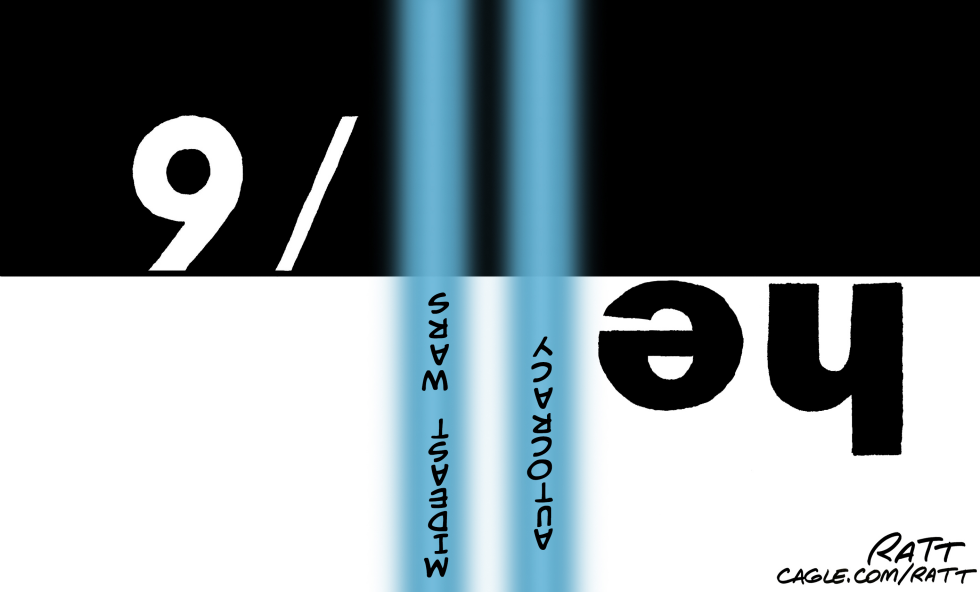
September 11 anniversary observances in 2026 coincide with ongoing debates over the long-term costs of U.S. and European involvement in Middle East conflicts that followed the attacks. The piece underscores how far removed current realities remain from the original site and moment of the 2001 attacks.
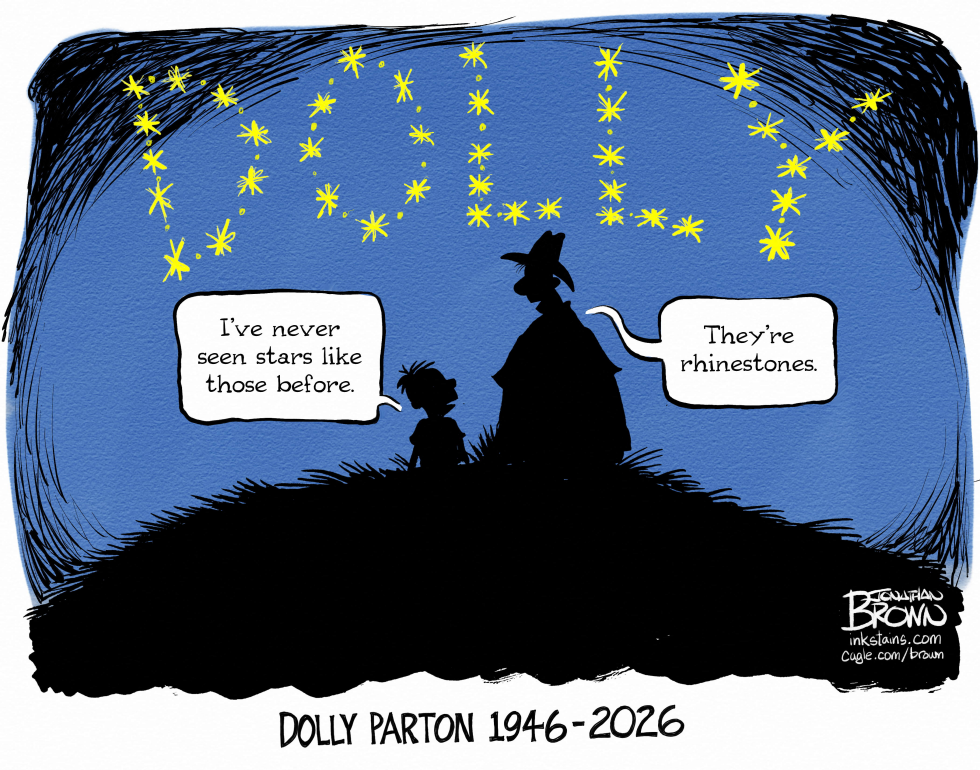
Dolly Parton passed away in 2026 at age 80. Fans and the public mourned the loss of the country music legend known for her rhinestone outfits and charitable work. The tribute highlights her enduring sparkle and cultural impact through a celestial memorial image. The piece positions her legacy as one of warmth, generosity, and unmistakable glamour that continues to shine.
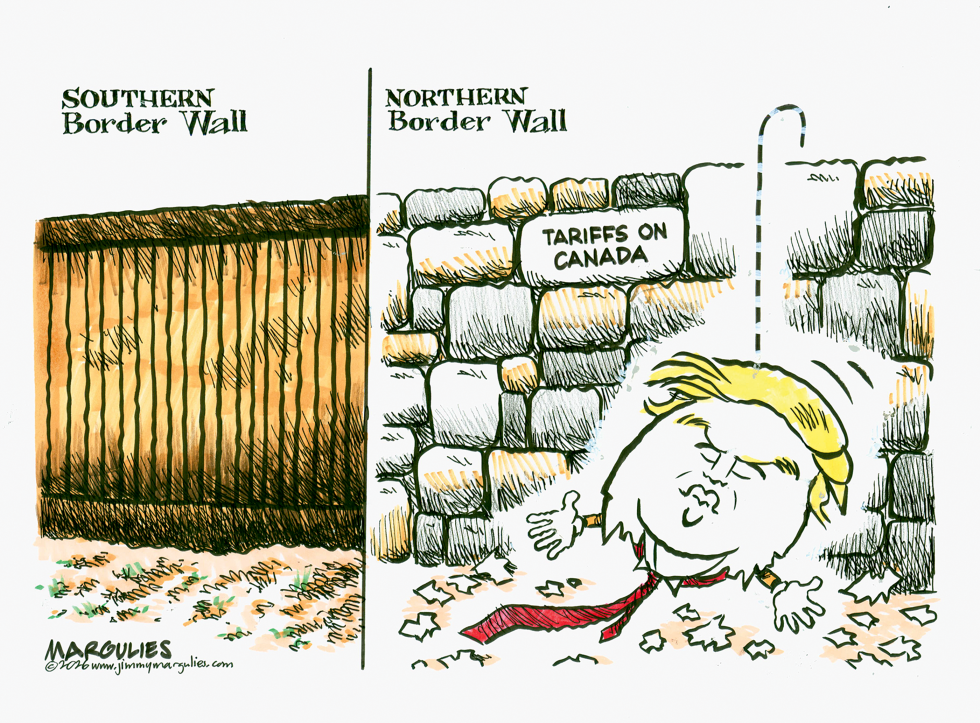
Tariffs targeting Canada have produced immediate political fallout for the administration. The move has drawn attention to trade tensions along the northern border and raised questions about the effectiveness of the policy. The piece portrays the tariffs as directly undermining the president's position.
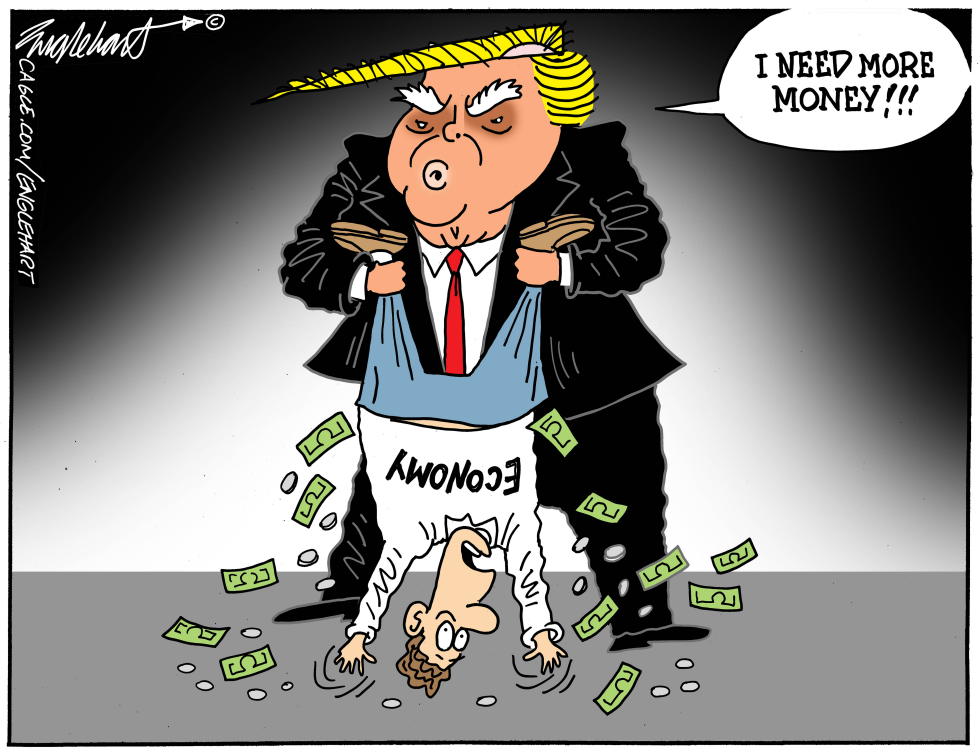
Donald Trump has pressed for additional revenue streams amid ongoing economic pressures. The move highlights tensions over fiscal demands and growth priorities. The piece portrays the action as direct extraction from economic resources.
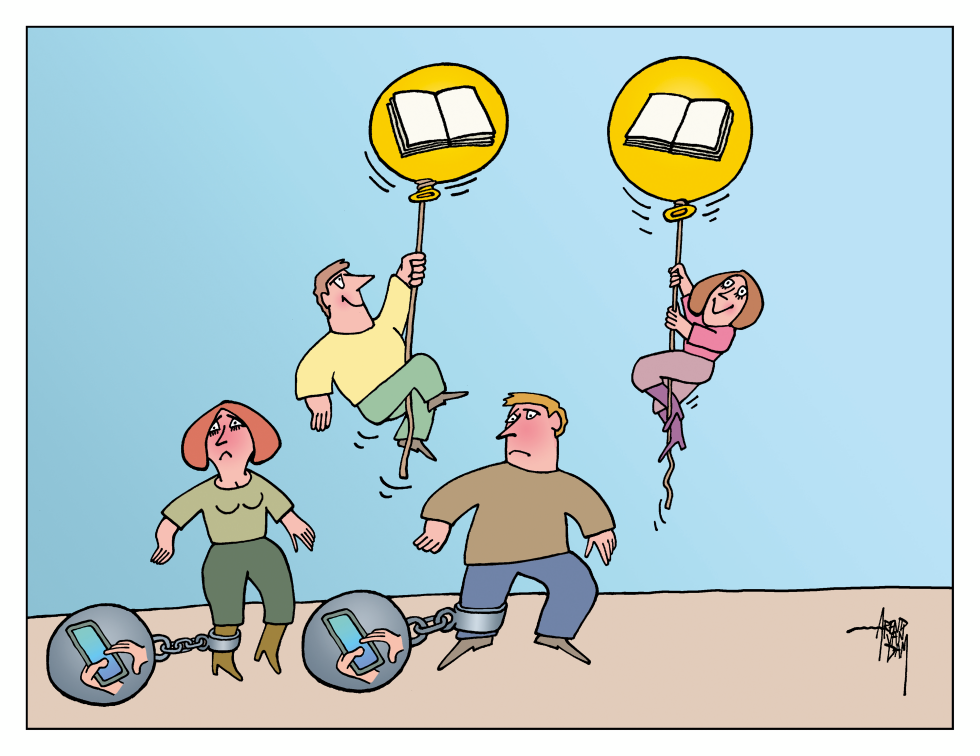
The ongoing debate over digital devices versus traditional reading materials continues to highlight how constant smartphone use can limit personal growth and mobility. Books, by contrast, offer pathways to broader perspectives and advancement. The editorial position favors reading as a superior force for individual upliftment over reliance on handheld technology.
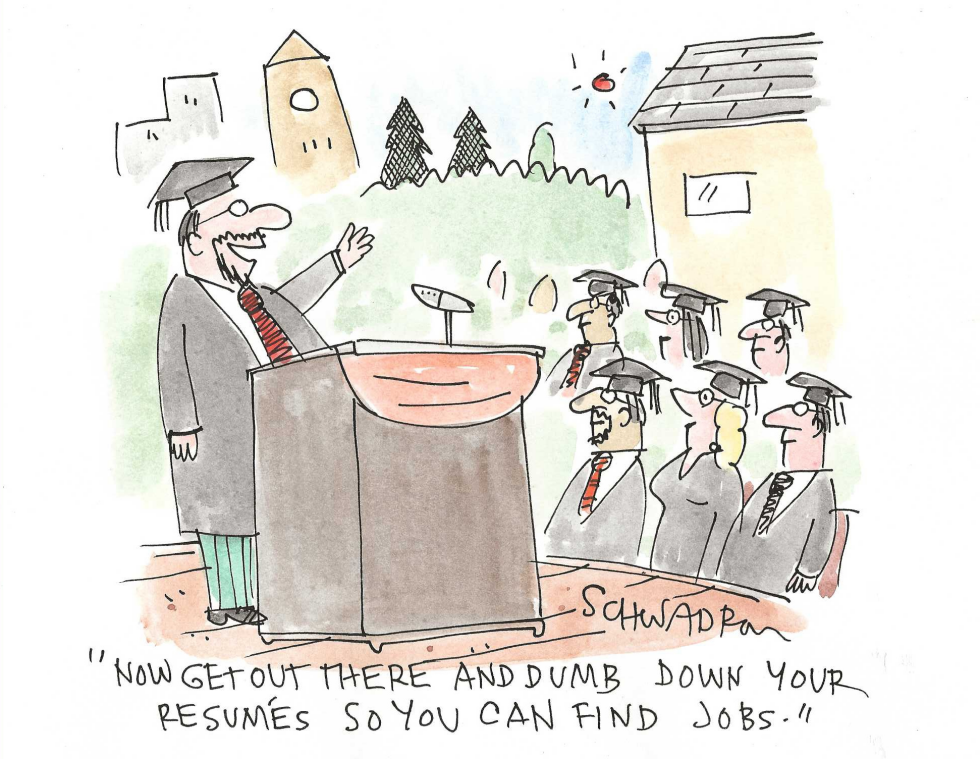
A commencement speaker at a college graduation advised new graduates to simplify their resumes by removing advanced qualifications to better compete in the current job market. The advice reflects ongoing concerns about hiring managers overlooking overqualified candidates and economic pressures limiting entry-level opportunities. The editorial takes the position that such guidance underscores systemic mismatches between higher education outcomes and employer demands rather than individual shortcomings.
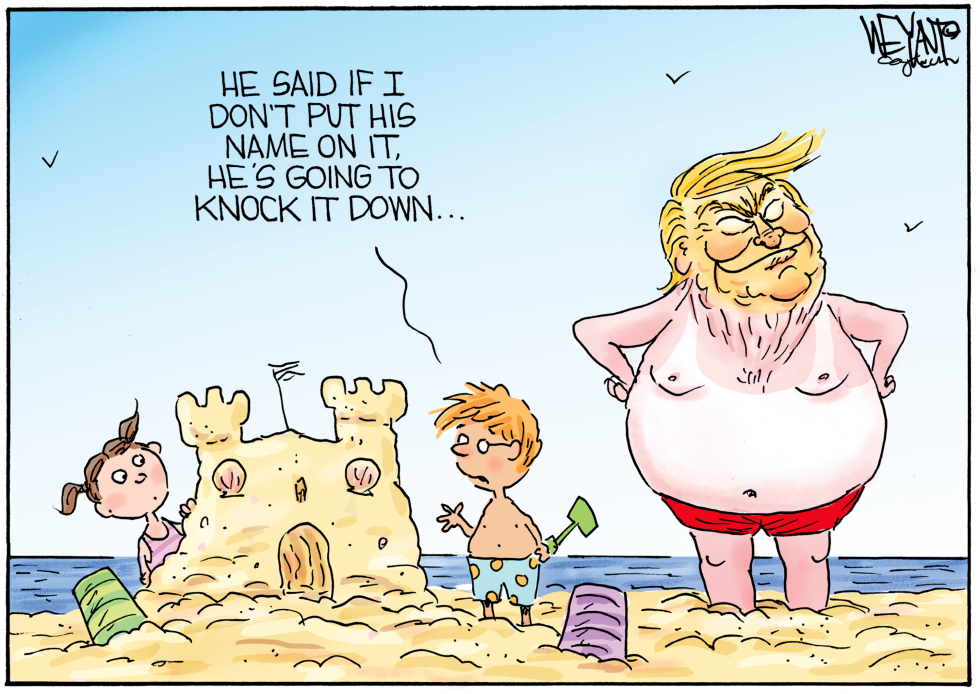
Donald Trump has long pressed for personal credit in public projects and political dealings. The pattern involves demands for recognition that extend even to minor or symbolic matters. This dynamic matters because it reveals how one figure seeks to dominate credit and loyalty across settings. The piece takes the position that such demands reflect an outsized need for acknowledgment that overrides ordinary boundaries.
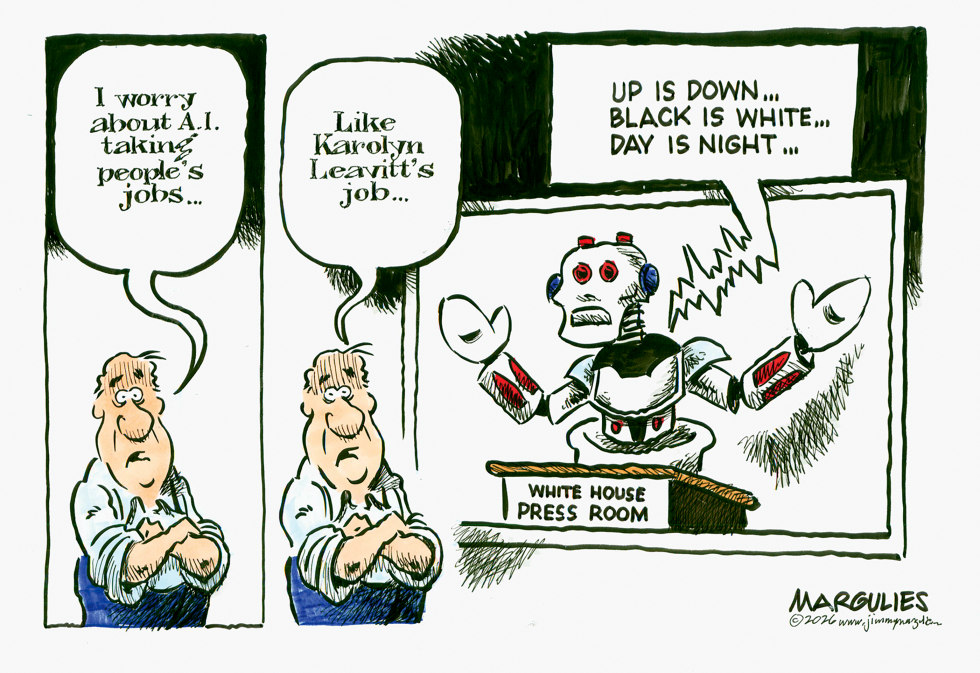
An AI robot has assumed duties as White House press secretary amid ongoing debates over automation displacing human roles in government communications. The development highlights tensions between technological efficiency and traditional staffing in high-profile federal positions. The piece portrays the shift as enabling scripted, contradictory messaging from the briefing room.
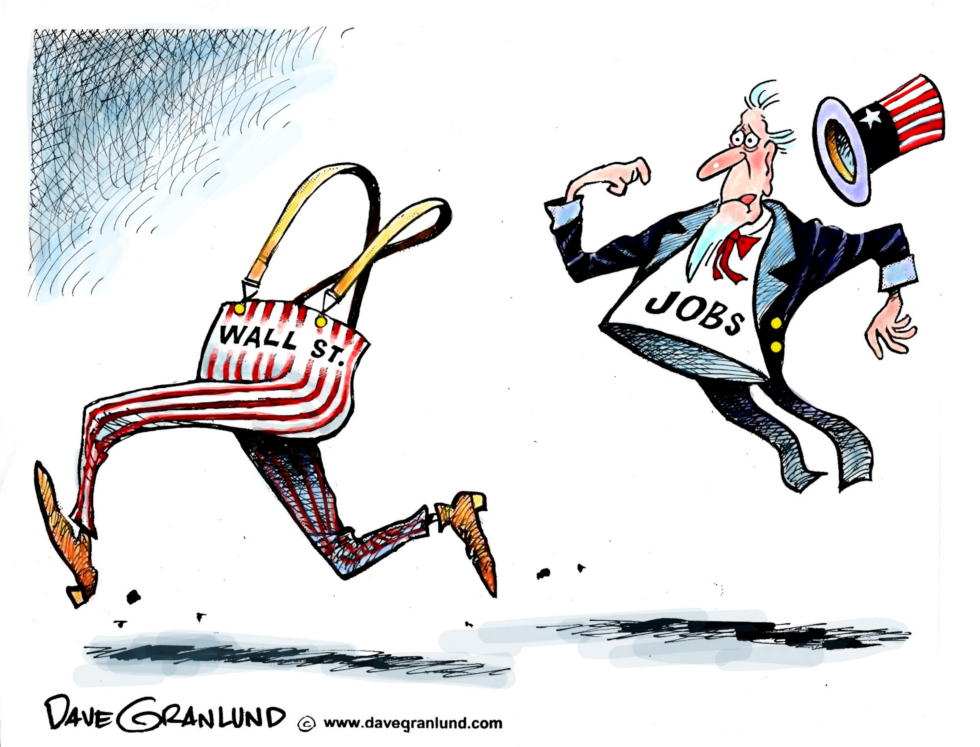
Wall Street and employment figures remain at odds in ongoing market dynamics. The separation underscores persistent challenges in aligning financial markets with job creation efforts amid broader economic pressures.
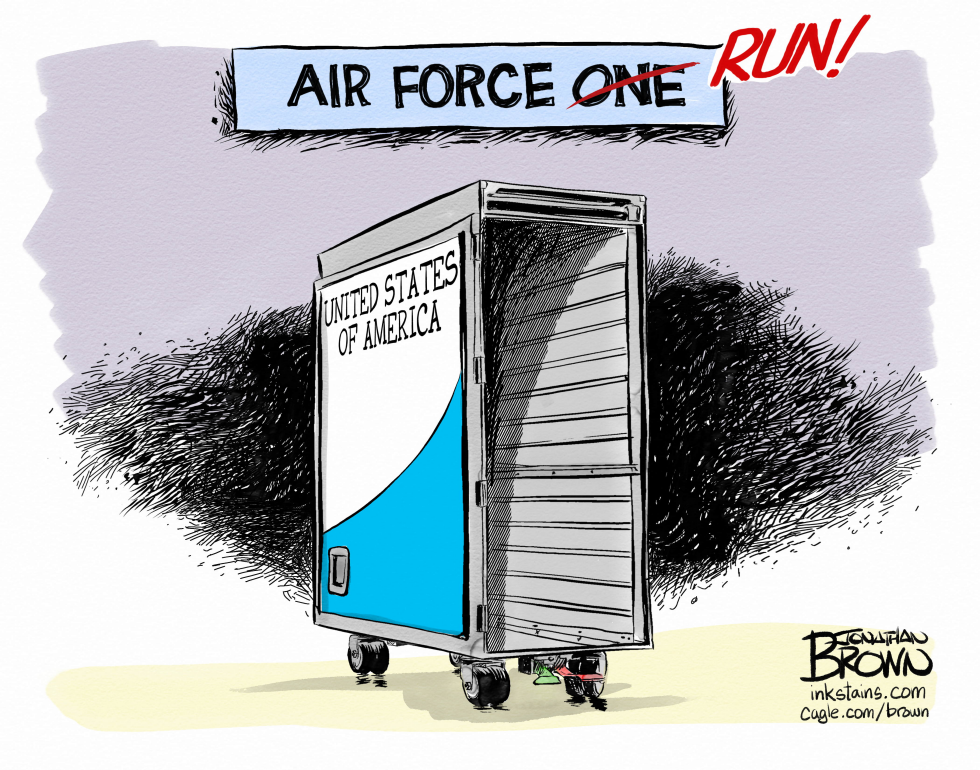
A wheeled airline catering cart occupies the center of the frame, painted in the livery of the presidential aircraft: white upper body, curved blue lower panel, and UNITED STATES OF AMERICA lettered down the side. Its full height door hangs open on empty wire shelving. Above it a pale blue placard reads AIR FORCE ONE, with ONE struck through in red and RUN! added beside that word in the same color. Two neckties poke out from between the casters underneath, one of them the long red tie Donald Trump is known for, the only trace of the men folded up inside. The drawing responds to reports that Trump sheltered in an airline galley cart against an assassination threat traced to Iran, turning the most recognizable branding in presidential aviation into an instruction to flee. Jonathan Brown signed the lower right corner alongside inkstains.com and Cagle.com/brown.
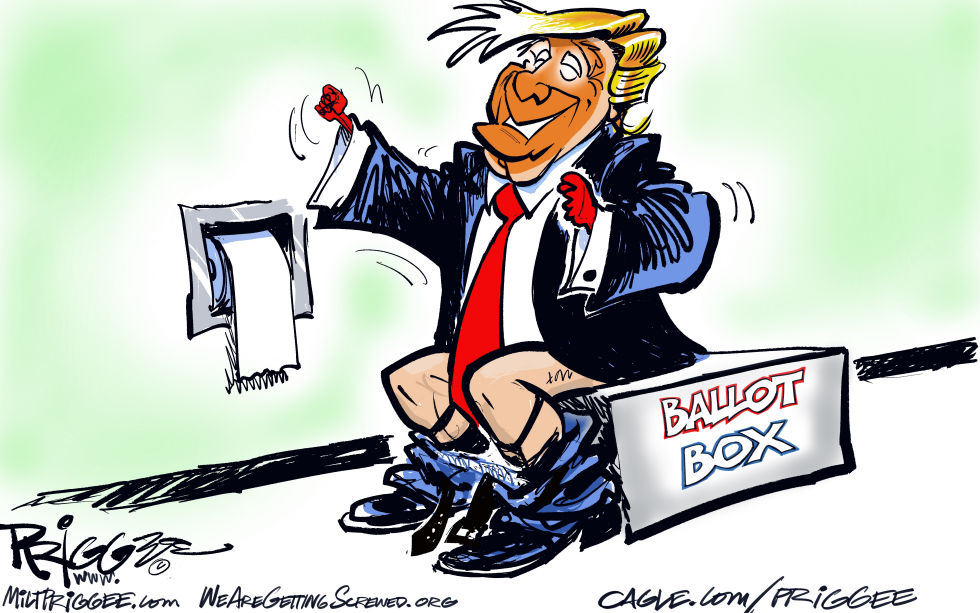
Donald Trump is shown seated on a ballot box marked with that label, his pants lowered to his ankles and underwear visible. He holds a red object in one raised hand while motion lines suggest movement. A separate ballot slot stands open to the left. The scene appears against a green background with artist markings at the base. Publication occurs during the 2026 election cycle when voting access and candidate conduct remain active topics.
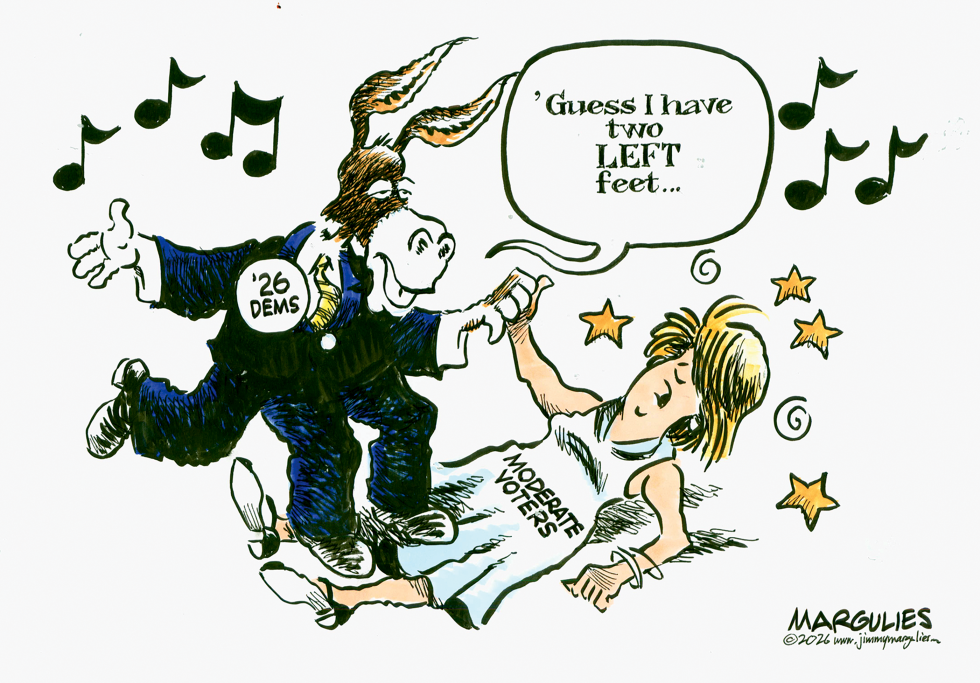
Democrats heading into the 2026 midterms face internal pressure to energize their base with progressive policies, yet this risks further distancing moderate voters essential for broader electoral success. The party has advanced left-leaning positions on issues like spending and social policy in recent cycles. Critics argue this approach prioritizes ideological purity over coalition building. The piece portrays the Democratic donkey as stepping on moderates while acknowledging its own missteps, highlighting the tension between base mobilization and centrist appeal.