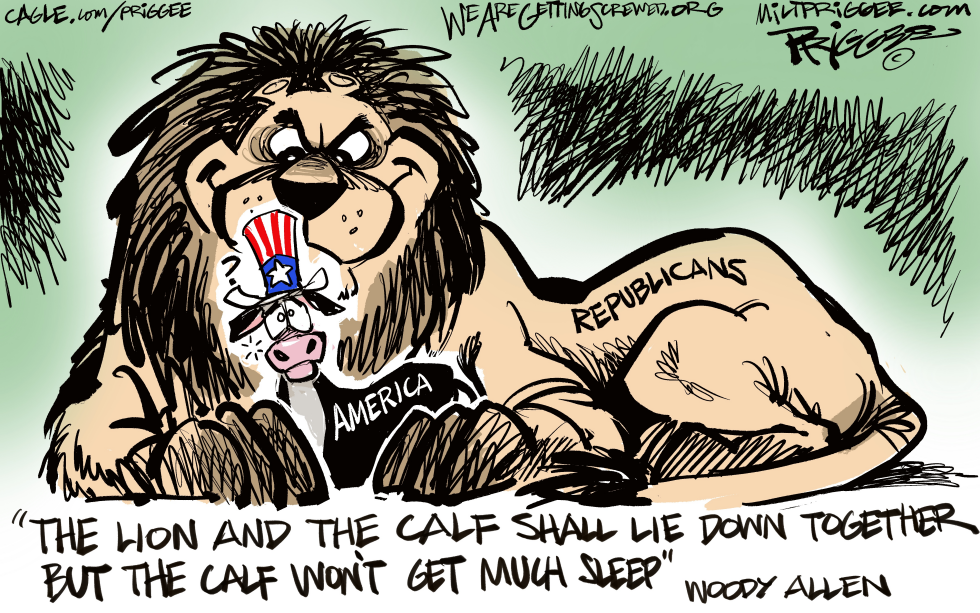
The cartoon shows a lion marked Republicans with an American calf in its mouth. A Woody Allen quote about the lion and calf lying down together runs along the bottom. The image uses the biblical reference to comment on political power dynamics as of the September 2026 publication date.
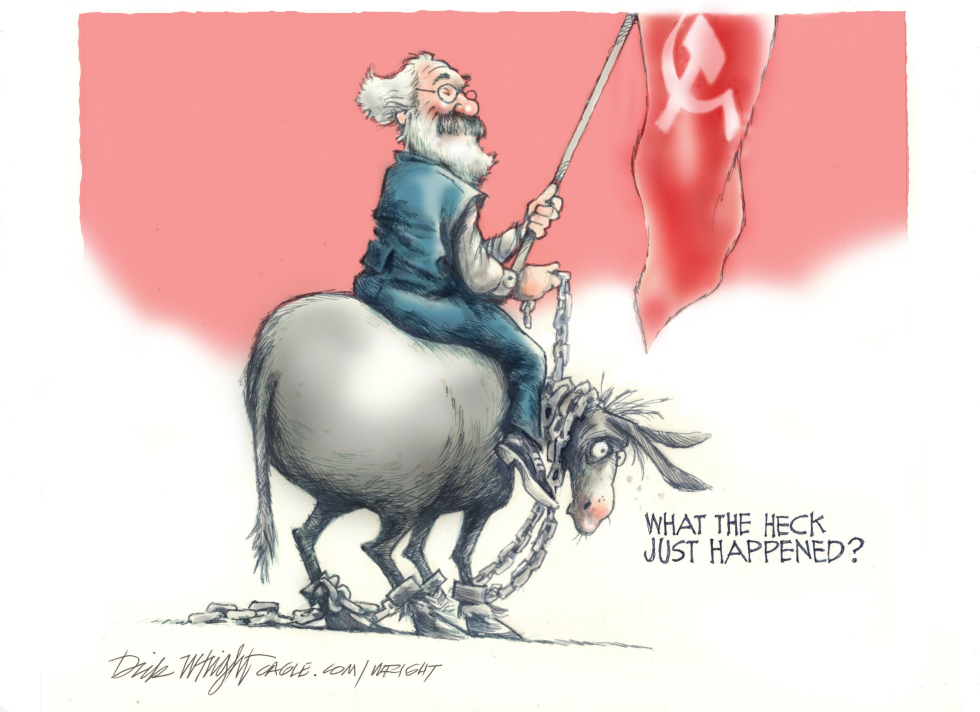
A Marxist figure has taken the reins of the Democratic Party symbol, raising a hammer-and-sickle flag over a donkey bound in chains. The image captures the moment the animal registers the shift in control. The editorial argues that radical communist influence has overtaken the party and left its traditional base bewildered by the abrupt change in direction.
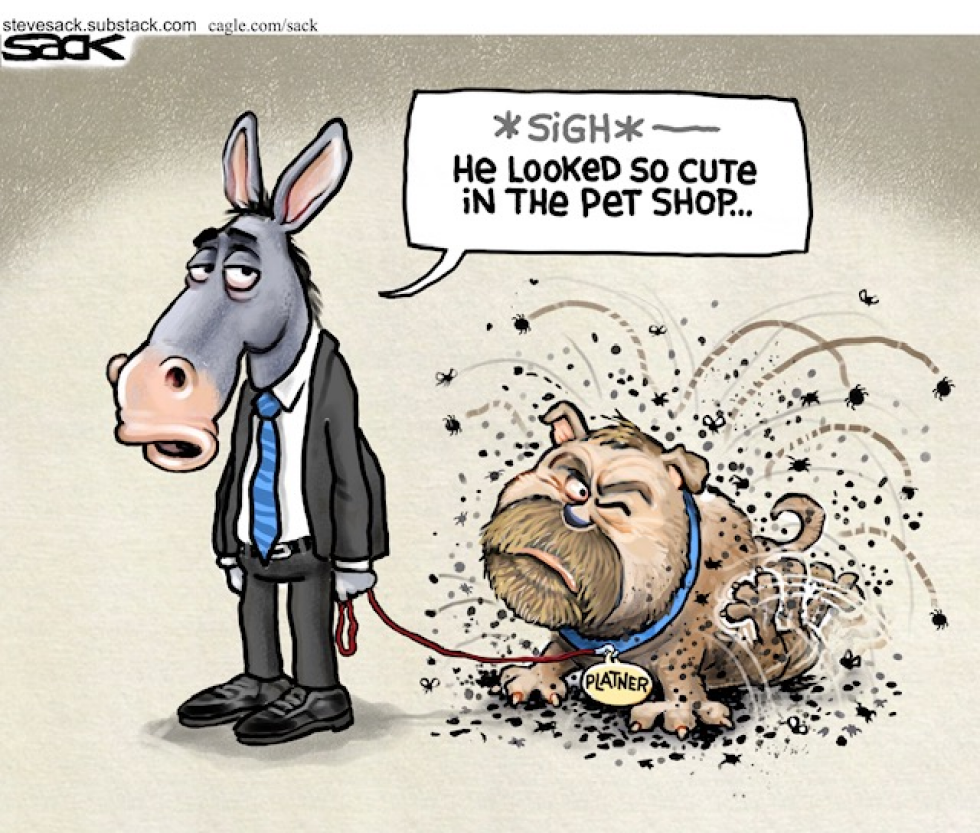
A suited donkey on a leash holds a flea-infested bulldog named Platner on the publication date of July 9, 2026. The donkey sighs about the pet shop appearance while bugs swarm the scene. The image uses standard party symbols to depict buyer remorse over a recent political choice.
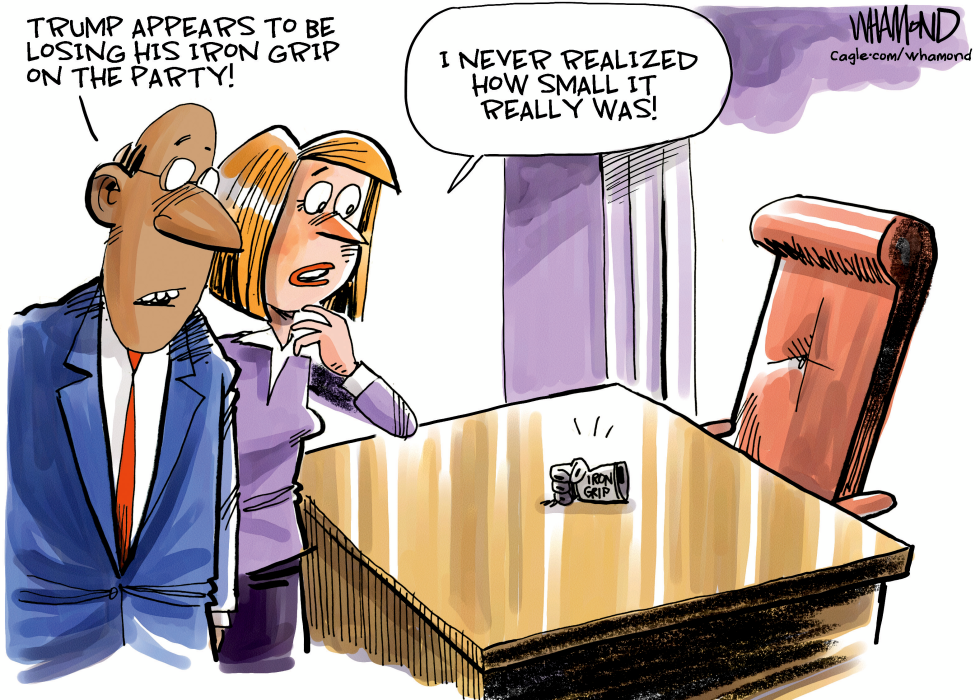
The image shows a man and woman in an office setting reacting to a miniature iron grip resting on a large desk. The man appears surprised while the woman delivers a line about its actual size. Text at top references Trump losing his iron grip on the party. The empty chair suggests a shift in power dynamics. This responds to recent developments involving Republican resistance to Trump positions on issues like file releases and redistricting.
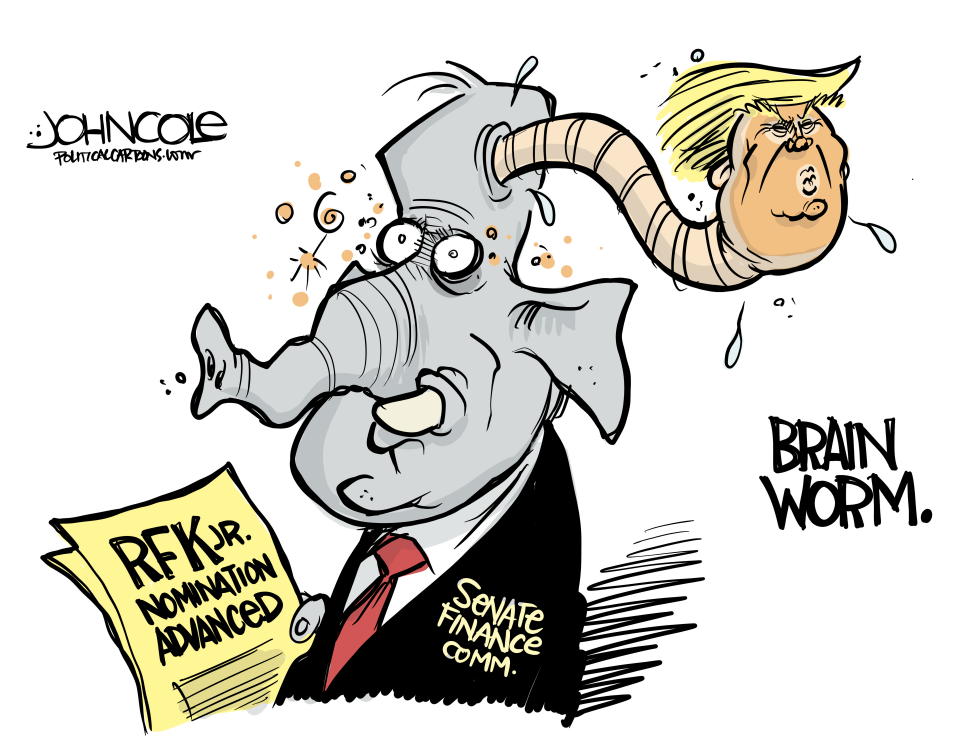
On February 4, 2025, John Cole's cartoon portrays Donald Trump as a brain worm emerging from the head of a Republican elephant. The elephant clutches a document noting RFK Jr.'s nomination advanced by the Senate Finance Committee.
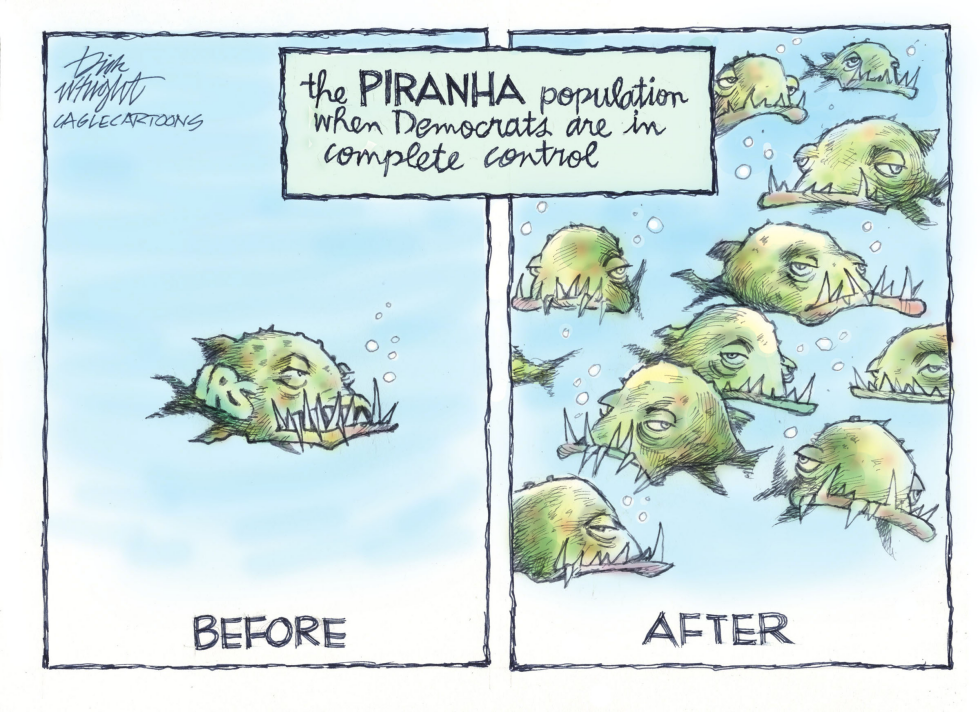
This Daryl Cagle political cartoon depicts the IRS as a lone piranha before Democrats assume complete control, then multiplying into a ferocious school afterward, bubbling with satirical bubbles. The IRS piranha metaphor cleverly critiques perceived overreach in tax enforcement, with the before after panels underscoring a conservative viewpoint on government expansion. Bubbles and grumpy fish expressions add humorous flair, making the Democrats control government satire both insightful and shareable. Overall, it's a witty jab at bureaucratic growth, perfect for sparking debates on fiscal policies.