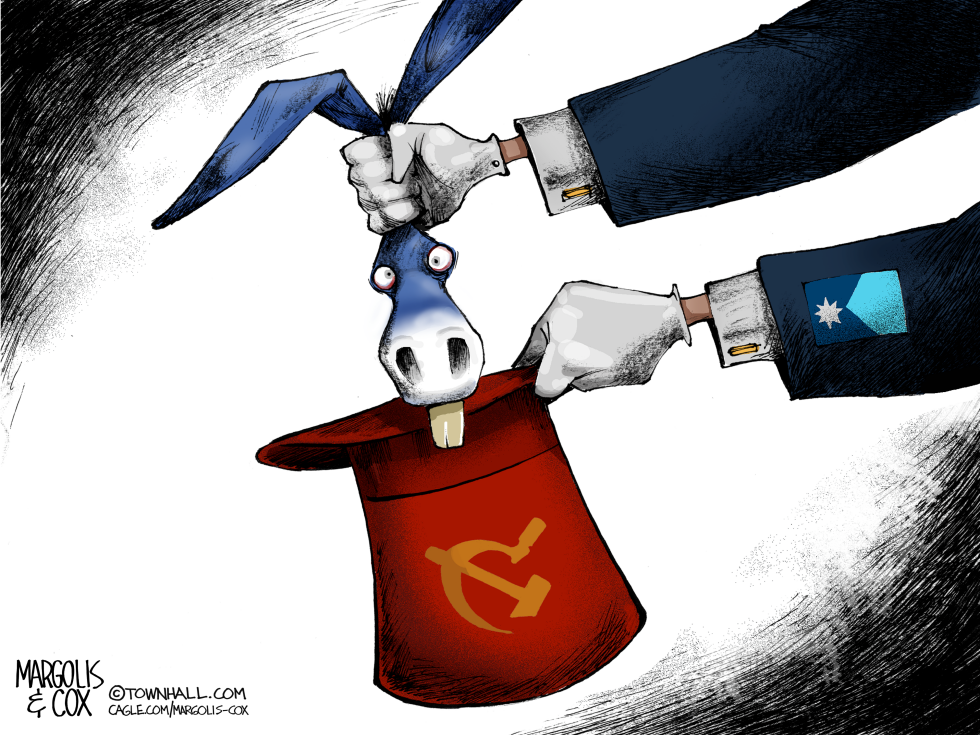
Accusations that Democratic policies carry communist undertones have persisted in partisan debate for years. The image frames the party as emerging directly from a communist emblem through a conjurer's reveal. This visual argument underscores ongoing conservative critiques that Democratic governance veers toward authoritarian economic controls rather than traditional American principles.
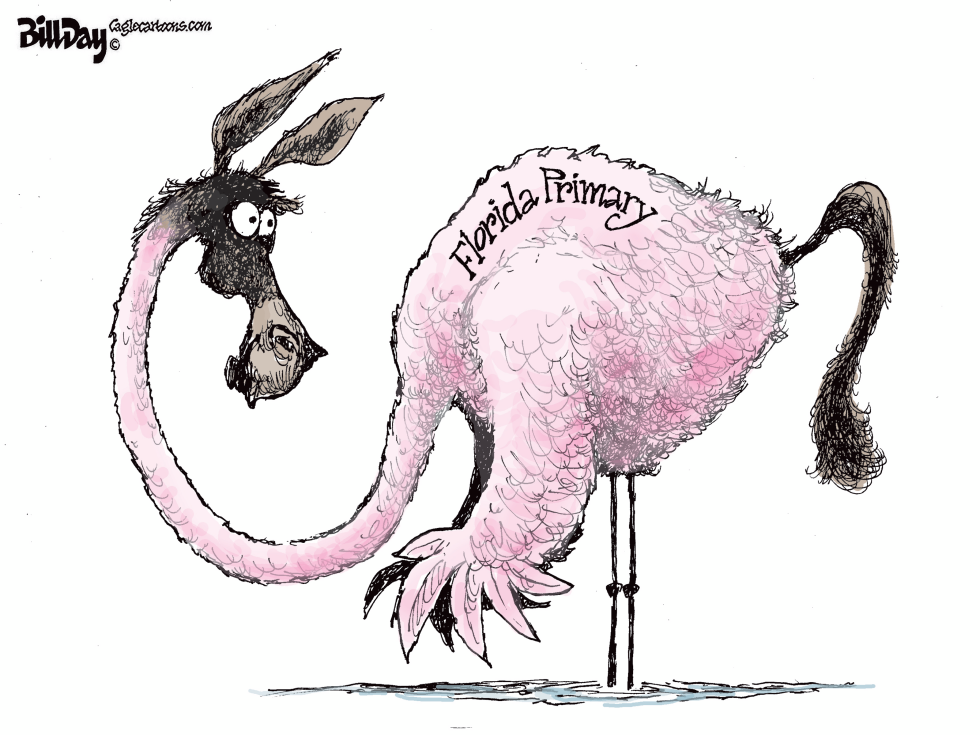
Florida prepares for its primary election with Democratic candidates competing for key nominations. The contest draws attention due to the state's role in national party positioning. The piece portrays the primary as an awkward fusion of traditional party identity and local Florida elements, suggesting the process strains familiar symbols.
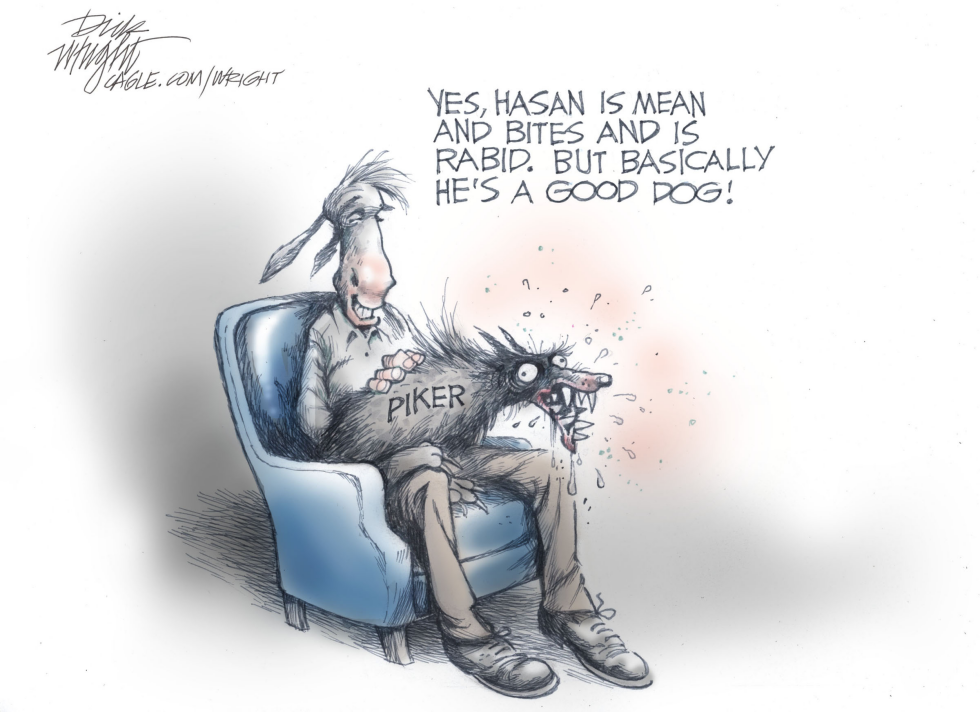
A prominent left-leaning commentator known for inflammatory rhetoric continues to draw defenses from Democratic figures despite repeated controversies over his statements. The defense frames the commentator as fundamentally loyal even while acknowledging aggressive conduct. This dynamic highlights ongoing tensions within progressive circles over how to handle allies whose rhetoric crosses into personal attacks. The piece portrays the defense as an exercise in willful denial of evident problems.
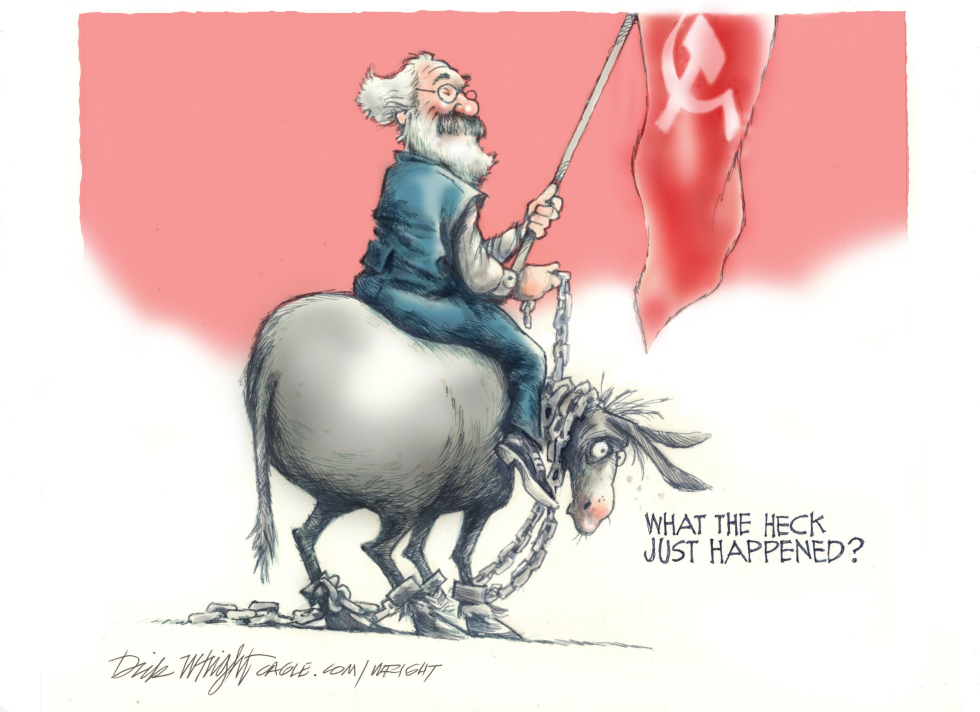
A Marxist figure has taken the reins of the Democratic Party symbol, raising a hammer-and-sickle flag over a donkey bound in chains. The image captures the moment the animal registers the shift in control. The editorial argues that radical communist influence has overtaken the party and left its traditional base bewildered by the abrupt change in direction.
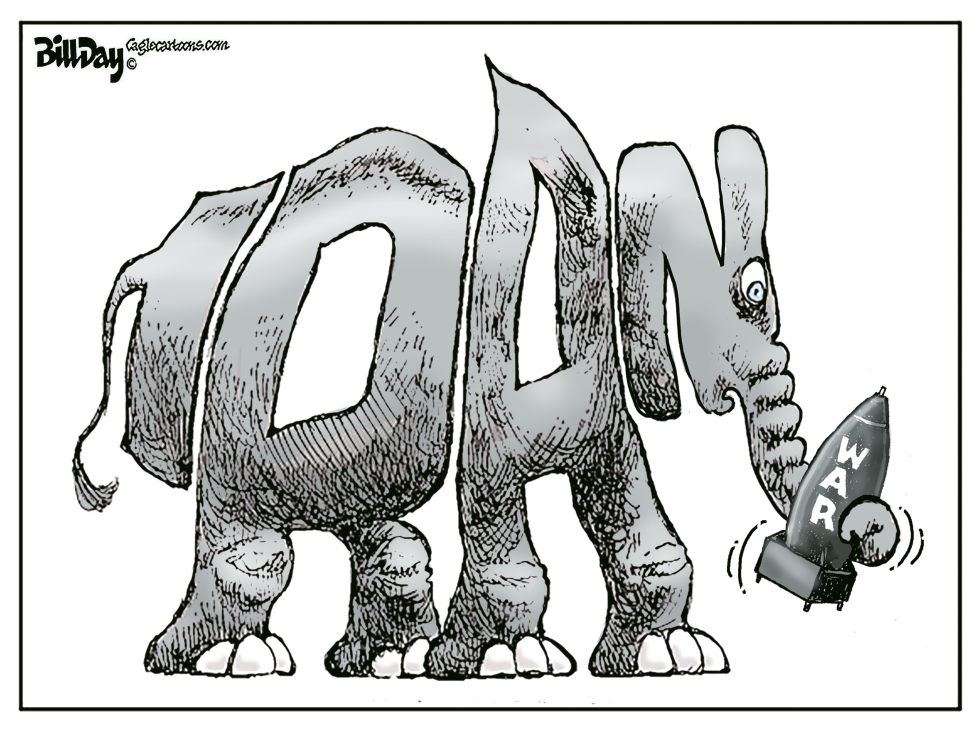
The Republican Party continues to navigate internal divisions over foreign policy and military engagement. Recent statements from party leaders have emphasized strength abroad while avoiding specific commitments on ongoing global conflicts. The piece portrays the GOP elephant as directly handling a war bomb, underscoring the risks of escalating rhetoric. It highlights how party identity remains tied to assertive defense postures. The editorial position criticizes the embrace of war imagery as potentially reckless.
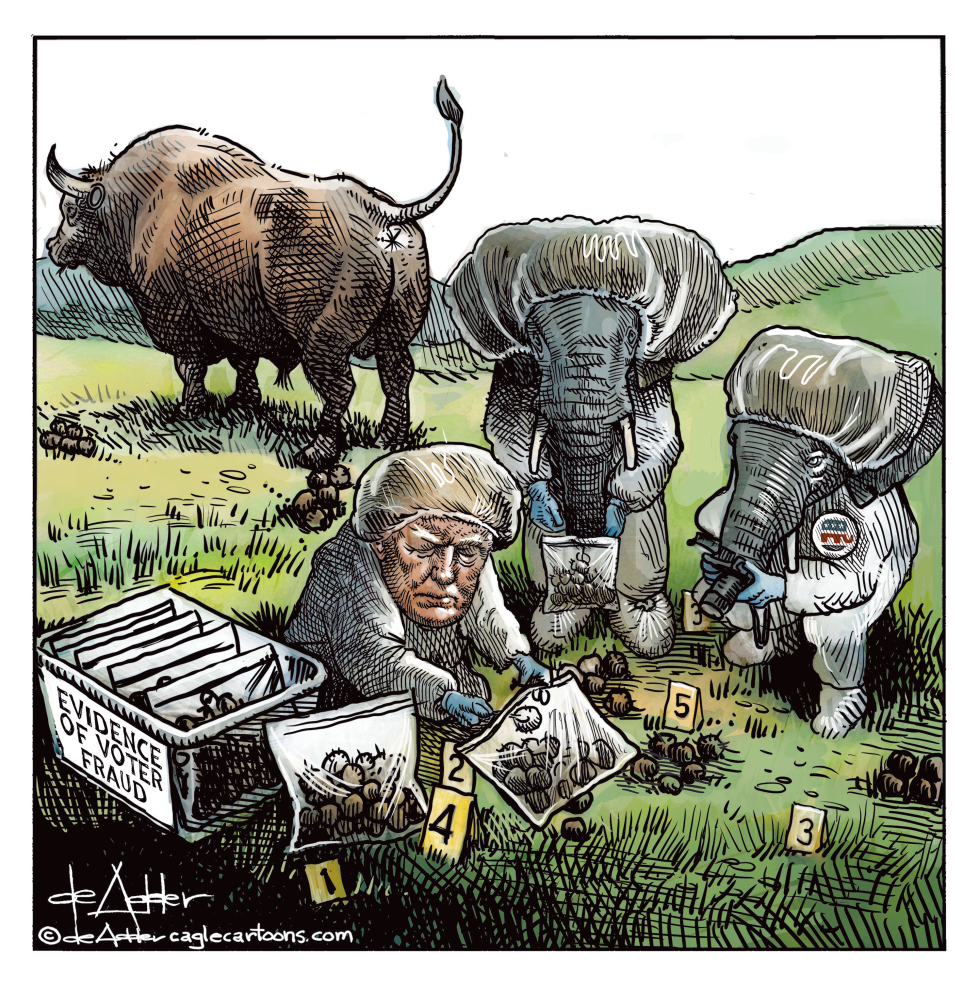
The cartoon shows Donald Trump in protective gear crouching to inspect animal droppings marked as voter fraud evidence. Two elephants wearing GOP buttons and hairnets collect samples in bags, while a bull stands in the background. Evidence boxes and numbered markers line the grassy field. The scene responds to ongoing Republican focus on election integrity issues around the 2026 period. It uses the droppings as a visual stand-in for disputed claims of widespread fraud.
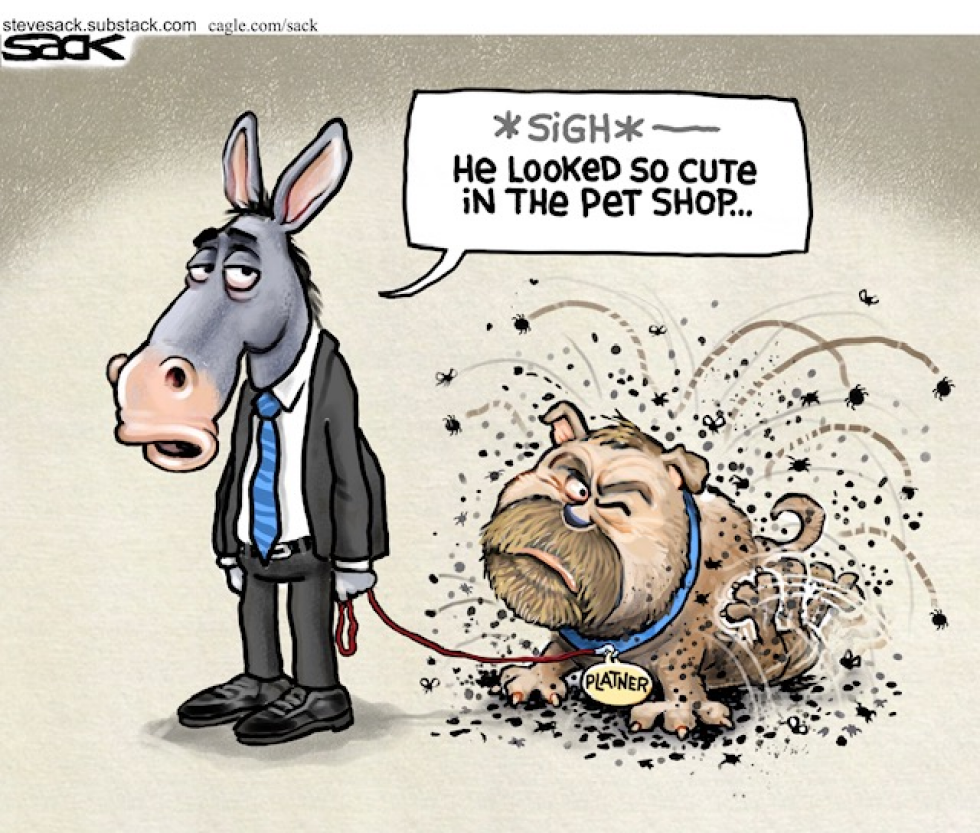
A suited donkey on a leash holds a flea-infested bulldog named Platner on the publication date of July 9, 2026. The donkey sighs about the pet shop appearance while bugs swarm the scene. The image uses standard party symbols to depict buyer remorse over a recent political choice.
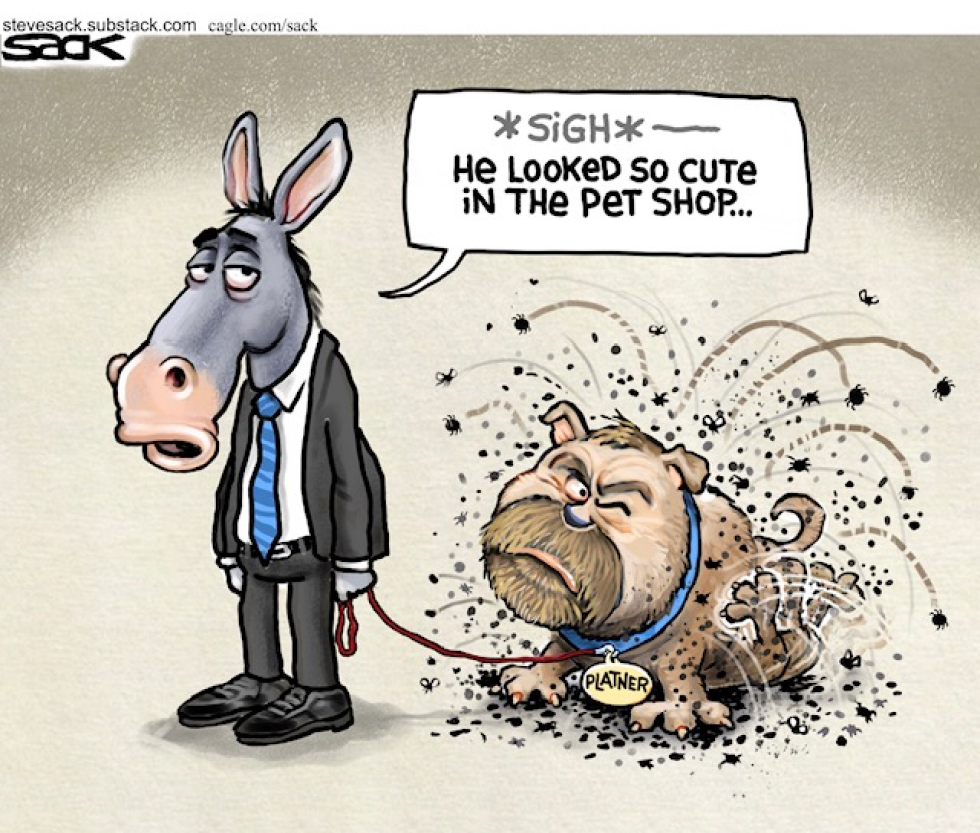
A Democratic donkey on a leash holds a flea-infested dog tagged Platner and expresses regret over its pet shop purchase in this July 8 2026 cartoon by Steve Sack. The visual shows the dog scratching amid a cloud of fleas as the donkey sighs that it looked cute at the store. The image comments on recent political developments involving candidate selection within the party.
The cartoon shows the Democratic donkey clutching a handgun labeled uncritical Israel support. A box overhead reads Bibi Gun. The donkey wears a suit and tie. The image responds to ongoing debates over US policy toward Israel and Benjamin Netanyahu in June 2026.
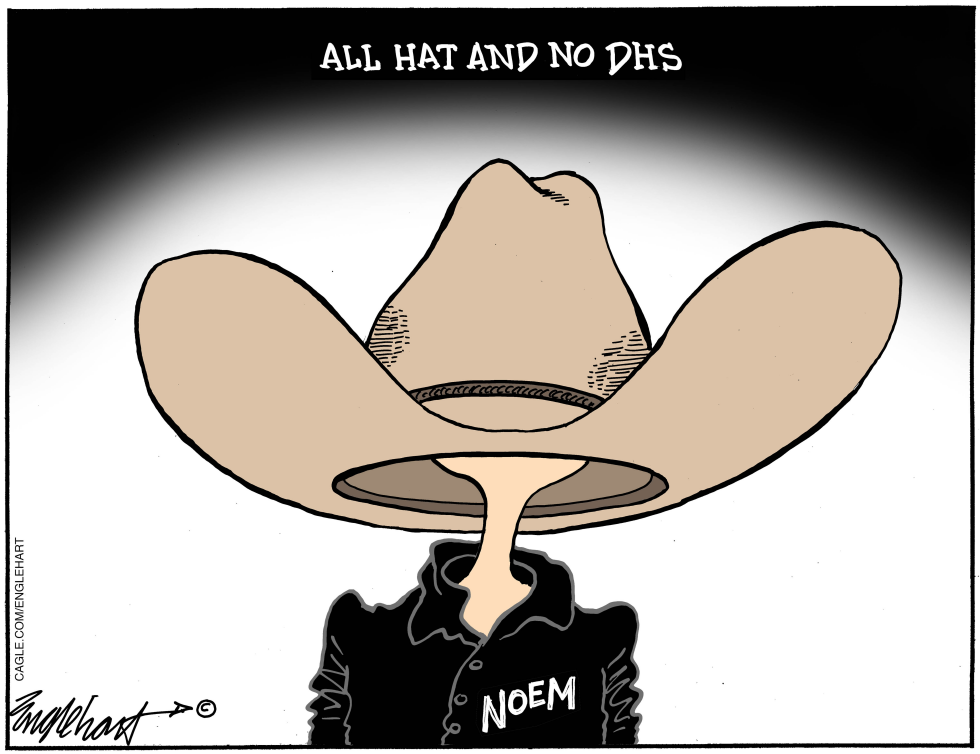
This biting political cartoon depicts Kristi Noem as an oversized cowboy hat swallowing a diminutive figure labeled 'NOEM,' with the punny title 'All Hat And No DHS.' It skewers the South Dakota governor's rumored bid for DHS Secretary in the Trump administration, playing on the idiom 'all hat and no cattle' to suggest she's all style and no substance for homeland security. Amid Republican politics buzz, the satirical art highlights Noem's political ambition clashing with reality, as border security and immigration policy debates rage on. The humorous critique captures the essence of GOP figures jockeying for positions, making it a viral-worthy jab at cabinet rumors and failed aspirations.
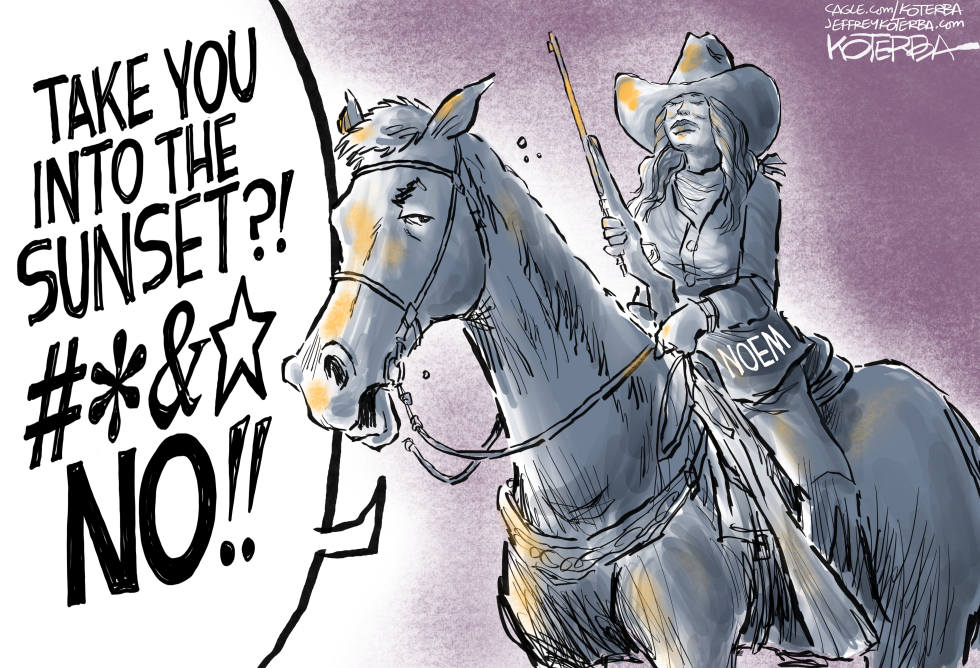
This Jeff Koterba political cartoon skewers Kristi Noem, the South Dakota governor embroiled in GOP scandal over her infamous dog-killing anecdote. Depicted as a cowgirl on a horse labeled 'NOEM,' the steed profanely refuses to 'take you into the sunset,' symbolizing the abrupt halt to her rising star in conservative politics, particularly her dashed hopes as a Trump VP pick. The humorous rejection underscores the backlash from animal cruelty revelations, blending satire with sharp commentary on Republican controversy and election humor. Viral potential lies in its irreverent take on political downfall, making it a shareable gem in American politics discourse.
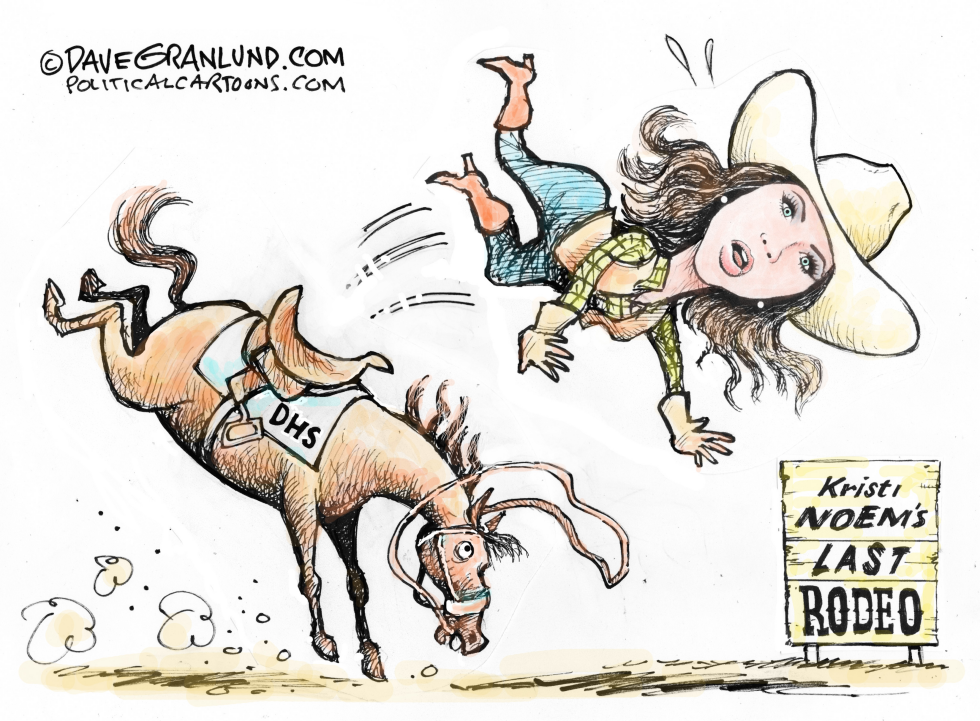
Dave Granlund's political cartoon hilariously portrays South Dakota Governor Kristi Noem in a rodeo metaphor, being violently thrown from a bucking horse labeled 'DHS' under a sign reading 'Kristi Noem's Last Rodeo.' This satire illustration captures her career downfall amid the infamous dog killing scandal, where she admitted to shooting her unruly pup Cricket, sparking widespread outrage. The humorous cartoon underscores how her VP ambitions for the Republican politics ticket were derailed, turning her book promotion into a PR nightmare. With elements of cowboy politics and political humor, it highlights the irreverent side of GOP satire, suggesting this could be Noem's final political stunt.
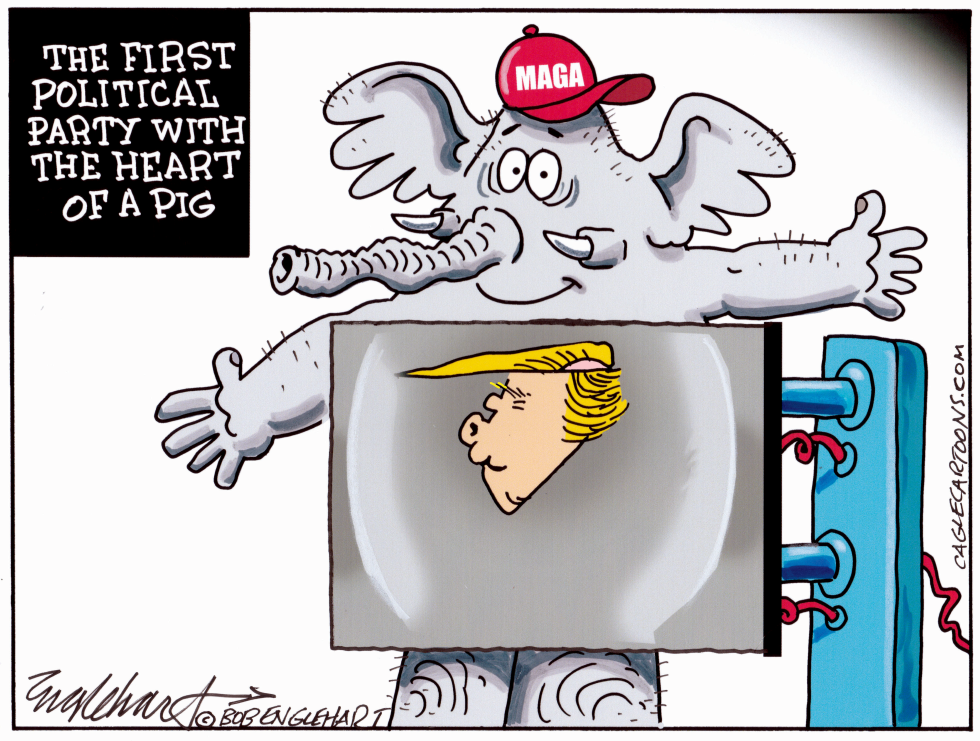
The cartoon depicts the Republican elephant with a MAGA cap holding a heart-shaped medical device. Inside the device is the profile of Donald Trump. Text in the upper left declares the party has the heart of a pig. The image appeared on January 14 2022 shortly after the 2020 election defeat and January 6 events. It uses surgical imagery to link the party to its former leader.