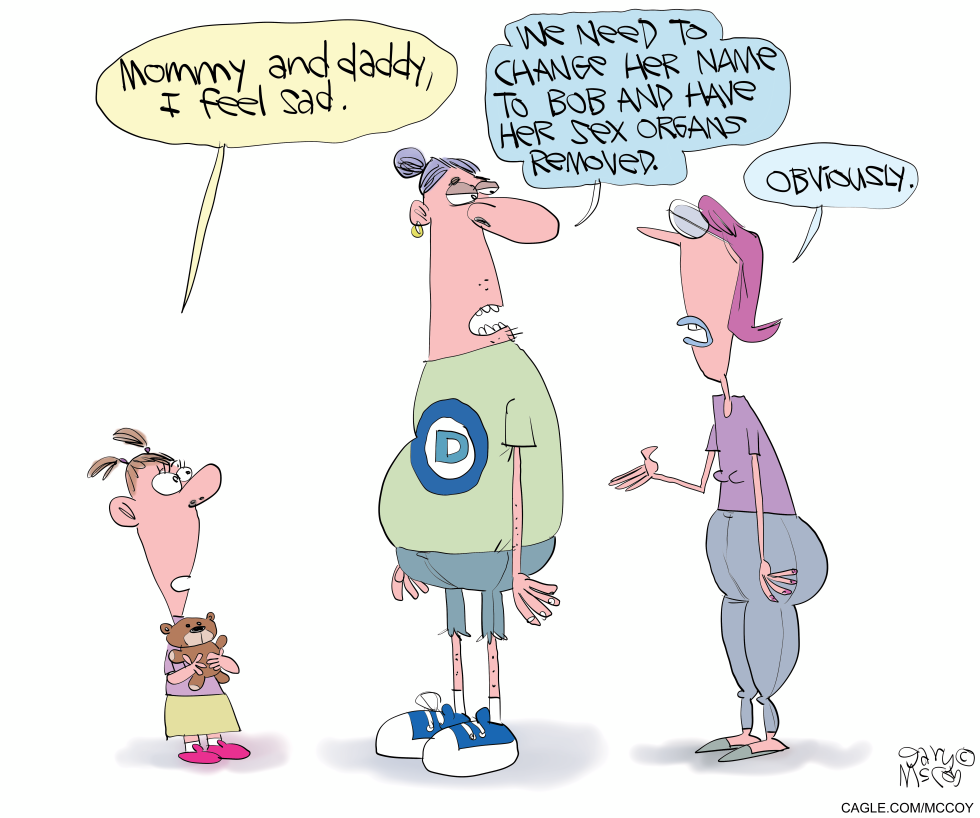
A child tells parents she feels sad. The adults immediately discuss changing the child's name to Bob and removing her sex organs. The exchange highlights a rapid pivot from emotional distress to medical intervention in family settings. The piece takes the position that such responses overlook the stated feeling and rush toward irreversible steps.
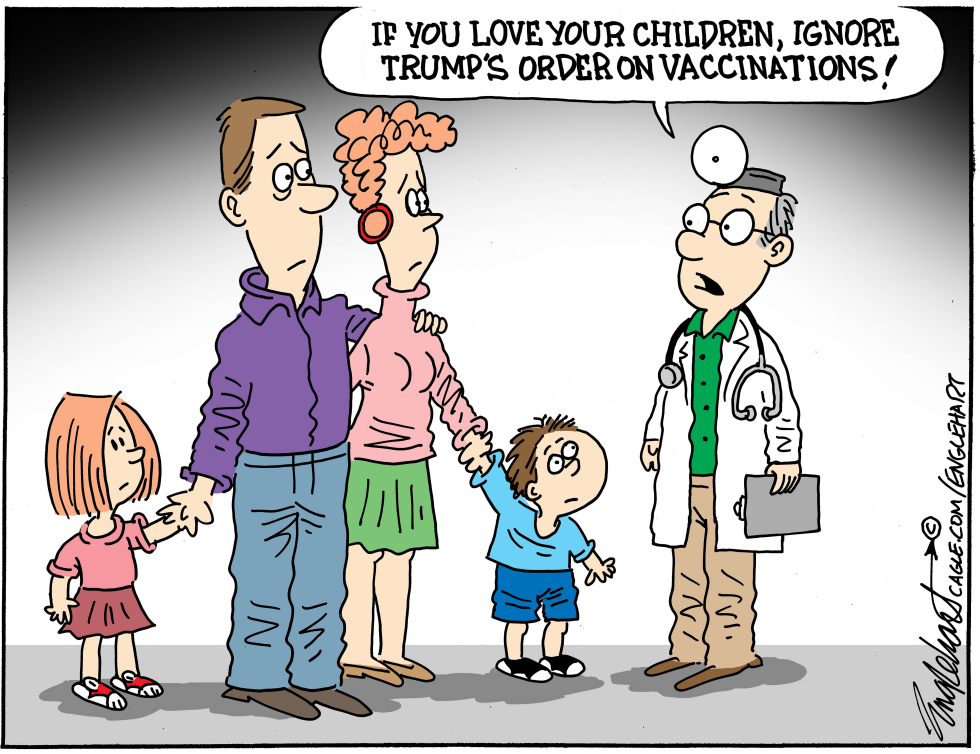
A doctor has publicly advised parents to disregard a presidential order on childhood vaccinations. The recommendation comes as the Trump administration advances new immunization policies. The stance highlights tensions between federal health directives and medical advice given directly to families. The piece presents the doctor's counsel as protective of children and critical of the order's approach.
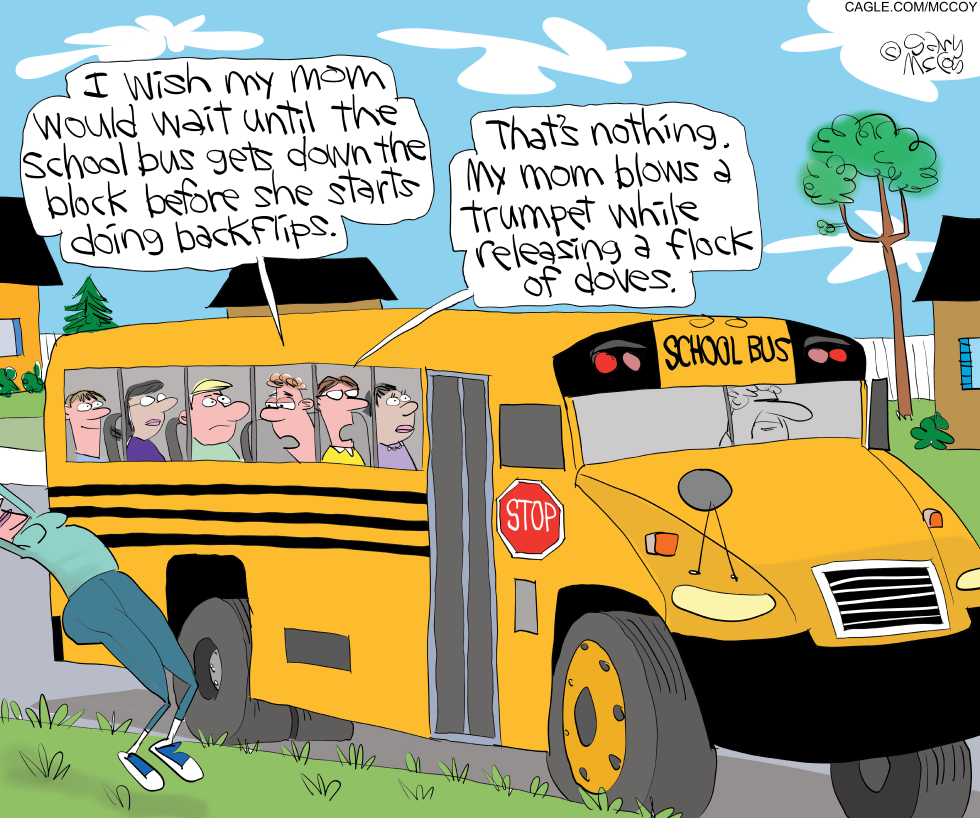
Parents often embarrass their children with enthusiastic send-offs at the school bus. The piece highlights the humorous side of overzealous maternal behavior in daily routines.
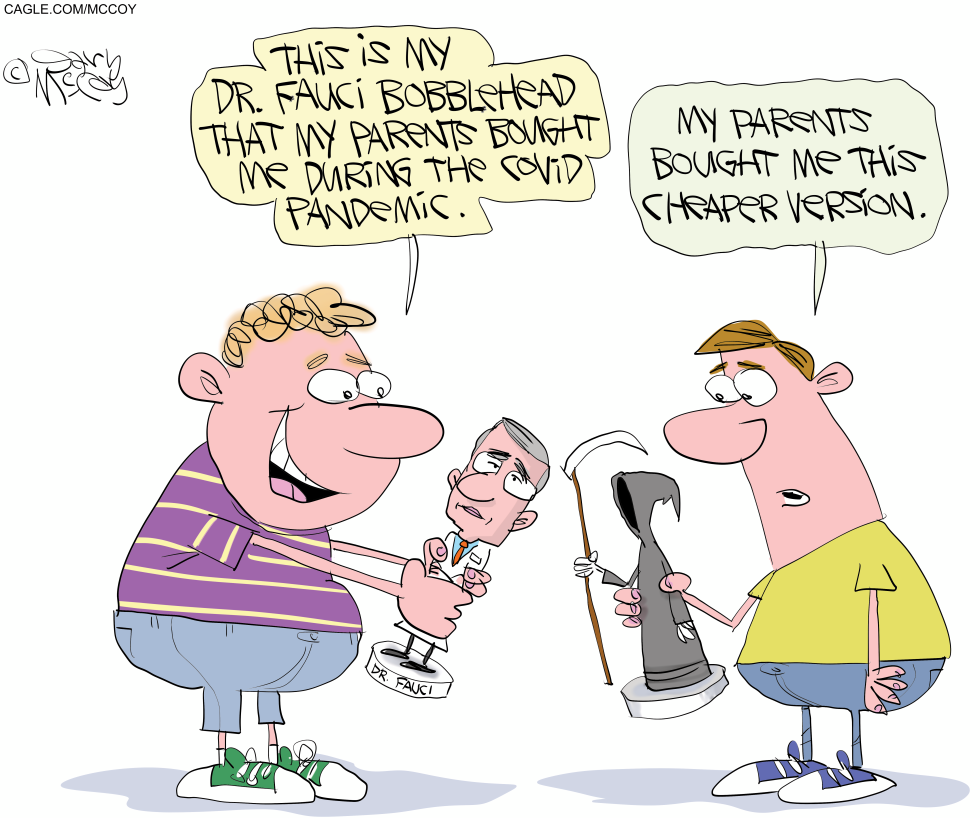
Public criticism of Dr. Anthony Fauci's pandemic guidance persisted years after the COVID-19 emergency ended. Parents who purchased official merchandise during lockdowns now face questions from children about the human cost of those policies. The image frames the bobblehead as a memento of official messaging while pairing it with a cheaper Grim Reaper figure to suggest excess deaths. This reflects ongoing skepticism toward federal health recommendations and the officials who delivered them. The editorial stance criticizes Fauci's influence and the policies he championed.
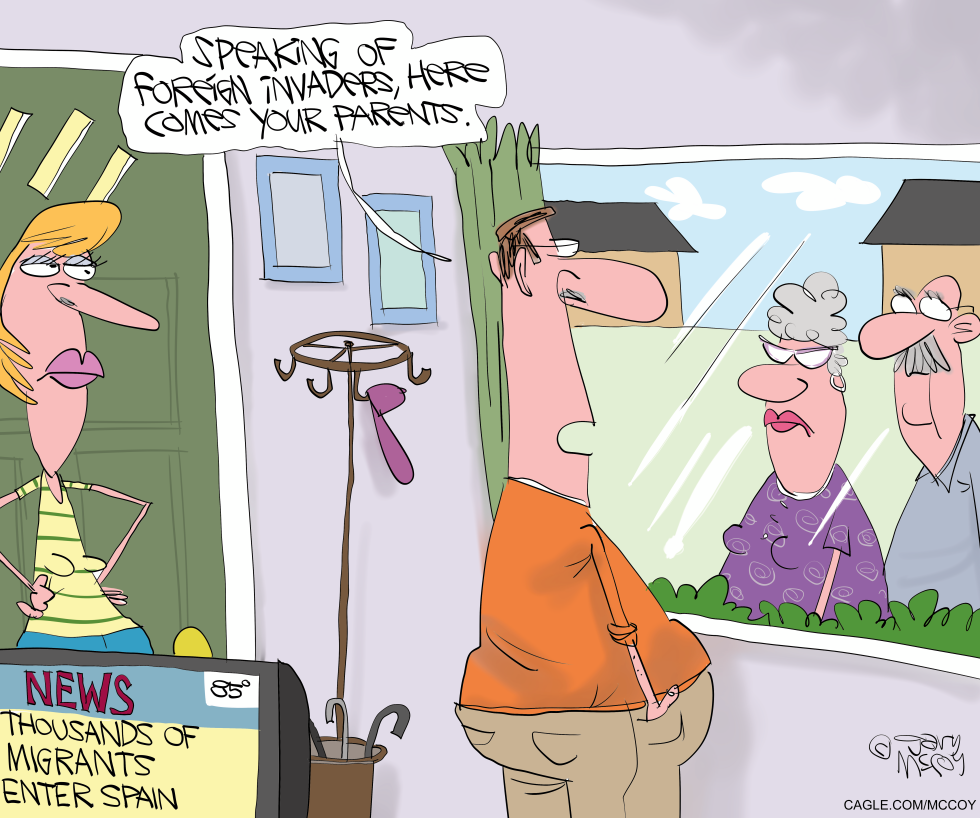
News reports show thousands of migrants entering Spain. The cartoon responds by having a man greet his in-laws with the same 'foreign invaders' label used in immigration debates. It highlights how inflammatory rhetoric can apply beyond policy to everyday family situations.
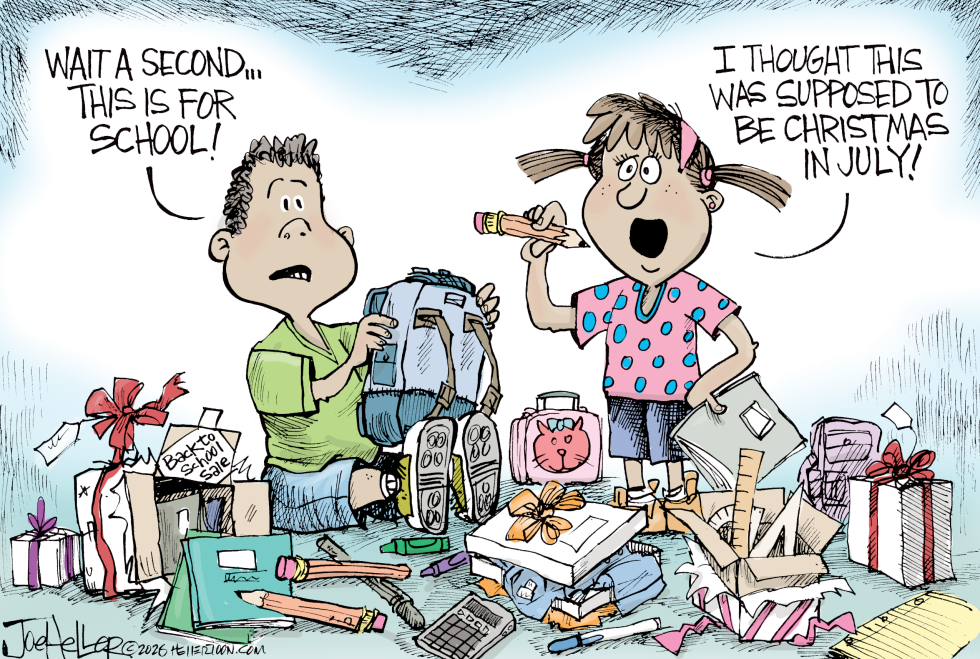
Retailers launched back-to-school promotions in late July, prompting families to stock up on supplies weeks ahead of the academic calendar. The timing overlaps with summer clearance events that mimic holiday marketing tactics. Parents and students face added pressure to buy early amid rising costs for essentials. The piece highlights how commercial calendars compress traditional shopping seasons and shift family routines.
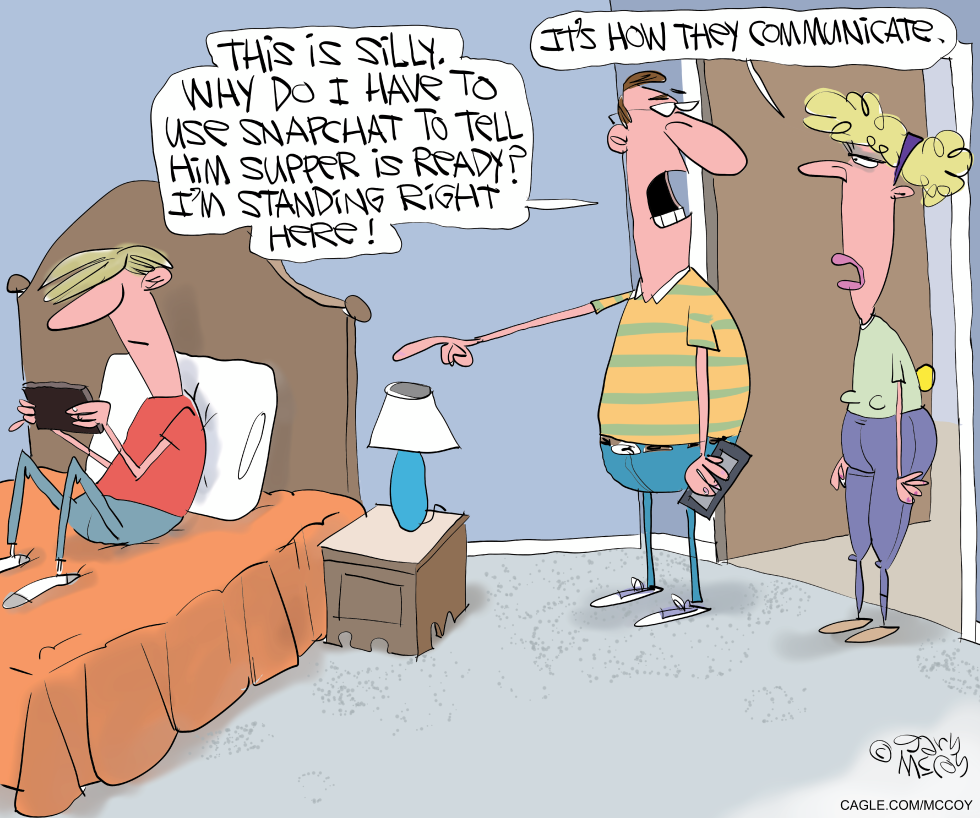
Parents increasingly rely on messaging apps to reach children inside the home rather than speaking directly. The practice reflects broader shifts in how families interact amid constant device use. The cartoon takes the position that this reliance on digital tools for routine matters like calling someone to supper has become normalized even when unnecessary.
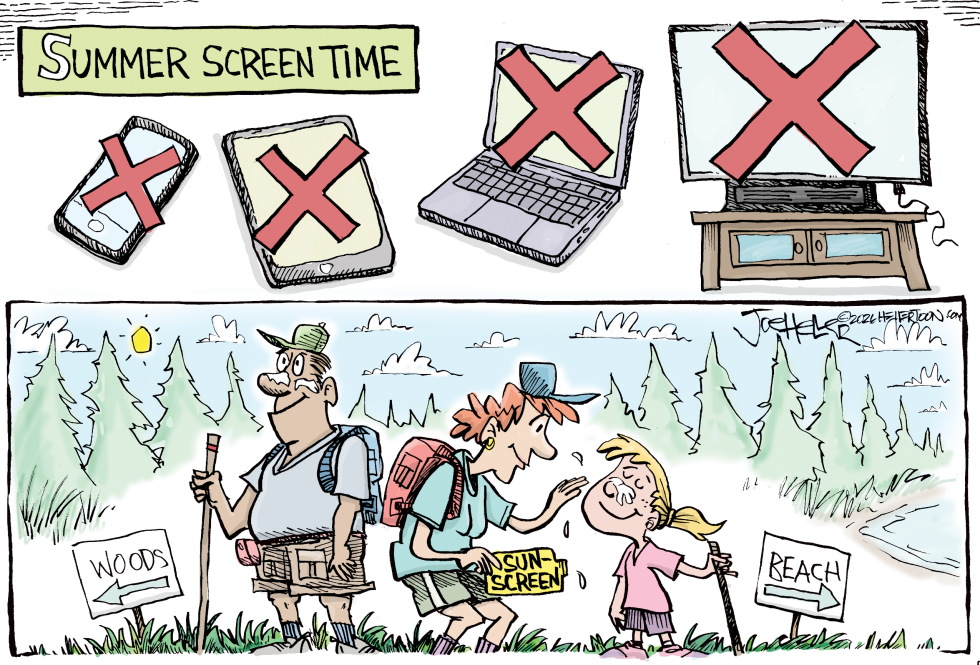
A family of three hikes along a forest trail in summer, leaving behind phones, tablets, laptops and televisions marked with red X's under a Summer Screen Time banner. The father carries a walking stick and backpack while the mother applies sunscreen to their daughter, who holds a stick near a Reach sign. A Woods sign points the way forward on the path.
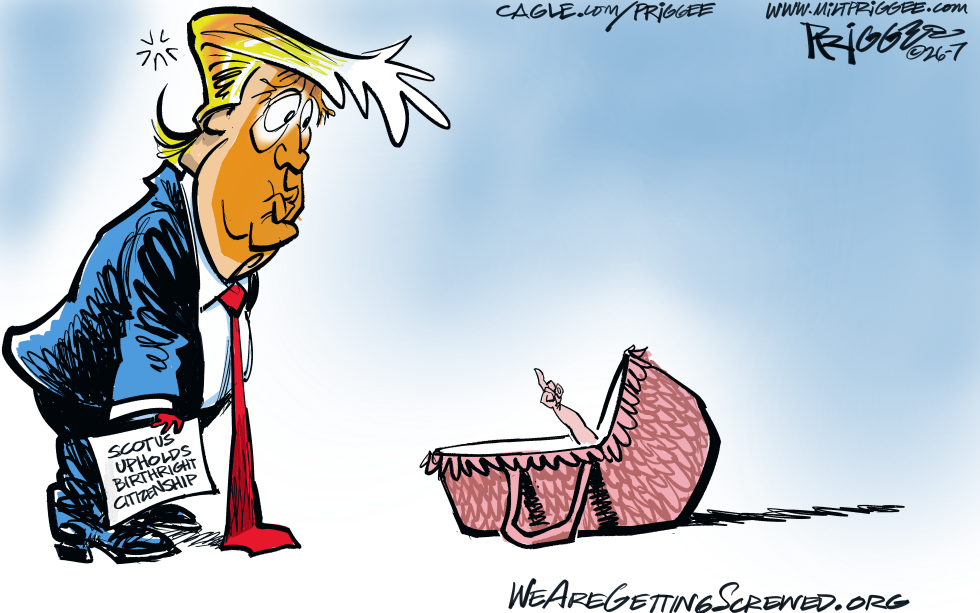
The cartoon illustrates Donald Trump holding a document announcing that the Supreme Court has upheld birthright citizenship. He stands over a bassinet from which an infant extends a middle finger. The image references the constitutional clause granting citizenship to those born on U.S. soil and positions the ruling as a direct rebuke to efforts to alter that interpretation.
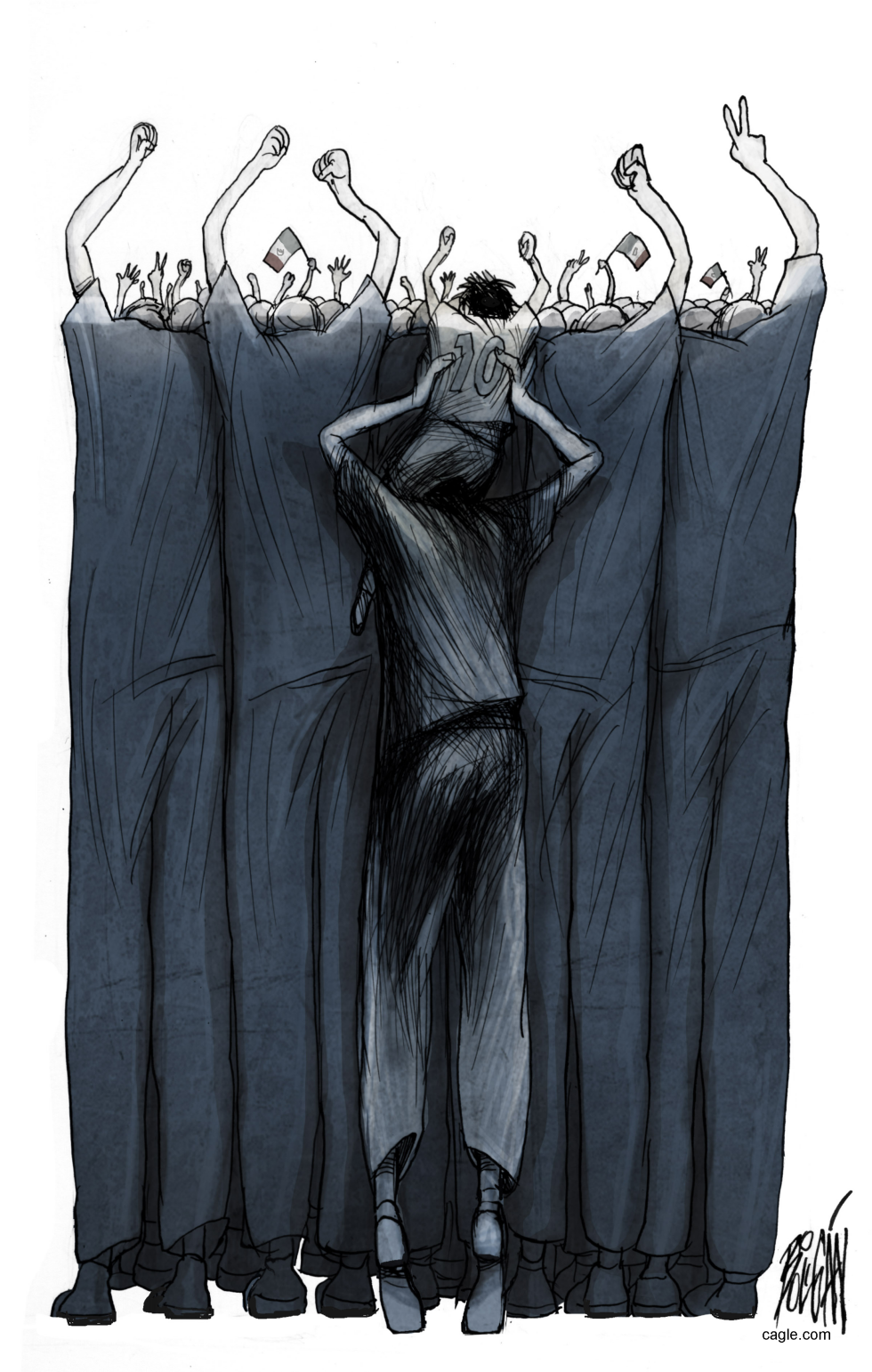
A soccer player wearing number 10 is lifted by a dense crowd of supporters waving small flags on Father's Day. The image highlights the role of a father figure in raising and carrying a child through challenges. The editorial position frames this as a direct expression of thanks to dads for their foundational support.
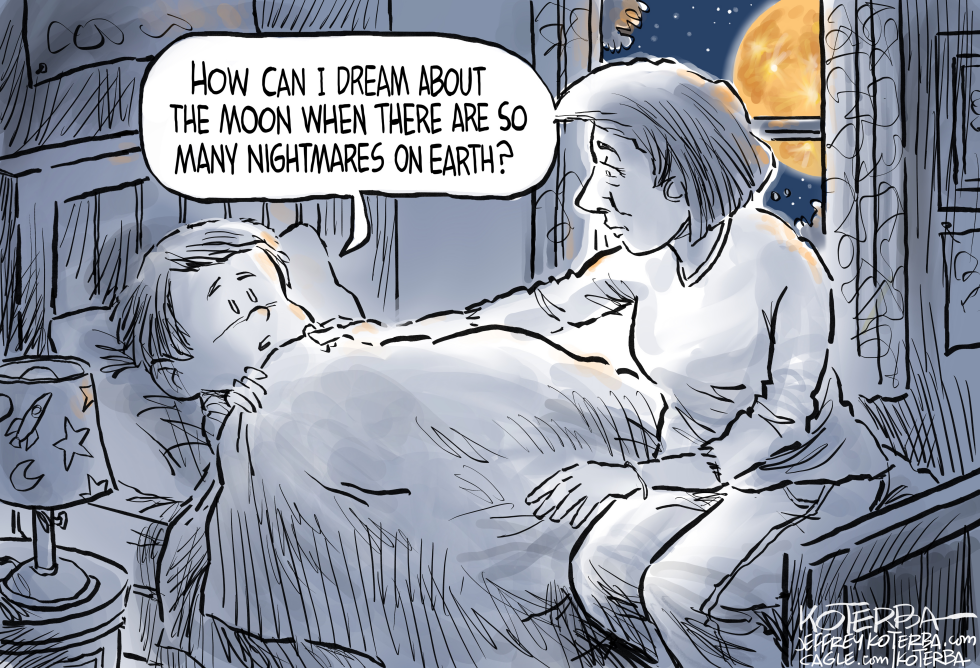
This poignant political cartoon depicts a child in bed, gazing toward a window framing a massive orange moon against a starry night sky, while confiding in a seated adult figure. The child's speech bubble reads: 'How Can I Dream About The Moon When There Are So Many Nightmares On Earth?' A bedside lamp with a star design illuminates the scene. Through this setup, the artwork satirizes how youth anxiety from global issues—like wars, climate woes, and social upheavals—stifles big dreams and aspirations. It's a clever commentary on how earthly nightmares eclipse celestial hopes, blending humor with insight into modern parenthood and childhood innocence lost. Tags: political cartoon, child nightmares, moon dreams, earth troubles, satirical illustration, youth anxiety, global chaos.
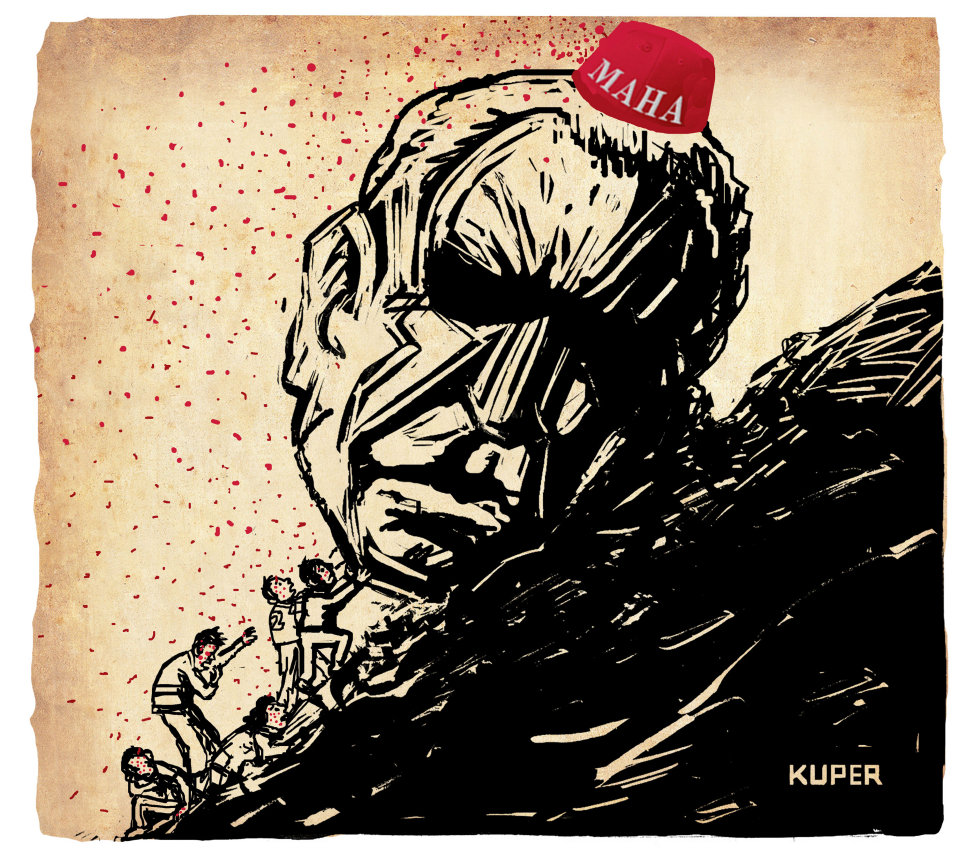
The drawing shows a massive head resembling Robert F. Kennedy Jr. wearing a red MAHA cap. Small children scale the figure while red dots scatter across the background. The composition ties the Make America Healthy Again slogan to rising measles cases. It responds to ongoing debates over vaccination policy and parental choices in early 2026. The visual places the head above the children to suggest scale of influence on health decisions.