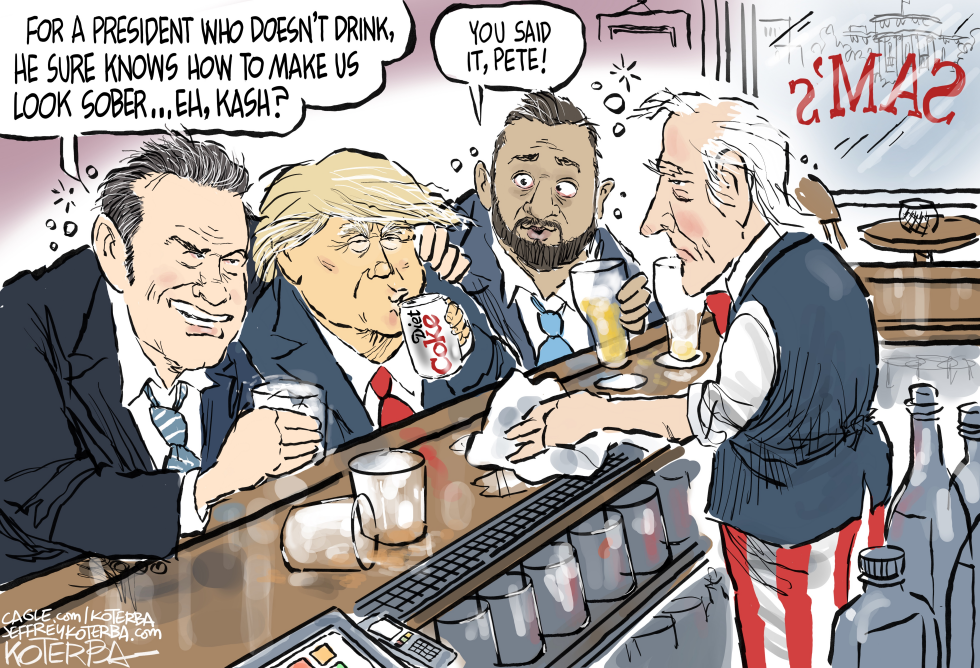
Jeff Koterba's cartoon depicts Pete Hegseth speaking to Kash Patel at a bar named Sam's, with Donald Trump sipping Diet Coke and an Uncle Sam-clad bartender resembling a political figure serving drinks. Tags like FBI, Department of War, and defense underscore the satire on Trump's nominees. The scene uses alcohol, beer, and cocktail elements to joke about Washington's political sobriety. Hegseth quips about the president's non-drinking habits making them look sober, while Patel agrees emphatically. This piece captures insider Washington dynamics with dry humor, blending bar culture and political appointments in a straightforward visual punch.
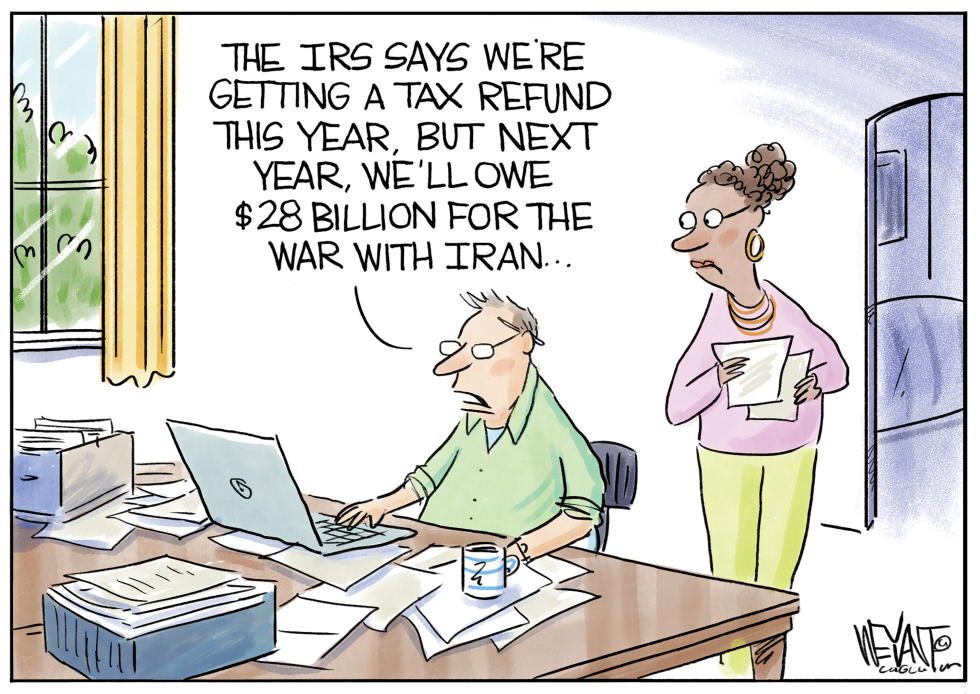
Dive into this biting political cartoon tax refund piece where a woman, holding papers, informs a laptop-working man about their IRS windfall this year, only to drop the bomb of owing $28 billion next for the war with Iran. The satirical cartoon Iran war vibe captures the absurdity of US taxes funding wars, with cluttered desks and exasperated expressions underscoring the humorous take on federal spending. It's a classic taxpayer burden Iran conflict jab, poking fun at government spending satire while illustrating the disconnect between personal finances and massive military expenses. Through cartoon about military expenses, it cleverly critiques fiscal policy in an office setting, making the war with Iran taxpayer joke both relatable and irreverently insightful for viewers pondering editorial cartoon fiscal policy.
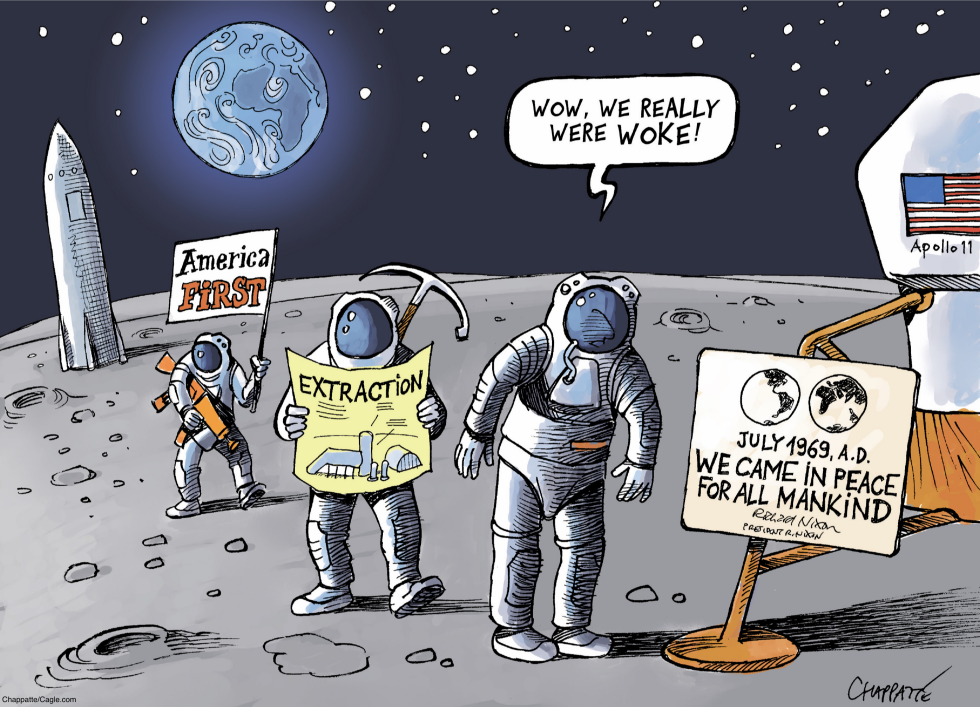
The cartoon shows three astronauts on the moon\\\\\\\'s surface, with Earth visible in the background. One holds a sign reading America First while carrying a weapon, another grips a document titled Extraction with a mining diagram, and the third wields a pickaxe next to a plaque stating We came in peace for all mankind from July 1969 A.D. near the Apollo 11 lander flagged with the US stars and stripes. A speech bubble declares Wow, we really were woke! The scene captures space race satire, lunar exploration humor, political cartoon commentary on shifting priorities from global peace to nationalistic resource grabs, all in Patrick Chappatte\\\\\\\'s style.
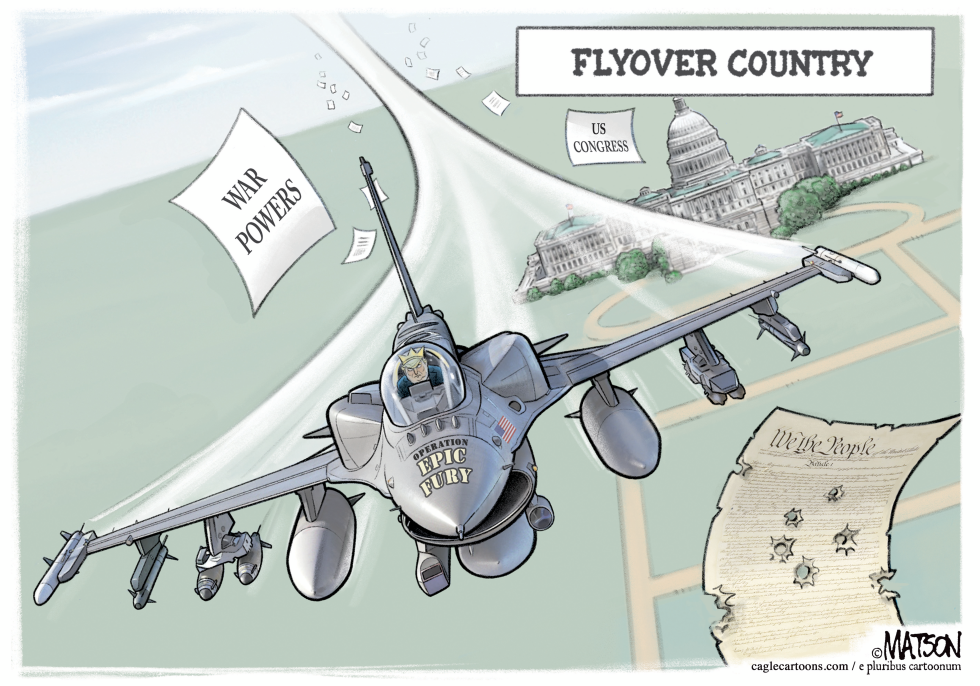
This sharp political cartoon captures the essence of executive overreach, with a fighter jet dubbed 'Epic Fury' zooming past US Congress, discarding war powers documents like confetti over flyover country. The torn US Constitution riddled with bullet holes symbolizes the erosion of constitutional principles amid unchecked military actions. Tags like political cartoon, war powers, US Congress, flyover country, US Constitution, and executive power underscore the satire on how presidents often sidestep legislative approval for wars, leaving the heartland—flyover country—to bear the brunt. It's a humorous yet insightful critique of the power imbalance in Washington, where the Capitol is just a scenic detour on the path to conflict.
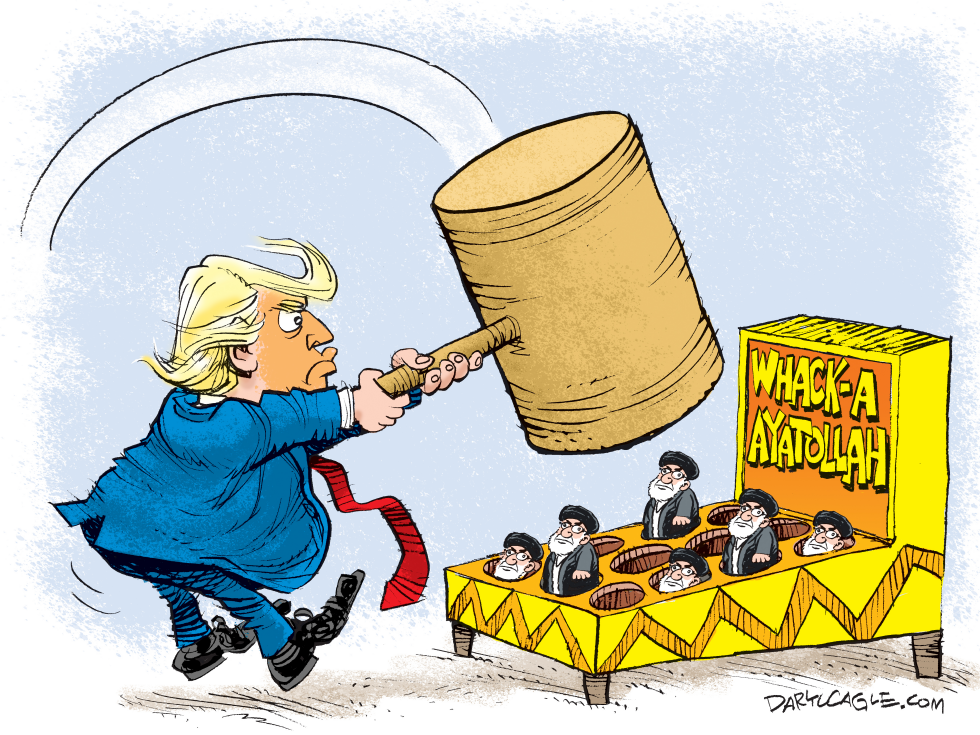
The cartoon shows Donald Trump in a blue suit swinging a massive wooden mallet at figures resembling Iranian Ayatollahs emerging from holes in a yellow arcade machine labeled Whack-A Ayatollah. The president appears mid-swing with motion lines indicating effort. The image comments on US policy toward Iran by framing the conflict as a repetitive carnival game where targets keep reappearing. Publication occurs during a period of heightened US-Iran tensions over nuclear issues and regional influence. The visual metaphor suggests difficulty in permanently resolving the challenge despite repeated attempts.
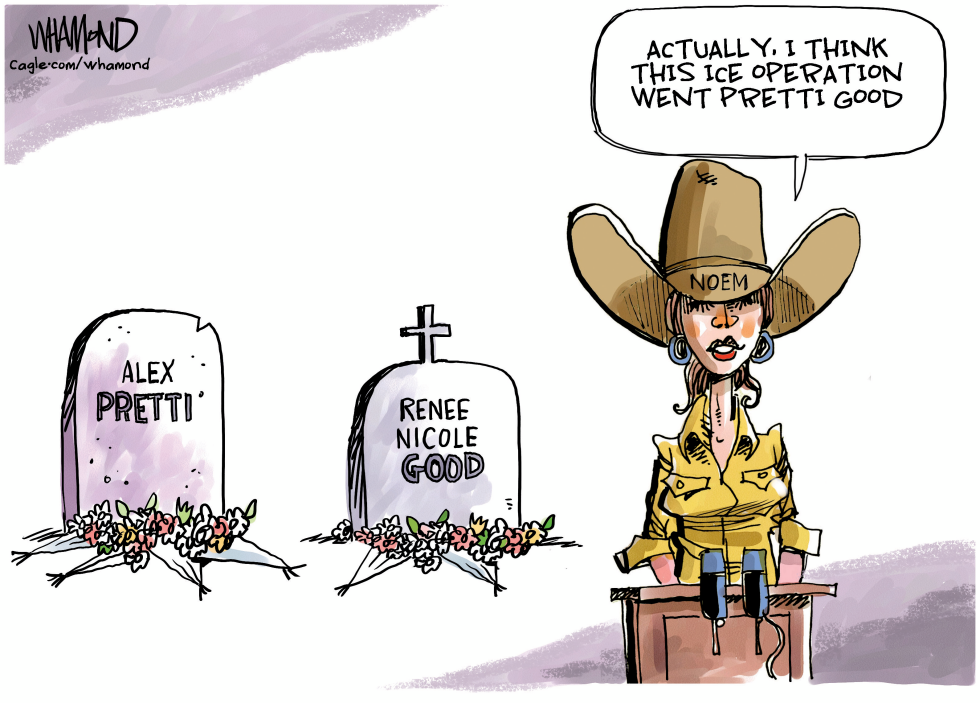
This political cartoon by Whamond features South Dakota Governor Kristi Noem, a prominent Republican and potential Trump ally, wearing a cowboy hat labeled 'NOEM' and speaking at a podium. She declares, 'Actually, I think this ICE operation went pretty good,' while standing beside two gravestones inscribed with 'Alex Pretti' and 'Renee Nicole Good,' adorned with flowers. The image satirizes immigration enforcement, border policy, and the human cost of deportation, highlighting perceived political callousness toward migrant deaths. Through humor and irony, it critiques how politicians like Noem might downplay tragedies in ICE operations, making it a sharp editorial cartoon on current Republican stances.
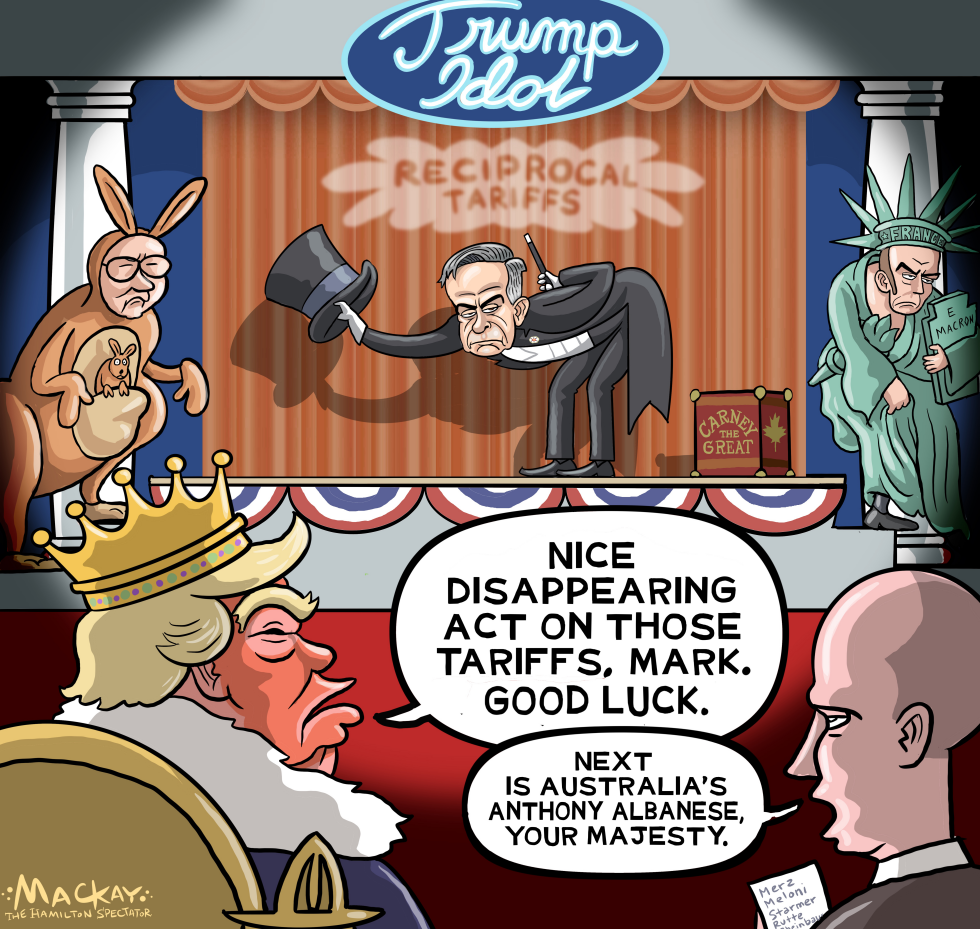
Graeme MacKay's cartoon depicts a stage parody of American Idol called Trump Idol, where a crowned Donald Trump judges world leaders performing acts related to reciprocal tariffs. A figure resembling Mark Carney bows in a top hat, having performed a disappearing act on tariffs, while a kangaroo-costumed character waits, labeled as Australia's Anthony Albanese. A Statue of Liberty figure holds a sign for E Macron France, and a box reads Carney The Great with a Canadian flag. The scene satirizes trade, diplomacy, economy, trust, and international relationships under Trump's strategy, with a bald advisor announcing the next act to 'Your Majesty.' The backdrop emphasizes reciprocal tariffs, blending protest and boycott themes in a humorous critique of USMCA and global partnerships.
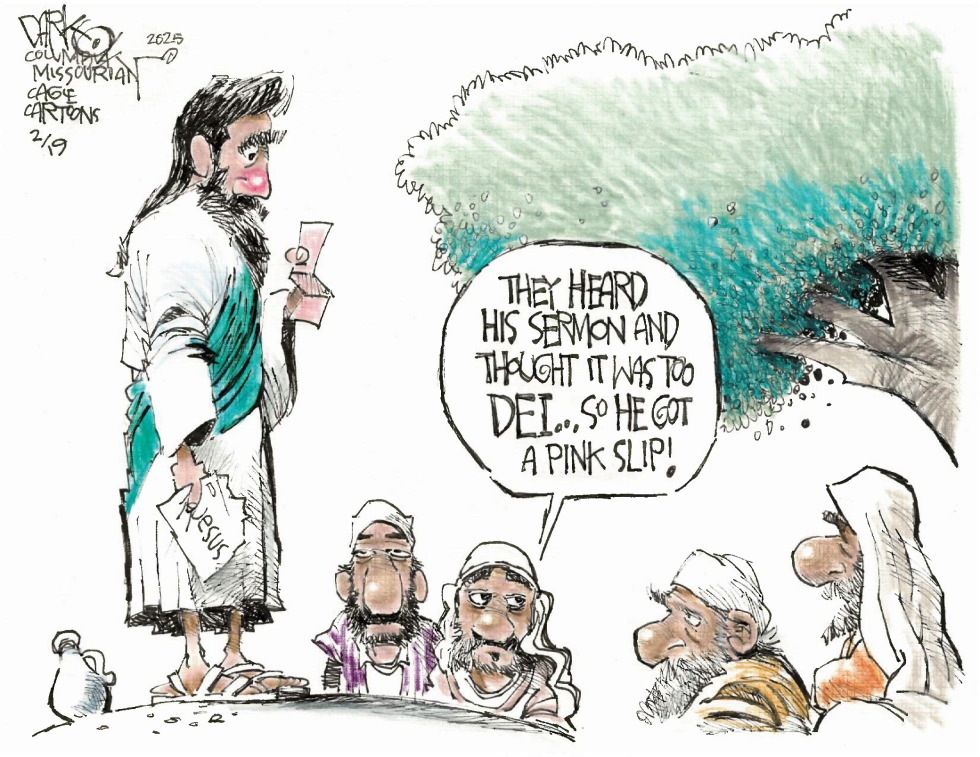
John Darkow's political cartoon portrays a bearded figure resembling Jesus, dressed in robes, holding a pink slip marked 'Jesus' while three seated men in ancient attire discuss his dismissal. One says, 'They heard his sermon and thought it was too DEI... so he got a pink slip!' The scene includes a bush and a jug, set against a simple background. This piece satirizes DEI initiatives by applying them to a biblical context, highlighting perceived overreach in diversity, equity, and inclusion efforts. The dry humor underscores tensions in modern politics, where traditional messages clash with contemporary standards. Tags like political cartoon jesus dei and satirical cartoon pink slip jesus capture its essence for SEO.
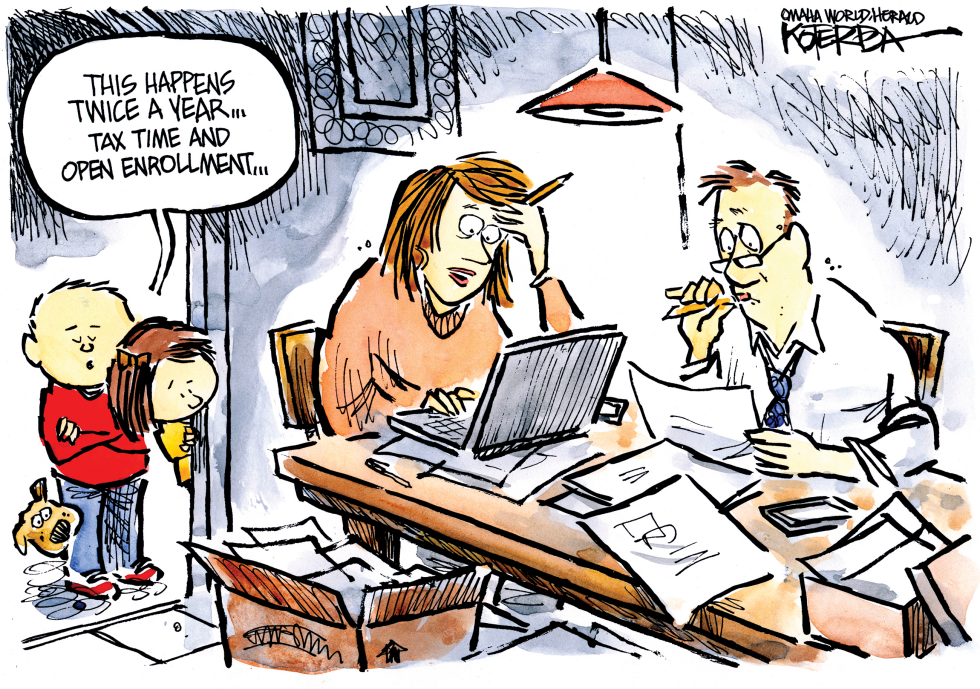
This political cartoon captures a family engulfed in the chaos of tax time and open enrollment, with a woman exclaiming about the twice-a-year ordeal while surrounded by papers, a laptop, and a box of forms. The scene highlights bureaucratic frustration, paperwork overload, and administrative burdens in a humorous light, featuring a man with glasses scrutinizing documents and children nearby. It's a sharp satire on how these annual rituals mimic each other in their soul-crushing complexity, poking fun at government-mandated headaches that afflict everyday Americans. With elements like a dangling light and scattered 'FORM' papers, the artwork underscores the universal dread of deadlines and deductions.
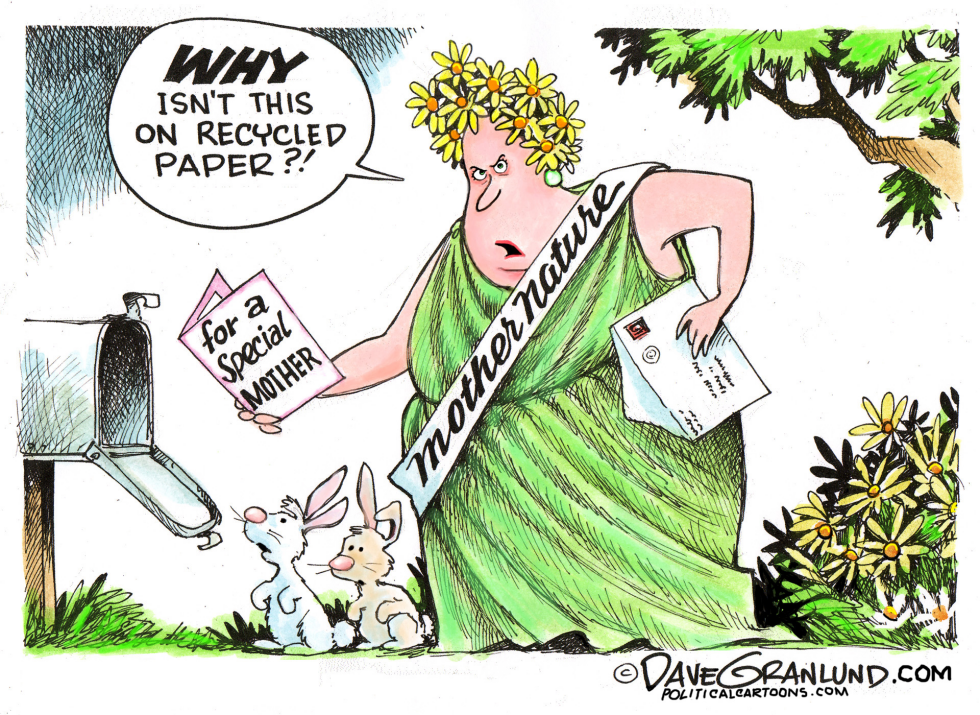
Dave Granlund's cartoon features Mother Nature, with a flower crown and green toga labeled 'Mother Nature,' expressing frustration over a non-recycled Mother's Day card pulled from a mailbox. Two rabbits watch as she holds the card reading 'For a Special Mother' and an envelope, surrounded by grass, flowers, and a tree branch. The speech bubble demands 'WHY ISN'T THIS ON RECYCLED PAPER ?!' Tags like mothers, mothers day, environment, recycle, recycled paper, and trees underscore the environmental message in this 2016 piece, blending holiday sentiment with a call for sustainability in greeting cards.
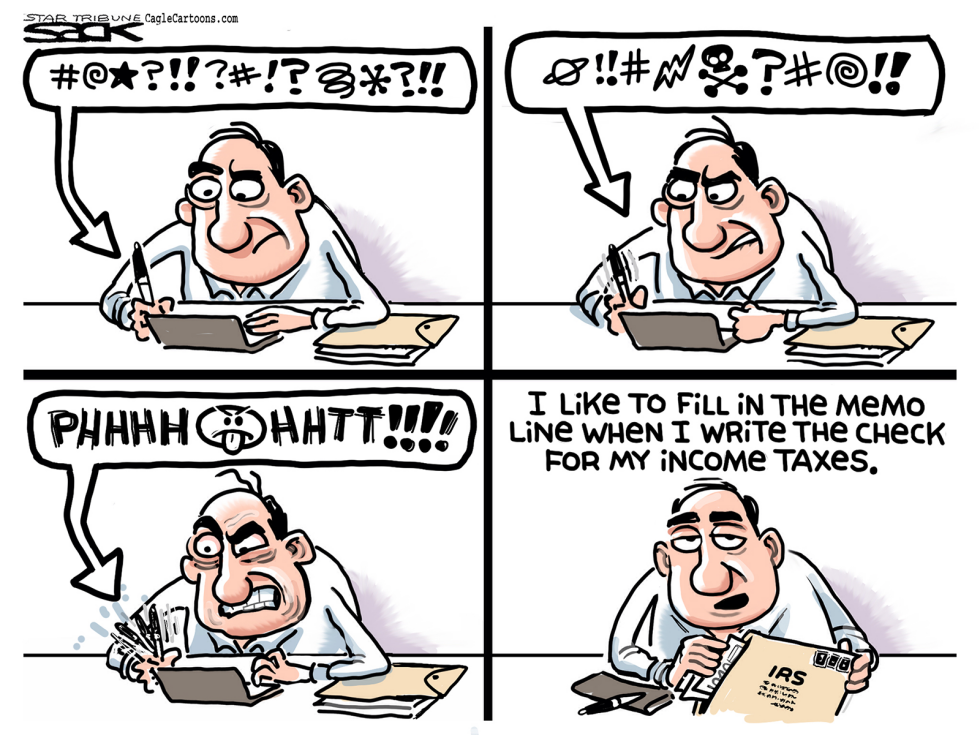
Steve Sack's tax frustration cartoon shows a balding man in four panels, venting anger through symbolic profanity while working on a laptop surrounded by papers. The sequence builds to a punchline about filling the memo line on his income taxes check with implied curses. This income tax filing humor resonates with widespread taxpayer frustration, capturing the annual dread of April 15 deadlines. The IRS check memo line satire uses visual exaggeration for dry wit, avoiding direct profanity but implying it through symbols like skulls and spirals. Such cartoons thrive in syndication for their relatable take on bureaucratic hassles. The piece maintains a light touch on universal gripes without delving into policy debates.
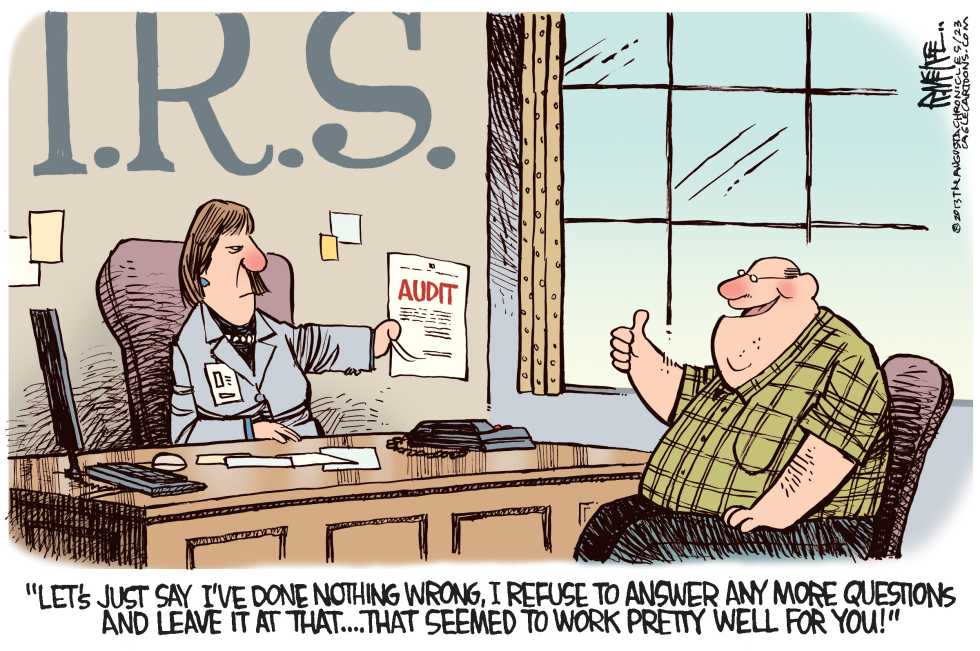
Rick McKee's 2013 cartoon depicts an IRS office where a female agent presents an audit document to a seated male taxpayer. The taxpayer, grinning with a thumbs up, declares he has done nothing wrong and refuses more questions, noting it worked for the agent. This IRS audit cartoon highlights themes of accountability and hypocrisy in a political satire IRS agent context. The image uses dry humor to comment on the IRS scandal, with the taxpayer pleads fifth cartoon element turning the tables. Elements like the IRS sign and office setting reinforce the government agency accountability cartoon narrative, making it a sharp take on bureaucratic irony.
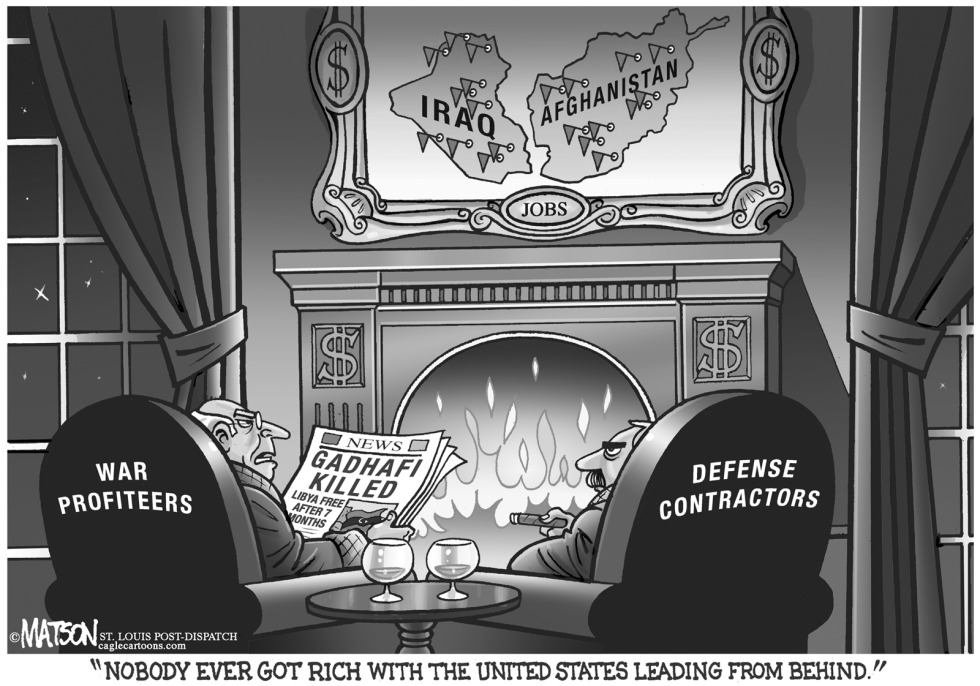
Gaddafi was killed and Libya declared free in October 2011 after seven months of NATO intervention. Defense contractors expressed disappointment that the U.S. approach produced no major reconstruction contracts comparable to those in Iraq and Afghanistan. The cartoon criticizes the limited financial opportunities created by the restrained U.S. role.
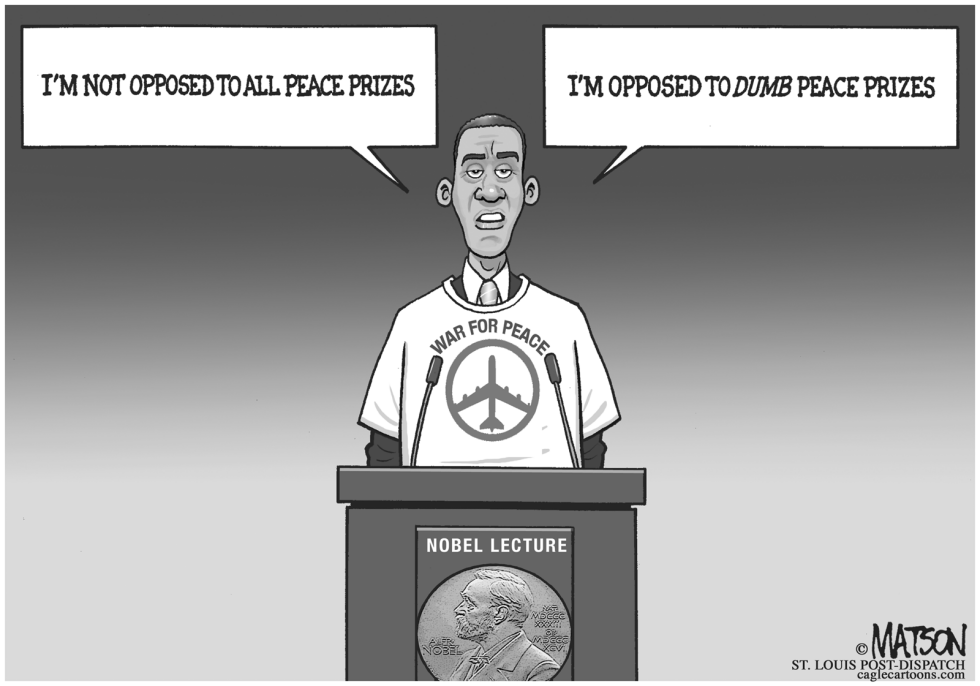
This Obama Nobel Peace Prize cartoon from 2009 captures a moment of political satire on Obama peace prize, with the central figure standing at a podium labeled Nobel lecture, delivering lines in speech bubbles: 'I'm not opposed to all peace prizes' and 'I'm opposed to dumb peace prizes.' The figure wears a t-shirt emblazoned with 'War for Peace' and a modified peace symbol featuring an airplane, emphasizing the irony. Created by R.J. Matson for the St. Louis Post-Dispatch, this piece joins the ranks of Cagle Cartoons Obama satire, highlighting the juxtaposition in the dumb peace prizes Obama speech bubble. The grayscale illustration keeps it simple, focusing on the podium with a medal-like emblem and the artist's signature in the corner, making it a classic example of 2009 Obama Nobel acceptance cartoon.