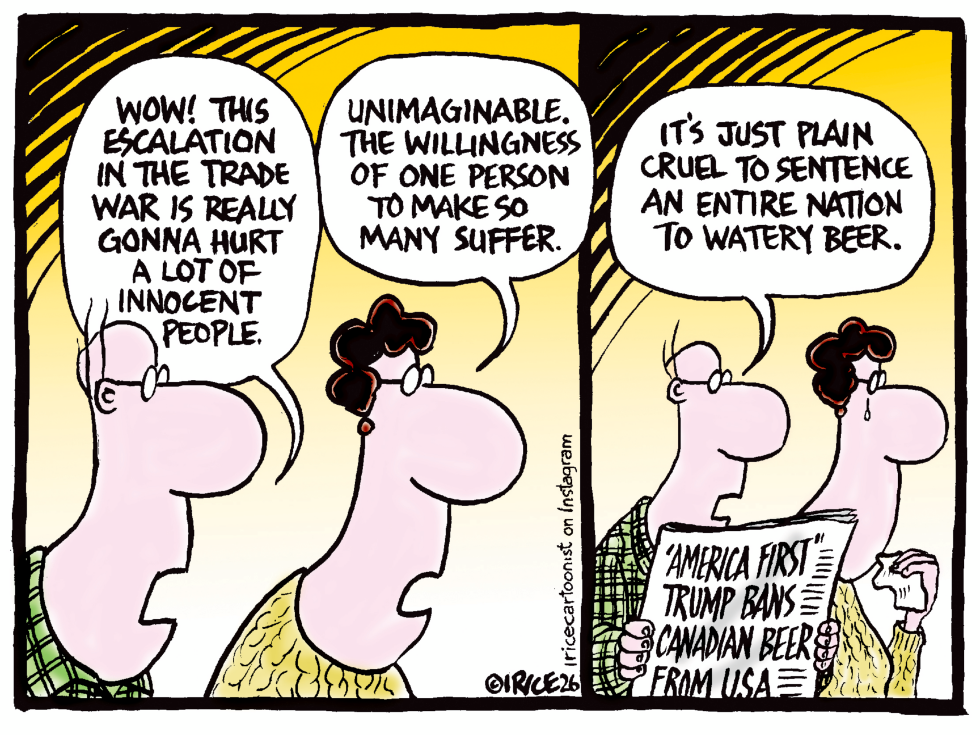
President Trump announced a ban on Canadian beer imports as part of an escalating trade dispute with Canada. The move, framed under the America First banner, immediately drew criticism for punishing ordinary citizens on both sides of the border. The policy extends earlier tariff threats into consumer goods, raising prices and limiting choices for American drinkers. Canadian exporters face sudden market loss while U.S. retailers scramble for alternatives. The editorial cartoon portrays the decision as petty and disproportionate, arguing that one leader's willingness to inflict broad pain reveals the human cost of personal political theater.
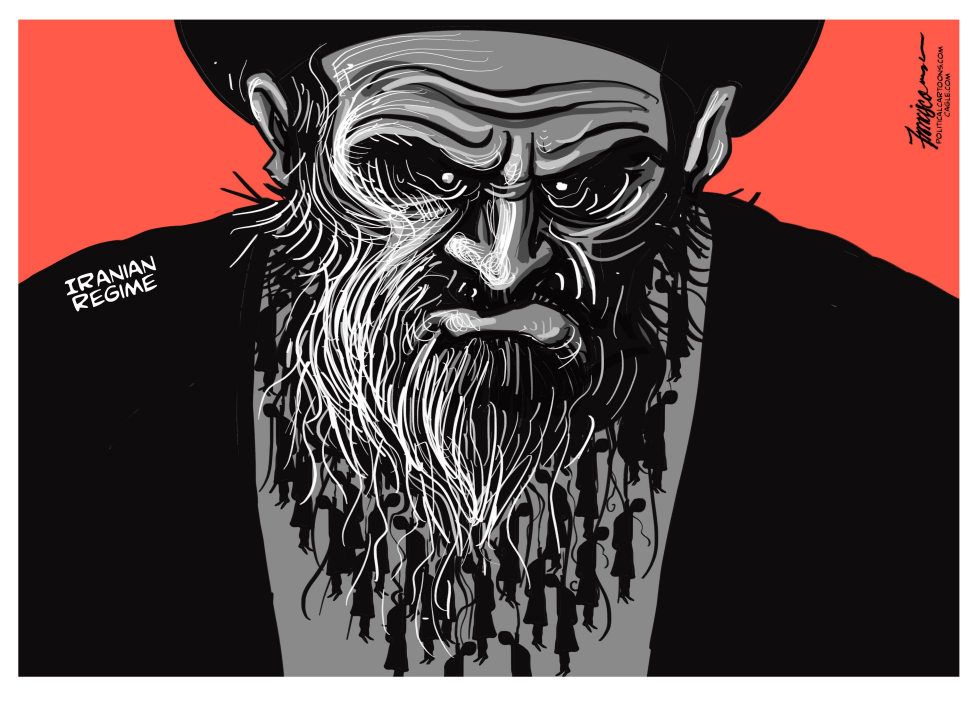
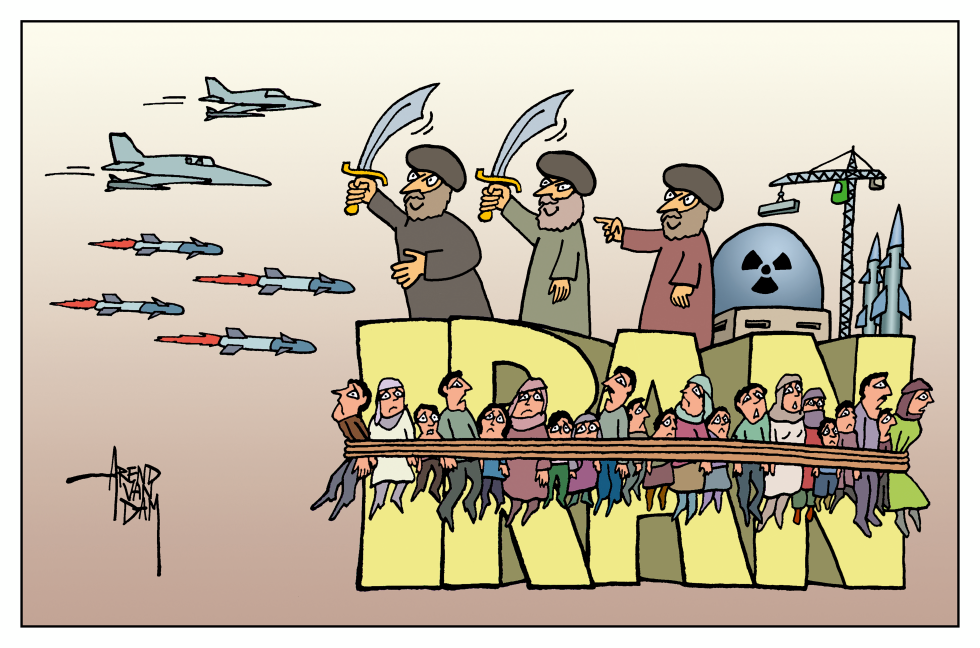
Iran continues to carry out executions at a high rate, targeting protesters, dissidents and minorities under the authority of Supreme Leader Ayatollah Ali Khamenei. The practice has drawn renewed criticism from human rights groups and Western governments concerned about due process and political repression. The cartoon frames the regime itself as the direct agent of these deaths, underscoring the leadership's personal responsibility for the ongoing campaign of hangings.
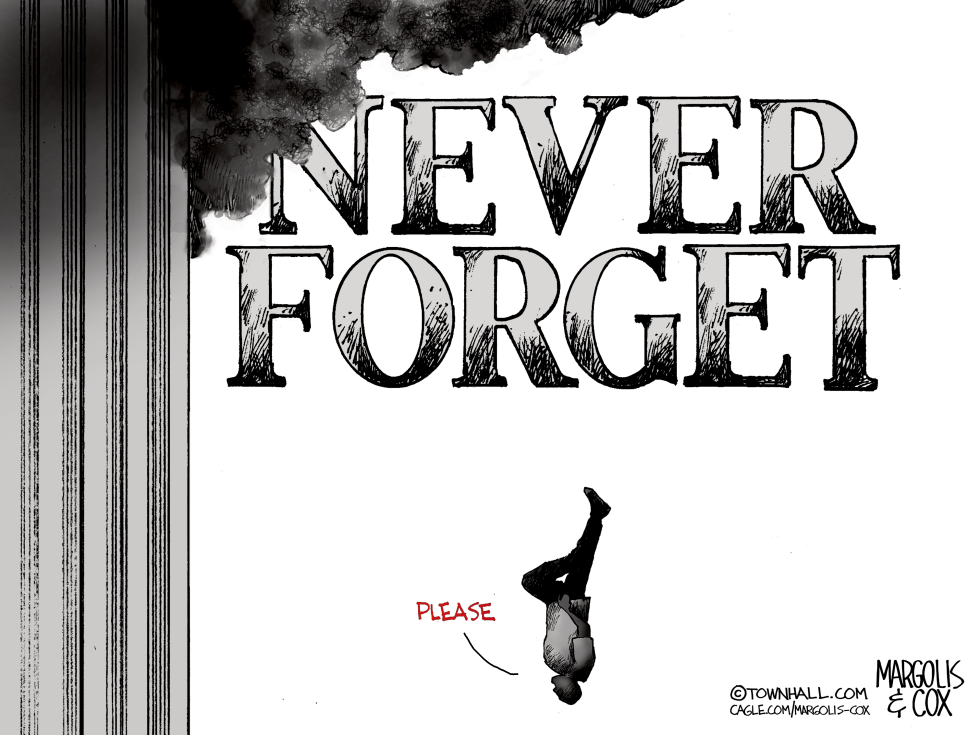
The 25th anniversary of the September 11, 2001 attacks arrives on September 11, 2026. Families and survivors continue to mark the loss of nearly 3,000 people at the World Trade Center, Pentagon and Flight 93. The milestone renews calls to remember the victims and the day's impact on national security and foreign policy. The cartoon underscores the enduring human tragedy through its central image of a falling figure.
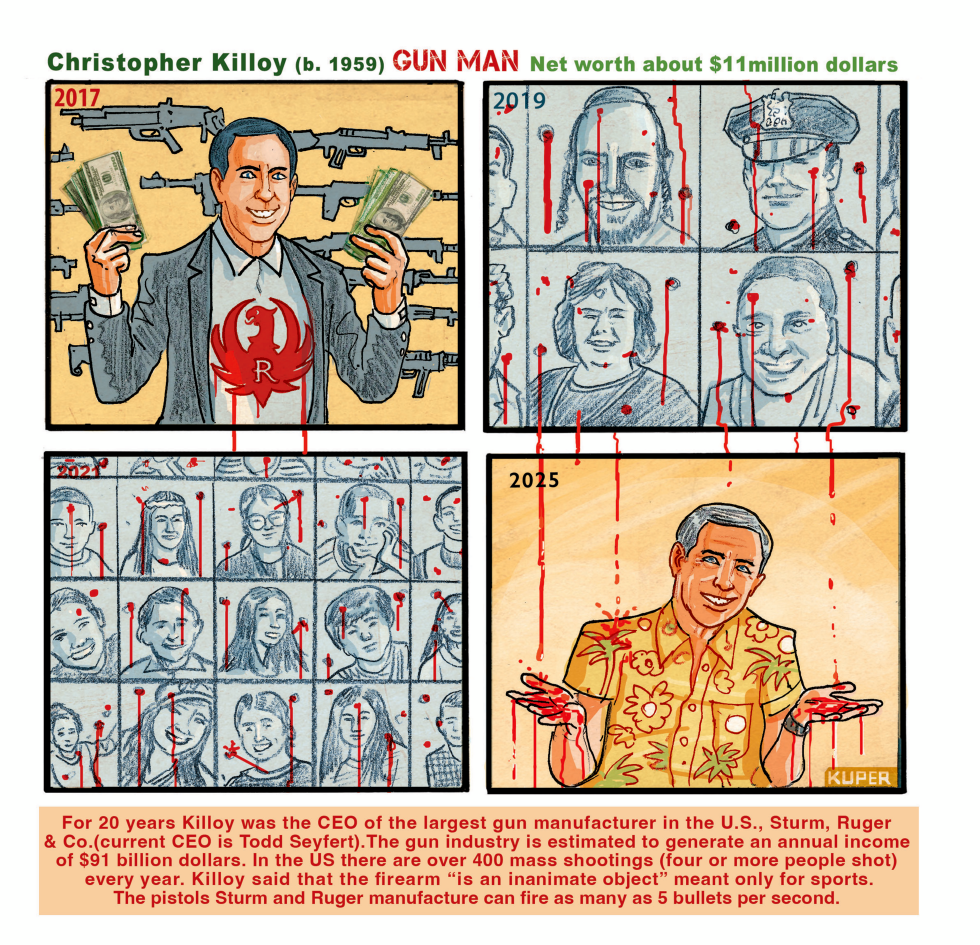
Christopher Killoy served as CEO of Sturm, Ruger & Co. from roughly 2005 to 2025, during which the company generated billions in revenue from firearms used in hundreds of U.S. mass shootings. The industry earns an estimated $91 billion annually, and more than 400 incidents occur each year. Killoy described guns as inanimate sporting objects. The cartoon criticizes the disconnect between corporate profits and the human cost shown in the accumulating portraits of victims.
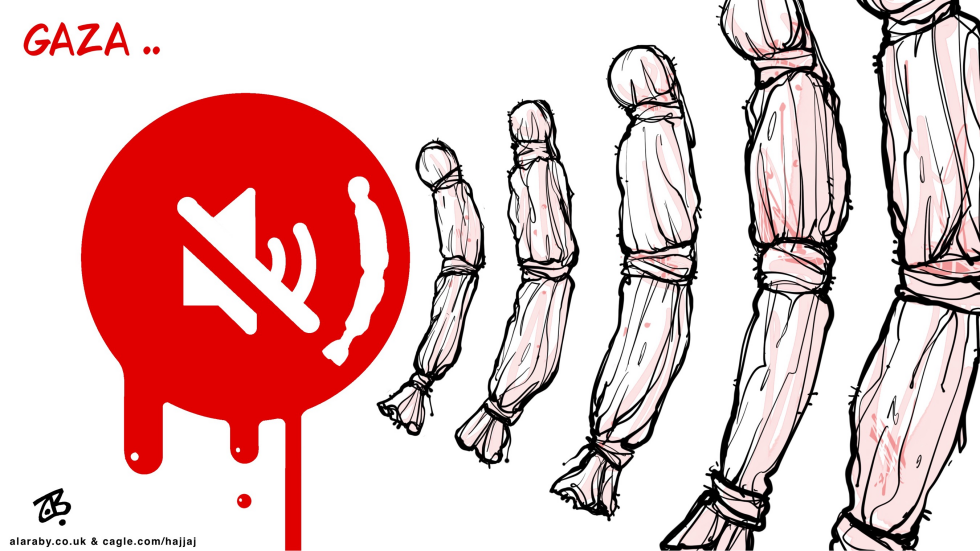
Ongoing conflict in Gaza continues to draw international attention to civilian casualties and restrictions on reporting. The piece responds to persistent calls for attention amid claims of media and global silence. It positions the mute symbol as a direct critique of inaction on reported suffering. The editorial stance emphasizes the need to break that silence and acknowledge the human cost in the region.
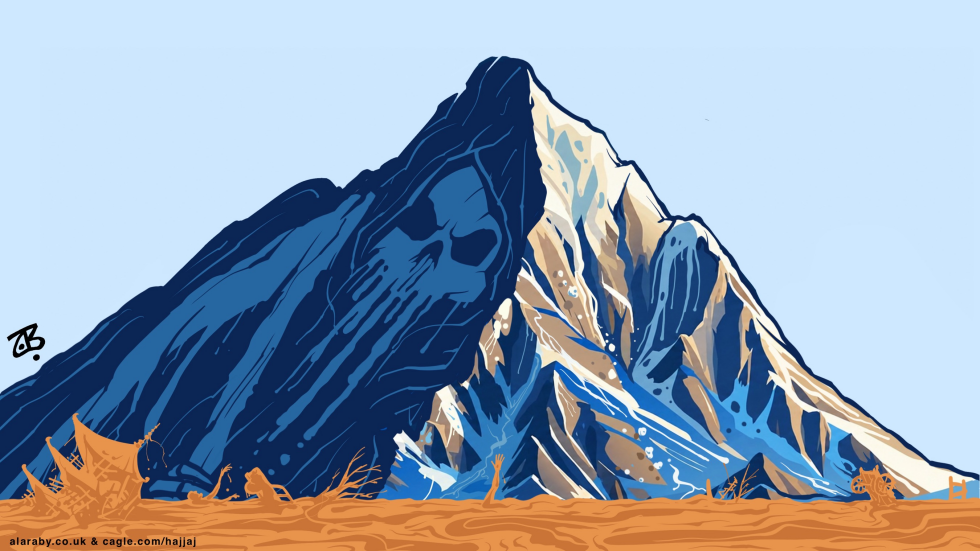
Severe flooding in the Himalayas has displaced thousands and caused significant loss of life amid accelerating glacial melt and intensified monsoon rains linked to climate change. The disaster highlights the vulnerability of mountain communities to extreme weather events that have grown more frequent in recent years. This piece frames the catastrophe as a stark warning of nature's retribution, underscoring the urgent need for global action on emissions to prevent further tragedies in fragile ecosystems.
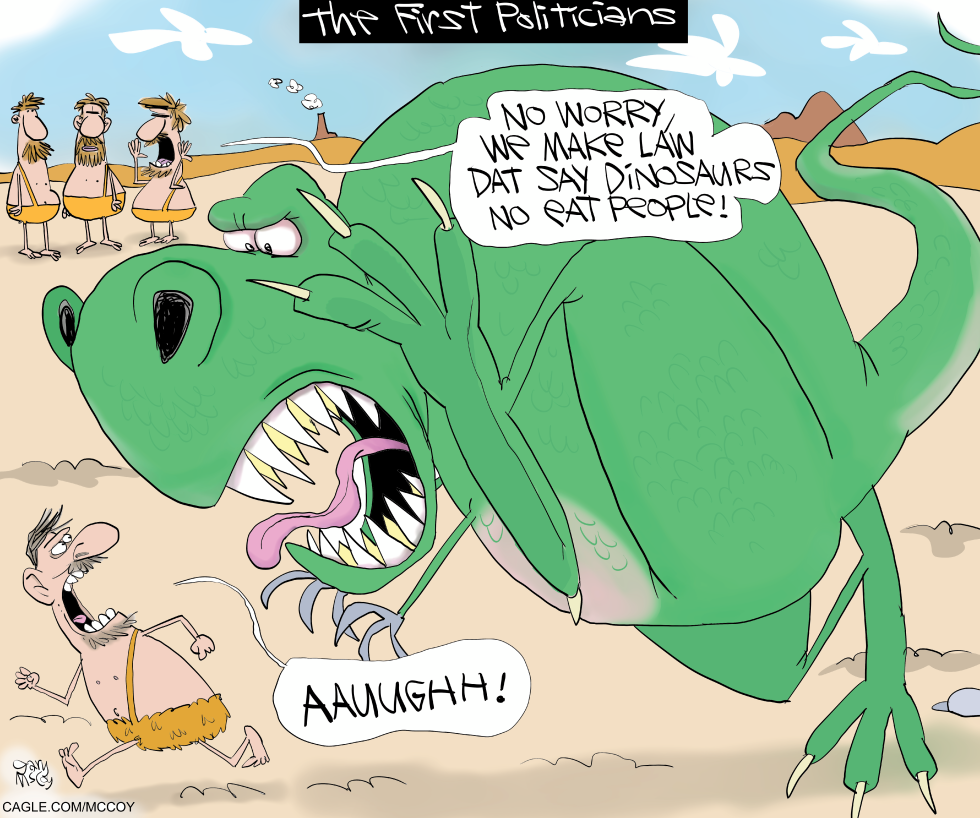
Politicians in prehistoric times promise a law banning dinosaurs from eating people. The pledge comes as a T-Rex looms over a fleeing caveman. The move highlights how leaders often make rules they have no intention of following. The piece takes the position that such assurances are empty and self-serving.
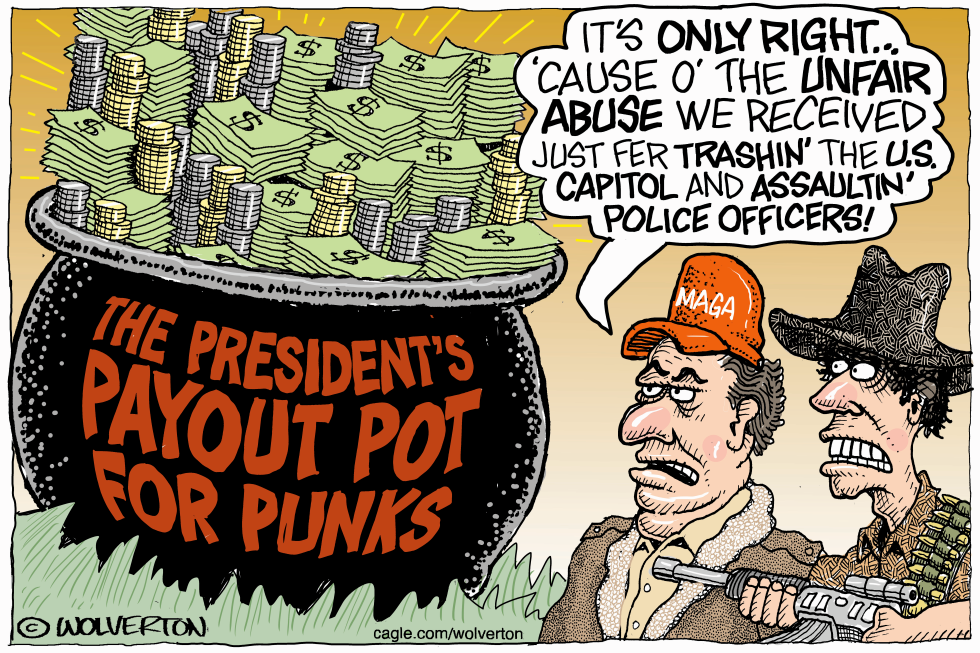
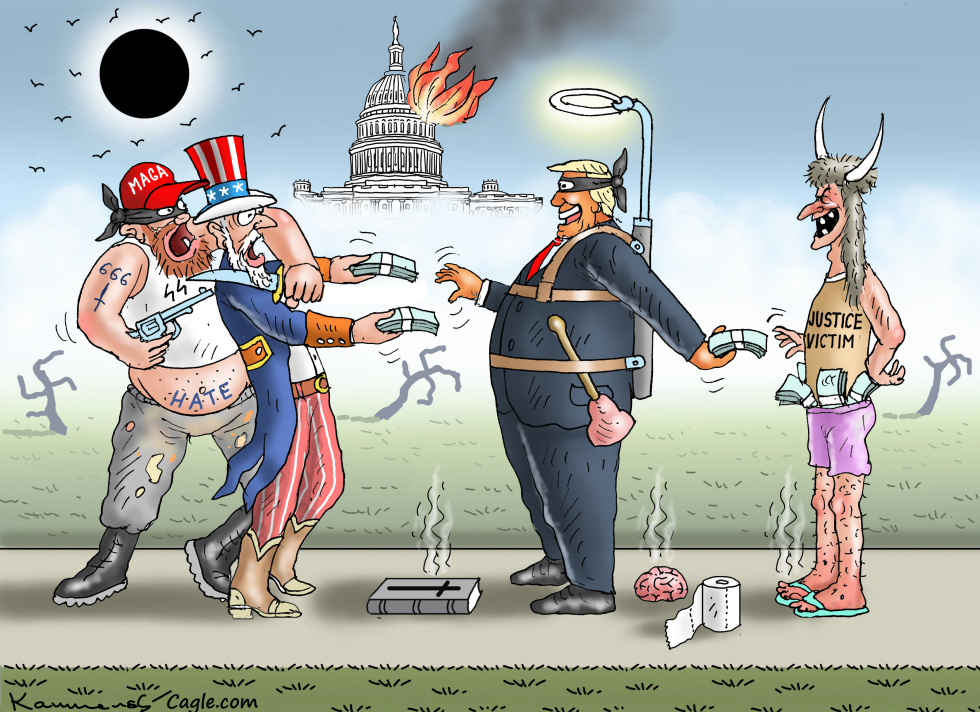
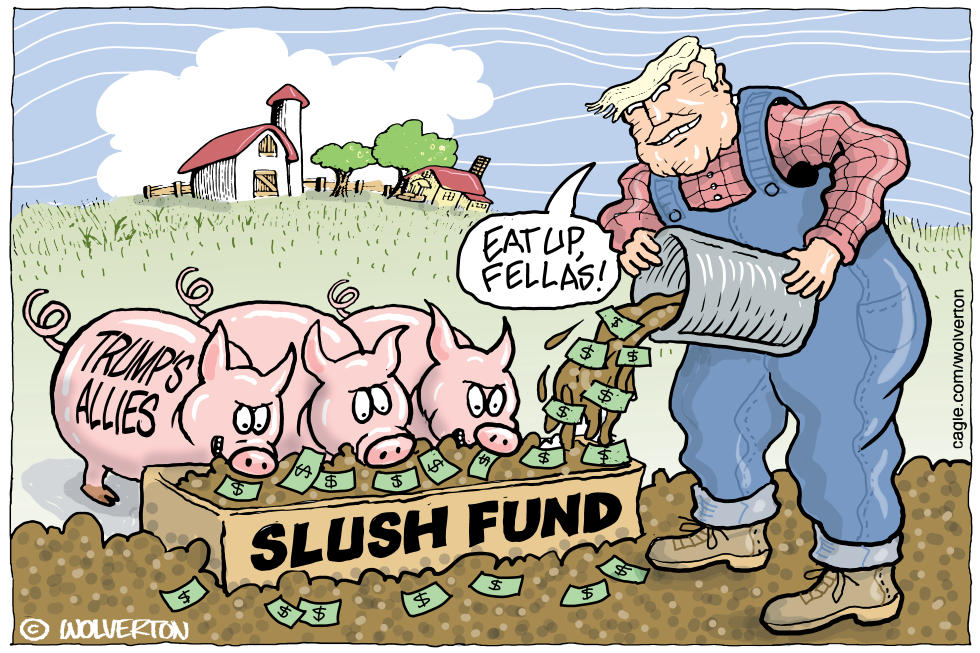
A proposal for compensation to January 6 defendants has drawn sharp criticism from opponents who view it as rewarding those convicted of attacking the Capitol and police. The editorial cartoon portrays the idea as a presidential slush fund for rioters, highlighting the perceived absurdity of compensating participants in the 2021 events.