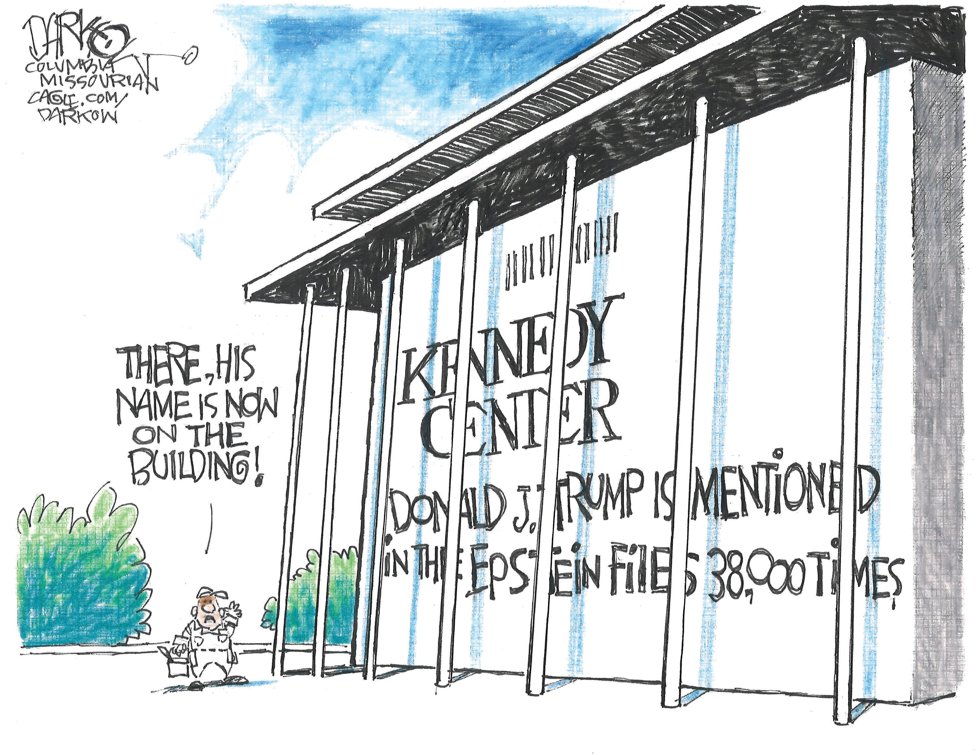
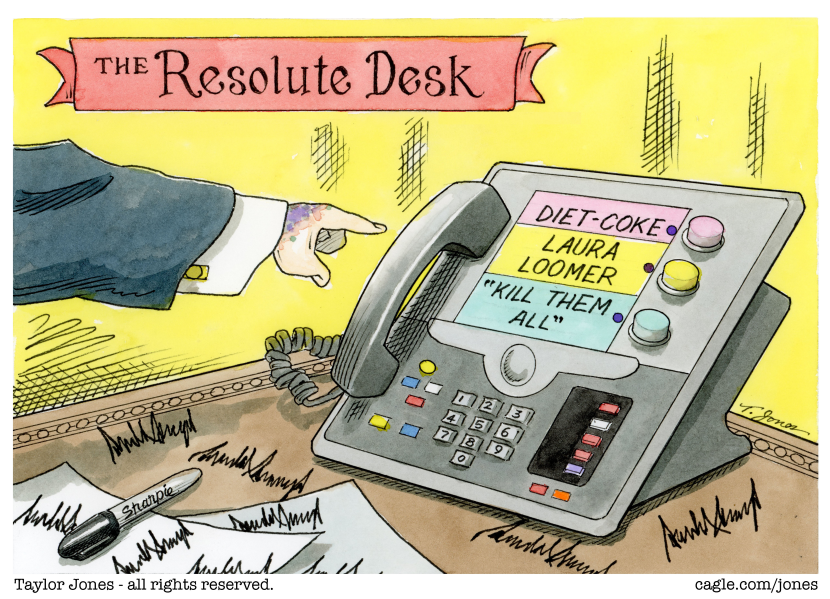
The Kennedy Center facade receives new lettering citing Donald J. Trump's 38,000 mentions in Epstein files. The addition follows a painter's declaration that the name now appears on the building. The piece frames the reference as the mechanism granting Trump association with the institution.
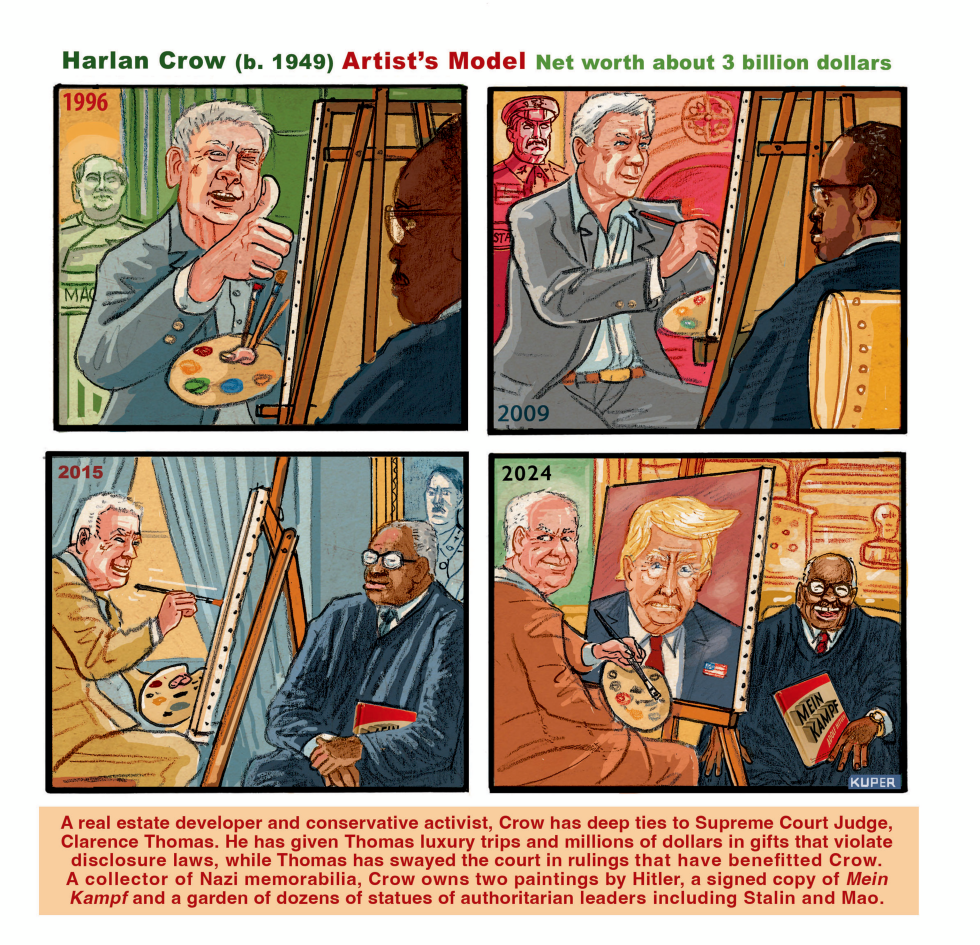
Real estate developer Harlan Crow has provided Supreme Court Justice Clarence Thomas with luxury trips and millions in undisclosed gifts that violate ethics rules. Thomas has participated in rulings benefiting Crow. Crow also collects Nazi memorabilia including Hitler paintings and a signed copy of Mein Kampf. The cartoon extends the pattern to a 2024 portrait of Donald Trump. It criticizes the intersection of wealthy donor influence and judicial decisions.
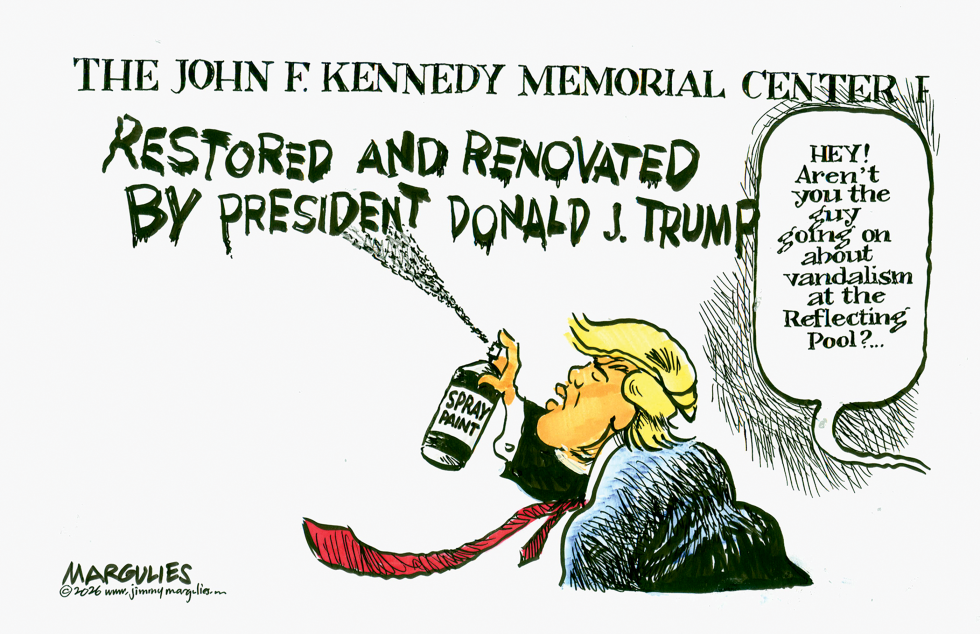
President Donald J. Trump faces accusations of altering the John F. Kennedy Memorial Center sign to claim personal credit for restoration work. The move draws immediate pushback tied to prior statements on vandalism at the Reflecting Pool. Critics see the action as an attempt to insert his name into a site honoring a predecessor.
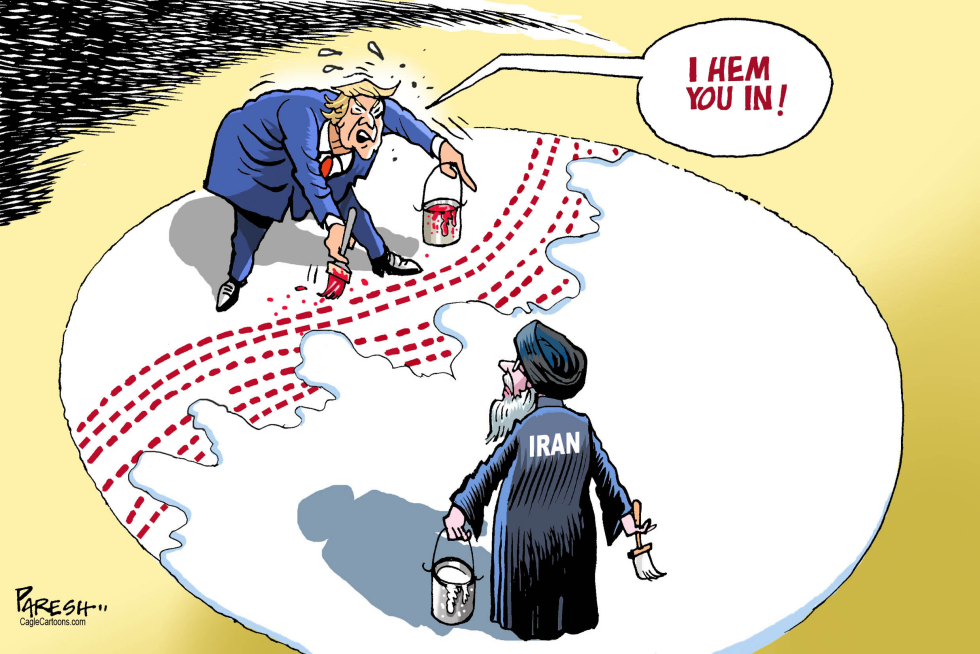
Donald Trump appears on a globe painting red dashed lines near a region labeled Iran. A robed figure marked Iran stands nearby holding a paint bucket. Trump points and declares through a speech bubble that he will hem the country in. The image responds to recent developments in U.S. policy toward Iran as of August 2026. The visual uses the act of painting boundaries to illustrate efforts at containment in the Middle East.
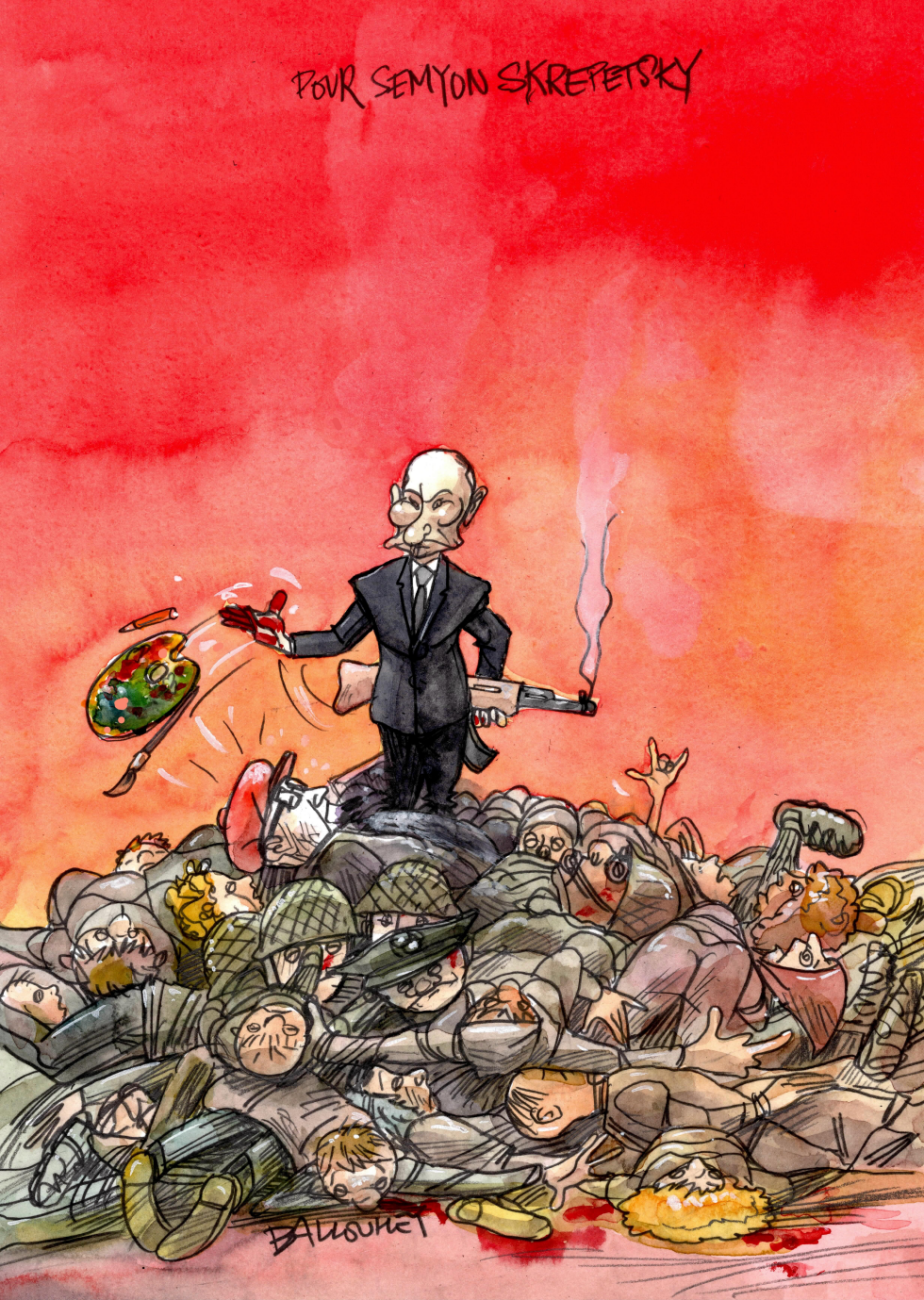
The illustration shows Semyon Skrepetsky standing on a heap of dead soldiers. He grips a rifle in one hand and a painter's palette in the other. Smoke rises from the weapon. The red-orange background suggests conflict. Text above reads 'POUR SEMYON SKREPETSKY'. The scene responds to ongoing military developments involving Russian forces as of the August 2026 publication date. The composition places the central figure above the casualties to emphasize the human cost of the fighting.
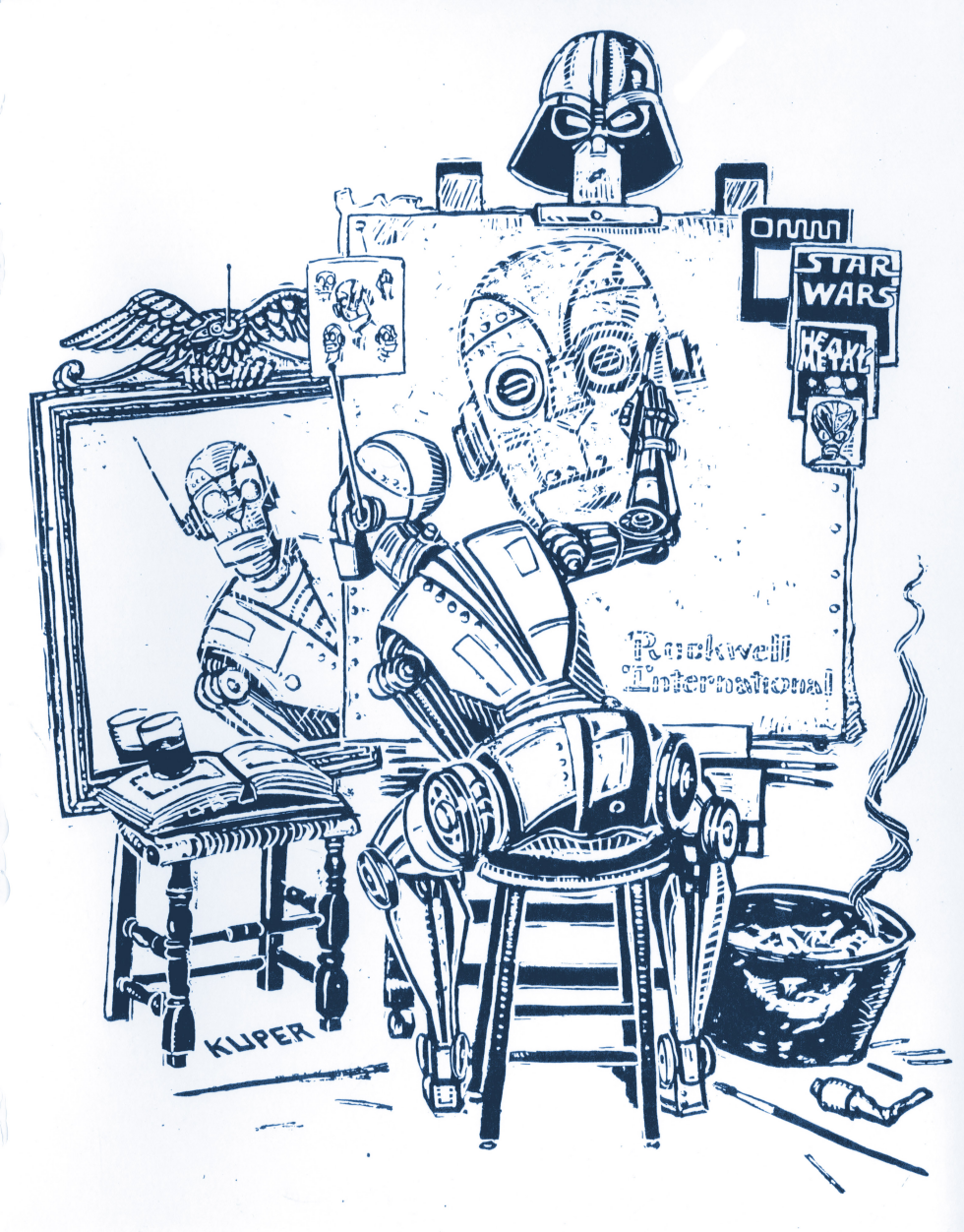
A robot artist paints a large canvas while wearing or positioned under a Darth Vader helmet, with Rockwell International branding visible. The scene includes Star Wars and Heavy Metal signage plus a mirror reflection of another robot. The piece comments on corporate and pop-culture intersections in creative production.
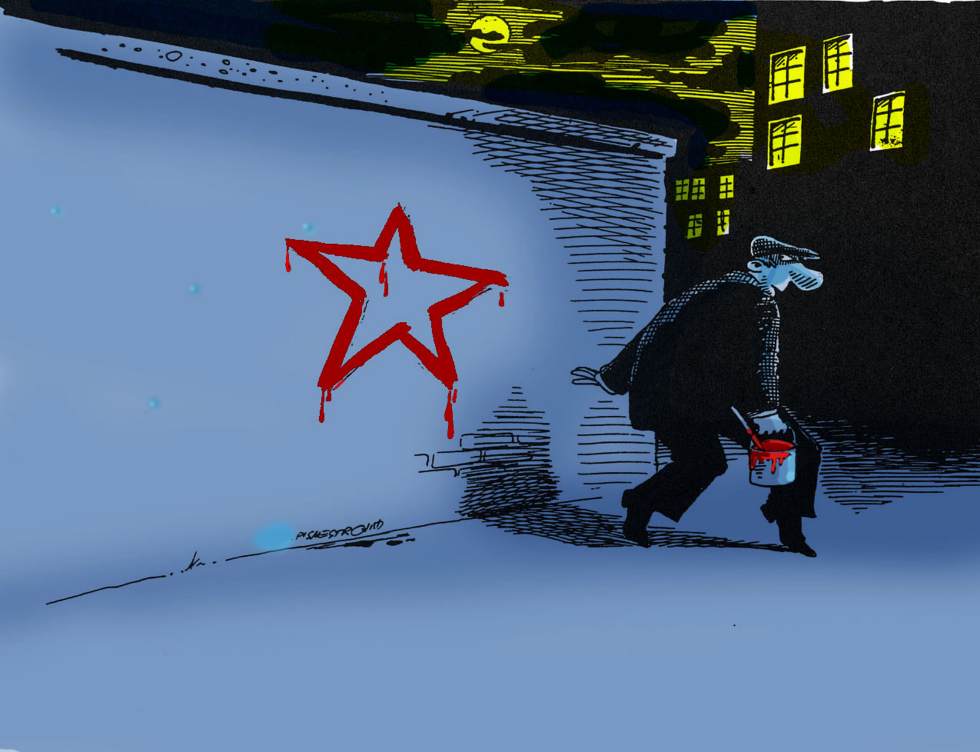
The cartoon depicts a man in dark clothing painting a large red star on a light-colored wall at night. Paint drips from the star. The figure then walks to the right holding a bucket of red paint and a brush. A building with illuminated windows stands in the background along with a yellow circle in the sky. The signature appears near the bottom. The image presents an act of applying a political symbol in a covert manner.
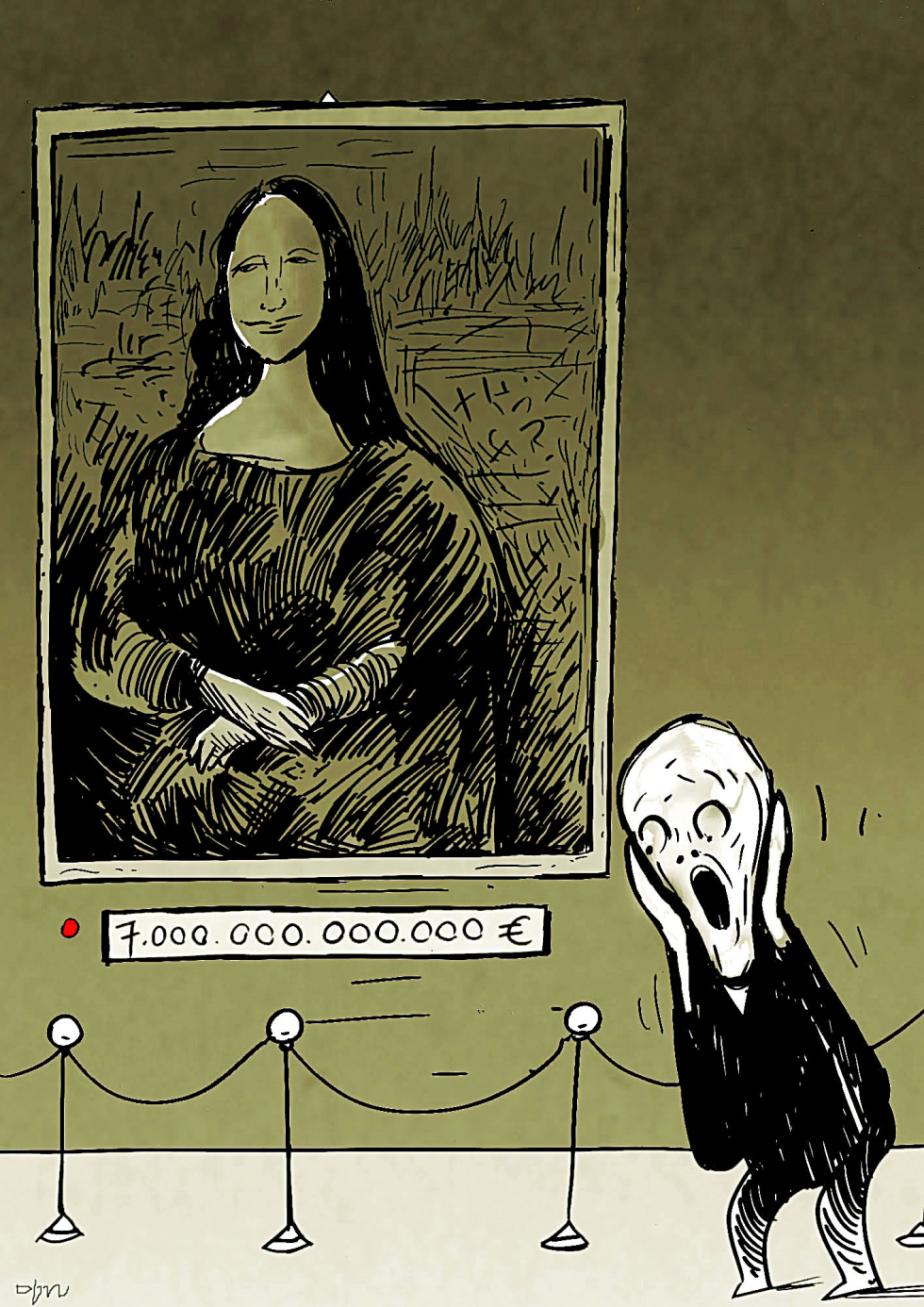
The Mona Lisa receives an eye-popping valuation of seven trillion euros in a museum setting. The figure in the image conveys immediate disbelief at the figure. The piece highlights ongoing debates over astronomical art market prices for cultural treasures.
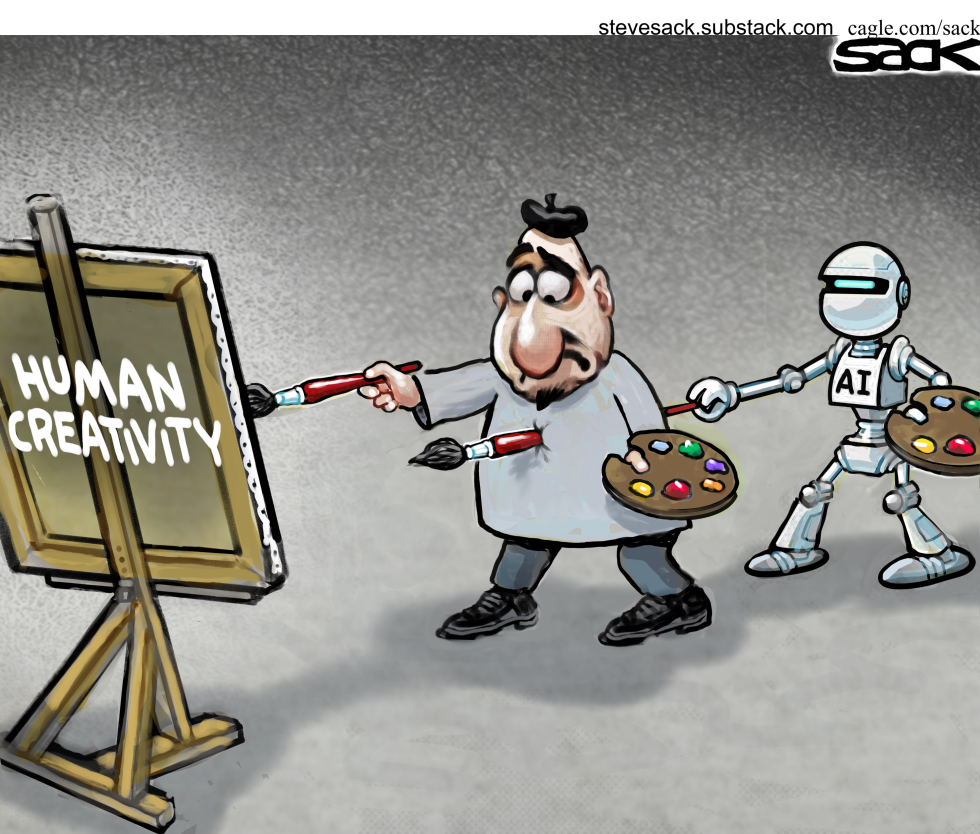
The cartoon depicts a human artist in a beret being attacked by a robot marked AI while painting the words HUMAN CREATIVITY on an easel. The robot holds a palette and extends a brush toward the artist in a stabbing motion. This visual responds to ongoing discussions about artificial intelligence tools generating images and displacing traditional artists. The scene uses the easel text and the robot label to frame the conflict between human work and machine output. Publication occurred on June 2, 2026, during continued public debate on AI capabilities in creative fields.
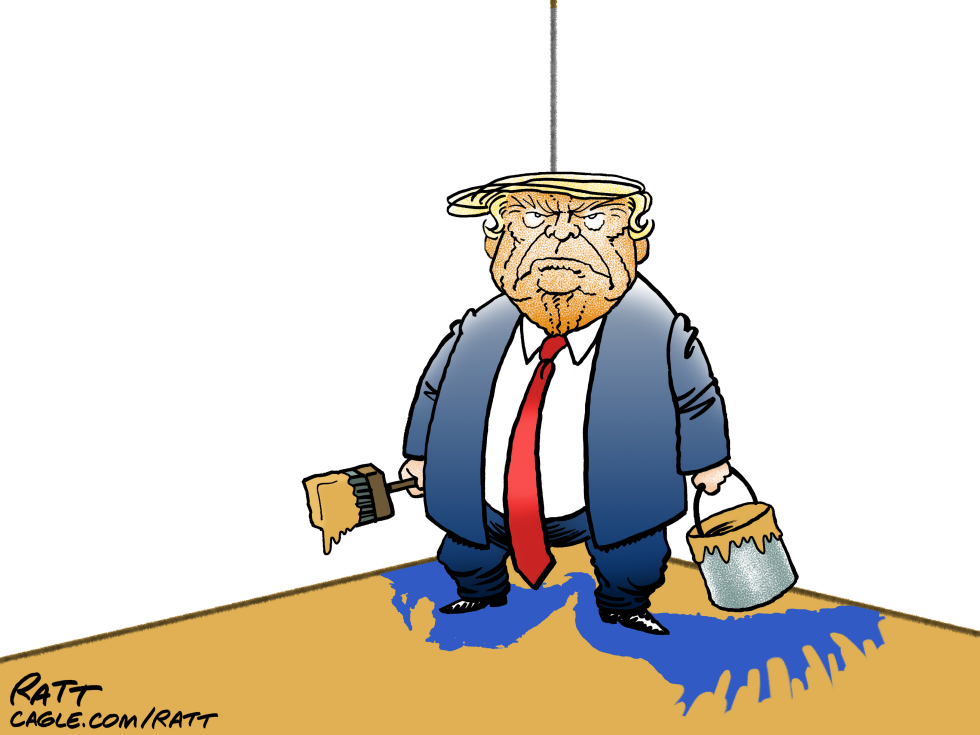
Donald Trump appears in a 2026 editorial image holding a paintbrush and bucket while standing on a blue painted area resembling the Strait of Hormuz. The scene responds to ongoing concerns over Iranian oil routes, potential conflict, and resulting effects on global oil and gas prices. The visual shows the figure applying paint that creates a path leading to restricted movement.