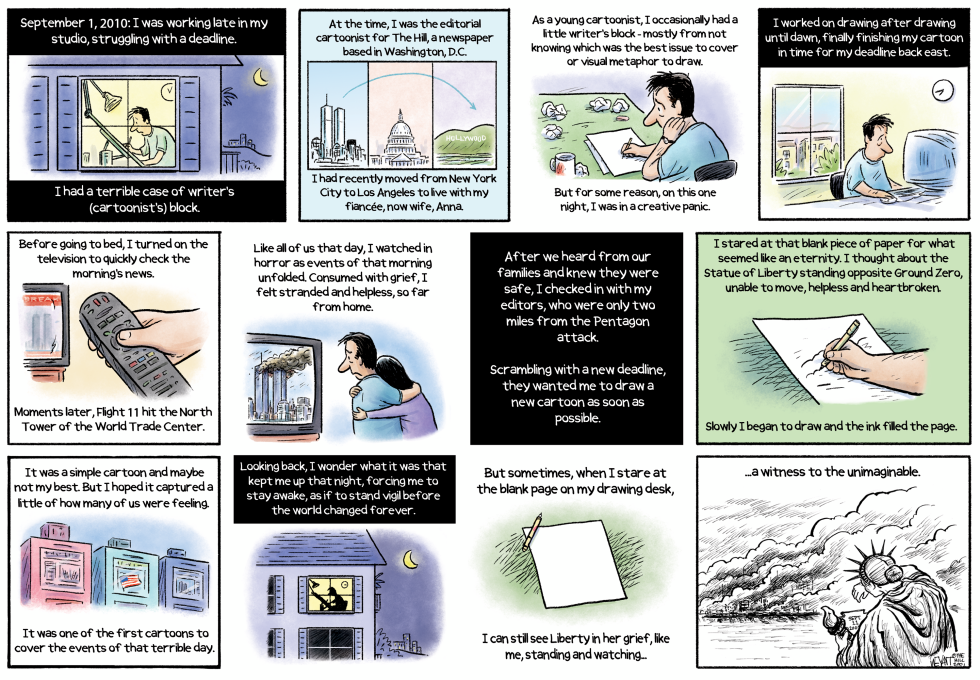
On September 11, 2001, editorial cartoonist Christopher Weyant faced a sudden deadline shift after the attacks on the World Trade Center and Pentagon. Working from Washington, D.C., he checked on family and editors before creating one of the earliest cartoons responding to the events. The piece shows his personal struggle with a blank page that night and the resulting image of the Statue of Liberty standing vigil opposite Ground Zero. The cartoon marks the 25th anniversary by revisiting how the attacks altered the nation and the artist's own sense of purpose.
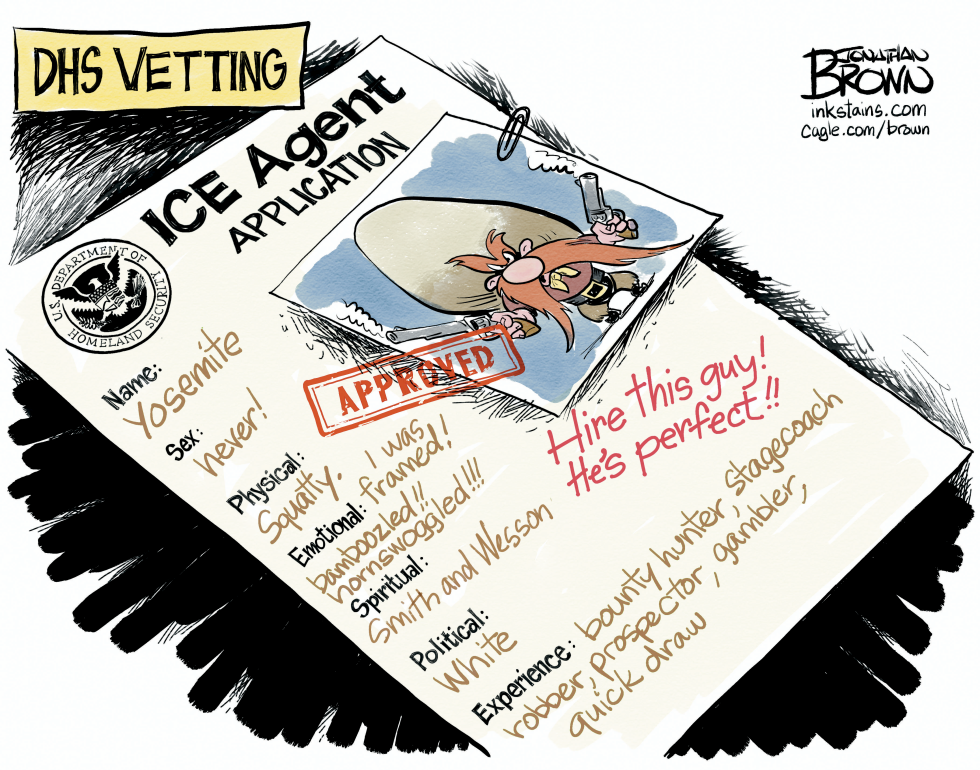
A DHS vetting document for an ICE agent position features Yosemite Sam with an approved stamp. The form lists disqualifying details in physical, emotional and experience sections. Red text urges hiring the figure anyway. The image highlights screening processes within immigration enforcement agencies.
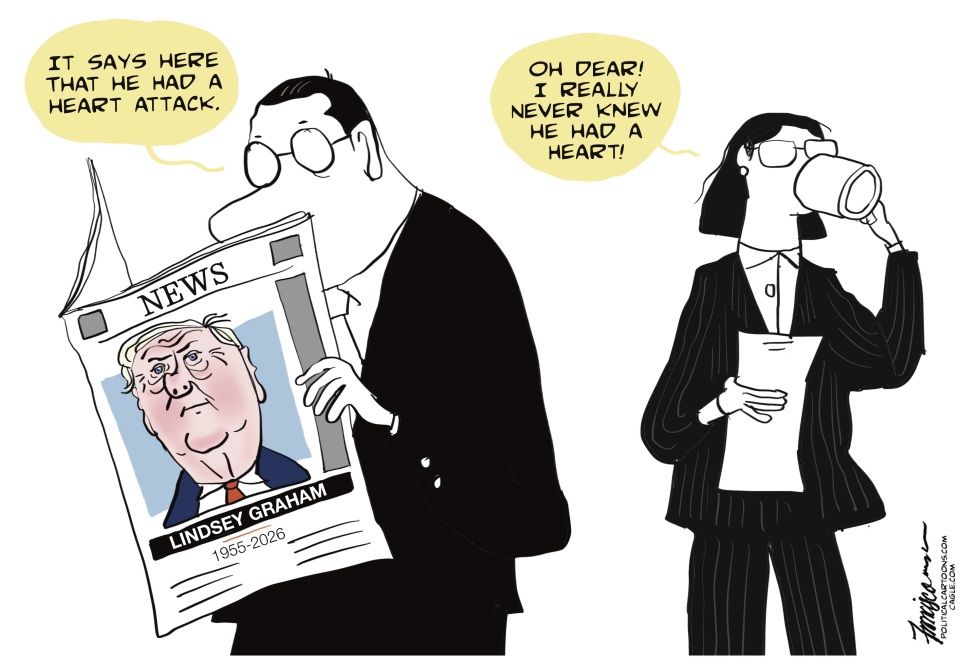
A man reads a newspaper reporting Lindsey Graham's heart attack and death in 2026. A woman standing nearby reacts with surprise that the senator had a heart at all. The exchange highlights the swift and pointed responses from political figures to the obituary.
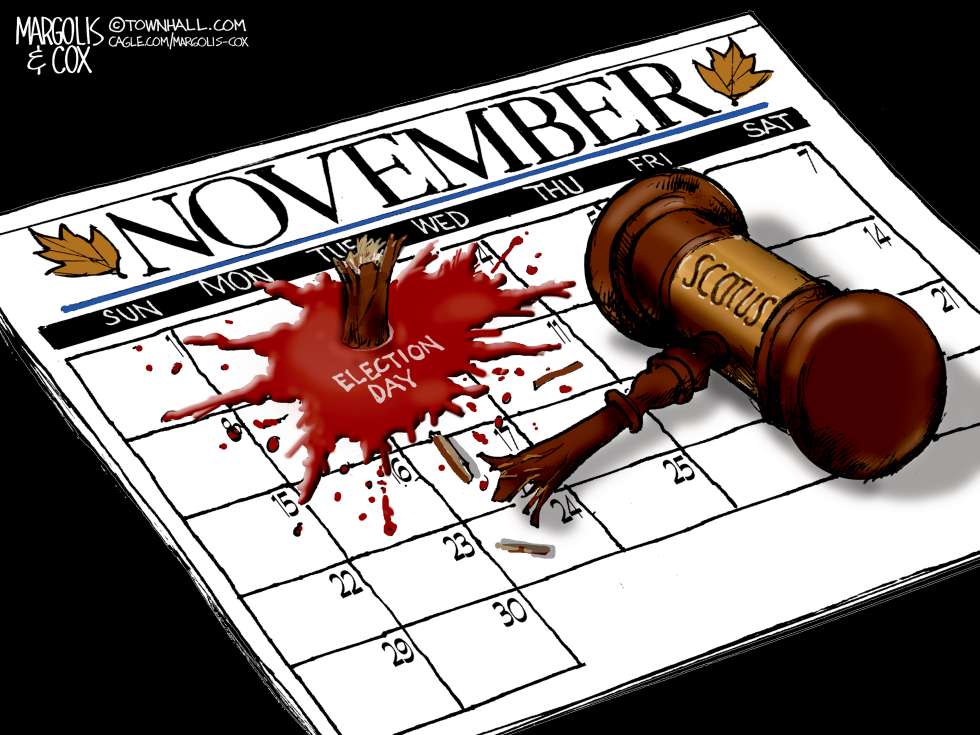
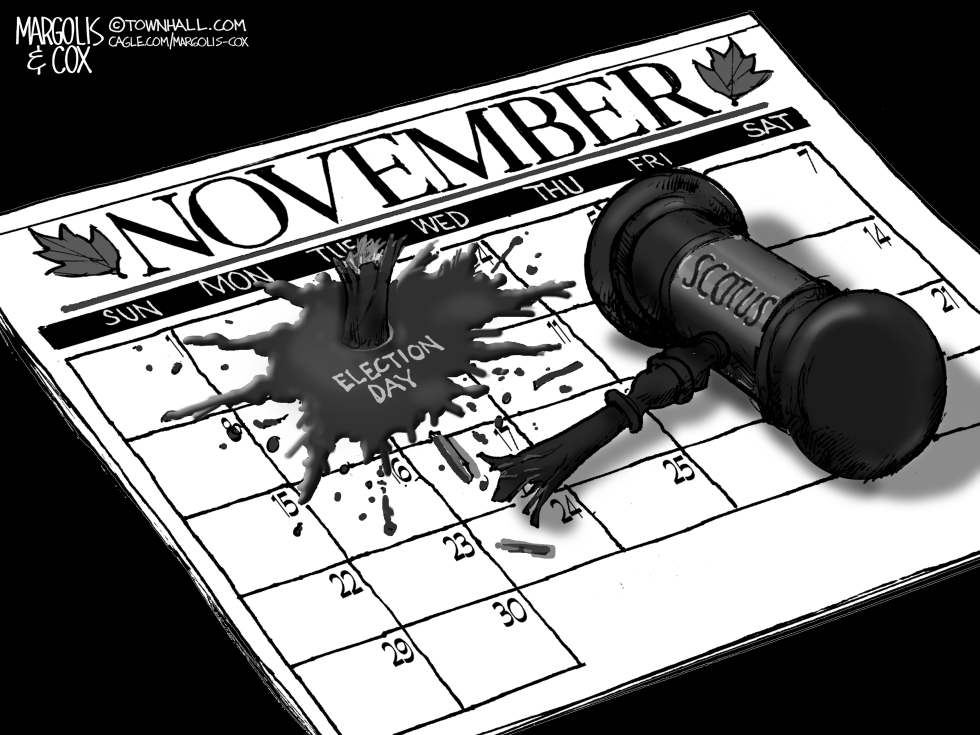
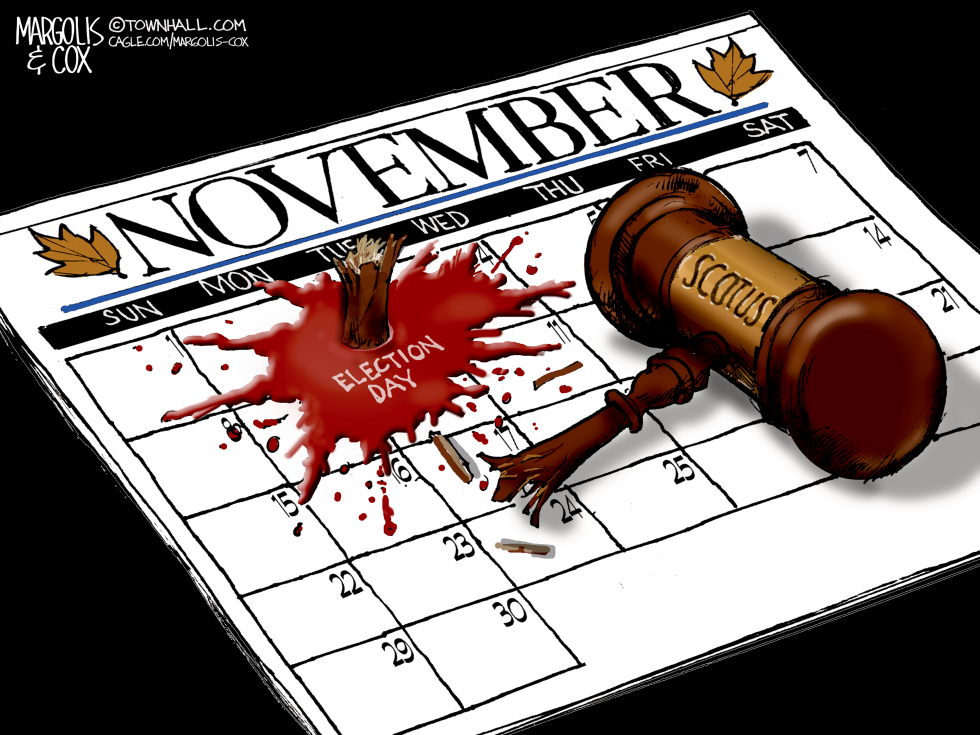
A large wooden gavel marked SCOTUS smashes into a November calendar page, obliterating the square labeled Election Day with a red splatter resembling blood and scattering fragments across surrounding dates.
A gavel marked SCOTUS rests on a November calendar page where the Election Day label has been struck amid ink splatter and scattered date fragments. The image shows the gavel positioned over the grid with visible days and dates around the impact area.
A large wooden gavel labeled SCOTUS rests on a November calendar page, its head crushing the words Election Day in a red splatter resembling blood. The calendar shows days of the week and dates with scattered debris and broken pieces around the impact site. The image appears on July 1, 2026, amid ongoing debates over Supreme Court rulings affecting electoral processes.
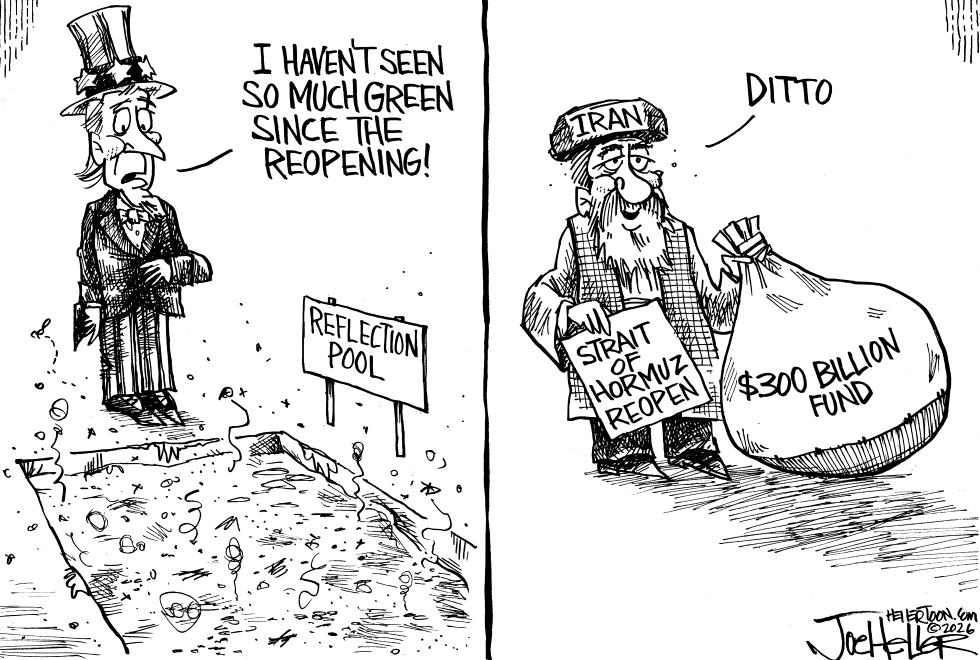
On June 19 2026 Joe Heller depicts Uncle Sam at a green-tinted reflection pool remarking on the color since reopening. In the facing panel a figure labeled Iran echoes the line while displaying a Strait of Hormuz reopen sign and a 300 billion dollar fund bag. The split composition ties the US visual gag to Iran's recent move on the vital waterway and associated financial package.
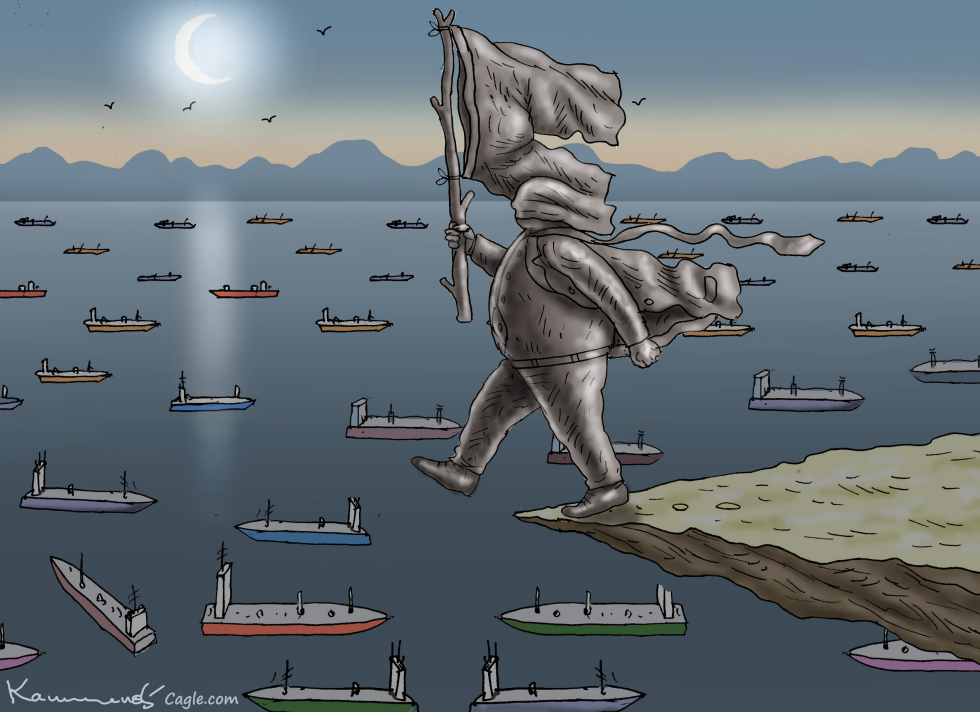
The cartoon shows a large, gray, statue-like figure with a hooded cloak, gripping a flag on a pole, as it steps forward off a cliff's edge. Below stretches a dark sea filled with many small ships of various colors, scattered across the water. In the background, mountains rise against a sky with a crescent moon and flying birds. The image, tagged with Banksy, Trumo, Hormuz, fascism, patriotism, and Maga terror, captures a moment of precarious advance. Artist Marian Kamensky signs it at the bottom left, linking to Cagle.com. This setup highlights a bold, unyielding march into potential downfall amid a busy maritime scene.
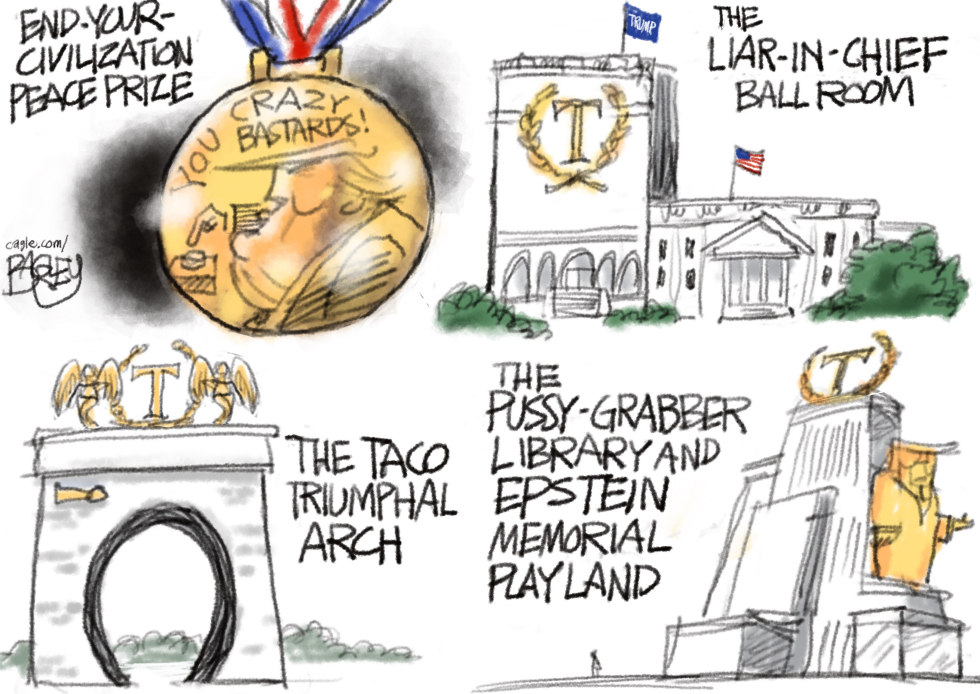
Pat Bagley's political cartoon titled Trump Legacy presents a series of imagined monuments that highlight controversial aspects through labels like End-Your-Civilization Peace Prize on a medal showing a figure with Trump's hairstyle, the Liar-in-Chief Ballroom resembling a grand building with Trump flag, the Taco Triumphal Arch as a stone structure with winged T, and the Pussy-Grabber Library and Epstein Memorial Playland as a classical edifice with a statue. These elements, tagged with arch, MAGA, triumphal, ballroom, peace prize, library, Epstein, use dry humor to comment on themes of liar, Republicans, fascism without adding unseen context. The composition clusters these items in a sketch style, emphasizing bold text and simple lines for impact.
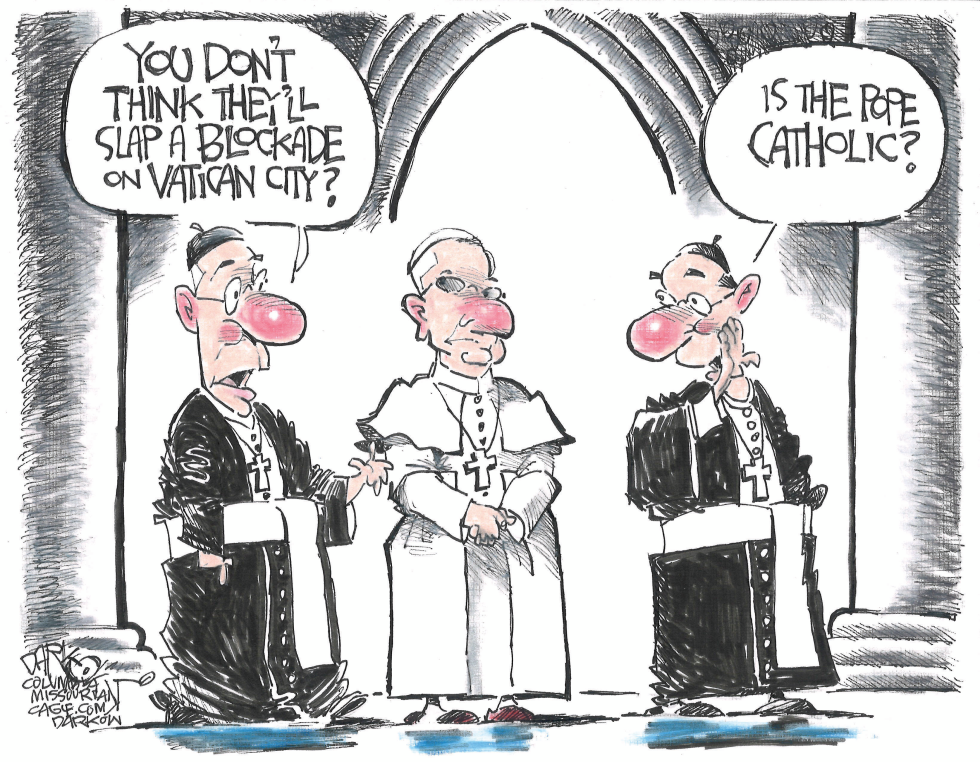
John Darkow's cartoon captures three Catholic clergy in traditional attire, with the central Pope figure amid a discussion on a Vatican blockade. The left figure worries about sanctions slapping Vatican City, while the right delivers the classic 'Is the Pope Catholic?' line, a rhetorical jab at obvious truths. This piece uses dry humor to spotlight tensions around religious institutions facing isolation, blending blockade fears with papal identity. The archway background grounds it in Vatican aesthetics, emphasizing the blockade theme without overreaching into unseen politics.