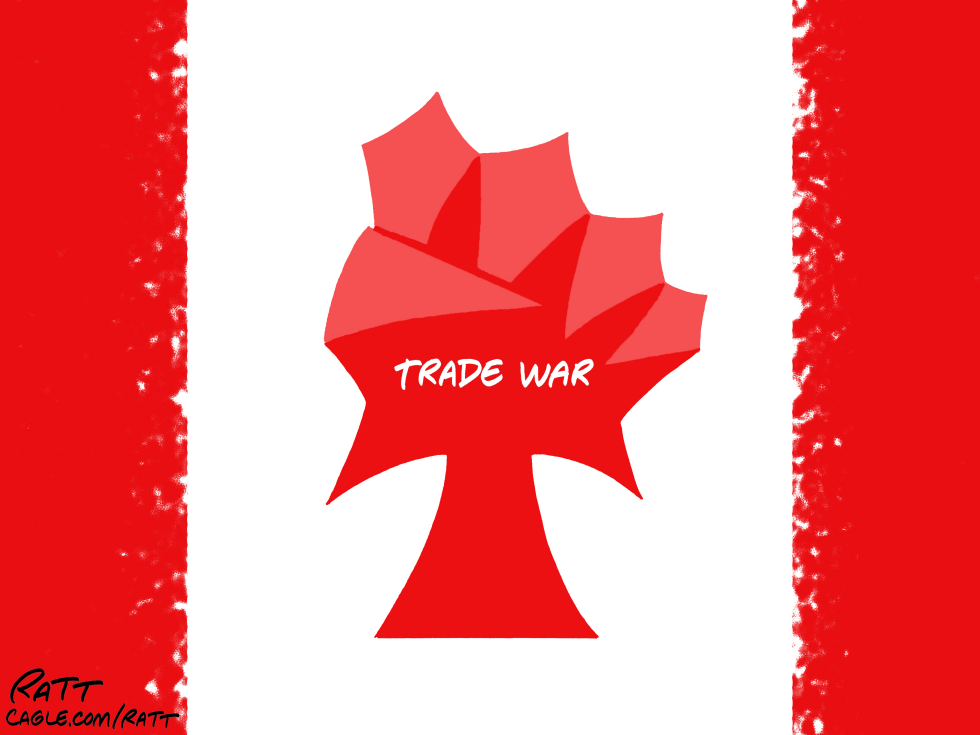
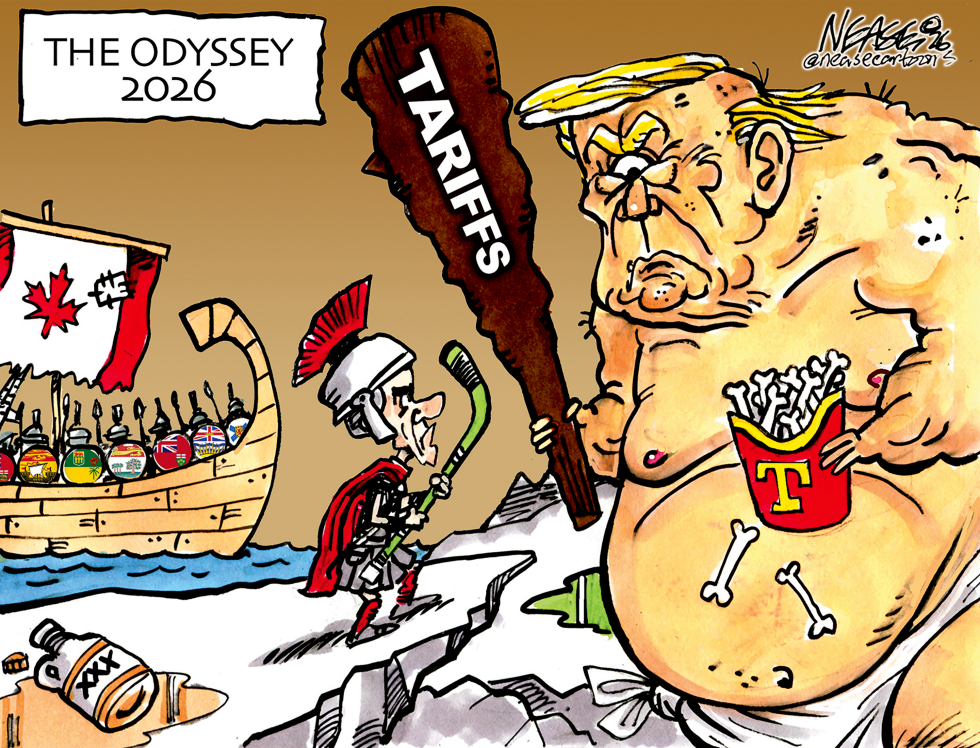
Ongoing US-Canada trade tensions escalated in 2026 with new tariff threats targeting Canadian exports. The dispute threatens key sectors including autos, lumber and agriculture, raising costs for consumers on both sides of the border. Canada has signaled plans to diversify markets and strengthen domestic industry. The cartoon frames the conflict as a direct assault on Canadian sovereignty and economic stability. It portrays the trade war as fracturing national symbols while urging a stronger northern response.
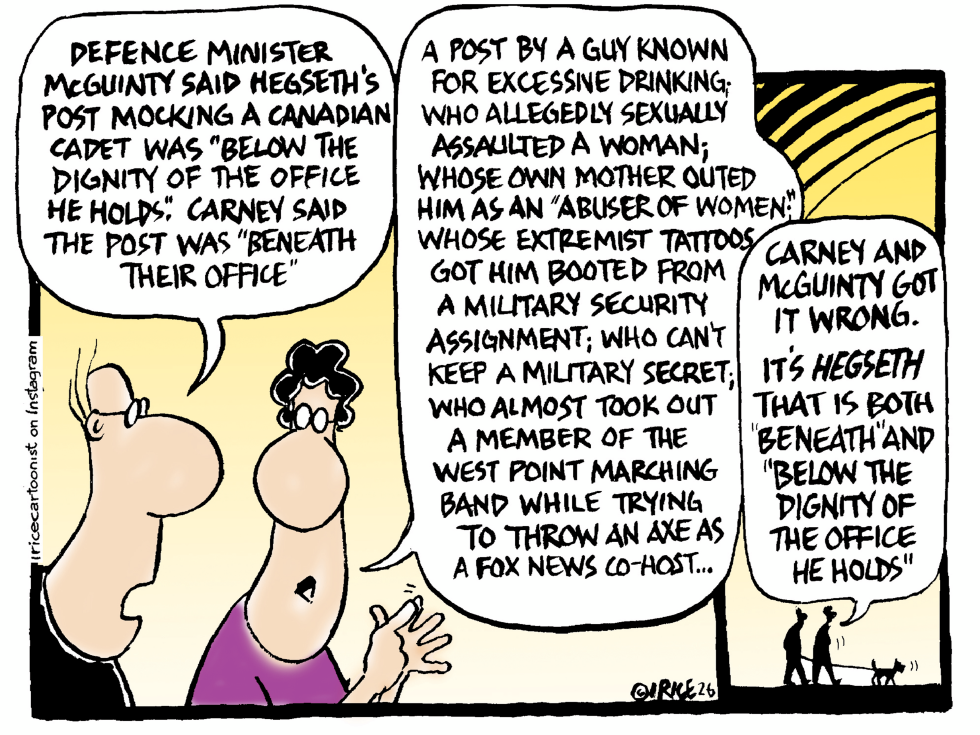
Canadian Defence Minister David McGuinty and Mark Carney publicly condemned a social media post by Pete Hegseth mocking a Canadian cadet, calling it beneath the dignity of the office. The remarks came amid Hegseth's nomination process for a senior U.S. defense position. The cartoon argues the ministers have the assessment backward, pointing instead to Hegseth's history of alleged misconduct, security clearance problems, and public incidents as the true disqualifiers. This reflects ongoing debate over nominee vetting standards and cross-border political commentary on U.S. appointments.
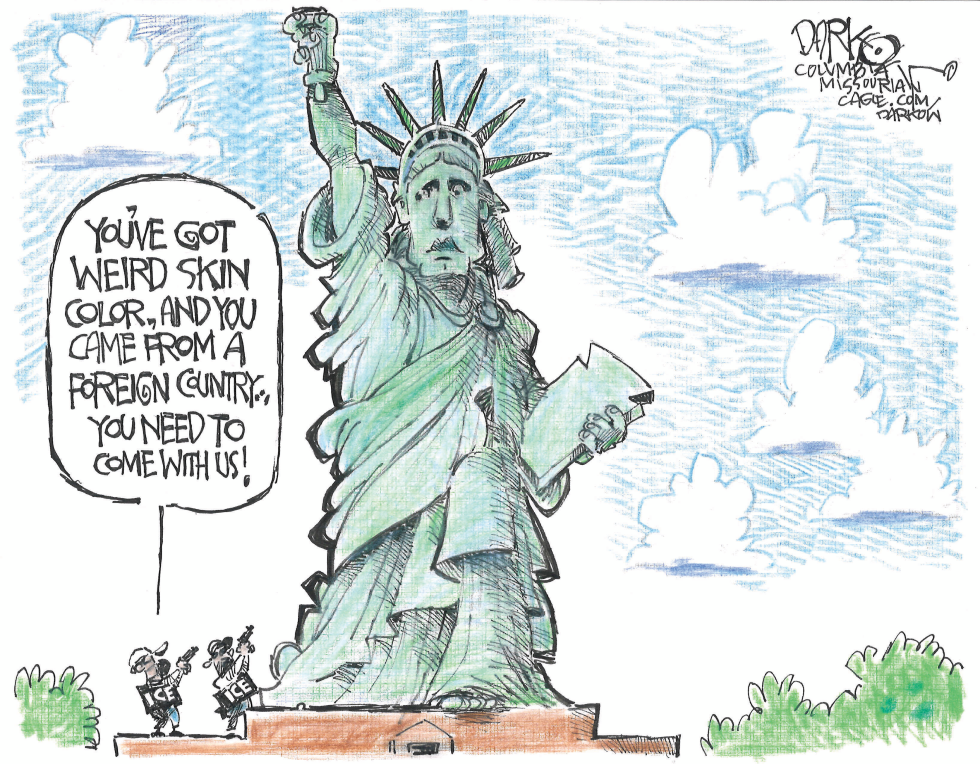
ICE agents have been depicted confronting the Statue of Liberty at its base while citing the monument's skin color and foreign origin as grounds for removal. The action highlights ongoing debates over immigration enforcement priorities and the use of appearance-based criteria in federal operations. The editorial position frames such tactics as inconsistent with the monument's historic role welcoming immigrants.
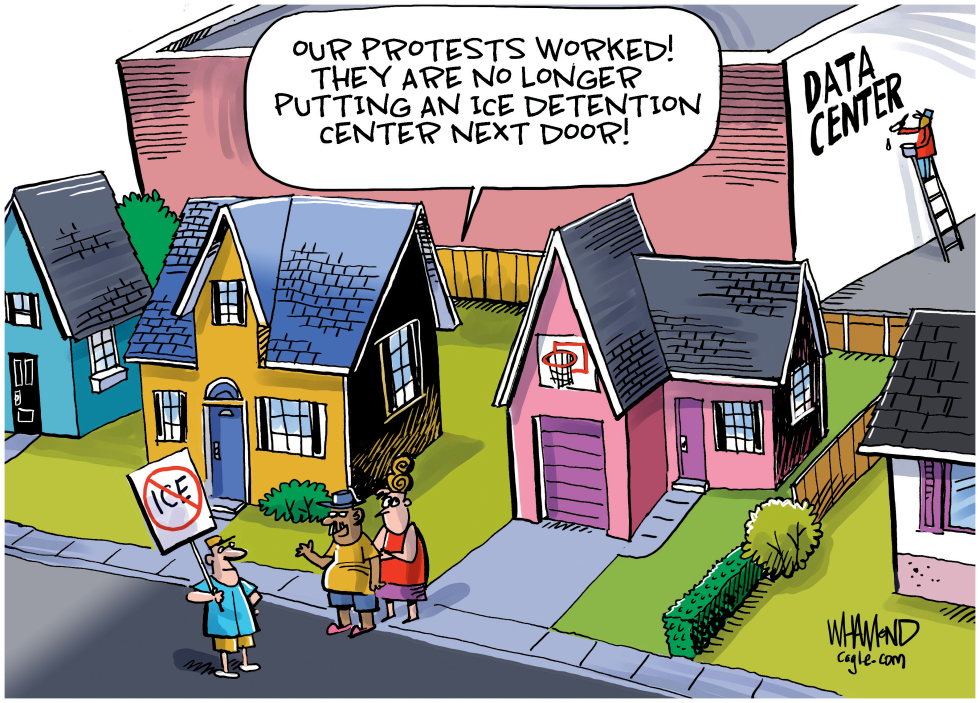
Residents in a suburban neighborhood protested plans for an ICE detention center near their homes. The facility was replaced by a data center, prompting cheers from locals who had opposed the detention site. The editorial highlights community pushback against immigration enforcement infrastructure and the unexpected outcome favoring commercial development instead.
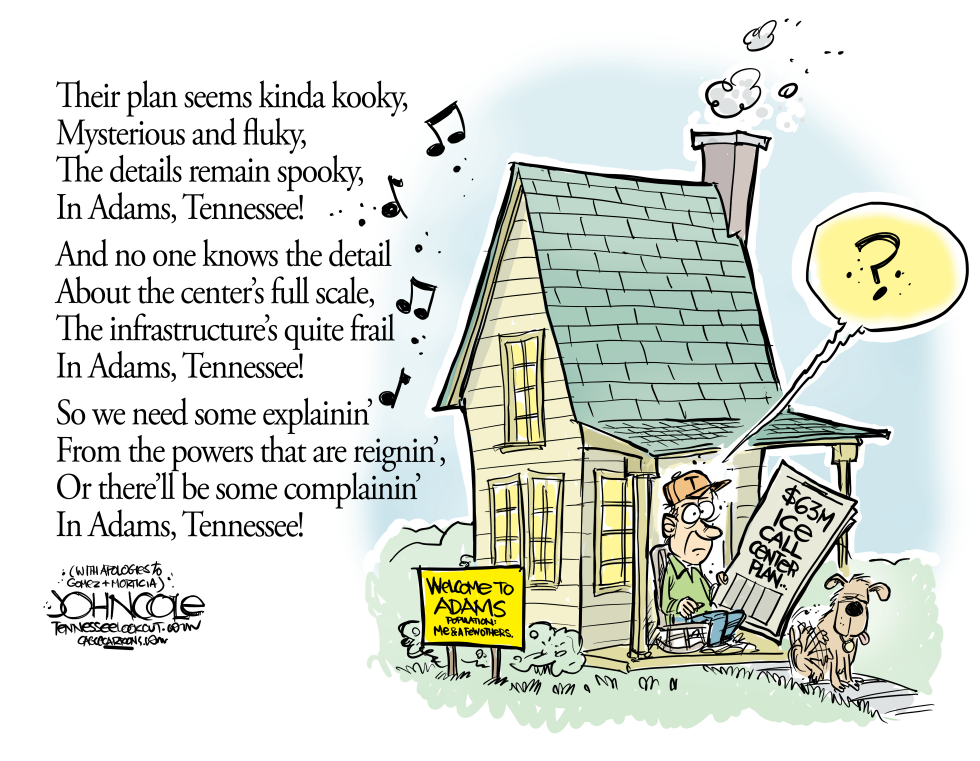
A proposed $63 million ICE call center in Adams, Tennessee has drawn local confusion over missing details on scale and infrastructure. The plan's opacity has prompted calls for clearer explanations from officials. The cartoon highlights resident frustration with the lack of transparency surrounding the project.
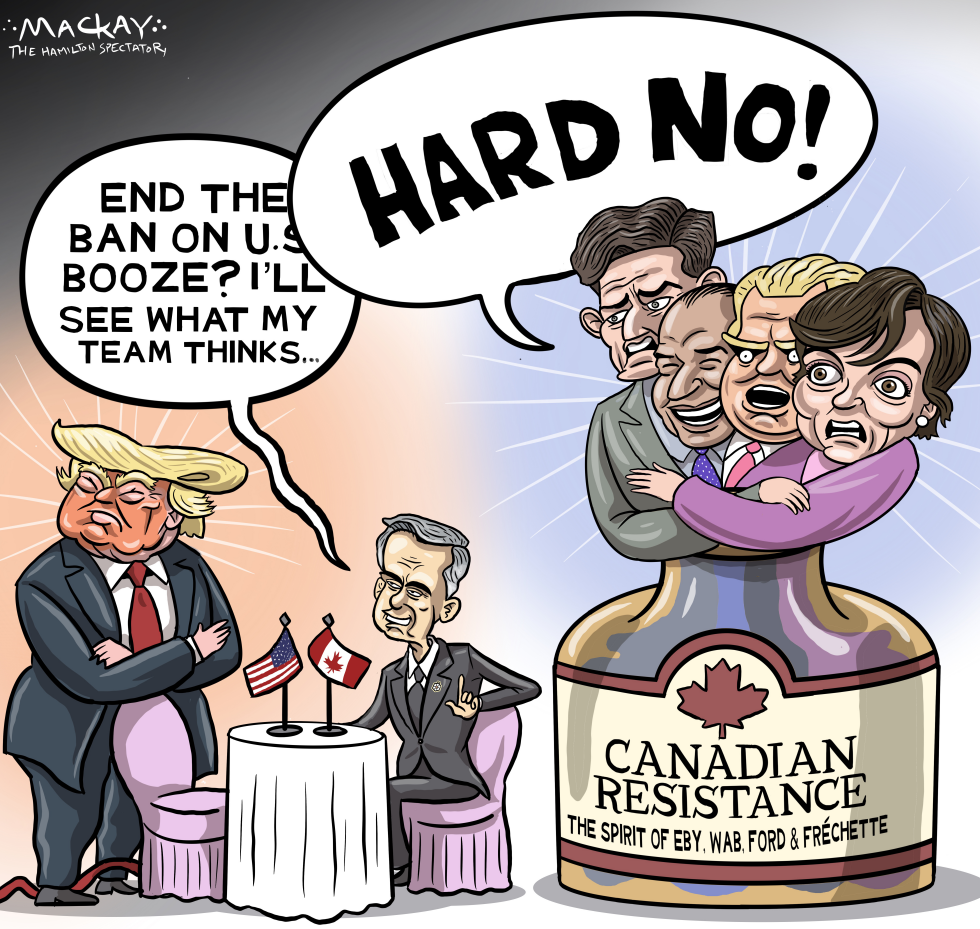
Donald Trump signaled openness to ending a ban on US alcohol imports into Canada during a meeting with Canadian officials. Provincial leaders including David Eby and Doug Ford responded with unified opposition. The cartoon portrays the premiers as a collective force of resistance and shows Trump deferring the decision to his team.
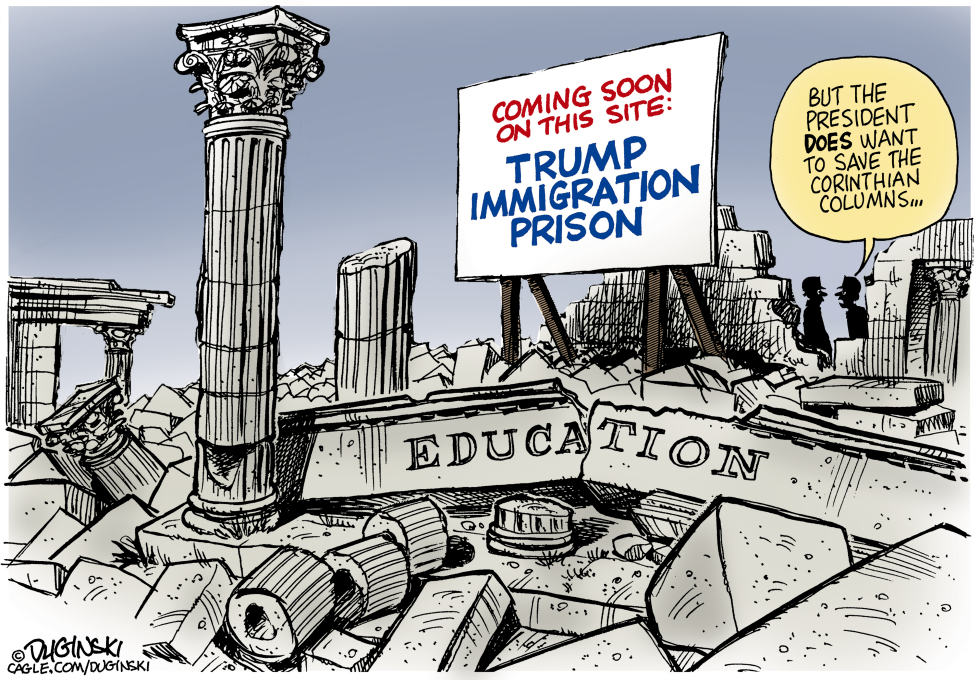
The Trump administration has moved to repurpose a site previously tied to education programs for a new immigration detention facility. The shift reflects ongoing policy emphasis on border enforcement over domestic education support. The piece argues that selective preservation of symbolic elements masks broader institutional damage.
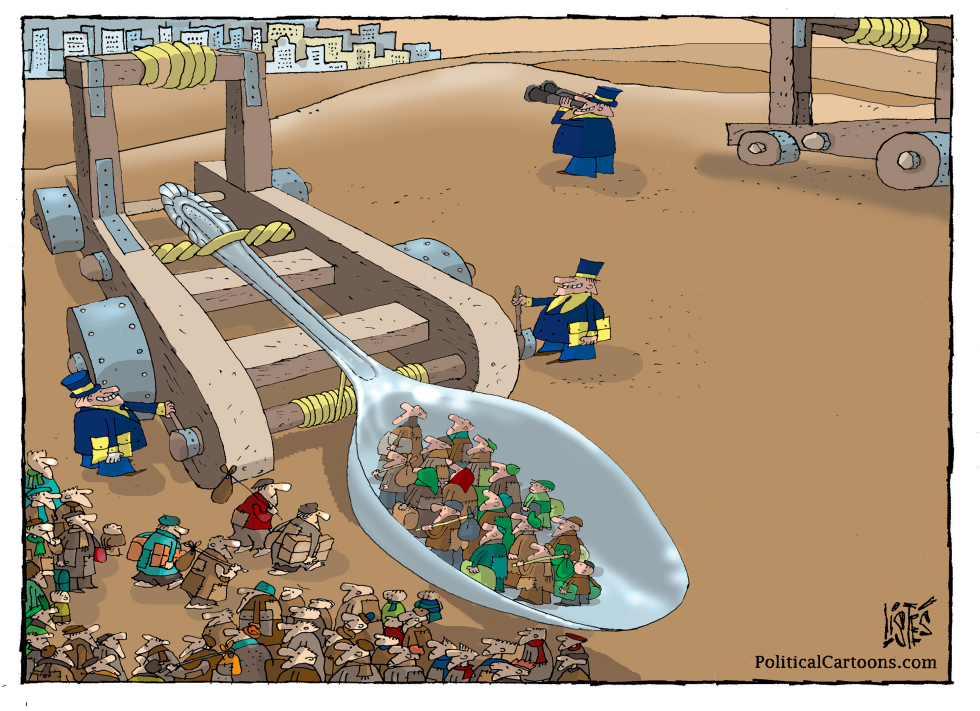
Border authorities continue to manage large inflows of refugees heading into major cities through various channels. The situation highlights ongoing debates over entry methods and urban capacity. Officials monitor the process closely as numbers rise. The piece argues that current approaches resemble mechanical ejection rather than orderly integration.
President Trump escalates tariffs on trading partners including Canada in mid-2026. The move targets imports amid ongoing disputes over trade balances and supply chains. Allies respond with coordinated pushback through diplomatic and economic channels. The cartoon casts the confrontation as a one-sided power play by the oversized tariff wielder against smaller coordinated opponents.
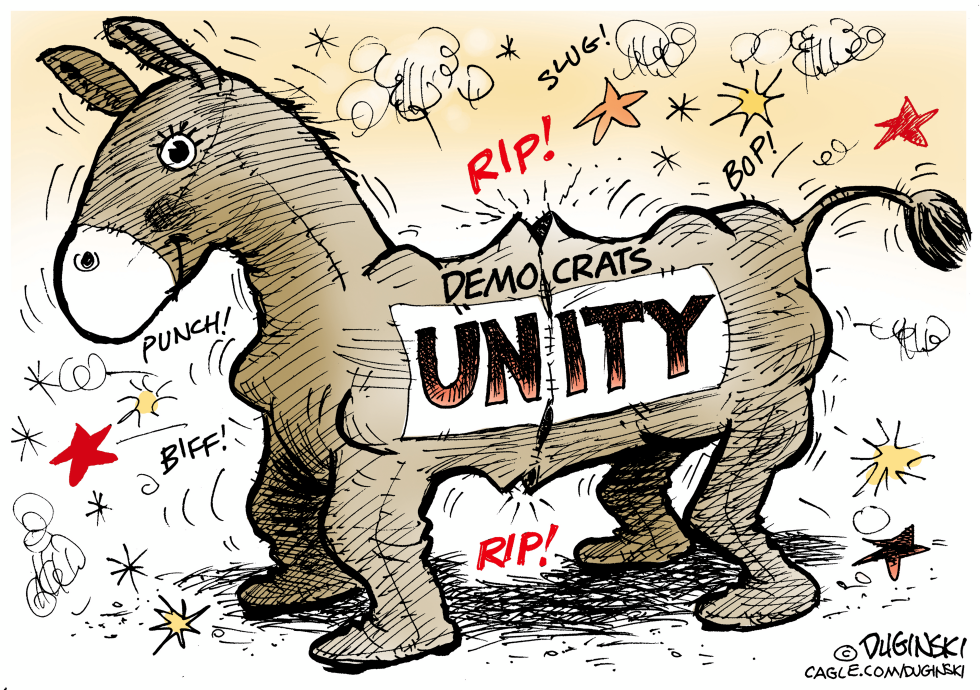
Democrats continue to display public divisions over strategy and messaging in the run-up to midterm and presidential contests. Party leaders struggle to project cohesion on issues ranging from economic policy to social priorities. The resulting perception of disarray weakens their ability to counter Republican narratives and mobilize voters. The cartoon highlights how these internal conflicts undermine the party's core message of unity.
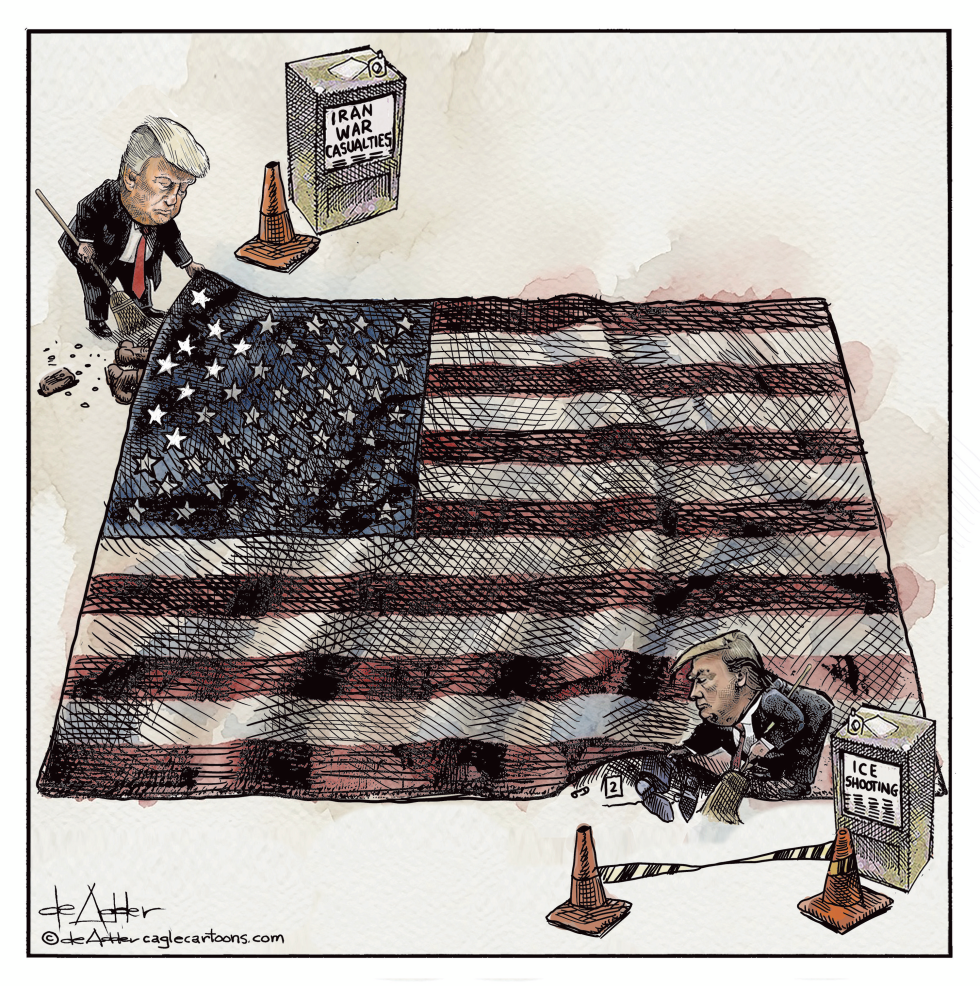
Donald Trump faces scrutiny over reported casualties from potential Iran conflict and an ICE-related shooting incident in mid-2026. The administration's handling of these events draws criticism for downplaying accountability. The piece argues that attempts to minimize these issues undermine public trust in governance.
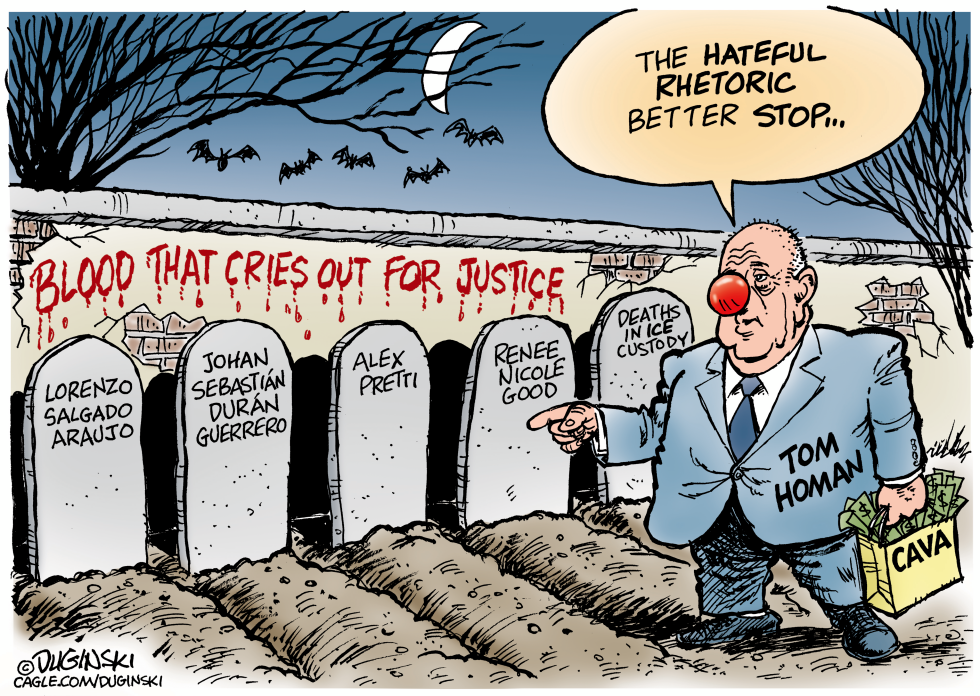
Tom Homan, a key figure in immigration enforcement, drew scrutiny in mid-2026 over inflammatory statements as reports of deaths in ICE custody continued. The piece portrays him dismissing concerns while profiting, arguing that such rhetoric must cease to address accountability in detention practices.
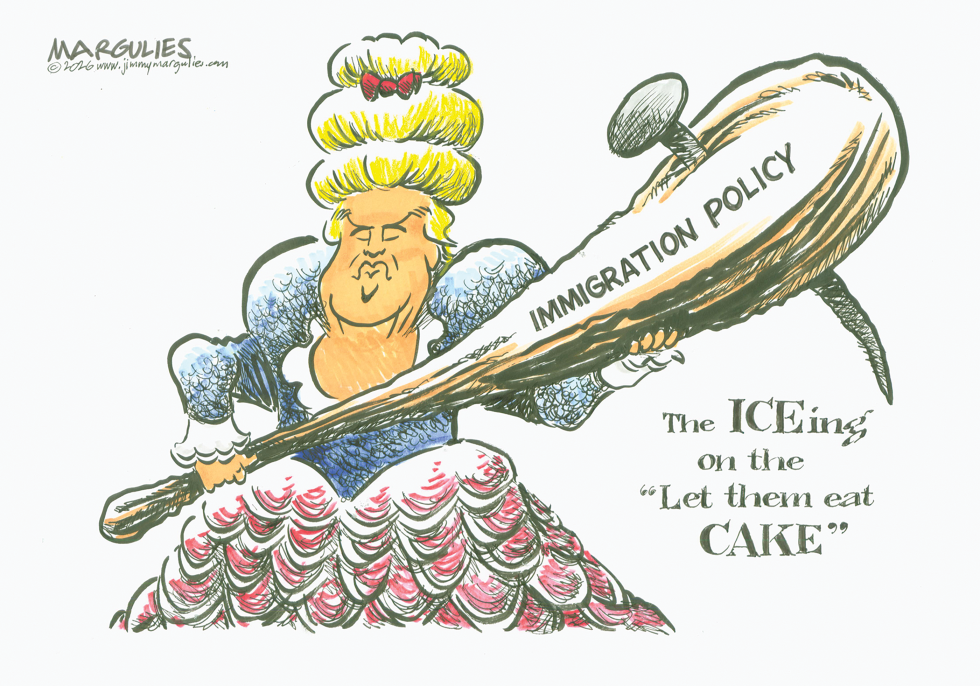
The image shows a figure resembling Donald Trump dressed in historical attire while holding a large bat marked immigration policy. Text beside it reads The ICEing on the Let them eat CAKE. The scene references enforcement actions tied to border policy around the July 2026 date.
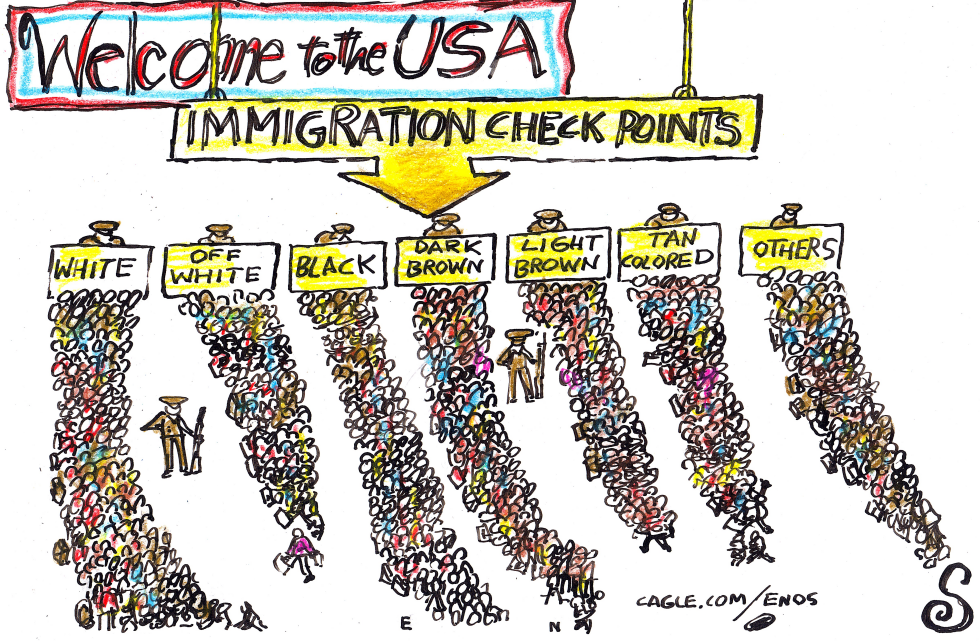
A cartoon depicts seven distinct lines of people at US immigration checkpoints, each labeled by skin color from white through off-white, black, dark brown, light brown, tan colored and others. Guards stand watch while a prominent welcome banner and immigration sign direct arrivals into the segregated queues. The image highlights the visual separation of entrants based on appearance.
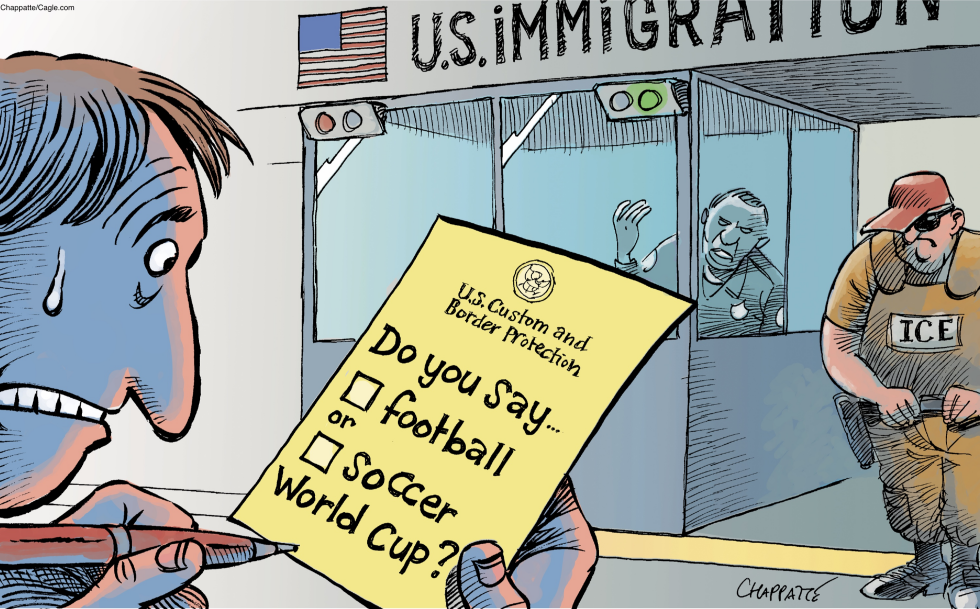
At a U.S. immigration checkpoint an applicant sweats over a form that forces a choice between football and soccer for World Cup purposes. An ICE officer stands ready nearby while another official watches from behind glass.