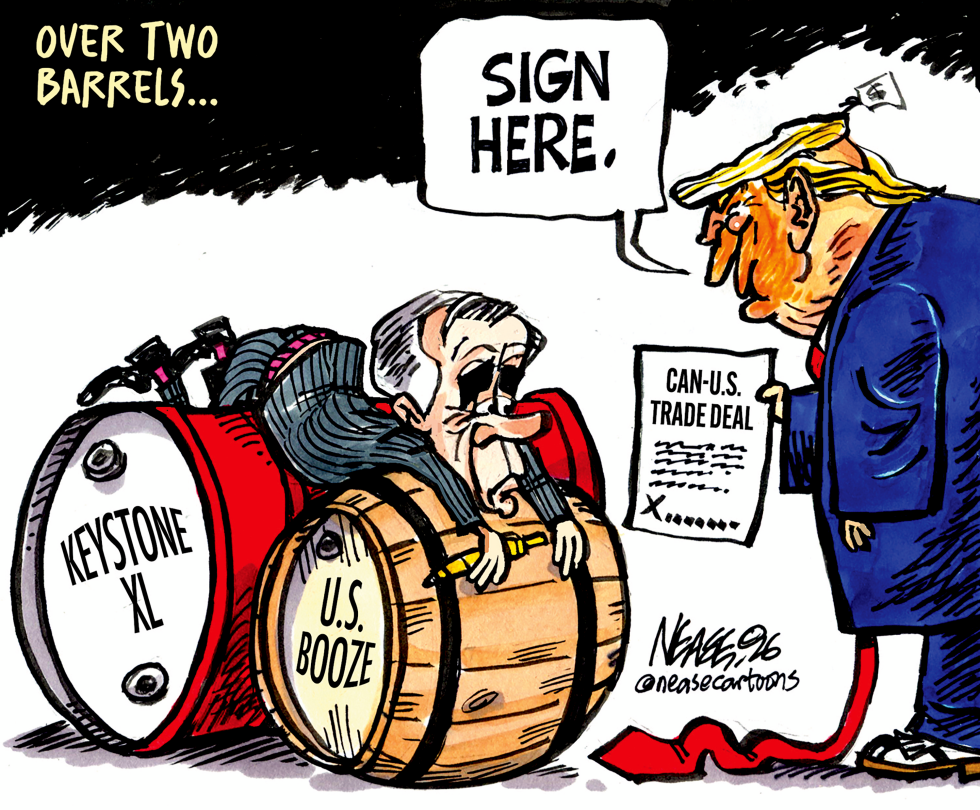
Donald Trump is pressing Canada to finalize a bilateral trade agreement by positioning the Canadian leader between a Keystone XL pipeline barrel and a U.S. booze barrel. The move ties energy infrastructure approval to broader trade concessions including alcohol exports. The editorial takes the position that such barrel-based pressure tactics risk undermining stable Canada-U.S. economic relations.
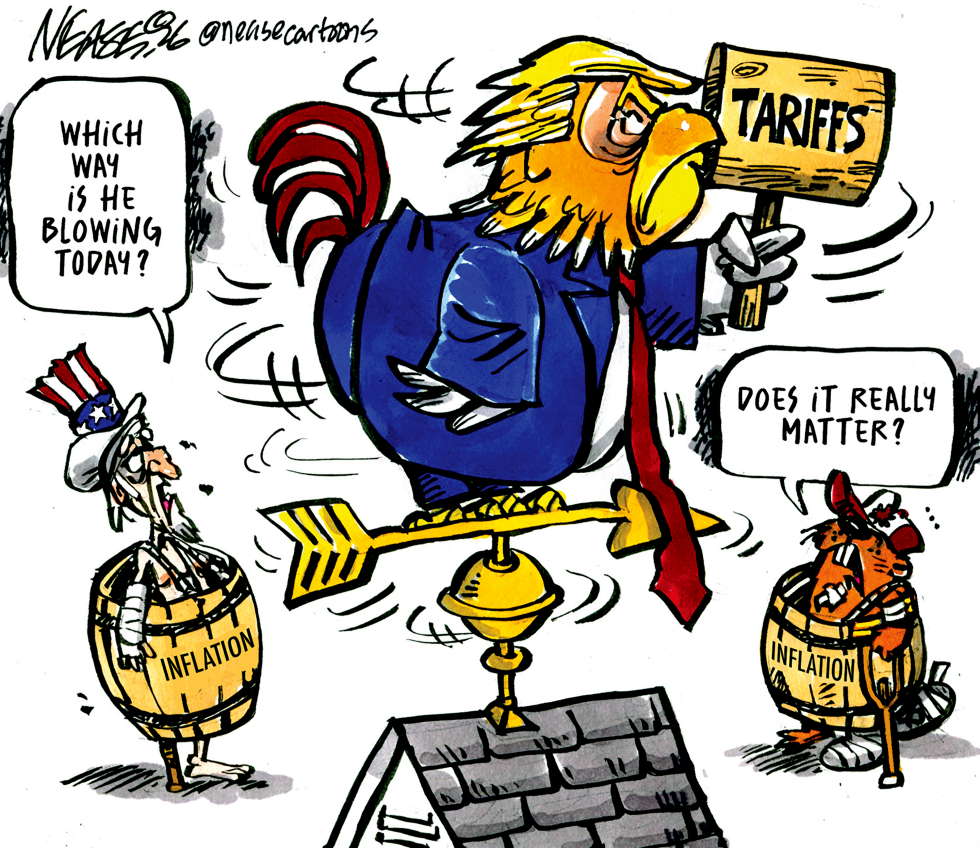
Donald Trump has proposed broad new tariffs on imports as part of his economic agenda. The measures have raised concerns about higher consumer prices and renewed inflation pressures. Markets and businesses are watching for clarity on timing and scope. The cartoon illustrates the confusion over which way tariff policy will ultimately point and whether the direction even matters to those already feeling inflation's effects.
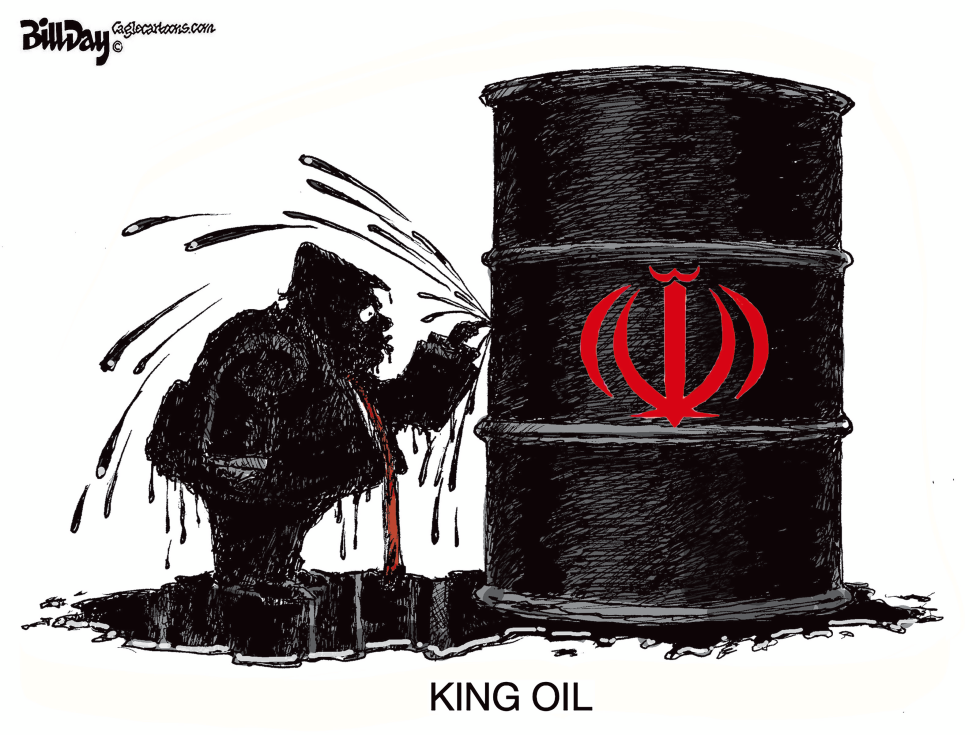
A dark figure spits oil at a barrel bearing the Iranian emblem on July 11 2026. The barrel rests in a puddle and carries the label KING OIL. The scene addresses ongoing energy and regional tensions involving Iran.
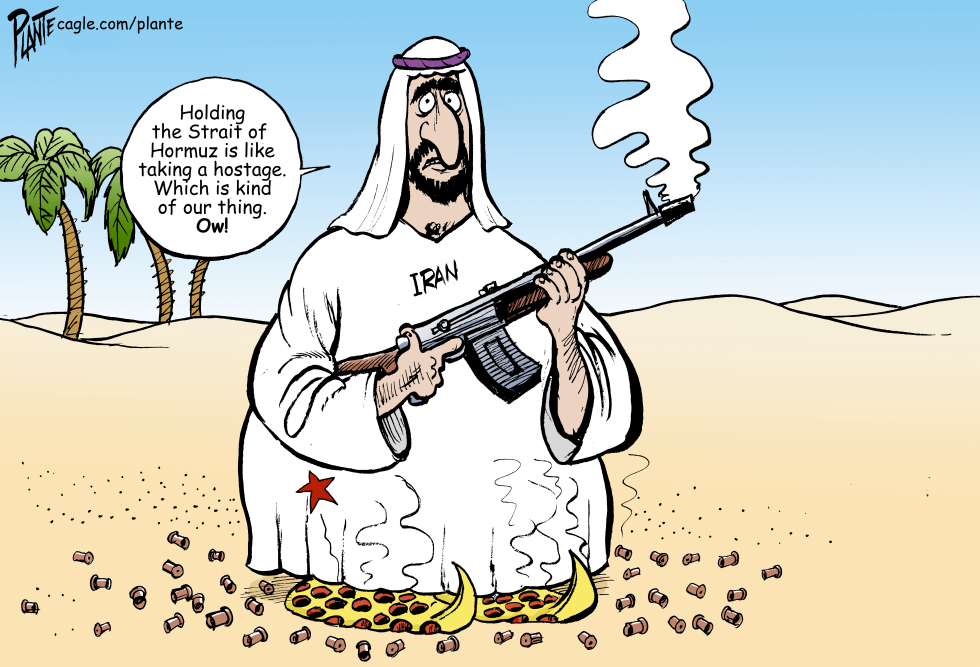
The cartoon shows a figure labeled Iran in desert robes holding a rifle and standing on a pizza slice marked with a crescent moon. A speech bubble has the figure saying holding the Strait of Hormuz is like taking a hostage which is kind of our thing. The scene is set against palm trees and sand dunes. It responds to ongoing concerns about Iran and shipping routes in the Persian Gulf as of late May 2026.
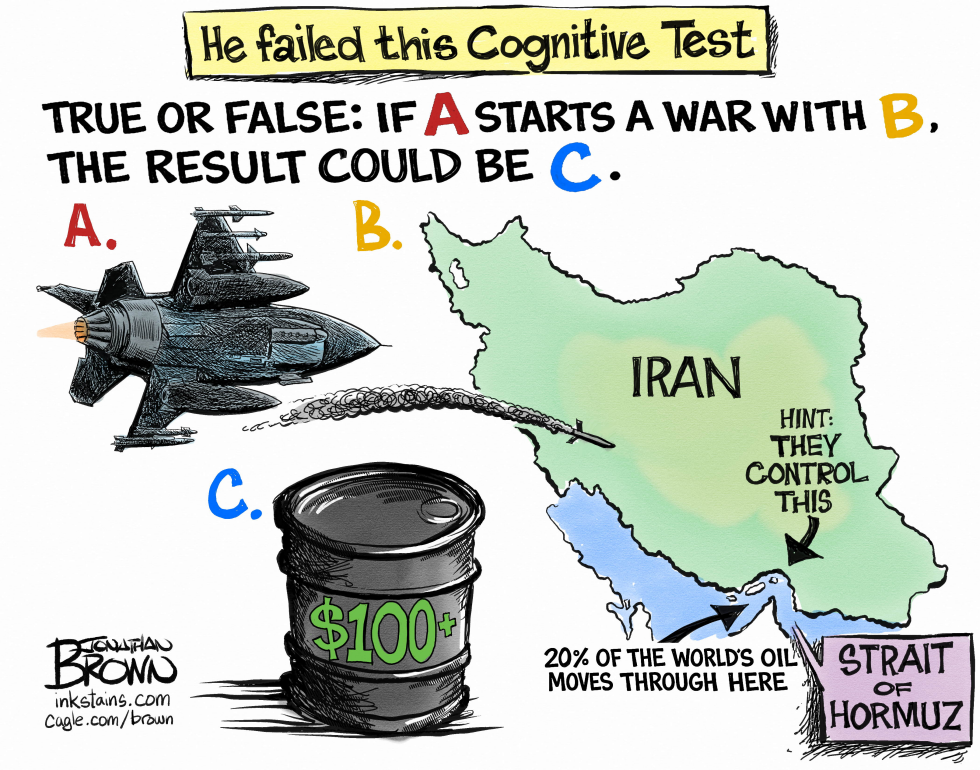
Jonathan Brown's cartoon presents a stark true-or-false cognitive test: if A (a fighter jet) starts a war with B (Iran), the result could be C (an oil barrel marked $100+). The map of Iran includes a hint pointing to the Strait of Hormuz, noting that 20% of the world's oil moves through there, underscoring control over this chokepoint. Tags such as cognitive test, war in Iran, oil prices, Strait of Hormuz, gas prices, and cost of war frame the satire. The artwork warns of economic fallout from conflict, with the jet trailing toward Iran and the oil barrel symbolizing surging costs. This piece captures geopolitical tensions in a simple, visual riddle.
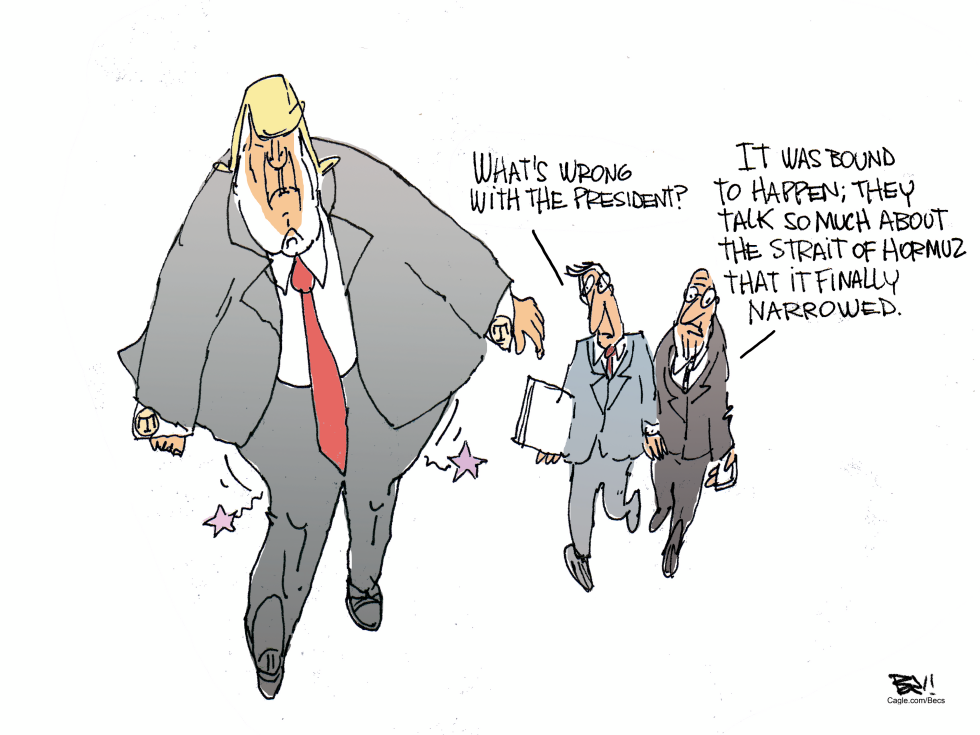
Becs captures the Donald Trump Administration's fixation on the Strait of Hormuz in a cartoon where the president appears stricken, with aides commenting on the inevitable 'narrowing' due to endless talk. This US War satire ties into oil dependencies, Iran tensions, and price per barrel fluctuations, showing a large Trump figure clutching his side amid a pun on geopolitical chokepoints. The image underscores how constant rhetoric about the strait leads to comedic physical distress, blending humor with commentary on foreign policy obsessions.
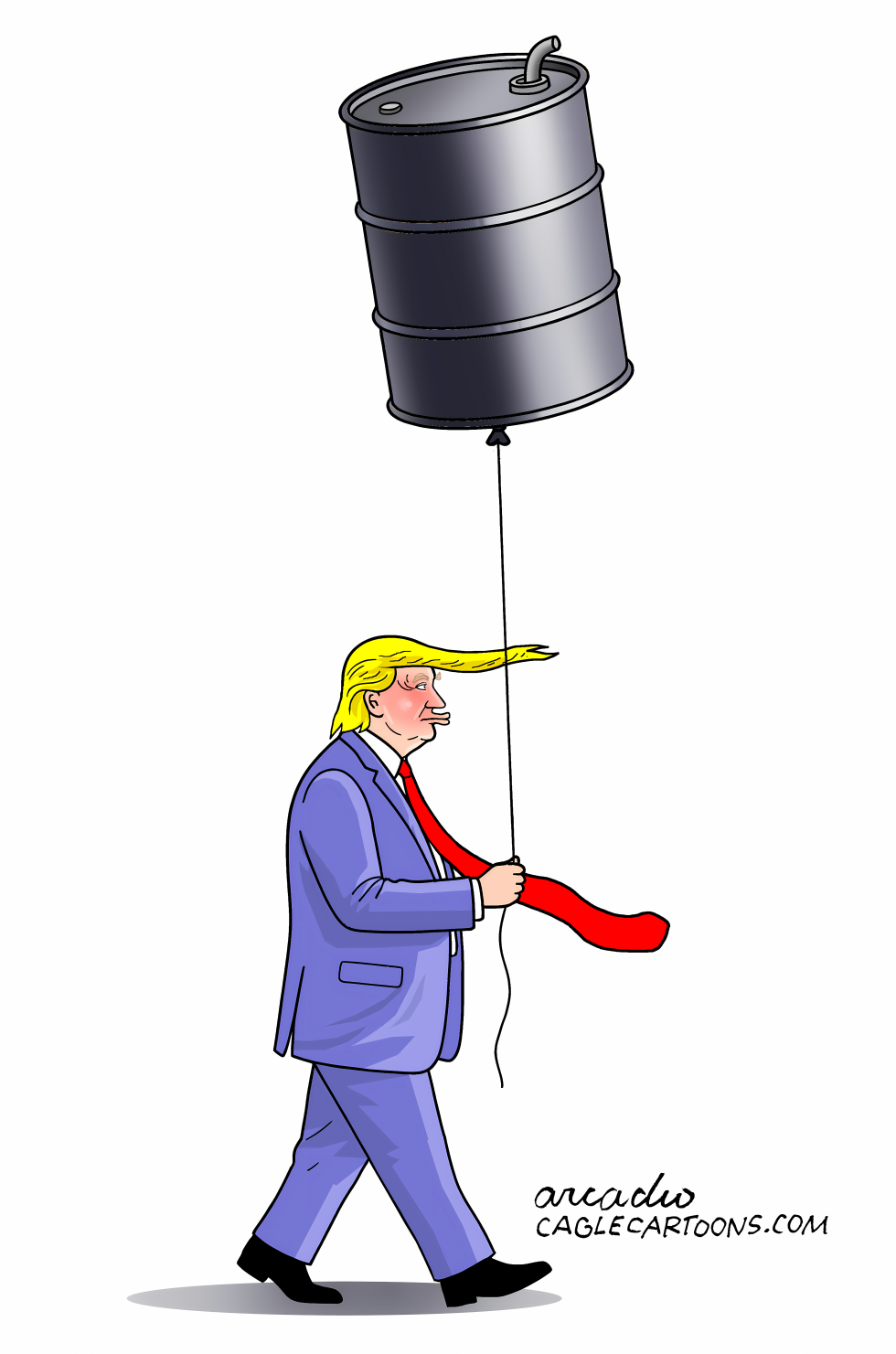
Arcadio Esquivel's cartoon captures Trump striding forward, his red tie extending upward to hold a massive oil barrel aloft like a helium balloon, with his yellow hair streaming behind. The simplicity highlights themes of Trump, oil prices, inflation, Hormuz, energy, and midterm elections. Such visuals often comment on economic pressures without words, relying on exaggerated features for recognition. Cartoonists like Esquivel use minimalism to drive points home, here linking a political figure to rising costs in a direct, unambiguous way. The white background keeps focus on the central elements, making the satire pop for viewers.
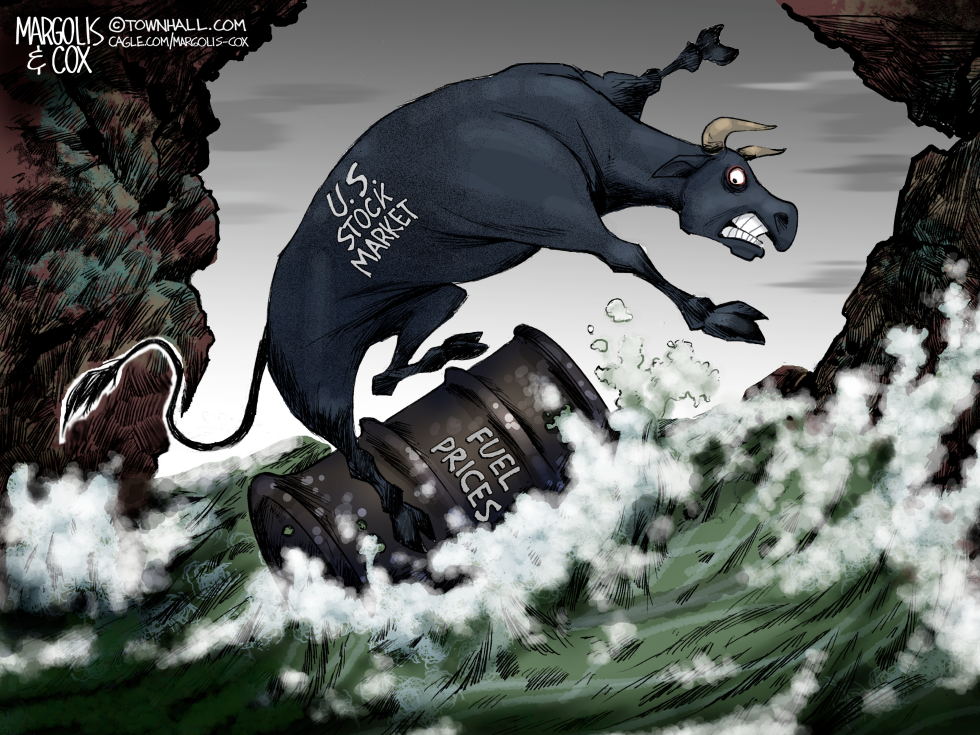
The cartoon shows a fierce black bull, emblazoned with 'U.S. Stock Market,' plummeting off jagged cliffs into a turbulent green sea where an oil barrel labeled 'Fuel Prices' tips over amid white foam. This visual packs a punch on how rising fuel prices can drag down the bull market, touching on economy, stocks, oil, prices, portfolio, and market tags. It's a classic setup: the bull charges ahead but hits the wall of energy costs, splashing into chaos. Editors see these often, where financial optimism meets harsh commodity realities, making it relatable for readers watching their investments swirl in the currents.
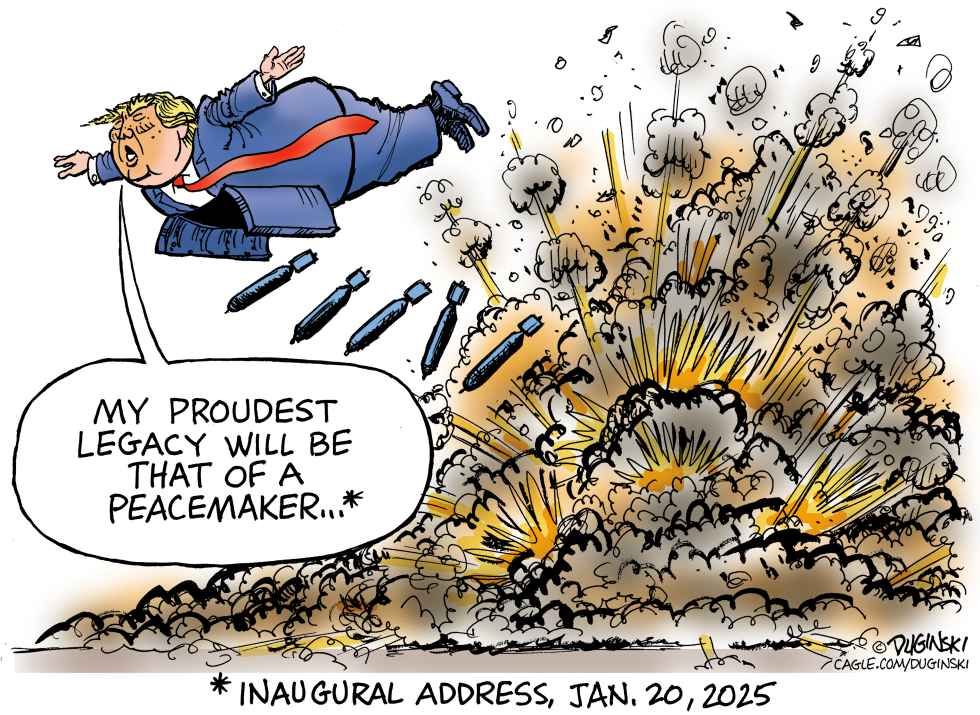
Duginski holds Trump accountable for his campaign promise to end wars within 24 hours of taking office. The Los Angeles Times illustrator catalogs the ongoing conflicts that remain unresolved. The broken promise imagery reflects sustained journalistic skepticism of Trump's foreign policy boasts.
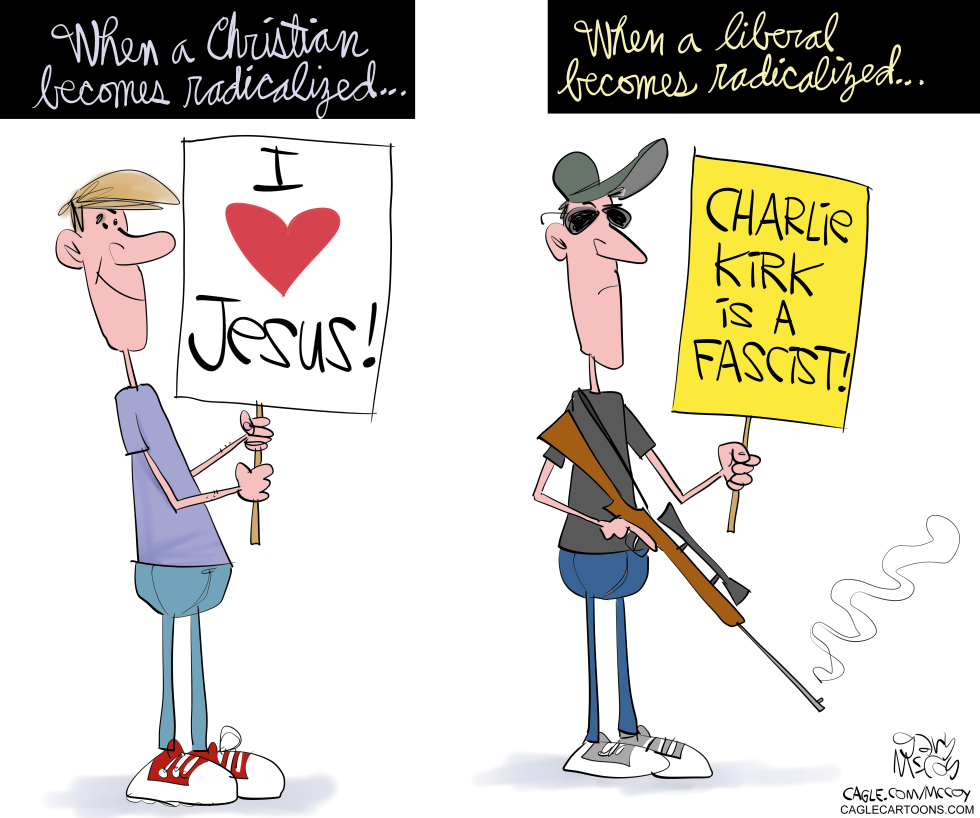
Gary McCoy's cartoon from 2025 divides the frame into two scenarios on radicalization. On the left, a figure in a cap holds a sign declaring 'I ♥ Jesus!' under the label 'When a Christian becomes radicalized...'. The right side shows a sunglasses-wearing man with a rifle emitting smoke, gripping a yellow sign that reads 'CHARLIE KIRK IS A FASCIST!' labeled 'When a liberal becomes radicalized.'. Tags like MAGA, Jesus, radicalized, Christian, liberal, Charlie Kirk, gun control, mental health, religion, Donald Trump, social media, and science frame the visual commentary. The piece highlights perceived disparities in how extremism manifests across ideological lines, with the Christian side shown as affectionate and the liberal as potentially violent.
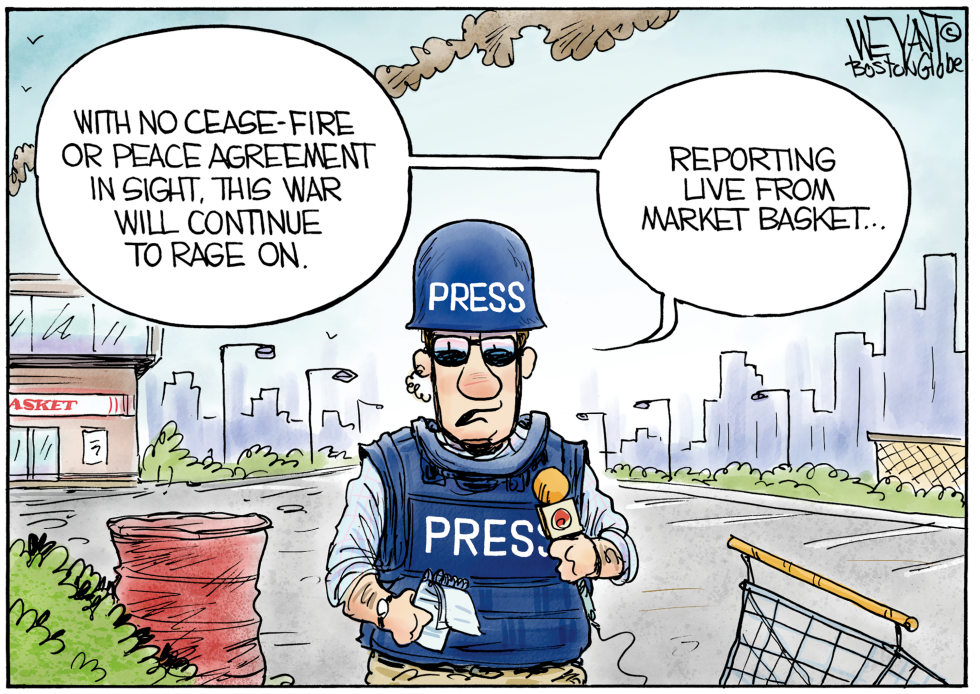
A Boston Globe cartoon shows a reporter in press armor broadcasting live from a Market Basket store. Speech bubbles frame the supermarket scene as an unresolved war with no cease-fire in sight. The image responds to ongoing tensions over ownership, supply chains, and rising prices at the New England chain during August 2025.