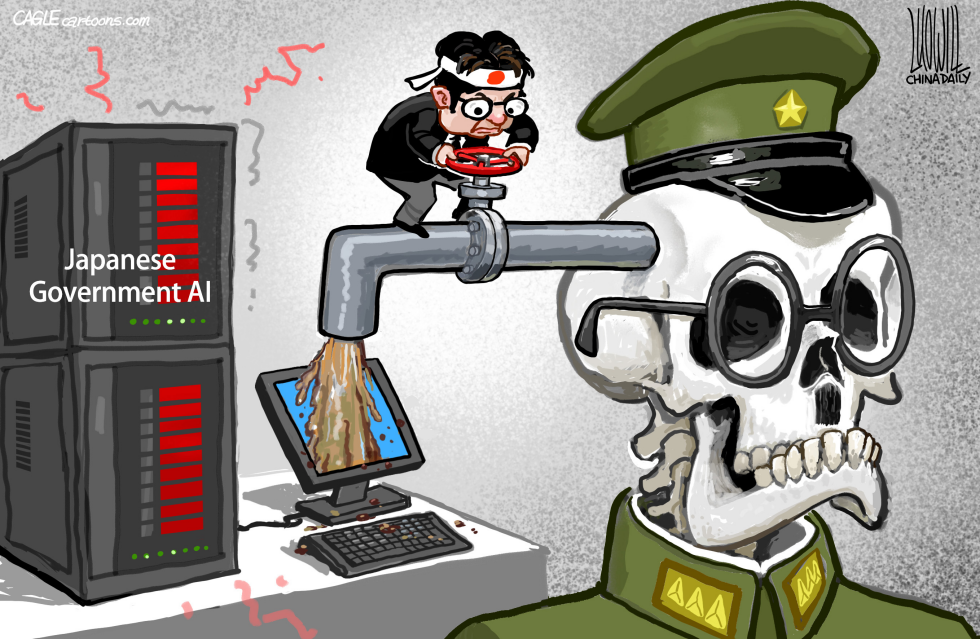
The cartoon depicts a Japanese Government AI server connected by pipe to a skull representing the Chinese military. A figure turns a valve as sludge flows from the server into the monitor and onward. The image comments on the quality of AI output reaching Chinese forces through this visual metaphor of contaminated data flow.
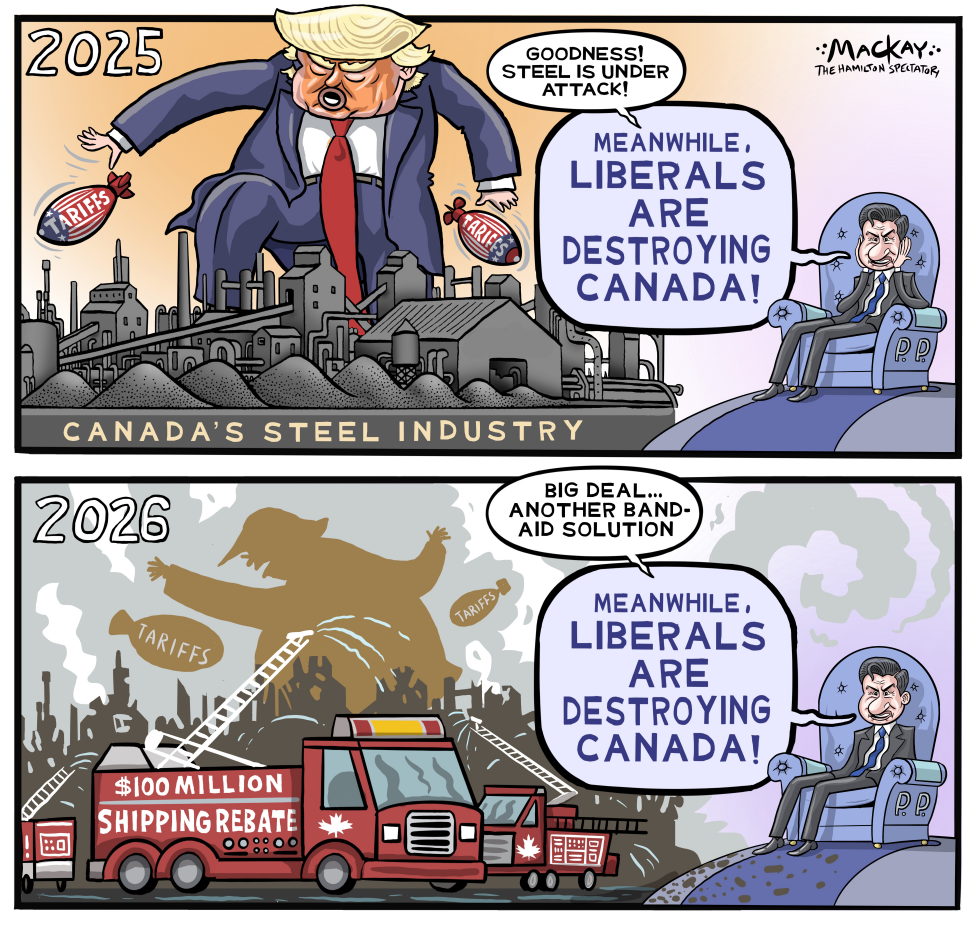
U.S. tariffs imposed on Canadian steel in 2025 triggered sharp declines in the domestic industry by 2026. The federal government responded with a $100 million shipping rebate. Conservative Leader Pierre Poilievre continued to focus attacks on the Liberal government rather than the trade shock. The cartoon argues this stance amounts to a repeated distraction from the core economic damage.
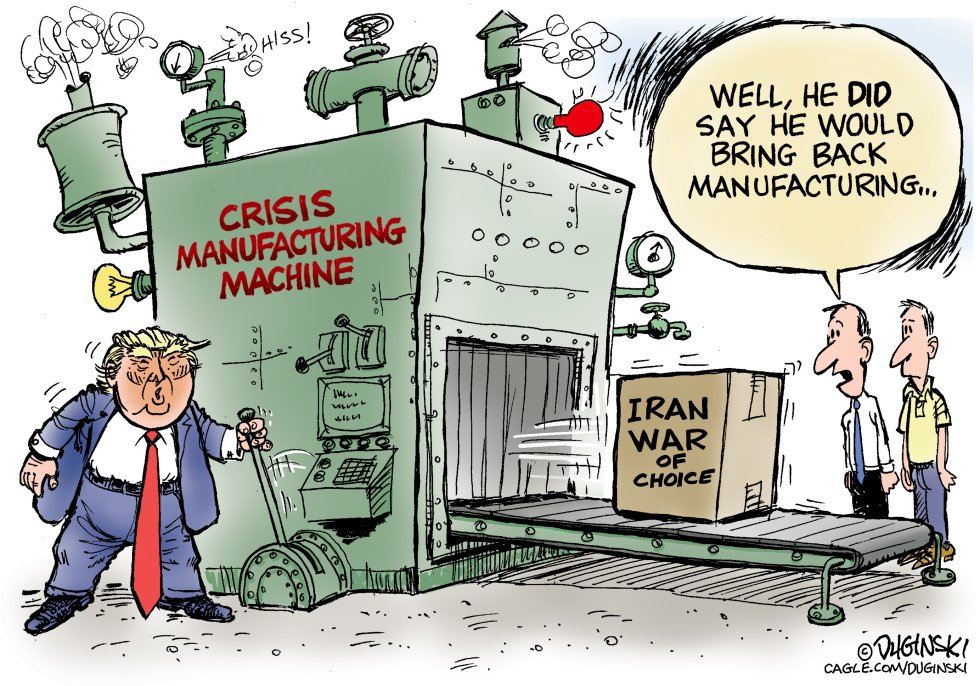
Donald Trump, holding the presidency in 2026, faces renewed scrutiny over foreign policy toward Iran. Recent statements revive campaign pledges to restore domestic manufacturing while tensions with Tehran escalate. The administration\\\'s approach draws criticism for prioritizing confrontation over diplomacy. Observers note the pattern of generating external crises rather than economic gains at home. The cartoon argues that Trump\\\'s actions fulfill a literal version of his manufacturing rhetoric by producing conflict instead of jobs.
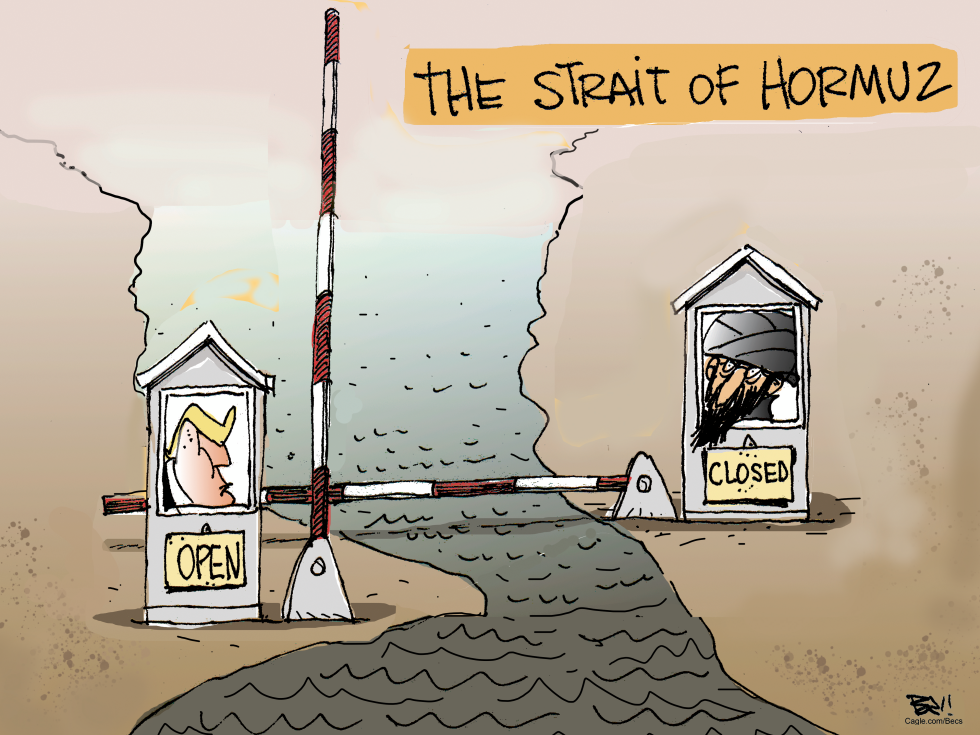
The Strait of Hormuz remains a flashpoint for global oil transit as the United States and Iran maintain opposing stances on access. Donald Trump positions an open checkpoint while an Iranian official signals closure. The editorial highlights the standoff's direct impact on energy markets and shipping security.
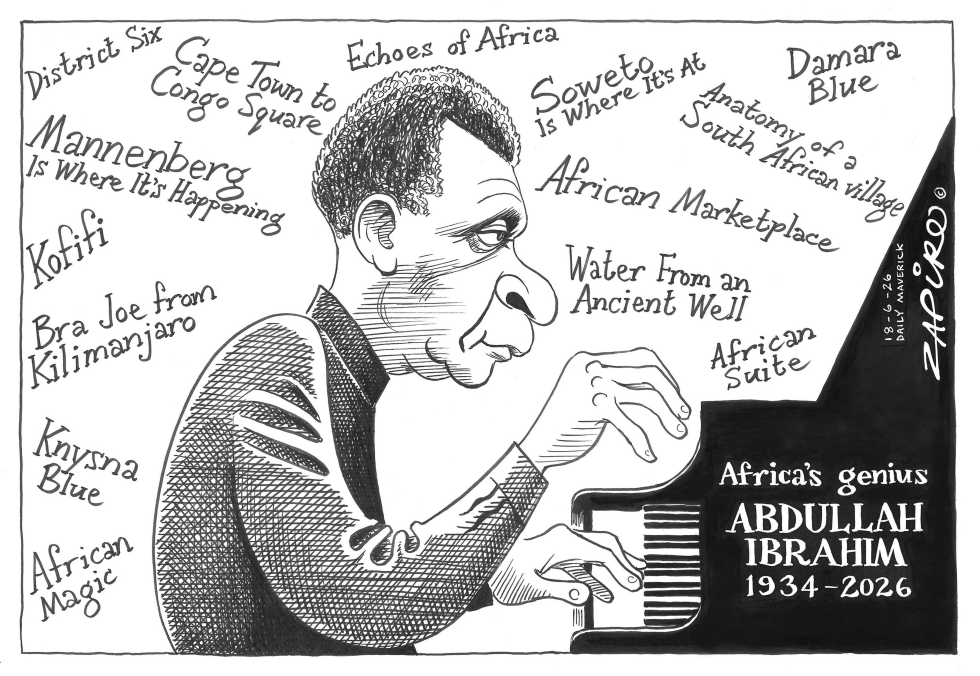
Zapiro created this tribute illustration of Abdullah Ibrahim following the South African jazz pianist's death in 2026. The drawing shows Ibrahim at the keyboard with titles of his well-known works arrayed around him, including Mannenberg, District Six, Soweto Is Where It's At, African Suite, and others drawn from his discography spanning decades of performances rooted in Cape Town and broader African musical traditions.
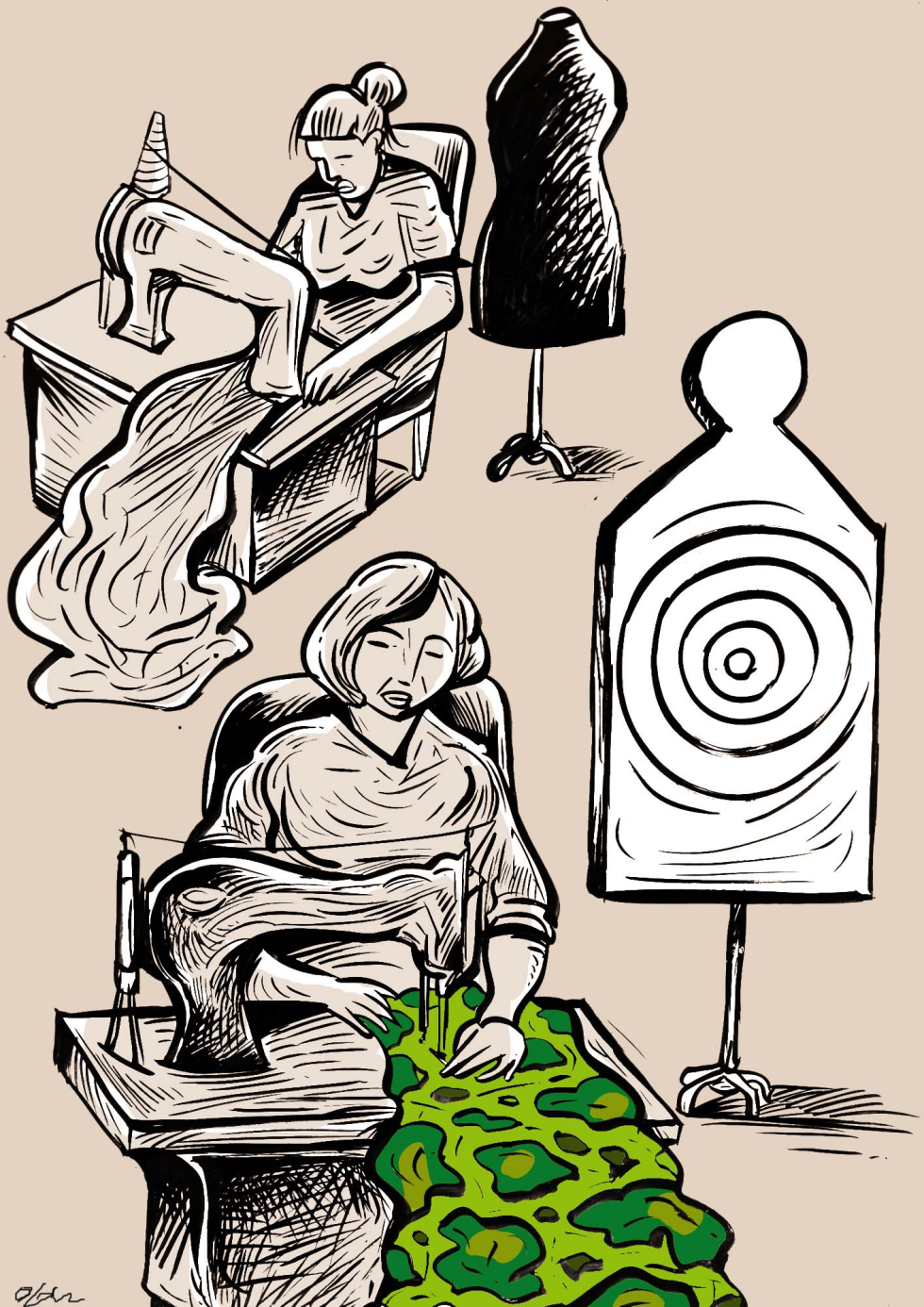
Garment workers continue to face challenging conditions in the global textile industry. The piece comments on the pressures and targeting of labor in this sector.