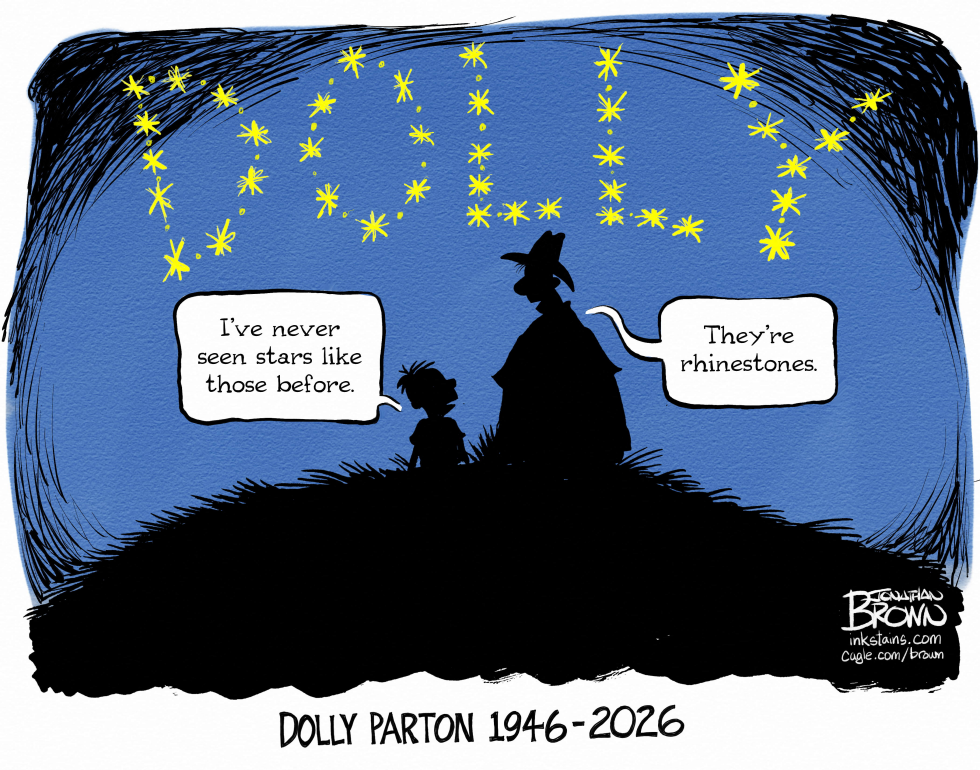
Dolly Parton passed away in 2026 at age 80. Fans and the public mourned the loss of the country music legend known for her rhinestone outfits and charitable work. The tribute highlights her enduring sparkle and cultural impact through a celestial memorial image. The piece positions her legacy as one of warmth, generosity, and unmistakable glamour that continues to shine.
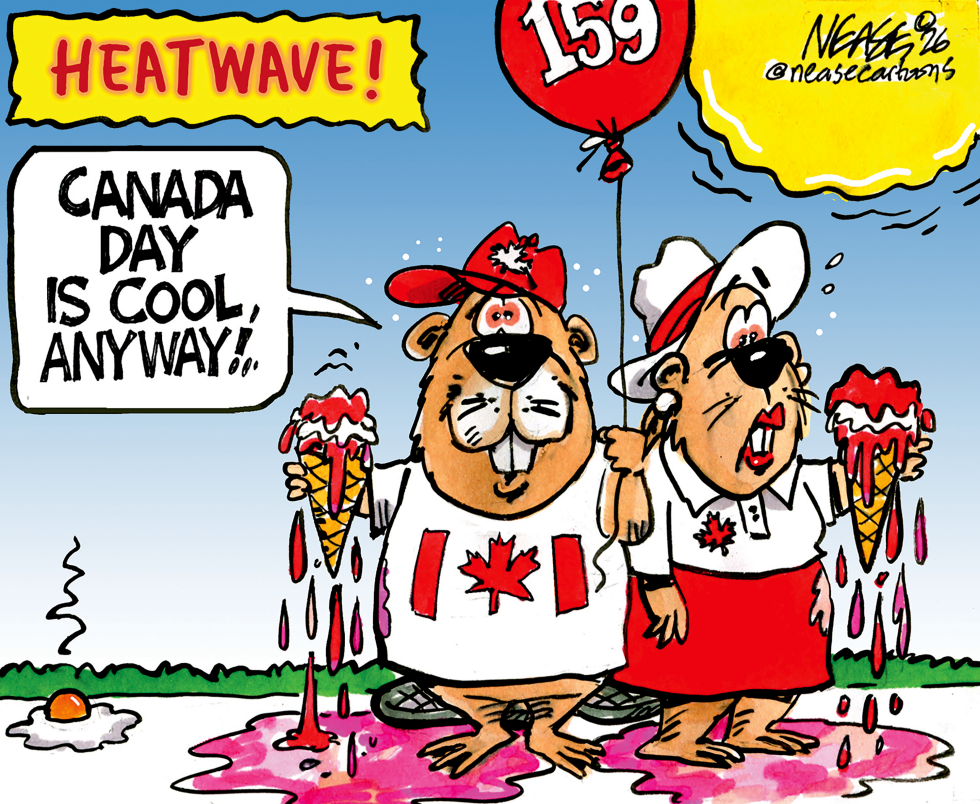
On June 30 2026 two cartoon beavers dressed in Canadian flag attire stand on melting pavement holding ice cream cones that drip heavily during an intense heatwave. A red balloon marked 159 floats above while a speech bubble declares Canada Day cool anyway. A fried egg lies on the ground near the pink puddle formed by the melting treats.
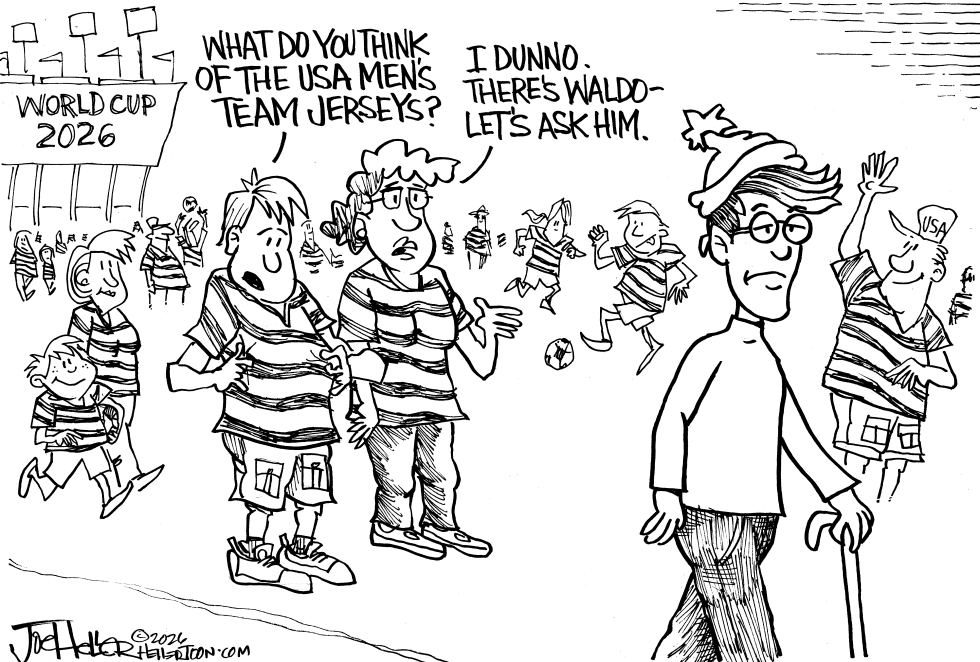
At the World Cup 2026, two fans in striped shirts debate the USA men's team jerseys, with one suggesting they ask Waldo, who stands nearby in similar attire. The scene plays on the resemblance between the team uniforms and the Where's Waldo character, set against a stadium backdrop filled with other striped figures and a soccer ball in play.
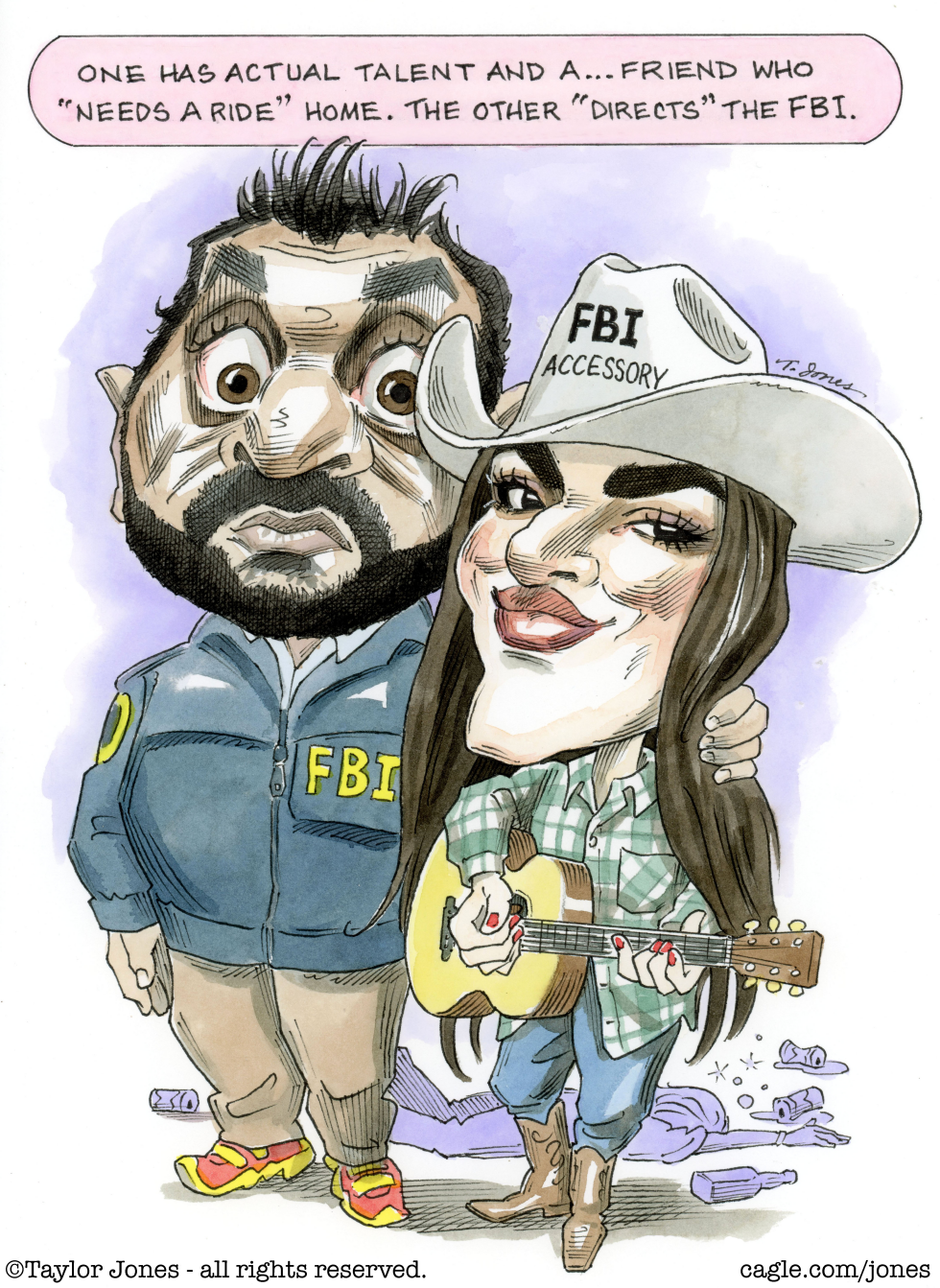
Taylor Jones draws a bearded man in an FBI jacket with wide eyes, standing next to a smiling woman wearing a cowboy hat marked FBI Accessory, her arm around him as she holds a guitar. Empty bottles and cans are scattered on the ground, suggesting drunkenness. The speech bubble contrasts one with actual talent and a friend who needs a ride home against the other who directs the FBI. Tags like Kash Patel, Alexis Wilkins, country music, Nashville singer, corruption, and incompetence frame this political cartoon's jab at abuse of office and justice department issues.
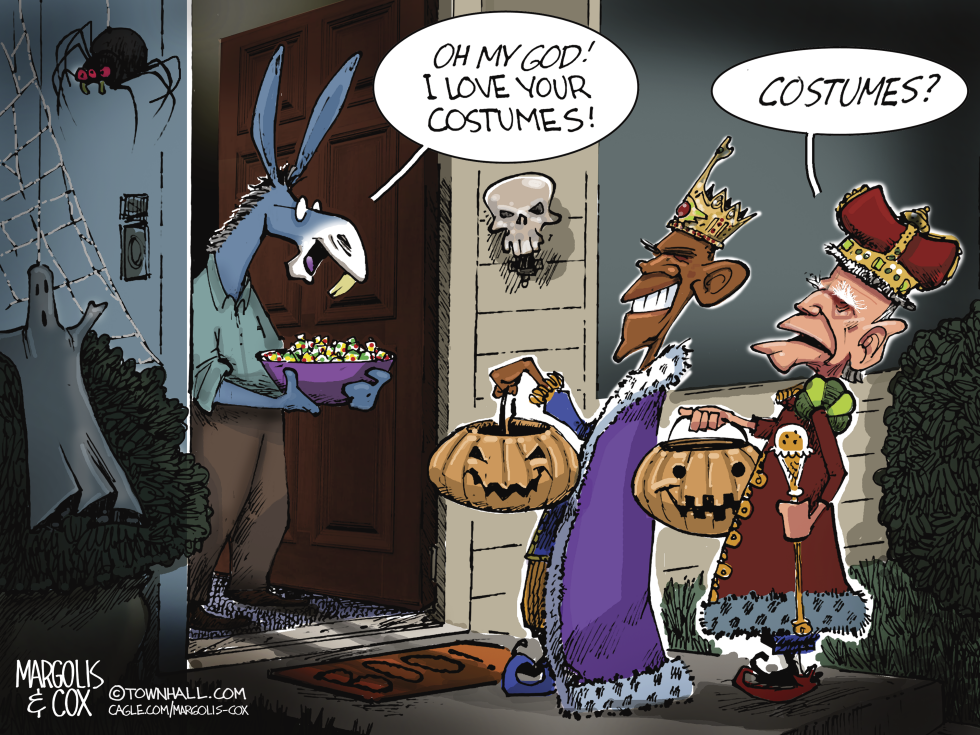
On October 21 2025 a political cartoon by Margolis and Cox depicts a Democratic donkey at a doorstep offering candy to figures resembling Barack Obama and Joe Biden dressed as kings for Halloween. The donkey exclaims approval of the costumes while one king questions the term. The image references the No Kings theme and critiques Democratic support for prominent leaders amid ongoing political debates.
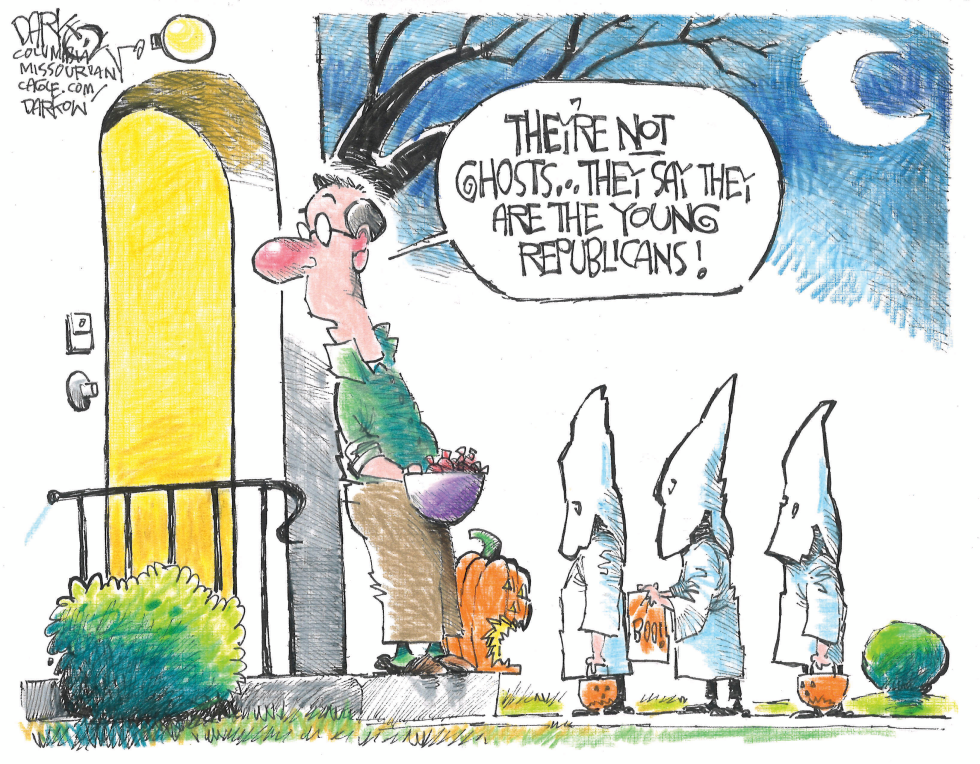
A homeowner stands at his doorway on Halloween night holding a bowl of candy. Three figures dressed in white pointed hoods and robes approach with buckets labeled BOO. The man remarks that the visitors insist they represent the Young Republicans rather than ghosts. The image references recent leaks from a Young Republicans chat group containing racist content. Publication occurred on October 20 2025 near the holiday.
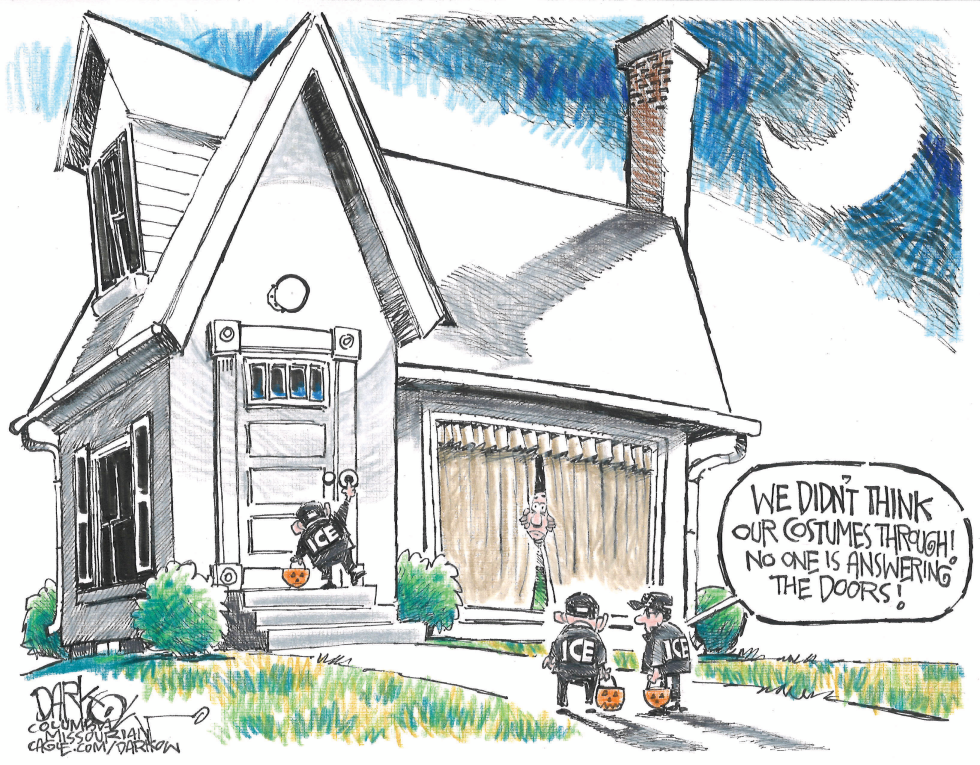
On October 8 2025 John Darkow depicts ICE agents trick or treating at a house. Their uniforms cause residents to avoid answering doors on Halloween night. The scene highlights public reluctance toward immigration enforcement actions.
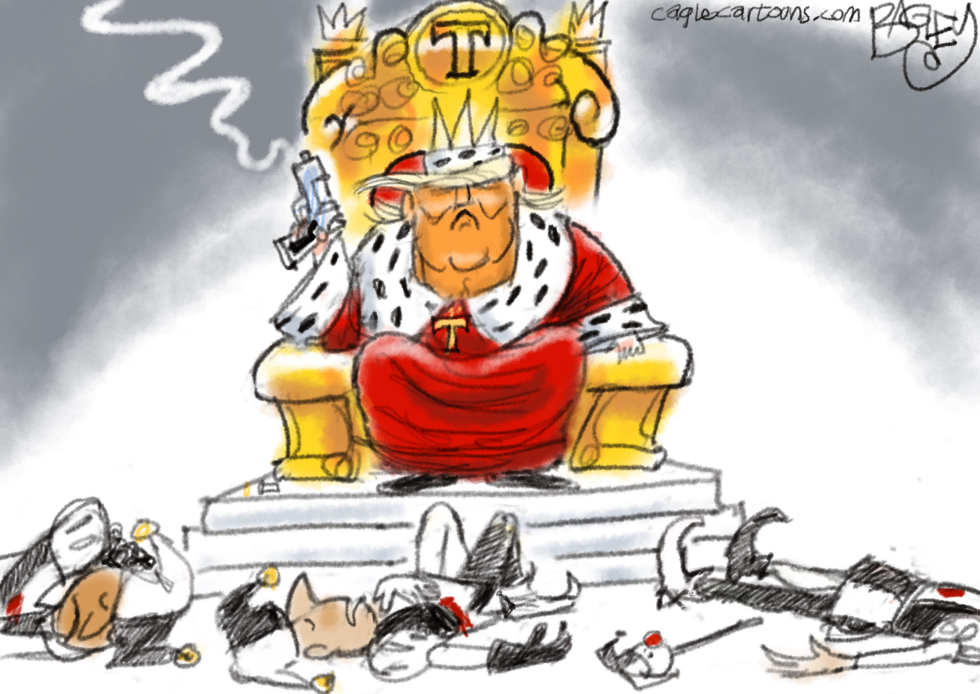
Pat Bagley's 'King Trump' captures a regal Donald Trump caricature seated on an ornate golden throne marked with a prominent 'T,' his expression stern as he grips a smoking pistol. Surrounding the throne's base lie several jester figures in black-and-white outfits, sprawled lifelessly with red blood spots, evoking themes of comedy suppression. Tags like Kimmel, Colbert, and Charlie Kirk hint at late-night hosts and conservative voices, but the image sticks to visible elements: the king's red robe, ermine trim, and the smoky aftermath. This piece comments on cancel culture, GOP dynamics, MAGA loyalty, hate, humor, and first amendment issues without overt labels, relying on caricature for impact. The dry wit underscores a tyrant's intolerance for jesters, a straightforward jab at power and censorship.
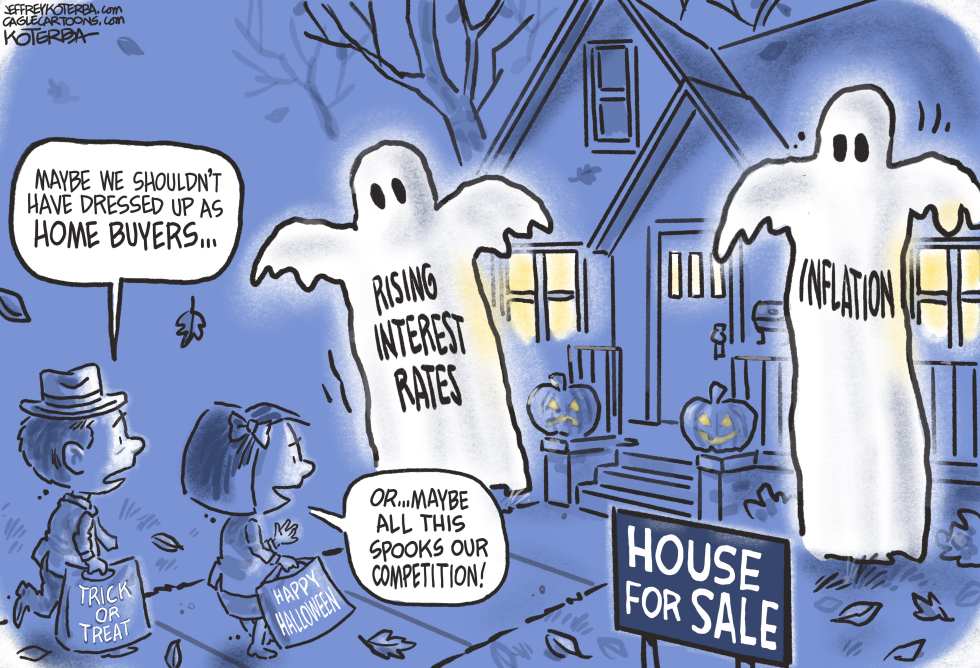
On October 25 2022 the cartoon shows two children in home buyer costumes trick or treating at a house for sale. Ghosts labeled rising interest rates and inflation stand in front scaring them away. Speech bubbles note the outfits may spook competition amid high costs.
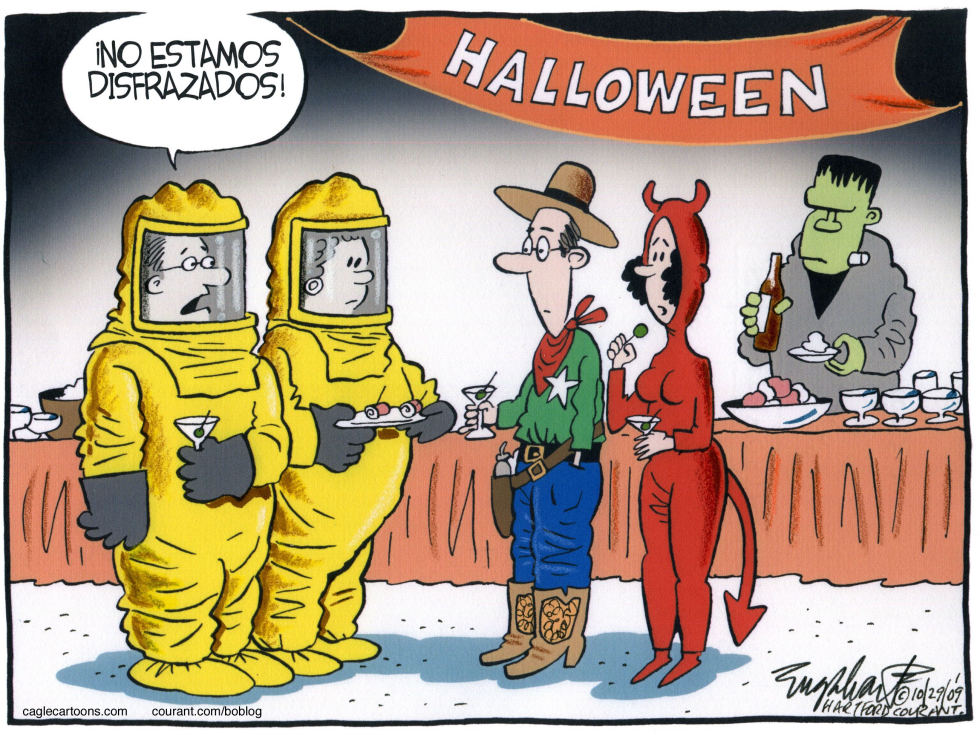
A 2009 cartoon by Bob Englehart depicts two people in full hazmat suits at a Halloween party declaring they are not in costume. The image responds directly to the active H1N1 swine flu outbreak that fall. Other guests appear in standard costumes including a cowboy, devil, and Frankenstein monster. The scene underscores public anxiety over the virus spreading at social events. The Hartford Courant published the work on October 30, 2009, as health officials urged precautions during the holiday season.