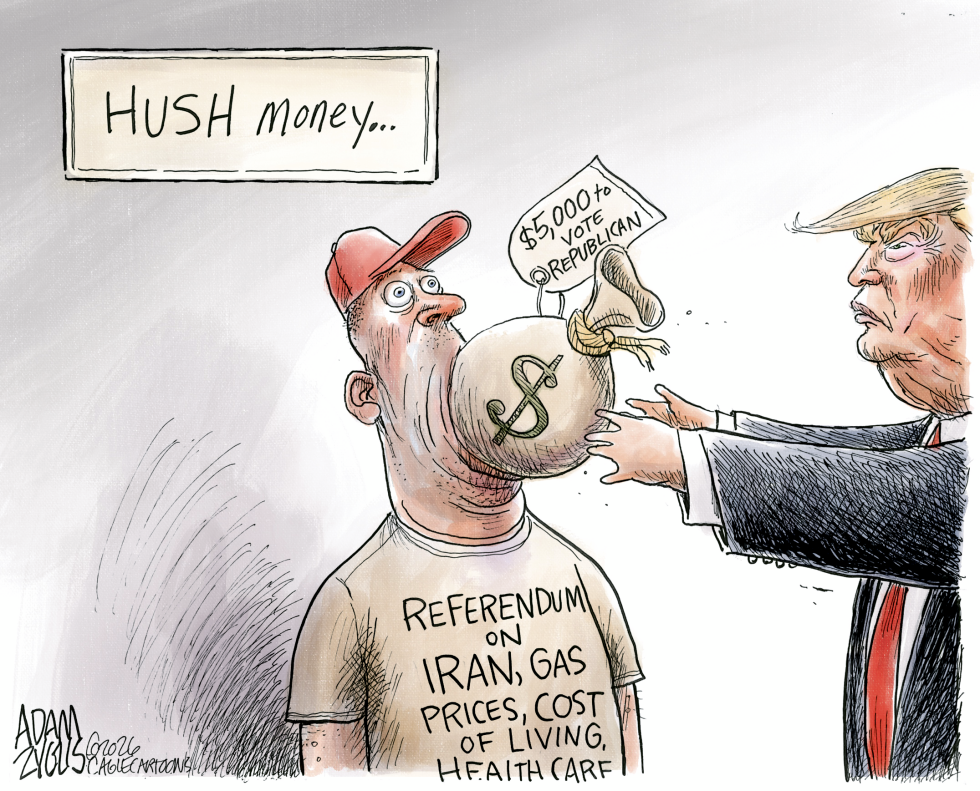
The cartoon shows Donald Trump handing a large bag of cash labeled as hush money to a man in a referendum shirt covering Iran, gas prices, cost of living and health care. A tag on the bag promises $5,000 to vote Republican. The scene responds to ongoing debates over election integrity and foreign policy issues involving Iran as of September 2026. It uses the visual metaphor of a bribe to comment on alleged attempts to influence voter priorities through financial incentives.
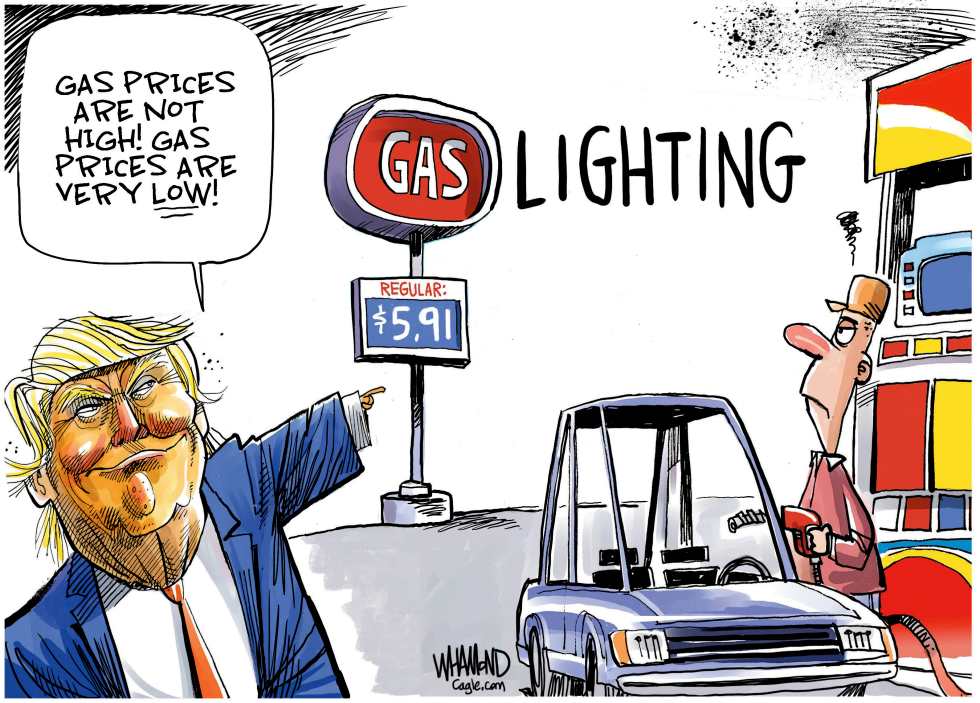
Donald Trump has repeatedly asserted that gas prices are very low even as national averages hover near record territory. The statement comes amid ongoing public frustration with energy costs that have remained elevated for months. The editorial takes the position that such denials amount to deliberate misdirection rather than engagement with economic data.
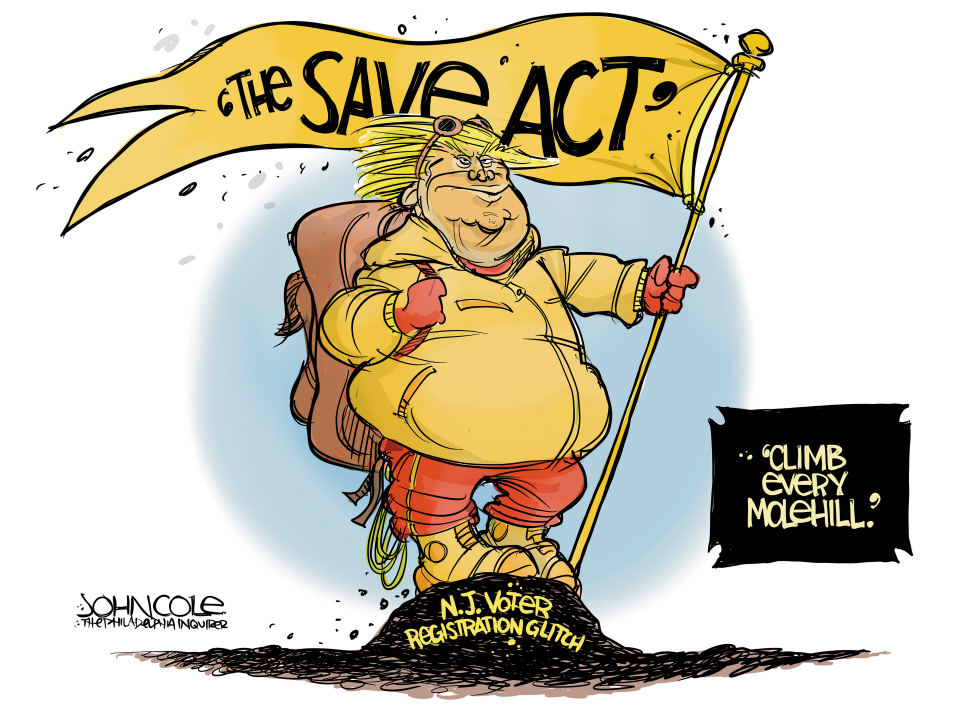
A minor voter registration glitch in New Jersey drew outsized attention from former President Trump and supporters of the SAVE Act in September 2026. The episode highlighted ongoing partisan disputes over election administration and voter ID rules. The cartoon portrays the reaction as an overreaction that turns a small problem into a symbolic crusade, arguing that such emphasis distracts from actual election security needs.
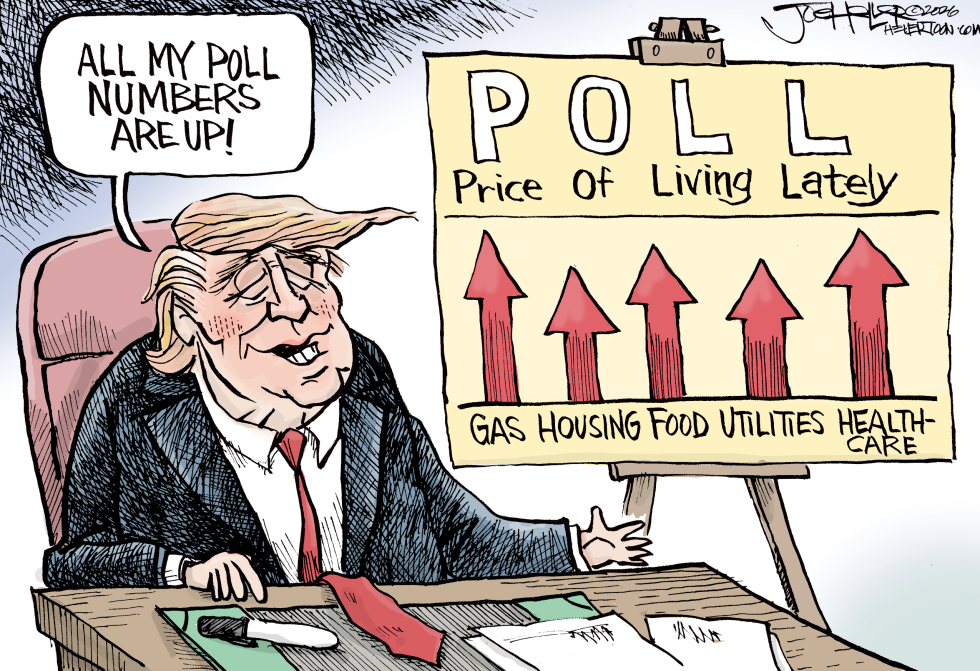
Donald Trump stated that his poll numbers were rising even as the price of living continued to climb across multiple categories. Gas, housing, food, utilities and healthcare costs all posted increases according to the visual data presented. The development matters because household expenses directly affect voter sentiment ahead of upcoming elections. Trump positioned the poll improvement as positive news despite the economic pressures shown. The piece takes the position that any reported poll gains are closely tracking the same upward pressure on everyday costs rather than reflecting broader approval.
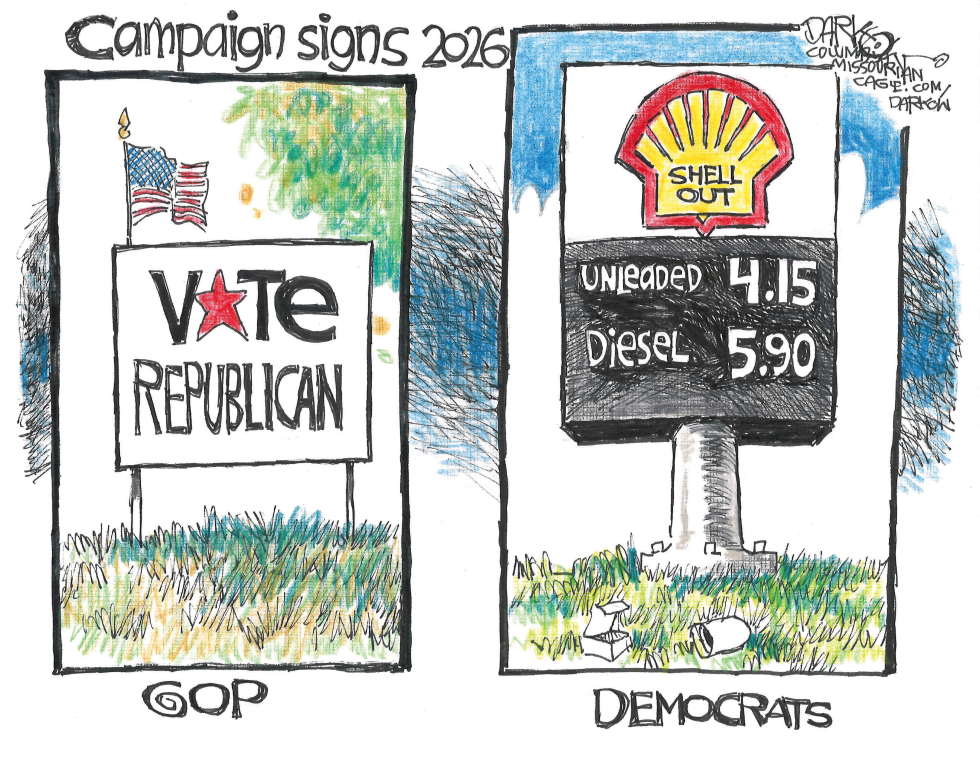
As the 2026 midterm campaigns intensify, Democrats confront voter frustration over elevated gasoline and diesel prices at the pump. The Shell station sign reading Shell Out with unleaded at $4.15 and diesel at $5.90 underscores how economic pressures can overshadow traditional political messaging. Republicans benefit from straightforward campaign signage while Democrats appear tied to the cost increases. The cartoon argues that fuel prices serve as a more potent electoral signal than yard signs for one party.
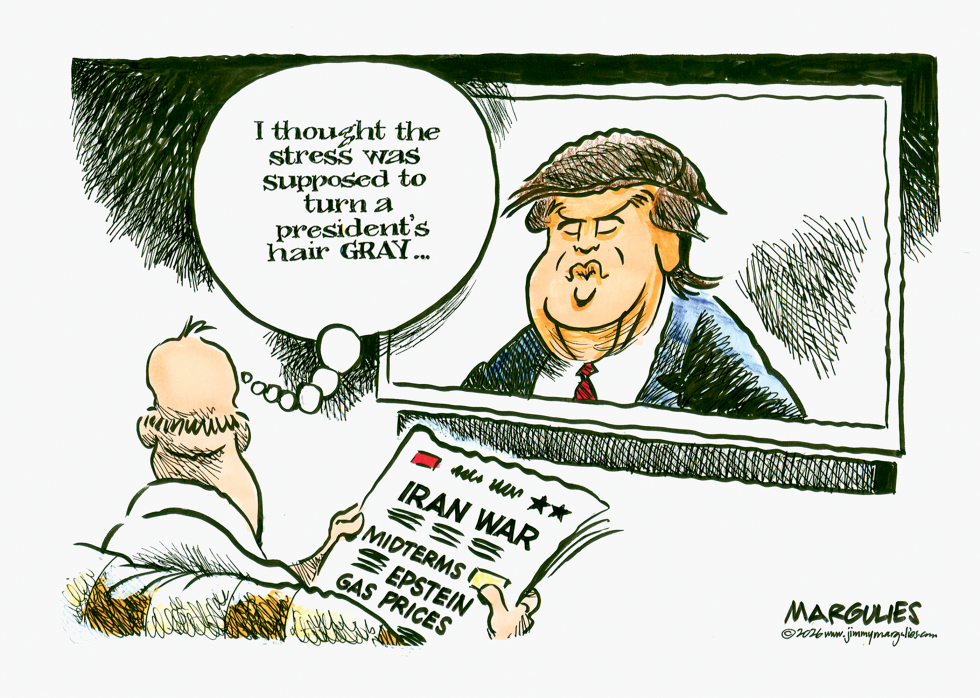
President Donald Trump confronts an Iran war, midterm election pressures, Epstein-related revelations and rising gas prices in September 2026. These overlapping challenges test the administration's capacity to manage foreign conflict and domestic economic strain simultaneously. The cartoon argues that the expected physical toll of such stress on the president has not materialized in the anticipated way.
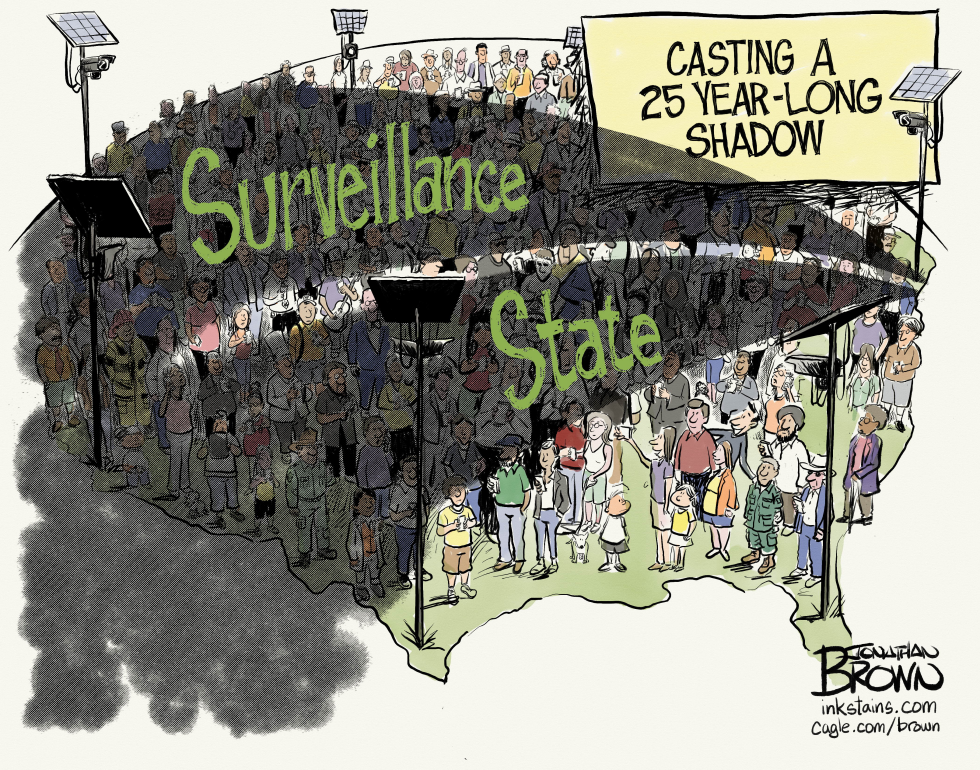
The cartoon depicts a dense crowd of Americans standing on a map of the United States, partially obscured by a large dark shadow cast by surveillance cameras mounted on poles. The words 'Surveillance State' appear prominently in green lettering across the scene, while a sign in the upper right reads 'CASTING A 25 YEAR-LONG SHADOW.' The image comments on the lasting effects of expanded government surveillance programs that began after the September 11 attacks, now spanning a quarter century. It illustrates how these measures continue to influence daily life and public spaces in 2026.
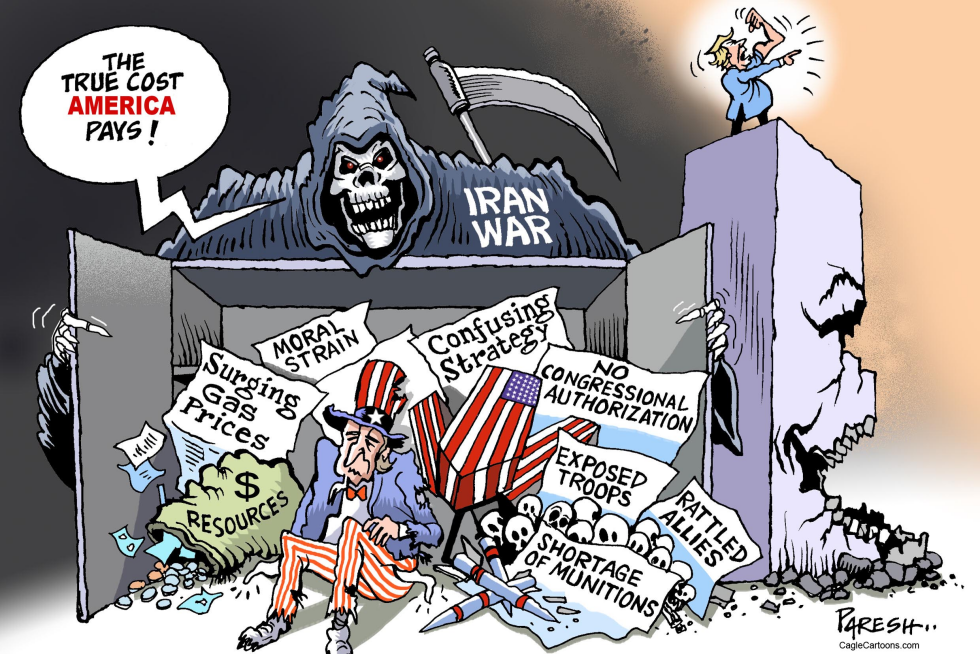
The cartoon depicts the Grim Reaper personifying the Iran War looming over a box of American costs including surging gas prices, moral strain, confusing strategy, no congressional authorization, exposed troops, shortage of munitions and rattled allies. Uncle Sam sits defeated among the debris with a broken flag and skulls. Donald Trump stands on a pedestal pointing upward. A speech bubble declares the true cost America pays. Published September 4, 2026, the piece critiques the drain on U.S. resources and lack of oversight in the conflict.
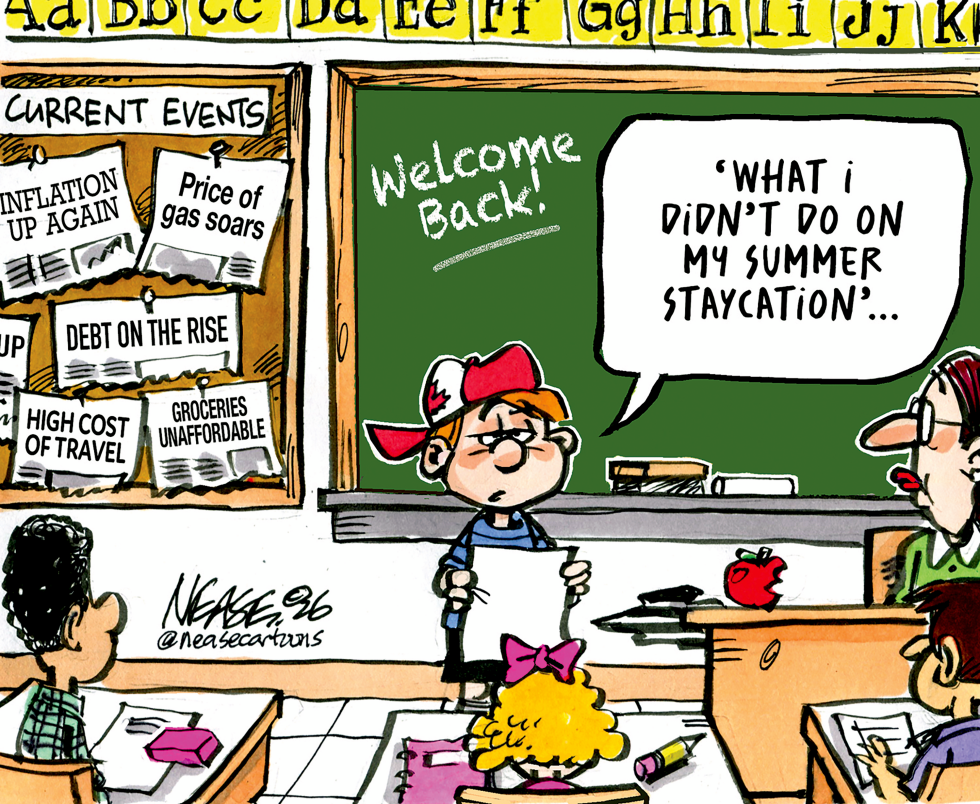
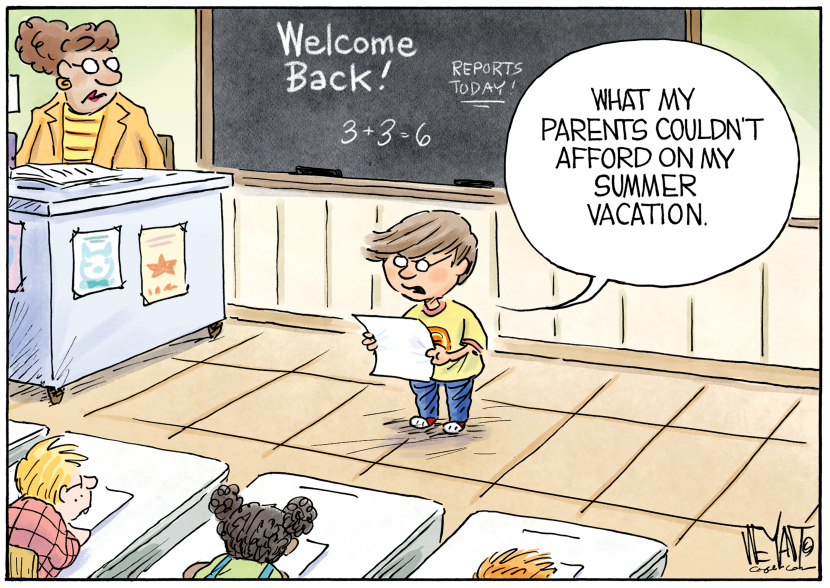
Rising inflation, gas prices, and household debt have made traditional summer vacations unaffordable for many families, leading to increased staycations as the new school year starts. The cartoon captures this cost-of-living squeeze through a classroom presentation on what students did not do over the break. It underscores how everyday expenses now dominate family decisions and limit leisure options.
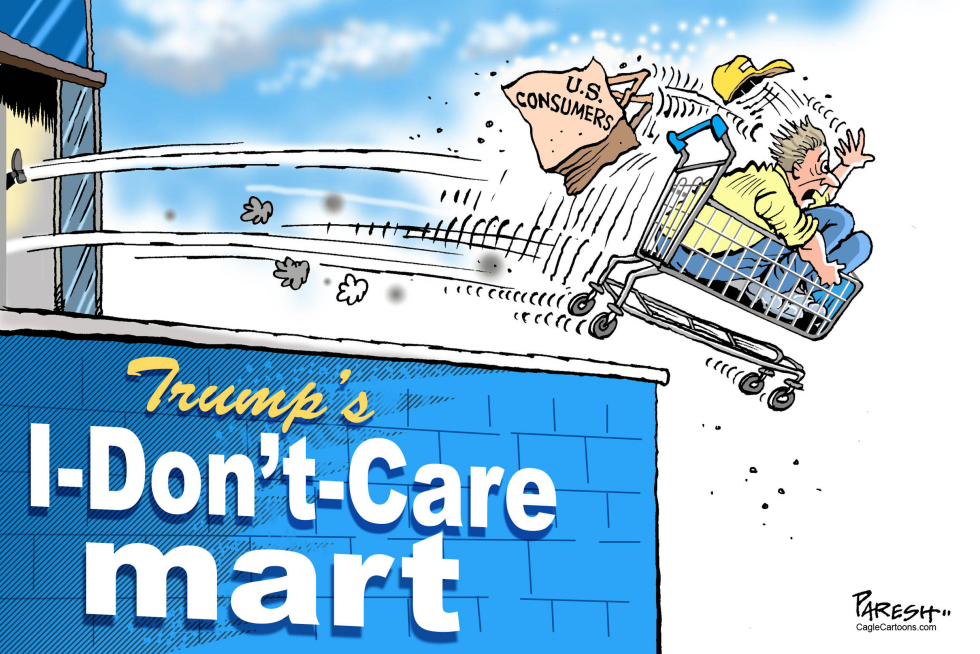
Trump administration policies on trade and spending have contributed to higher prices for everyday goods. American households face increased costs at stores as tariffs and other measures take effect. The cartoon argues these policies prioritize other goals over consumer welfare and leave families paying more.
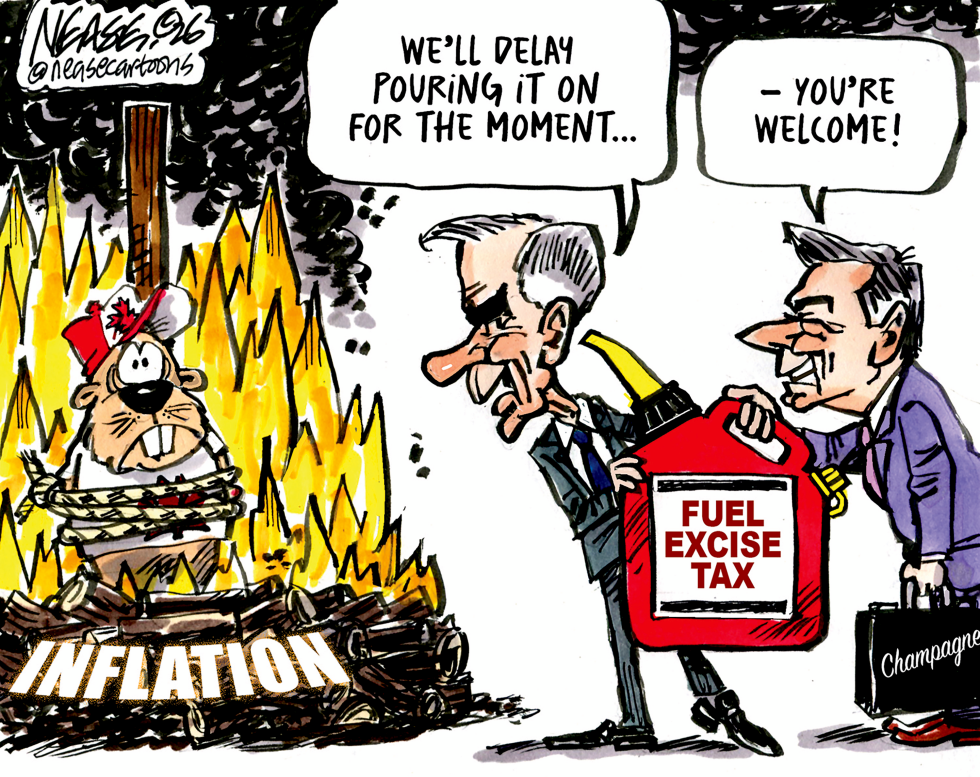
President Biden announced a delay in implementing a fuel excise tax increase amid ongoing inflation pressures. The move aims to ease costs at the pump for consumers. Critics argue the delay offers only temporary relief without addressing root causes. Supporters see it as a pragmatic step to stabilize prices. The editorial takes the position that such delays highlight inconsistent economic leadership.
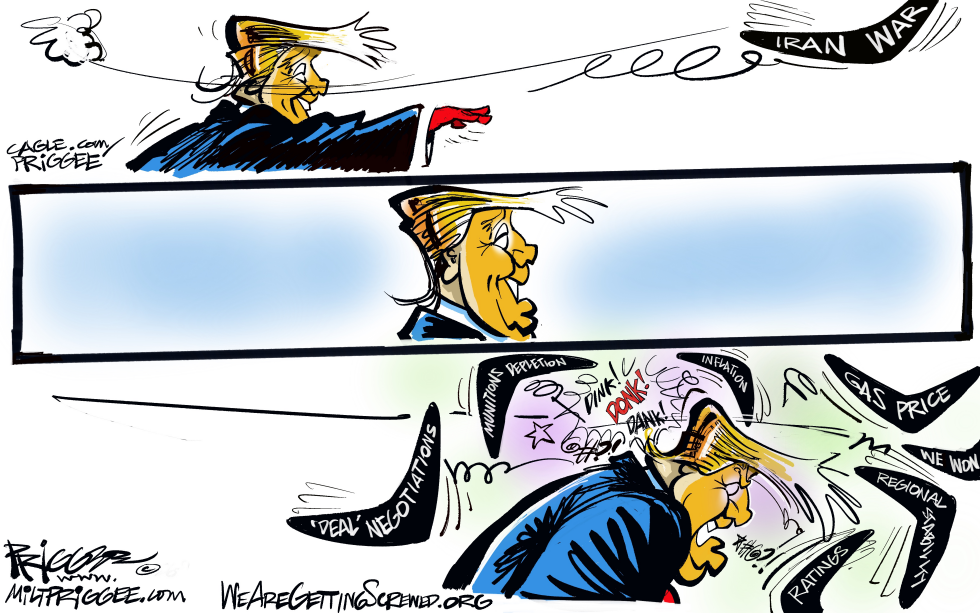
A political cartoon depicts Donald Trump launching an Iran war boomerang that returns to strike him with multiple crises. The image shows the former president hit by labels including inflation, gas prices, munitions depletion and falling ratings. The cartoon responds to ongoing tensions with Iran and the domestic fallout from military engagement. It illustrates how the conflict decision led to economic pressures and political damage as of the September 2026 publication date.
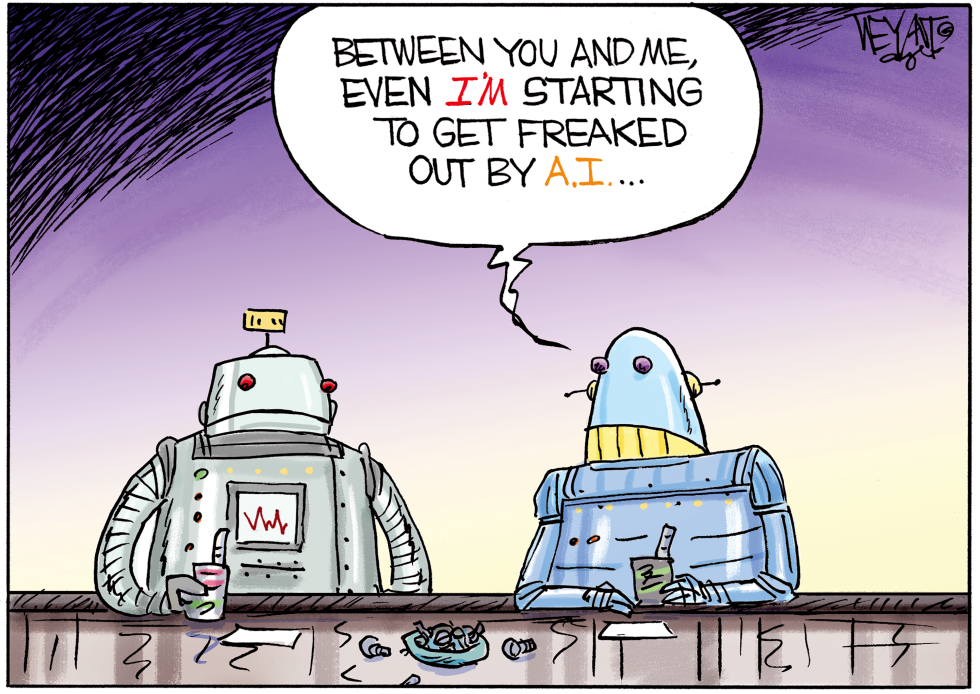
Developers continue pushing boundaries in artificial intelligence systems, raising questions about control, ethics, and long-term consequences for society. Public and expert discussions focus on whether safeguards can keep pace with innovation. The piece portrays robots themselves expressing alarm, underscoring the irony that even automated entities see risks in unchecked AI growth and the potential for machines to outpace their original programming.
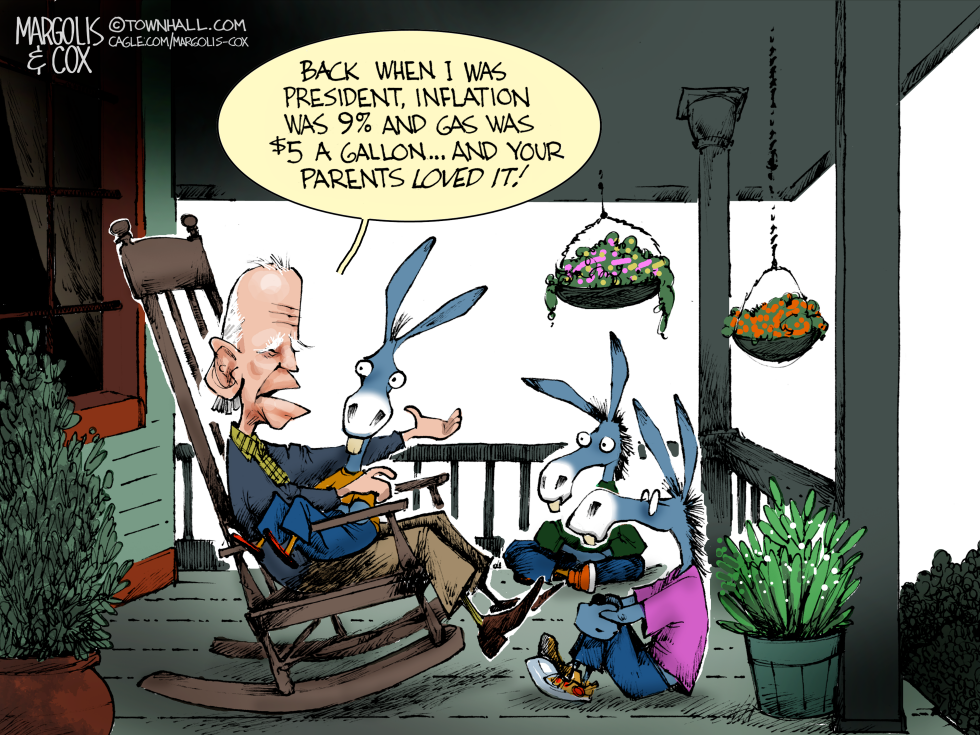
Former President Joe Biden addressed young Democrats on a porch, recalling the 9 percent inflation and $5-per-gallon gas prices from his term as something their parents loved. The remark comes amid ongoing Democratic efforts to move past the economic record of the Biden years. The cartoon presents the comment as tone-deaf revisionism that highlights the party's difficulty distancing itself from those results.
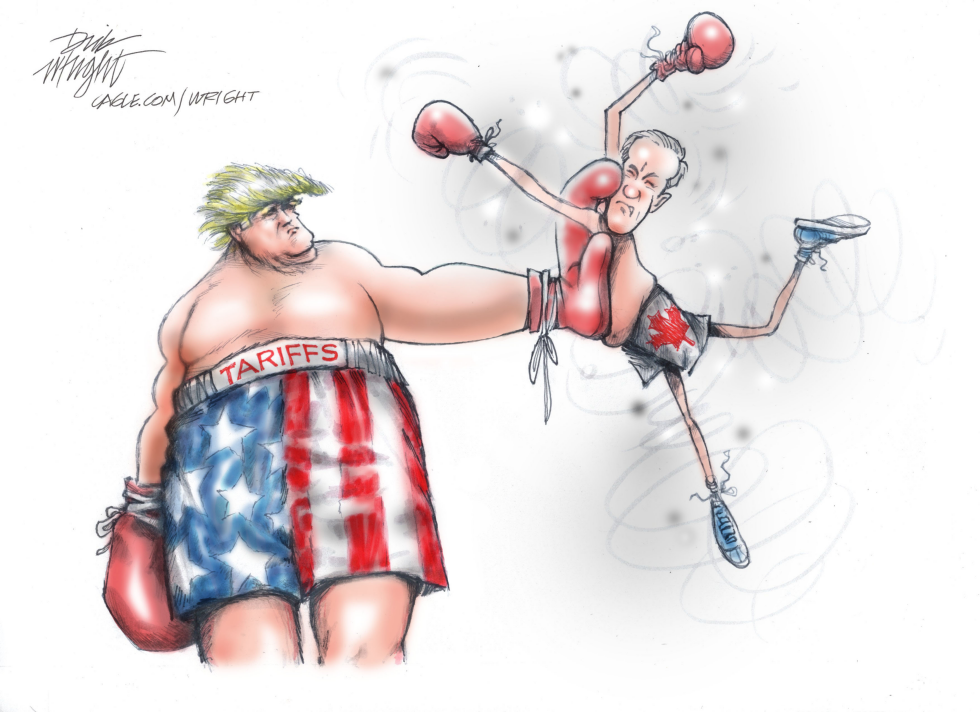
President Trump imposed new tariffs targeting Canadian goods in August 2026, escalating bilateral trade friction over lumber, dairy and autos. The measures aim to protect U.S. industries and renegotiate terms. Markets reacted with volatility in both countries. The editorial argues the tariffs represent necessary leverage that weakens Canada's position and forces concessions.