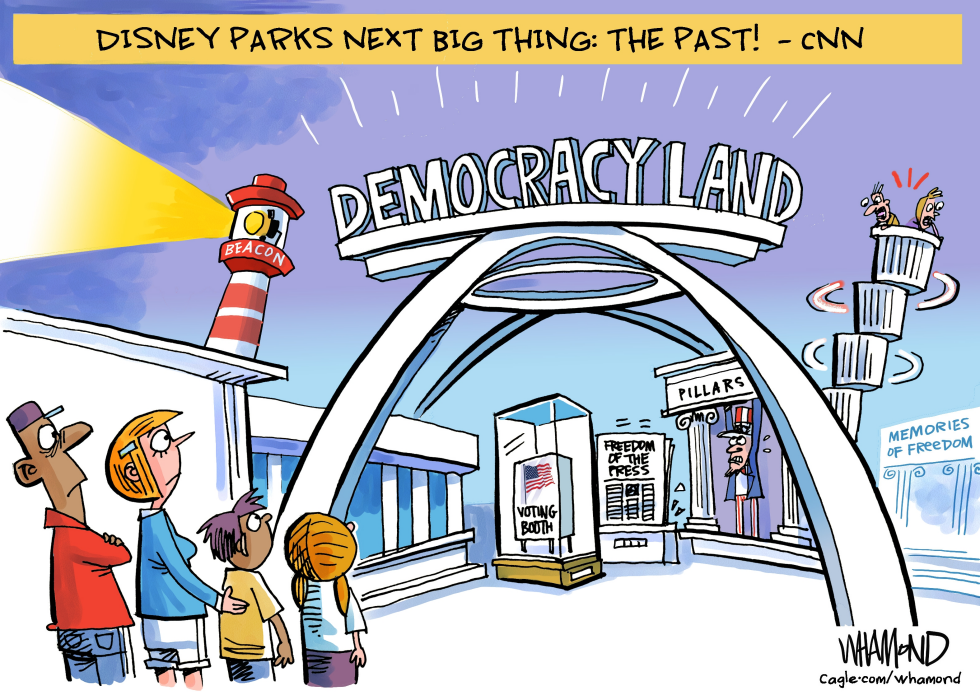
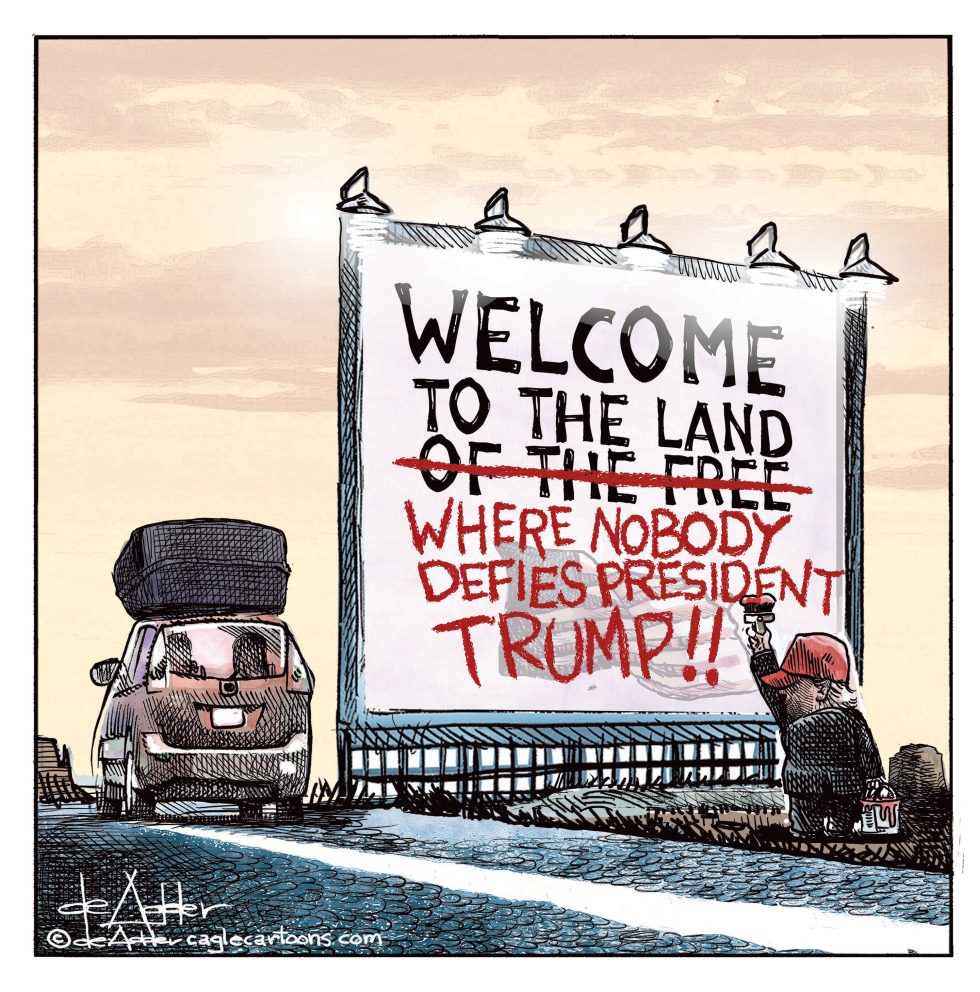
A CNN report on Disney parks reviving past attractions coincides with ongoing debates over voting access and press protections in 2026. Critics argue recent policies have weakened core democratic safeguards, turning once-central institutions into historical curiosities. The cartoon frames this shift as an editorial critique of backsliding norms.
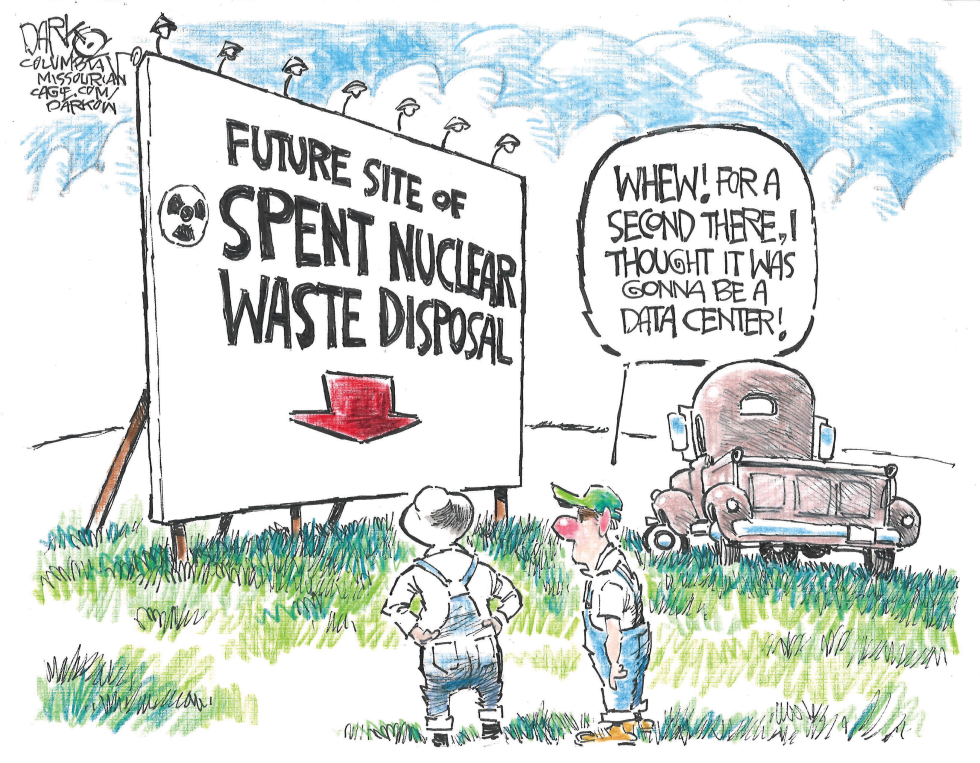
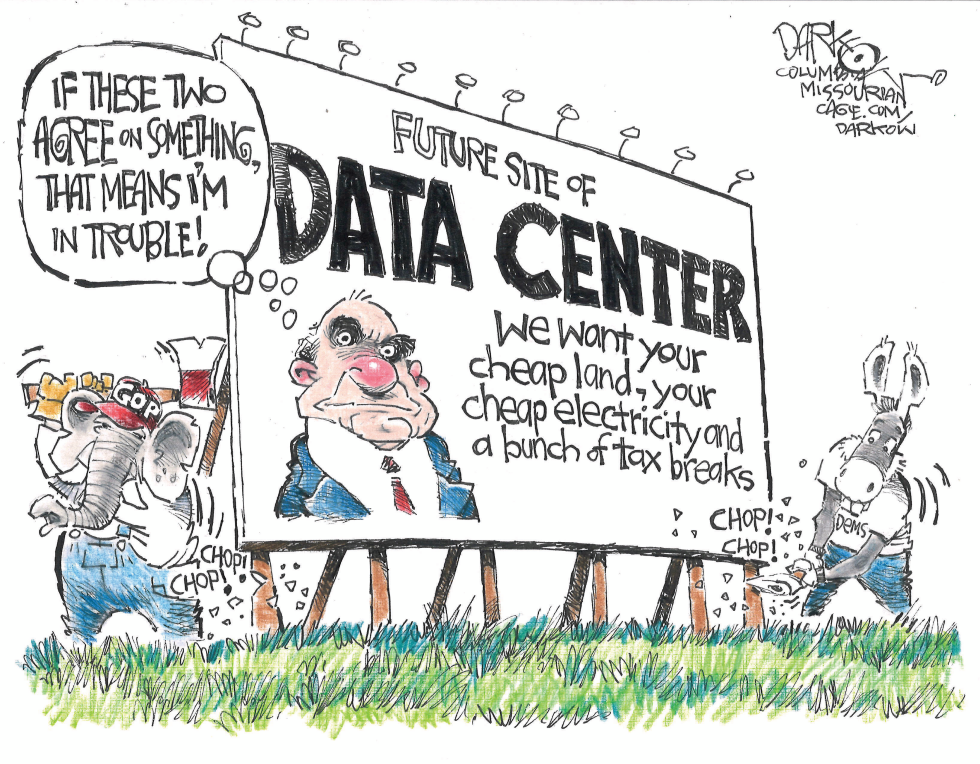
Rural communities continue to face competing proposals for large-scale projects on agricultural land. A planned spent nuclear waste disposal facility draws attention as residents weigh it against potential data center developments that often bring high energy demands and infrastructure changes. The editorial takes the position that such choices reflect broader tensions in siting energy-related facilities versus technology operations in farming areas.
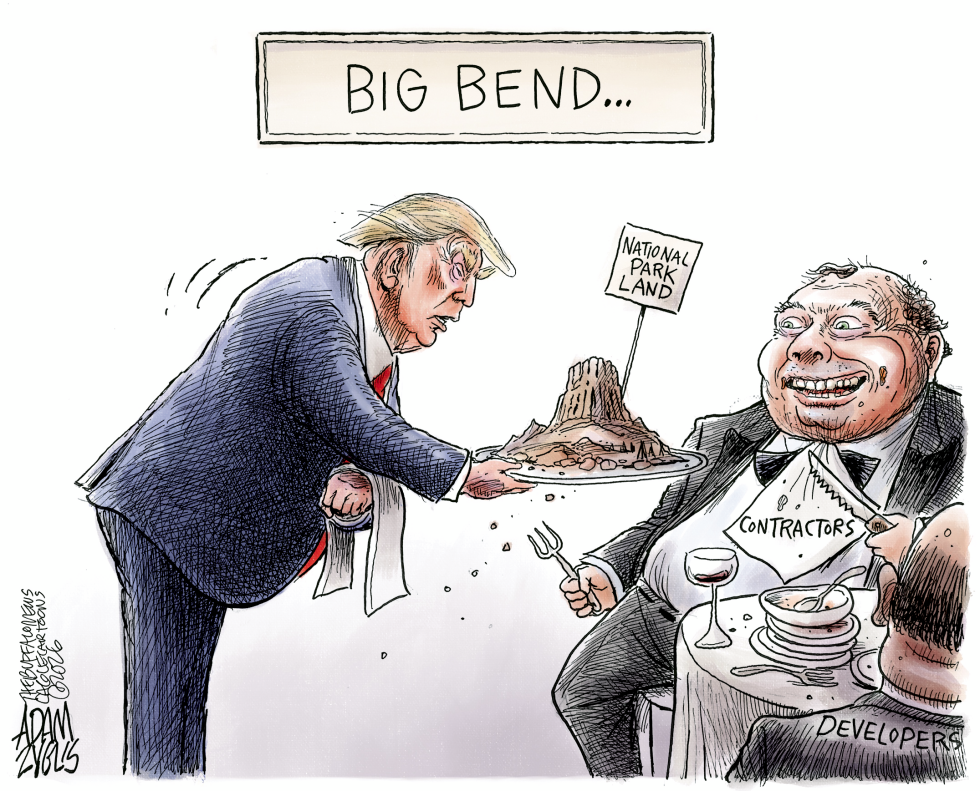
The cartoon shows Donald Trump acting as a waiter and presenting a plate topped with a mountain labeled national park land to a seated contractor. A sign reading Big Bend appears overhead. The image responds to ongoing debates over development proposals affecting protected federal lands including Big Bend National Park.
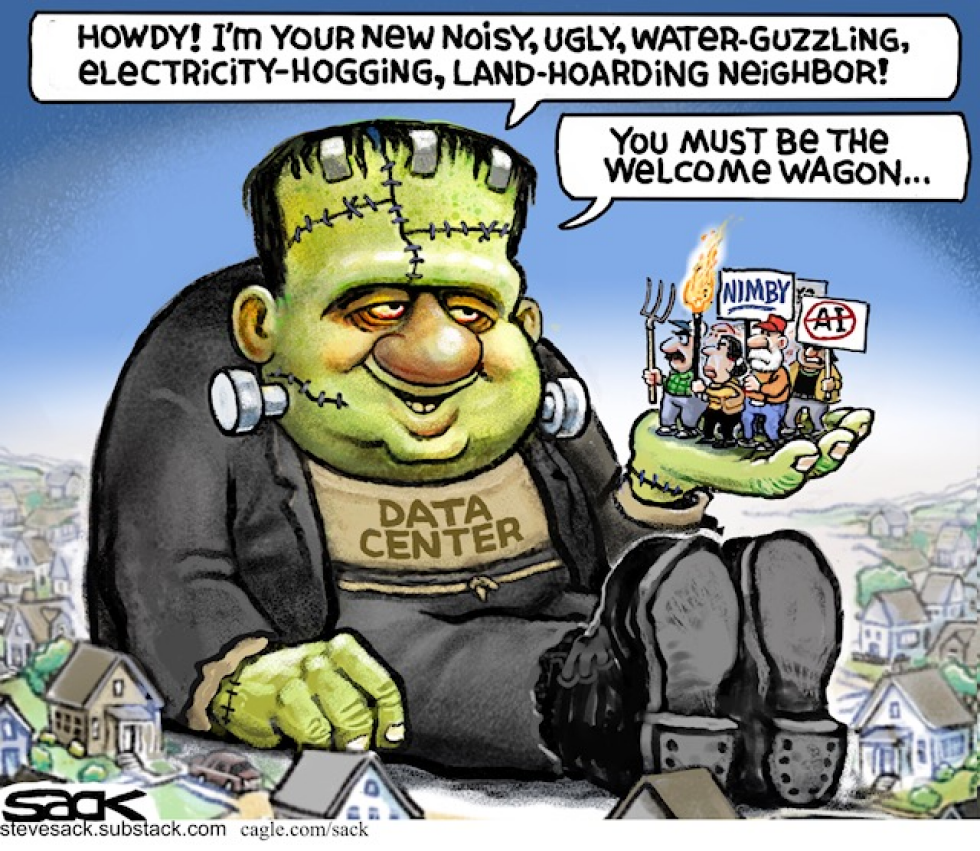
Rapid growth in AI data centers has triggered protests in suburban areas over high electricity and water consumption plus land use. Residents organized under NIMBY banners to block projects they say strain local infrastructure. The cartoon frames the facilities as intrusive newcomers disrupting neighborhoods.
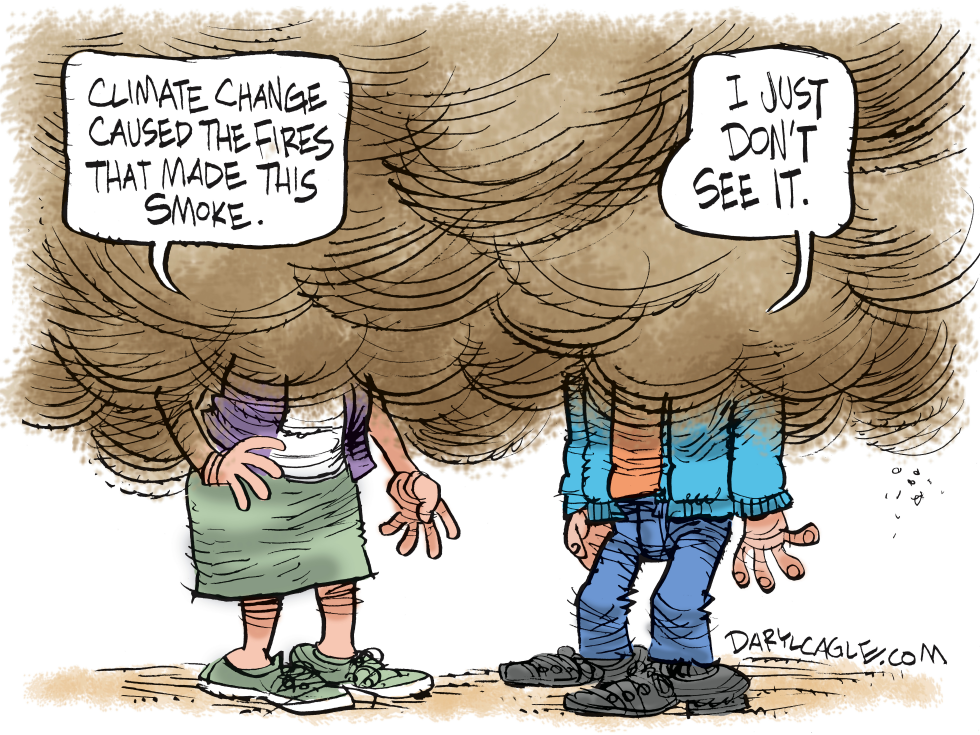
Canadian wildfires have produced widespread smoke affecting air quality across regions. The debate centers on whether climate change drives the fires or if other factors dominate. Public discourse shows persistent skepticism despite visible evidence. The piece highlights how some reject the link between rising temperatures and increased fire activity. It critiques the refusal to acknowledge observable environmental changes tied to climate patterns.
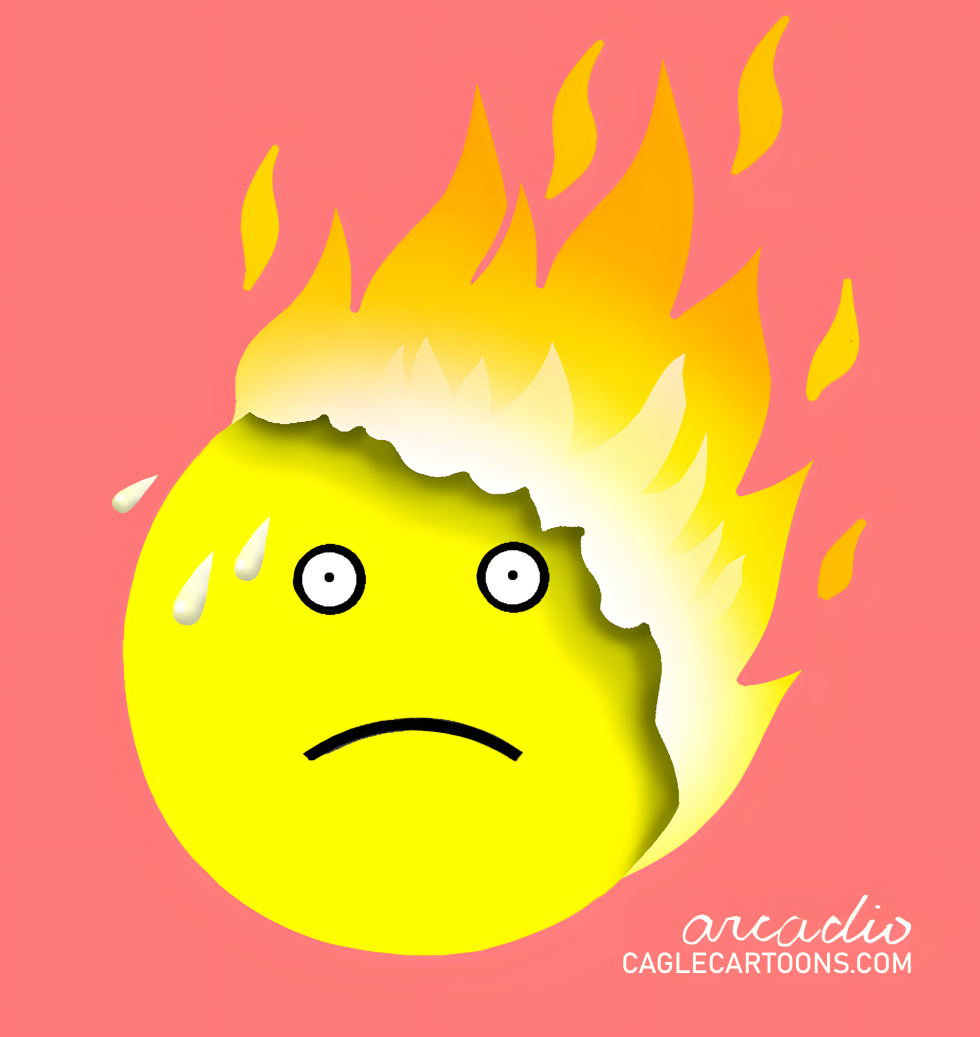
Ongoing wildfire seasons and fire-related disasters continue to disrupt communities and personal well-being across affected regions. The piece frames these events as forces that directly eliminate everyday happiness and security for those impacted. It presents fire as an eraser of positive emotion rather than a manageable natural occurrence.
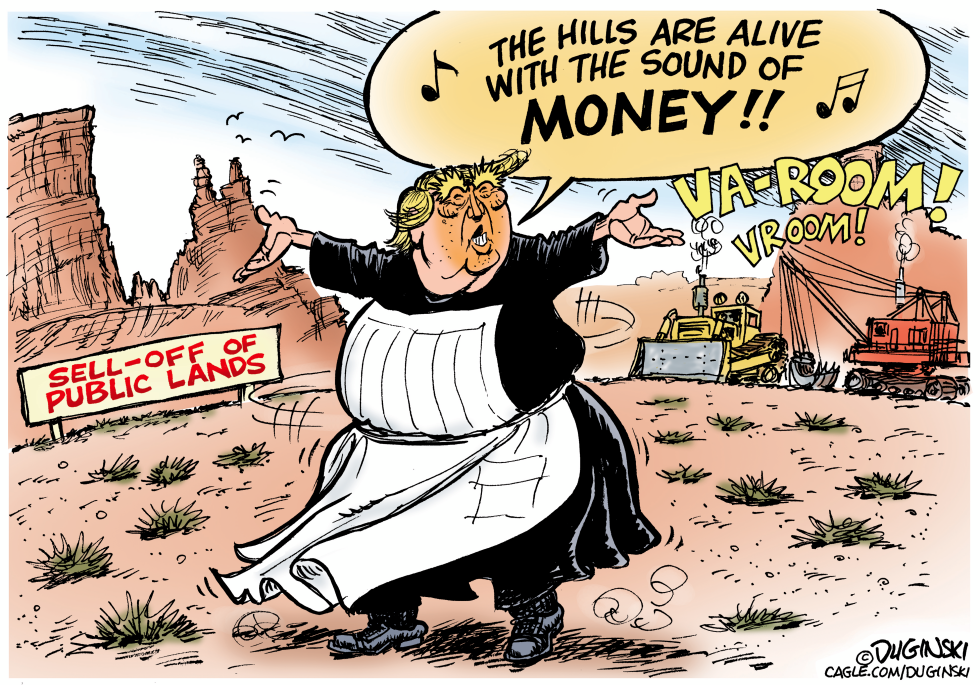
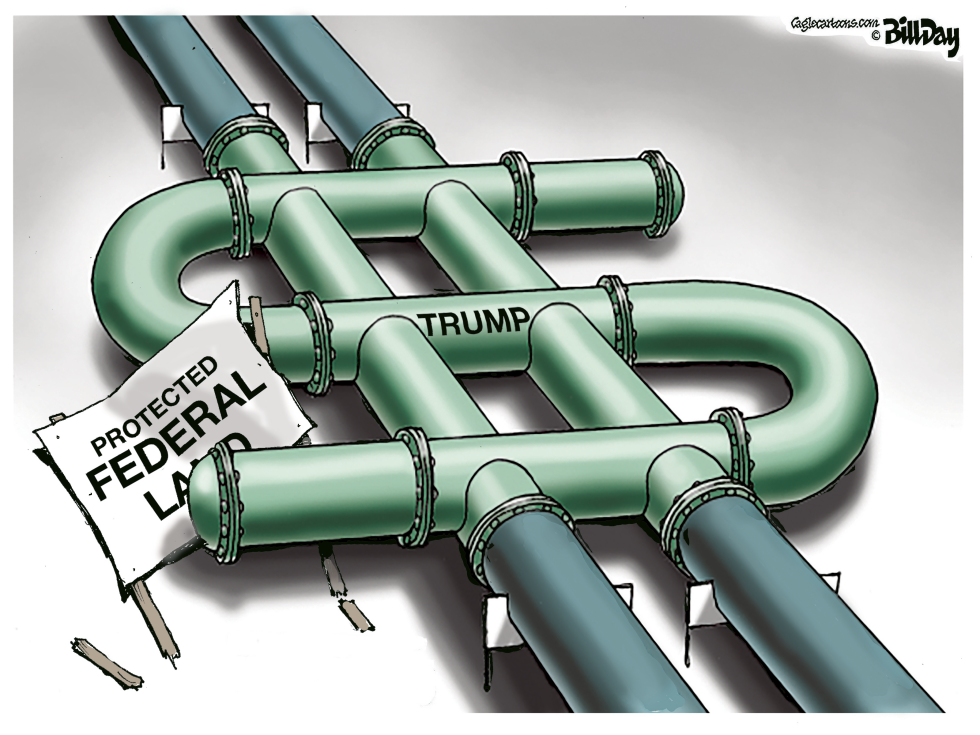
On July 19 2026 the administration advanced plans to sell federal public lands for private development. The move drew immediate pushback from conservation groups concerned about loss of open space and long-term environmental costs. The cartoon frames the policy as a cash-driven transaction rather than a measured land-use decision.
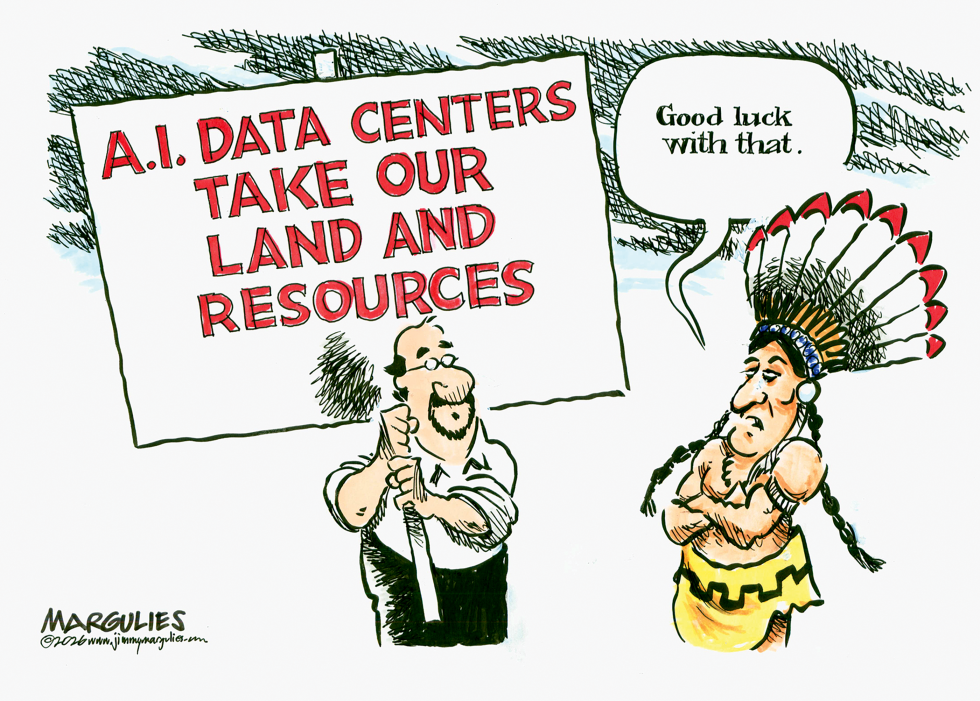
A man holds a sign protesting AI data centers taking land and resources. A Native American protester responds with skepticism. The July 2026 cartoon addresses growing conflicts between technology infrastructure and land use claims.
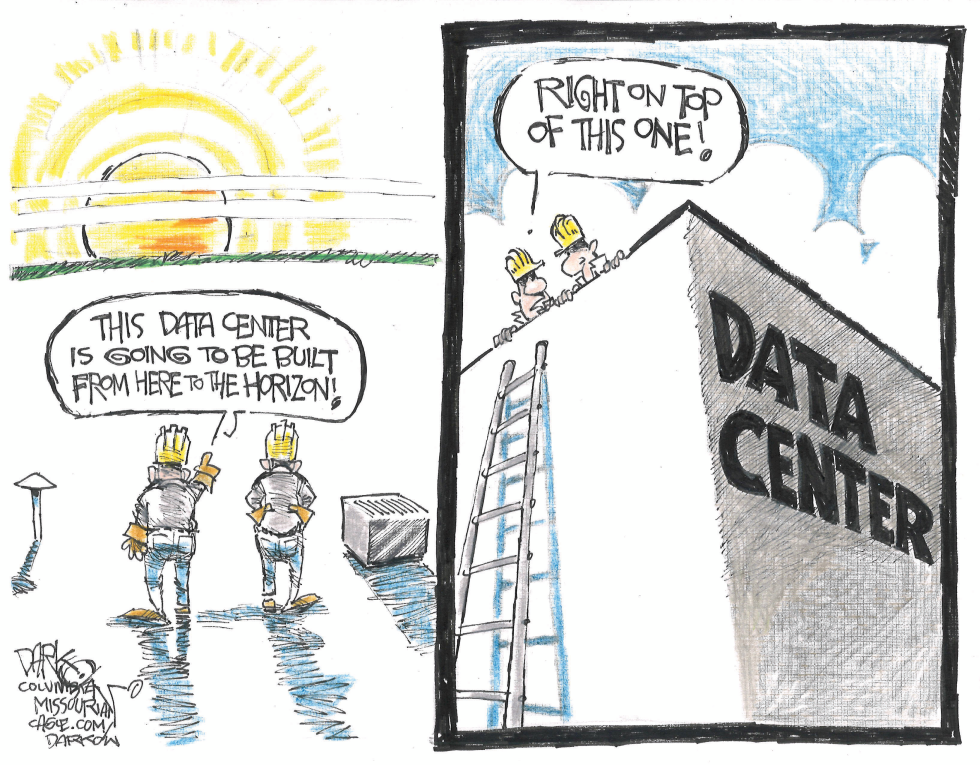
The cartoon by John Darkow depicts construction workers surveying expansive sites for new data centers, with one declaring plans to build from the current location to the horizon. In the adjacent panel, workers on a ladder atop a massive data center building announce plans to place another facility directly on top. The image responds to the ongoing surge in data center development fueled by artificial intelligence demands. As of mid-2026, tech companies continue rapid expansion of facilities that require significant land, electricity and water resources. Local governments face increasing pressure to manage zoning, infrastructure strain and environmental impacts from these projects.
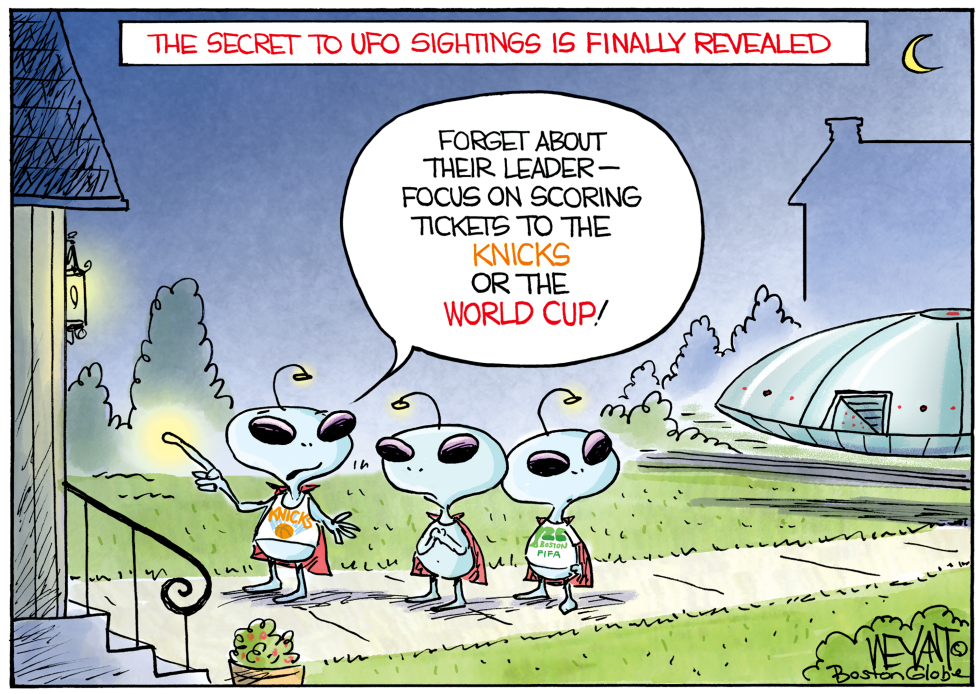
A cartoon published June 8 2026 shows three small aliens on a suburban lawn at night. One points toward a glowing house while a speech bubble urges focus on Knicks or World Cup tickets instead of their leader. A domed UFO rests on the grass nearby. The top banner states the secret to UFO sightings is finally revealed. The scene ties high demand for major sports events to unexplained aerial phenomena.
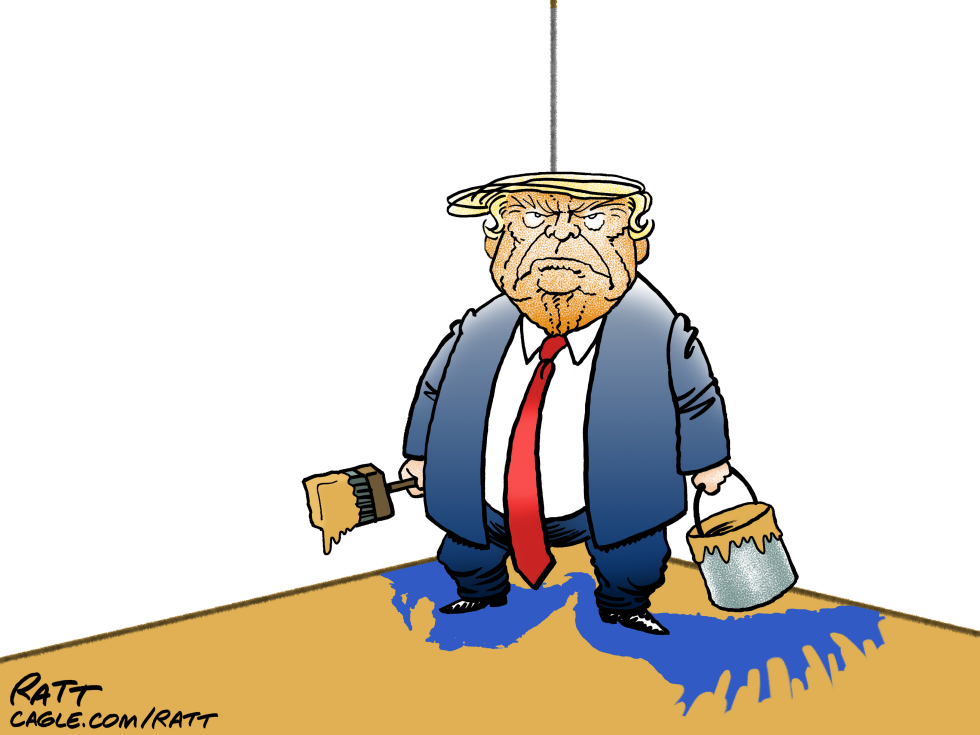
Donald Trump appears in a 2026 editorial image holding a paintbrush and bucket while standing on a blue painted area resembling the Strait of Hormuz. The scene responds to ongoing concerns over Iranian oil routes, potential conflict, and resulting effects on global oil and gas prices. The visual shows the figure applying paint that creates a path leading to restricted movement.