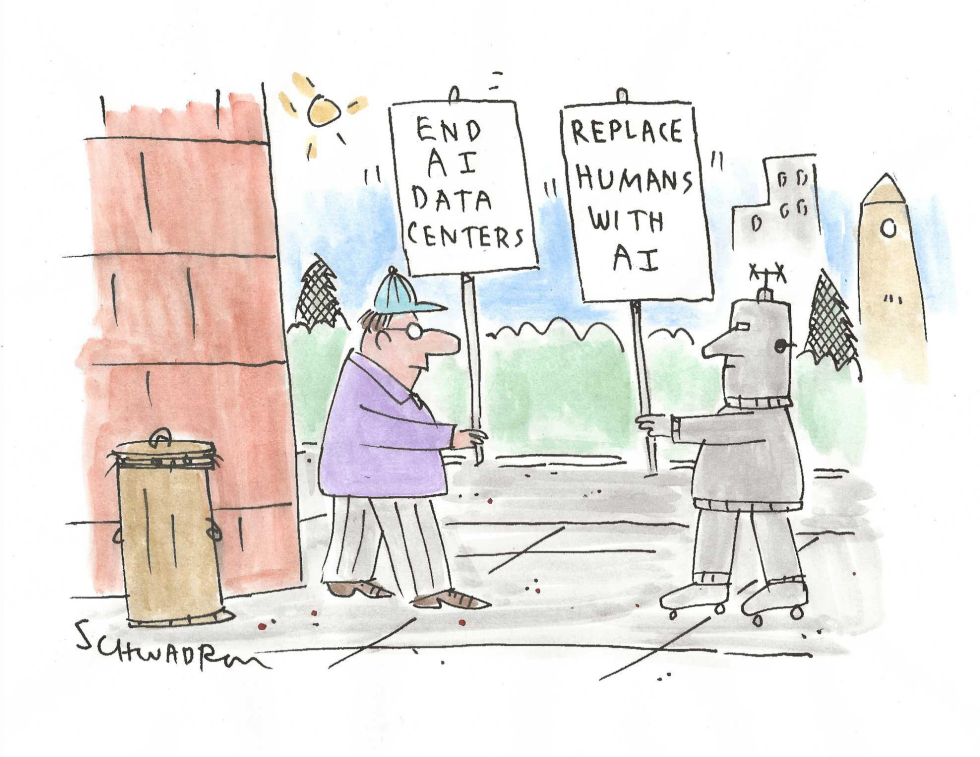
Public demonstrations against AI data centers and for replacing human workers with artificial intelligence underscore growing societal friction over the technology's rapid expansion. Data centers powering AI systems face criticism for energy demands and environmental costs, while automation threatens widespread job losses across sectors. The cartoon illustrates these contradictory positions through direct confrontation between a human protester and a robotic counterpart. This reflects ongoing debates where environmental concerns clash with arguments for efficiency gains from AI. The piece takes a neutral stance, simply presenting the absurdity of simultaneous opposition to and advocacy for AI dominance without resolving the tension.
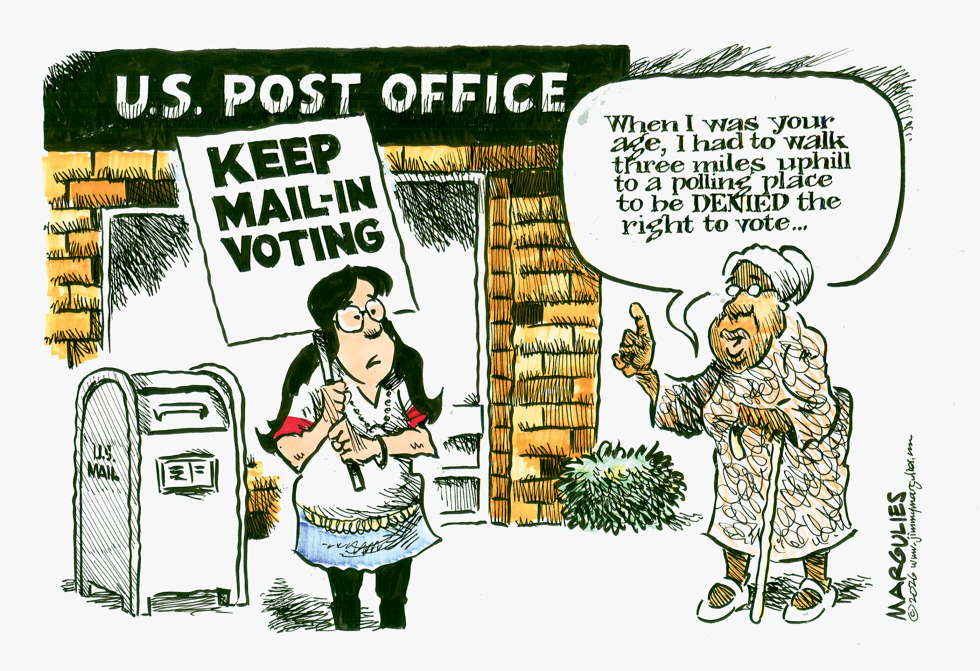
A protest sign at a U.S. Post Office calls for an end to mail-in voting. The cartoon responds to ongoing state-level efforts to restrict mail ballots after expanded use in recent elections. Such limits disproportionately affect older voters and those with mobility issues who previously faced physical barriers at polling places. The piece argues that rolling back mail-in options revives the very obstacles elderly citizens once endured, undermining broader access to the ballot.
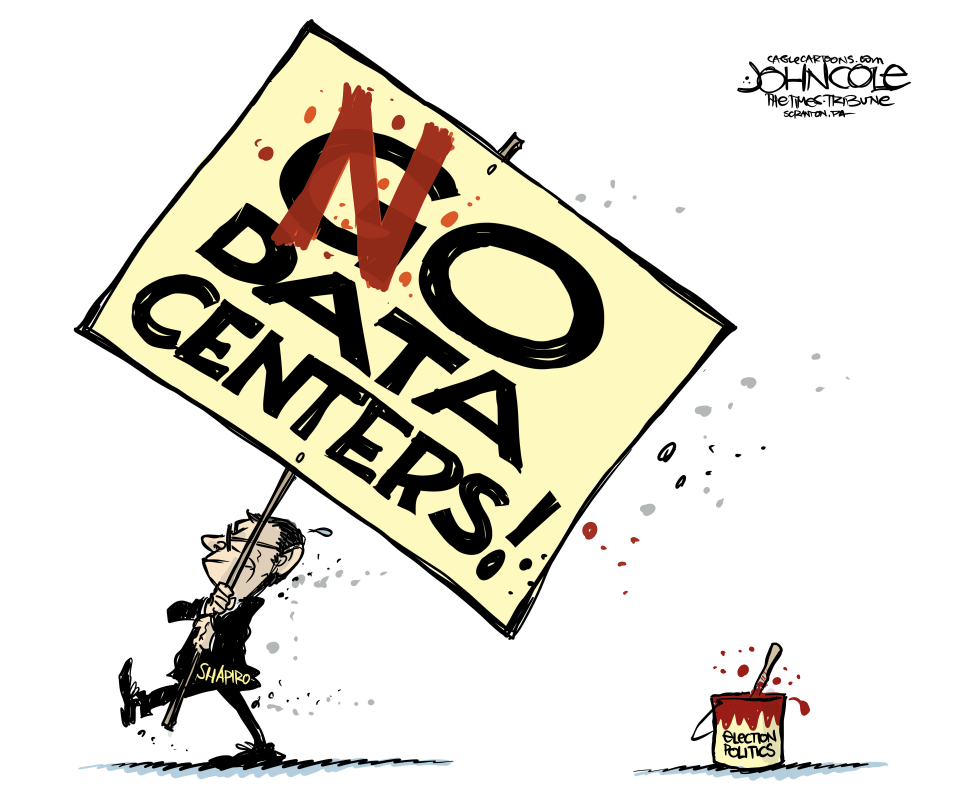
Pennsylvania Governor Josh Shapiro has adjusted his public position on data centers during the 2026 election cycle. The move comes as local communities raise concerns over energy use and land development tied to new facilities. Shapiro now appears to soften earlier opposition. The editorial takes the view that the shift reflects standard campaign maneuvering rather than a substantive policy evolution.
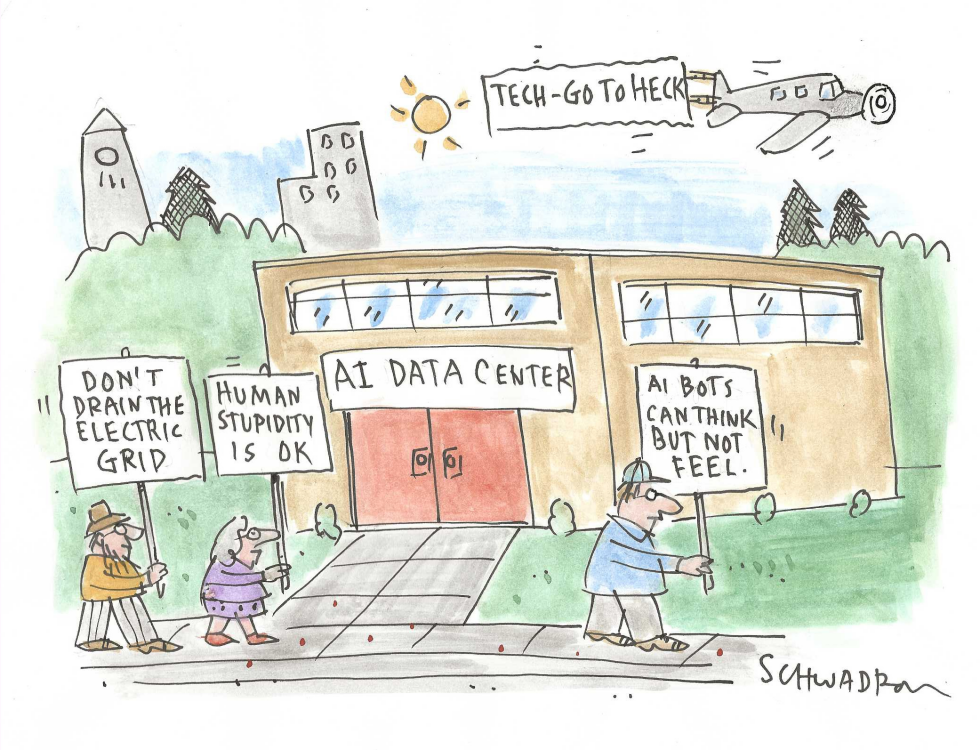
Protesters gather outside an AI data center building holding signs that read 'DON'T DRAIN THE ELECTRIC GRID,' 'HUMAN STUPIDITY IS OK,' and 'AI BOTS CAN THINK BUT NOT FEEL.' An airplane tows a banner reading 'TECH-GO TO HECK' overhead. The cartoon by Harley Schwadron, published July 31, 2026, depicts public opposition to the energy demands of AI facilities amid ongoing debates about data center impacts on electricity grids and technology development.
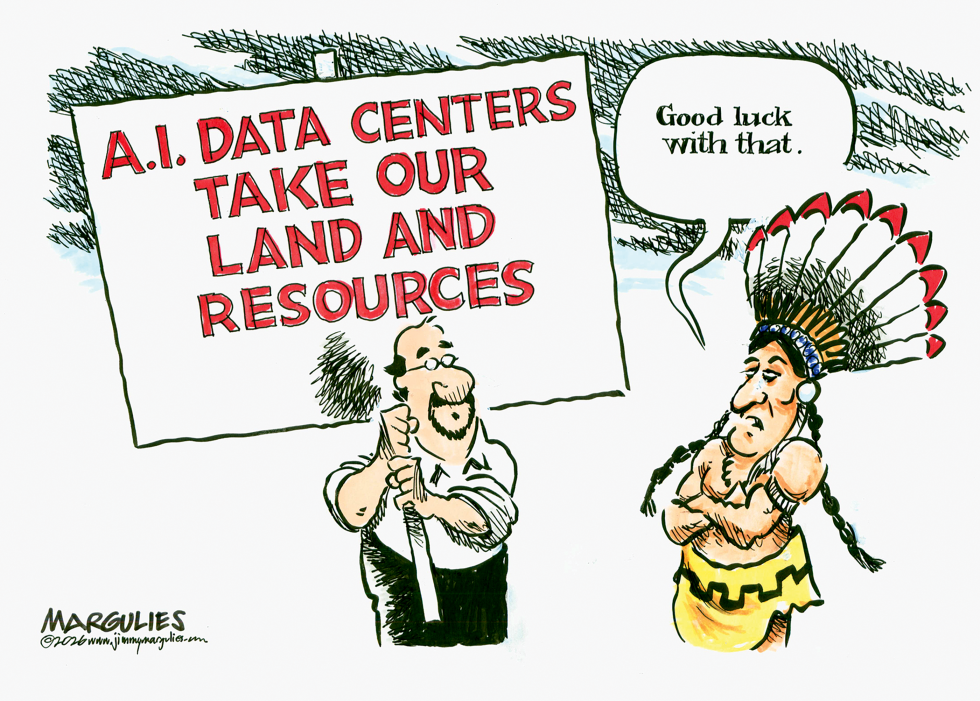
A man holds a sign protesting AI data centers taking land and resources. A Native American protester responds with skepticism. The July 2026 cartoon addresses growing conflicts between technology infrastructure and land use claims.
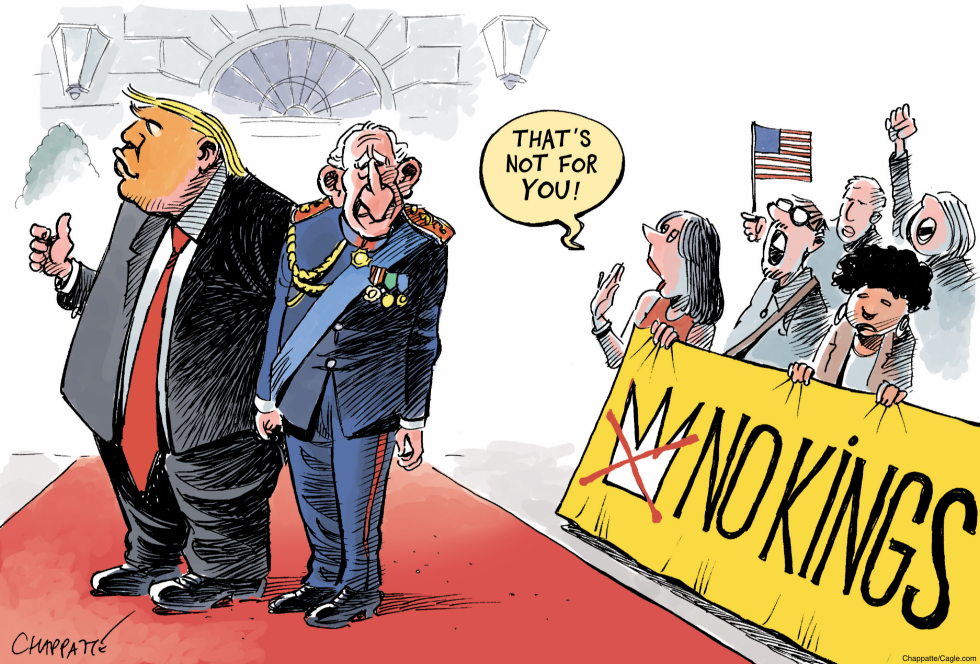
Patrick Chappatte's cartoon captures a fictional royal visit in Washington DC, where Trump, with his signature hair and suit, walks arm-in-arm with King Charles in full regalia. A group of protesters, waving a USA flag, holds a yellow sign featuring a crossed-out crown and 'NO KINGS,' while one shouts 'That's Not For You!' The scene tags USA, Great Britain, Trump, King Charles, monarchy, Democrats, demonstrations, United Kingdom, blending humor on transatlantic relations and anti-monarchy sentiments in a clearly visible setup on a red carpet against a grand building backdrop. The dry satire highlights visible contrasts without deeper inference.
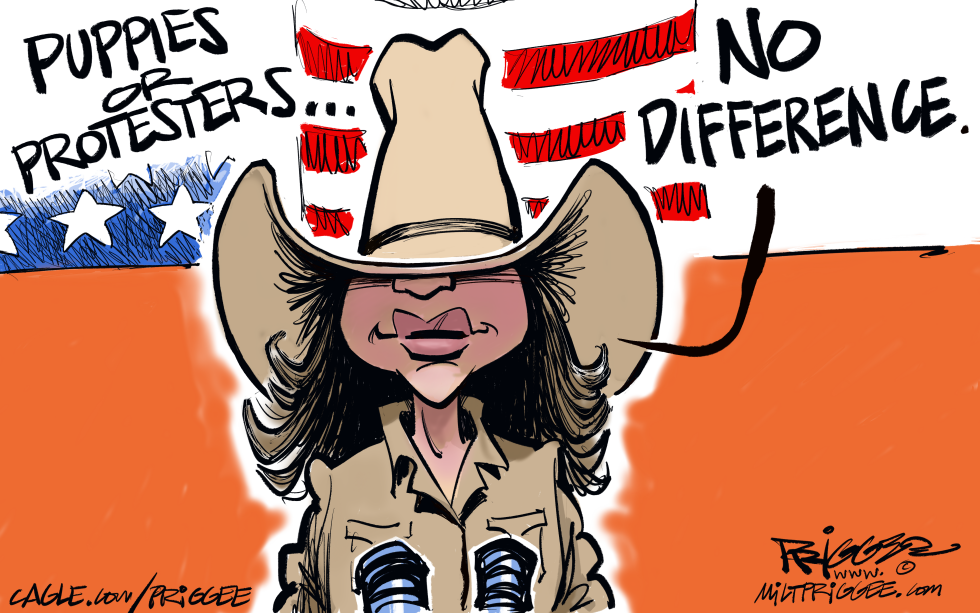
Dive into this irreverent political cartoon where a smirking, cowboy-hatted caricature, reminiscent of South Dakota's Kristi Noem, drawls that there's 'no difference' between puppies and protesters. With an American flag-adorned hat and a backdrop of scribbled disdain, the image skewers the GOP criticism surrounding Noem's infamous puppy shooting controversy. It's a sharp jab at conservative politics, blending animal cruelty debate with protest rights in a way that's both humorous and insightful. The satire underscores how some rancher lifestyle defenders might blur lines between disciplining unruly pets and quelling freedom of speech advocates. Created by Milt Priggee, this viral cartoon captures public outrage and media scandal, potentially eyeing Noem's Trump VP pick ambitions. Overall, it's a witty commentary on the absurdities of political figures who shoot from the hip—literally.
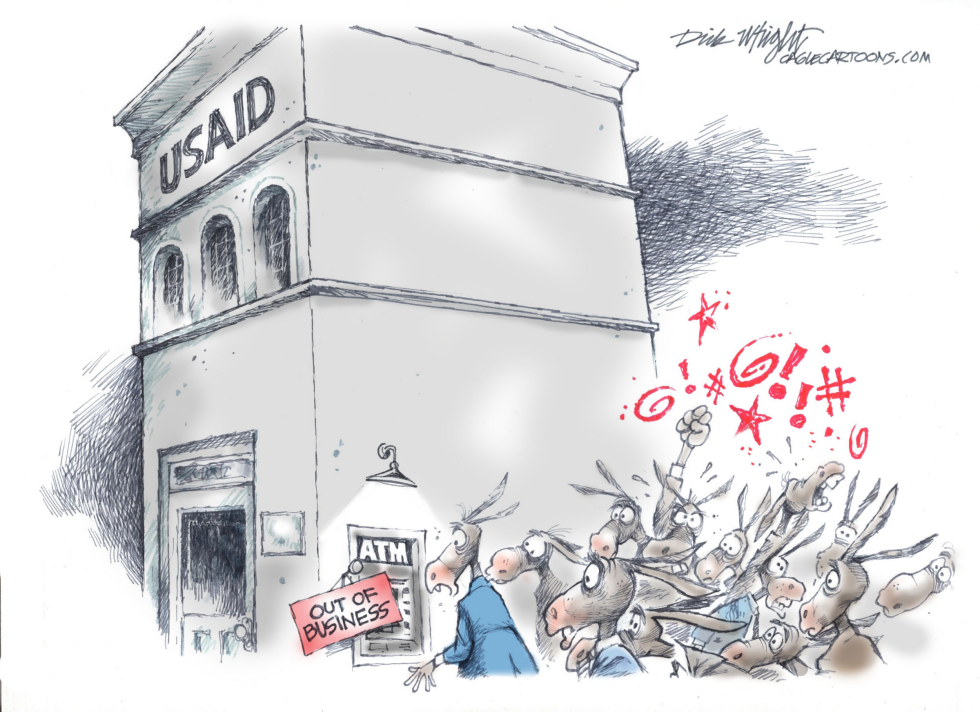
The cartoon depicts the USAID headquarters with its ATM marked out of business. A crowd of donkeys symbolizing Democrats reacts with anger and raised fists. The scene responds to the Trump administration's 2025 moves via DOGE to cut foreign aid programs viewed as wasteful or agenda-driven.