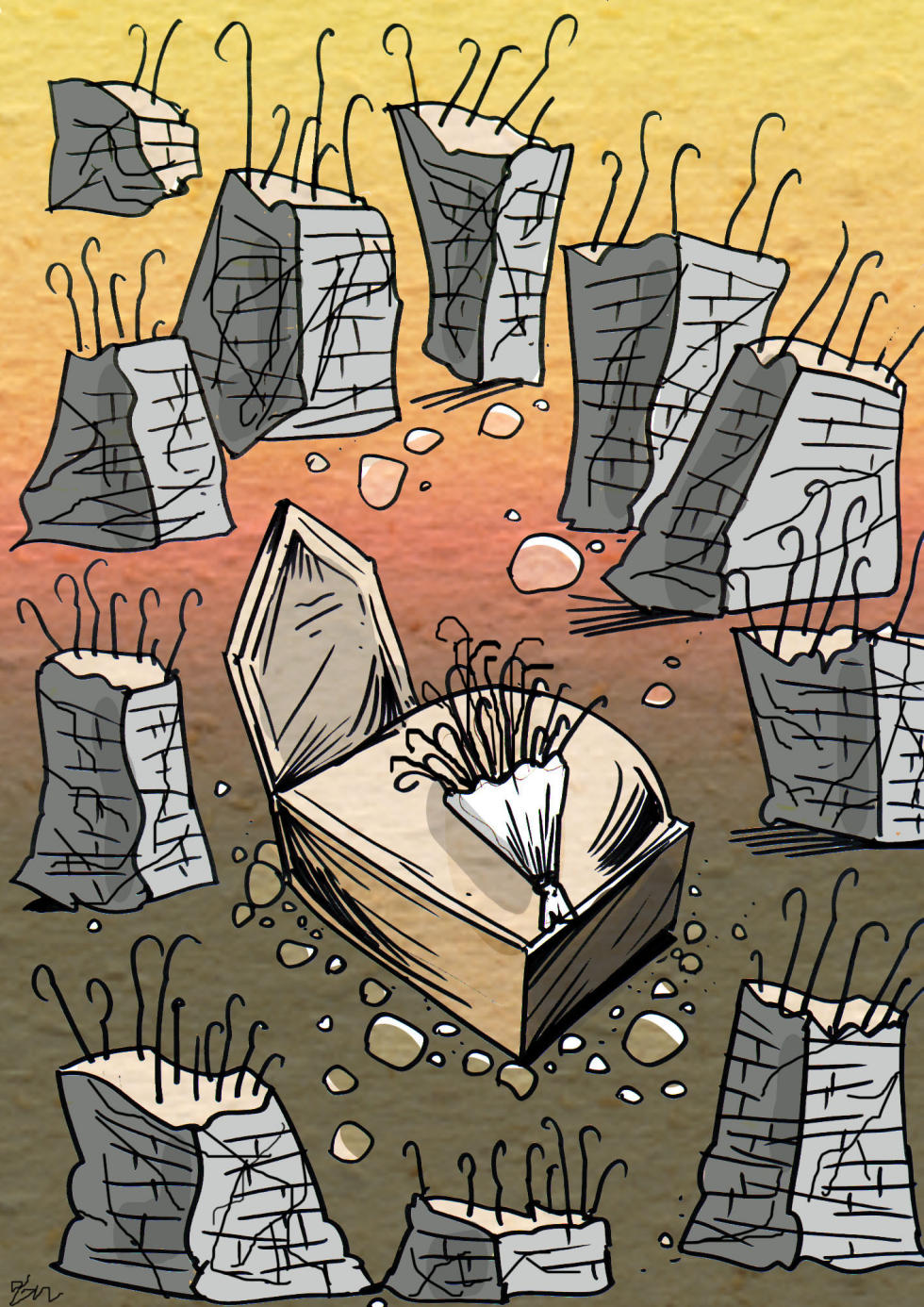
No single dated event anchors this image. It addresses the ongoing pressure on books and ideas from censorship, bans, and cultural conflict. The piece argues that literature and open inquiry remain vulnerable yet resilient amid surrounding threats.
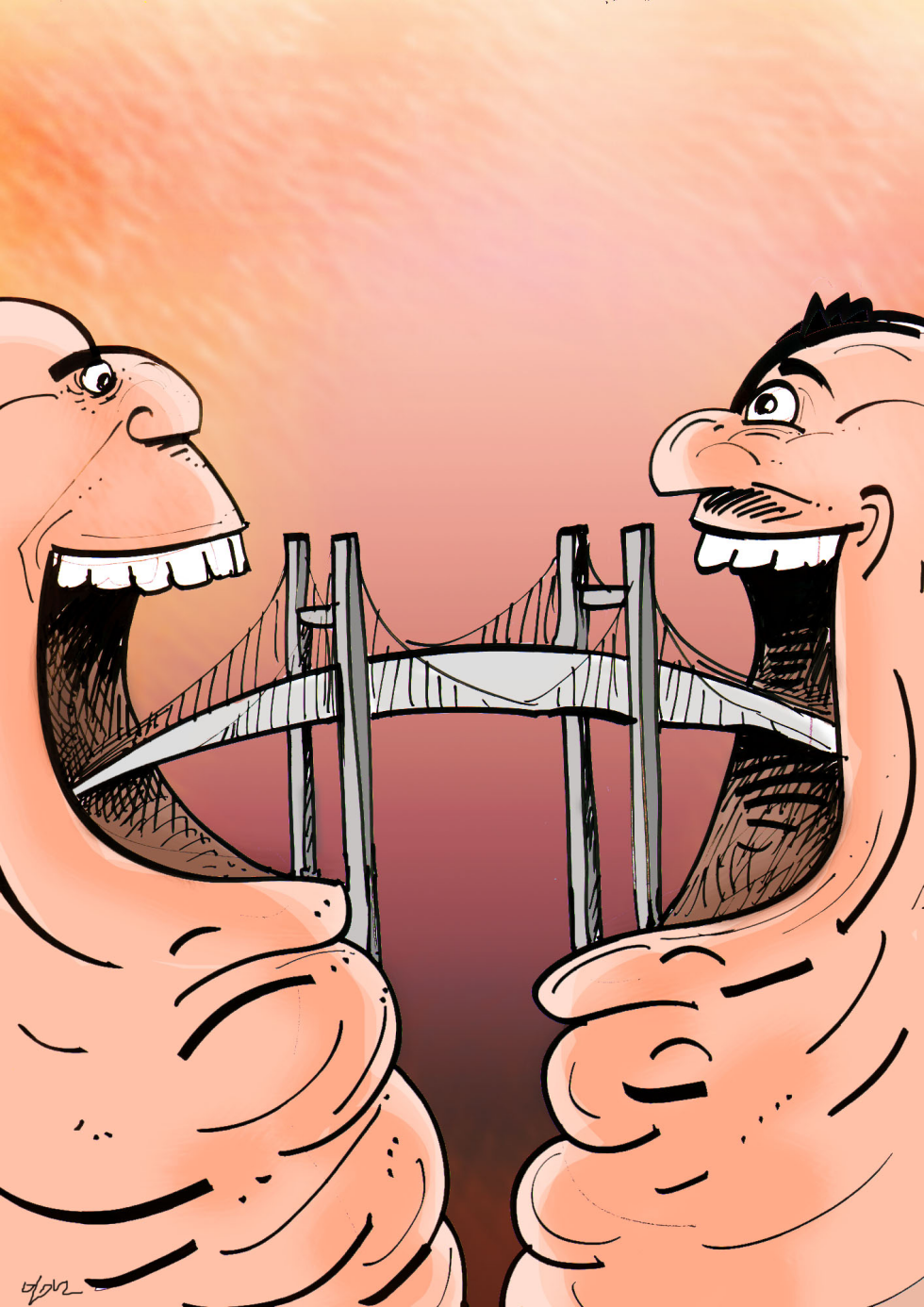
Political leaders from opposing camps are locked in a struggle over control of a major infrastructure initiative. The dispute highlights how shared projects become battlegrounds for influence and credit. The cartoon portrays the tension as each side seeks dominance rather than cooperation, underscoring risks to timely completion and public benefit.
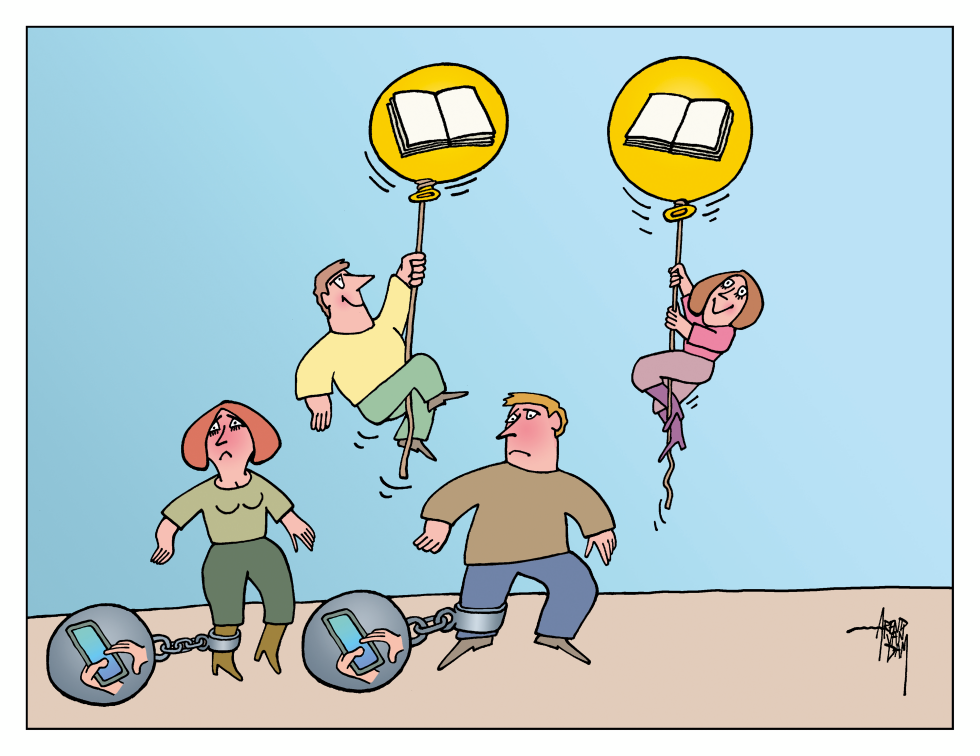
The ongoing debate over digital devices versus traditional reading materials continues to highlight how constant smartphone use can limit personal growth and mobility. Books, by contrast, offer pathways to broader perspectives and advancement. The editorial position favors reading as a superior force for individual upliftment over reliance on handheld technology.
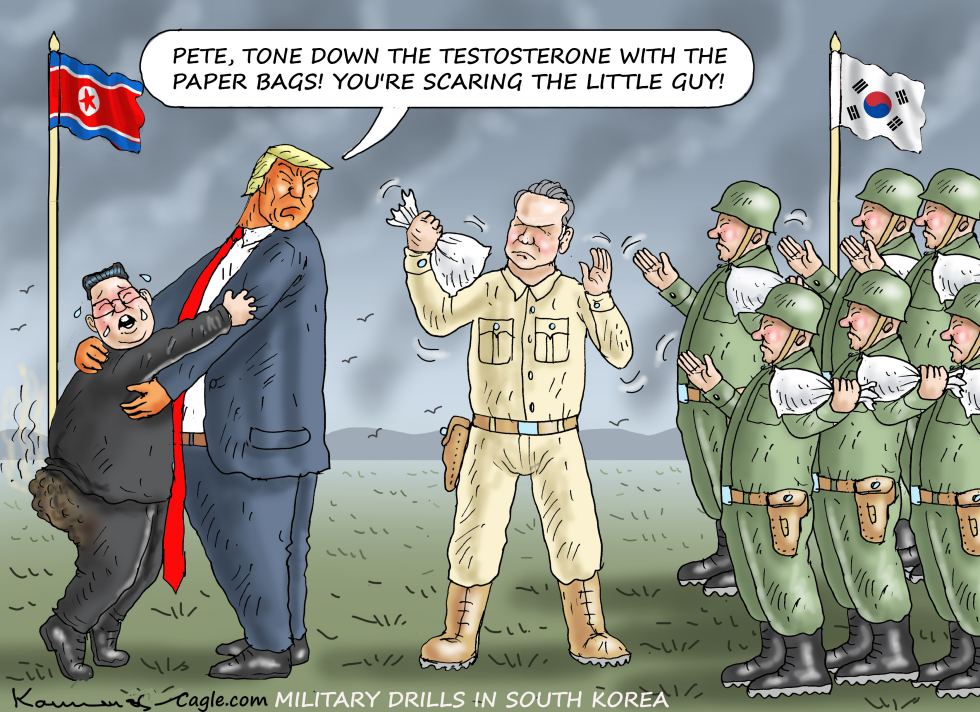
US and South Korean forces conducted joint military drills in mid-August 2026, prompting sharp North Korean protests over perceived threats. Donald Trump appeared at the scene restraining Kim Jong-un while a uniformed figure urged restraint with paper bags to calm the North Korean leader. The image frames the drills as overly provocative and mocks the testosterone-driven posturing on all sides.
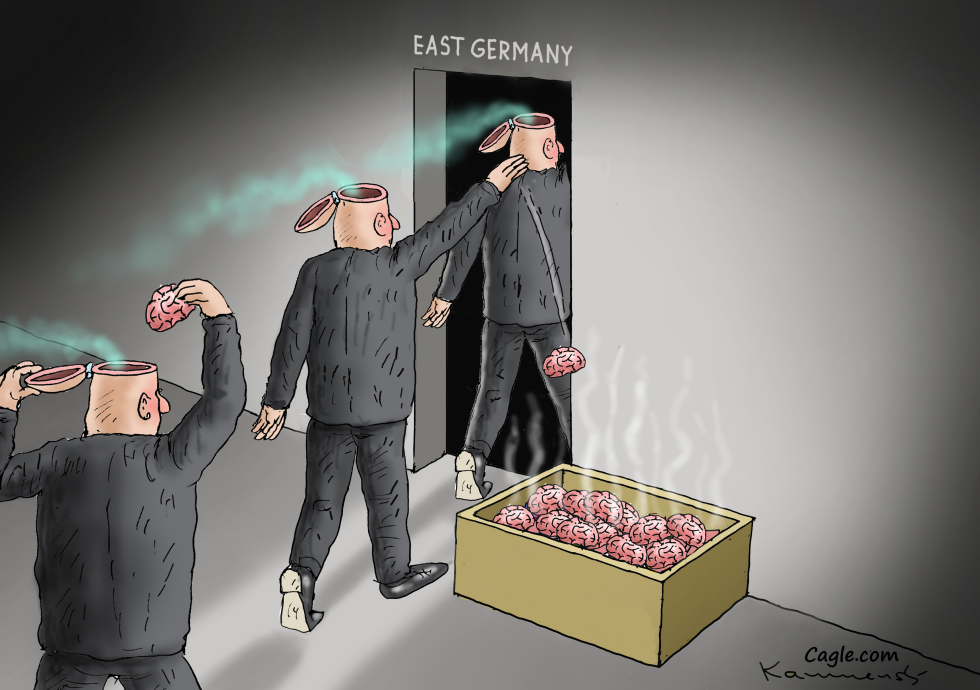
The cartoon responds to the enduring perception of East Germany as a place where independent thought is incompatible with entry. It depicts men voluntarily removing their brains before crossing the threshold. The editorial position frames the regime as one that demands the surrender of reason.
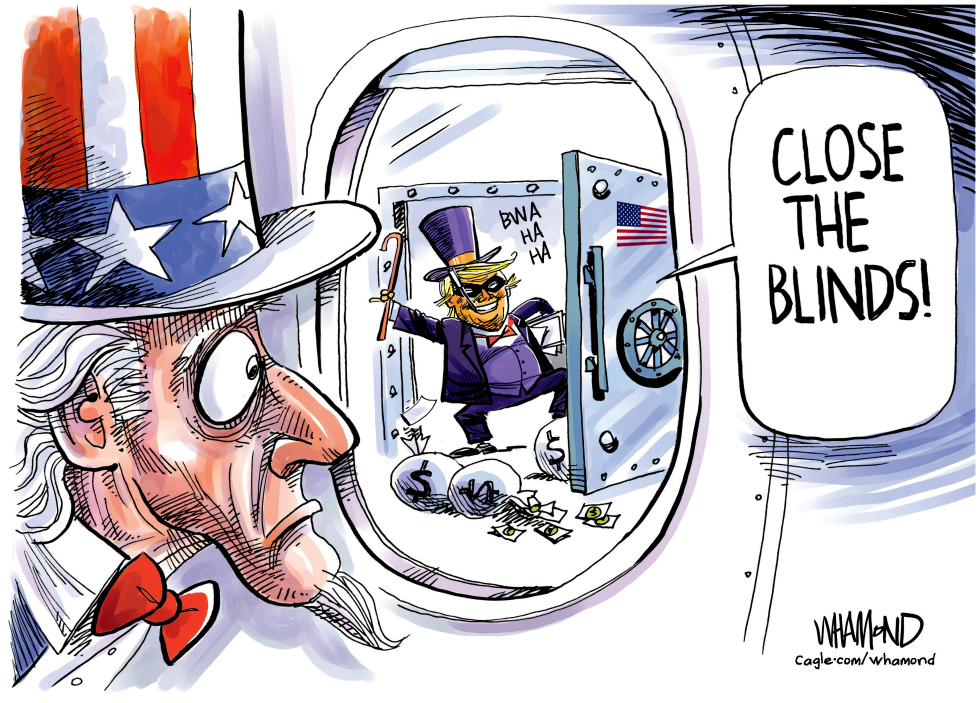
Donald Trump appears inside an open government vault surrounded by spilling money bags and orders the blinds closed. The scene highlights concerns over financial secrecy and lack of transparency in high office. The piece takes the position that such actions undermine public trust in how funds are handled.
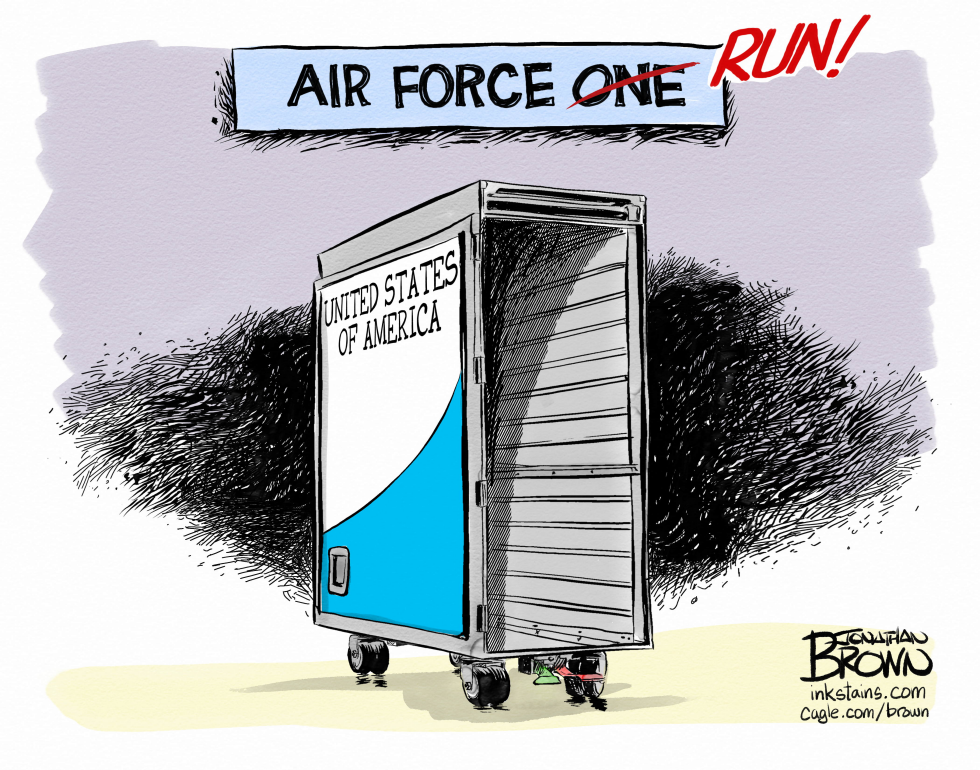
A wheeled airline catering cart occupies the center of the frame, painted in the livery of the presidential aircraft: white upper body, curved blue lower panel, and UNITED STATES OF AMERICA lettered down the side. Its full height door hangs open on empty wire shelving. Above it a pale blue placard reads AIR FORCE ONE, with ONE struck through in red and RUN! added beside that word in the same color. Two neckties poke out from between the casters underneath, one of them the long red tie Donald Trump is known for, the only trace of the men folded up inside. The drawing responds to reports that Trump sheltered in an airline galley cart against an assassination threat traced to Iran, turning the most recognizable branding in presidential aviation into an instruction to flee. Jonathan Brown signed the lower right corner alongside inkstains.com and Cagle.com/brown.
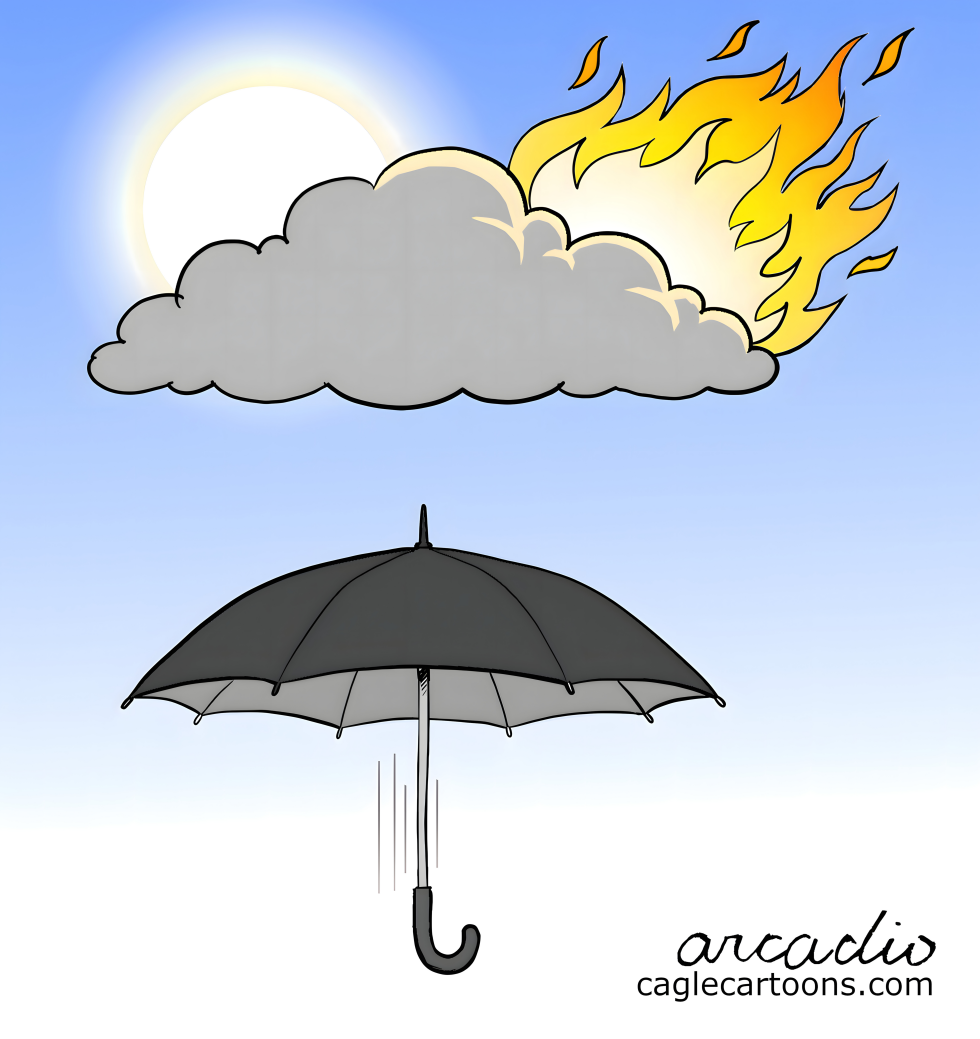
Persistent heat and drought conditions continue across affected regions with little precipitation relief. A fiery cloud formation underscores the absence of expected rain despite visible preparations for it. The piece highlights the ongoing mismatch between anticipated weather relief and actual dry, burning conditions.
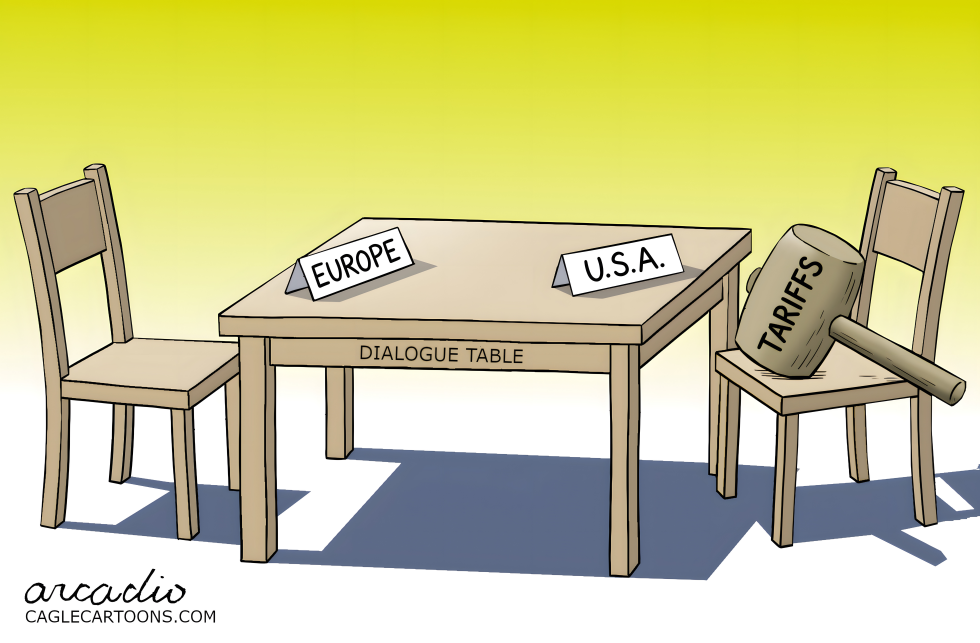
US and European officials face renewed friction over trade measures as tariffs disrupt scheduled talks. The impasse highlights ongoing disputes on import duties and market access that affect supply chains and consumer prices on both sides of the Atlantic. The editorial position criticizes the tariff approach for preventing constructive engagement and prolonging economic uncertainty.
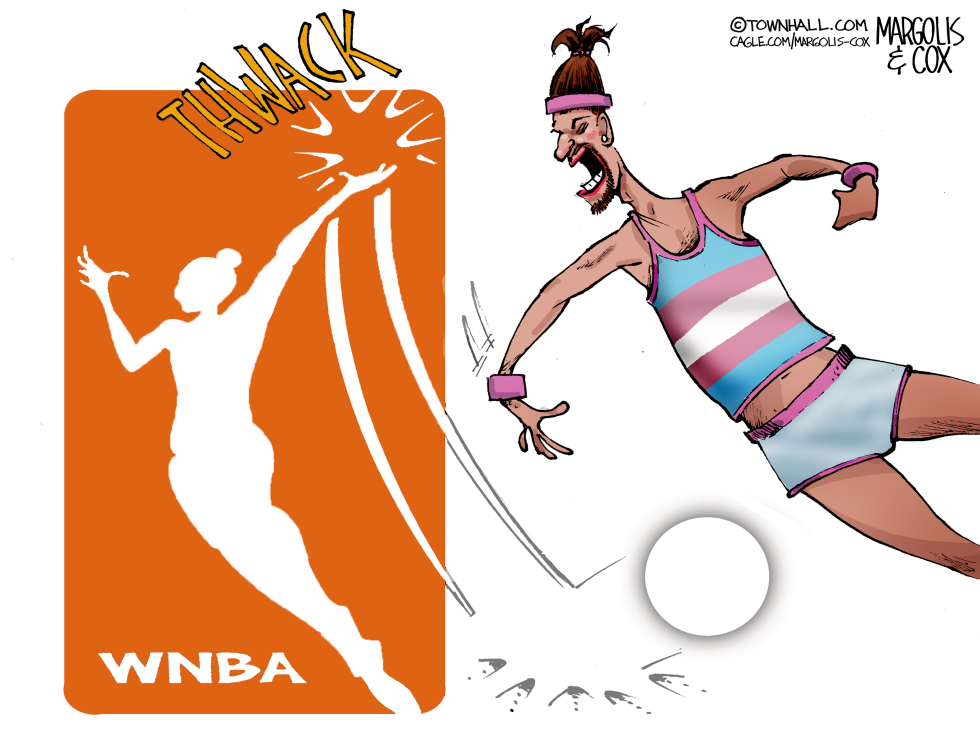
A transgender athlete in women's basketball draws renewed scrutiny as debates over fairness and eligibility persist in professional leagues. The piece critiques the inclusion of biological males in female competitions.
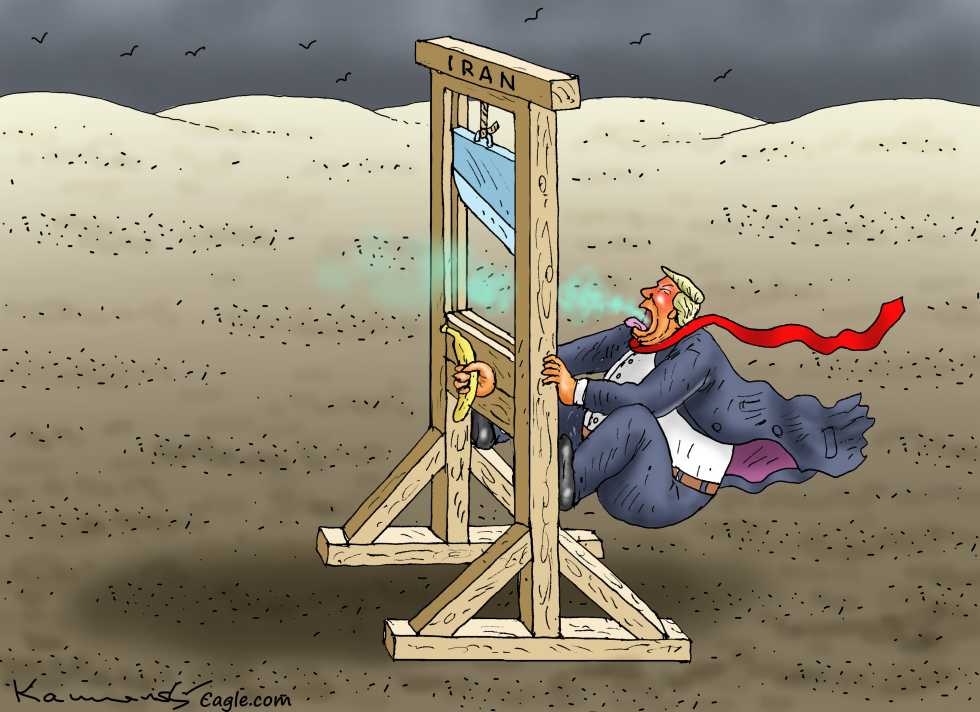
Donald Trump encounters a mishap involving a guillotine marked Iran during a desert encounter. The incident highlights ongoing tensions in U.S. relations with Iran amid shifting political dynamics. The depiction underscores risks and missteps in handling foreign policy challenges with that nation.
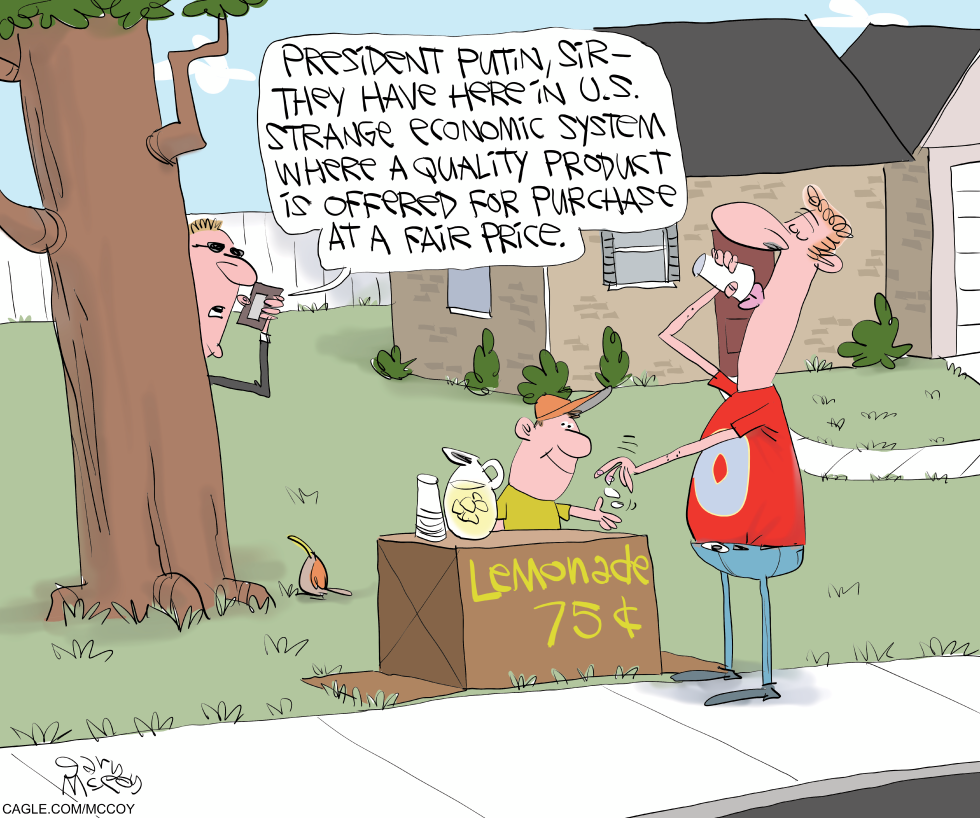
A cartoon depicts a man explaining the U.S. free-market system of offering quality goods at fair prices to President Putin during a phone call next to a child's lemonade stand. The scene underscores the perceived strangeness of American capitalism from a Russian perspective. The editorial position critiques the disconnect between market-driven economies and state-controlled systems.
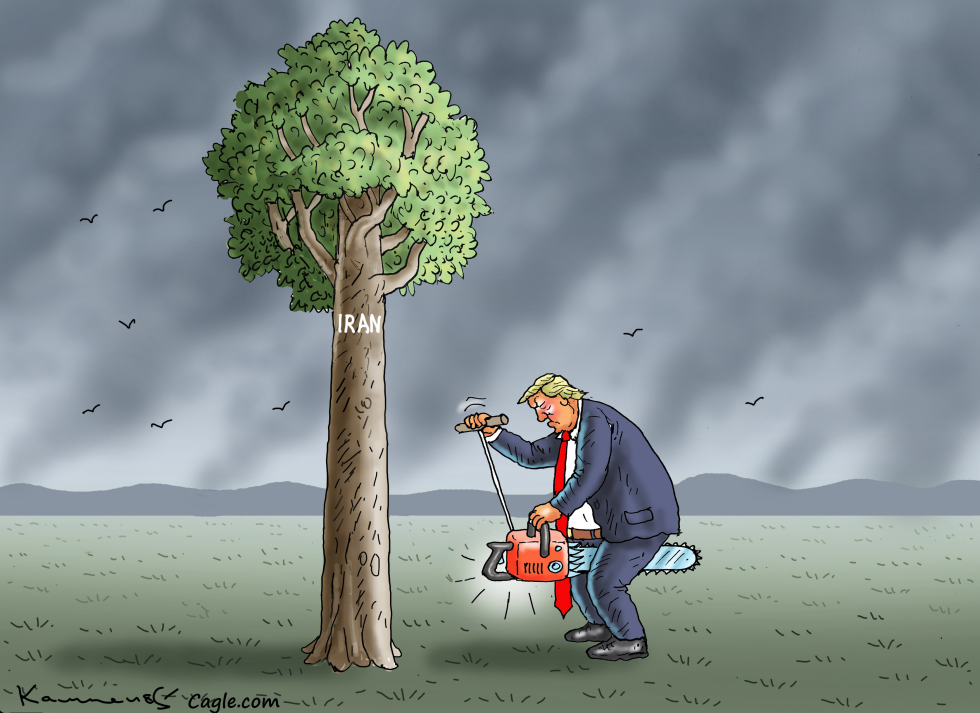
Donald Trump is shown actively cutting down a tree labeled Iran with a chainsaw on August 6, 2026. The image responds to ongoing tensions in US-Iran relations and debates over forceful policy measures. The editorial position criticizes the aggressive stance as reckless and destabilizing.
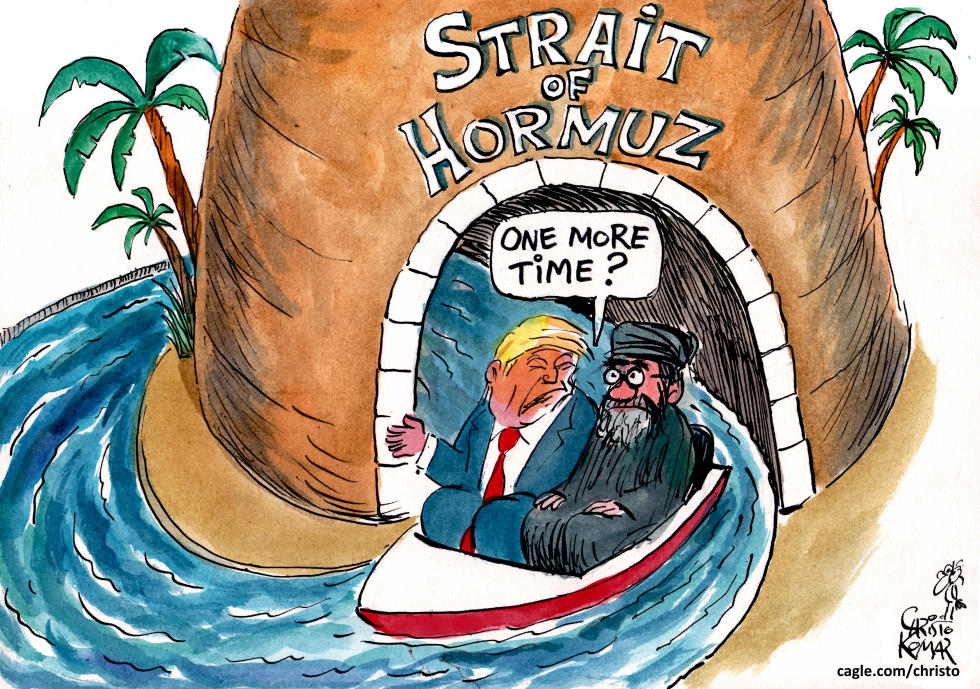
On August 5 2026 renewed friction over shipping lanes in the Strait of Hormuz draws attention as former President Donald Trump appears alongside Iran's Supreme Leader in a symbolic return to the chokepoint. The episode underscores ongoing US-Iran friction over energy exports and naval presence. The piece portrays the pair repeating a risky transit that highlights persistent strategic vulnerabilities in the Persian Gulf.
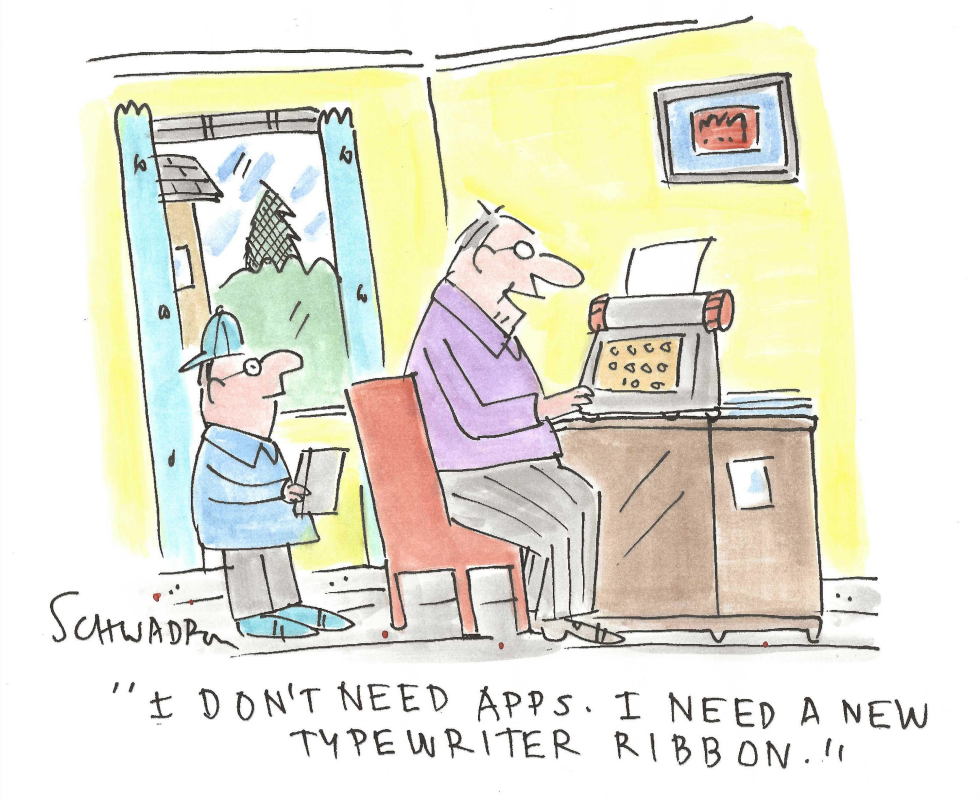
An elderly office worker continues using a manual typewriter despite widespread adoption of digital applications. The man explicitly states he requires only a replacement ribbon rather than any software tools. This reflects an ongoing generational divide where some older individuals maintain preference for analog equipment amid accelerating workplace digitization. The editorial highlights the persistence of traditional methods against pressure to adopt new technology.