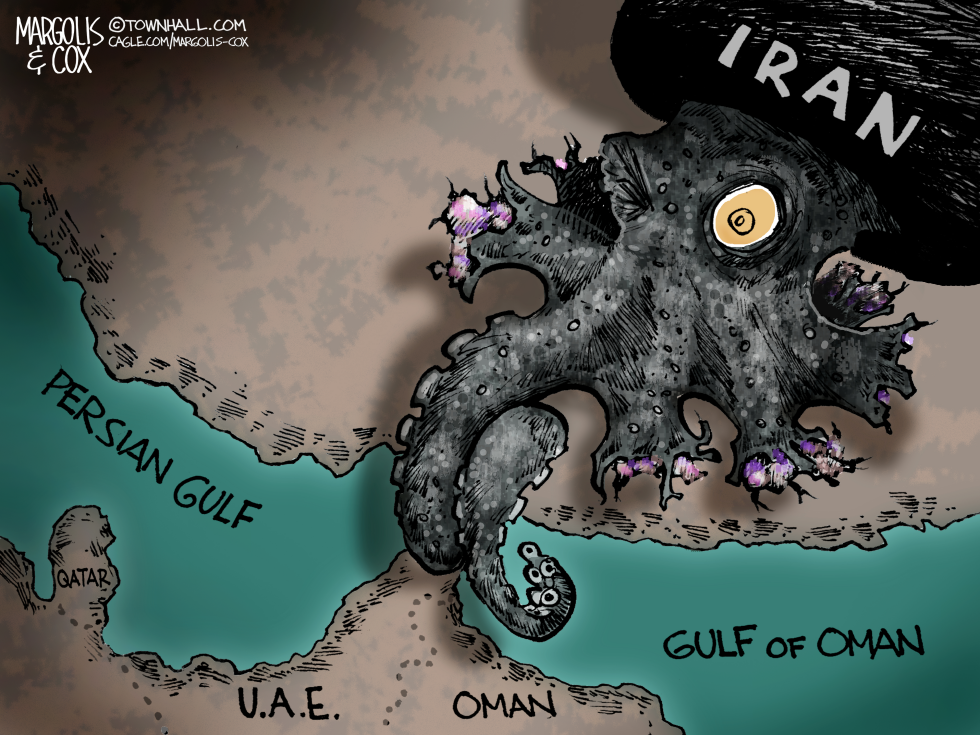
Cartoons like this one from Margolis and Cox cut straight to the absurdity of international posturing. Here, an oversized octopus labeled 'Iran' looms over a simplified map of the Persian Gulf and Gulf of Oman, its tentacles coiling tightly around the Strait of Hormuz. The creature's single eye glares out, while purple-tipped suckers grip the landmasses labeled Qatar, UAE, and Oman. It's a classic visual metaphor for control, poking at Iran's threats to block this crucial oil route. waterway. Such images remind editors how satire distills complex geopolitics into something shareable, even if the humor lands dry as desert sand. With tags like Iran Strait of Hormuz blockade, Persian Gulf tension, octopus metaphor, Middle East satire, oil route choke, and strategic dominance, the piece fits neatly into discussions of global energy security.
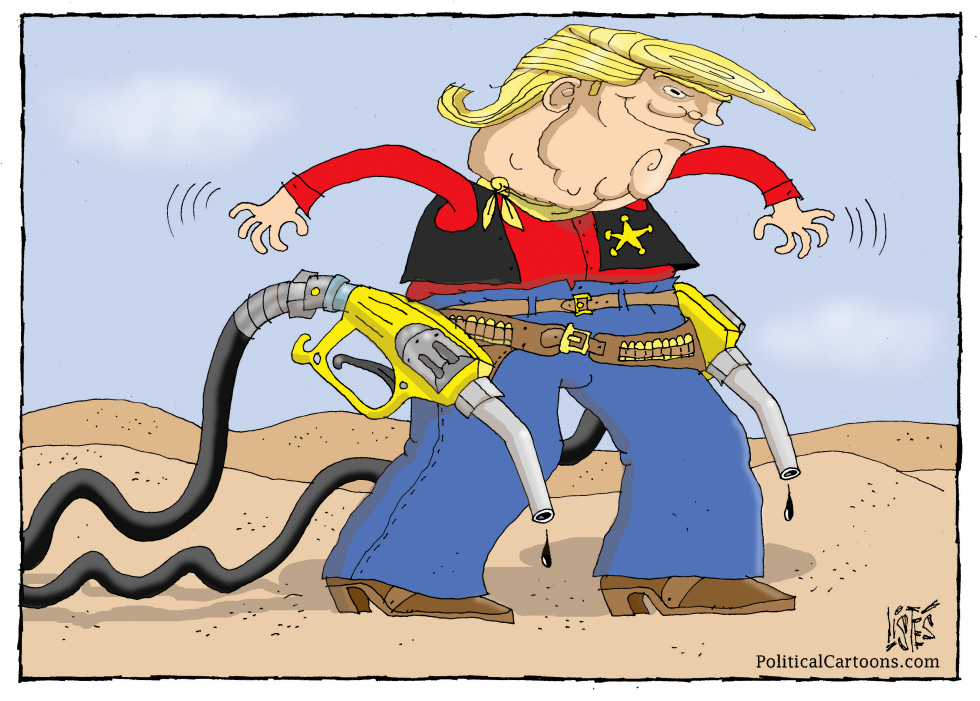
The March 2026 cartoon depicts President Trump as a sheriff in a desert landscape with a gas pump hose attached to his body. Fuel drips from the nozzle onto the sand while the long hose trails behind. The image responds to ongoing concerns over global oil supplies and potential disruptions tied to Iran. Publication occurs during heightened attention to energy markets and U.S. foreign policy in the Middle East.
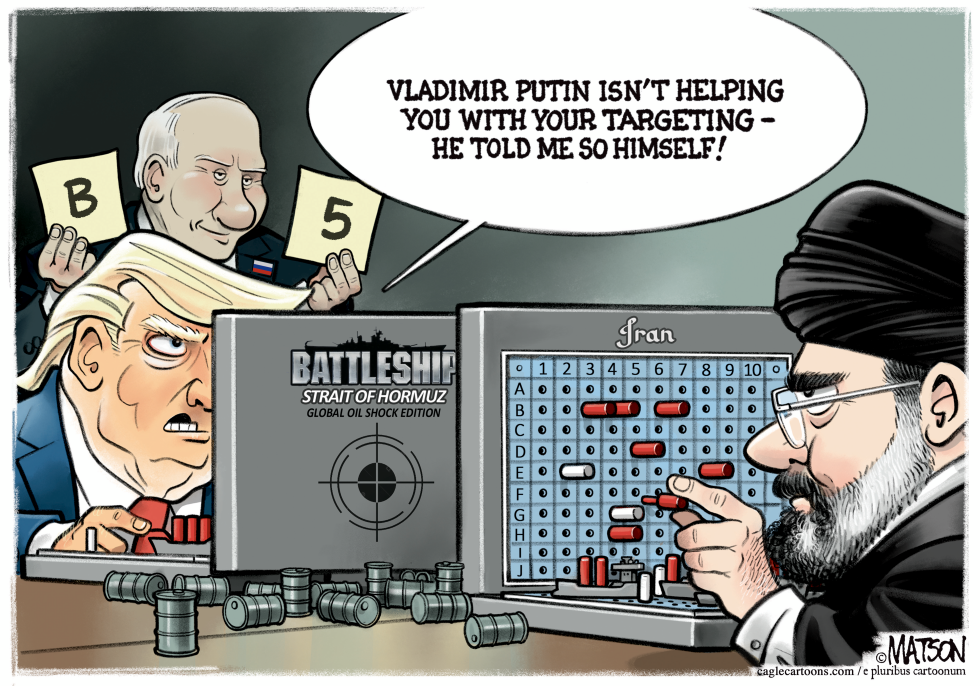
The cartoon shows Donald Trump, Vladimir Putin and Iran's Ayatollah Khamenei engaged in a Battleship match themed around the Strait of Hormuz and global oil shock. Putin holds B5 cards while denying help to Iran on targeting US assets, reflecting recent reports of Russian-Iranian military coordination and risks to international shipping and energy markets as of March 2026.
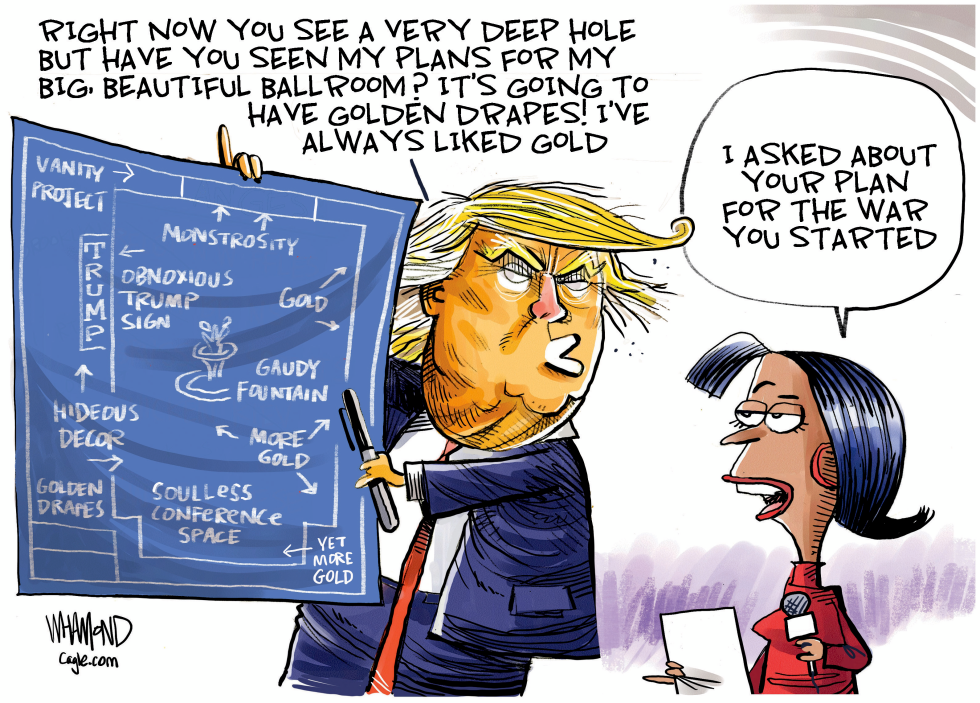
Dave Whamond's cartoon captures Trump in a classic pose, holding up a blueprint riddled with tags like vanity project, monstrosity, Trump obnoxious Trump sign, gaudy fountain, hideous decor, golden drapes, soulless conference space, and repeated calls for more gold. The scene unfolds with Trump enthusiastically describing a very deep hole for his big beautiful ballroom, emphasizing his love for golden drapes. A female reporter, microphone in hand, points out the mismatch, stating she asked about the plan for the war he started. This setup skewers Trump's apparent lack of strategy, turning serious inquiries about Iran war, no endgame, quagmire, military campaign, regime change, and improvising into a punchline about frivolous vanity. The dry humor lands on the contradictions, with Trump's focus on gaudy aesthetics over critical issues like troops in danger and boots on ground.
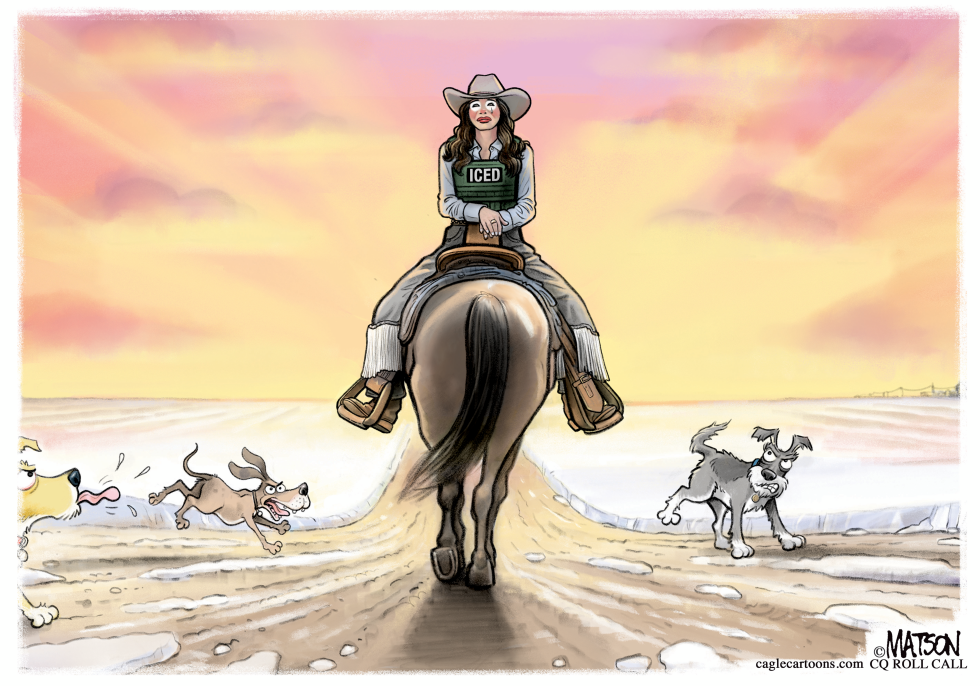
This sharp political cartoon captures an ICE agent, styled as a plucky cowgirl in a cowboy hat, galloping into a pastel sunset on her trusty horse, while a pack of frantic dogs—stand-ins for coyote smugglers—scatter in disarray. The 'ICED' vest adds a punny twist, perhaps nodding to the agency being put on ice amid heated immigration debates. With tags like political satire, border security, ICE criticism, cartoon dogs, western theme, and immigration policy, the image skewers the often chaotic world of enforcement, where even the bad guys (or dogs) get a comedic getaway. Matson's irreverent style shines through in this insightful jab at bureaucratic rodeos.
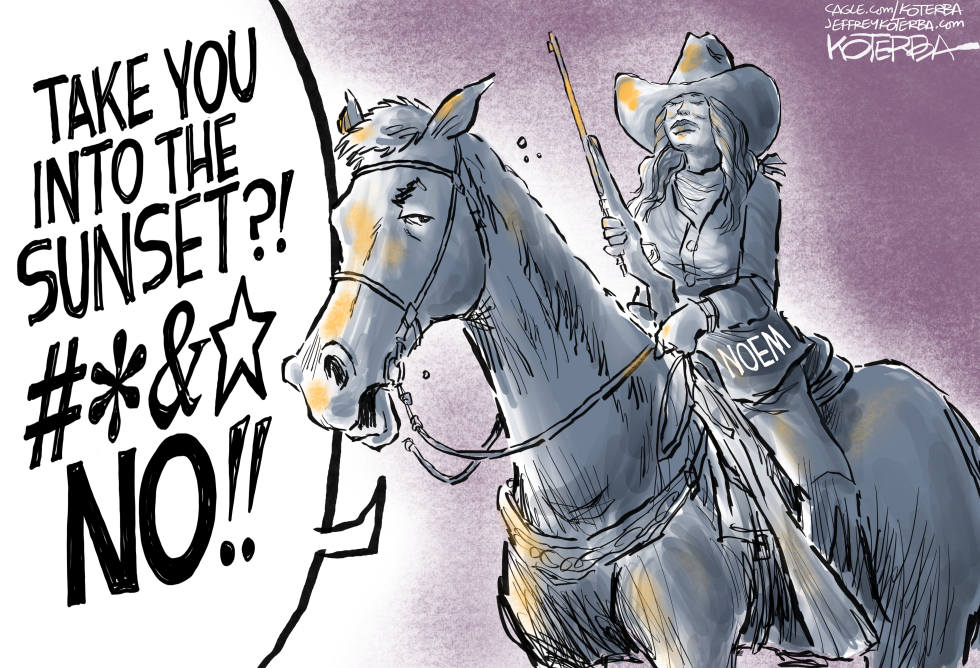
This Jeff Koterba political cartoon skewers Kristi Noem, the South Dakota governor embroiled in GOP scandal over her infamous dog-killing anecdote. Depicted as a cowgirl on a horse labeled 'NOEM,' the steed profanely refuses to 'take you into the sunset,' symbolizing the abrupt halt to her rising star in conservative politics, particularly her dashed hopes as a Trump VP pick. The humorous rejection underscores the backlash from animal cruelty revelations, blending satire with sharp commentary on Republican controversy and election humor. Viral potential lies in its irreverent take on political downfall, making it a shareable gem in American politics discourse.