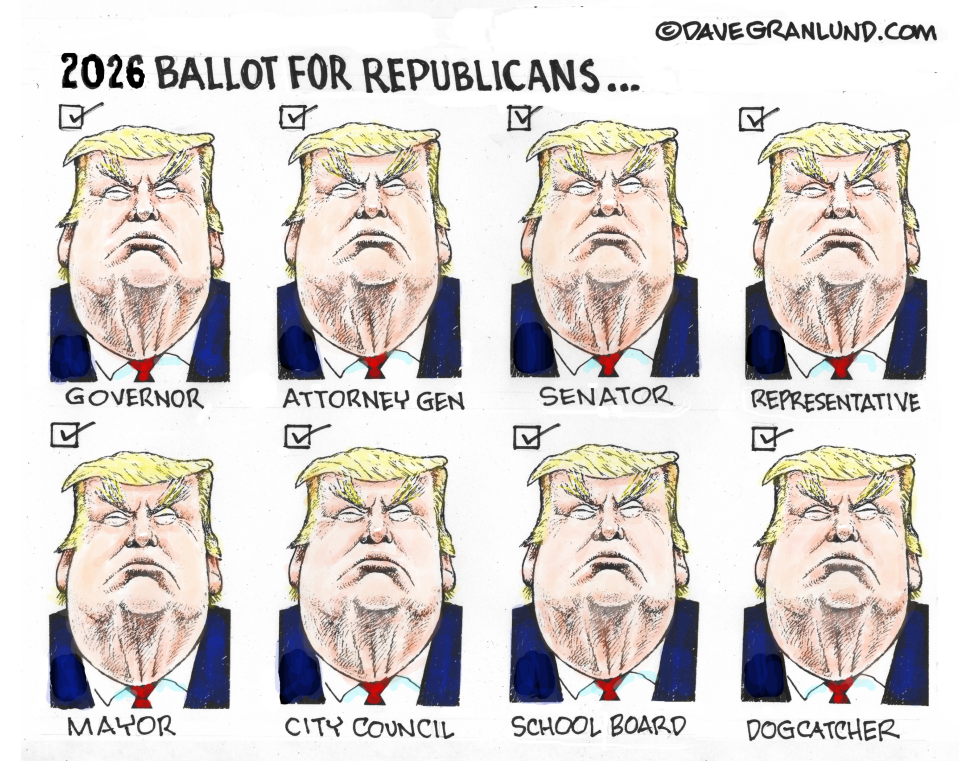
The cartoon depicts eight identical caricatures of Donald Trump filling every position on a 2026 Republican ballot, from governor and attorney general down to dogcatcher. Each image carries a checkmark, underscoring the editorial point that Trump loyalty has become the sole qualification for GOP candidates at every level. Published September 11, 2026, the image comments on the ongoing consolidation of Republican primaries around Trump-aligned figures ahead of the midterm cycle. The visual repetition emphasizes how the former president's influence extends from high-profile statewide offices to local contests. This approach mirrors real-world patterns where Trump endorsements shape candidate selection across the party.
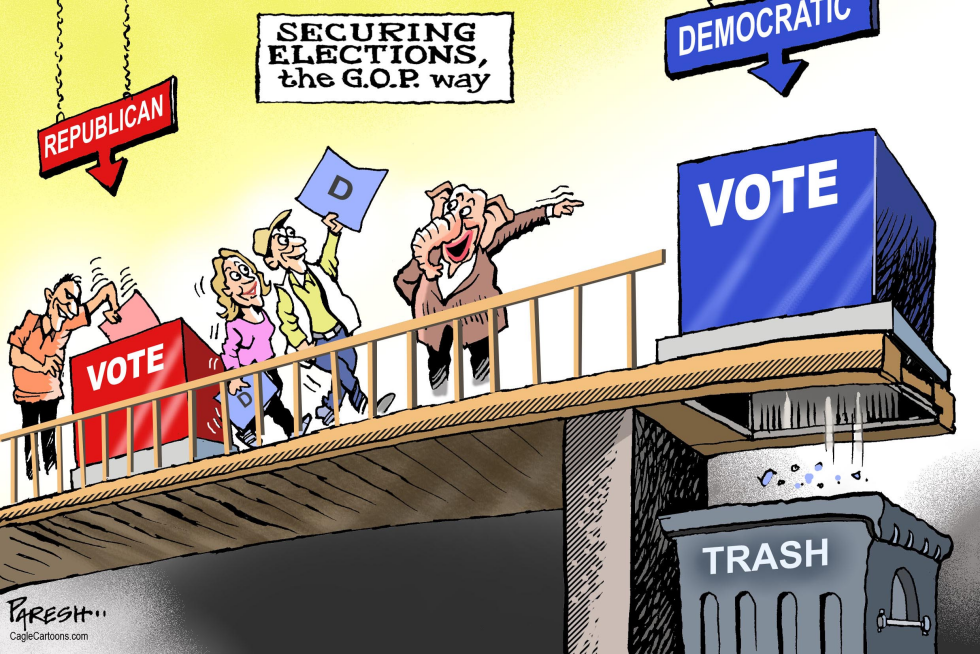
The cartoon depicts Republicans on a platform guiding a large blue vote box labeled Democratic into a trash can below while a red Republican vote box remains on the structure. A sign reads Securing Elections the G.O.P. way. The elephant symbol of the GOP points toward the action as figures including one holding a D flag stand nearby. The image comments on claims of election integrity by showing ballots from one party discarded. This reflects ongoing partisan debates over voting procedures and access as of the 2026 publication date.
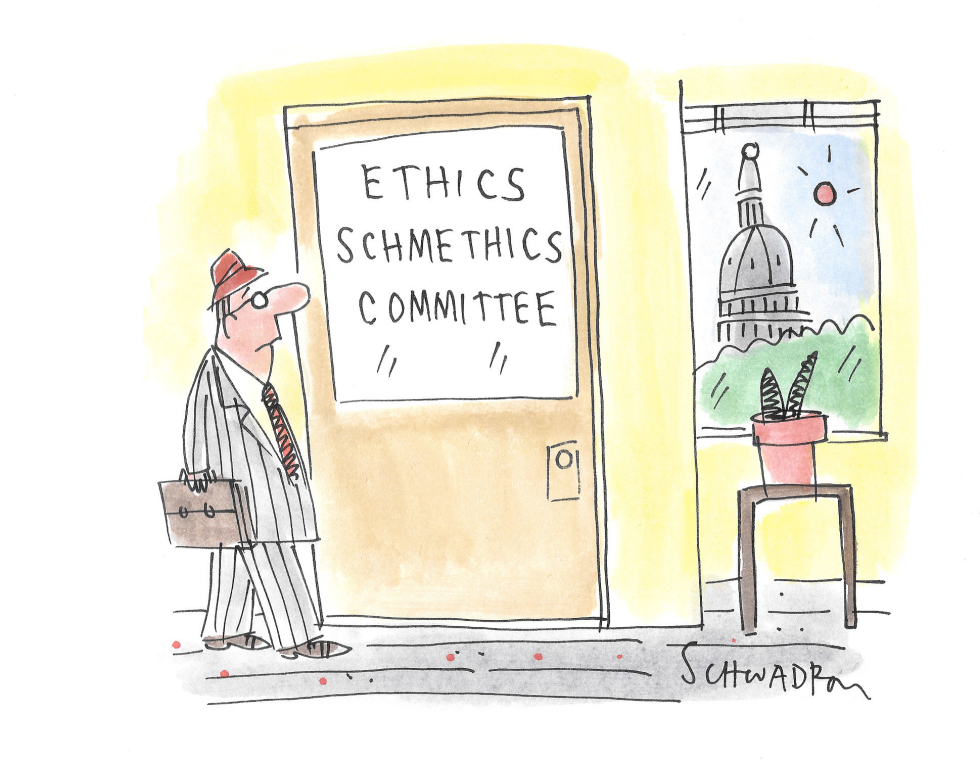
Congress continues to sideline meaningful ethics oversight, with lawmakers showing little interest in strengthening or even respecting the chamber's ethics committee. The panel exists on paper but carries little practical weight in daily operations. This dynamic matters because weak internal standards erode public trust in legislative institutions and invite outside influence. The cartoon captures the prevailing attitude that ethics rules are an afterthought rather than a core responsibility.
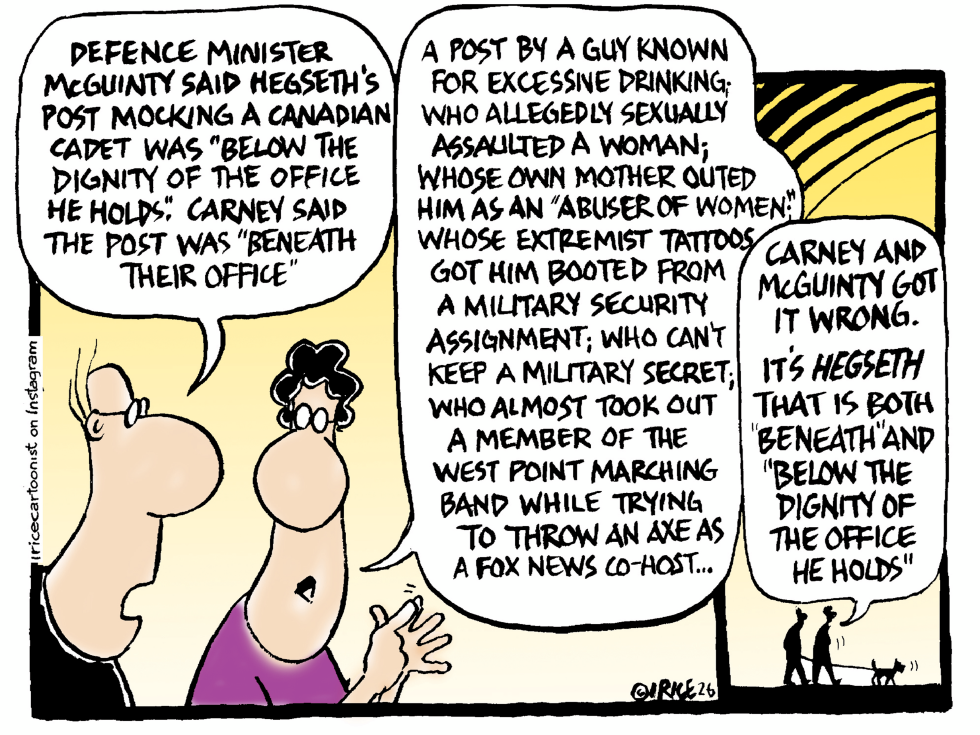
Canadian Defence Minister David McGuinty and Mark Carney publicly condemned a social media post by Pete Hegseth mocking a Canadian cadet, calling it beneath the dignity of the office. The remarks came amid Hegseth's nomination process for a senior U.S. defense position. The cartoon argues the ministers have the assessment backward, pointing instead to Hegseth's history of alleged misconduct, security clearance problems, and public incidents as the true disqualifiers. This reflects ongoing debate over nominee vetting standards and cross-border political commentary on U.S. appointments.
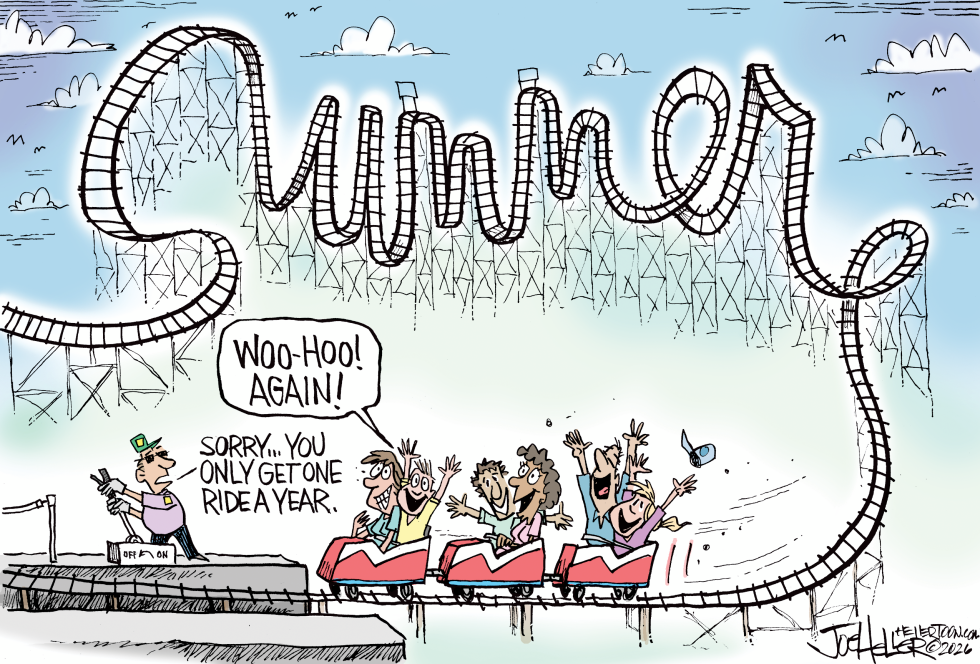
Late August brings the familiar end-of-summer realization that warm weather and leisure time feel fleeting. The cartoon depicts an amusement park enforcing a one-ride-per-year policy on a coaster shaped like the word summer. The editorial position highlights how quickly the season passes and how little time remains for enjoyment.
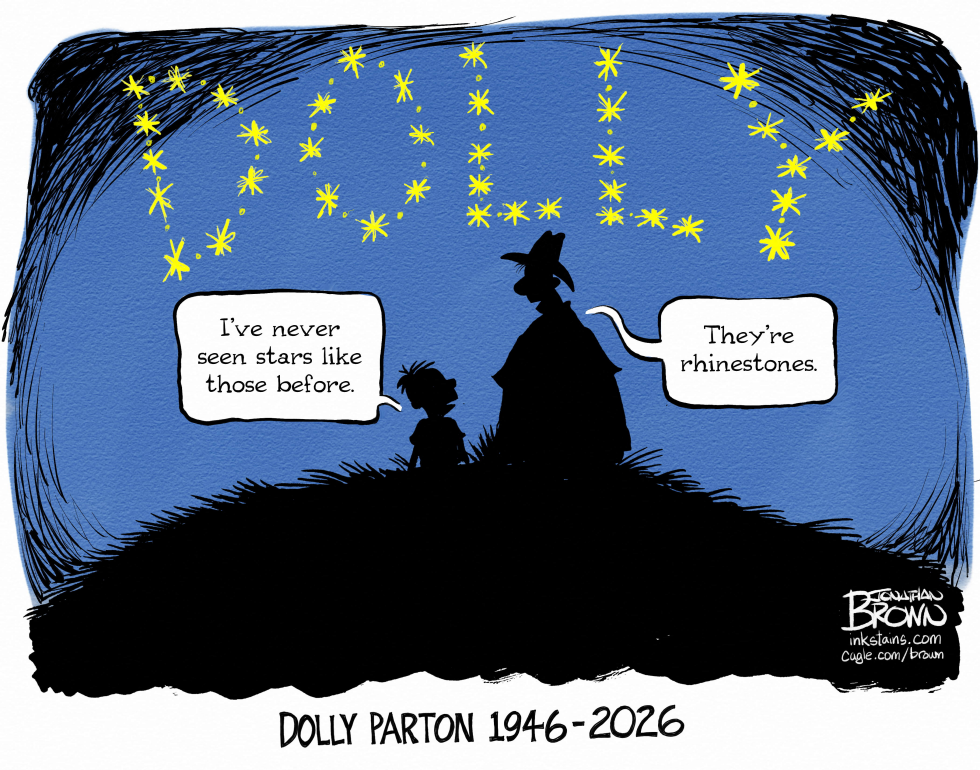
Dolly Parton passed away in 2026 at age 80. Fans and the public mourned the loss of the country music legend known for her rhinestone outfits and charitable work. The tribute highlights her enduring sparkle and cultural impact through a celestial memorial image. The piece positions her legacy as one of warmth, generosity, and unmistakable glamour that continues to shine.
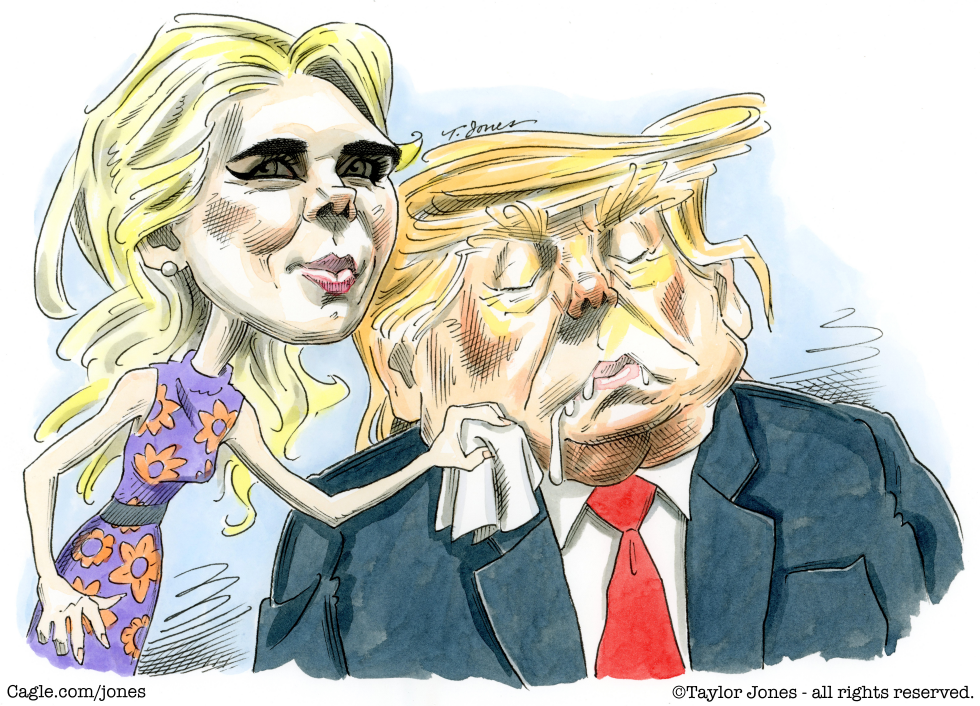
Donald Trump appears in a vulnerable state during a public or staff interaction in 2026. Natalie Harp, a known associate, tends to him by wiping drool from his face. The moment highlights ongoing scrutiny of the former president's health and stamina. Observers note the personal nature of the assistance amid continued political activity. The piece presents the scene as evidence of reliance on close aides.
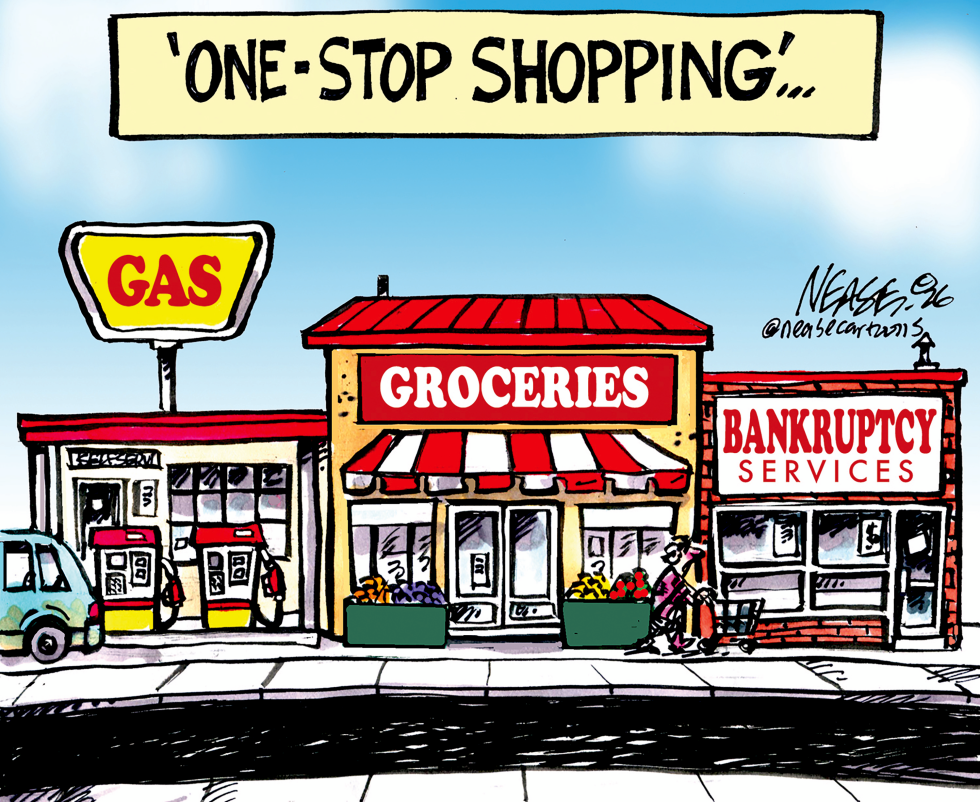
Consumers face persistent inflation that raises the cost of essentials such as fuel and food. A strip mall now groups gas, groceries and bankruptcy services together, highlighting how household budgets stretch thin. The editorial position criticizes the normalization of bankruptcy as a routine stop in everyday commerce.
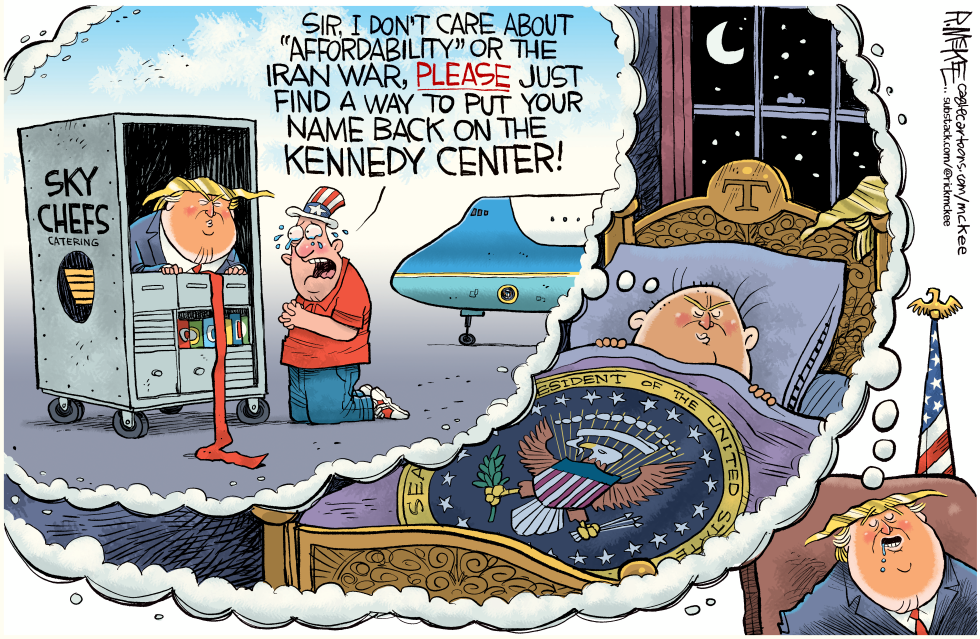
Donald Trump has repeatedly expressed interest in attaching his name to prominent public institutions. The Kennedy Center, a major arts venue in Washington, has drawn his attention as a potential target for rebranding. Critics argue such moves distract from pressing national issues including foreign conflicts and domestic spending. The cartoon depicts this fixation as a nighttime preoccupation that sidelines other responsibilities.
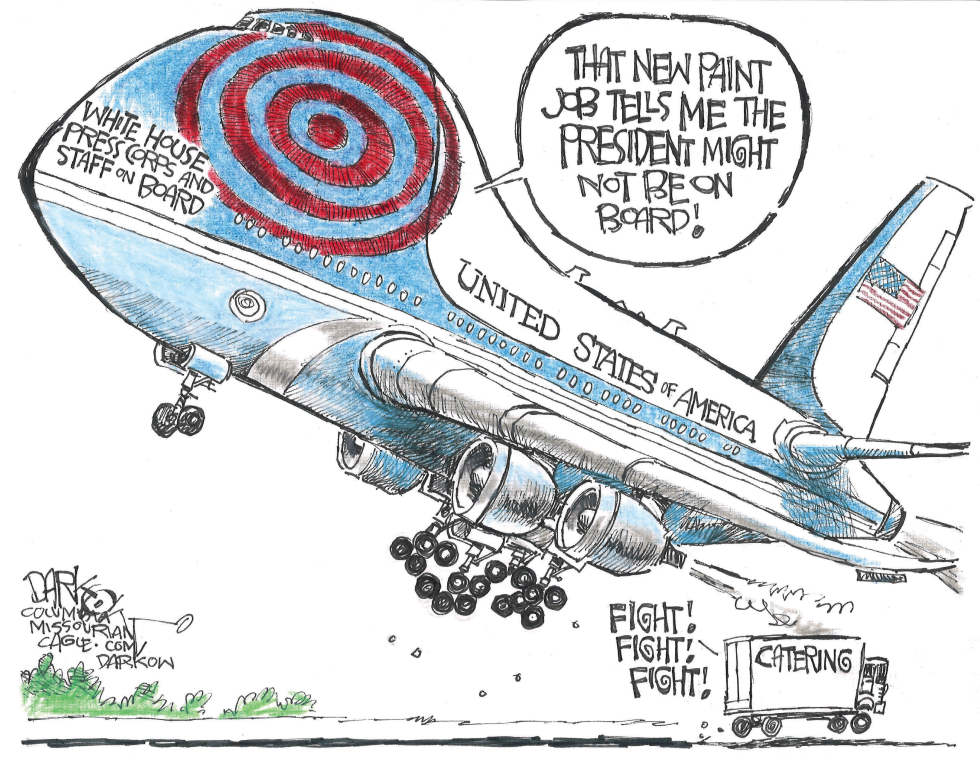
Air Force One appears with a large target painted on its upper fuselage while carrying White House press corps and staff. A nearby catering truck chants fight slogans as the plane descends. The image suggests the president may not be aboard the targeted aircraft. This visual plays on recent tensions surrounding presidential travel and security. The editorial stance highlights perceived risks or distancing from official duties.
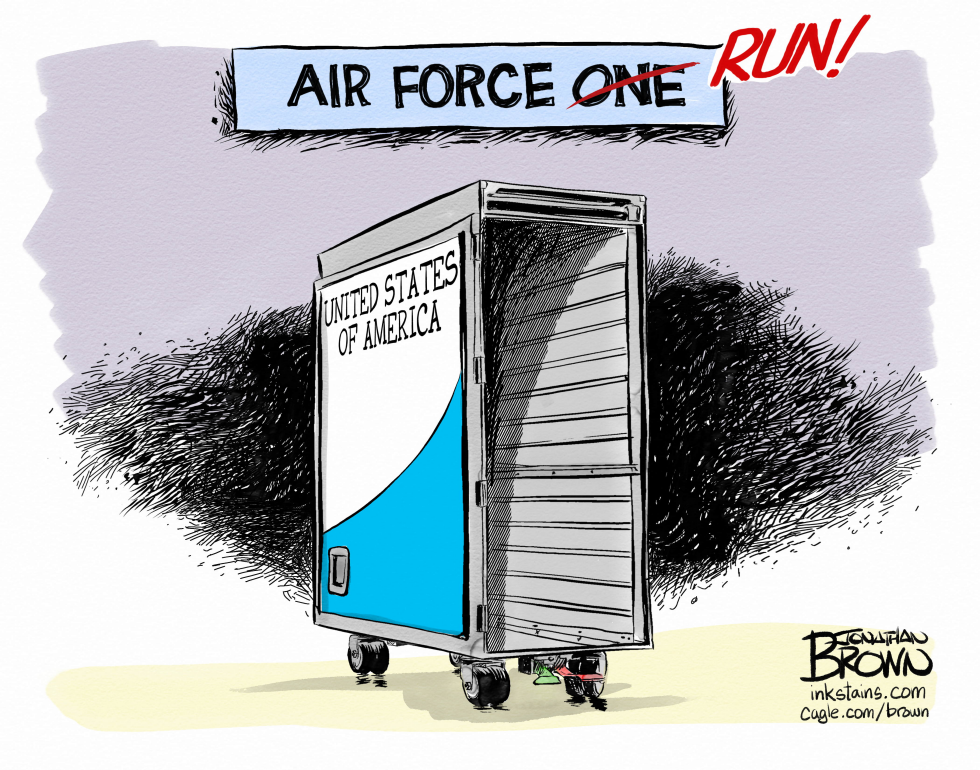
A wheeled airline catering cart occupies the center of the frame, painted in the livery of the presidential aircraft: white upper body, curved blue lower panel, and UNITED STATES OF AMERICA lettered down the side. Its full height door hangs open on empty wire shelving. Above it a pale blue placard reads AIR FORCE ONE, with ONE struck through in red and RUN! added beside that word in the same color. Two neckties poke out from between the casters underneath, one of them the long red tie Donald Trump is known for, the only trace of the men folded up inside. The drawing responds to reports that Trump sheltered in an airline galley cart against an assassination threat traced to Iran, turning the most recognizable branding in presidential aviation into an instruction to flee. Jonathan Brown signed the lower right corner alongside inkstains.com and Cagle.com/brown.
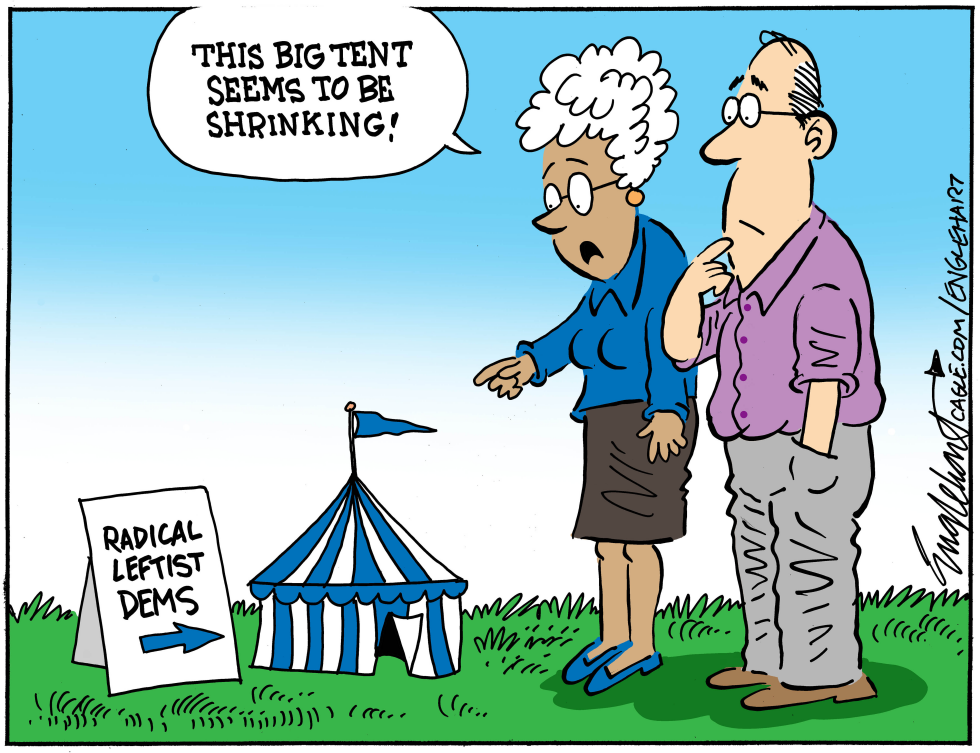
Democratic Party figures have grown concerned that the traditional big tent coalition is contracting as radical leftists consolidate control over the party's direction and messaging. The shift sidelines moderates and narrows the range of acceptable views within the organization. This dynamic raises questions about the party's ability to maintain broad electoral appeal in upcoming cycles. The editorial takes the position that the exclusionary turn is self-defeating and accelerates the party's isolation from mainstream voters.
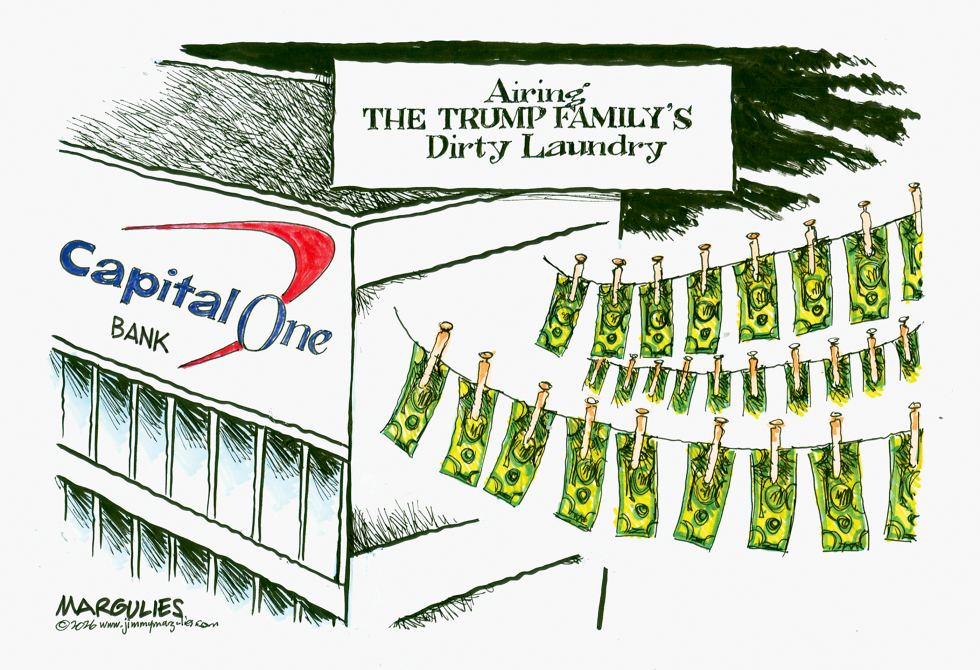
Questions persist over the Trump family's banking relationships and financial disclosures at Capital One. The bank has faced scrutiny for its handling of loans tied to the family businesses. These matters draw attention because they involve a former president and his relatives. Public records and legal filings continue to surface details about debts and repayments. The editorial takes the position that such financial entanglements warrant full transparency to maintain public trust in both political figures and major financial institutions.
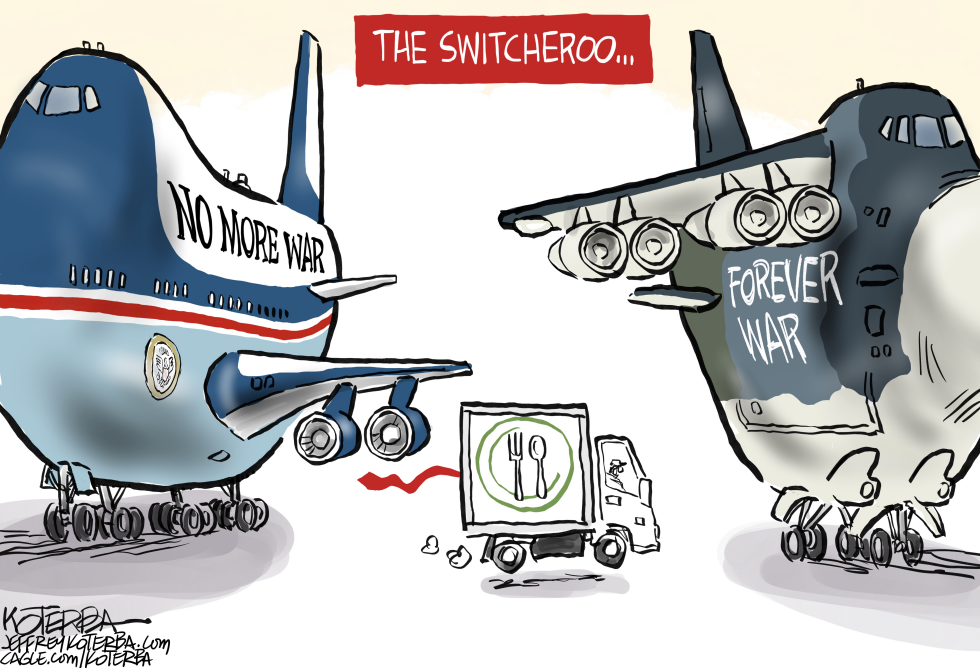
A political shift in military posture draws attention as commitments move from ending wars to sustaining them indefinitely. The editorial critiques the reversal as a cynical about-face on foreign engagements.